TOPIC: CRIMINAL JUSTICE SYSTEM
PRESENTED IN OLIVER TWIST
Name: Jinal B. Parmar
Roll No.: 13
Paper No.: 6 The Victorian Age
M.A. Sem.: 2
Year: 2013-2014
Submitted to: Department of English
Smt. S. B. Gardi
Maharaja Krishnakumarsinhji
Bhavnagar University
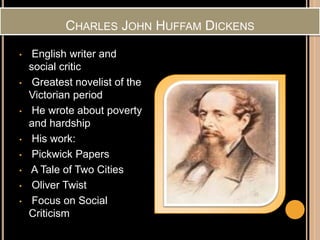
CHARLES JOHN HUFFAM DICKENS
• English writer and
social critic
• Greatest novelist of the
Victorian period
• He wrote about poverty
and hardship
• His work:
• Pickwick Papers
• A Tale of Two Cities
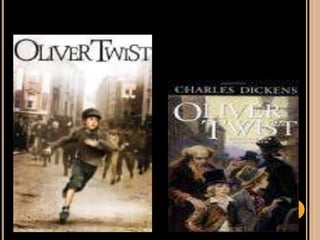
• Oliver Twist
• Focus on Social
Criticism
 Subtitled is “The Parish Boy‟s
Progress”
 A social Novel
 Story of a orphan child „Oliver
Twist‟
 Story reflects the issues of child
labour and cruel treatment to the
orphans
 The novel has inspired by the
story of Robert Blincoe
 Dickens has reflacted issue of
child labour through the character of
Oliver Twist
Oliver Twist :
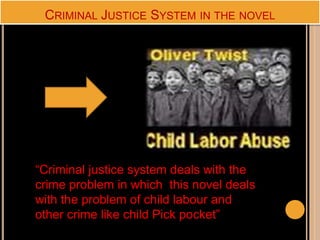
CRIMINAL JUSTICE SYSTEM IN THE NOVEL
“Criminal justice system deals with the
crime problem in which this novel deals
with the problem of child labour and
other crime like child Pick pocket”
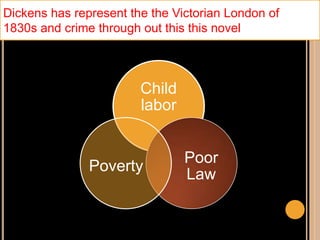
Child
labor
Poor
Law
Poverty
Dickens has represent the the Victorian London of
1830s and crime through out this this novel
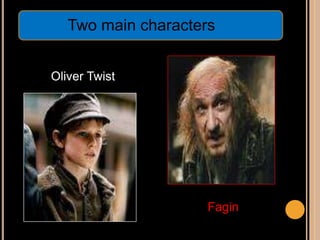
Two main characters
Oliver Twist
Fagin
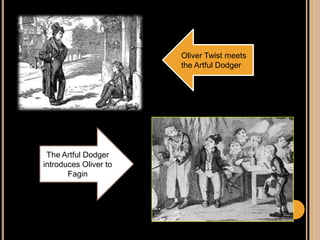
Oliver Twist meets
the Artful Dodger
The Artful Dodger
introduces Oliver to
Fagin
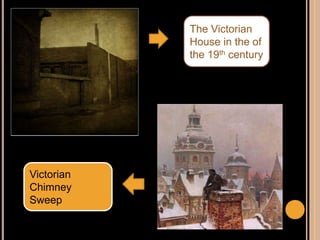
The Victorian
House in the of
the 19th century
Victorian
Chimney
Sweep
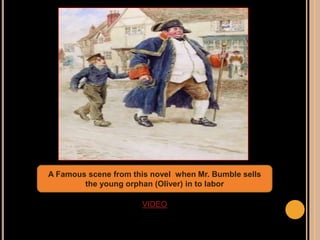
A Famous scene from this novel when Mr. Bumble sells
the young orphan (Oliver) in to labor
VIDEO
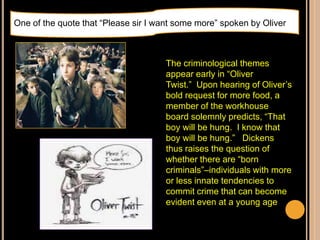
The criminological themes
appear early in “Oliver
Twist.” Upon hearing of Oliver‟s
bold request for more food, a
member of the workhouse
board solemnly predicts, “That
boy will be hung. I know that
boy will be hung.” Dickens
thus raises the question of
whether there are “born
criminals”–individuals with more
or less innate tendencies to
commit crime that can become
evident even at a young age
One of the quote that “Please sir I want some more” spoken by Oliver
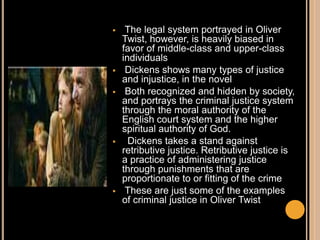
 The legal system portrayed in Oliver
Twist, however, is heavily biased in
favor of middle-class and upper-class
individuals
 Dickens shows many types of justice
and injustice, in the novel
 Both recognized and hidden by society,
and portrays the criminal justice system
through the moral authority of the
English court system and the higher
spiritual authority of God.
 Dickens takes a stand against
retributive justice. Retributive justice is
a practice of administering justice
through punishments that are
proportionate to or fitting of the crime
 These are just some of the examples
of criminal justice in Oliver Twist
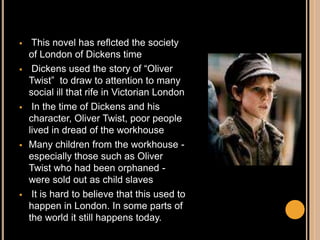
 This novel has reflcted the society
of London of Dickens time
 Dickens used the story of “Oliver
Twist” to draw to attention to many
social ill that rife in Victorian London
 In the time of Dickens and his
character, Oliver Twist, poor people
lived in dread of the workhouse
 Many children from the workhouse -
especially those such as Oliver
Twist who had been orphaned -
were sold out as child slaves
 It is hard to believe that this used to
happen in London. In some parts of
the world it still happens today.
Thank you…

paper no-6 The Victorian Age "criminal justice system presented in Oliver twist"

  • 1.
    TOPIC: CRIMINAL JUSTICESYSTEM PRESENTED IN OLIVER TWIST Name: Jinal B. Parmar Roll No.: 13 Paper No.: 6 The Victorian Age M.A. Sem.: 2 Year: 2013-2014 Submitted to: Department of English Smt. S. B. Gardi Maharaja Krishnakumarsinhji Bhavnagar University
  • 3.
    CHARLES JOHN HUFFAMDICKENS • English writer and social critic • Greatest novelist of the Victorian period • He wrote about poverty and hardship • His work: • Pickwick Papers • A Tale of Two Cities • Oliver Twist • Focus on Social Criticism
  • 4.
     Subtitled is“The Parish Boy‟s Progress”  A social Novel  Story of a orphan child „Oliver Twist‟  Story reflects the issues of child labour and cruel treatment to the orphans  The novel has inspired by the story of Robert Blincoe  Dickens has reflacted issue of child labour through the character of Oliver Twist Oliver Twist :
  • 5.
    CRIMINAL JUSTICE SYSTEMIN THE NOVEL “Criminal justice system deals with the crime problem in which this novel deals with the problem of child labour and other crime like child Pick pocket”
  • 6.
    Child labor Poor Law Poverty Dickens has representthe the Victorian London of 1830s and crime through out this this novel
  • 7.
  • 8.
    Oliver Twist meets theArtful Dodger The Artful Dodger introduces Oliver to Fagin
  • 9.
    The Victorian House inthe of the 19th century Victorian Chimney Sweep
  • 10.
    A Famous scenefrom this novel when Mr. Bumble sells the young orphan (Oliver) in to labor VIDEO
  • 11.
    The criminological themes appearearly in “Oliver Twist.” Upon hearing of Oliver‟s bold request for more food, a member of the workhouse board solemnly predicts, “That boy will be hung. I know that boy will be hung.” Dickens thus raises the question of whether there are “born criminals”–individuals with more or less innate tendencies to commit crime that can become evident even at a young age One of the quote that “Please sir I want some more” spoken by Oliver
  • 12.
     The legalsystem portrayed in Oliver Twist, however, is heavily biased in favor of middle-class and upper-class individuals  Dickens shows many types of justice and injustice, in the novel  Both recognized and hidden by society, and portrays the criminal justice system through the moral authority of the English court system and the higher spiritual authority of God.  Dickens takes a stand against retributive justice. Retributive justice is a practice of administering justice through punishments that are proportionate to or fitting of the crime  These are just some of the examples of criminal justice in Oliver Twist
  • 13.
     This novelhas reflcted the society of London of Dickens time  Dickens used the story of “Oliver Twist” to draw to attention to many social ill that rife in Victorian London  In the time of Dickens and his character, Oliver Twist, poor people lived in dread of the workhouse  Many children from the workhouse - especially those such as Oliver Twist who had been orphaned - were sold out as child slaves  It is hard to believe that this used to happen in London. In some parts of the world it still happens today.
  • 14.