Emphysema
KHAWAJA TAIMOOR SHAHID
M.Phil Zoology, M.Ed
Department of Zoology
Superior College M.B.DiN
Emphysema
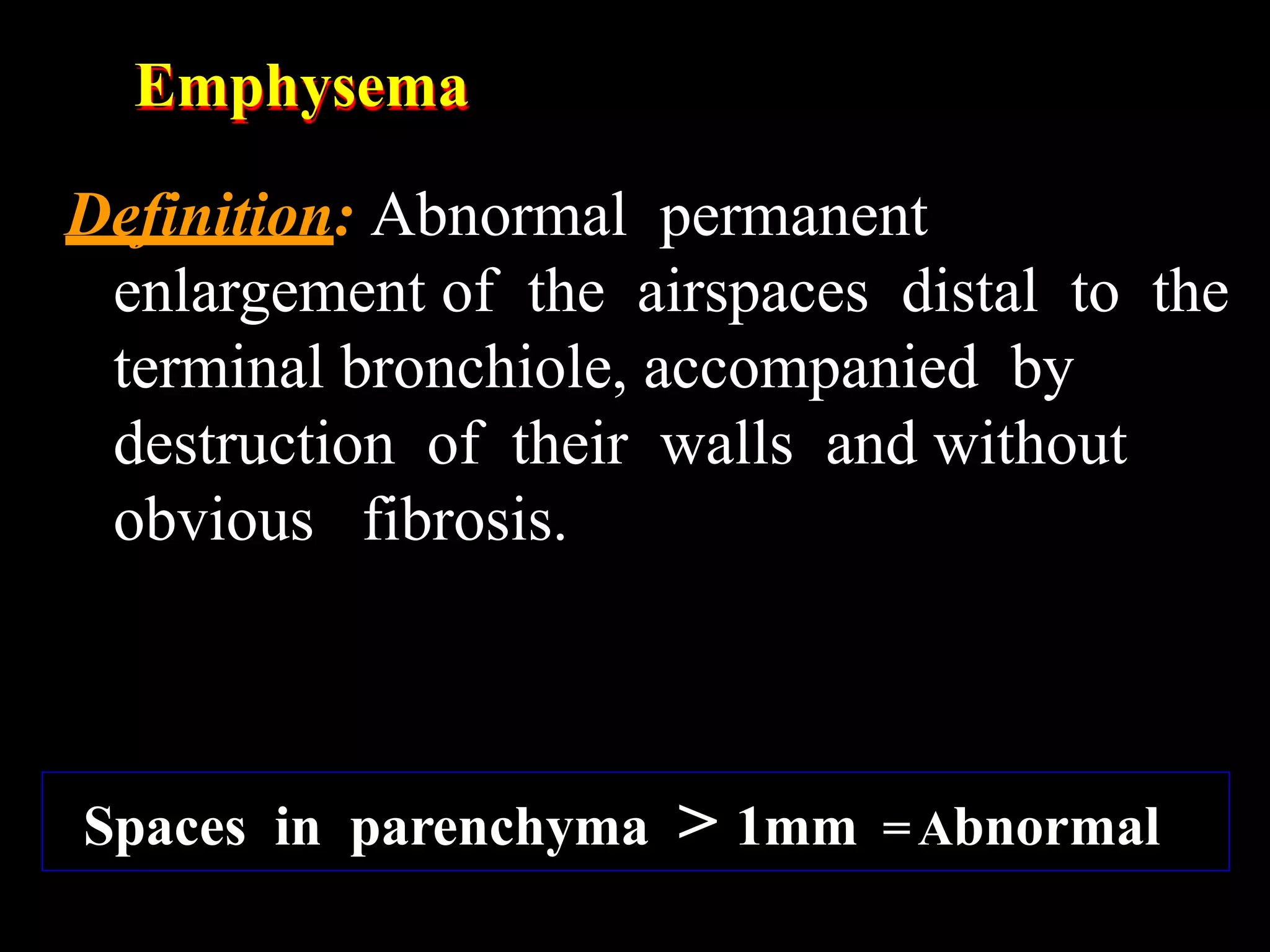
Definition: Abnormal permanent
enlargement of the airspaces distal to the
terminal bronchiole, accompanied by
destruction of their walls and without
obvious fibrosis.
Spaces in parenchyma > 1mm =Abnormal
Emphysema
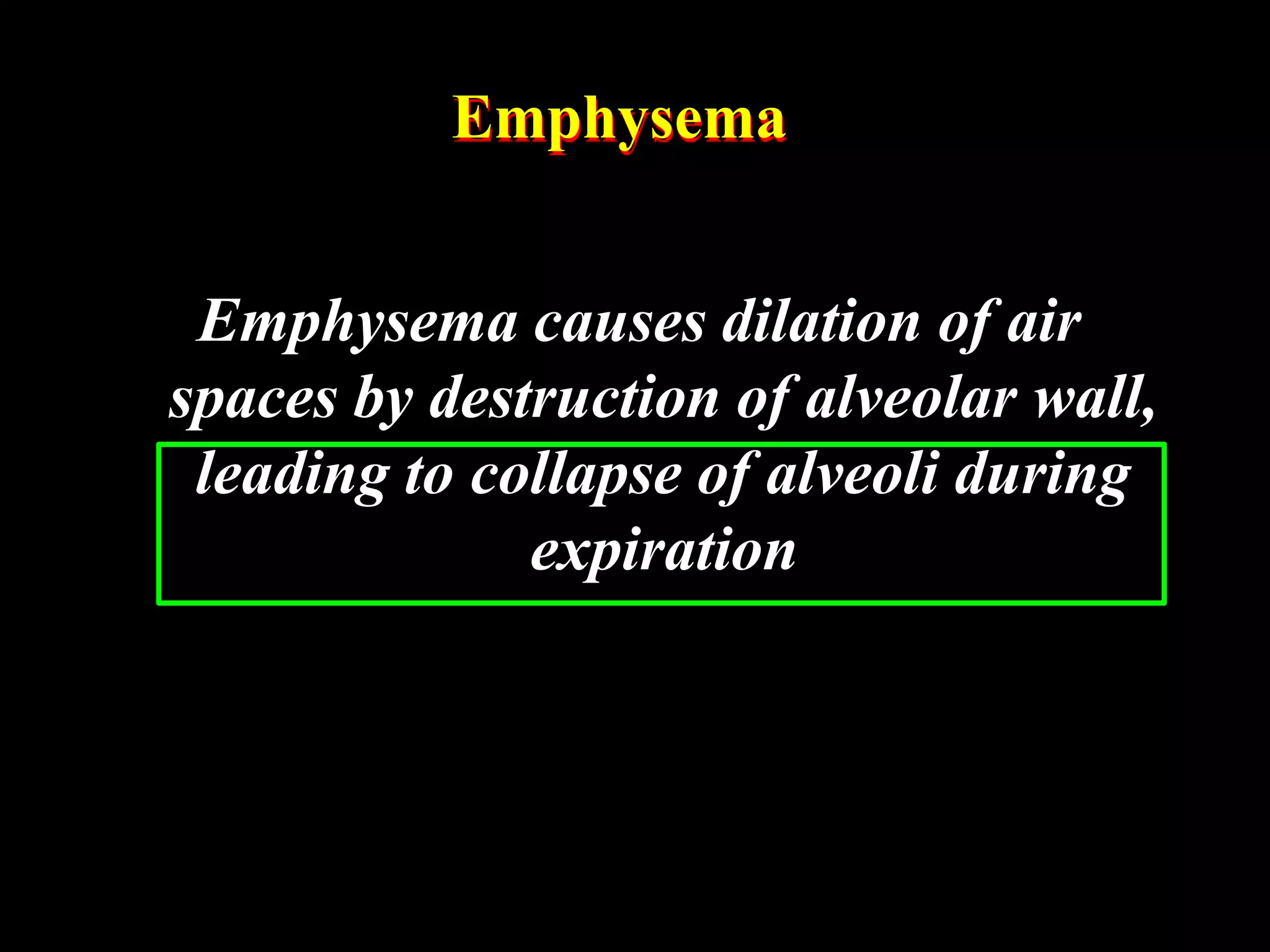
Emphysema causes dilation of air
spaces by destruction of alveolar wall,
leading to collapse of alveoli during
expiration
Emphysema & Overinflation
• Emphysema: Increased air space with
destruction
• Overinflation: Increased air space without
destruction
Classification: Types of emphysema
1. Centriacinar
2. Panacinar
3. Paraseptal [Distal acinar]
4. Mixed & unclassified [Irregular]
Centriacinar :
[ centrilobular, Proximal acinar ]
• Dilatation of Respiratory Bronchiole
• Upper lobes - severely involved
• Can coexist with chronic bronchitis
• Invariably occurs in smokers
• Coal mine workers [carbon, dust]
Panacinar Emphysema:
• Whole of Acinus uniformly affected
• Lower lobes severely involved
• Association:
… A1AT deficiency
… Cigarette smokers
A1AT= Alpha-1 antitrypsin deficiency (AAT
deficiency) is an inherited condition that raises
your risk for lung and liver disease
Paraseptal (Distal Acinar)
• Localized along pleura - peripheral part
of the acinus; a region of the lung
supplied with air from one of the terminal
bronchioles.
• Predisposes to spontaneous peumothorax
• Adjacent to foci of fibrosis ; represent
microscopic zones of acute lung injury
• Least common
Mixed – IRREGULAR EMPHYSEMA:
• MOST COMMON
• LEAST SIGNIFICANT
• COMMON AROUND SCAR TISSUE
• COMBINATION OF TYPES
• Scar tissue is a collection of cells and
collagen that covers the site of the injury.
Etiology
• Cigarette smoking [20 - 40% smokers]
• Air pollution
• Alpha-1-antitrypsin deficiency
Clinical picture
• Dysponea
• Cough with or without expectoration
• Wheezing
• Loss of weight
• Peptic ulceration
• Hypercapnia > changes in central
nervous system
• Barrel chest
Barrel chest
Obstructive Pulmonary diseases
• Disorders Associated with Airflow
Obstruction
• Chronic bronchitis, Emphysema, Asthma,
Bronchiectasis & Bronchiolitis come under
this category
Venn diagram of chronic obstructive pulmonary disease (COPD).
Chronic obstructive lung disease is a disorder in which subsets of
patients may have dominant features of chronic bronchitis,
emphysema, or asthma. The result is irreversible airflow obstruction.
COPD
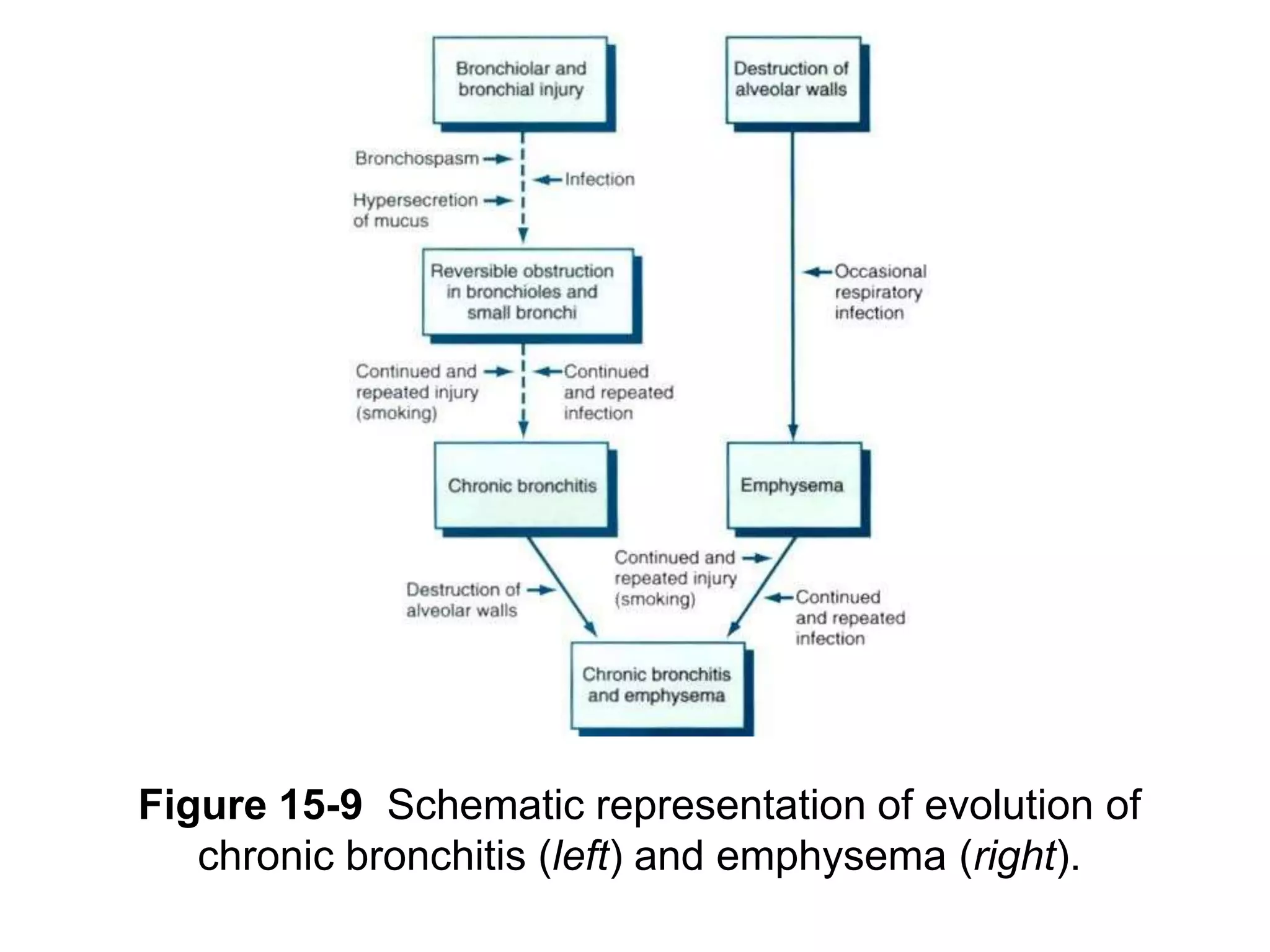
• COPD: Comprises Emphysema and chronic
bronchitis
• Many patients have overlapping features of
damage at both the acinar level (emphysema) and
bronchial level (bronchitis)
• Common extrinsic trigger— cigarette smoking —
is implicated in both the diseases
Figure 15-9 Schematic representation of evolution of
chronic bronchitis (left) and emphysema (right).
“Pink Puffer”
Emphysema
Thin
Dysponea
< Vital capacity
> Lung volume
“Blue Bloater” – Chronic bronchitis
Table 15-4 -- Emphysema and Chronic Bronchitis
Predominant Bronchitis Predominant Emphysema
Age (yr) 40–45 50–75
Dyspnea Mild; late Severe; early
Cough Early; copious sputum Late; scanty sputum
Infections Common Occasional
Respiratory insufficiency Repeated Terminal
Cor pulmonale Common Rare; terminal
Airway resistance Increased Normal or slightly increased
Elastic recoil Normal Low
Chest radiograph Prominent vessels; large heart Hyperinflation; small heart
Appearance Blue bloater Pink puffer
E N D

13. Emphysema.pptx

  • 1.
    Emphysema KHAWAJA TAIMOOR SHAHID M.PhilZoology, M.Ed Department of Zoology Superior College M.B.DiN
  • 2.
    Emphysema Definition: Abnormal permanent enlargementof the airspaces distal to the terminal bronchiole, accompanied by destruction of their walls and without obvious fibrosis. Spaces in parenchyma > 1mm =Abnormal
  • 3.
    Emphysema Emphysema causes dilationof air spaces by destruction of alveolar wall, leading to collapse of alveoli during expiration
  • 4.
    Emphysema & Overinflation •Emphysema: Increased air space with destruction • Overinflation: Increased air space without destruction
  • 5.
    Classification: Types ofemphysema 1. Centriacinar 2. Panacinar 3. Paraseptal [Distal acinar] 4. Mixed & unclassified [Irregular]
  • 6.
    Centriacinar : [ centrilobular,Proximal acinar ] • Dilatation of Respiratory Bronchiole • Upper lobes - severely involved • Can coexist with chronic bronchitis • Invariably occurs in smokers • Coal mine workers [carbon, dust]
  • 7.
    Panacinar Emphysema: • Wholeof Acinus uniformly affected • Lower lobes severely involved • Association: … A1AT deficiency … Cigarette smokers A1AT= Alpha-1 antitrypsin deficiency (AAT deficiency) is an inherited condition that raises your risk for lung and liver disease
  • 8.
    Paraseptal (Distal Acinar) •Localized along pleura - peripheral part of the acinus; a region of the lung supplied with air from one of the terminal bronchioles. • Predisposes to spontaneous peumothorax • Adjacent to foci of fibrosis ; represent microscopic zones of acute lung injury • Least common
  • 9.
    Mixed – IRREGULAREMPHYSEMA: • MOST COMMON • LEAST SIGNIFICANT • COMMON AROUND SCAR TISSUE • COMBINATION OF TYPES • Scar tissue is a collection of cells and collagen that covers the site of the injury.
  • 10.
    Etiology • Cigarette smoking[20 - 40% smokers] • Air pollution • Alpha-1-antitrypsin deficiency
  • 11.
    Clinical picture • Dysponea •Cough with or without expectoration • Wheezing • Loss of weight • Peptic ulceration • Hypercapnia > changes in central nervous system • Barrel chest
  • 12.
  • 13.
    Obstructive Pulmonary diseases •Disorders Associated with Airflow Obstruction • Chronic bronchitis, Emphysema, Asthma, Bronchiectasis & Bronchiolitis come under this category
  • 14.
    Venn diagram ofchronic obstructive pulmonary disease (COPD). Chronic obstructive lung disease is a disorder in which subsets of patients may have dominant features of chronic bronchitis, emphysema, or asthma. The result is irreversible airflow obstruction.
  • 15.
    COPD • COPD: ComprisesEmphysema and chronic bronchitis • Many patients have overlapping features of damage at both the acinar level (emphysema) and bronchial level (bronchitis) • Common extrinsic trigger— cigarette smoking — is implicated in both the diseases
  • 16.
    Figure 15-9 Schematicrepresentation of evolution of chronic bronchitis (left) and emphysema (right).
  • 18.
  • 19.
    “Blue Bloater” –Chronic bronchitis
  • 20.
    Table 15-4 --Emphysema and Chronic Bronchitis Predominant Bronchitis Predominant Emphysema Age (yr) 40–45 50–75 Dyspnea Mild; late Severe; early Cough Early; copious sputum Late; scanty sputum Infections Common Occasional Respiratory insufficiency Repeated Terminal Cor pulmonale Common Rare; terminal Airway resistance Increased Normal or slightly increased Elastic recoil Normal Low Chest radiograph Prominent vessels; large heart Hyperinflation; small heart Appearance Blue bloater Pink puffer
  • 21.