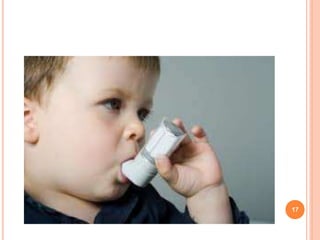

ASTHMA
1
KHAWAJA TAIMOOR SHAHID
Department of Zoology
Superior College M.B.DiN
INTRODUCTION
02
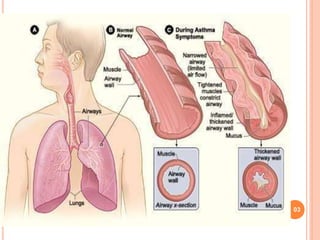
 Asthma is a chronic inflammatory disease of
the airways that causes airway hyper-
responsiveness, mucosal edema, and mucus
production.
 Asthma is characterized by chronic airway
inflammation and airway hyper-increased
reponsiveness, leading to symptoms of wheeze,
cough, chest tightness and dyspnoea.
03
ETIOLOGY AND RISK FACTOR
Asthma occurs in families which suggest that it
is an inherited disorder.
Allergy is the strongest predisposing factor for
asthma.
Chronic exposure to airway irritants or
allergens also increases the risk for developing
asthma.
Common allergens can be seasonal (eg, grass,
tree, and weed pollens, mold, dust, or animal
dander).
04
CONTD…
 Excitatory state (stress ,cry )
 Occupational environment
 factor such as cold air, air pollution,
infection,
 Occupational environment
drug
 Other factor such as cold air ,air pollution,
infection, diet
05
CONTD…
Triggers
 Allergens
 Upper respiratory tract viral infections
Exercise
 Cold air
 Sulfur Drugs (BETA dioxide blocker
aspirin)
 Irritants (household sprays, paint fumes)
06
CLASSIFICATION
07
Asthma is a complex disorder of the
conducting airways that most simply can be
classified as:
 extrinsic – implying a definite external cause
intrinsic – when no causative agent can be
identified.
CLINICAL MANIFESTATIONS
08
 The principal symptoms of asthma are wheezing
attacks and episodic shortness of breath.
 Typical symptoms include recurrent episodes of
wheezing, chest tightness, breathlessness and
cough.
 In some instances, cough may be the only
symptom
 cough, with or without mucus production
 Expiration requires effort and
prolonged.
becomes
Contd….
09
As the exacerbation progresses,
diaphoresis, Tachycardia and a widened
pulse pressure may occur with
hypoxemia and along central cyanosis .
DIAGNOSIS
10
History taking
A complete family, environmental, and
occupational history is essential.
 Family history : History of asthma in family
Environmental history : seasonal changes,
high pollen counts, mold, climate changes
(particularly cold air), and air pollution,
CONTD…
 Occupational history : occupation-related
chemicals and compounds, including metal
salts, wood and vegetable dust
 Medications (eg, aspirin)
 Industrial chemicals and plastics, biologic
enzymes (eg, laundry detergents), animal and
insect dusts, sera, and secretions.
11
CONTD..
12
Physical examination
 wheezing all over the lung
breathlessness and cough.
Cyanosis
INVESTIGATIONS
Lung function tests/ pulmonary function
test : Shows variable airflow limitation
Blood tests :shows increase in the number
of eosinophils in peripheral blood (> 0.4 ×
109/L).
Sputum tests The presence of large
numbers of eosinophils in the sputum is a
more useful diagnostic tool. 13
CONTD…
Chest X-ray : There are no diagnostic
features of asthma on the chest X-ray
A chest X-ray may be helpful in excluding
a pneumothorax, which can occur as a
complication of asthma
Skin tests Skin-prick tests (SPT) should
be performed in all cases of asthma to
help identify allergic causes.
14
MEDICAL MANAGEMENT
 Reassure the patient , as anxiety worsen respiratory
distress
 Keep the patient in upright position
 Start oxygen 50-60 % initially, continue till the patient
is better and not dyspnoeic
 Nebulized with salbutamol or Terbutalin for
immediate relief.
Salbutamol 5 mg (1 ml with 1 ml normal saline) stat.
Repeat dose at 15 mins if required during the first
hour.
Hourly for next few hours till bronchospasm is
controlled.
15
MEDICAL MANAGEMENT CONTD….
Secure I/V line
Inj. Hydrocotisone 200mg I/V stat routinely
given to all severe cases than 6 hourly
Antibiotic if there is evidence of infection
Adequate hydration and mucolytics.
16
17
THANK YOU
18

10. asthma.pptx

  • 1.
    ASTHMA 1 KHAWAJA TAIMOOR SHAHID Departmentof Zoology Superior College M.B.DiN
  • 2.
    INTRODUCTION 02  Asthma isa chronic inflammatory disease of the airways that causes airway hyper- responsiveness, mucosal edema, and mucus production.  Asthma is characterized by chronic airway inflammation and airway hyper-increased reponsiveness, leading to symptoms of wheeze, cough, chest tightness and dyspnoea.
  • 3.
  • 4.
    ETIOLOGY AND RISKFACTOR Asthma occurs in families which suggest that it is an inherited disorder. Allergy is the strongest predisposing factor for asthma. Chronic exposure to airway irritants or allergens also increases the risk for developing asthma. Common allergens can be seasonal (eg, grass, tree, and weed pollens, mold, dust, or animal dander). 04
  • 5.
    CONTD…  Excitatory state(stress ,cry )  Occupational environment  factor such as cold air, air pollution, infection,  Occupational environment drug  Other factor such as cold air ,air pollution, infection, diet 05
  • 6.
    CONTD… Triggers  Allergens  Upperrespiratory tract viral infections Exercise  Cold air  Sulfur Drugs (BETA dioxide blocker aspirin)  Irritants (household sprays, paint fumes) 06
  • 7.
    CLASSIFICATION 07 Asthma is acomplex disorder of the conducting airways that most simply can be classified as:  extrinsic – implying a definite external cause intrinsic – when no causative agent can be identified.
  • 8.
    CLINICAL MANIFESTATIONS 08  Theprincipal symptoms of asthma are wheezing attacks and episodic shortness of breath.  Typical symptoms include recurrent episodes of wheezing, chest tightness, breathlessness and cough.  In some instances, cough may be the only symptom  cough, with or without mucus production  Expiration requires effort and prolonged. becomes
  • 9.
    Contd…. 09 As the exacerbationprogresses, diaphoresis, Tachycardia and a widened pulse pressure may occur with hypoxemia and along central cyanosis .
  • 10.
    DIAGNOSIS 10 History taking A completefamily, environmental, and occupational history is essential.  Family history : History of asthma in family Environmental history : seasonal changes, high pollen counts, mold, climate changes (particularly cold air), and air pollution,
  • 11.
    CONTD…  Occupational history: occupation-related chemicals and compounds, including metal salts, wood and vegetable dust  Medications (eg, aspirin)  Industrial chemicals and plastics, biologic enzymes (eg, laundry detergents), animal and insect dusts, sera, and secretions. 11
  • 12.
    CONTD.. 12 Physical examination  wheezingall over the lung breathlessness and cough. Cyanosis
  • 13.
    INVESTIGATIONS Lung function tests/pulmonary function test : Shows variable airflow limitation Blood tests :shows increase in the number of eosinophils in peripheral blood (> 0.4 × 10⁹/L). Sputum tests The presence of large numbers of eosinophils in the sputum is a more useful diagnostic tool. 13
  • 14.
    CONTD… Chest X-ray :There are no diagnostic features of asthma on the chest X-ray A chest X-ray may be helpful in excluding a pneumothorax, which can occur as a complication of asthma Skin tests Skin-prick tests (SPT) should be performed in all cases of asthma to help identify allergic causes. 14
  • 15.
    MEDICAL MANAGEMENT  Reassurethe patient , as anxiety worsen respiratory distress  Keep the patient in upright position  Start oxygen 50-60 % initially, continue till the patient is better and not dyspnoeic  Nebulized with salbutamol or Terbutalin for immediate relief. Salbutamol 5 mg (1 ml with 1 ml normal saline) stat. Repeat dose at 15 mins if required during the first hour. Hourly for next few hours till bronchospasm is controlled. 15
  • 16.
    MEDICAL MANAGEMENT CONTD…. SecureI/V line Inj. Hydrocotisone 200mg I/V stat routinely given to all severe cases than 6 hourly Antibiotic if there is evidence of infection Adequate hydration and mucolytics. 16
  • 17.
  • 18.