A Model of Teaching by Listening Chapter 13
How can teachers accommodate the interests of all children? Tell children to wait until their topic of interest comes up. Tell children you will be happy to start a unit of study pertaining to their area of interest as soon as the current unit is over. Suggest to children to spend their free time studying the area of interest. Try to integrate a child’s area of interest into the current lesson. Allow a child to explore the area of interest  instead  of completing the  current unit. ARE ANY OF THESE PRACTICAL?  BENEFICIAL?  DOABLE?
Model of Teaching by Listening Based on research that found there was a direct link between meaningful learning with a child’s own interests. If we are interested, we will find more meaning in the activities, investigations, etc. Topics of interest carry meaning, and only the children themselves know what is interesting to them.
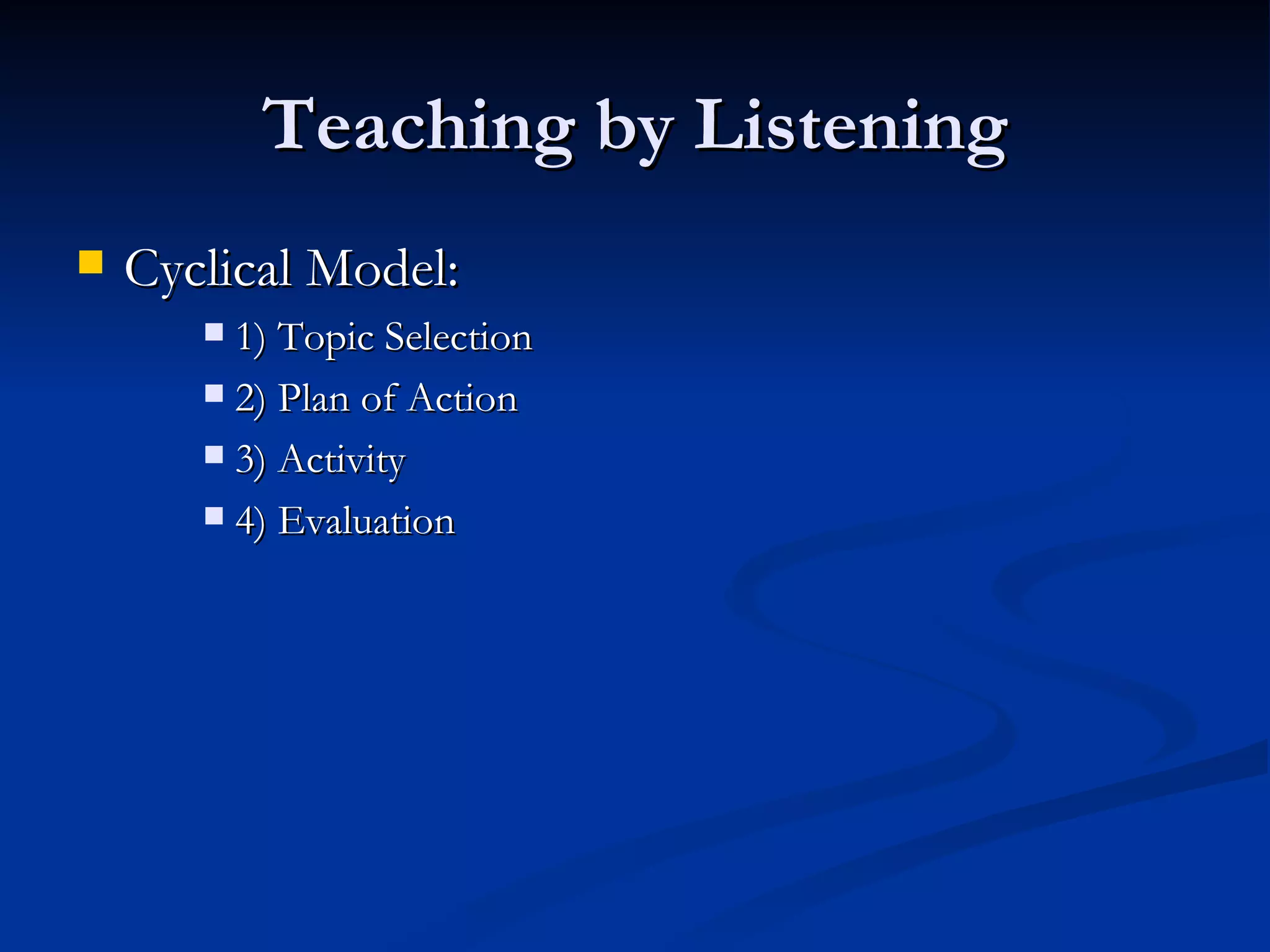
Teaching by Listening Cyclical Model: 1) Topic Selection 2) Plan of Action 3) Activity 4) Evaluation
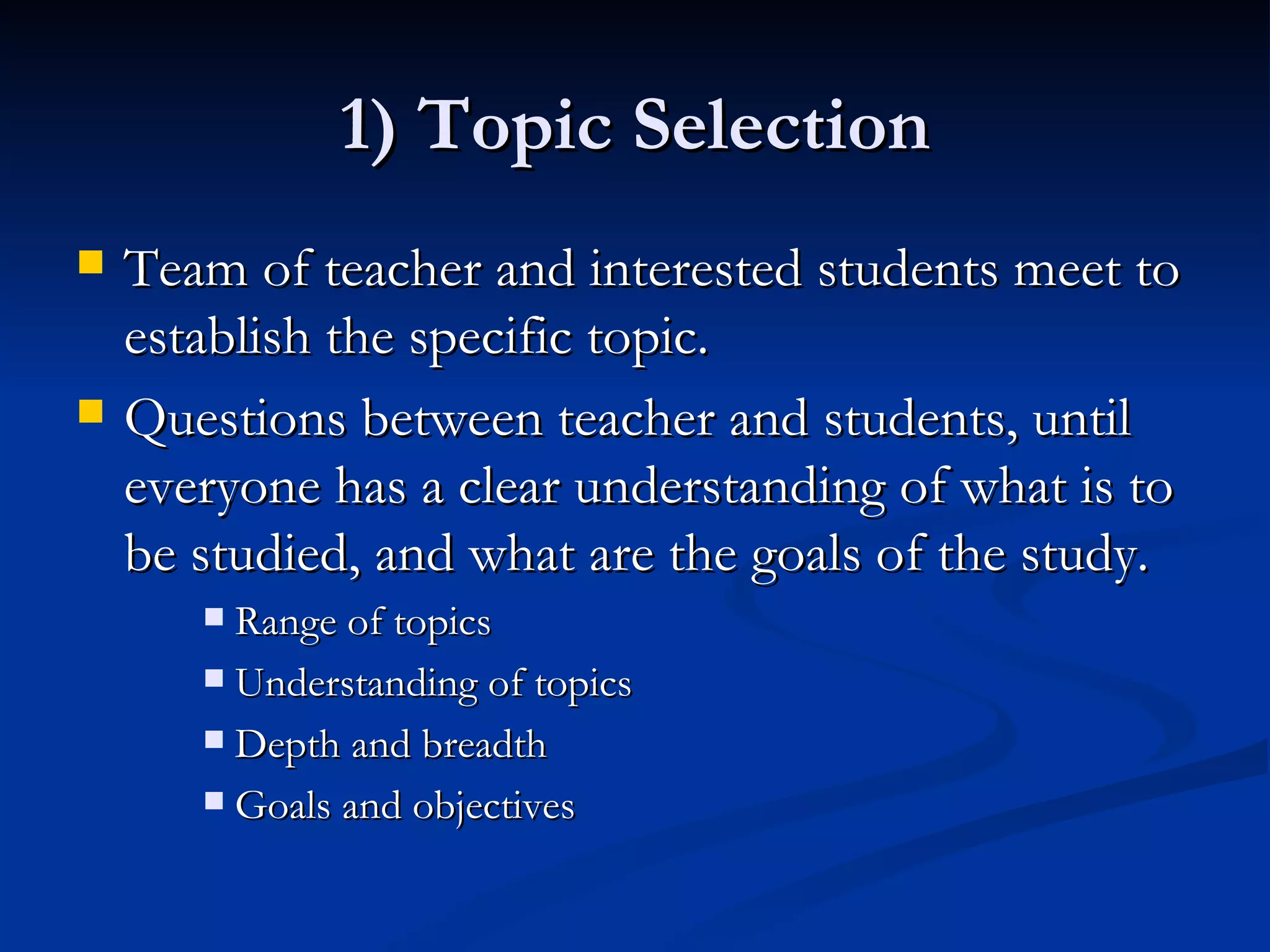
1) Topic Selection Team of teacher and interested students meet to establish the specific topic. Questions between teacher and students, until everyone has a clear understanding of what is to be studied, and what are the goals of the study. Range of topics Understanding of topics Depth and breadth Goals and objectives
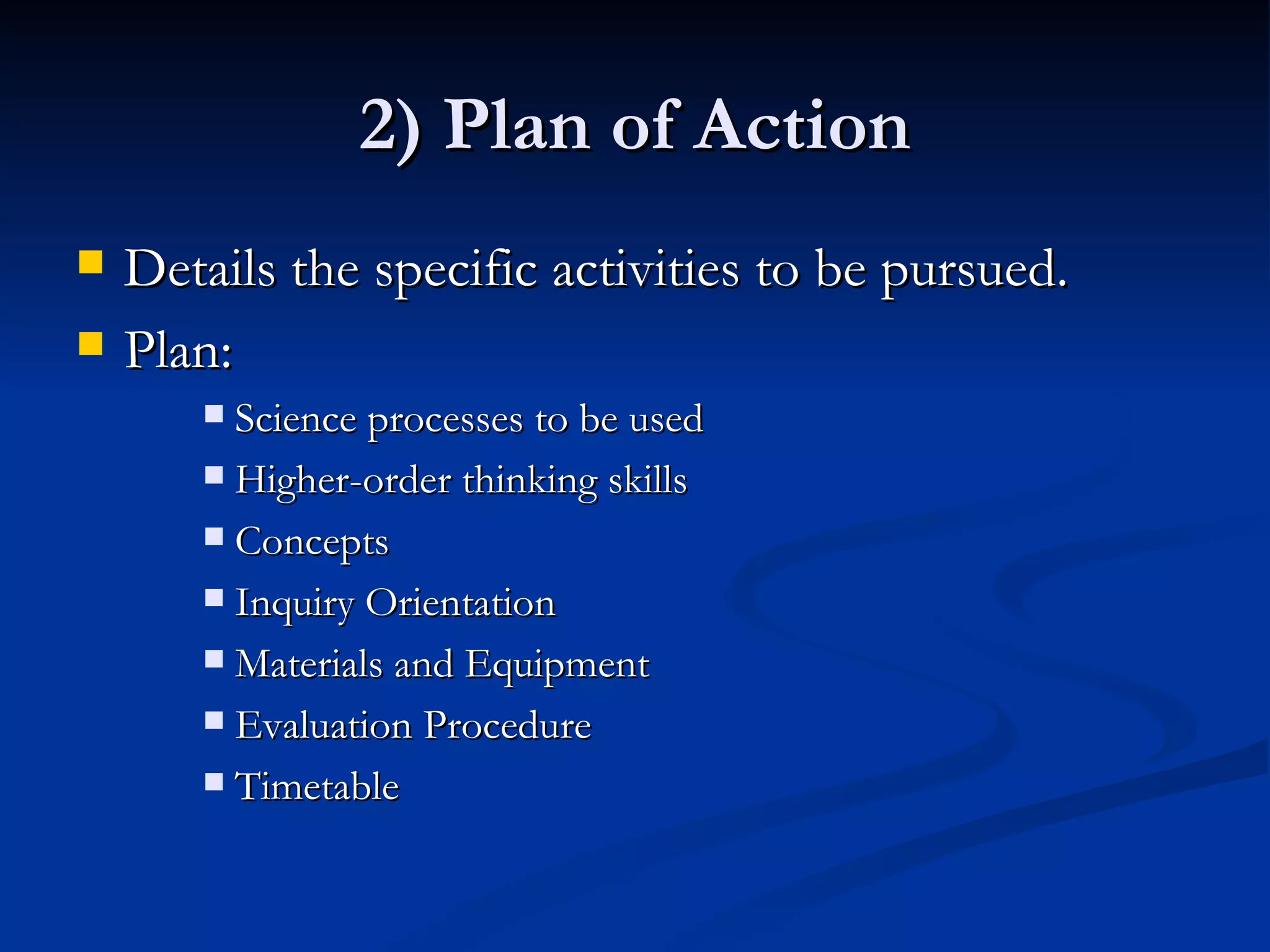
2) Plan of Action Details the specific activities to be pursued. Plan: Science processes to be used Higher-order thinking skills Concepts Inquiry Orientation Materials and Equipment Evaluation Procedure Timetable
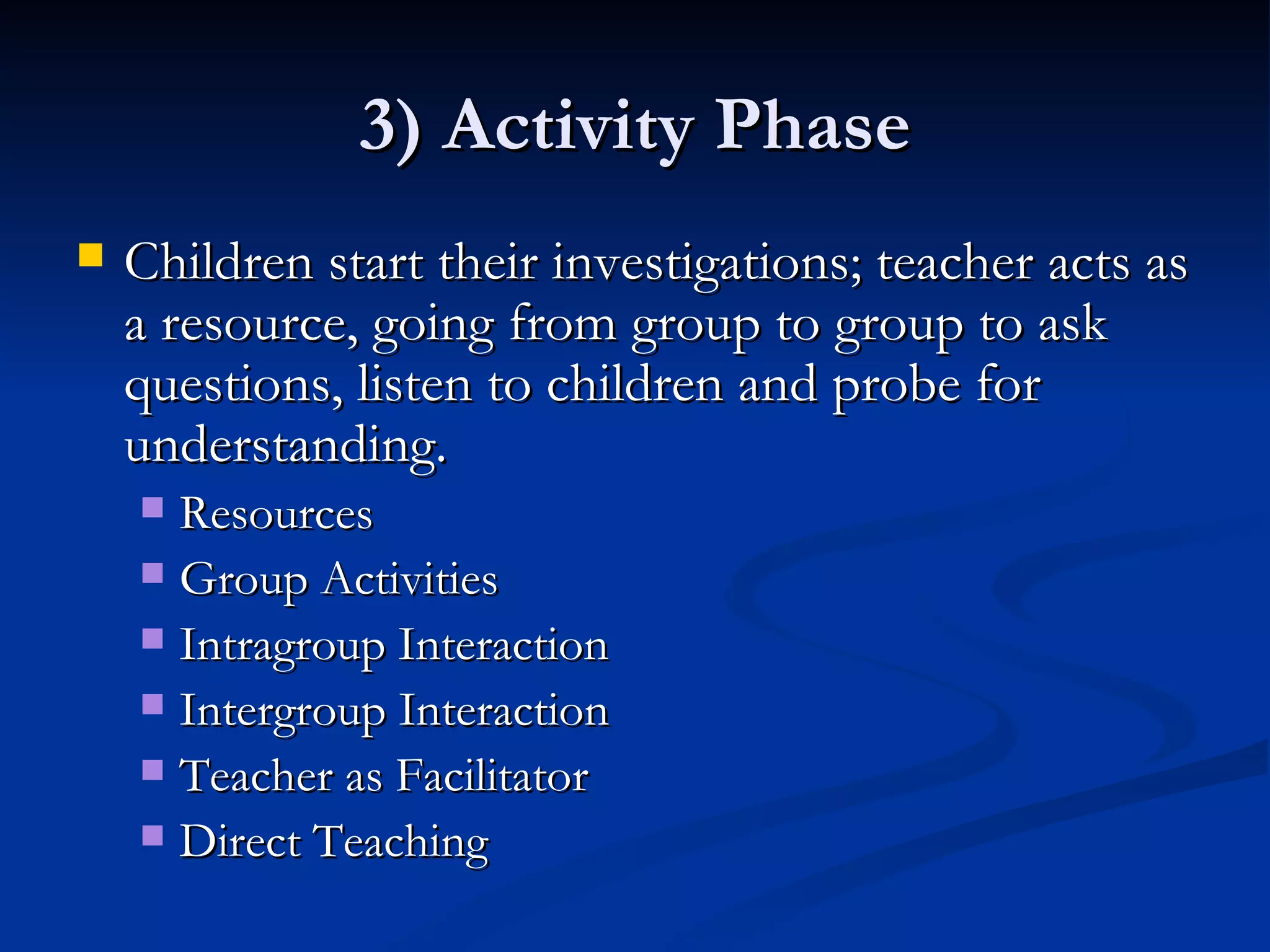
3) Activity Phase Children start their investigations; teacher acts as a resource, going from group to group to ask questions, listen to children and probe for understanding. Resources Group Activities Intragroup Interaction Intergroup Interaction Teacher as Facilitator Direct Teaching
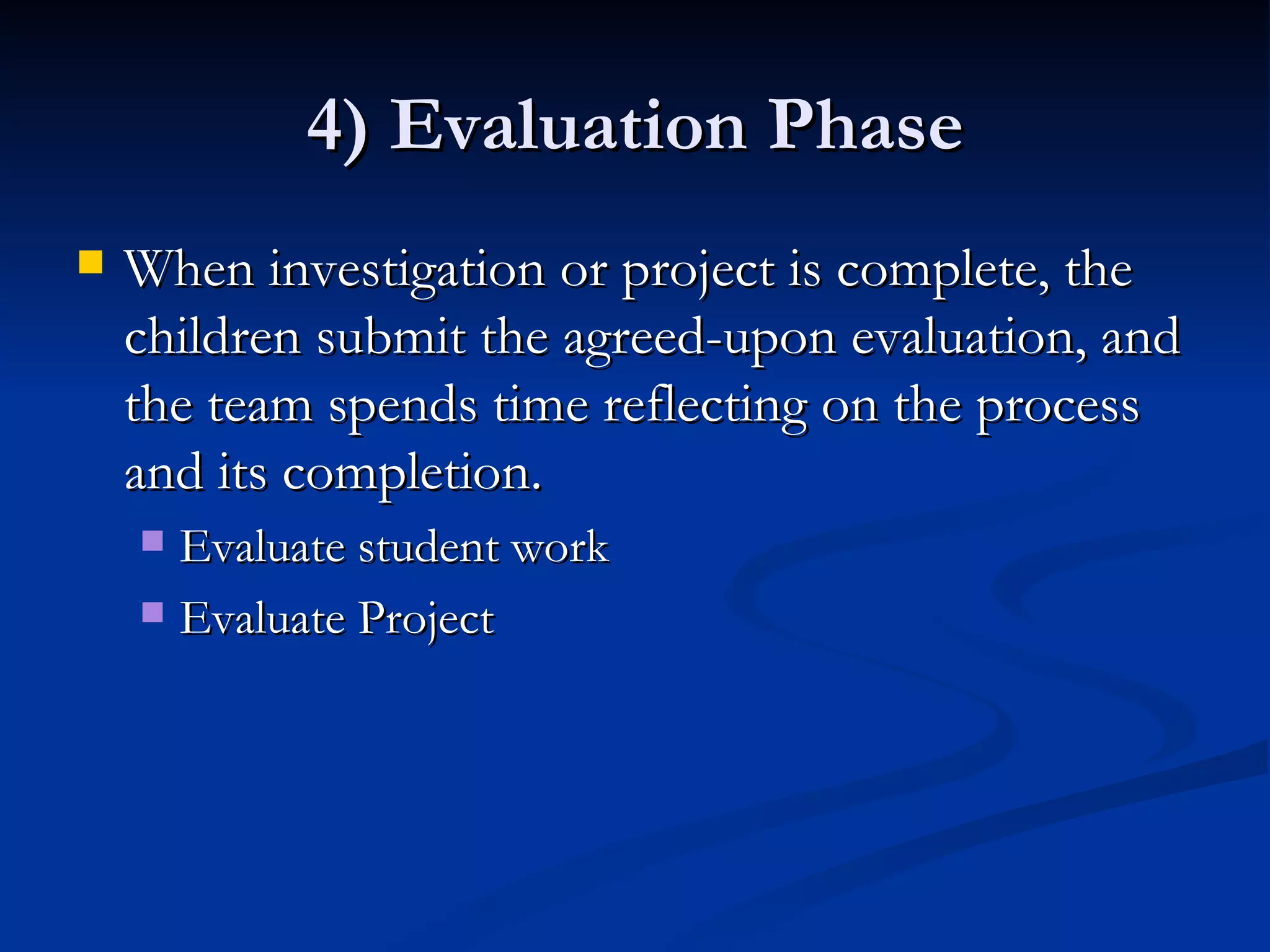
4) Evaluation Phase When investigation or project is complete, the children submit the agreed-upon evaluation, and the team spends time reflecting on the process and its completion. Evaluate student work Evaluate Project
Pros and Cons of this Model Pros: - meaningful learning takes place - children ask and answer their own questions Cons: - requires a great deal of teacher experience - requires many supplies, resources, storage, etc.
A goal to reach… Work towards preparing yourself and your students for using such a model Perhaps towards the end of the school year?

13 a model of teaching by listening

  • 1.
    A Model ofTeaching by Listening Chapter 13
  • 2.
    How can teachersaccommodate the interests of all children? Tell children to wait until their topic of interest comes up. Tell children you will be happy to start a unit of study pertaining to their area of interest as soon as the current unit is over. Suggest to children to spend their free time studying the area of interest. Try to integrate a child’s area of interest into the current lesson. Allow a child to explore the area of interest instead of completing the current unit. ARE ANY OF THESE PRACTICAL? BENEFICIAL? DOABLE?
  • 3.
    Model of Teachingby Listening Based on research that found there was a direct link between meaningful learning with a child’s own interests. If we are interested, we will find more meaning in the activities, investigations, etc. Topics of interest carry meaning, and only the children themselves know what is interesting to them.
  • 4.
    Teaching by ListeningCyclical Model: 1) Topic Selection 2) Plan of Action 3) Activity 4) Evaluation
  • 5.
    1) Topic SelectionTeam of teacher and interested students meet to establish the specific topic. Questions between teacher and students, until everyone has a clear understanding of what is to be studied, and what are the goals of the study. Range of topics Understanding of topics Depth and breadth Goals and objectives
  • 6.
    2) Plan ofAction Details the specific activities to be pursued. Plan: Science processes to be used Higher-order thinking skills Concepts Inquiry Orientation Materials and Equipment Evaluation Procedure Timetable
  • 7.
    3) Activity PhaseChildren start their investigations; teacher acts as a resource, going from group to group to ask questions, listen to children and probe for understanding. Resources Group Activities Intragroup Interaction Intergroup Interaction Teacher as Facilitator Direct Teaching
  • 8.
    4) Evaluation PhaseWhen investigation or project is complete, the children submit the agreed-upon evaluation, and the team spends time reflecting on the process and its completion. Evaluate student work Evaluate Project
  • 9.
    Pros and Consof this Model Pros: - meaningful learning takes place - children ask and answer their own questions Cons: - requires a great deal of teacher experience - requires many supplies, resources, storage, etc.
  • 10.
    A goal toreach… Work towards preparing yourself and your students for using such a model Perhaps towards the end of the school year?