In the Fullness of
Time

(Book 1)

Unit III
Kingdom of God
• Kingdom of God is the central teaching of
  Jesus Christ. Synoptics focus on K.O.G
• In Matthew the preferred term is Kingdom
  of Heaven but means the same thing.
• Centrality – Matt 4:17, 23; Mark 1:15; Luke
  4:42.
• There are 50 sayings or parables about
  K.OG in Synoptics
Kingdom of God – Term analysis
•   Kingdom – authority and power of the king
•   Basiliea (Gk.) – Royal Power
•   Malkuth (Heb.) – same
•   Rev. 12:10; 2 Chron. 29:11
•   Period when God’s salvation realized
Kingdom of God in OT
• God is King and is ruler of all. (Ps. 82;
  145:13)
• 1 Sam 8:7-9; God is disappointed with
  Israel’s call for a human king.
• David as King is the seal of the covenant.
• The expression KOG is absent but the
  idea of God’s rule or reign is ever present
• Future reign of God as King – Isaiah 52:7
  and so is connected to end of the times.
  There is a hopeful longing for the end of
  the age.
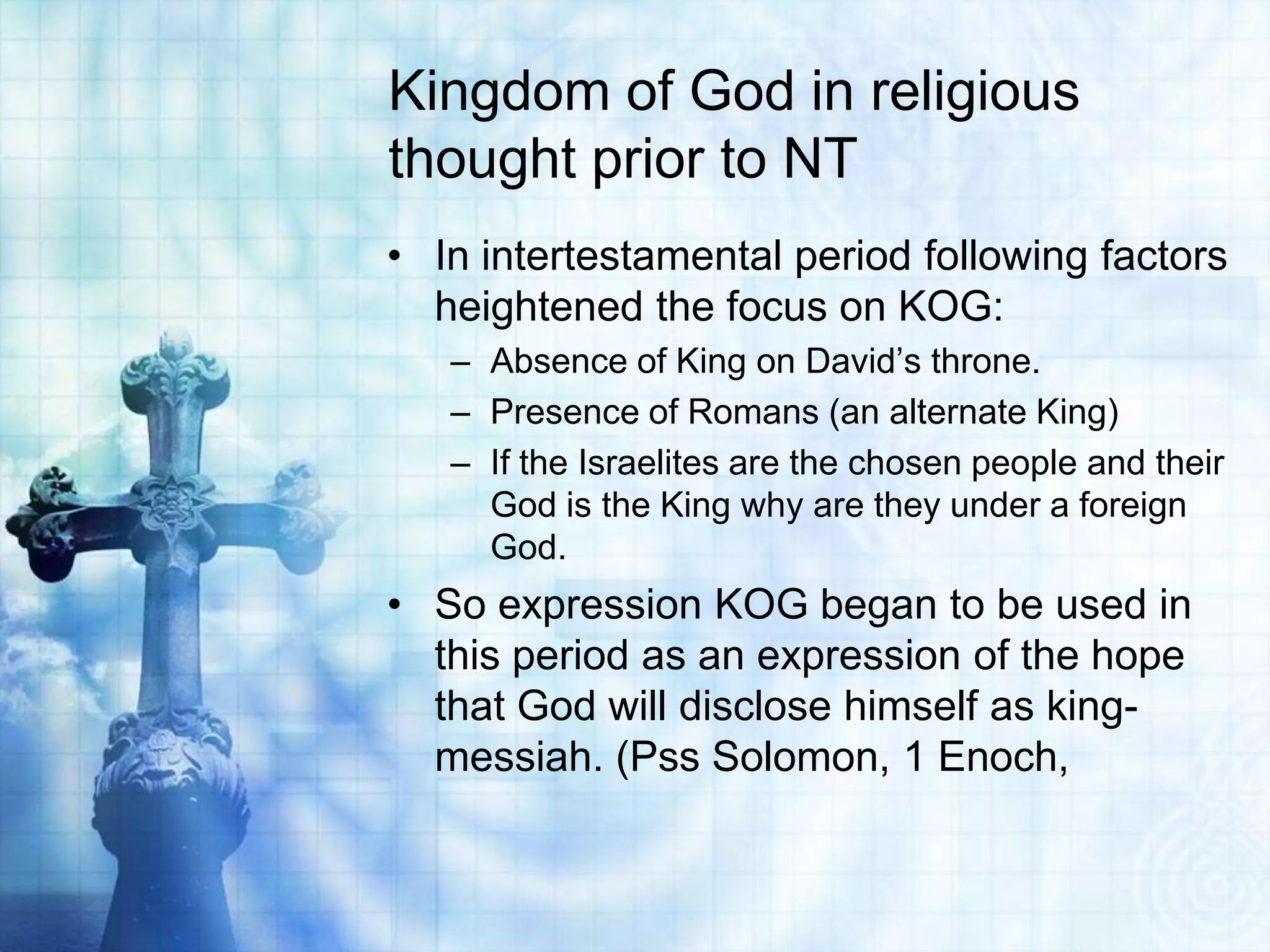
Kingdom of God in religious
thought prior to NT
• In intertestamental period following factors
  heightened the focus on KOG:
   – Absence of King on David’s throne.
   – Presence of Romans (an alternate King)
   – If the Israelites are the chosen people and their
     God is the King why are they under a foreign
     God.
• So expression KOG began to be used in
  this period as an expression of the hope
  that God will disclose himself as king-
  messiah. (Pss Solomon, 1 Enoch,
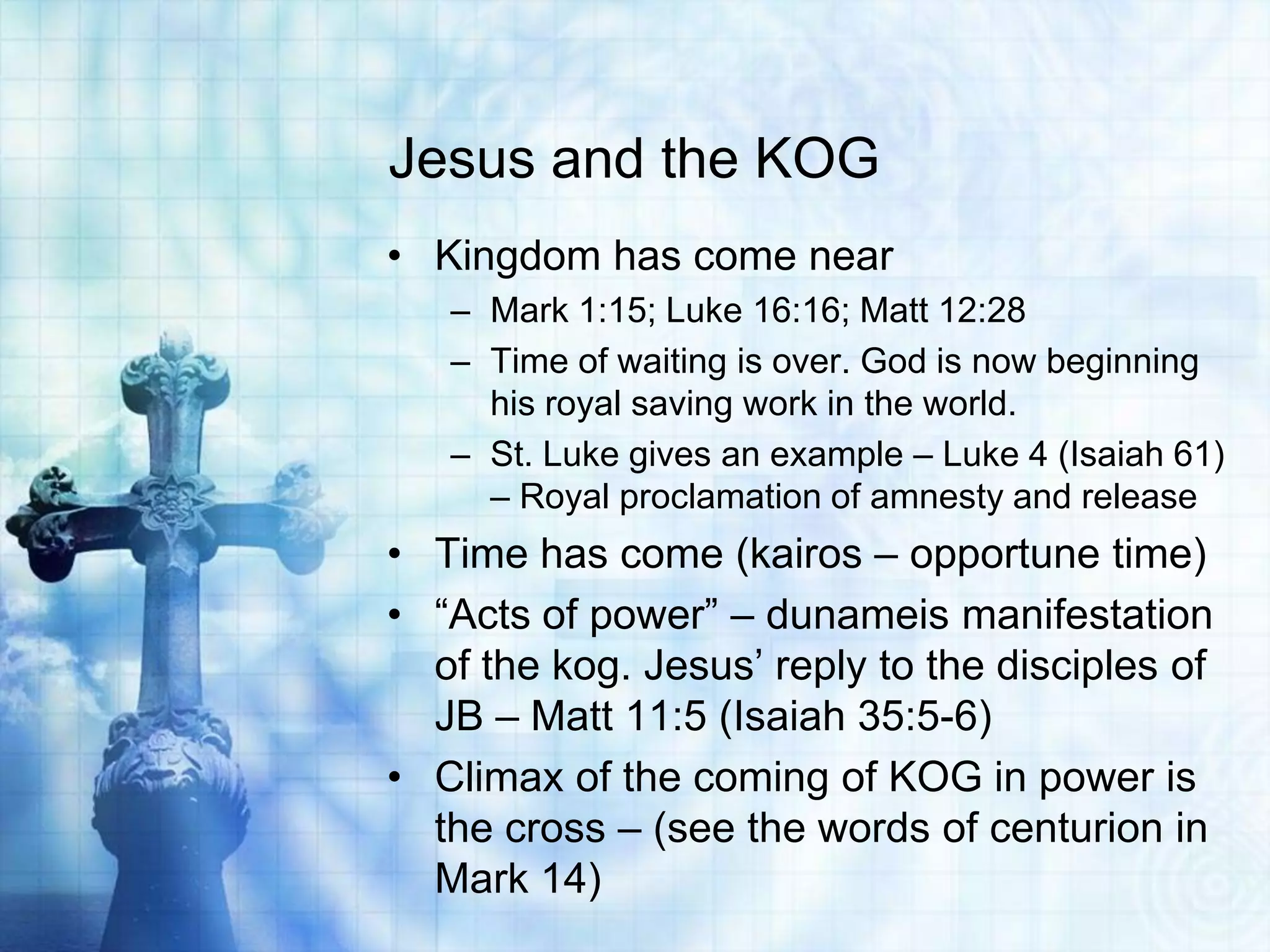
Jesus and the KOG
• Kingdom has come near
   – Mark 1:15; Luke 16:16; Matt 12:28
   – Time of waiting is over. God is now beginning
     his royal saving work in the world.
   – St. Luke gives an example – Luke 4 (Isaiah 61)
     – Royal proclamation of amnesty and release
• Time has come (kairos – opportune time)
• “Acts of power” – dunameis manifestation
  of the kog. Jesus’ reply to the disciples of
  JB – Matt 11:5 (Isaiah 35:5-6)
• Climax of the coming of KOG in power is
  the cross – (see the words of centurion in
  Mark 14)
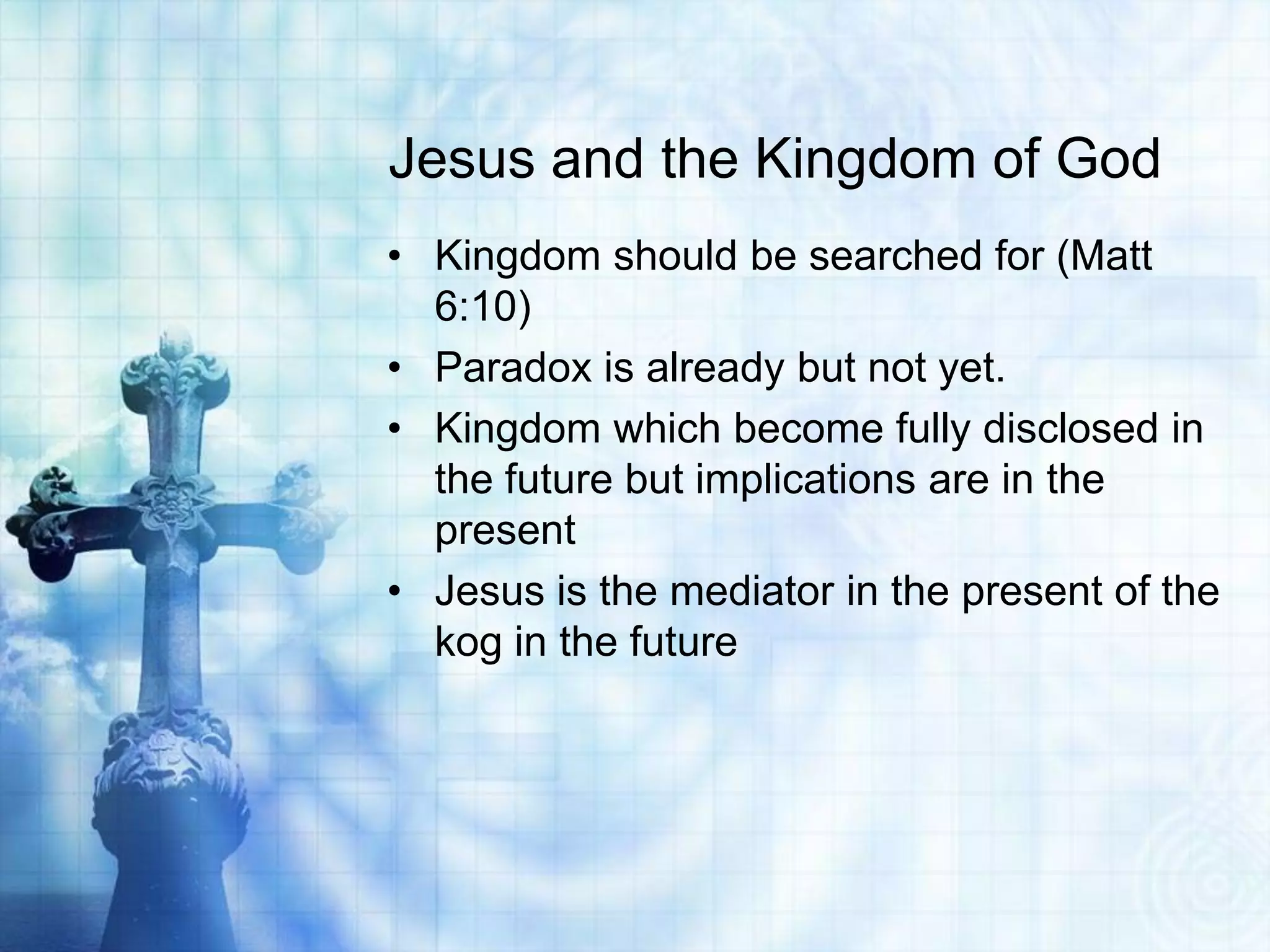
Jesus and the Kingdom of God
• Kingdom should be searched for (Matt
  6:10)
• Paradox is already but not yet.
• Kingdom which become fully disclosed in
  the future but implications are in the
  present
• Jesus is the mediator in the present of the
  kog in the future
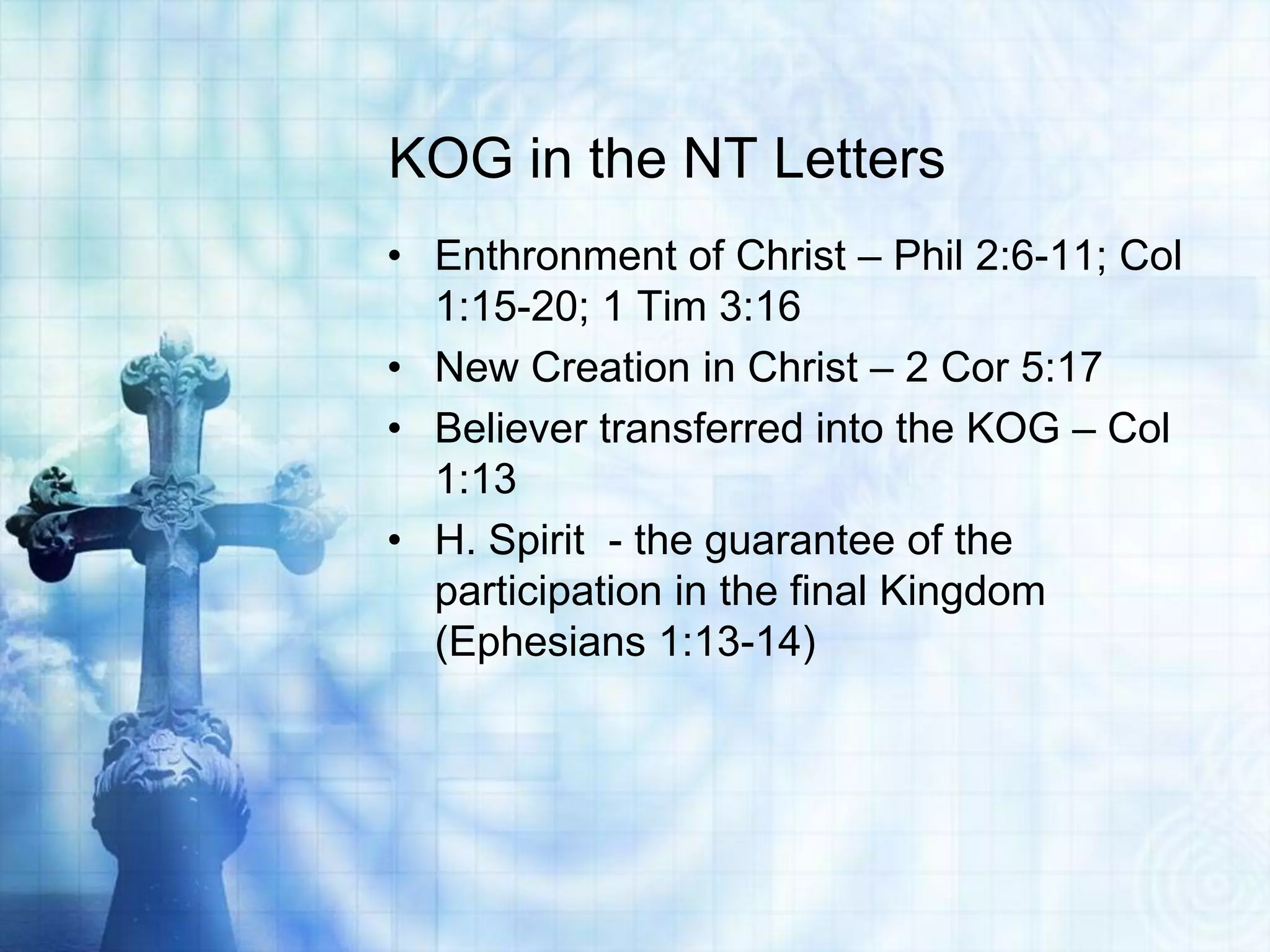
KOG in the NT Letters
• Enthronment of Christ – Phil 2:6-11; Col
  1:15-20; 1 Tim 3:16
• New Creation in Christ – 2 Cor 5:17
• Believer transferred into the KOG – Col
  1:13
• H. Spirit - the guarantee of the
  participation in the final Kingdom
  (Ephesians 1:13-14)
Kingdom of God and believer
• Repentance to trust in the King
• Faith of the people. “Jesus is unable to
  heal” - Mark 6:5-6
Church and the Kingdom of God
• Church is the first fruit of the KOG
• Church is seen as the new Israel –
  (extension of Israel to include Gentiles)
Kingdom of God and the Kingdom
of Caesar
• Eungelion – “Good News” rivals the good
  news of the ascension of Roman Emperor
   – Emperor Augustus’ autobiography
   – Calls himself the “Son of God”
• Satan was seen as the real power behind
  the throne (see Revelation)
Eucharist and KOG
• Eucharist is the banquet of the KOG
• Messianic banquet
• Eighth day – sabbath of history. History is
  interrupted with the reign of God.
•   When Jesus took the bread and the cup and gave them to his
    disciples as his body and blood, hewas making the disciples a
    gift. Since his person was identified with the reign of God, the
    gift of bread and wine as his body was a gift fully identified with
    the reign of God, and presented in aform that people can fully
    consume and become one with. As the disciples eat, they make
    thekingdom of God fully their own, and are identified with the
    reign of God. Jesus giving himself for them was a carrying out of
    his mission to present the reign of God on their behalf.
•   - J. Denny Weaver
•   Future KOG is made present in the eucharist

Part02 a unit3

  • 1.
    In the Fullnessof Time (Book 1) Unit III
  • 2.
    Kingdom of God •Kingdom of God is the central teaching of Jesus Christ. Synoptics focus on K.O.G • In Matthew the preferred term is Kingdom of Heaven but means the same thing. • Centrality – Matt 4:17, 23; Mark 1:15; Luke 4:42. • There are 50 sayings or parables about K.OG in Synoptics
  • 3.
    Kingdom of God– Term analysis • Kingdom – authority and power of the king • Basiliea (Gk.) – Royal Power • Malkuth (Heb.) – same • Rev. 12:10; 2 Chron. 29:11 • Period when God’s salvation realized
  • 4.
    Kingdom of Godin OT • God is King and is ruler of all. (Ps. 82; 145:13) • 1 Sam 8:7-9; God is disappointed with Israel’s call for a human king. • David as King is the seal of the covenant. • The expression KOG is absent but the idea of God’s rule or reign is ever present • Future reign of God as King – Isaiah 52:7 and so is connected to end of the times. There is a hopeful longing for the end of the age.
  • 5.
    Kingdom of Godin religious thought prior to NT • In intertestamental period following factors heightened the focus on KOG: – Absence of King on David’s throne. – Presence of Romans (an alternate King) – If the Israelites are the chosen people and their God is the King why are they under a foreign God. • So expression KOG began to be used in this period as an expression of the hope that God will disclose himself as king- messiah. (Pss Solomon, 1 Enoch,
  • 6.
    Jesus and theKOG • Kingdom has come near – Mark 1:15; Luke 16:16; Matt 12:28 – Time of waiting is over. God is now beginning his royal saving work in the world. – St. Luke gives an example – Luke 4 (Isaiah 61) – Royal proclamation of amnesty and release • Time has come (kairos – opportune time) • “Acts of power” – dunameis manifestation of the kog. Jesus’ reply to the disciples of JB – Matt 11:5 (Isaiah 35:5-6) • Climax of the coming of KOG in power is the cross – (see the words of centurion in Mark 14)
  • 7.
    Jesus and theKingdom of God • Kingdom should be searched for (Matt 6:10) • Paradox is already but not yet. • Kingdom which become fully disclosed in the future but implications are in the present • Jesus is the mediator in the present of the kog in the future
  • 8.
    KOG in theNT Letters • Enthronment of Christ – Phil 2:6-11; Col 1:15-20; 1 Tim 3:16 • New Creation in Christ – 2 Cor 5:17 • Believer transferred into the KOG – Col 1:13 • H. Spirit - the guarantee of the participation in the final Kingdom (Ephesians 1:13-14)
  • 9.
    Kingdom of Godand believer • Repentance to trust in the King • Faith of the people. “Jesus is unable to heal” - Mark 6:5-6
  • 10.
    Church and theKingdom of God • Church is the first fruit of the KOG • Church is seen as the new Israel – (extension of Israel to include Gentiles)
  • 11.
    Kingdom of Godand the Kingdom of Caesar • Eungelion – “Good News” rivals the good news of the ascension of Roman Emperor – Emperor Augustus’ autobiography – Calls himself the “Son of God” • Satan was seen as the real power behind the throne (see Revelation)
  • 12.
    Eucharist and KOG •Eucharist is the banquet of the KOG • Messianic banquet • Eighth day – sabbath of history. History is interrupted with the reign of God. • When Jesus took the bread and the cup and gave them to his disciples as his body and blood, hewas making the disciples a gift. Since his person was identified with the reign of God, the gift of bread and wine as his body was a gift fully identified with the reign of God, and presented in aform that people can fully consume and become one with. As the disciples eat, they make thekingdom of God fully their own, and are identified with the reign of God. Jesus giving himself for them was a carrying out of his mission to present the reign of God on their behalf. • - J. Denny Weaver • Future KOG is made present in the eucharist