ORGANIZATIONAL
CHANGE
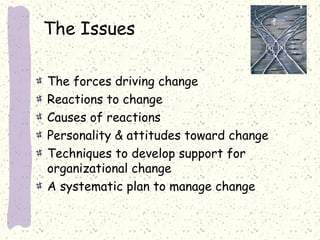
The Issues
The forces driving change
Reactions to change
Causes of reactions
Personality & attitudes toward change
Techniques to develop support for
organizational change
A systematic plan to manage change
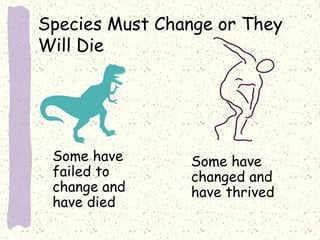
Species Must Change or They
Will Die

Some have
failed to
change and
have died

Some have
changed and
have thrived
Organizations, Too, Must
Change or Die
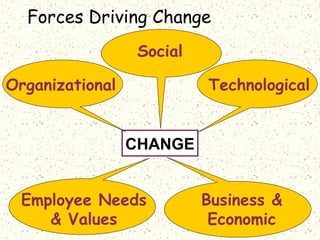
Forces Driving Change
Social
Organizational

Technological

CHANGE
Employee Needs
& Values

Business &
Economic
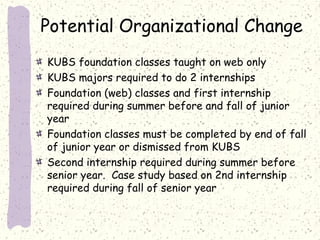
Potential Organizational Change
KUBS foundation classes taught on web only
KUBS majors required to do 2 internships
Foundation (web) classes and first internship
required during summer before and fall of junior
year
Foundation classes must be completed by end of fall
of junior year or dismissed from KUBS
Second internship required during summer before
senior year. Case study based on 2nd internship
required during fall of senior year
Team Activity
Describe Impending Change*
Nature of the change
Forces driving the change
Criteria to measure change success

*See Part I on Change Exercise Form
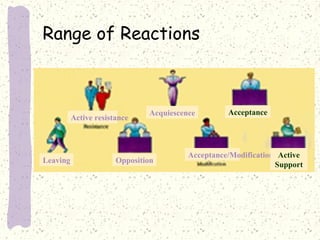
Range of Reactions

Active resistance

Leaving

Acquiescence

Opposition

Acceptance

Acceptance/Modification Active
Support
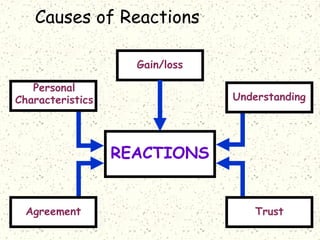
Causes of Reactions
Gain/loss
Personal
Characteristics

Understanding

REACTIONS

Agreement

Trust
Change Attitudes
Cognitive
The higher the score, the more a person
believes that change produces positive effects
for the individual, coworkers, and the
organization
Affective
The higher the score, the more a person looks
forward to change and enjoys it
Behavioral Tendency
The higher the score, the more a person tends
to initiate and/or support change
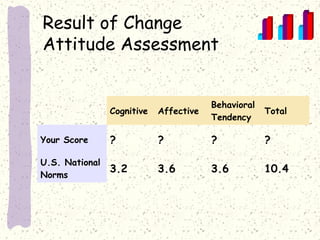
Result of Change
Attitude Assessment

Cognitive

Affective

Behavioral
Tendency

Your Score

?

?

?

?

U.S. National
Norms

3.2

3.6

3.6

10.4

Total
Personality & Change
Tolerance for Ambiguity
The higher the score, the better able a person
is to be comfortable with uncertainty
Dogmatism
The higher the score, the more rigid a person's
belief system (for example, they like to know
the rules and follow them and apply old solutions
to new problems)
Authoritarianism
The higher the score, the stronger a person's
belief that power and status should be clearly
defined and respected, and that there should be
a formal organizational hierarchy of authority
Cont.
Personality & Change

(Cont.)

Internal Locus of Control
The higher the score, the more a person
believes that his or her abilities and efforts
influence successes and failures
External Locus of Control
The higher the score, the more a person
believes that other people, circumstances, or
luck influence his or her successes and failures
Team Activity
Consider Stakeholders*
Identify important stakeholders
Using terminology from today’s class, describe the
expected reactions of each of the stakeholders
previously identified.
Be specific. If, for example, you identify a group
from which you expect active resistance, pinpoint
(if possible) the specific resistance behaviors
expected.
Using today’s terminology, identify the underlying
causes of the expected reactions.

*See Part II on Change Exercise Form
Techniques for Developing
Support and Reducing Resistance
Education and communication
Participation and involvement
Facilitative support
Emotional support
Incentives
Manipulation and co-optation
Coercion
Education & Communication
Information on the change
When the change will be introduced
How the change will be introduced
Why the change is necessary
Logic behind the change
Objectives that the change is expected
to accomplish

Strategy Issue: When/how to do
education & communication
Participation & Involvement
Help define need
Help define objectives
Help define change
Help define change process
Help lead change process
Participate in trials

Strategy Issue: When/how to do
participation & involvement
Facilitative Support
Time
Skills training
Funding
Consultation
Hardware
Software
Infrastructure
Other

Strategy Issue: When/how to do
facilitative support
Emotional Support
Information on common reactions
Reasonable goals
Expectation of and support for anxiety
Understanding
Formal programs (e.g., EAPs)

Strategy Issue: When/how to do
emotional support
Incentives and Rewards
Responsibility
Challenge
Growth opportunity
Visibility
Intrinsic rewards
Financial rewards
Recognition
Promotion

Strategy Issue: When/how to do
incentives & rewards
Manipulation & Co-optation
Manipulation of information provided to
make change look promising
False promises of support
Incentives that become bribes
Figurehead roles to co-opt resistance

Strategy Issue: When/how to do
manipulation & co-optation
Coercion
Support change
Support change
Support change
Support change

or
or
or
or

lose pay opportunities
lose job
not get promoted
be embarrassed

Strategy Issue: When/how to do
coercion
Team Activity
Plan for Developing
Support and Reducing
Resistance
Using today’s terminology, identify the actions you
recommend to develop the support needed (or to
reduce potentially dysfunctional resistance)
Explain why you feel each of these actions is
appropriate
Explain how each action will contribute toward
meeting effectiveness criteria

*See Parts III

& IV on Change Exercise Form
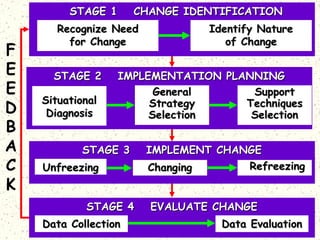
STAGE 1

F
E
E
D
B
A
C
K

CHANGE IDENTIFICATION

Recognize Need
for Change
STAGE 2
Situational
Diagnosis

Identify Nature
of Change

IMPLEMENTATION PLANNING
General
Support
Strategy
Techniques
Selection
Selection

STAGE 3
Unfreezing
STAGE 4
Data Collection

IMPLEMENT CHANGE
Refreezing
Changing
EVALUATE CHANGE
Data Evaluation
The Issues
The forces driving change
Reactions to change
Causes of reactions
Personality & attitudes toward change
Techniques to develop support for
organizational change
A systematic plan to manage change

12 change

  • 1.
  • 2.
    The Issues The forcesdriving change Reactions to change Causes of reactions Personality & attitudes toward change Techniques to develop support for organizational change A systematic plan to manage change
  • 3.
    Species Must Changeor They Will Die Some have failed to change and have died Some have changed and have thrived
  • 4.
  • 5.
  • 6.
    Potential Organizational Change KUBSfoundation classes taught on web only KUBS majors required to do 2 internships Foundation (web) classes and first internship required during summer before and fall of junior year Foundation classes must be completed by end of fall of junior year or dismissed from KUBS Second internship required during summer before senior year. Case study based on 2nd internship required during fall of senior year
  • 7.
    Team Activity Describe ImpendingChange* Nature of the change Forces driving the change Criteria to measure change success *See Part I on Change Exercise Form
  • 8.
    Range of Reactions Activeresistance Leaving Acquiescence Opposition Acceptance Acceptance/Modification Active Support
  • 9.
  • 10.
    Change Attitudes Cognitive The higherthe score, the more a person believes that change produces positive effects for the individual, coworkers, and the organization Affective The higher the score, the more a person looks forward to change and enjoys it Behavioral Tendency The higher the score, the more a person tends to initiate and/or support change
  • 11.
    Result of Change AttitudeAssessment Cognitive Affective Behavioral Tendency Your Score ? ? ? ? U.S. National Norms 3.2 3.6 3.6 10.4 Total
  • 12.
    Personality & Change Tolerancefor Ambiguity The higher the score, the better able a person is to be comfortable with uncertainty Dogmatism The higher the score, the more rigid a person's belief system (for example, they like to know the rules and follow them and apply old solutions to new problems) Authoritarianism The higher the score, the stronger a person's belief that power and status should be clearly defined and respected, and that there should be a formal organizational hierarchy of authority Cont.
  • 13.
    Personality & Change (Cont.) InternalLocus of Control The higher the score, the more a person believes that his or her abilities and efforts influence successes and failures External Locus of Control The higher the score, the more a person believes that other people, circumstances, or luck influence his or her successes and failures
  • 14.
    Team Activity Consider Stakeholders* Identifyimportant stakeholders Using terminology from today’s class, describe the expected reactions of each of the stakeholders previously identified. Be specific. If, for example, you identify a group from which you expect active resistance, pinpoint (if possible) the specific resistance behaviors expected. Using today’s terminology, identify the underlying causes of the expected reactions. *See Part II on Change Exercise Form
  • 15.
    Techniques for Developing Supportand Reducing Resistance Education and communication Participation and involvement Facilitative support Emotional support Incentives Manipulation and co-optation Coercion
  • 16.
    Education & Communication Informationon the change When the change will be introduced How the change will be introduced Why the change is necessary Logic behind the change Objectives that the change is expected to accomplish Strategy Issue: When/how to do education & communication
  • 17.
    Participation & Involvement Helpdefine need Help define objectives Help define change Help define change process Help lead change process Participate in trials Strategy Issue: When/how to do participation & involvement
  • 18.
  • 19.
    Emotional Support Information oncommon reactions Reasonable goals Expectation of and support for anxiety Understanding Formal programs (e.g., EAPs) Strategy Issue: When/how to do emotional support
  • 20.
    Incentives and Rewards Responsibility Challenge Growthopportunity Visibility Intrinsic rewards Financial rewards Recognition Promotion Strategy Issue: When/how to do incentives & rewards
  • 21.
    Manipulation & Co-optation Manipulationof information provided to make change look promising False promises of support Incentives that become bribes Figurehead roles to co-opt resistance Strategy Issue: When/how to do manipulation & co-optation
  • 22.
    Coercion Support change Support change Supportchange Support change or or or or lose pay opportunities lose job not get promoted be embarrassed Strategy Issue: When/how to do coercion
  • 23.
    Team Activity Plan forDeveloping Support and Reducing Resistance Using today’s terminology, identify the actions you recommend to develop the support needed (or to reduce potentially dysfunctional resistance) Explain why you feel each of these actions is appropriate Explain how each action will contribute toward meeting effectiveness criteria *See Parts III & IV on Change Exercise Form
  • 24.
    STAGE 1 F E E D B A C K CHANGE IDENTIFICATION RecognizeNeed for Change STAGE 2 Situational Diagnosis Identify Nature of Change IMPLEMENTATION PLANNING General Support Strategy Techniques Selection Selection STAGE 3 Unfreezing STAGE 4 Data Collection IMPLEMENT CHANGE Refreezing Changing EVALUATE CHANGE Data Evaluation
  • 25.
    The Issues The forcesdriving change Reactions to change Causes of reactions Personality & attitudes toward change Techniques to develop support for organizational change A systematic plan to manage change