09/04/2016
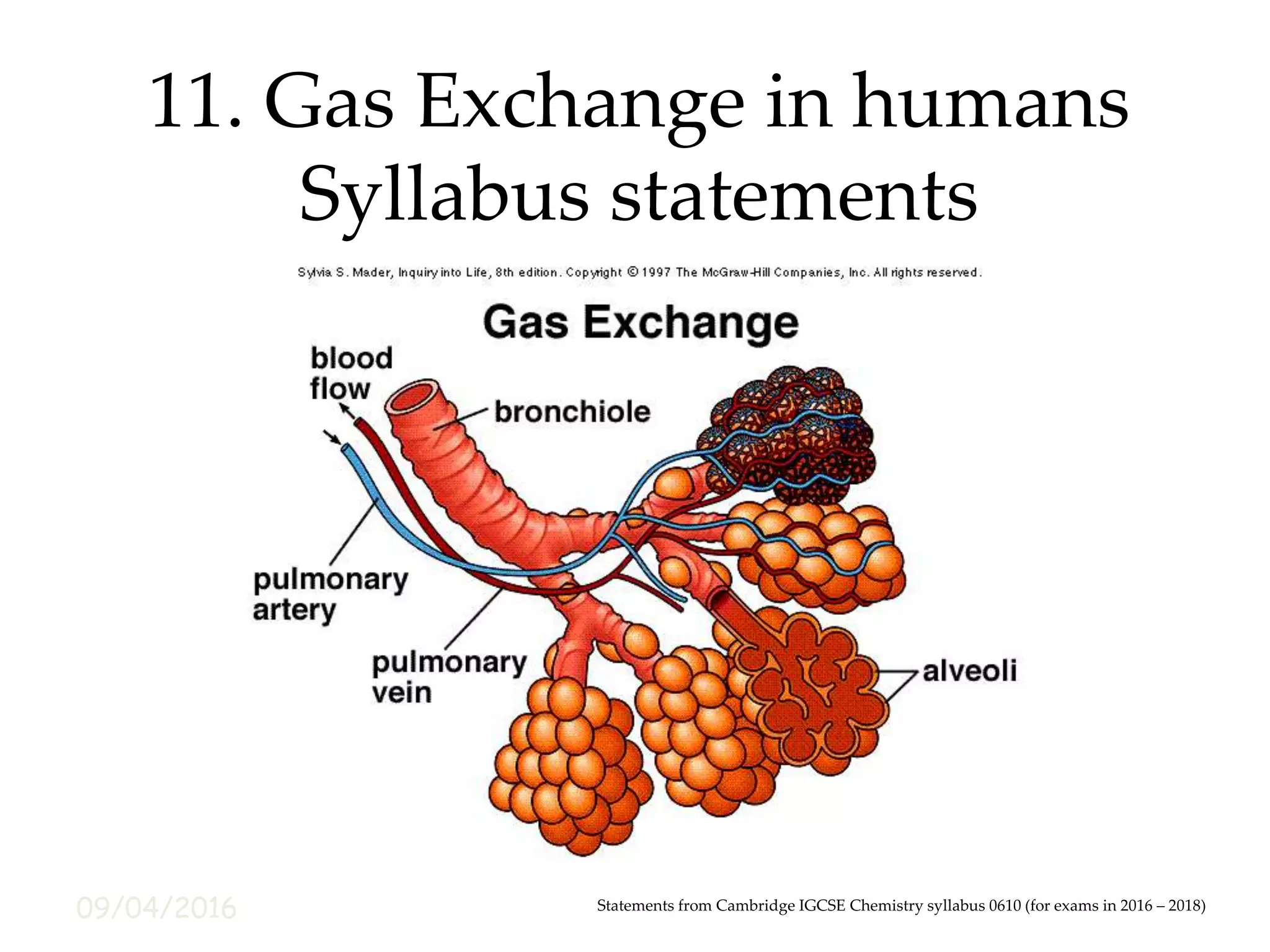
11. Gas Exchange in humans
Syllabus statements
Statements from Cambridge IGCSE Chemistry syllabus 0610 (for exams in 2016 – 2018)
Gas Exchange in humans
• List the features of gas exchange surfaces in
humans, limited to large surface area, thin surface,
good blood supply and good ventilation with air
• Name and identify the lungs, diaphragm, ribs,
intercostal muscles, larynx, trachea, bronchi,
bronchioles, alveoli and associated capillaries, and
the internal and external intercostal muscles
• State the functions of the cartilage in the trachea
Gas Exchange in humans
• Explain the role of the ribs, the internal & external
intercostal muscles and the diaphragm in
producing volume and pressure changes in the
thorax leading to the ventilation of the lungs
• State the differences in composition between
inspired and expired air (oxygen, carbon dioxide
and water vapour)
• Explain the differences in composition between
inspired and expired air
• Use limewater as a test for carbon dioxide to
investigate the differences in composition between
inspired and expired air
Gas Exchange in humans
• Investigate and describe the effects of physical
activity on rate and depth of breathing
• Explain the link between physical activity and rate
and depth of breathing in terms of the increased
carbon dioxide concentration in the blood,
detected by the brain, causing an increased rate of
breathing
• Explain the role of goblet cells, mucus and ciliated
cells in protecting the gas exchange system from
pathogens and particles

11 syllabus statements

  • 1.
    09/04/2016 11. Gas Exchangein humans Syllabus statements Statements from Cambridge IGCSE Chemistry syllabus 0610 (for exams in 2016 – 2018)
  • 2.
    Gas Exchange inhumans • List the features of gas exchange surfaces in humans, limited to large surface area, thin surface, good blood supply and good ventilation with air • Name and identify the lungs, diaphragm, ribs, intercostal muscles, larynx, trachea, bronchi, bronchioles, alveoli and associated capillaries, and the internal and external intercostal muscles • State the functions of the cartilage in the trachea
  • 3.
    Gas Exchange inhumans • Explain the role of the ribs, the internal & external intercostal muscles and the diaphragm in producing volume and pressure changes in the thorax leading to the ventilation of the lungs • State the differences in composition between inspired and expired air (oxygen, carbon dioxide and water vapour) • Explain the differences in composition between inspired and expired air • Use limewater as a test for carbon dioxide to investigate the differences in composition between inspired and expired air
  • 4.
    Gas Exchange inhumans • Investigate and describe the effects of physical activity on rate and depth of breathing • Explain the link between physical activity and rate and depth of breathing in terms of the increased carbon dioxide concentration in the blood, detected by the brain, causing an increased rate of breathing • Explain the role of goblet cells, mucus and ciliated cells in protecting the gas exchange system from pathogens and particles