Phylum Echinodermata
General Characteristics

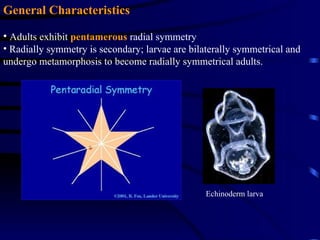
• Adults exhibit pentamerous radial symmetry
• Radially symmetry is secondary; larvae are bilaterally symmetrical and
undergo metamorphosis to become radially symmetrical adults.


                                                 Echinoderm larva
General Characteristics cont.

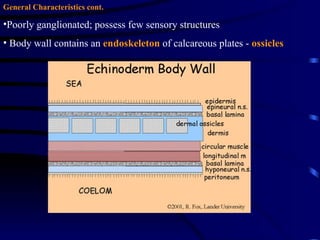
•Poorly ganglionated; possess few sensory structures
• Body wall contains an endoskeleton of calcareous plates - ossicles
General Characteristics cont.
• Possess a network of canals throughout the body - water vascular
system.
• The canals are connected to extensions called tube feet (=podia),
located on the oral surface
• The water vascular system is important for locomotion, feeding, and
gas exchange.


• Sexes are separate; gametes shed into the water; fertilization is external
Echinoderm Diversity
Class Asteroidea

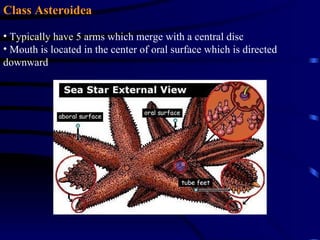
• Typically have 5 arms which merge with a central disc
• Mouth is located in the center of oral surface which is directed
downward
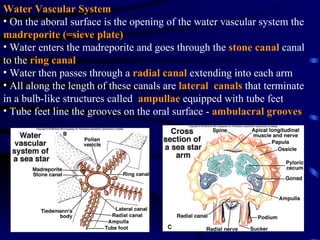
Water Vascular System
• On the aboral surface is the opening of the water vascular system the
madreporite (=sieve plate)
• Water enters the madreporite and goes through the stone canal canal
to the ring canal
• Water then passes through a radial canal extending into each arm
• All along the length of these canals are lateral canals that terminate
in a bulb-like structures called ampullae equipped with tube feet
• Tube feet line the grooves on the oral surface - ambulacral grooves
How the Podia Operate

• Ampulla contract and force fluid into the podia causing it to
become extended
• Suckers at the tips of the podia come into contact with the substrate
and adhere to the surface
• Then the podia contract, thereby forcing water back into the
ampulla, and the body is pulled forward
Nutrition


• Mouth leads to a 2-part
stomach: a large cardiac
stomach and a smaller
pyloric stomach
• The pyloric stomach
connects with digestive
glands (=pyloric cecae) that
runs into each arm


• A short intestine extends from from the pyloric stomach to an anus on
the aboral surface
• Associated with the intestine are rectal cecae that pump the fecal
wastes out of the anus
Additional Characteristics

• The endoskelton is made up of calcareous plates that often penetrate
the dermis as spines
• Between the spines and plates are projections called papulae, which
function in gas exchange and excretion
• Other projections on the body wall include tiny jaw-like appendages
called pedicellaria
Class Echinoidea

• Lack arms
• Body is enclosed in a shell or test
• Body surface is usually covered with moveable spines
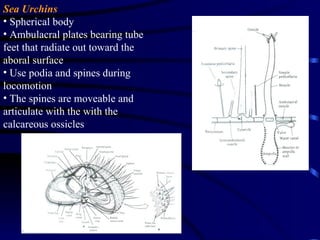
Sea Urchins
• Spherical body
• Ambulacral plates bearing tube
feet that radiate out toward the
aboral surface
• Use podia and spines during
locomotion
• The spines are moveable and
articulate with the with the
calcareous ossicles
• Sea urchins generally feed by scraping algae off of rocks
• Accomplished via a complex chewing apparatus called
Aristotle's lantern
Class Holothuroidea

• Lack arms
• Oral-aboral axis is greatly extended
• Endoskeleton is reduced to a few ossicles
scattered over the surface of the animal
making them rather soft bodied
• Some species crawl along the substrate
using podia; others have peristaltic
locomotion via muscle contractions


    Dermal ossicles
• At the oral end of the body are a group of tentacles (modified
podia) that surround the mouth; used in feeding
• Have a muscular cloaca that is partly used in gas exchange
• The actual gas exchange structures are branching structures called
respiratory trees
Class Crinoidea
• Most primitive of the echinoderms
• Unusual in that the oral surface is
directed upward
• Aboral surface is attached to the
substrate by means of a bendable
stalk
• The portion of the crinoid body
attached to the stalk is called the
crown; bears a number of arms
• Along the length of the arms are
branches called pinnules
• The arms and the pinnules have
ambulacral grooves with suckerless
podia (secrete mucus)
• The ambulacral grooves are heavily
ciliated and the cilia is used to direct
food to the mouth (=filter feeding)

11 echinodermata

  • 1.
  • 2.
    General Characteristics • Adultsexhibit pentamerous radial symmetry • Radially symmetry is secondary; larvae are bilaterally symmetrical and undergo metamorphosis to become radially symmetrical adults. Echinoderm larva
  • 3.
    General Characteristics cont. •Poorlyganglionated; possess few sensory structures • Body wall contains an endoskeleton of calcareous plates - ossicles
  • 4.
    General Characteristics cont. •Possess a network of canals throughout the body - water vascular system. • The canals are connected to extensions called tube feet (=podia), located on the oral surface • The water vascular system is important for locomotion, feeding, and gas exchange. • Sexes are separate; gametes shed into the water; fertilization is external
  • 5.
  • 6.
    Class Asteroidea • Typicallyhave 5 arms which merge with a central disc • Mouth is located in the center of oral surface which is directed downward
  • 7.
    Water Vascular System •On the aboral surface is the opening of the water vascular system the madreporite (=sieve plate) • Water enters the madreporite and goes through the stone canal canal to the ring canal • Water then passes through a radial canal extending into each arm • All along the length of these canals are lateral canals that terminate in a bulb-like structures called ampullae equipped with tube feet • Tube feet line the grooves on the oral surface - ambulacral grooves
  • 8.
    How the PodiaOperate • Ampulla contract and force fluid into the podia causing it to become extended • Suckers at the tips of the podia come into contact with the substrate and adhere to the surface • Then the podia contract, thereby forcing water back into the ampulla, and the body is pulled forward
  • 9.
    Nutrition • Mouth leadsto a 2-part stomach: a large cardiac stomach and a smaller pyloric stomach • The pyloric stomach connects with digestive glands (=pyloric cecae) that runs into each arm • A short intestine extends from from the pyloric stomach to an anus on the aboral surface • Associated with the intestine are rectal cecae that pump the fecal wastes out of the anus
  • 10.
    Additional Characteristics • Theendoskelton is made up of calcareous plates that often penetrate the dermis as spines • Between the spines and plates are projections called papulae, which function in gas exchange and excretion • Other projections on the body wall include tiny jaw-like appendages called pedicellaria
  • 11.
    Class Echinoidea • Lackarms • Body is enclosed in a shell or test • Body surface is usually covered with moveable spines
  • 12.
    Sea Urchins • Sphericalbody • Ambulacral plates bearing tube feet that radiate out toward the aboral surface • Use podia and spines during locomotion • The spines are moveable and articulate with the with the calcareous ossicles
  • 13.
    • Sea urchinsgenerally feed by scraping algae off of rocks • Accomplished via a complex chewing apparatus called Aristotle's lantern
  • 14.
    Class Holothuroidea • Lackarms • Oral-aboral axis is greatly extended • Endoskeleton is reduced to a few ossicles scattered over the surface of the animal making them rather soft bodied • Some species crawl along the substrate using podia; others have peristaltic locomotion via muscle contractions Dermal ossicles
  • 15.
    • At theoral end of the body are a group of tentacles (modified podia) that surround the mouth; used in feeding • Have a muscular cloaca that is partly used in gas exchange • The actual gas exchange structures are branching structures called respiratory trees
  • 16.
    Class Crinoidea • Mostprimitive of the echinoderms • Unusual in that the oral surface is directed upward • Aboral surface is attached to the substrate by means of a bendable stalk • The portion of the crinoid body attached to the stalk is called the crown; bears a number of arms • Along the length of the arms are branches called pinnules • The arms and the pinnules have ambulacral grooves with suckerless podia (secrete mucus) • The ambulacral grooves are heavily ciliated and the cilia is used to direct food to the mouth (=filter feeding)