Native Roots of American
        Identity
  US Culture and the Iroquois
Founding Fathers: Choosing to be
            Romans
• Regular ongoing contact between
  Haudenosaunee and Colonists (Grinde)
  – Protecting Private Property was Founding
    Father’s big concern
• Two antithetical strands of American
  culture (Venables):
  – 1)Emphasis on private, rather than communal,
    property
  – 2)Liberty became identified with the noble
    image of the Indian
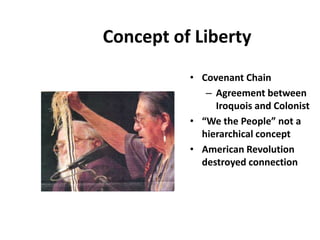
Concept of Liberty
          • Covenant Chain
             – Agreement between
               Iroquois and Colonist
          • “We the People” not a
            hierarchical concept
          • American Revolution
            destroyed connection
Americans as Indians
• Benjamin Franklin wrote extensively about
  the Haudenosaunee Longhouse system
• Mohawk “Kings” in England
• “Sons of Liberty” dumped tea in Boston
  Harbor dressed as Mohawks
Cultural Conflict
• ”Given the conflicting impulses of life
  and liberty on the one hand and property
  on the other, it is not surprising that at
  one moment the Founding Fathers could
  extol the virtues of the savage state--life
  and liberty--and at the next moment
  move to establish an executive branch;
  checks; balances; and separations of
  powers which would insure the survival
  of property--prosperity.”(93)
• Quotes pp 98-99
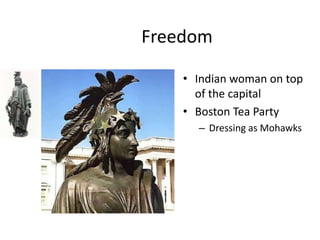
Freedom

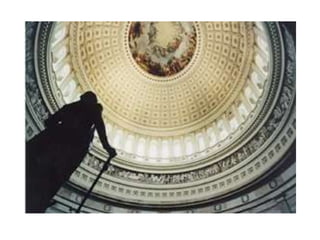
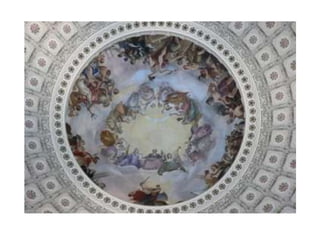
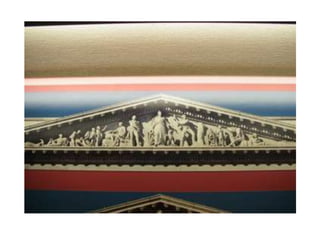
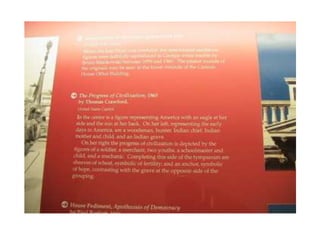
    • Indian woman on top
      of the capital
    • Boston Tea Party
      – Dressing as Mohawks
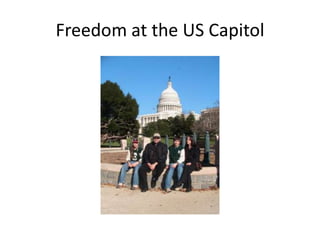
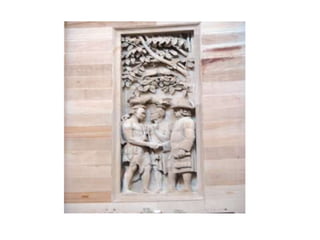
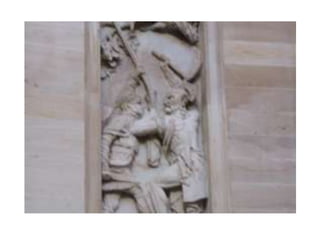
Freedom at the US Capitol
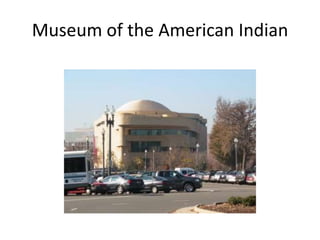
Museum of the American Indian
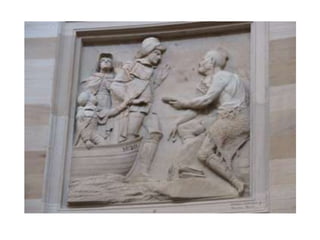
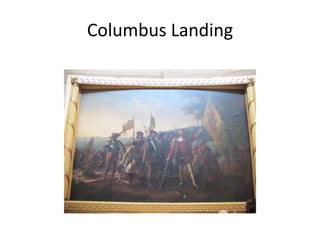
Columbus Landing
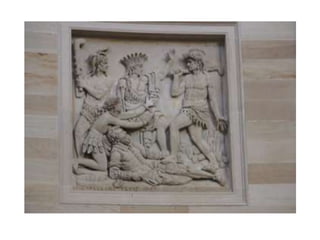
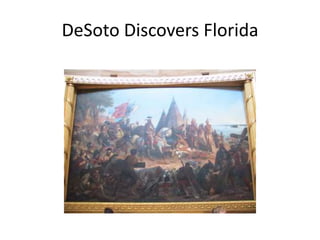
DeSoto Discovers Florida
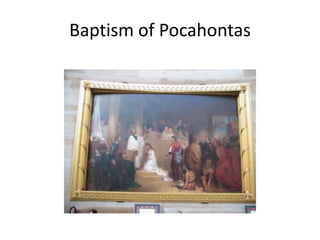
Baptism of Pocahontas
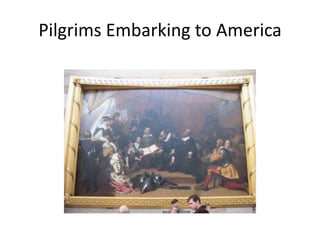
Pilgrims Embarking to America
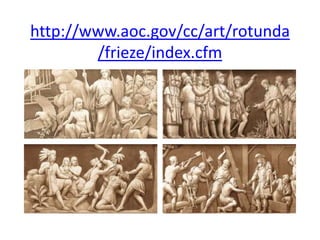
http://www.aoc.gov/cc/art/rotunda
        /frieze/index.cfm
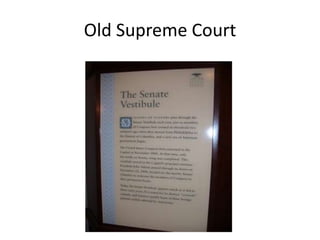
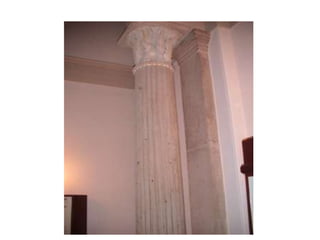
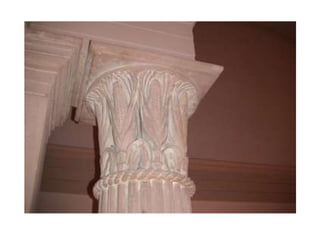
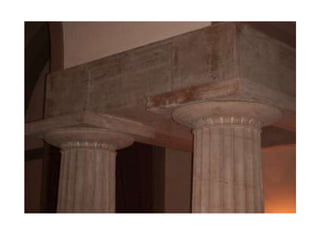
Old Supreme Court
Women as the Center of
  Community Life
Iroquois influence on the Women’s
       movement in the US
Iroquois Influence on Women’s
         Movement in the US
• Matilda Joslyn Gage (1826-1898)
  – With Elizabeth Cady Stanton and Susan B.
    Anthony, Gage forms the “triumvirate” of leaders
  – Author with Anthony of History of Woman
    Suffrage
  – Forgotten by the end of the 19th century
     • Why?
Women and Property
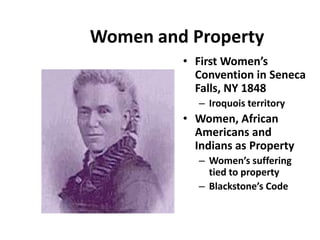
         • First Women’s
           Convention in Seneca
           Falls, NY 1848
            – Iroquois territory
         • Women, African
           Americans and
           Indians as Property
            – Women’s suffering
              tied to property
            – Blackstone’s Code
Gage’s Activism

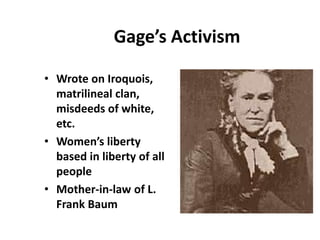
• Wrote on Iroquois,
  matrilineal clan,
  misdeeds of white,
  etc.
• Women’s liberty
  based in liberty of all
  people
• Mother-in-law of L.
  Frank Baum
Sally Roesch Wagner
• "It comes as no surprise then, that when reformers
  like Matilda Joslyn Gage looked outside of their
  culture for a model upon which to base their vision
  of an egalitarian world, they quickly found their well-
  known Indian neighbors."[121]
• Gage Foundation in Fayetteville, NY
   – http://www.pinn.net/~sunshine/gage/mjg.html
   – New vision of feminism
   – Sisters In Spirit
Women Providers
• Haudenosaunee women were farmers
  – Scandalous for Europeans
  – Tilled all crops in “slash & burn” fields
  – Extensive knowledge of plants, wild and domestic
Three Sisters
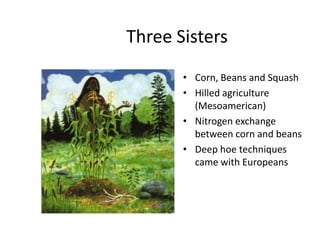
       • Corn, Beans and Squash
       • Hilled agriculture
         (Mesoamerican)
       • Nitrogen exchange
         between corn and beans
       • Deep hoe techniques
         came with Europeans
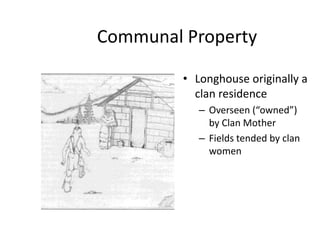
Communal Property

         • Longhouse originally a
           clan residence
            – Overseen (“owned”)
              by Clan Mother
            – Fields tended by clan
              women
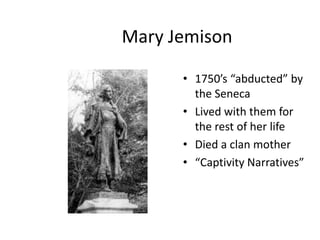
Mary Jemison

      • 1750’s “abducted” by
        the Seneca
      • Lived with them for
        the rest of her life
      • Died a clan mother
      • “Captivity Narratives”
Balance of Life
• Women responsible for life “in” the earth
  (agriculture)
• Men responsible for life “on” the earth
  (hunting)
• Connected to sexual roles
• Allotment Act (1870’s) shifted balance to
  women in the home and men in the fields
Succotash
• Corn Soup
• Mixture of corn, beans and venison (now “salt
  pork”)
• Washed corn, white corn, flint corn, Indian
  corn
  – Cooked several days in wood ash
Haudenosaunee Women and Politics
• Clan Mothers choose male clan “chiefs”
  – Iroquois word is “good mind”
  – Chiefs are “horned” given deer antler “gustoweh,”
    head-dress
  – If they misbehave they can be “dehorned” by the
    clan mother
Role of Haudenosaunee Women
•   Direct the men from behind
•   Chiefs council with clan mothers
•   All decisions are made only by consensus
•   Women make the decision to go to war
    – They are responsible for children who will suffer
Clan Chiefs & Mothers

Oversee ceremonies
In Longhouse no distinction between
  “religious” “political” “economic” “familial”
Make certain the cycles of life continue to the
  Seventh Generation
  Decisions made now effect people long into
  the future
European Fiction of Control
• Men in control of their homes used force (rape and
  violence)
   – Legacy of a patrilineal system of inheritance and property
     rights
• Men in clan house had to behave, used force in
  hunting and diplomacy
   – Legacy of matrilineal system of communal property
• Distinctive “religious” views of Mother
What is Haudenousaunee “religion?”
• Connection and exchanges with a living earth
• Duties and responsibilities of women and men
  to Creation
• Continuing the ceremonial cycle of
  Thanksgivings
Haudenosaunee and the US

   Sullivan-Clinton Campaign
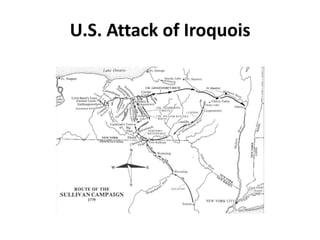
Washington to Major General John
     Sullivan, 31 May 1779
“The expedition you are appointed to
command is to be directed against the hostile
tribes of the Six Nations of Indians [i.e., the
Haudenosaunee] with their associates and
adherents. The immediate objects are total
destruction and devastation of their
settlements and the capture of as many
prisoners of every sex and age as possible. It
will be essential to ruin their crops in the
ground and prevent their planting more.”
U.S. Attack of Iroquois
Consequences of the
             Sullivan Campaign
•   Land laid to waste
•   160,000 bushels of corn destroyed
•   43 Haudenosaunee towns burned
•   Winter of 1779-80 was very hard
    – Starvation and homelessness
• Honnahdahguyuss
    – ”Destroyer of Villages”
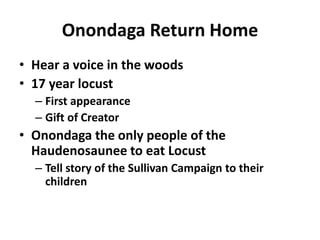
Onondaga Return Home
• Hear a voice in the woods
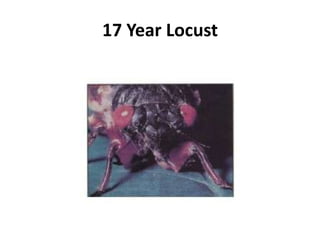
• 17 year locust
  – First appearance
  – Gift of Creator
• Onondaga the only people of the
  Haudenosaunee to eat Locust
  – Tell story of the Sullivan Campaign to their
    children
17 Year Locust
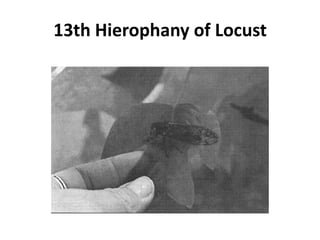
13th Hierophany of Locust
Contentious Views of Creation
• Haudenosaunee            • Americans
  – Immanence of the         – Transcendence of the
    Sacred                     Sacred (otiosus)
  – Earth as an animate      – Earth as an inanimate
    being                      thing
  – People co-habit with     – People alone are above
    other beings               other beings
  – Emphasis on Creation     – Emphasis on the End of
                               Time
GEORGE WASHINGTON’S
WAMPUM BELT AND THE
 CANANDAIGUA TREATY
    11 November 1794
Commemorated every year on
       November 11
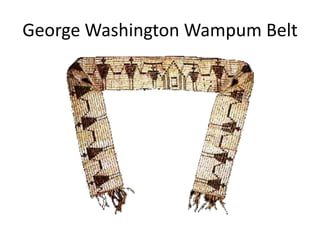
George Washington Wampum Belt
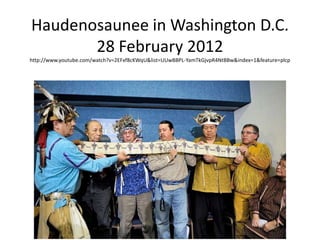
Haudenosaunee in Washington D.C.
       28 February 2012
http://www.youtube.com/watch?v=2EFxf8cKWqU&list=UUwBBPL-YamTkGjvpR4NtBBw&index=1&feature=plcp

11 5-12-rel142

  • 1.
    Native Roots ofAmerican Identity US Culture and the Iroquois
  • 2.
    Founding Fathers: Choosingto be Romans • Regular ongoing contact between Haudenosaunee and Colonists (Grinde) – Protecting Private Property was Founding Father’s big concern • Two antithetical strands of American culture (Venables): – 1)Emphasis on private, rather than communal, property – 2)Liberty became identified with the noble image of the Indian
  • 3.
    Concept of Liberty • Covenant Chain – Agreement between Iroquois and Colonist • “We the People” not a hierarchical concept • American Revolution destroyed connection
  • 4.
    Americans as Indians •Benjamin Franklin wrote extensively about the Haudenosaunee Longhouse system • Mohawk “Kings” in England • “Sons of Liberty” dumped tea in Boston Harbor dressed as Mohawks
  • 5.
    Cultural Conflict • ”Giventhe conflicting impulses of life and liberty on the one hand and property on the other, it is not surprising that at one moment the Founding Fathers could extol the virtues of the savage state--life and liberty--and at the next moment move to establish an executive branch; checks; balances; and separations of powers which would insure the survival of property--prosperity.”(93) • Quotes pp 98-99
  • 6.
    Freedom • Indian woman on top of the capital • Boston Tea Party – Dressing as Mohawks
  • 7.
    Freedom at theUS Capitol
  • 8.
    Museum of theAmerican Indian
  • 14.
  • 15.
  • 16.
  • 17.
  • 18.
  • 21.
  • 28.
    Women as theCenter of Community Life Iroquois influence on the Women’s movement in the US
  • 29.
    Iroquois Influence onWomen’s Movement in the US • Matilda Joslyn Gage (1826-1898) – With Elizabeth Cady Stanton and Susan B. Anthony, Gage forms the “triumvirate” of leaders – Author with Anthony of History of Woman Suffrage – Forgotten by the end of the 19th century • Why?
  • 30.
    Women and Property • First Women’s Convention in Seneca Falls, NY 1848 – Iroquois territory • Women, African Americans and Indians as Property – Women’s suffering tied to property – Blackstone’s Code
  • 31.
    Gage’s Activism • Wroteon Iroquois, matrilineal clan, misdeeds of white, etc. • Women’s liberty based in liberty of all people • Mother-in-law of L. Frank Baum
  • 32.
    Sally Roesch Wagner •"It comes as no surprise then, that when reformers like Matilda Joslyn Gage looked outside of their culture for a model upon which to base their vision of an egalitarian world, they quickly found their well- known Indian neighbors."[121] • Gage Foundation in Fayetteville, NY – http://www.pinn.net/~sunshine/gage/mjg.html – New vision of feminism – Sisters In Spirit
  • 33.
    Women Providers • Haudenosauneewomen were farmers – Scandalous for Europeans – Tilled all crops in “slash & burn” fields – Extensive knowledge of plants, wild and domestic
  • 34.
    Three Sisters • Corn, Beans and Squash • Hilled agriculture (Mesoamerican) • Nitrogen exchange between corn and beans • Deep hoe techniques came with Europeans
  • 35.
    Communal Property • Longhouse originally a clan residence – Overseen (“owned”) by Clan Mother – Fields tended by clan women
  • 36.
    Mary Jemison • 1750’s “abducted” by the Seneca • Lived with them for the rest of her life • Died a clan mother • “Captivity Narratives”
  • 37.
    Balance of Life •Women responsible for life “in” the earth (agriculture) • Men responsible for life “on” the earth (hunting) • Connected to sexual roles • Allotment Act (1870’s) shifted balance to women in the home and men in the fields
  • 38.
    Succotash • Corn Soup •Mixture of corn, beans and venison (now “salt pork”) • Washed corn, white corn, flint corn, Indian corn – Cooked several days in wood ash
  • 39.
    Haudenosaunee Women andPolitics • Clan Mothers choose male clan “chiefs” – Iroquois word is “good mind” – Chiefs are “horned” given deer antler “gustoweh,” head-dress – If they misbehave they can be “dehorned” by the clan mother
  • 40.
    Role of HaudenosauneeWomen • Direct the men from behind • Chiefs council with clan mothers • All decisions are made only by consensus • Women make the decision to go to war – They are responsible for children who will suffer
  • 41.
    Clan Chiefs &Mothers Oversee ceremonies In Longhouse no distinction between “religious” “political” “economic” “familial” Make certain the cycles of life continue to the Seventh Generation Decisions made now effect people long into the future
  • 42.
    European Fiction ofControl • Men in control of their homes used force (rape and violence) – Legacy of a patrilineal system of inheritance and property rights • Men in clan house had to behave, used force in hunting and diplomacy – Legacy of matrilineal system of communal property • Distinctive “religious” views of Mother
  • 43.
    What is Haudenousaunee“religion?” • Connection and exchanges with a living earth • Duties and responsibilities of women and men to Creation • Continuing the ceremonial cycle of Thanksgivings
  • 44.
    Haudenosaunee and theUS Sullivan-Clinton Campaign
  • 45.
    Washington to MajorGeneral John Sullivan, 31 May 1779 “The expedition you are appointed to command is to be directed against the hostile tribes of the Six Nations of Indians [i.e., the Haudenosaunee] with their associates and adherents. The immediate objects are total destruction and devastation of their settlements and the capture of as many prisoners of every sex and age as possible. It will be essential to ruin their crops in the ground and prevent their planting more.”
  • 46.
  • 47.
    Consequences of the Sullivan Campaign • Land laid to waste • 160,000 bushels of corn destroyed • 43 Haudenosaunee towns burned • Winter of 1779-80 was very hard – Starvation and homelessness • Honnahdahguyuss – ”Destroyer of Villages”
  • 48.
    Onondaga Return Home •Hear a voice in the woods • 17 year locust – First appearance – Gift of Creator • Onondaga the only people of the Haudenosaunee to eat Locust – Tell story of the Sullivan Campaign to their children
  • 49.
  • 50.
  • 51.
    Contentious Views ofCreation • Haudenosaunee • Americans – Immanence of the – Transcendence of the Sacred Sacred (otiosus) – Earth as an animate – Earth as an inanimate being thing – People co-habit with – People alone are above other beings other beings – Emphasis on Creation – Emphasis on the End of Time
  • 52.
    GEORGE WASHINGTON’S WAMPUM BELTAND THE CANANDAIGUA TREATY 11 November 1794 Commemorated every year on November 11
  • 53.
  • 54.
    Haudenosaunee in WashingtonD.C. 28 February 2012 http://www.youtube.com/watch?v=2EFxf8cKWqU&list=UUwBBPL-YamTkGjvpR4NtBBw&index=1&feature=plcp