America
In THE 1950s
Prosperity & Conformity
U.S. History
Chapter 23
#21
Assignment
1. Critical Thinking p. 809 Q. 1&2
2. Ch 23 Assessment p. 817-819 Q. 1-20

1. A - Closed Shop
Handwritten Due - Tuesday

Quiz
40 pts – Tuesday
Key Terms & People
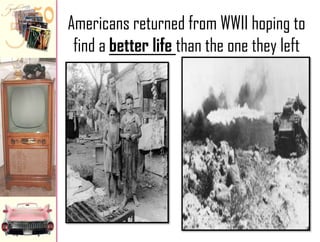
Americans returned from WWII hoping to
find a better life than the one they left
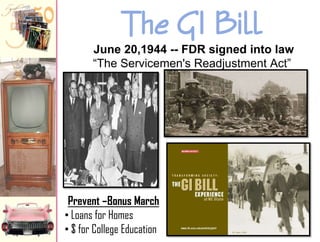
The GI Bill
June 20,1944 -- FDR signed into law
“The Servicemen's Readjustment Act”

Prevent –Bonus March
• Loans for Homes
• $ for College Education
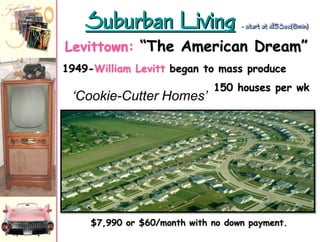
Suburban Living

- start at 45Sec(8min)

Levittown: “The American Dream”
1949-William Levitt began to mass produce

‘Cookie-Cutter Homes’

150 houses per wk

$7,990 or $60/month with no down payment.
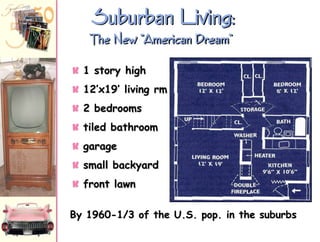
Suburban Living:
The New “American Dream”
k 1 story high
k 12‟x19‟ living rm
k 2 bedrooms

k tiled bathroom
k garage
k small backyard
k front lawn

By 1960-1/3 of the U.S. pop. in the suburbs
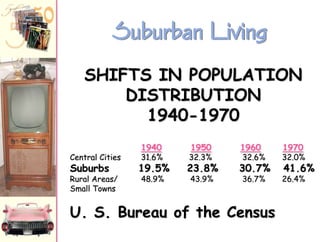
Suburban Living
SHIFTS IN POPULATION
DISTRIBUTION
1940-1970
Central Cities

Suburbs

Rural Areas/
Small Towns

1940

31.6%

19.5%
48.9%

1950

32.3%

23.8%
43.9%

1960

1970

32.6%

32.0%

36.7%

26.4%

30.7%

U. S. Bureau of the Census

41.6%
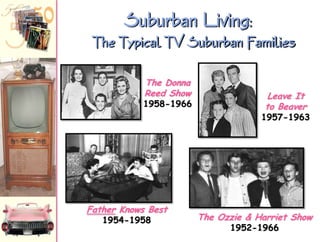
Suburban Living:
The Typical TV Suburban Families
The Donna
Reed Show

1958-1966

Leave It
to Beaver

1957-1963

Father Knows Best
1954-1958

The Ozzie & Harriet Show
1952-1966
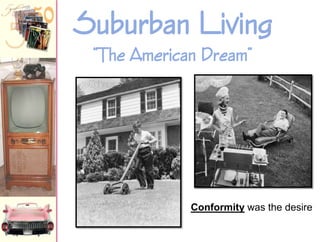
Suburban Living
“The American Dream”

Conformity was the desire
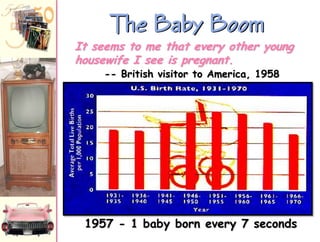
The Baby Boom
It seems to me that every other young
housewife I see is pregnant.
-- British visitor to America, 1958

1957 - 1 baby born every 7 seconds
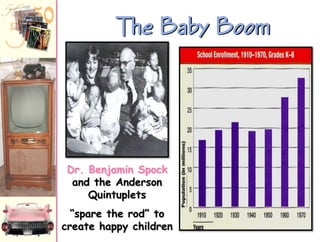
The Baby Boom

Dr. Benjamin Spock
and the Anderson
Quintuplets
“spare the rod” to
create happy children
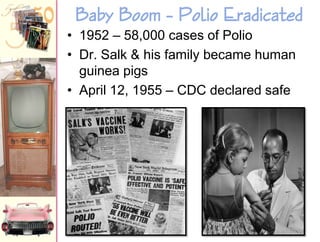
Baby Boom – Polio Eradicated
• 1952 – 58,000 cases of Polio
• Dr. Salk & his family became human
guinea pigs
• April 12, 1955 – CDC declared safe
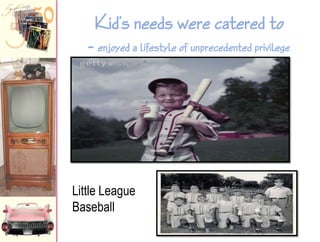
Kid’s needs were catered to

- enjoyed a lifestyle of unprecedented privilege

Little League
Baseball
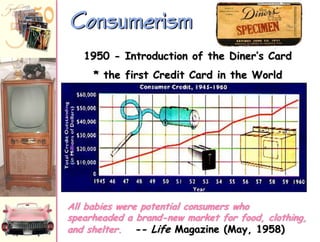
Consumerism
1950 - Introduction of the Diner‟s Card

* the first Credit Card in the World

All babies were potential consumers who
spearheaded a brand-new market for food, clothing,
and shelter. -- Life Magazine (May, 1958)
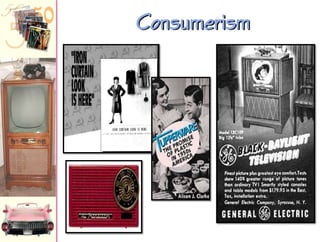
Consumerism
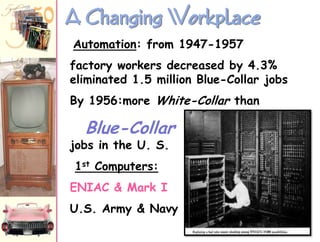
A Changing Workplace
Automation: from 1947-1957
factory workers decreased by 4.3%
eliminated 1.5 million Blue-Collar jobs
By 1956:more White-Collar than

Blue-Collar

jobs in the U. S.
1st Computers:

ENIAC & Mark I
U.S. Army & Navy
Women in the Workforce
• After WWII – Women were
encouraged to:
“Go back Home”
“Give your Job to a Vet”
• Women stayed in the workforce,
but in more traditional roles
- low pay
- faced discrimination for talents
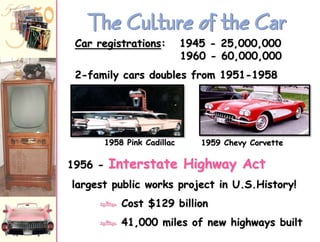
The Culture of the Car
Car registrations:

1945 - 25,000,000
1960 - 60,000,000

2-family cars doubles from 1951-1958

1958 Pink Cadillac

1956 -

1959 Chevy Corvette

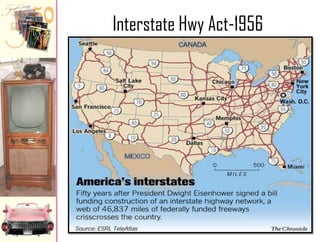
Interstate Highway Act

largest public works project in U.S.History!

Å Cost $129 billion
Å 41,000 miles of new highways built
Interstate Hwy Act-1956
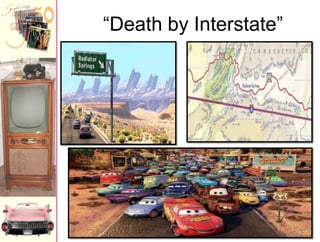
“Death by Interstate”
The Culture of the Car
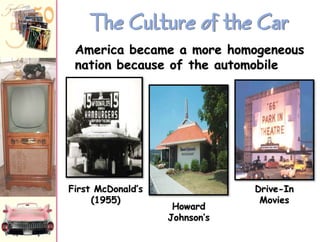
America became a more homogeneous
nation because of the automobile

First McDonald‟s
(1955)

Howard
Johnson‟s

Drive-In
Movies
The Culture of the Car
The U. S. pop. was on the move in the 1950‟s

“Sunbelt” states - southwest
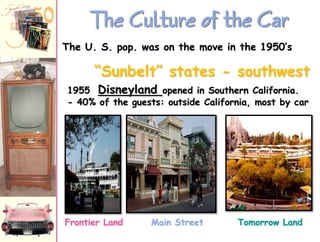
1955 Disneyland opened in Southern California.
- 40% of the guests: outside California, most by car

Frontier Land

Main Street

Tomorrow Land
Television
1946 - 7,000 TV sets in America
1950 - 50,000,000 TV sets in Am.
“Television is a vast wasteland”

Newton Minnow, Chairman of the FCC -1961
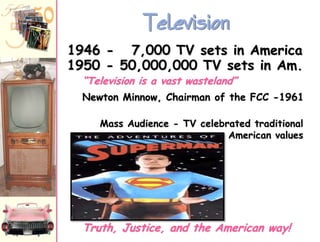
Mass Audience - TV celebrated traditional
American values

Truth, Justice, and the American way!
Television - Family Shows
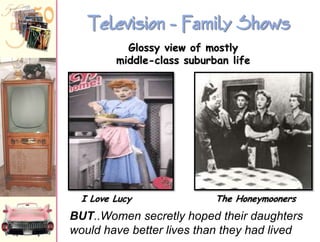
Glossy view of mostly
middle-class suburban life

I Love Lucy

The Honeymooners

BUT..Women secretly hoped their daughters
would have better lives than they had lived
Women’s talents were
put down
Gimbel’s Department store ad in 1952
Riddle – What’s College?

"That's where girls who are
above cooking and sewing go
to meet a man so they can
spend their lives cooking and
sewing."
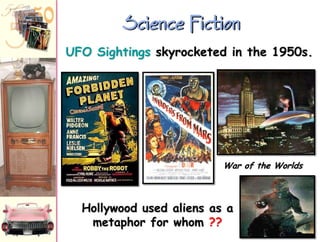
Science Fiction
UFO Sightings skyrocketed in the 1950s.

War of the Worlds

Hollywood used aliens as a
metaphor for whom ??
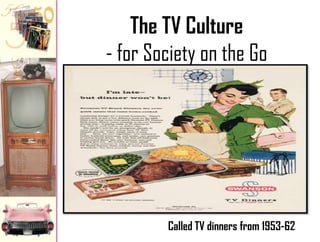
The TV Culture
- for Society on the Go

Called TV dinners from 1953-62
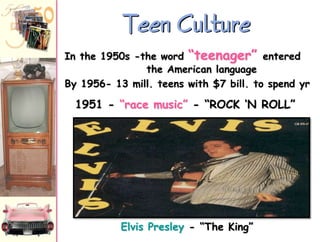
Teen Culture
In the 1950s -the word “teenager” entered
the American language
By 1956- 13 mill. teens with $7 bill. to spend yr

1951 - “race music” - “ROCK „N ROLL”

Elvis Presley - “The King”
Teen Culture
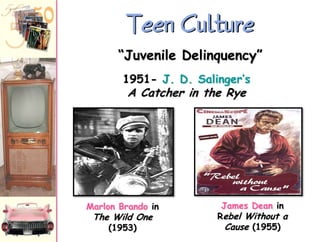
“Juvenile Delinquency”
1951- J. D. Salinger‟s

A Catcher in the Rye

Marlon Brando in

The Wild One
(1953)

James Dean in
Rebel Without a
Cause (1955)
Teen Culture
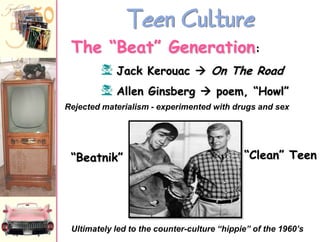
The “Beat” Generation:
f Jack Kerouac  On The Road
f Allen Ginsberg  poem, “Howl”
Rejected materialism - experimented with drugs and sex

“Beatnik”

“Clean” Teen

Ultimately led to the counter-culture “hippie” of the 1960’s
Religious Revival
Today in the U. S., the Christian faith is back in
the center of things. -- Time magazine, 1954

Church membership: 1940 -

64,000,000
1960 - 114,000,000

Television Preachers:
1. Catholic

Bishop Fulton J. Sheen
“Life is Worth Living”

2. Methodist Minister

Norman Vincent Peale

The Power of Positive Thinking

3.

Rev. Billy Graham

- ecumenical message;
warned against the evils of Communism

1950s americanculture[1]

  • 1.
    America In THE 1950s Prosperity& Conformity U.S. History Chapter 23 #21
  • 2.
    Assignment 1. Critical Thinkingp. 809 Q. 1&2 2. Ch 23 Assessment p. 817-819 Q. 1-20 1. A - Closed Shop Handwritten Due - Tuesday Quiz 40 pts – Tuesday Key Terms & People
  • 3.
    Americans returned fromWWII hoping to find a better life than the one they left
  • 4.
    The GI Bill June20,1944 -- FDR signed into law “The Servicemen's Readjustment Act” Prevent –Bonus March • Loans for Homes • $ for College Education
  • 5.
    Suburban Living - startat 45Sec(8min) Levittown: “The American Dream” 1949-William Levitt began to mass produce ‘Cookie-Cutter Homes’ 150 houses per wk $7,990 or $60/month with no down payment.
  • 6.
    Suburban Living: The New“American Dream” k 1 story high k 12‟x19‟ living rm k 2 bedrooms k tiled bathroom k garage k small backyard k front lawn By 1960-1/3 of the U.S. pop. in the suburbs
  • 7.
    Suburban Living SHIFTS INPOPULATION DISTRIBUTION 1940-1970 Central Cities Suburbs Rural Areas/ Small Towns 1940 31.6% 19.5% 48.9% 1950 32.3% 23.8% 43.9% 1960 1970 32.6% 32.0% 36.7% 26.4% 30.7% U. S. Bureau of the Census 41.6%
  • 8.
    Suburban Living: The TypicalTV Suburban Families The Donna Reed Show 1958-1966 Leave It to Beaver 1957-1963 Father Knows Best 1954-1958 The Ozzie & Harriet Show 1952-1966
  • 9.
    Suburban Living “The AmericanDream” Conformity was the desire
  • 10.
    The Baby Boom Itseems to me that every other young housewife I see is pregnant. -- British visitor to America, 1958 1957 - 1 baby born every 7 seconds
  • 11.
    The Baby Boom Dr.Benjamin Spock and the Anderson Quintuplets “spare the rod” to create happy children
  • 12.
    Baby Boom –Polio Eradicated • 1952 – 58,000 cases of Polio • Dr. Salk & his family became human guinea pigs • April 12, 1955 – CDC declared safe
  • 13.
    Kid’s needs werecatered to - enjoyed a lifestyle of unprecedented privilege Little League Baseball
  • 14.
    Consumerism 1950 - Introductionof the Diner‟s Card * the first Credit Card in the World All babies were potential consumers who spearheaded a brand-new market for food, clothing, and shelter. -- Life Magazine (May, 1958)
  • 15.
  • 16.
    A Changing Workplace Automation:from 1947-1957 factory workers decreased by 4.3% eliminated 1.5 million Blue-Collar jobs By 1956:more White-Collar than Blue-Collar jobs in the U. S. 1st Computers: ENIAC & Mark I U.S. Army & Navy
  • 17.
    Women in theWorkforce • After WWII – Women were encouraged to: “Go back Home” “Give your Job to a Vet” • Women stayed in the workforce, but in more traditional roles - low pay - faced discrimination for talents
  • 18.
    The Culture ofthe Car Car registrations: 1945 - 25,000,000 1960 - 60,000,000 2-family cars doubles from 1951-1958 1958 Pink Cadillac 1956 - 1959 Chevy Corvette Interstate Highway Act largest public works project in U.S.History! Å Cost $129 billion Å 41,000 miles of new highways built
  • 19.
  • 20.
  • 21.
    The Culture ofthe Car America became a more homogeneous nation because of the automobile First McDonald‟s (1955) Howard Johnson‟s Drive-In Movies
  • 22.
    The Culture ofthe Car The U. S. pop. was on the move in the 1950‟s “Sunbelt” states - southwest 1955 Disneyland opened in Southern California. - 40% of the guests: outside California, most by car Frontier Land Main Street Tomorrow Land
  • 23.
    Television 1946 - 7,000TV sets in America 1950 - 50,000,000 TV sets in Am. “Television is a vast wasteland” Newton Minnow, Chairman of the FCC -1961 Mass Audience - TV celebrated traditional American values Truth, Justice, and the American way!
  • 24.
    Television - FamilyShows Glossy view of mostly middle-class suburban life I Love Lucy The Honeymooners BUT..Women secretly hoped their daughters would have better lives than they had lived
  • 25.
    Women’s talents were putdown Gimbel’s Department store ad in 1952 Riddle – What’s College? "That's where girls who are above cooking and sewing go to meet a man so they can spend their lives cooking and sewing."
  • 26.
    Science Fiction UFO Sightingsskyrocketed in the 1950s. War of the Worlds Hollywood used aliens as a metaphor for whom ??
  • 27.
    The TV Culture -for Society on the Go Called TV dinners from 1953-62
  • 28.
    Teen Culture In the1950s -the word “teenager” entered the American language By 1956- 13 mill. teens with $7 bill. to spend yr 1951 - “race music” - “ROCK „N ROLL” Elvis Presley - “The King”
  • 29.
    Teen Culture “Juvenile Delinquency” 1951-J. D. Salinger‟s A Catcher in the Rye Marlon Brando in The Wild One (1953) James Dean in Rebel Without a Cause (1955)
  • 30.
    Teen Culture The “Beat”Generation: f Jack Kerouac  On The Road f Allen Ginsberg  poem, “Howl” Rejected materialism - experimented with drugs and sex “Beatnik” “Clean” Teen Ultimately led to the counter-culture “hippie” of the 1960’s
  • 31.
    Religious Revival Today inthe U. S., the Christian faith is back in the center of things. -- Time magazine, 1954 Church membership: 1940 - 64,000,000 1960 - 114,000,000 Television Preachers: 1. Catholic Bishop Fulton J. Sheen “Life is Worth Living” 2. Methodist Minister Norman Vincent Peale The Power of Positive Thinking 3. Rev. Billy Graham - ecumenical message; warned against the evils of Communism