Introduction to Social Media
for West Sussex PCT

Presented by Mark Walker
Learning about social media

 Those from advertising and PR know the
 art of communciations but need to
 understand the technology and culture of
 social media. Whilst those with social
 media backgrounds often lack
 communications and PR skills.

  –  Tony Effik, Chair, Internet Advertising Bureau
Learning about social media

 The gap for current marketers is less
 about learning new skills and more about
 unlearning old habits.

  –  Neil Keliner, Havas Media
Learning about social media

 Ultimately you can’t teach someone the
 internet, they have to have a passion that
 sees them learning every day they come to
 work. Because it changes everyday.

  –  James Bromley, MD Mail Online
Introduction to Social Media

•  Your Questions About Social Media
•  Where are we now?
•  Getting to grips with social media
•  Next Steps
Outcomes from this session

•  You have more knowledge about current
   use of Social Media
•  You have asked questions and had some of
   them answered
•  You have talked to colleagues
•  You are more confident about your choices
•  You are starting to decide what to do next
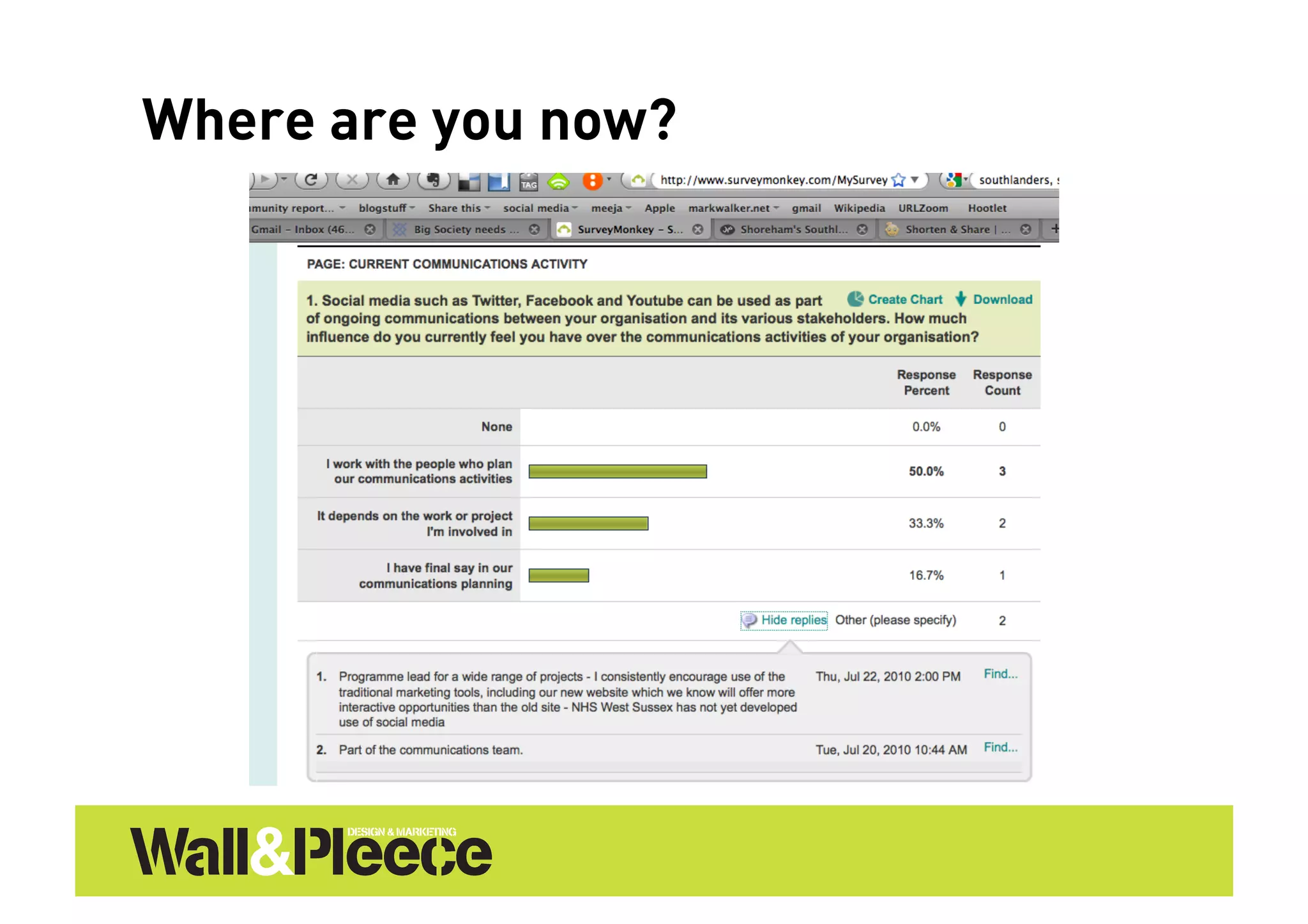
Where are you now?
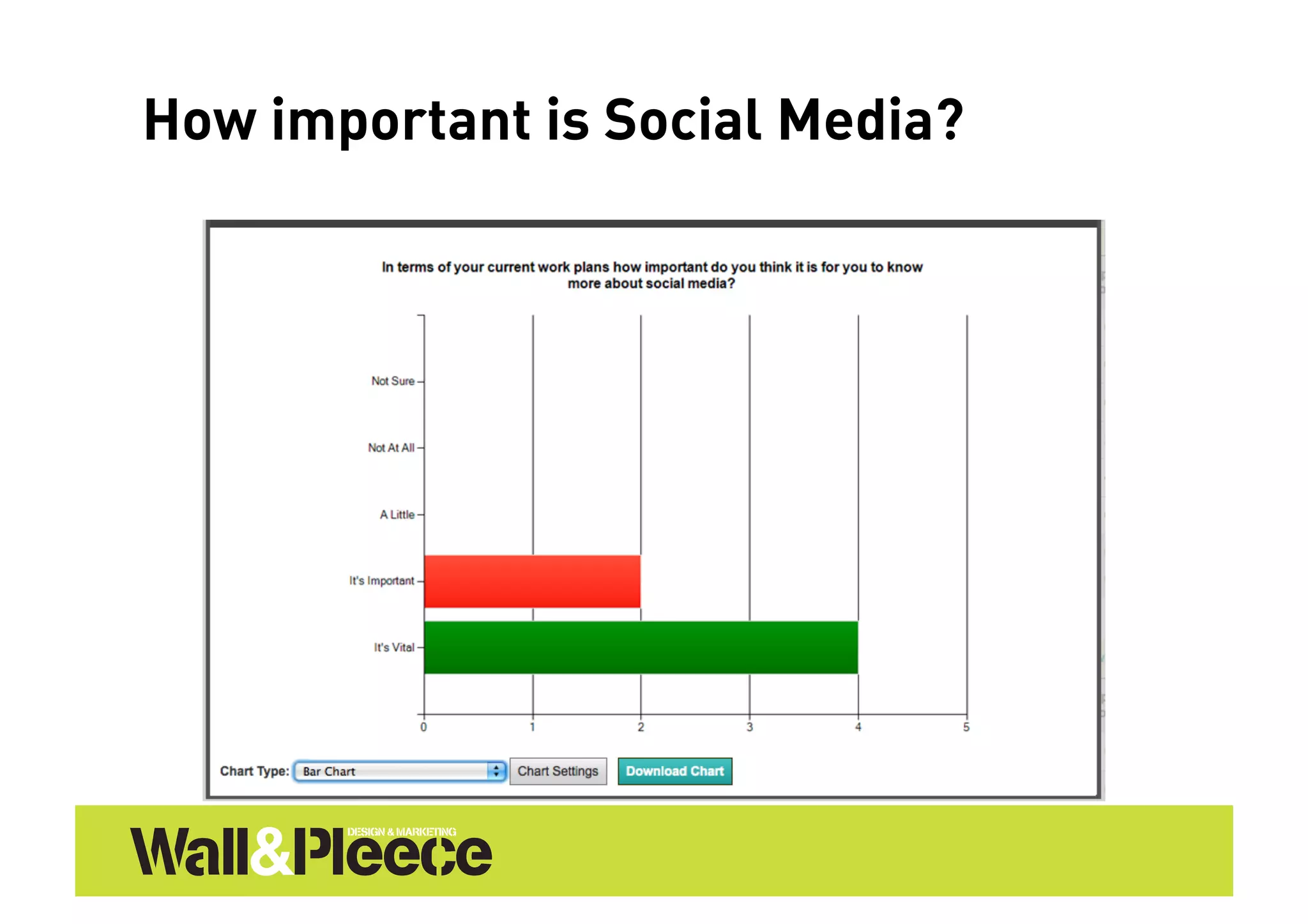
How important is Social Media?
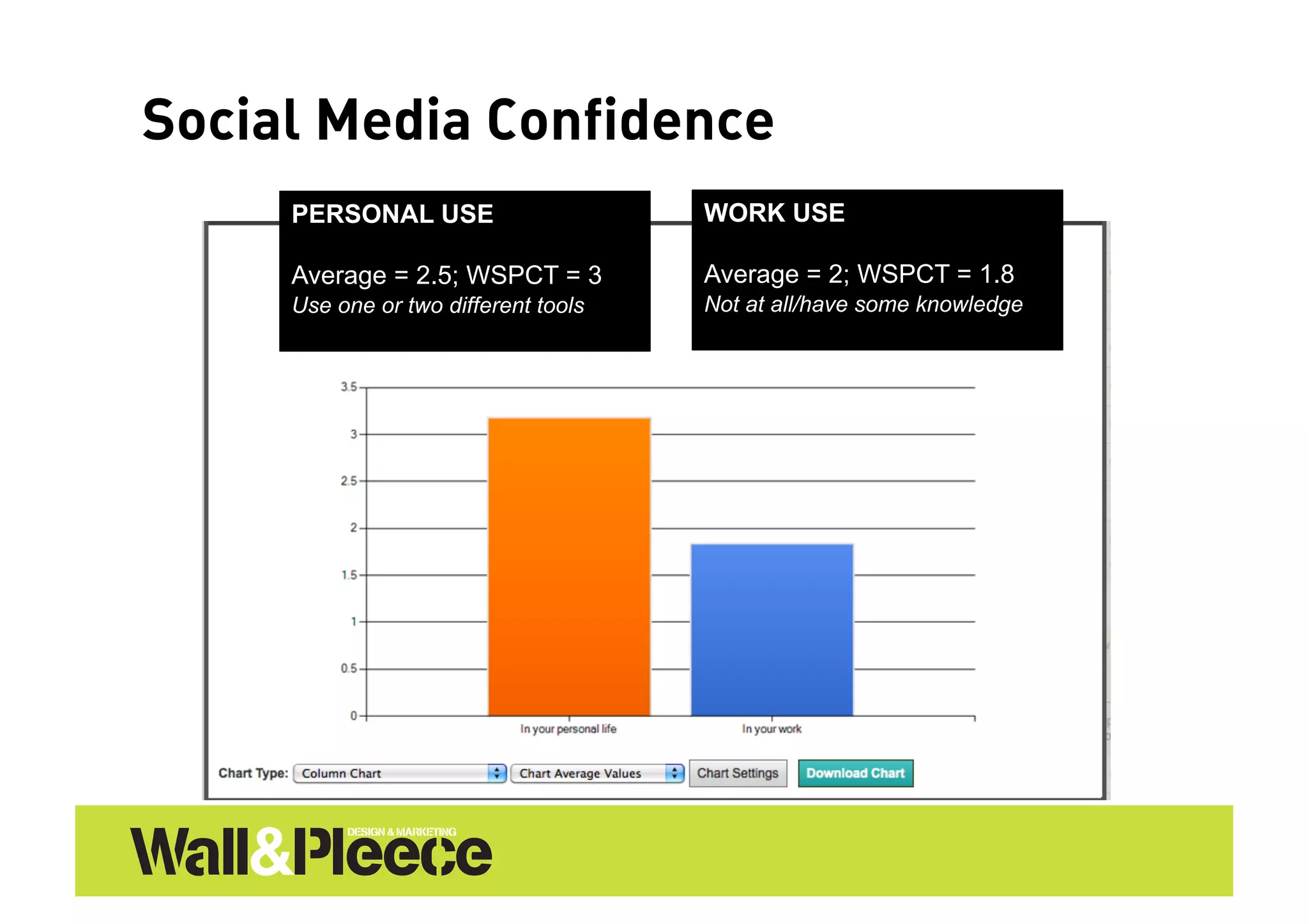
Social Media Confidence
     PERSONAL USE                     WORK USE

     Average = 2.5; WSPCT = 3         Average = 2; WSPCT = 1.8
     Use one or two different tools   Not at all/have some knowledge
Your questions about Social Media

•  What is the best way for NHS to engage with social media?
•  Is there any evidence of usefulness for the NHS?
•  How can we evaluate the use of social media to show effectiveness?
•  Which are the most useful tools for what we want to achieve?
•  What are the costs? Inc time/people/financial resources?
•  Whose role is it within the organisation?
•  How do we manage the risks (e.g. reputational) without stifling our
   involvement?
•  What can we learn from others who are already doing
   this successfully?
•  How can we make sure that we're being useful to people and not just ticking
   various social media boxes?
What is social media?
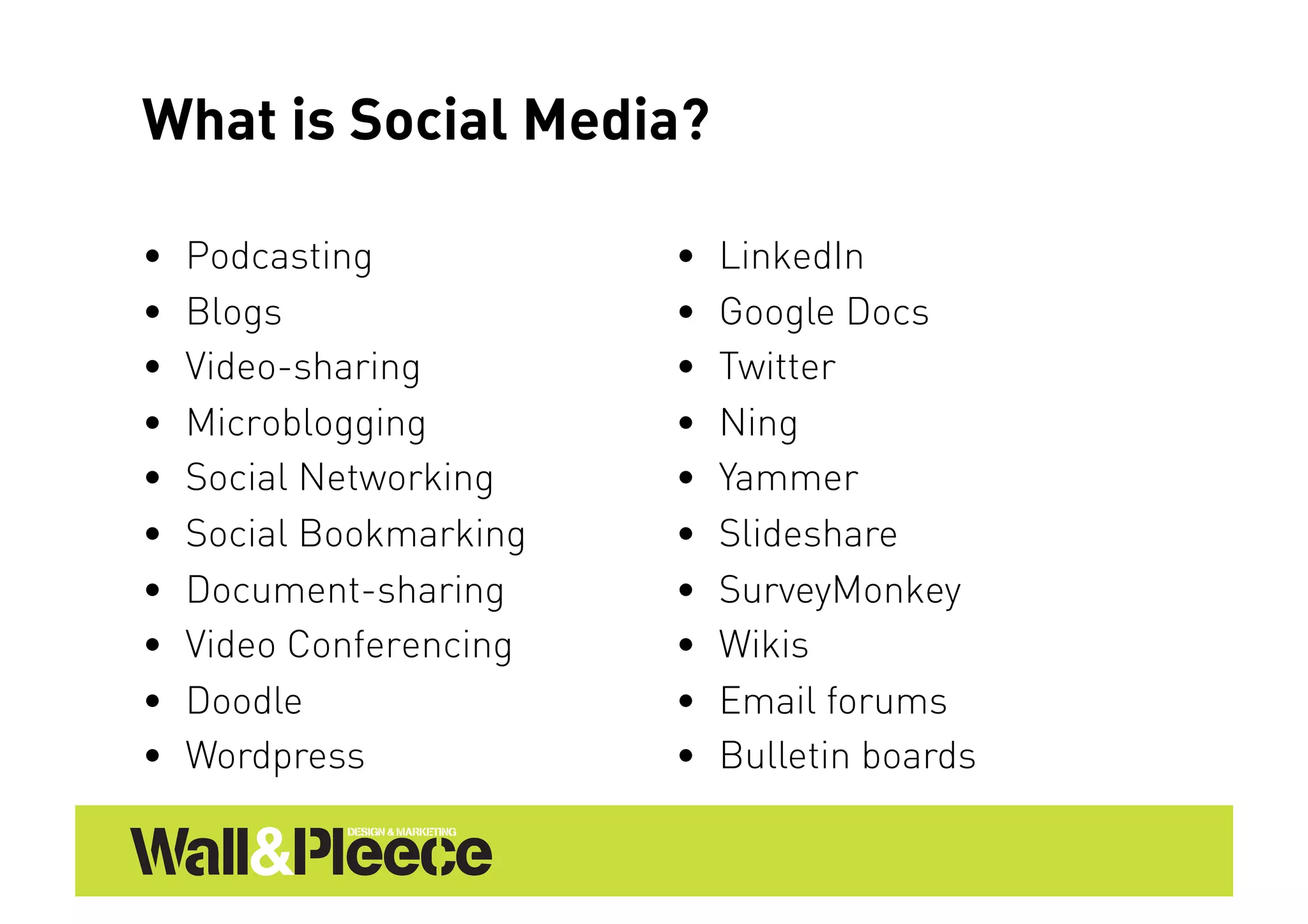
What is Social Media?

•  The internet
•  Social spaces
•  Interactive
•  Multi-functional
•  Fashionable
•  Dynamic
•  Cheap
•  Easy to use
What is Social Media?

•    Podcasting           •    LinkedIn
•    Blogs                •    Google Docs
•    Video-sharing        •    Twitter
•    Microblogging        •    Ning
•    Social Networking    •    Yammer
•    Social Bookmarking   •    Slideshare
•    Document-sharing     •    SurveyMonkey
•    Video Conferencing   •    Wikis
•    Doodle               •    Email forums
•    Wordpress            •    Bulletin boards
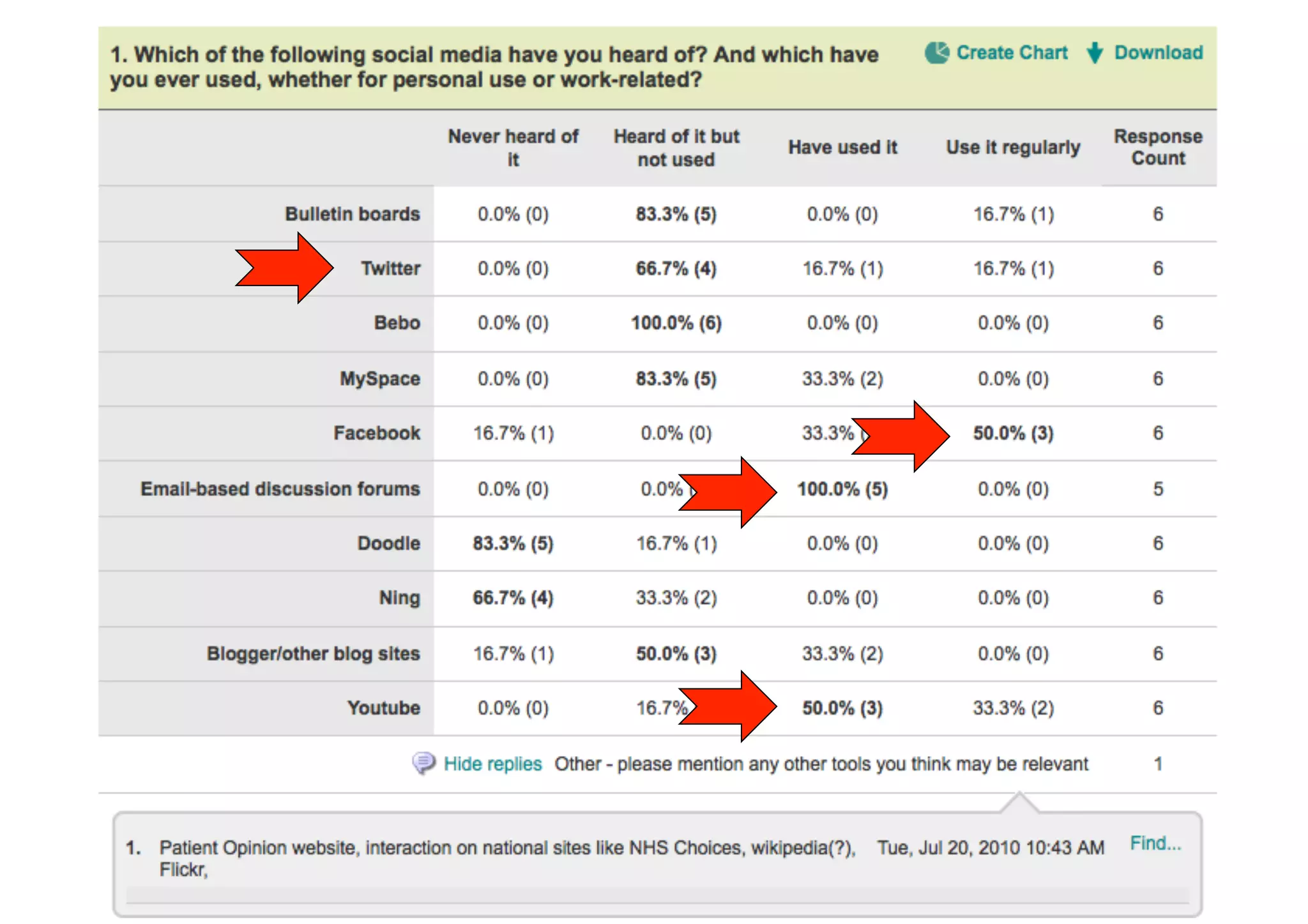
Your current use of social media
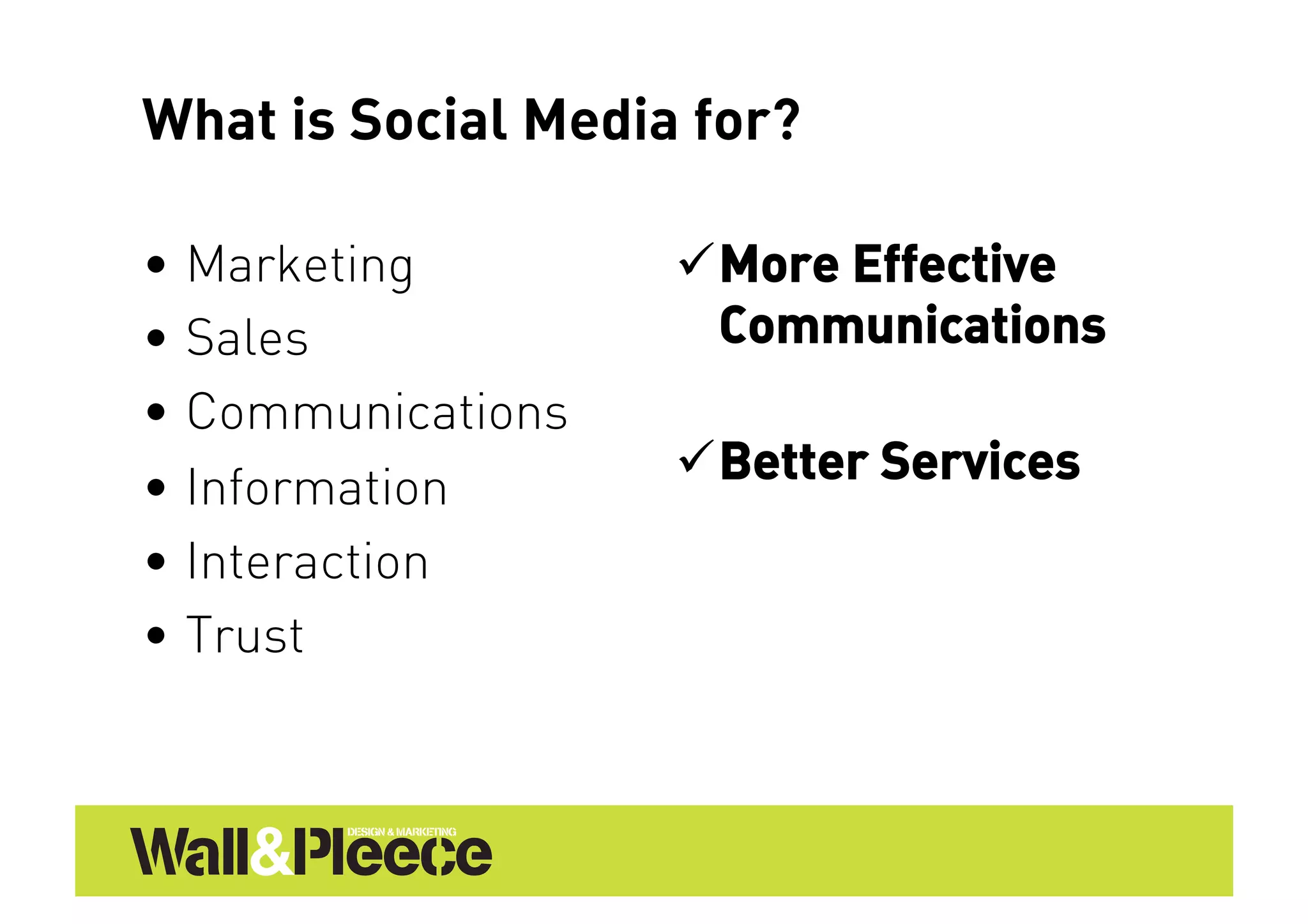
What is Social Media for?

•  Marketing         More Effective
•  Sales              Communications
•  Communications
•  Information       Better Services
•  Interaction
•  Trust
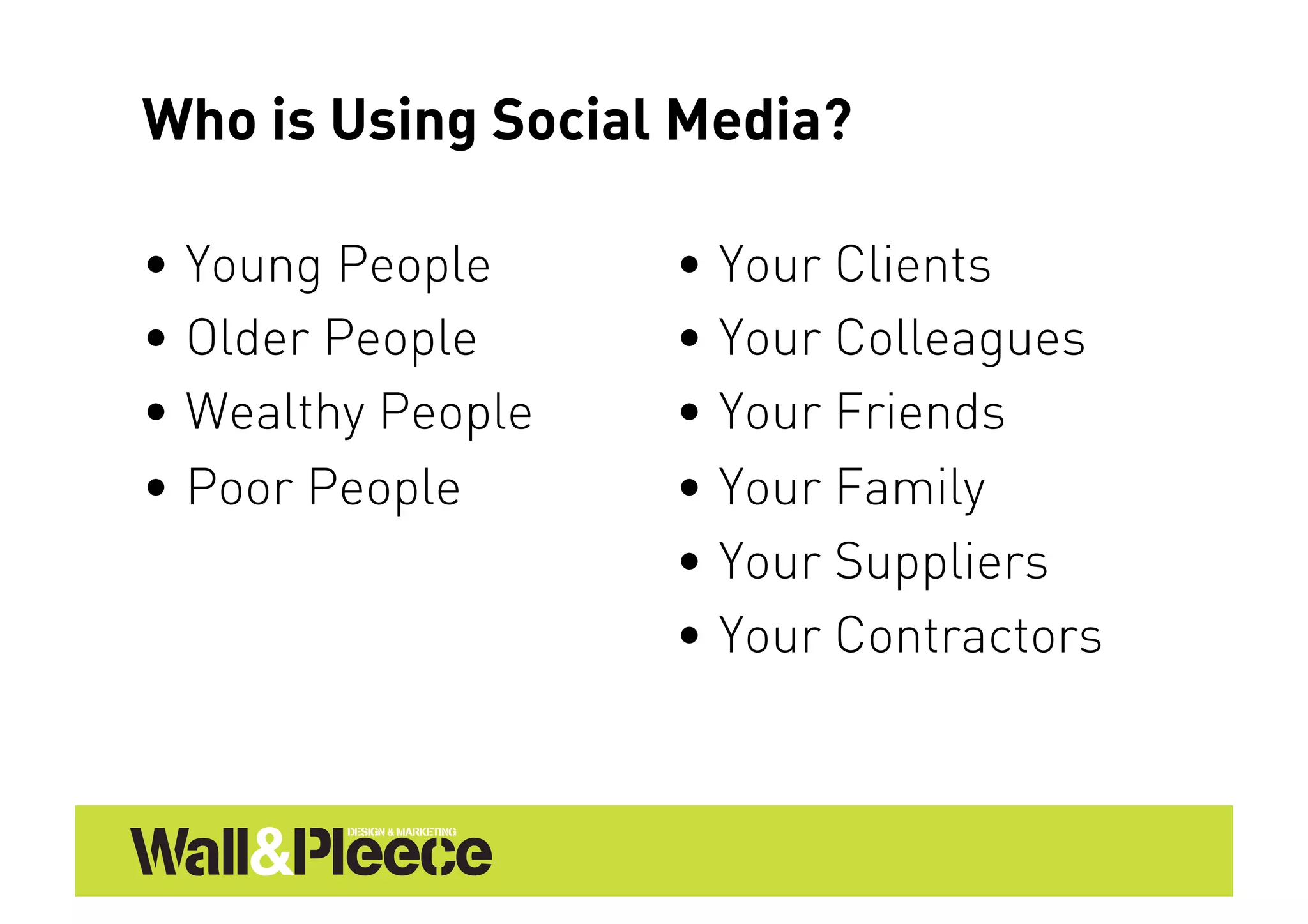
Who is Using Social Media?

•  Young People     •  Your Clients
•  Older People     •  Your Colleagues
•  Wealthy People   •  Your Friends
•  Poor People      •  Your Family
                    •  Your Suppliers
                    •  Your Contractors
What are they using Social Media for?

•  Entertainment, education, health, work
•  Asking questions and sharing answers
•  Making recommendations
•  Checking technical information
•  Supporting one another
•  Creating communities
•  Bypassing the mainstream answers
Social Media in the Marketing Mix

•  Price           •  Research
•  Product         •  Advertising
•  Promotion       •  Personal Sales
•  Place           •  Affiliates
•  People          •  Word of Mouth
                   •  Internal Comms
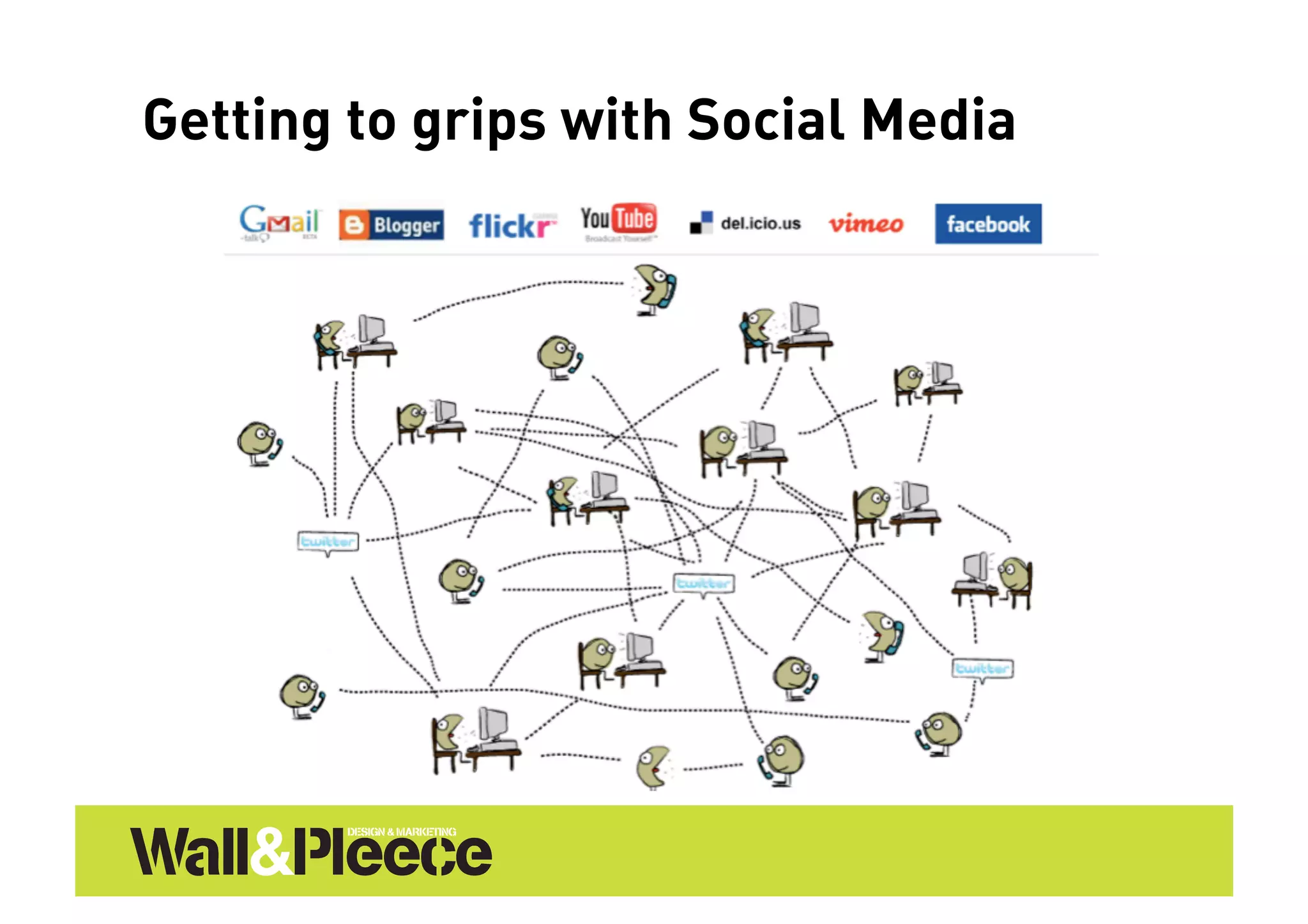
Getting to grips with Social Media
The Problem with Social Media…

The Problem               The Solution
•  Too Many Choices       •  Patience
•  Too Little Time        •  Focus
•  Too Little Direction   •  Routine
•  Evidence               •  Measurement
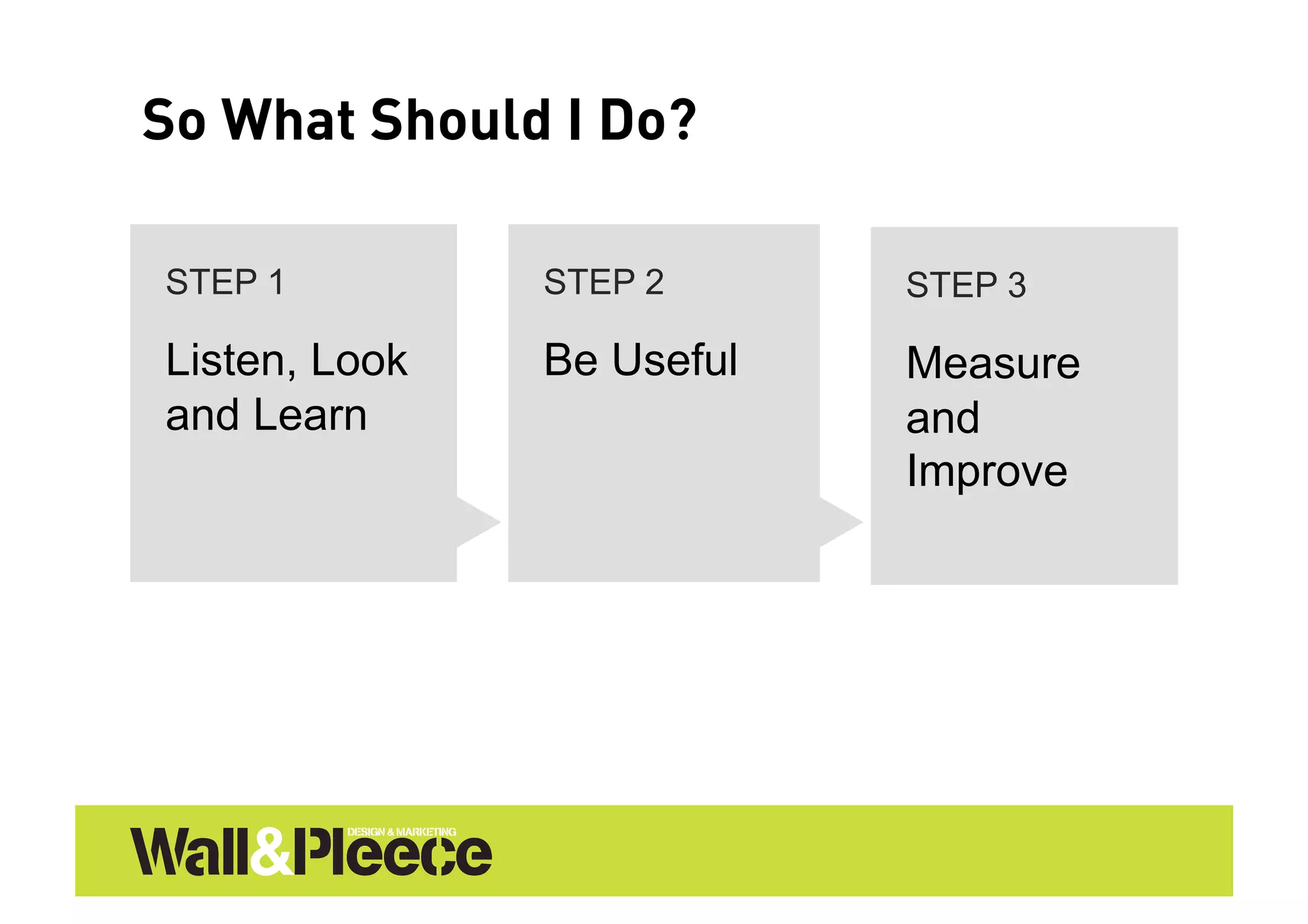
So What Should I Do?

• STEP 1        STEP 2
                         •    STEP 3

 Listen, Look   Be Useful     Measure
 and Learn                    and
                              Improve
Step 1: Listen, Look and Learn

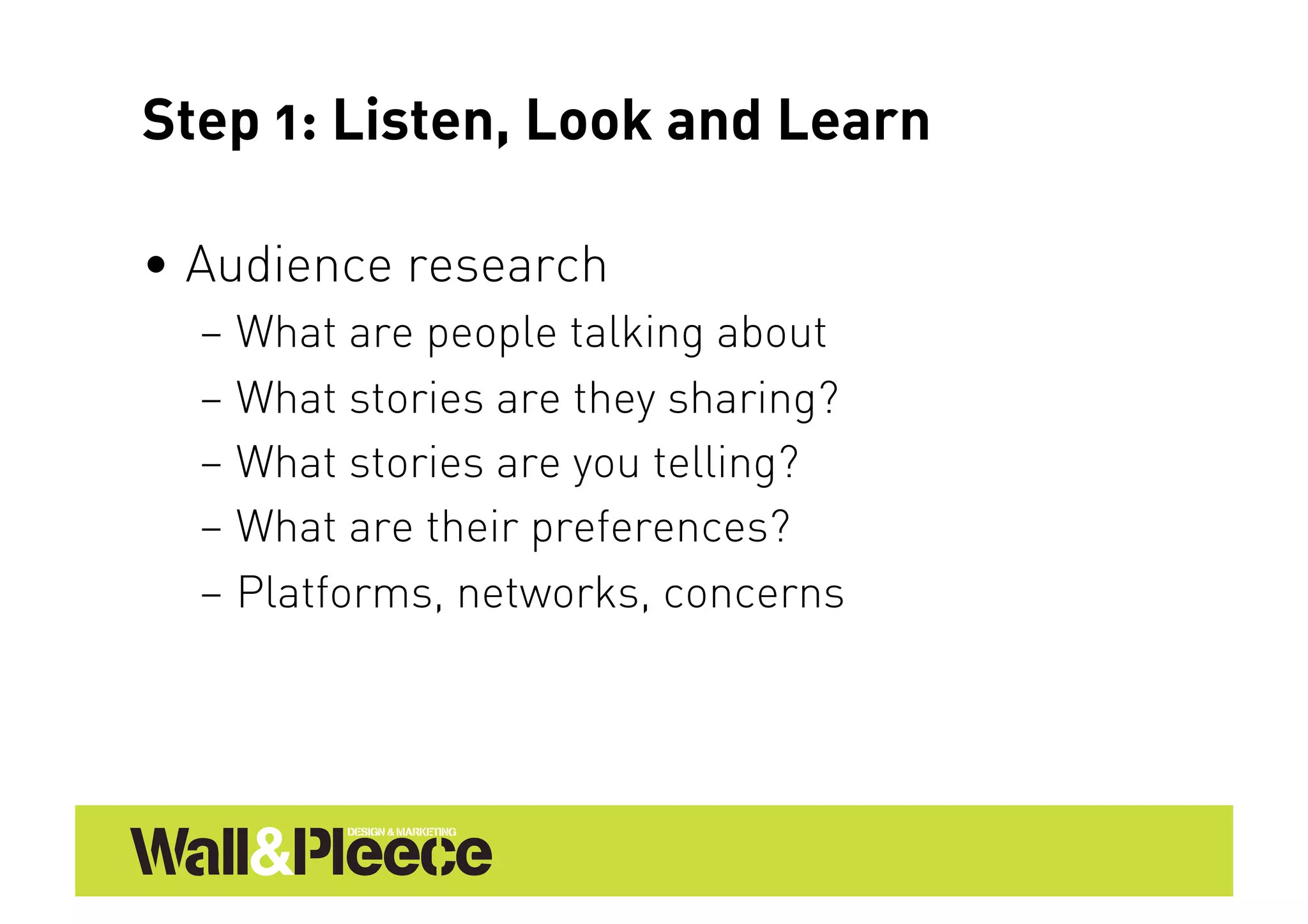
•  Audience research
  –  What are people talking about
  –  What stories are they sharing?
  –  What stories are you telling?
  –  What are their preferences?
  –  Platforms, networks, concerns
Step 1: Listen, Look and Learn

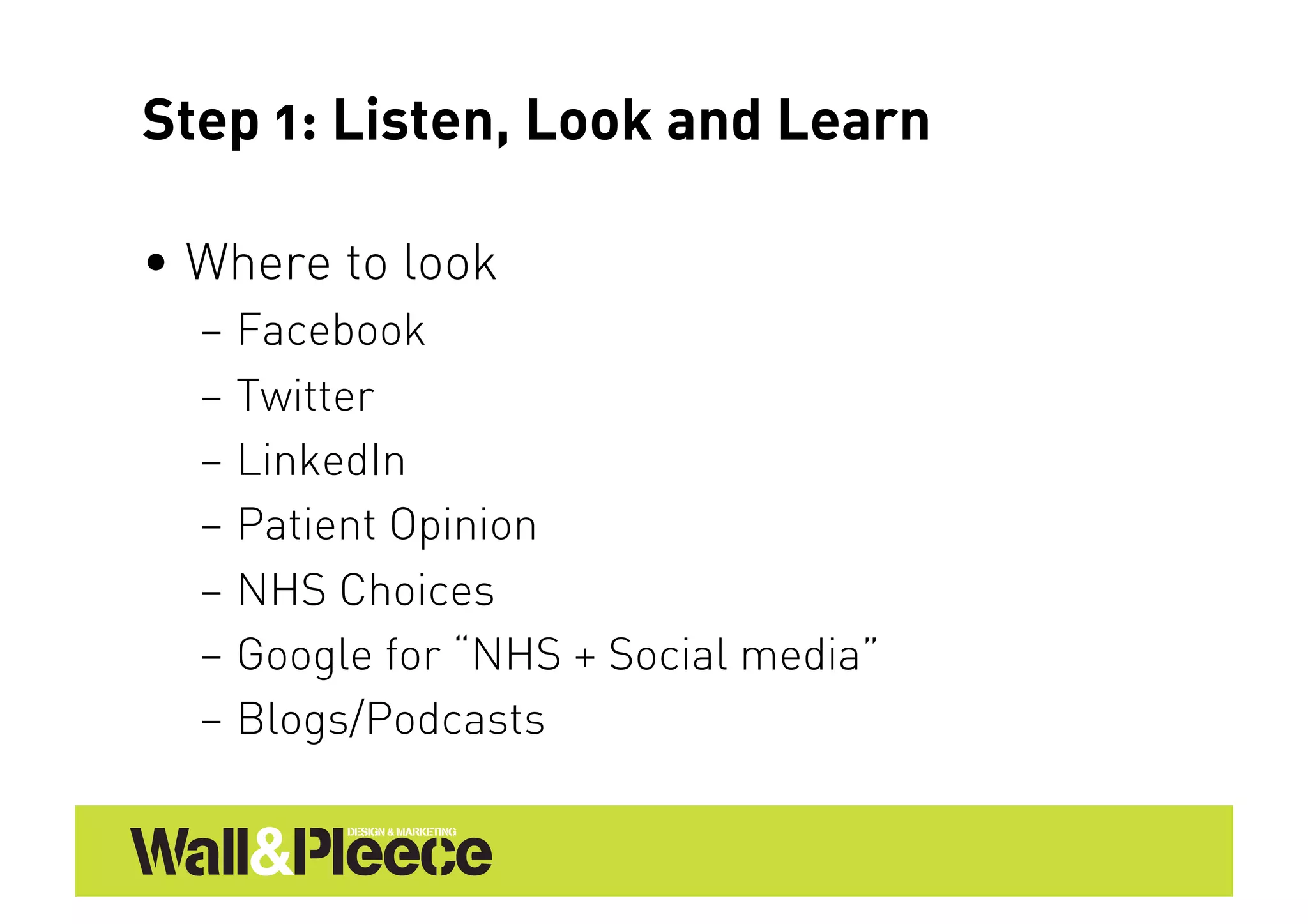
•  Where to look
  –  Facebook
  –  Twitter
  –  LinkedIn
  –  Patient Opinion
  –  NHS Choices
  –  Google for “NHS + Social media”
  –  Blogs/Podcasts
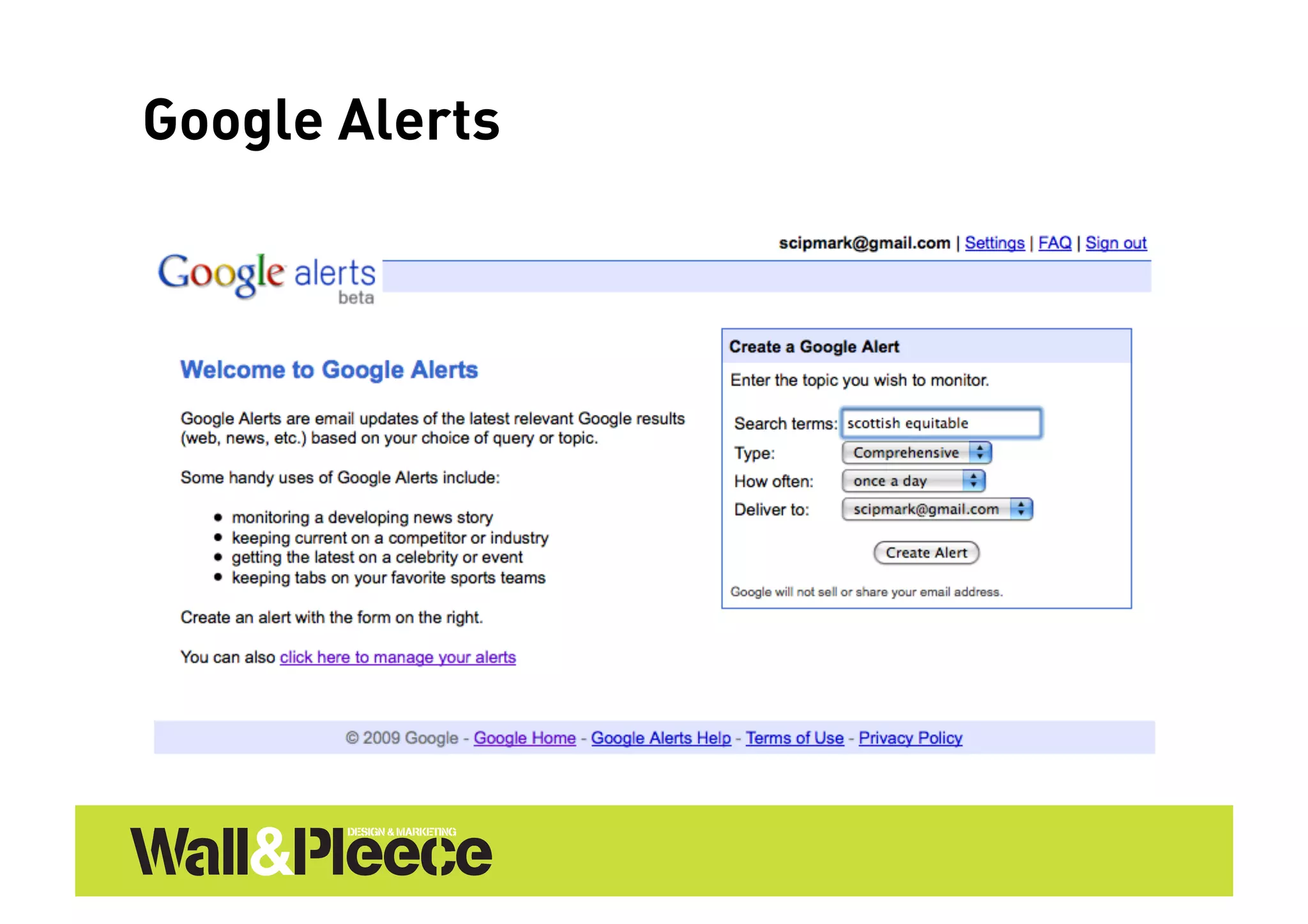
Google Alerts
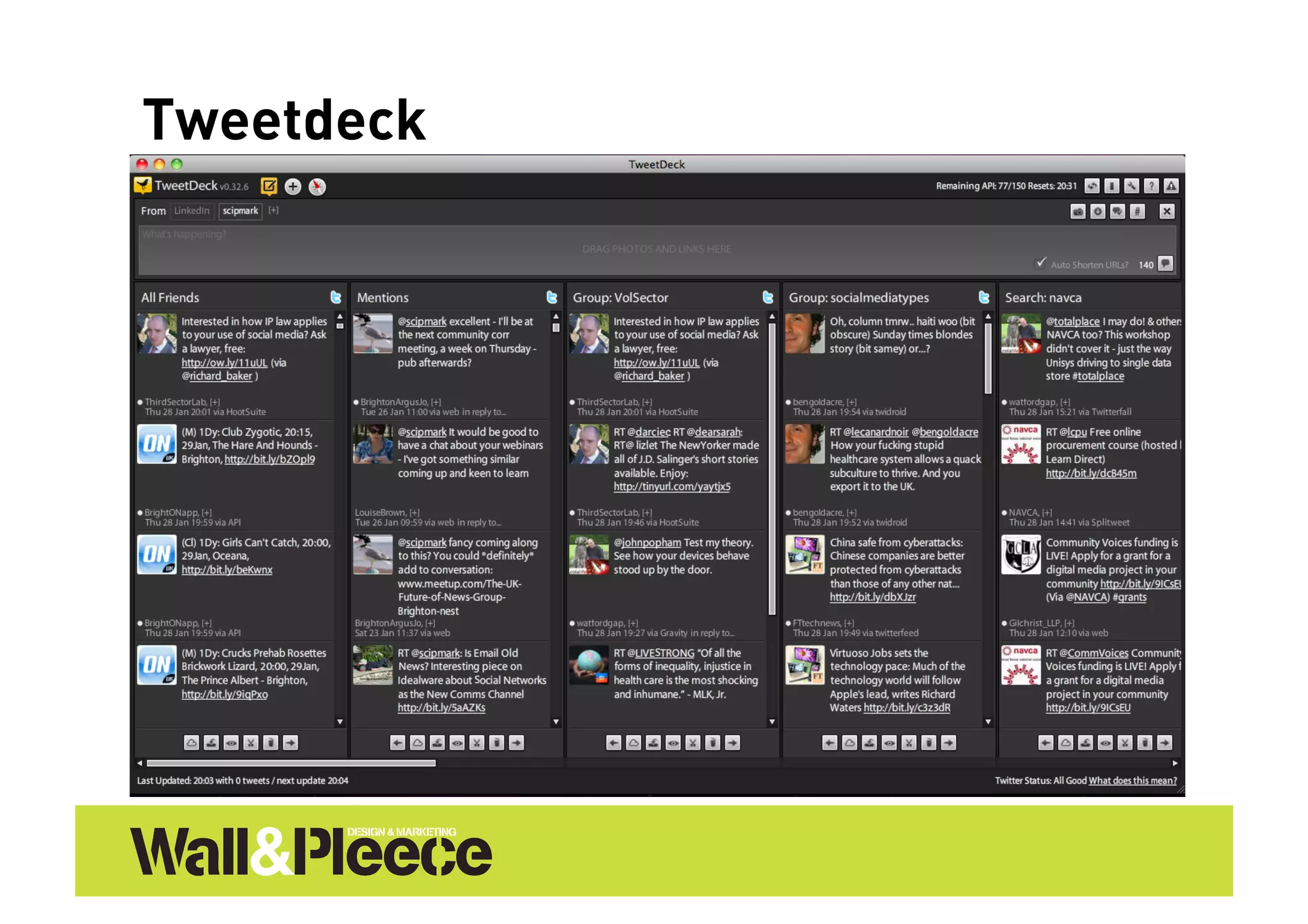
Tweetdeck
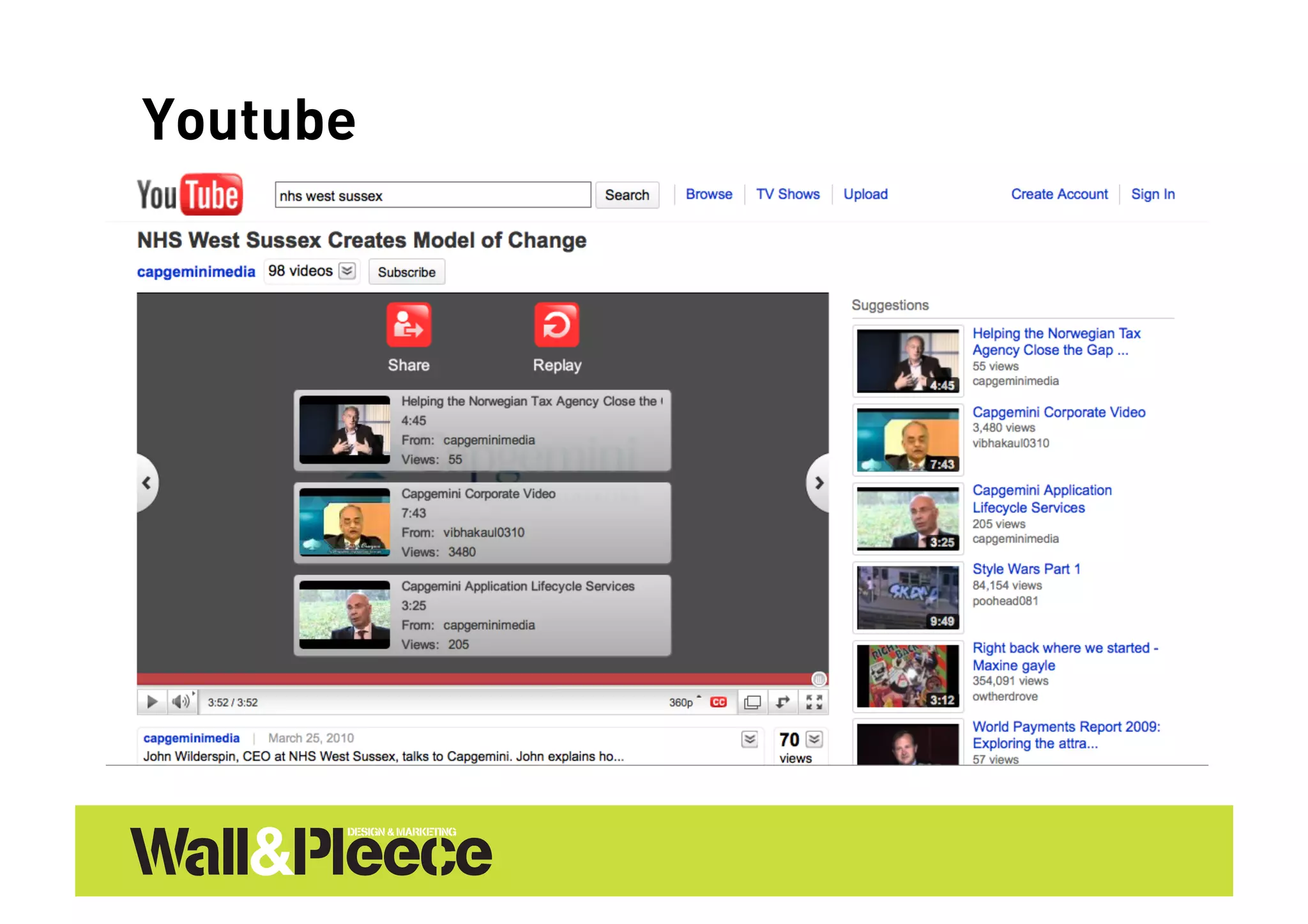
Youtube
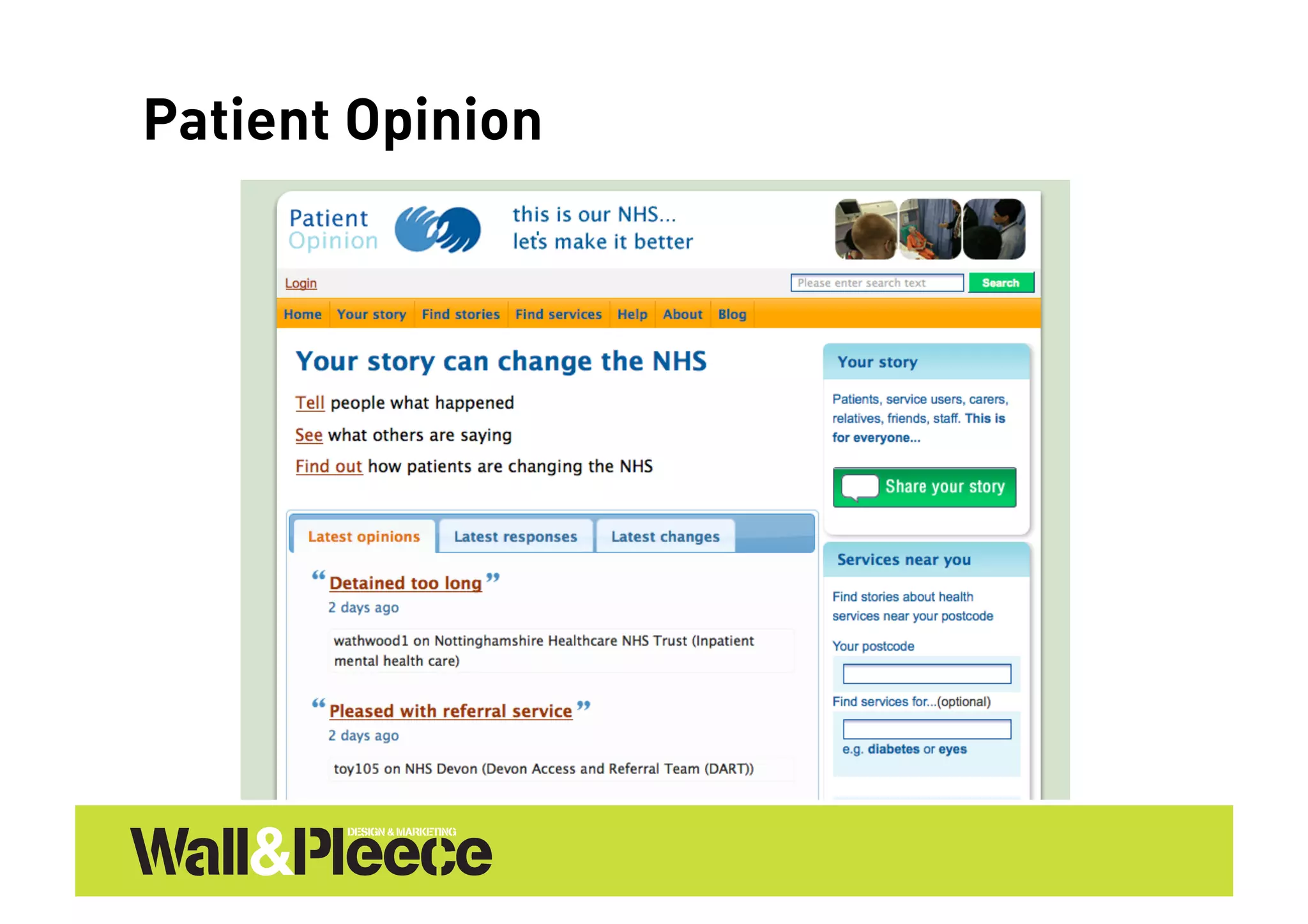
Patient Opinion
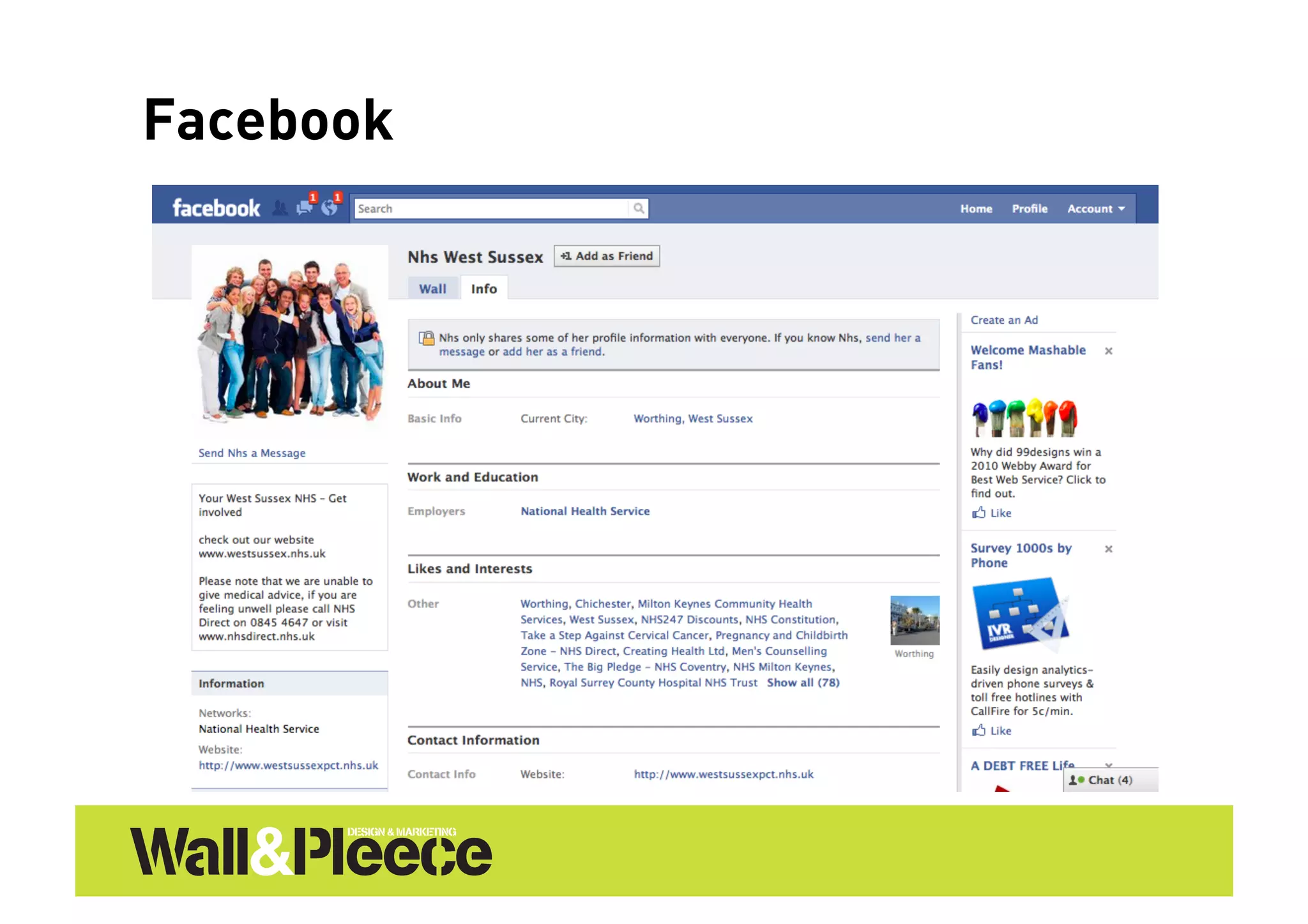
Facebook
NHS Choices
Step 2: Be Useful in Your Network

•  Share what you know
•  Signposting
•  Announcing
•  Listening
•  Responding
Step 2: Be Useful in Your Network

20 minutes a day
•  Update your website/blog
•  Post comments
•  Tweet useful links and news
•  RT useful links and new
•  Talk to colleagues, clients, partners
•  Recommend something
Step 3: Measure and Improve

•  Small Steps
•  Adjust Your Routine
•  Build a Network
•  Be Patient
•  Be Selective
•  Be Focused
Step 3: Measure and Improve

 Normalise your social media evaluation -
 remember, this is just another media type;
 Don't do it in isolation - integrate it with
 your mainstream media analysis so you
 have the ability to view a complete and
 comparable media landscape

  –  Chartered Institute of Public Relations
     Guide to Social Media
Step 3: Measure and Improve

•  Spreadsheet
   – Hits, friends, posts, comments, polls
•  www.bit.ly
   – What are people listening to?
•  Communications campaigns
   – Direct costs, people’s time, trends
Next Steps

•  Start with where you are now
•  Set achievable goals
•  Understand your networks
•  Share what you know
•  Be useful
Next Steps: Individual

•  Learning by Doing
   – I will spend 30 minutes a week
     researching the use of social media in
     the NHS
   – I will spend 20 minutes a day being
     useful to other people by using the web
   – I will include knowledge about social
     media in my personal development goals
Next Steps: Organisation

• Marketing
  – Research + website + online
• Strategy
  – Policy, research, services, etc
• Human Resources
  – Skills, training, job description
Next Steps: Your thoughts

• One thing for yourself
• One thing for your department
• One thing for your organisation
Useful Guides

•  www.icrossing.co.uk/what-we-think
   – eBook: What is Social Media?
•  www.nixonmcinnes.co.uk
   – Marketing Guides
•  www.cipr.co.uk/socialmedia
   – Chartered Institute of Public Relations
• Me and My Web Shadow
  – http://amzn.to/9paTvZ
Keep In Touch

E: mark@wallandpleece.co.uk
W: www.wallandpleece.co.uk
W: www.markwalker.net
T: @scipmark
LinkedIn: scipmark

100726 Introduction to Social Media and NHS

  • 1.
    Introduction to SocialMedia for West Sussex PCT Presented by Mark Walker
  • 2.
    Learning about socialmedia Those from advertising and PR know the art of communciations but need to understand the technology and culture of social media. Whilst those with social media backgrounds often lack communications and PR skills. –  Tony Effik, Chair, Internet Advertising Bureau
  • 3.
    Learning about socialmedia The gap for current marketers is less about learning new skills and more about unlearning old habits. –  Neil Keliner, Havas Media
  • 4.
    Learning about socialmedia Ultimately you can’t teach someone the internet, they have to have a passion that sees them learning every day they come to work. Because it changes everyday. –  James Bromley, MD Mail Online
  • 5.
    Introduction to SocialMedia •  Your Questions About Social Media •  Where are we now? •  Getting to grips with social media •  Next Steps
  • 6.
    Outcomes from thissession •  You have more knowledge about current use of Social Media •  You have asked questions and had some of them answered •  You have talked to colleagues •  You are more confident about your choices •  You are starting to decide what to do next
  • 7.
  • 8.
    How important isSocial Media?
  • 9.
    Social Media Confidence PERSONAL USE WORK USE Average = 2.5; WSPCT = 3 Average = 2; WSPCT = 1.8 Use one or two different tools Not at all/have some knowledge
  • 10.
    Your questions aboutSocial Media •  What is the best way for NHS to engage with social media? •  Is there any evidence of usefulness for the NHS? •  How can we evaluate the use of social media to show effectiveness? •  Which are the most useful tools for what we want to achieve? •  What are the costs? Inc time/people/financial resources? •  Whose role is it within the organisation? •  How do we manage the risks (e.g. reputational) without stifling our involvement? •  What can we learn from others who are already doing this successfully? •  How can we make sure that we're being useful to people and not just ticking various social media boxes?
  • 11.
  • 12.
    What is SocialMedia? •  The internet •  Social spaces •  Interactive •  Multi-functional •  Fashionable •  Dynamic •  Cheap •  Easy to use
  • 13.
    What is SocialMedia? •  Podcasting •  LinkedIn •  Blogs •  Google Docs •  Video-sharing •  Twitter •  Microblogging •  Ning •  Social Networking •  Yammer •  Social Bookmarking •  Slideshare •  Document-sharing •  SurveyMonkey •  Video Conferencing •  Wikis •  Doodle •  Email forums •  Wordpress •  Bulletin boards
  • 14.
    Your current useof social media
  • 15.
    What is SocialMedia for? •  Marketing  More Effective •  Sales Communications •  Communications •  Information  Better Services •  Interaction •  Trust
  • 16.
    Who is UsingSocial Media? •  Young People •  Your Clients •  Older People •  Your Colleagues •  Wealthy People •  Your Friends •  Poor People •  Your Family •  Your Suppliers •  Your Contractors
  • 17.
    What are theyusing Social Media for? •  Entertainment, education, health, work •  Asking questions and sharing answers •  Making recommendations •  Checking technical information •  Supporting one another •  Creating communities •  Bypassing the mainstream answers
  • 18.
    Social Media inthe Marketing Mix •  Price •  Research •  Product •  Advertising •  Promotion •  Personal Sales •  Place •  Affiliates •  People •  Word of Mouth •  Internal Comms
  • 19.
    Getting to gripswith Social Media
  • 20.
    The Problem withSocial Media… The Problem The Solution •  Too Many Choices •  Patience •  Too Little Time •  Focus •  Too Little Direction •  Routine •  Evidence •  Measurement
  • 21.
    So What ShouldI Do? • STEP 1 STEP 2 •  STEP 3 Listen, Look Be Useful Measure and Learn and Improve
  • 22.
    Step 1: Listen,Look and Learn •  Audience research –  What are people talking about –  What stories are they sharing? –  What stories are you telling? –  What are their preferences? –  Platforms, networks, concerns
  • 23.
    Step 1: Listen,Look and Learn •  Where to look –  Facebook –  Twitter –  LinkedIn –  Patient Opinion –  NHS Choices –  Google for “NHS + Social media” –  Blogs/Podcasts
  • 24.
  • 25.
  • 26.
  • 27.
  • 28.
  • 29.
  • 30.
    Step 2: BeUseful in Your Network •  Share what you know •  Signposting •  Announcing •  Listening •  Responding
  • 31.
    Step 2: BeUseful in Your Network 20 minutes a day •  Update your website/blog •  Post comments •  Tweet useful links and news •  RT useful links and new •  Talk to colleagues, clients, partners •  Recommend something
  • 32.
    Step 3: Measureand Improve •  Small Steps •  Adjust Your Routine •  Build a Network •  Be Patient •  Be Selective •  Be Focused
  • 33.
    Step 3: Measureand Improve Normalise your social media evaluation - remember, this is just another media type; Don't do it in isolation - integrate it with your mainstream media analysis so you have the ability to view a complete and comparable media landscape –  Chartered Institute of Public Relations Guide to Social Media
  • 34.
    Step 3: Measureand Improve •  Spreadsheet – Hits, friends, posts, comments, polls •  www.bit.ly – What are people listening to? •  Communications campaigns – Direct costs, people’s time, trends
  • 35.
    Next Steps •  Startwith where you are now •  Set achievable goals •  Understand your networks •  Share what you know •  Be useful
  • 36.
    Next Steps: Individual • Learning by Doing – I will spend 30 minutes a week researching the use of social media in the NHS – I will spend 20 minutes a day being useful to other people by using the web – I will include knowledge about social media in my personal development goals
  • 37.
    Next Steps: Organisation • Marketing – Research + website + online • Strategy – Policy, research, services, etc • Human Resources – Skills, training, job description
  • 38.
    Next Steps: Yourthoughts • One thing for yourself • One thing for your department • One thing for your organisation
  • 39.
    Useful Guides •  www.icrossing.co.uk/what-we-think – eBook: What is Social Media? •  www.nixonmcinnes.co.uk – Marketing Guides •  www.cipr.co.uk/socialmedia – Chartered Institute of Public Relations • Me and My Web Shadow – http://amzn.to/9paTvZ
  • 40.
    Keep In Touch E:mark@wallandpleece.co.uk W: www.wallandpleece.co.uk W: www.markwalker.net T: @scipmark LinkedIn: scipmark