
HUMAN RESOURCE MANAGEMENT
Chapter 10
WHAT ARE THE PURPOSE AND LEGAL
CONTEXT OF HUMAN RESOURCE
MANAGEMENT?
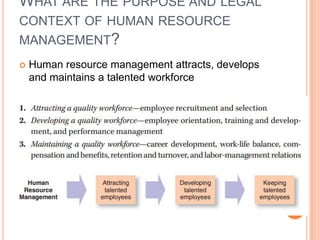
   Human resource management attracts, develops
    and maintains a talented workforce
 Strategic human resource management aligns human
  capital with organizational strategies
 Human capital – the economic value of people with job-
  relevant abilities, knowledge, ideas, energies and
  commitments.
 Government legislation protects against employment
  discrimination
 Job discrimination – someone is denied a job or job
  assignment for non-job relevant reasons
  Equal Employment Opportunity (EEO) – the right to
  employment advancement without regard to race, sex,
  religion, color or national origin.
 Affirmative action – an effort to give preference in
  employment to women and minority group members
 Bona fide occupational qualifications – employment
  criteria justified by capacity to perform a job
 Laws can’t guarantee that employee discrimination won’t
  happen
 Employee privacy – right to privacy on and off the job
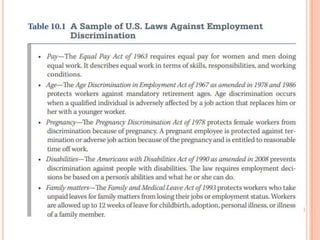
 Pay discrimination – occurs when women and men are
  paid differently for doing equal work
 Pregnancy discrimination – penalizes a woman on the
  job or as a job applicant for being pregnant
 Age discrimination – penalizes an employee in a job or
  as a job applicant for being over the age of 40
WHAT ARE THE ESSENTIAL HUMAN RESOURCE
MANAGEMENT PRACTICES?

 Person-job fit – match of individual skills, interests
  an personal characteristics with the job
 Person-organization fit – is the match of individual
  values, interests and behavior with the
  organizational culture
 Recruitment attracts qualified job applicants
 Recruitment – a set of activities designed to attracts
  a qualified pool of applicants
 Realistic job previews – provide job candidates with
  all pertinent information about a job and
  organization
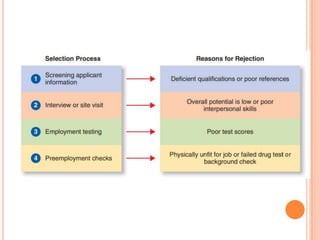
 Selection makes decisions to hire qualified job applicants
 Selection – choosing whom to hire from a pool of
  qualified job applicants
 Reliability – a selection device gives consistent results
  over repeated measures
 Validity – the scores on a selection device have
  demonstrated links on job performance
 Assessment center – examines how job candidates
  handle simulated work situations
 Work sampling – evaluates applicants as they perform
  actual work talents
 Socialization and organization integrate new
  employees into the organization
 Socialization – systematically influences the
  expectations, behavior and attitudes of new
  employees
 Orientation – familiarizes new employees with jobs,
  co-workers and organizational policies and services
 Training continually develops employee skills and
  capabilities
 Coaching – occurs as an experienced person offers
  performance advice to a less experienced person
 Mentoring – assigns early-career employees as protégés
  to more senior ones
 Reverse Mentoring – younger and newly-hired
  employees mentor senior executives often on latest
  developments with digital technologies
 Performance management appraises and rewards
  accomplishments
 Performance appraisal – process of formally evaluating
  performance and providing feedback to a job holder
 Graphic rating scale – uses a checklist of traits or
  characteristics to evaluate performance
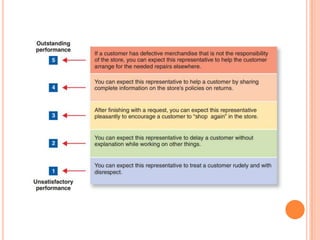
 Behavior-anchored rating scale (BARS) – uses specific
  descriptions of actual behaviors to rate various levels of
  performance
 Critical-incident technique – keeps a log of someone’s
  effective and ineffective job behaviors
 360⁰ feedback – includes superiors, subordinates, peers
  and even customers in the appraisal process
 Multiperson comparison – compares one person’s
  performance with that of others
 Retention and career development provide career
  paths
 Career development – process of managing how a
  person grows and progresses in a career
 Career planning – process of matching career goals
  and individual capabilities with opportunities for
  their fulfillment
WHAT ARE THE CURRENT ISSUES IN HUMAN
RESOURCE MANAGEMENT?
 Today’s lifestyle increases demands for flexibly and
  work-life balance
 Work-life balance - involves balancing career
  demands with personal and family needs
 Organizations are using more independent
  contractors and party-time workers
 Independent contractors – hired on temporary
  contracts and are not part of the organization’s
  permanent workforce
 Contingency workers – work as needed and part-time,
  often on a longer-time basis
 Compensation plans influence employee recruitment and
  retention
 Merit pay – awards pay increases in proportion to
  performance contributions
 Bonus pay – plans provide one-time payments based on
  performance accomplishments
 Profit-sharing – distributes to employees a proportion of
  net profits earned by the organization
 Gain sharing – allows employees to share in cost savings
  or productivity gains realized by their efforts
 Stock options – give the right to purchase shares at a
  fixed price in the future
   Fringe Benefits are an important part of employee
    compensation packages
   Fringe benefits – non-monetary forms of compensation such
    as health insurance and retirement plans
   Family-friendly benefits – help employees achieve better work-
    life balance
   Flexible benefits – programs allow choice to personalize
    benefits within a set dollar allowance
   Employee assistance programs – helps employees cope with
    personal stresses and problems
   Labor relations and collective bargaining are closely governed
    by law
   Labor union – an organization that deals with employers on
    the workers’ collective behalf
   Labor contract – formal agreement between a union and an
    employer about the terms of work for union members
    Collective bargaining – the process of negotiating,
    administering and interpreting a labor contract
   Two-tie wager systems – pay new hires less than the workers
    already doing the same jobs with more seniority
10

10

  • 1.
  • 2.
    WHAT ARE THEPURPOSE AND LEGAL CONTEXT OF HUMAN RESOURCE MANAGEMENT?  Human resource management attracts, develops and maintains a talented workforce
  • 3.
     Strategic humanresource management aligns human capital with organizational strategies  Human capital – the economic value of people with job- relevant abilities, knowledge, ideas, energies and commitments.  Government legislation protects against employment discrimination  Job discrimination – someone is denied a job or job assignment for non-job relevant reasons
  • 4.
     EqualEmployment Opportunity (EEO) – the right to employment advancement without regard to race, sex, religion, color or national origin.  Affirmative action – an effort to give preference in employment to women and minority group members  Bona fide occupational qualifications – employment criteria justified by capacity to perform a job
  • 6.
     Laws can’tguarantee that employee discrimination won’t happen  Employee privacy – right to privacy on and off the job  Pay discrimination – occurs when women and men are paid differently for doing equal work  Pregnancy discrimination – penalizes a woman on the job or as a job applicant for being pregnant  Age discrimination – penalizes an employee in a job or as a job applicant for being over the age of 40
  • 7.
    WHAT ARE THEESSENTIAL HUMAN RESOURCE MANAGEMENT PRACTICES?  Person-job fit – match of individual skills, interests an personal characteristics with the job  Person-organization fit – is the match of individual values, interests and behavior with the organizational culture
  • 8.
     Recruitment attractsqualified job applicants  Recruitment – a set of activities designed to attracts a qualified pool of applicants  Realistic job previews – provide job candidates with all pertinent information about a job and organization
  • 9.
     Selection makesdecisions to hire qualified job applicants  Selection – choosing whom to hire from a pool of qualified job applicants  Reliability – a selection device gives consistent results over repeated measures  Validity – the scores on a selection device have demonstrated links on job performance  Assessment center – examines how job candidates handle simulated work situations  Work sampling – evaluates applicants as they perform actual work talents
  • 11.
     Socialization andorganization integrate new employees into the organization  Socialization – systematically influences the expectations, behavior and attitudes of new employees  Orientation – familiarizes new employees with jobs, co-workers and organizational policies and services
  • 12.
     Training continuallydevelops employee skills and capabilities  Coaching – occurs as an experienced person offers performance advice to a less experienced person  Mentoring – assigns early-career employees as protégés to more senior ones  Reverse Mentoring – younger and newly-hired employees mentor senior executives often on latest developments with digital technologies
  • 13.
     Performance managementappraises and rewards accomplishments  Performance appraisal – process of formally evaluating performance and providing feedback to a job holder  Graphic rating scale – uses a checklist of traits or characteristics to evaluate performance  Behavior-anchored rating scale (BARS) – uses specific descriptions of actual behaviors to rate various levels of performance
  • 15.
     Critical-incident technique– keeps a log of someone’s effective and ineffective job behaviors  360⁰ feedback – includes superiors, subordinates, peers and even customers in the appraisal process  Multiperson comparison – compares one person’s performance with that of others
  • 16.
     Retention andcareer development provide career paths  Career development – process of managing how a person grows and progresses in a career  Career planning – process of matching career goals and individual capabilities with opportunities for their fulfillment
  • 17.
    WHAT ARE THECURRENT ISSUES IN HUMAN RESOURCE MANAGEMENT?  Today’s lifestyle increases demands for flexibly and work-life balance  Work-life balance - involves balancing career demands with personal and family needs  Organizations are using more independent contractors and party-time workers  Independent contractors – hired on temporary contracts and are not part of the organization’s permanent workforce
  • 18.
     Contingency workers– work as needed and part-time, often on a longer-time basis  Compensation plans influence employee recruitment and retention  Merit pay – awards pay increases in proportion to performance contributions  Bonus pay – plans provide one-time payments based on performance accomplishments
  • 19.
     Profit-sharing –distributes to employees a proportion of net profits earned by the organization  Gain sharing – allows employees to share in cost savings or productivity gains realized by their efforts  Stock options – give the right to purchase shares at a fixed price in the future
  • 20.
    Fringe Benefits are an important part of employee compensation packages  Fringe benefits – non-monetary forms of compensation such as health insurance and retirement plans  Family-friendly benefits – help employees achieve better work- life balance  Flexible benefits – programs allow choice to personalize benefits within a set dollar allowance  Employee assistance programs – helps employees cope with personal stresses and problems
  • 21.
    Labor relations and collective bargaining are closely governed by law  Labor union – an organization that deals with employers on the workers’ collective behalf  Labor contract – formal agreement between a union and an employer about the terms of work for union members  Collective bargaining – the process of negotiating, administering and interpreting a labor contract  Two-tie wager systems – pay new hires less than the workers already doing the same jobs with more seniority