SBAR TECHNIQUE FOR
COMMUNICATION
COMMUNICATION
Communication is the activity of
conveying information through the
exchange of ideas, feelings,
intentions, attitudes, expectations,
perceptions or commands, as by
speech, non-verbal gestures, writings,
behavior and possibly by other means
such as electromagnetic, chemical or
physical phenomena and smell.
COMMUNICATION
From
Latin commūnicāre,
meaning
"to share“
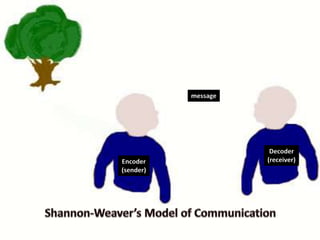
Encoder
(sender)
Decoder
(receiver)
message
Effective Communication
Effective communication
is not only about
conveying a message that
you want to say. It is
about conveying the
message so that other
people understand and
respond to it.
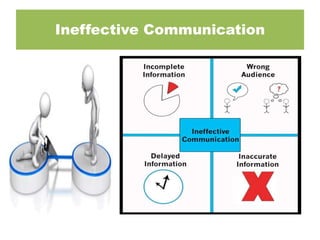
Ineffective Communication
Assumptions & Hints
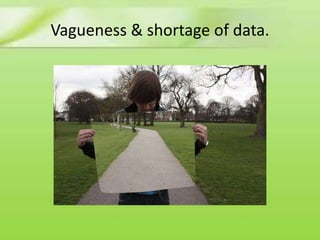
Vagueness & shortage of data.
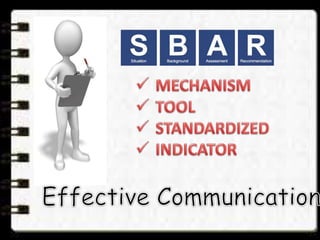
What we need for Effective
Communication?
• Mechanism (established
processes): to frame
conversations
• Tool (distinct design) to
share concise and
focused information.
• Standard of
Communication
• Indicator of Effective
Communication
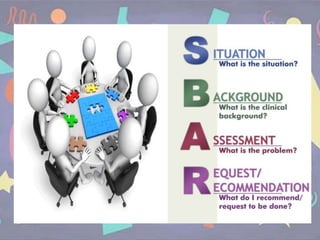
Situation, Background,
Assessment and
Recommendation
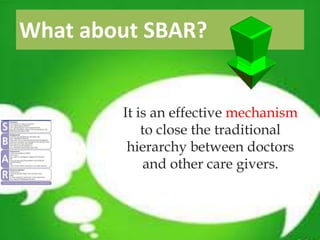
What about SBAR?
It is an effective mechanism
to close the traditional
hierarchy between doctors
and other care givers.
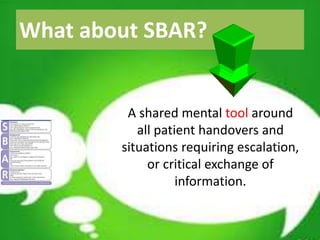
What about SBAR?
A shared mental tool around
all patient handovers and
situations requiring escalation,
or critical exchange of
information.
What about SBAR?
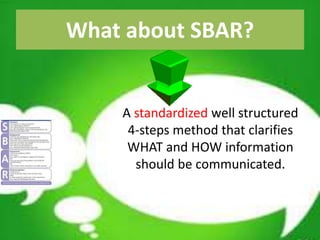
A standardized well structured
4-steps method that clarifies
WHAT and HOW information
should be communicated.
What about SBAR?
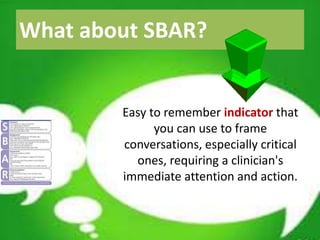
Easy to remember indicator that
you can use to frame
conversations, especially critical
ones, requiring a clinician's
immediate attention and action.
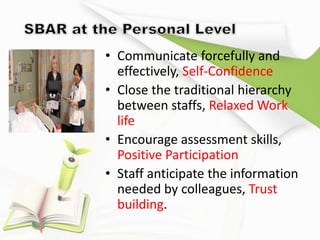
• Communicate forcefully and
effectively, Self-Confidence
• Close the traditional hierarchy
between staffs, Relaxed Work
life
• Encourage assessment skills,
Positive Participation
• Staff anticipate the information
needed by colleagues, Trust
building.
• Reducing repetition.
• The right level of
detail.
• The right sequence of
flow.
• Concise and focused
information.
• To foster a culture of patient
safety.
• To develop effective
communication and
teamwork
• Easy to remember and can
reduce the time spent on
patient handover.
• An ROP (Required
Organizational Practice)
requested by Accreditation
Body
• Patient care is dependant on effective
communication
- including telephone communication
between all staff involved in the
care of the
patient
• Effective communication has become more
important as healthcare has become more
complex, highly specialized and team-based.
• It is a daily task
• It is rarely ‘explicitly’ taught
• Telephone referrals can be a source of
frustration for both the ‘giver’ and the
‘receiver’
• Ineffective telephone communication
can compromise patient care
• People are busy and don’t want more work! It takes time
and practice to plan a good handover of patient/client
information
• It can be difficult to summarize a complex case
succinctly
• The person making the referral:
– is often asked about things they have
already said
– may not get the help they were expecting
• The person receiving the referral may
– interrupt mid-sentence
– make assumptions about the capability of caller
He was focused, but not well
prepared….
1. The doctor clearly states what he wants:
– He wants the other doctor to come and
see the
patient.
2. He checks he is talking to the right person but …
- He doesn’t have important
information at hand
3. The main problem is lack of preparation
- How long does it take to prepare?
References
• http://www.ihi.org/resources/Pages/Tools/SBARToolkit.aspx
• http://www.institute.nhs.uk/quality_and_service_improvement_tools/quality_and_service_improvement
_tools/sbar_-_situation_-_background_-_assessment_-_recommendation.html
• http://www.institute.nhs.uk/safer_care/safer_care/situation_background_assessment_recommendation.
html
• http://www.health.mil/Military-Health-Topics/Access-Cost-Quality-and-Safety/Quality-And-Safety-of-
Healthcare/Patient-Safety/Patient-Safety-Products-And-Services/Order-Patient-Safety-Materials
• http://www.health.mil/~/media/MHS/General%20Images/PSMaterials/SBAR_POSTER_border.ashx
• http://en.wikipedia.org/wiki/Communication

1. sbar technique in communication

  • 1.
  • 2.
    COMMUNICATION Communication is theactivity of conveying information through the exchange of ideas, feelings, intentions, attitudes, expectations, perceptions or commands, as by speech, non-verbal gestures, writings, behavior and possibly by other means such as electromagnetic, chemical or physical phenomena and smell.
  • 3.
  • 4.
  • 5.
    Effective Communication Effective communication isnot only about conveying a message that you want to say. It is about conveying the message so that other people understand and respond to it.
  • 6.
  • 7.
  • 8.
  • 9.
    What we needfor Effective Communication? • Mechanism (established processes): to frame conversations • Tool (distinct design) to share concise and focused information. • Standard of Communication • Indicator of Effective Communication
  • 10.
  • 11.
    What about SBAR? Itis an effective mechanism to close the traditional hierarchy between doctors and other care givers.
  • 12.
    What about SBAR? Ashared mental tool around all patient handovers and situations requiring escalation, or critical exchange of information.
  • 13.
    What about SBAR? Astandardized well structured 4-steps method that clarifies WHAT and HOW information should be communicated.
  • 14.
    What about SBAR? Easyto remember indicator that you can use to frame conversations, especially critical ones, requiring a clinician's immediate attention and action.
  • 17.
    • Communicate forcefullyand effectively, Self-Confidence • Close the traditional hierarchy between staffs, Relaxed Work life • Encourage assessment skills, Positive Participation • Staff anticipate the information needed by colleagues, Trust building.
  • 18.
    • Reducing repetition. •The right level of detail. • The right sequence of flow. • Concise and focused information.
  • 19.
    • To fostera culture of patient safety. • To develop effective communication and teamwork • Easy to remember and can reduce the time spent on patient handover. • An ROP (Required Organizational Practice) requested by Accreditation Body
  • 20.
    • Patient careis dependant on effective communication - including telephone communication between all staff involved in the care of the patient • Effective communication has become more important as healthcare has become more complex, highly specialized and team-based.
  • 21.
    • It isa daily task • It is rarely ‘explicitly’ taught • Telephone referrals can be a source of frustration for both the ‘giver’ and the ‘receiver’ • Ineffective telephone communication can compromise patient care
  • 22.
    • People arebusy and don’t want more work! It takes time and practice to plan a good handover of patient/client information • It can be difficult to summarize a complex case succinctly • The person making the referral: – is often asked about things they have already said – may not get the help they were expecting • The person receiving the referral may – interrupt mid-sentence – make assumptions about the capability of caller
  • 24.
    He was focused,but not well prepared…. 1. The doctor clearly states what he wants: – He wants the other doctor to come and see the patient. 2. He checks he is talking to the right person but … - He doesn’t have important information at hand 3. The main problem is lack of preparation - How long does it take to prepare?
  • 26.
    References • http://www.ihi.org/resources/Pages/Tools/SBARToolkit.aspx • http://www.institute.nhs.uk/quality_and_service_improvement_tools/quality_and_service_improvement _tools/sbar_-_situation_-_background_-_assessment_-_recommendation.html •http://www.institute.nhs.uk/safer_care/safer_care/situation_background_assessment_recommendation. html • http://www.health.mil/Military-Health-Topics/Access-Cost-Quality-and-Safety/Quality-And-Safety-of- Healthcare/Patient-Safety/Patient-Safety-Products-And-Services/Order-Patient-Safety-Materials • http://www.health.mil/~/media/MHS/General%20Images/PSMaterials/SBAR_POSTER_border.ashx • http://en.wikipedia.org/wiki/Communication