Measuring Motion
How do you know something is moving? An object in outer space appears to be stationary in space. How can we tell it is moving or not moving??? Do these answers work for determining is something is moving on Earth?
Point of reference An object that stays in place compared to an object that is moving. Examples: North Star, mountains on Earth, buildings, trees, etc
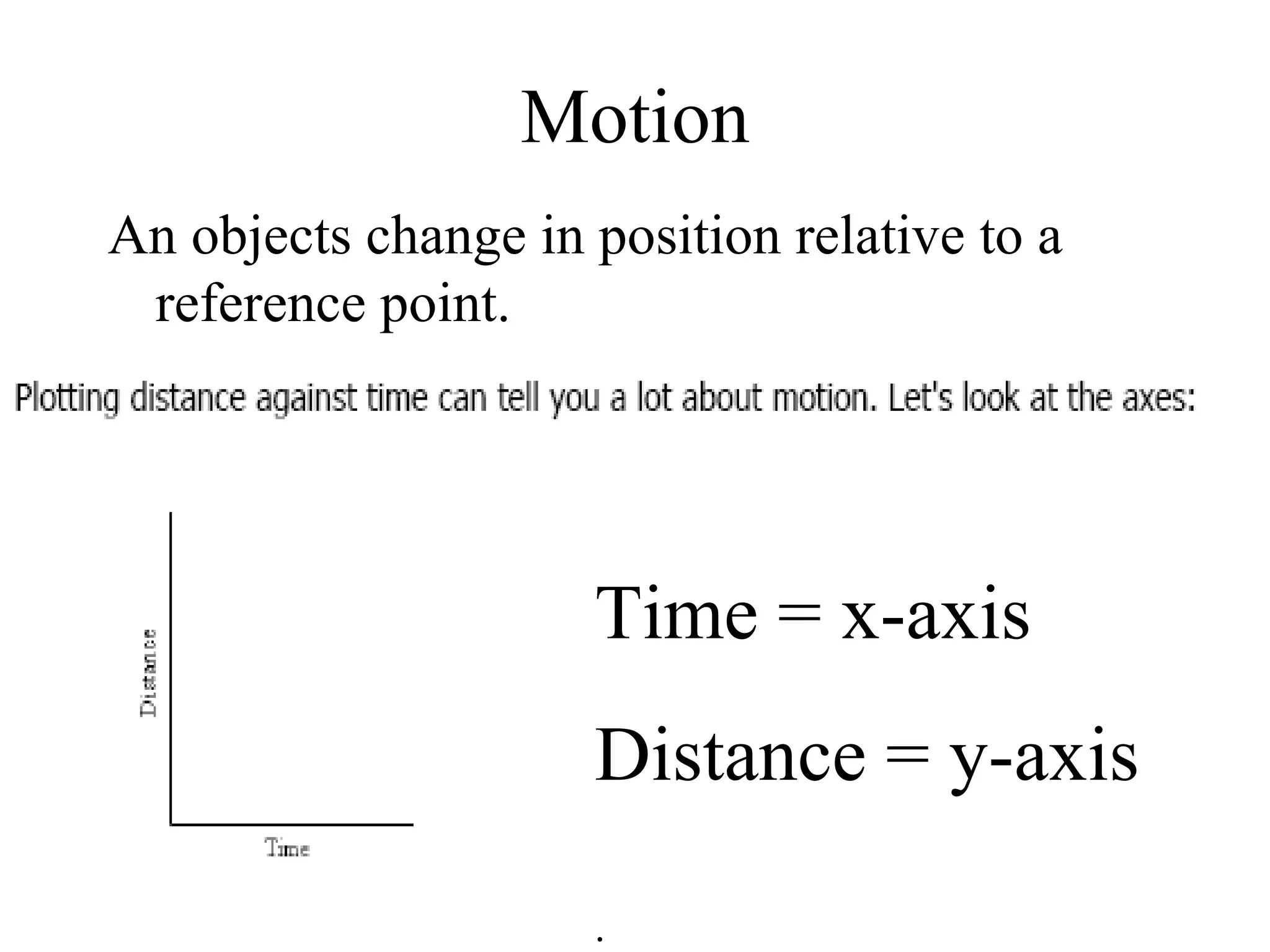
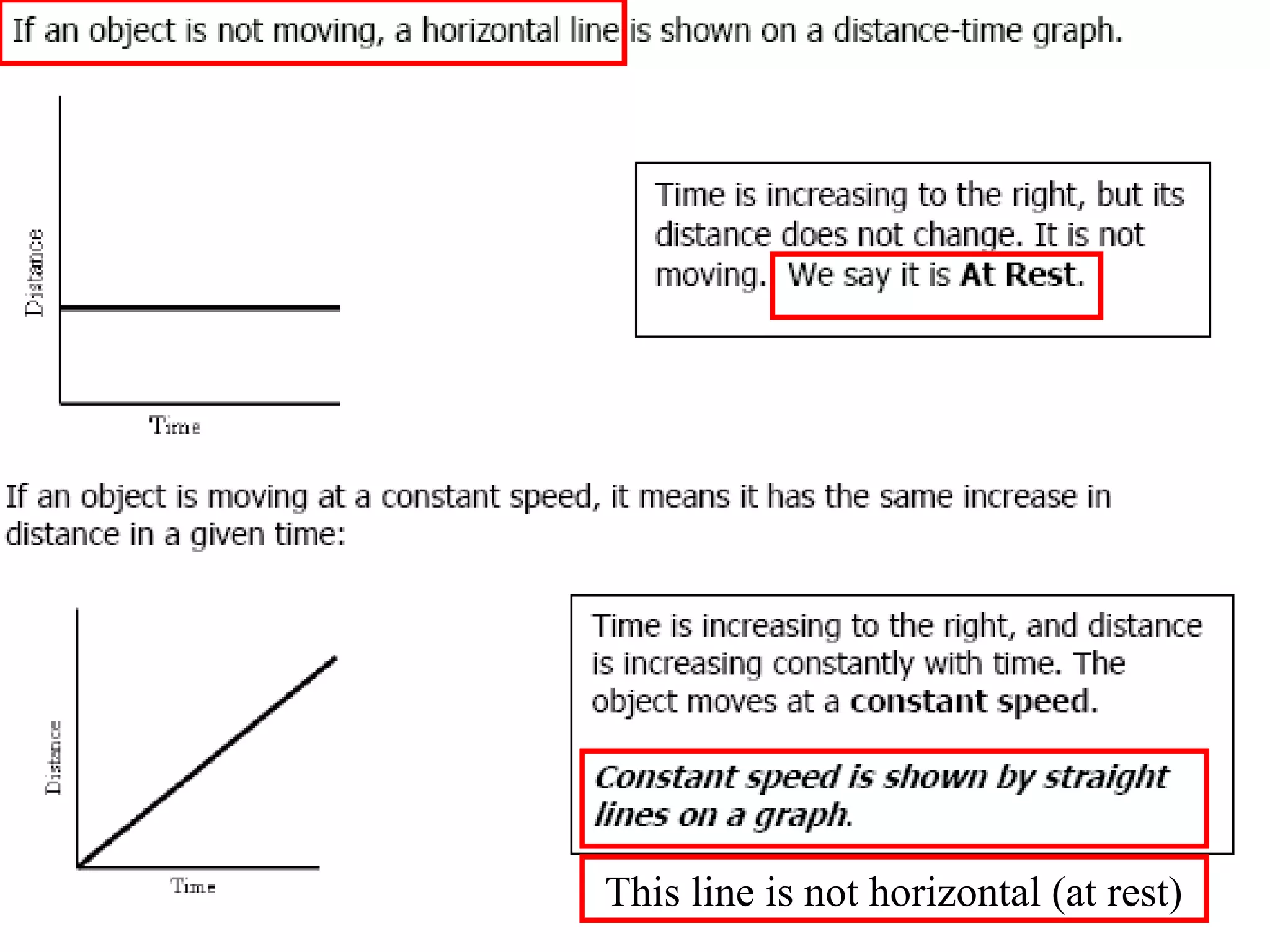
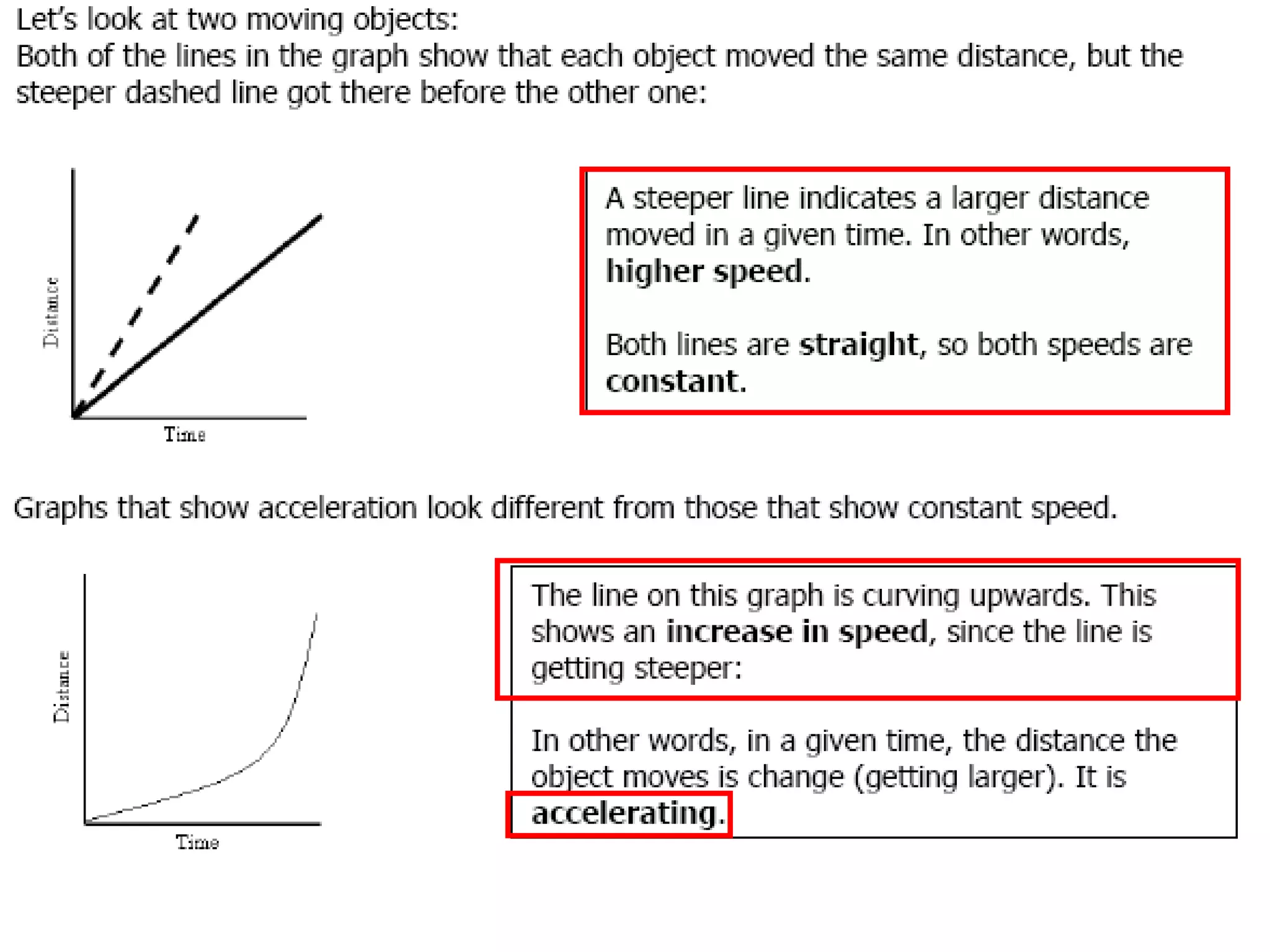
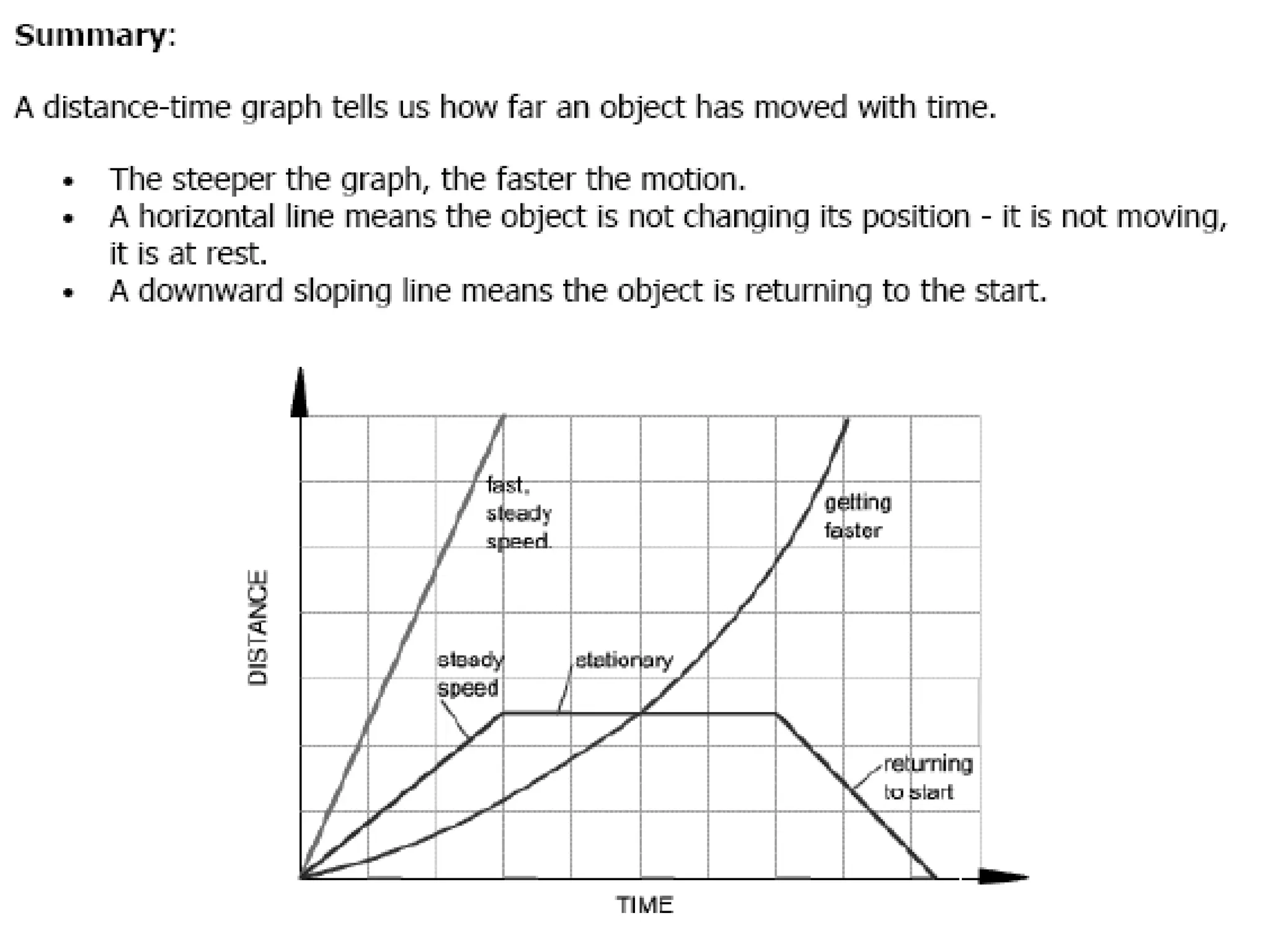
Motion An objects change in position relative to a reference point. Time = x-axis Distance = y-axis .
This line is not horizontal (at rest)
 
 
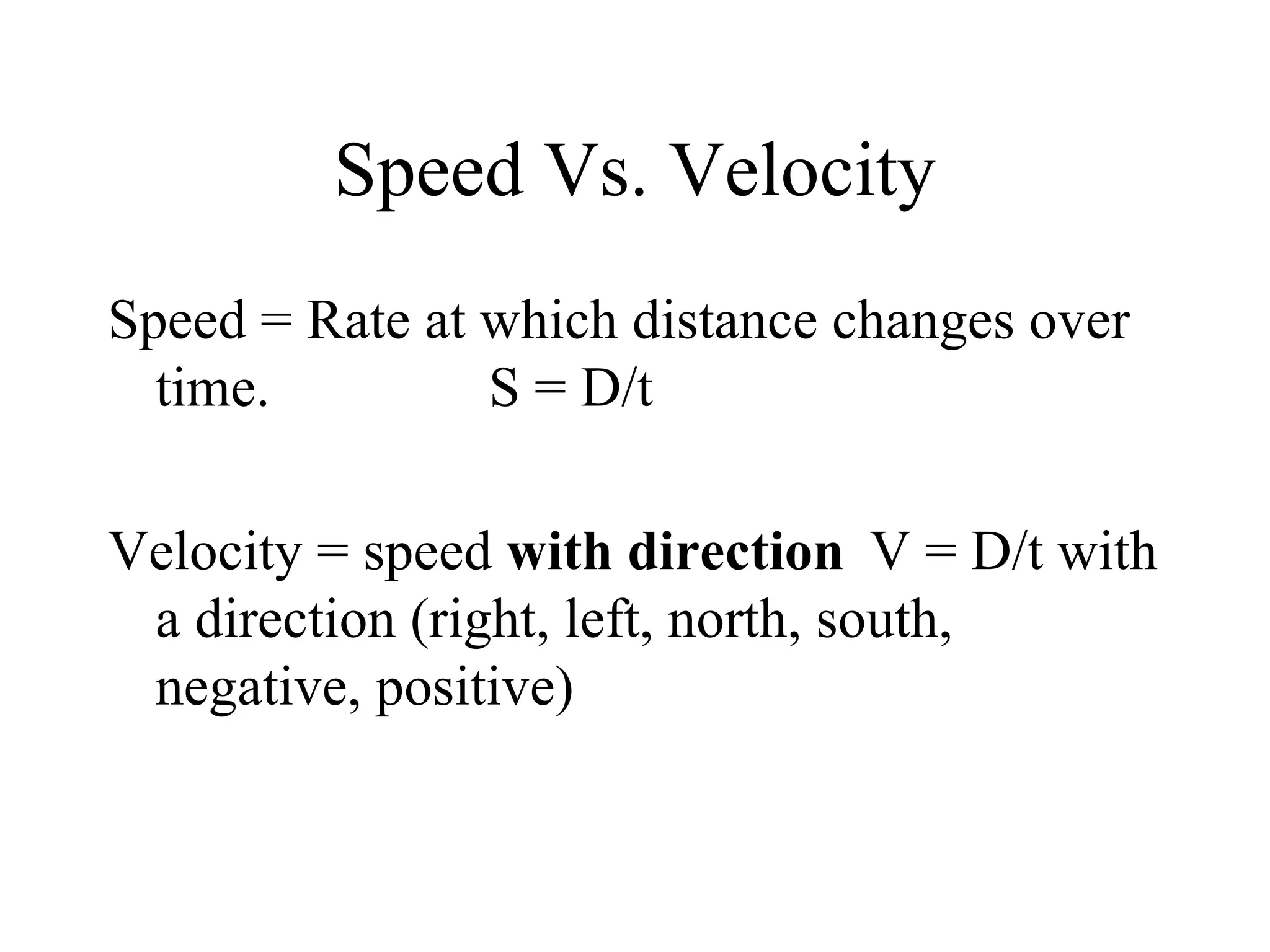
Speed Vs. Velocity Speed = Rate at which distance changes over time. S = D/t Velocity = speed  with direction   V = D/t with a direction (right, left, north, south, negative, positive)
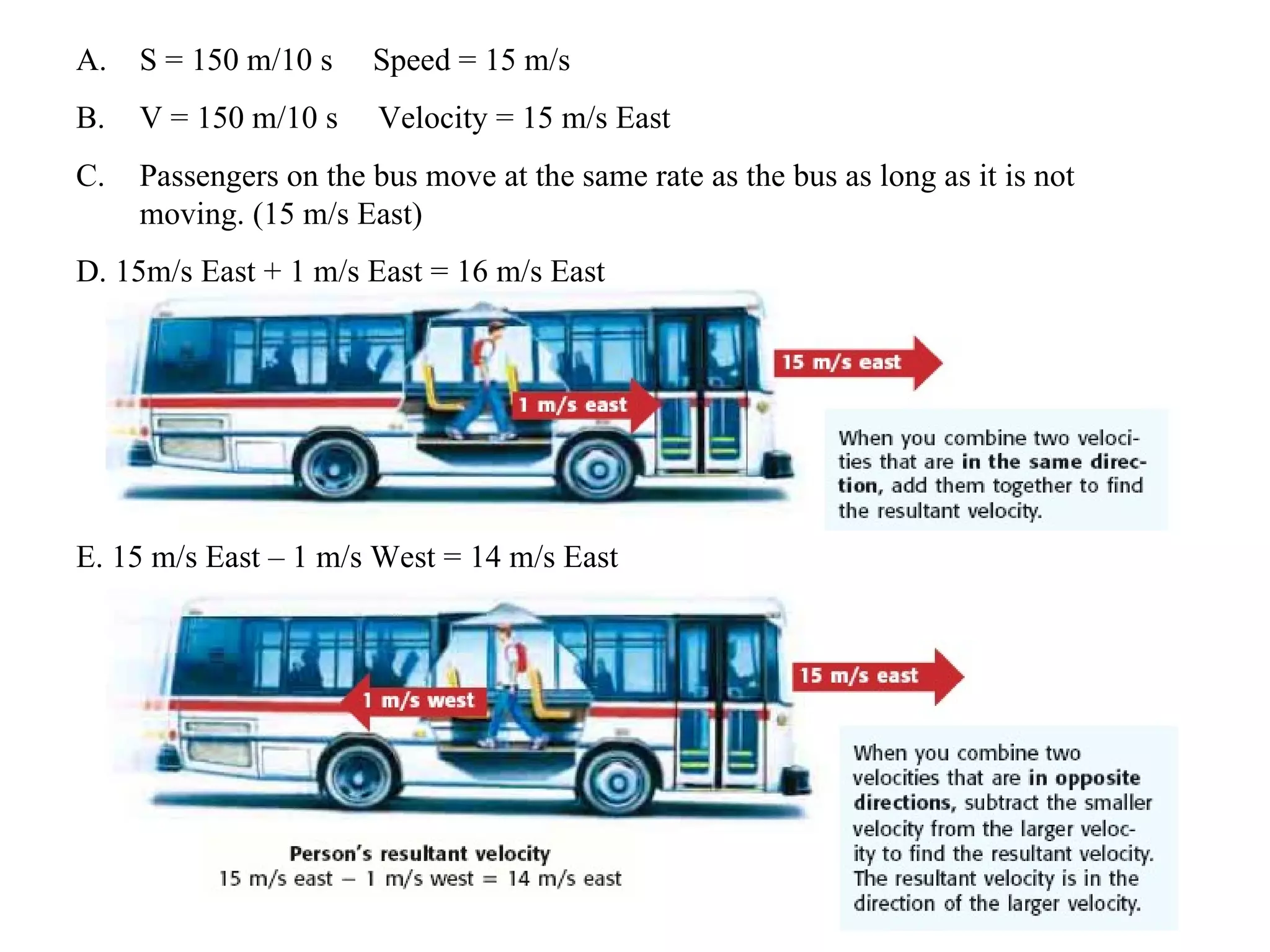
Example A bus moves a distance of 150 m East in 10 seconds. What is the bus’s average speed? What is the bus’s average velocity? What are the passengers on the bus’s average velocity (assume no passengers are moving)? If a passenger stands up and starts moving 1 m/s East, what is the passengers total velocity? If another passenger stands up and starts moving 1 m/s West what is the passengers total velocity?
S = 150 m/10 s  Speed = 15 m/s V = 150 m/10 s  Velocity = 15 m/s East Passengers on the bus move at the same rate as the bus as long as it is not moving. (15 m/s East) D. 15m/s East + 1 m/s East = 16 m/s East E. 15 m/s East – 1 m/s West = 14 m/s East
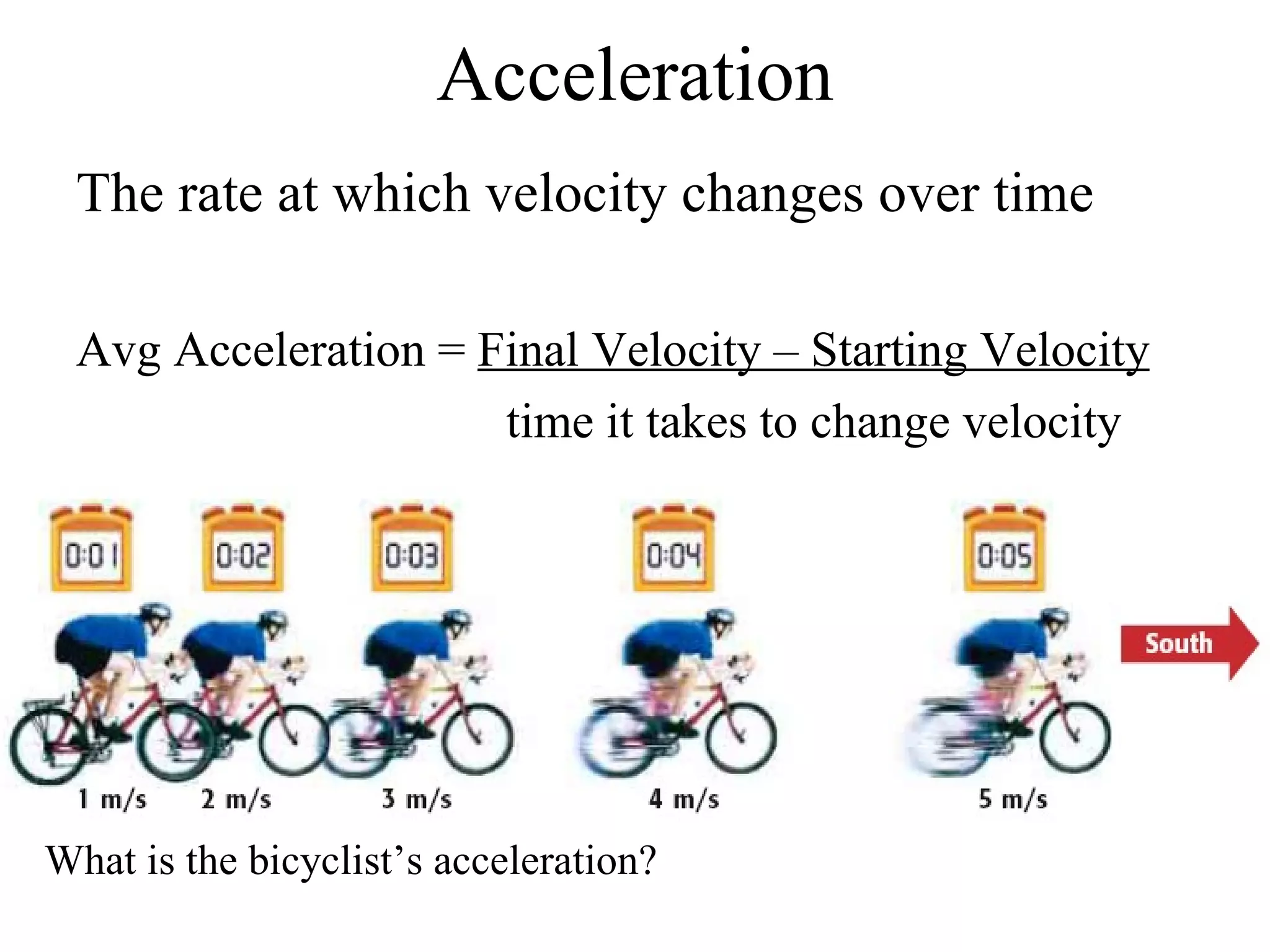
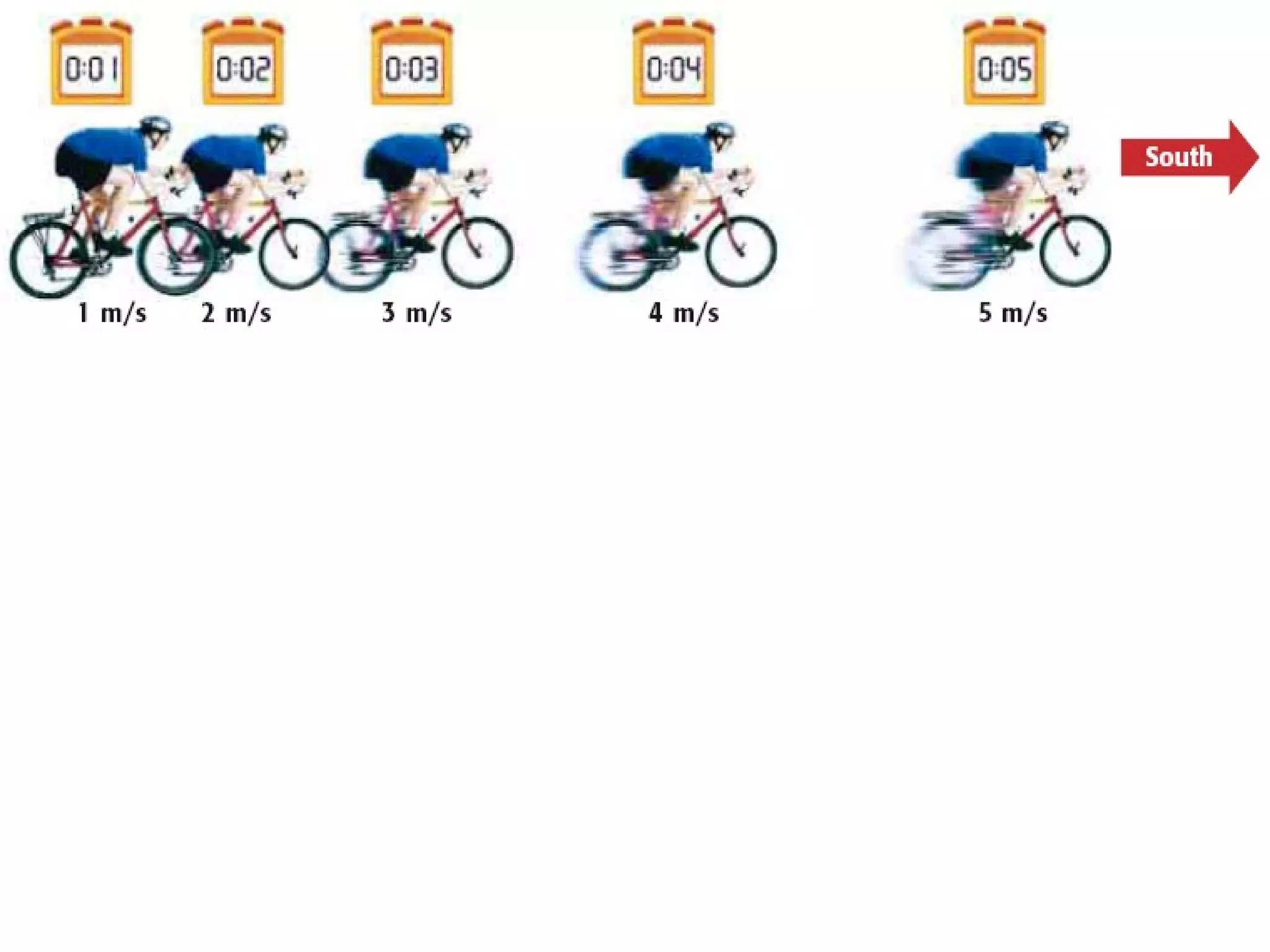
Acceleration The rate at which velocity changes over time Avg Acceleration =  Final Velocity – Starting Velocity   time it takes to change velocity What is the bicyclist’s acceleration?
 
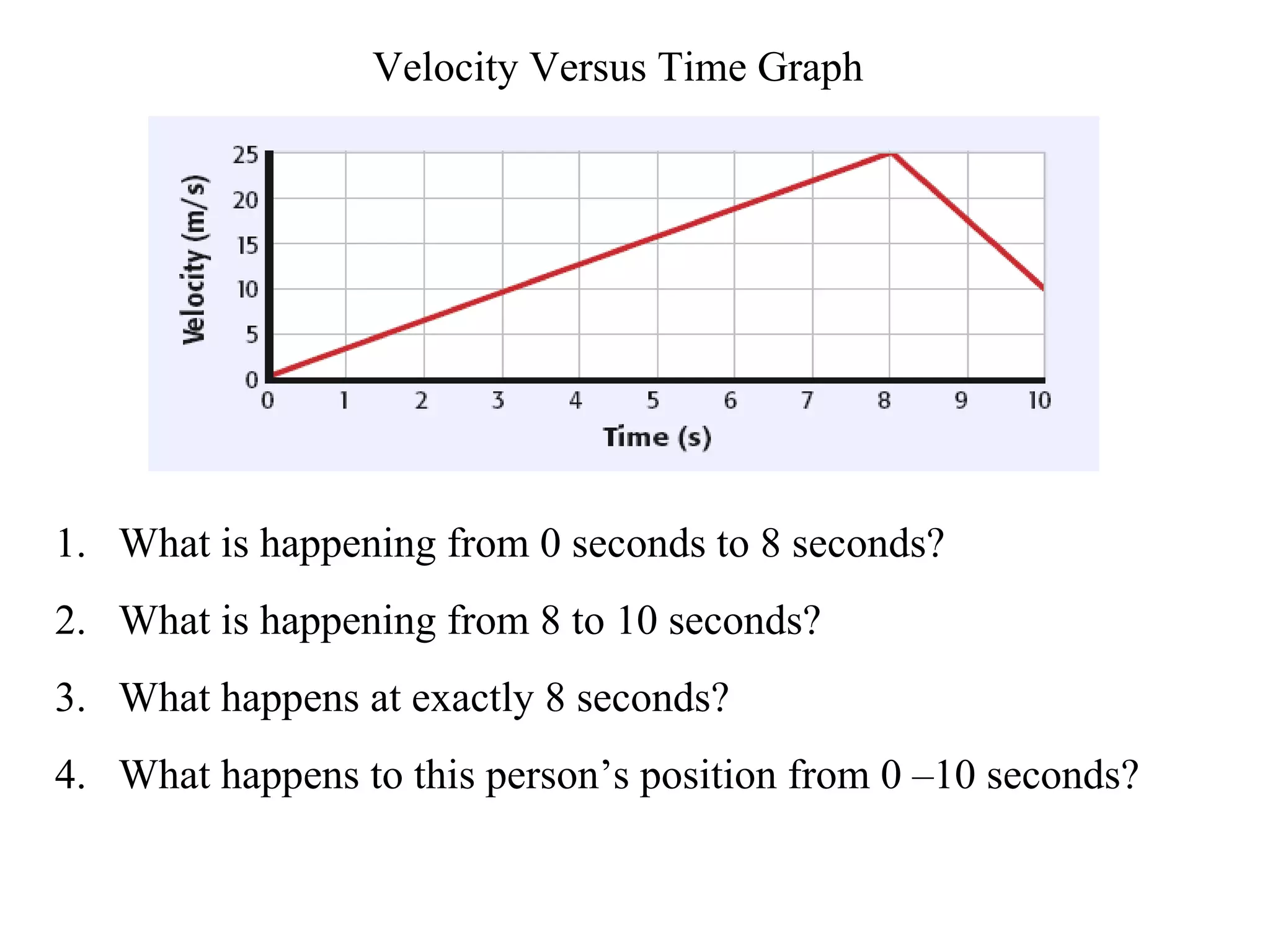
Velocity Versus Time Graph What is happening from 0 seconds to 8 seconds? What is happening from 8 to 10 seconds? What happens at exactly 8 seconds? What happens to this person’s position from 0 –10 seconds?
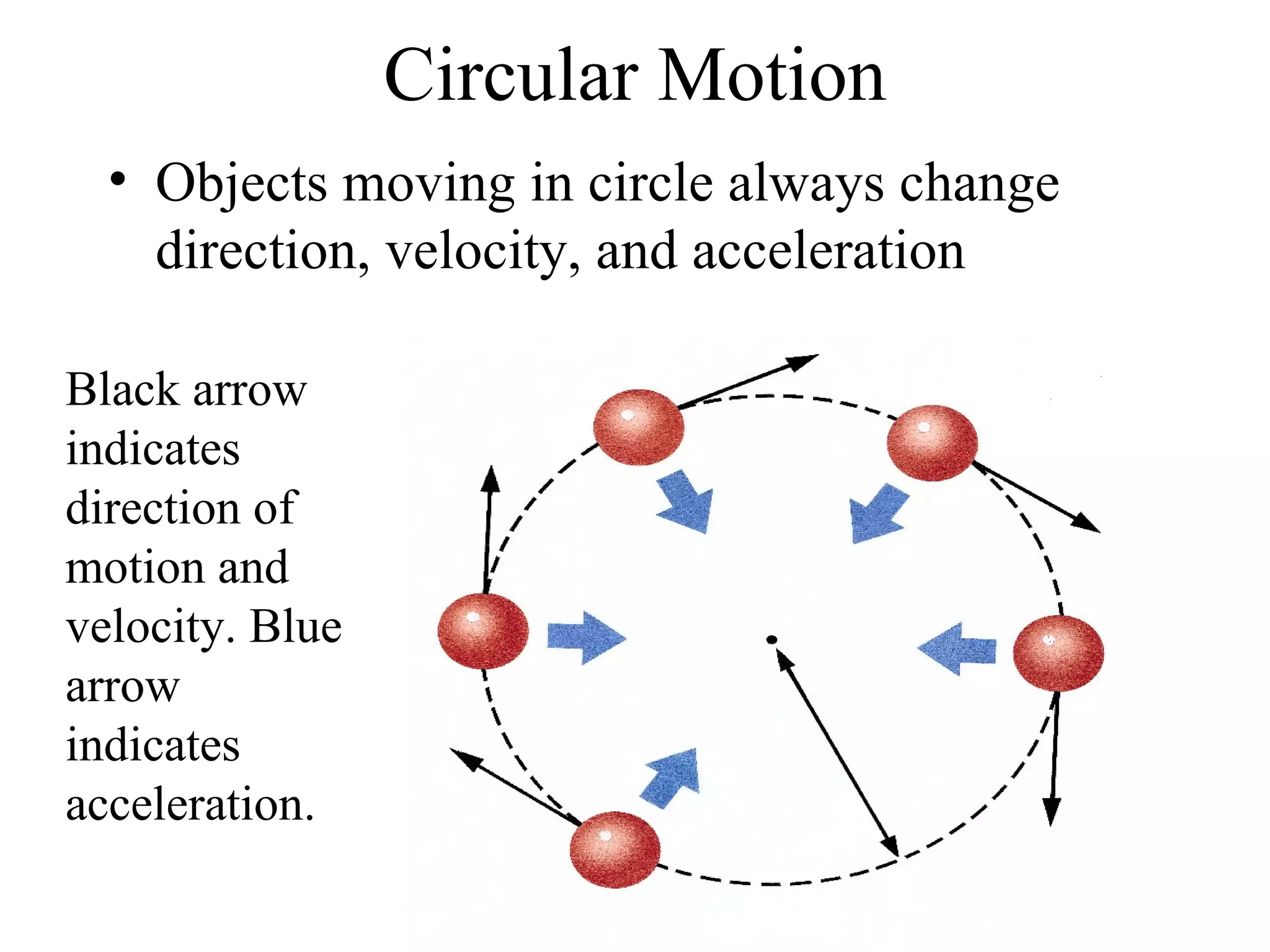
Circular Motion Objects moving in circle always change direction, velocity, and acceleration Black arrow indicates direction of motion and velocity. Blue arrow indicates acceleration.

1 Measuring Motion

  • 1.
  • 2.
    How do youknow something is moving? An object in outer space appears to be stationary in space. How can we tell it is moving or not moving??? Do these answers work for determining is something is moving on Earth?
  • 3.
    Point of referenceAn object that stays in place compared to an object that is moving. Examples: North Star, mountains on Earth, buildings, trees, etc
  • 4.
    Motion An objectschange in position relative to a reference point. Time = x-axis Distance = y-axis .
  • 5.
    This line isnot horizontal (at rest)
  • 6.
  • 7.
  • 8.
    Speed Vs. VelocitySpeed = Rate at which distance changes over time. S = D/t Velocity = speed with direction V = D/t with a direction (right, left, north, south, negative, positive)
  • 9.
    Example A busmoves a distance of 150 m East in 10 seconds. What is the bus’s average speed? What is the bus’s average velocity? What are the passengers on the bus’s average velocity (assume no passengers are moving)? If a passenger stands up and starts moving 1 m/s East, what is the passengers total velocity? If another passenger stands up and starts moving 1 m/s West what is the passengers total velocity?
  • 10.
    S = 150m/10 s Speed = 15 m/s V = 150 m/10 s Velocity = 15 m/s East Passengers on the bus move at the same rate as the bus as long as it is not moving. (15 m/s East) D. 15m/s East + 1 m/s East = 16 m/s East E. 15 m/s East – 1 m/s West = 14 m/s East
  • 11.
    Acceleration The rateat which velocity changes over time Avg Acceleration = Final Velocity – Starting Velocity time it takes to change velocity What is the bicyclist’s acceleration?
  • 12.
  • 13.
    Velocity Versus TimeGraph What is happening from 0 seconds to 8 seconds? What is happening from 8 to 10 seconds? What happens at exactly 8 seconds? What happens to this person’s position from 0 –10 seconds?
  • 14.
    Circular Motion Objectsmoving in circle always change direction, velocity, and acceleration Black arrow indicates direction of motion and velocity. Blue arrow indicates acceleration.