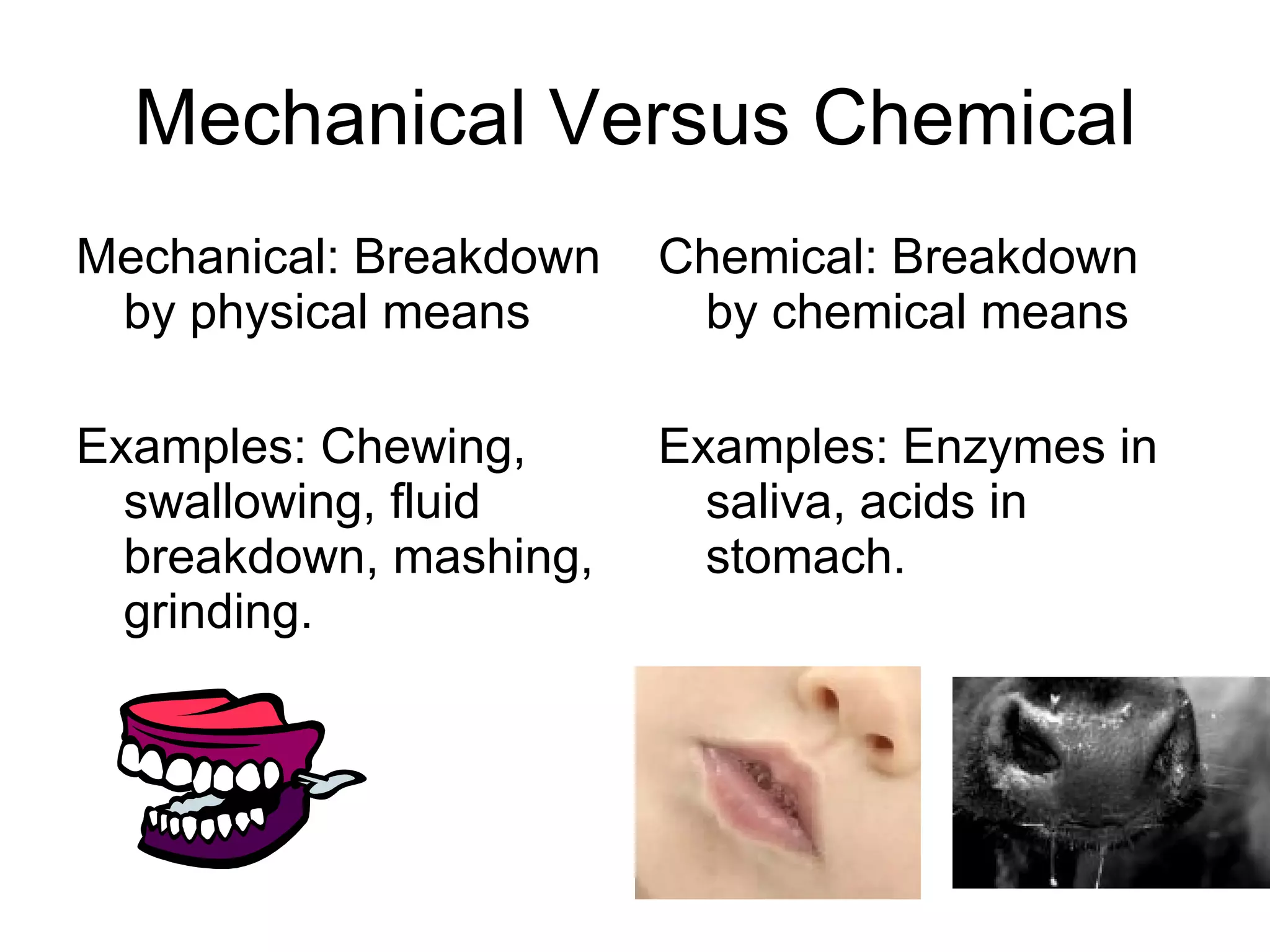
Mechanical Versus Chemical Mechanical: Breakdown by physical means Examples: Chewing, swallowing, fluid breakdown, mashing, grinding. Chemical: Breakdown by chemical means Examples: Enzymes in saliva, acids in stomach.
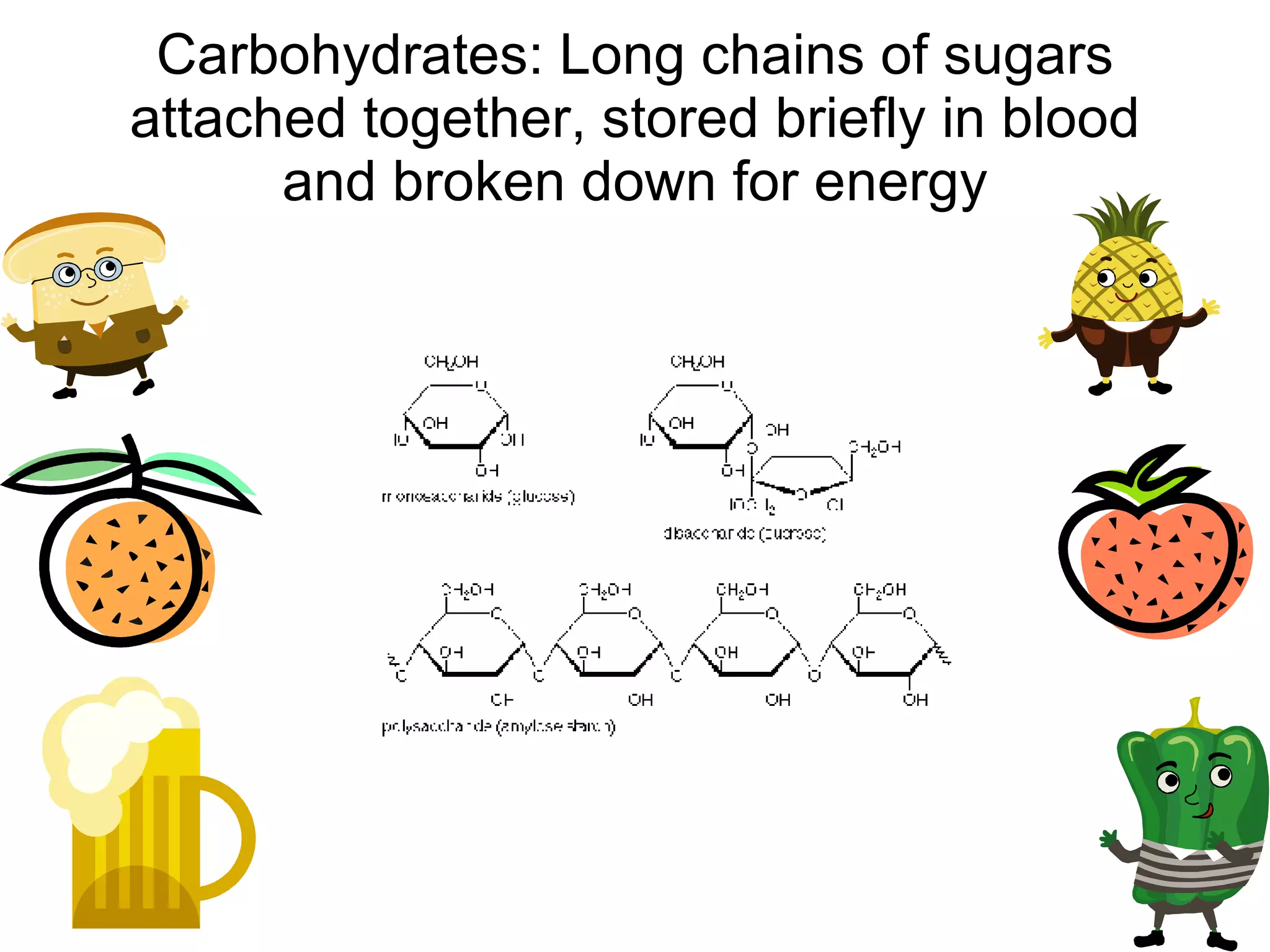
Carbohydrates: Long chains of sugars attached together, stored briefly in blood and broken down for energy
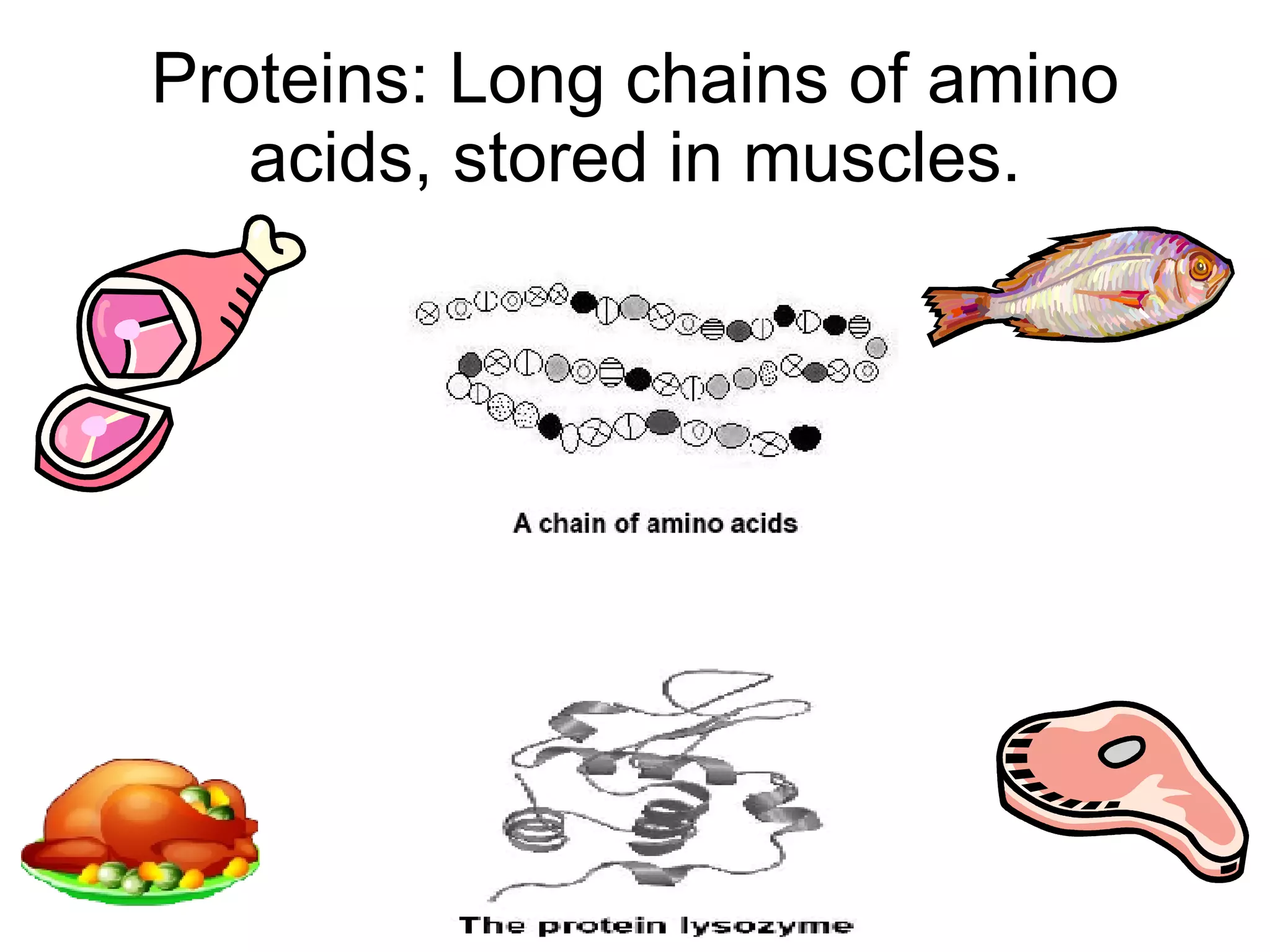
Proteins: Long chains of amino acids, stored in muscles.
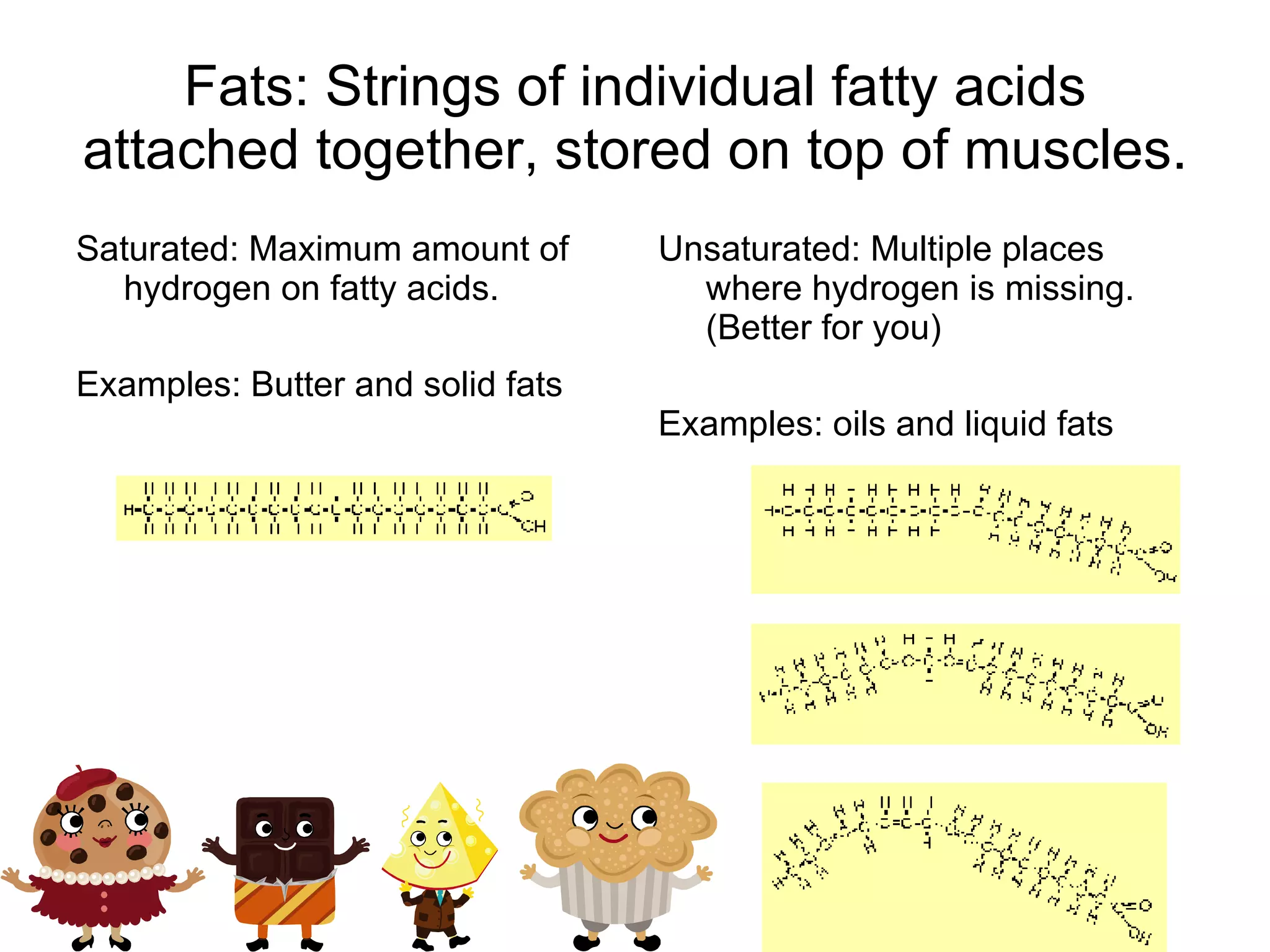
Fats: Strings of individual fatty acids attached together, stored on top of muscles. Saturated: Maximum amount of hydrogen on fatty acids. Examples: Butter and solid fats Unsaturated: Multiple places where hydrogen is missing. (Better for you) Examples: oils and liquid fats
Enzymes: Chemicals that aid in breaking down carbohydrates, fats and proteins. Order of food breakdown Carbohydrates in blood (turned to fat if not used) Fat in body Proteins (muscle degeneration) Diets, do they work? Which ones?

Digestion

  • 1.
    Mechanical Versus ChemicalMechanical: Breakdown by physical means Examples: Chewing, swallowing, fluid breakdown, mashing, grinding. Chemical: Breakdown by chemical means Examples: Enzymes in saliva, acids in stomach.
  • 2.
    Carbohydrates: Long chainsof sugars attached together, stored briefly in blood and broken down for energy
  • 3.
    Proteins: Long chainsof amino acids, stored in muscles.
  • 4.
    Fats: Strings ofindividual fatty acids attached together, stored on top of muscles. Saturated: Maximum amount of hydrogen on fatty acids. Examples: Butter and solid fats Unsaturated: Multiple places where hydrogen is missing. (Better for you) Examples: oils and liquid fats
  • 5.
    Enzymes: Chemicals thataid in breaking down carbohydrates, fats and proteins. Order of food breakdown Carbohydrates in blood (turned to fat if not used) Fat in body Proteins (muscle degeneration) Diets, do they work? Which ones?