Downloaded 18 times
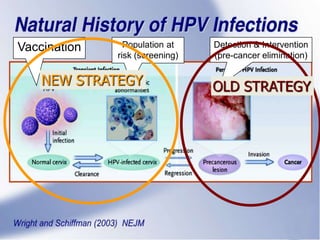

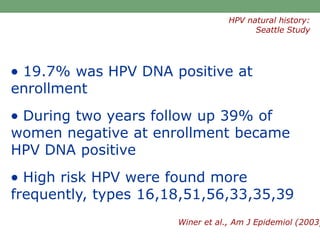
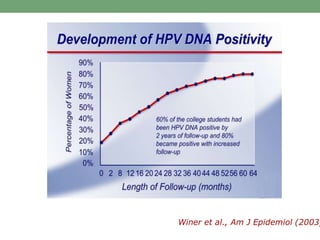
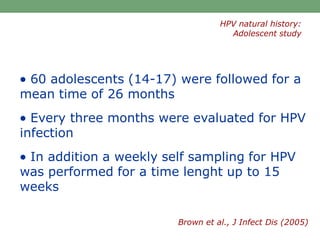
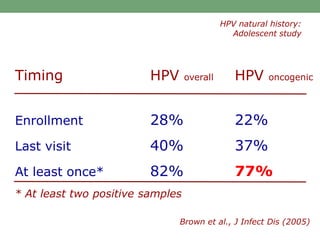
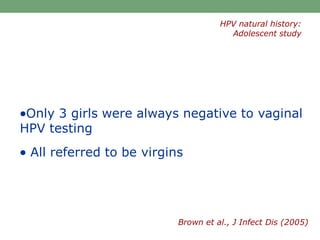
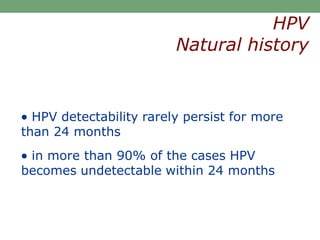
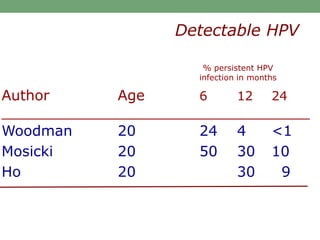
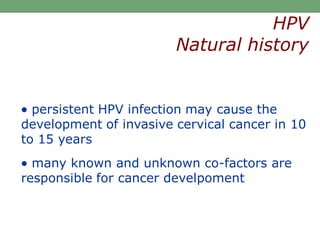
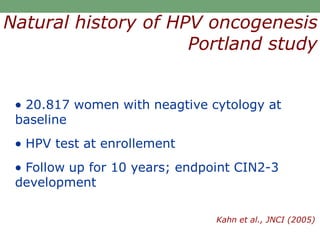
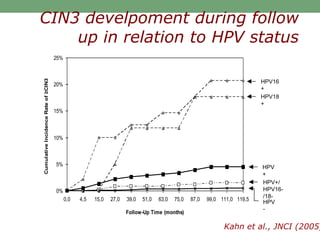
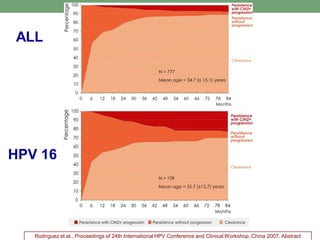
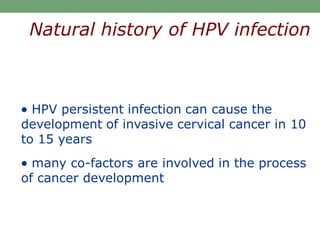
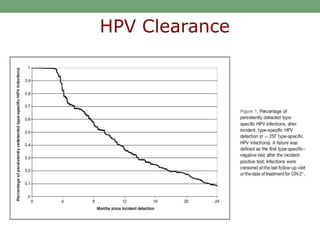
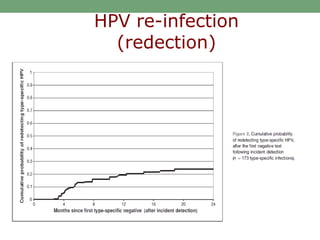
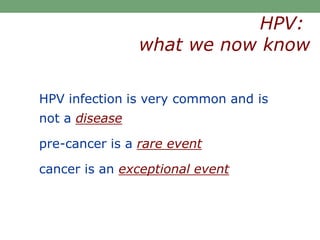
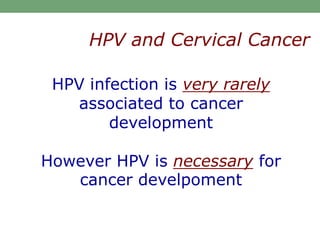
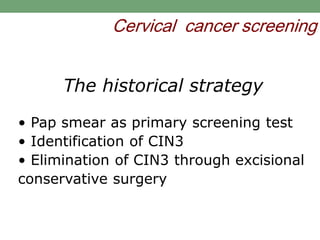
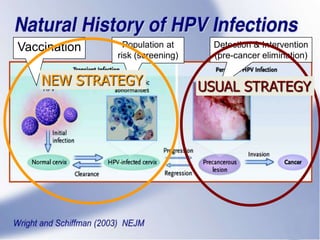
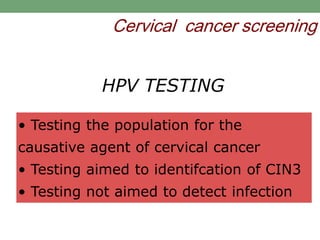
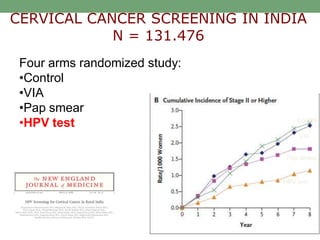
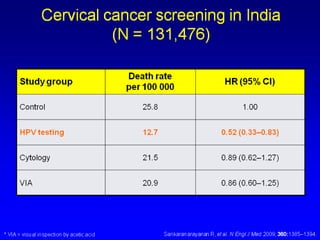
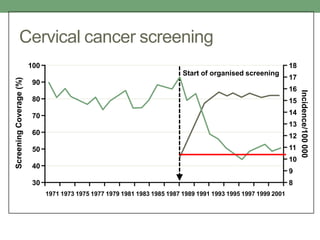
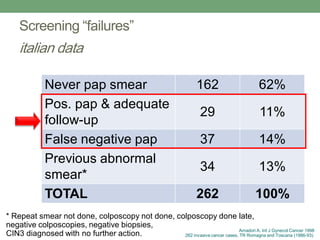
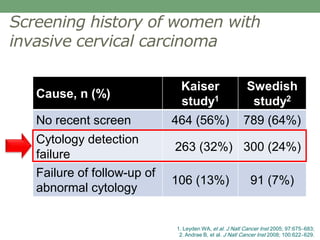
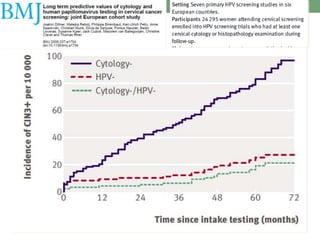
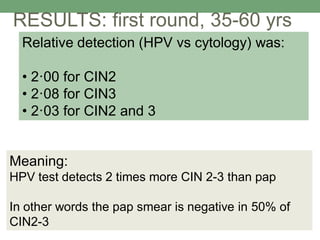
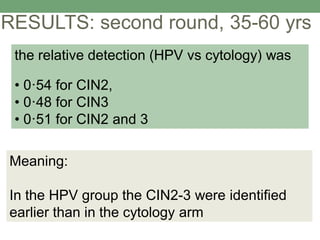
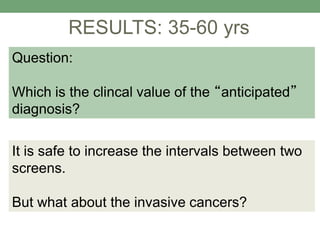
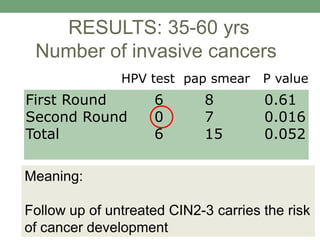
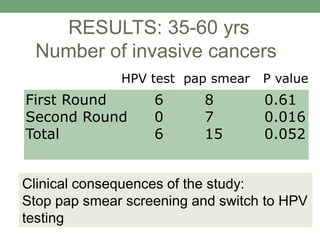
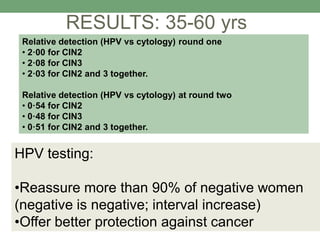
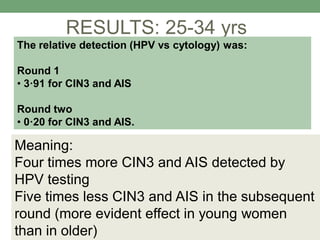
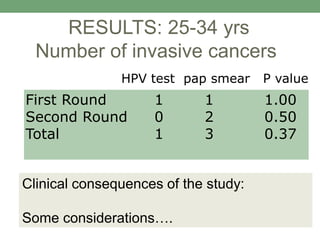
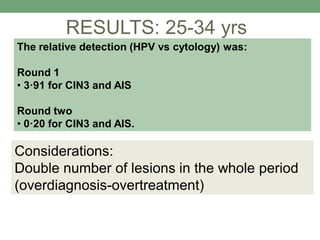
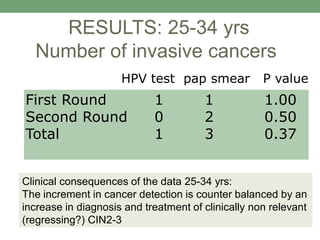
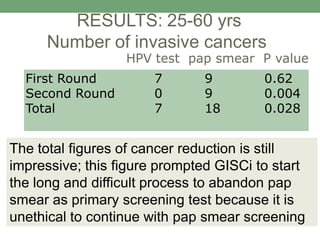
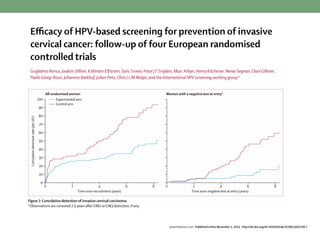
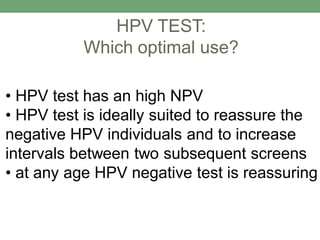
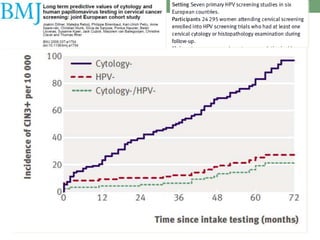
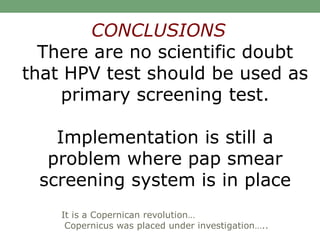


This document summarizes key findings about HPV natural history and HPV testing for cervical cancer screening. It was found that HPV infection is very common but rarely leads to cancer. While persistent HPV infection can cause cervical cancer after 10-15 years, many cofactors are also involved in cancer development. Studies showed that HPV becomes undetectable within 2 years for most women. HPV testing was found to detect more pre-cancer than pap smears but also detected more lesions that may regress. HPV testing allows longer screening intervals for HPV-negative women and better protection against cancer compared to pap smears alone. While HPV testing is more effective, implementing new screening strategies poses challenges where pap smear systems are already in place.


