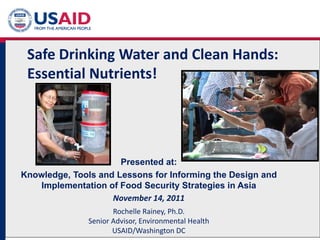
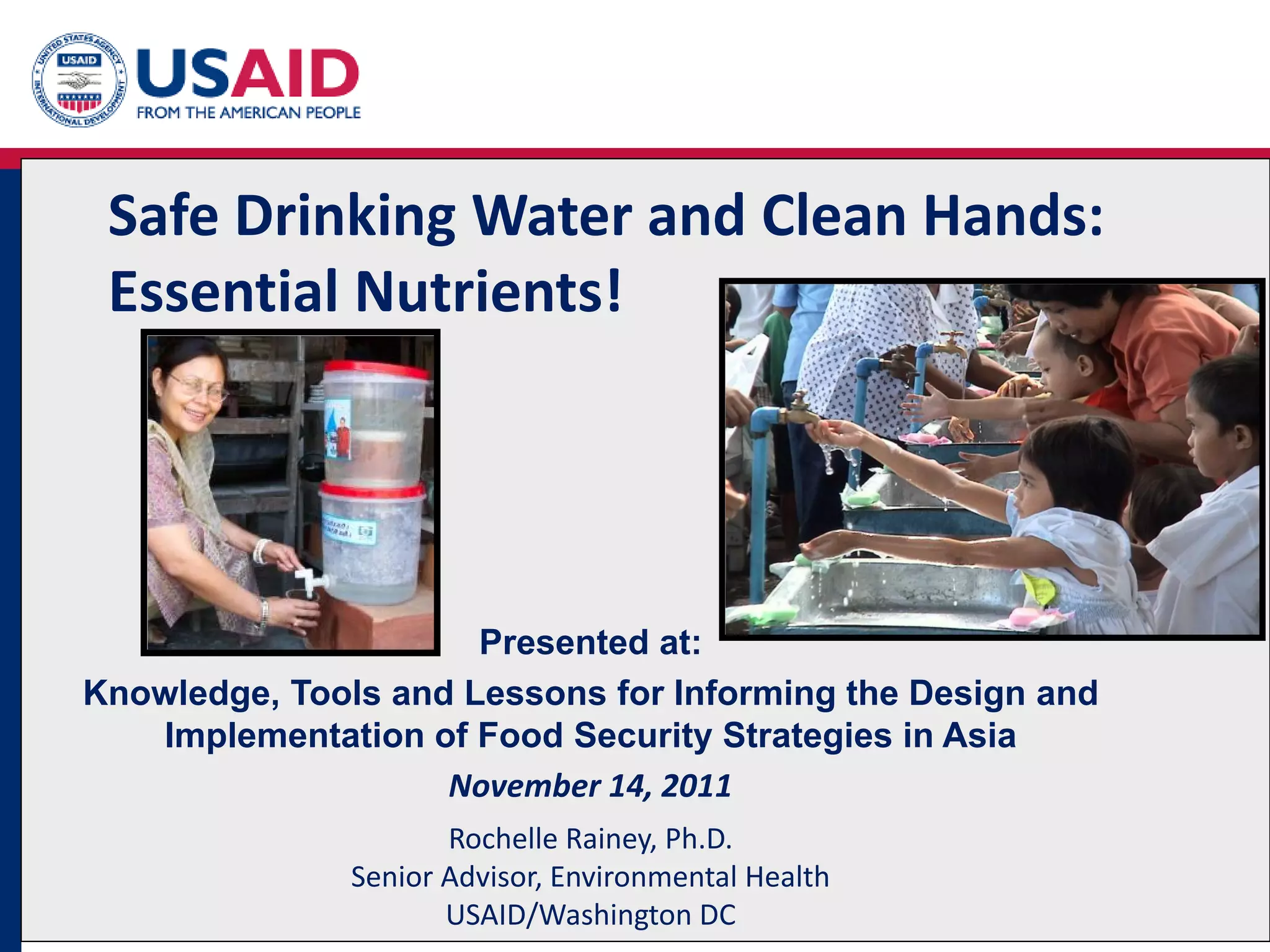
Safe Drinking Water and Clean Hands:
Essential Nutrients!
Presented at:
Knowledge, Tools and Lessons for Informing the Design and
Implementation of Food Security Strategies in Asia
November 14, 2011
Rochelle Rainey, Ph.D.
Senior Advisor, Environmental Health
USAID/Washington DC
Objectives
1. To understand the connections
between undernutrition and WASH*
2. To understand ways to prevent
diarrhea and undernutrition
3. To understand options for integrating
WASH into agriculture programs for
improved nutrition
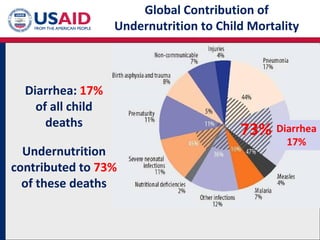
Global Contribution of
Undernutrition to Child Mortality
Diarrhea: 17%
of all child
deaths
Undernutrition
contributed to 73%
of these deaths
Diarrhea
17%
73%
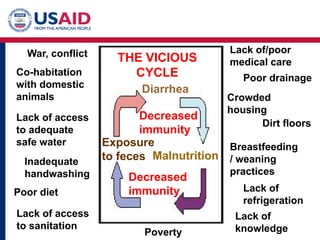
Co-habitation
with domestic
animals
Lack of access
to adequate
safe water
Dirt floors
Crowded
housing
Poor diet Lack of
refrigeration
Lack of/poor
medical care
Breastfeeding
/ weaning
practices
Lack of access
to sanitation
Inadequate
handwashing
Poverty
Lack of
knowledge
War, conflict THE VICIOUS
CYCLE
Diarrhea
Exposure
to feces Malnutrition
Decreased
immunity
Poor drainage
Decreased
immunity
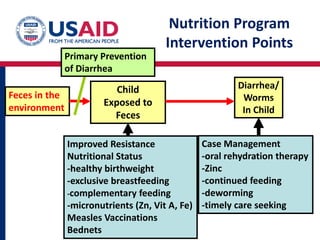
Nutrition Program
Intervention Points
Feces in the
environment
Child
Exposed to
Feces
Diarrhea/
Worms
In Child
Improved Resistance
Nutritional Status
-healthy birthweight
-exclusive breastfeeding
-complementary feeding
-micronutrients (Zn, Vit A, Fe)
Measles Vaccinations
Bednets
Case Management
-oral rehydration therapy
-Zinc
-continued feeding
-deworming
-timely care seeking
Primary Prevention
of Diarrhea
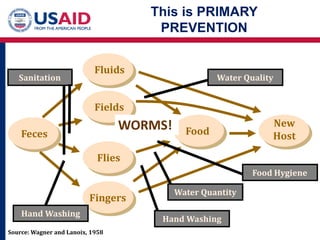
This is PRIMARY
PREVENTION
Fields
Fluids
Fingers
Flies
Feces Food
New
Host
Hand Washing
Source: Wagner and Lanoix, 1958
Water Quality
Water Quantity
Food Hygiene
Hand Washing
Sanitation
WORMS!
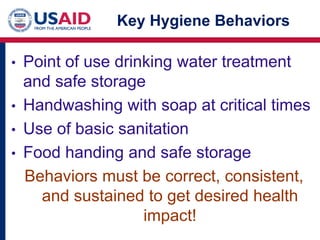
Key Hygiene Behaviors
• Point of use drinking water treatment
and safe storage
• Handwashing with soap at critical times
• Use of basic sanitation
• Food handing and safe storage
Behaviors must be correct, consistent,
and sustained to get desired health
impact!
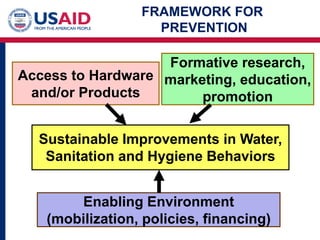
Enabling Environment
(mobilization, policies, financing)
Access to Hardware
and/or Products
Formative research,
marketing, education,
promotion
Sustainable Improvements in Water,
Sanitation and Hygiene Behaviors
FRAMEWORK FOR
PREVENTION
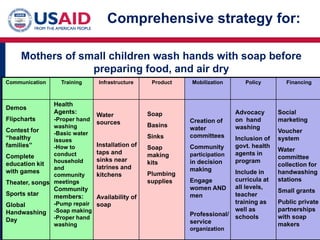
Mothers of small children wash hands with soap before
preparing food, and air dry
Comprehensive strategy for:
Communication Training Infrastructure Product Mobilization Policy Financing
Demos
Flipcharts
Contest for
“healthy
families”
Complete
education kit
with games
Theater, songs
Sports star
Global
Handwashing
Day
Health
Agents:
-Proper hand
washing
-Basic water
issues
-How to
conduct
household
and
community
meetings
Community
members:
-Pump repair
-Soap making
-Proper hand
washing
Creation of
water
committees
Community
participation
in decision
making
Engage
women AND
men
Professional/
service
organization
Water
sources
Installation of
taps and
sinks near
latrines and
kitchens
Availability of
soap
Soap
Basins
Sinks
Soap
making
kits
Plumbing
supplies
Advocacy
on hand
washing
Inclusion of
govt. health
agents in
program
Include in
curricula at
all levels,
teacher
training as
well as
schools
Social
marketing
Voucher
system
Water
committee
collection for
handwashing
stations
Small grants
Public private
partnerships
with soap
makers
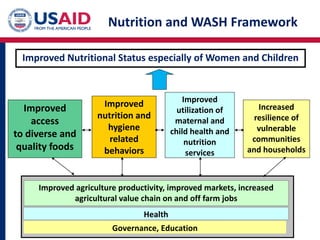
Improved Nutritional Status especially of Women and Children
Improved
access
to diverse and
quality foods
Improved
nutrition and
hygiene
related
behaviors
Improved
utilization of
maternal and
child health and
nutrition
services
Increased
resilience of
vulnerable
communities
and households
Improved agriculture productivity, improved markets, increased
agricultural value chain on and off farm jobs
Health
Nutrition and WASH Framework
Governance, Education
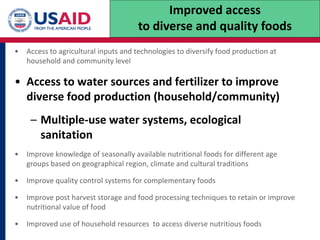
• Access to agricultural inputs and technologies to diversify food production at
household and community level
• Access to water sources and fertilizer to improve
diverse food production (household/community)
– Multiple-use water systems, ecological
sanitation
• Improve knowledge of seasonally available nutritional foods for different age
groups based on geographical region, climate and cultural traditions
• Improve quality control systems for complementary foods
• Improve post harvest storage and food processing techniques to retain or improve
nutritional value of food
• Improved use of household resources to access diverse nutritious foods
Improved access
to diverse and quality foods
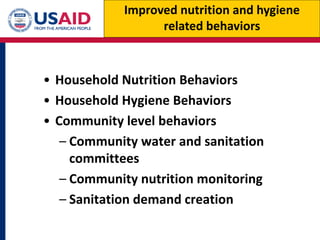
• Household Nutrition Behaviors
• Household Hygiene Behaviors
• Community level behaviors
– Community water and sanitation
committees
– Community nutrition monitoring
– Sanitation demand creation
Improved nutrition and hygiene
related behaviors
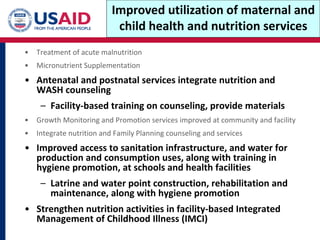
• Treatment of acute malnutrition
• Micronutrient Supplementation
• Antenatal and postnatal services integrate nutrition and
WASH counseling
– Facility-based training on counseling, provide materials
• Growth Monitoring and Promotion services improved at community and facility
• Integrate nutrition and Family Planning counseling and services
• Improved access to sanitation infrastructure, and water for
production and consumption uses, along with training in
hygiene promotion, at schools and health facilities
– Latrine and water point construction, rehabilitation and
maintenance, along with hygiene promotion
• Strengthen nutrition activities in facility-based Integrated
Management of Childhood Illness (IMCI)
Improved utilization of maternal and
child health and nutrition services
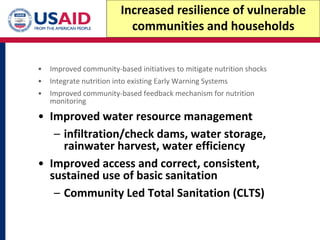
• Improved community-based initiatives to mitigate nutrition shocks
• Integrate nutrition into existing Early Warning Systems
• Improved community-based feedback mechanism for nutrition
monitoring
• Improved water resource management
– infiltration/check dams, water storage,
rainwater harvest, water efficiency
• Improved access and correct, consistent,
sustained use of basic sanitation
– Community Led Total Sanitation (CLTS)
Increased resilience of vulnerable
communities and households
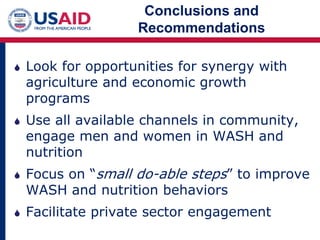
Conclusions and
Recommendations
 Look for opportunities for synergy with
agriculture and economic growth
programs
 Use all available channels in community,
engage men and women in WASH and
nutrition
 Focus on “small do-able steps” to improve
WASH and nutrition behaviors
 Facilitate private sector engagement
Thanks for your time!
Questions?
Rochelle Rainey
USAID/Washington
rrainey@usaid.gov
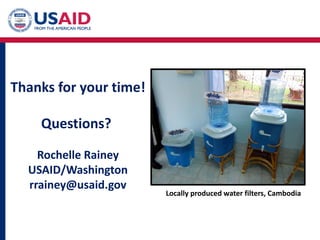
Locally produced water filters, Cambodia

Safe drinking water and clean hands: Essential nutrients!

  • 1.
    Safe Drinking Waterand Clean Hands: Essential Nutrients! Presented at: Knowledge, Tools and Lessons for Informing the Design and Implementation of Food Security Strategies in Asia November 14, 2011 Rochelle Rainey, Ph.D. Senior Advisor, Environmental Health USAID/Washington DC
  • 2.
    Objectives 1. To understandthe connections between undernutrition and WASH* 2. To understand ways to prevent diarrhea and undernutrition 3. To understand options for integrating WASH into agriculture programs for improved nutrition
  • 3.
    Global Contribution of Undernutritionto Child Mortality Diarrhea: 17% of all child deaths Undernutrition contributed to 73% of these deaths Diarrhea 17% 73%
  • 4.
    Co-habitation with domestic animals Lack ofaccess to adequate safe water Dirt floors Crowded housing Poor diet Lack of refrigeration Lack of/poor medical care Breastfeeding / weaning practices Lack of access to sanitation Inadequate handwashing Poverty Lack of knowledge War, conflict THE VICIOUS CYCLE Diarrhea Exposure to feces Malnutrition Decreased immunity Poor drainage Decreased immunity
  • 5.
    Nutrition Program Intervention Points Fecesin the environment Child Exposed to Feces Diarrhea/ Worms In Child Improved Resistance Nutritional Status -healthy birthweight -exclusive breastfeeding -complementary feeding -micronutrients (Zn, Vit A, Fe) Measles Vaccinations Bednets Case Management -oral rehydration therapy -Zinc -continued feeding -deworming -timely care seeking Primary Prevention of Diarrhea
  • 6.
    This is PRIMARY PREVENTION Fields Fluids Fingers Flies FecesFood New Host Hand Washing Source: Wagner and Lanoix, 1958 Water Quality Water Quantity Food Hygiene Hand Washing Sanitation WORMS!
  • 7.
    Key Hygiene Behaviors •Point of use drinking water treatment and safe storage • Handwashing with soap at critical times • Use of basic sanitation • Food handing and safe storage Behaviors must be correct, consistent, and sustained to get desired health impact!
  • 8.
    Enabling Environment (mobilization, policies,financing) Access to Hardware and/or Products Formative research, marketing, education, promotion Sustainable Improvements in Water, Sanitation and Hygiene Behaviors FRAMEWORK FOR PREVENTION
  • 9.
    Mothers of smallchildren wash hands with soap before preparing food, and air dry Comprehensive strategy for: Communication Training Infrastructure Product Mobilization Policy Financing Demos Flipcharts Contest for “healthy families” Complete education kit with games Theater, songs Sports star Global Handwashing Day Health Agents: -Proper hand washing -Basic water issues -How to conduct household and community meetings Community members: -Pump repair -Soap making -Proper hand washing Creation of water committees Community participation in decision making Engage women AND men Professional/ service organization Water sources Installation of taps and sinks near latrines and kitchens Availability of soap Soap Basins Sinks Soap making kits Plumbing supplies Advocacy on hand washing Inclusion of govt. health agents in program Include in curricula at all levels, teacher training as well as schools Social marketing Voucher system Water committee collection for handwashing stations Small grants Public private partnerships with soap makers
  • 10.
    Improved Nutritional Statusespecially of Women and Children Improved access to diverse and quality foods Improved nutrition and hygiene related behaviors Improved utilization of maternal and child health and nutrition services Increased resilience of vulnerable communities and households Improved agriculture productivity, improved markets, increased agricultural value chain on and off farm jobs Health Nutrition and WASH Framework Governance, Education
  • 11.
    • Access toagricultural inputs and technologies to diversify food production at household and community level • Access to water sources and fertilizer to improve diverse food production (household/community) – Multiple-use water systems, ecological sanitation • Improve knowledge of seasonally available nutritional foods for different age groups based on geographical region, climate and cultural traditions • Improve quality control systems for complementary foods • Improve post harvest storage and food processing techniques to retain or improve nutritional value of food • Improved use of household resources to access diverse nutritious foods Improved access to diverse and quality foods
  • 12.
    • Household NutritionBehaviors • Household Hygiene Behaviors • Community level behaviors – Community water and sanitation committees – Community nutrition monitoring – Sanitation demand creation Improved nutrition and hygiene related behaviors
  • 13.
    • Treatment ofacute malnutrition • Micronutrient Supplementation • Antenatal and postnatal services integrate nutrition and WASH counseling – Facility-based training on counseling, provide materials • Growth Monitoring and Promotion services improved at community and facility • Integrate nutrition and Family Planning counseling and services • Improved access to sanitation infrastructure, and water for production and consumption uses, along with training in hygiene promotion, at schools and health facilities – Latrine and water point construction, rehabilitation and maintenance, along with hygiene promotion • Strengthen nutrition activities in facility-based Integrated Management of Childhood Illness (IMCI) Improved utilization of maternal and child health and nutrition services
  • 14.
    • Improved community-basedinitiatives to mitigate nutrition shocks • Integrate nutrition into existing Early Warning Systems • Improved community-based feedback mechanism for nutrition monitoring • Improved water resource management – infiltration/check dams, water storage, rainwater harvest, water efficiency • Improved access and correct, consistent, sustained use of basic sanitation – Community Led Total Sanitation (CLTS) Increased resilience of vulnerable communities and households
  • 15.
    Conclusions and Recommendations  Lookfor opportunities for synergy with agriculture and economic growth programs  Use all available channels in community, engage men and women in WASH and nutrition  Focus on “small do-able steps” to improve WASH and nutrition behaviors  Facilitate private sector engagement
  • 16.
    Thanks for yourtime! Questions? Rochelle Rainey USAID/Washington rrainey@usaid.gov Locally produced water filters, Cambodia