OECD/ECLAC REGIONAL CONSULTATION 
Inclusive Growth in Latin America and the Caribbean 
Education and Inclusive Growth in Brazil 
Naercio Menezes Filho 
Insper Institute and University of Sao Paulo
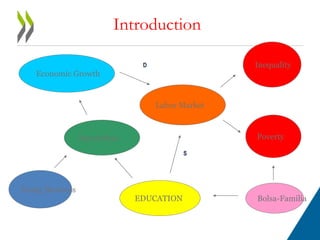
Introduction 
Labor Market 
Innovation Poverty 
EDUCATION 
Economic Growth 
Inequality 
Bolsa-Familia 
S 
D 
Doing Business
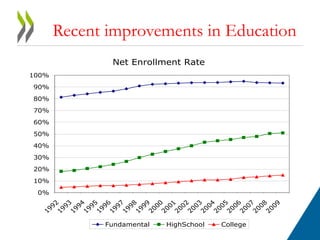
Recent improvements in Education 
Net Enrollment Rate 
100% 
90% 
80% 
70% 
60% 
50% 
40% 
30% 
20% 
10% 
0% 
1992 
1993 
1994 
1995 
1996 
1997 
1998 
1999 
2000 
2001 
2002 
2003 
2004 
2005 
2006 
2007 
2008 
2009 
Fundamental HighSchool College
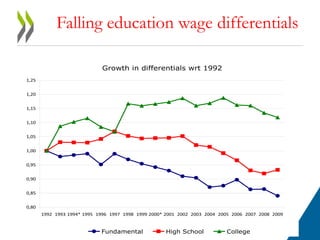
Falling education wage differentials 
Growth in differentials wrt 1992 
1,25 
1,20 
1,15 
1,10 
1,05 
1,00 
0,95 
0,90 
0,85 
0,80 
1992 1993 1994* 1995 1996 1997 1998 1999 2000* 2001 2002 2003 2004 2005 2006 2007 2008 2009 
Fundamental High School College
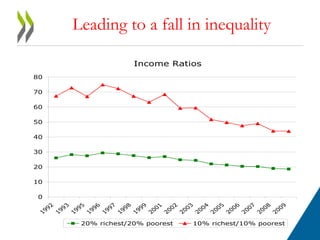
Leading to a fall in inequality 
Income Ratios 
80 
70 
60 
50 
40 
30 
20 
10 
0 
1992 
1993 
1995 
1996 
1997 
1998 
1999 
2001 
2002 
2003 
2004 
2005 
2006 
2007 
2008 
2009 
20% richest/20% poorest 10% richest/10% poorest
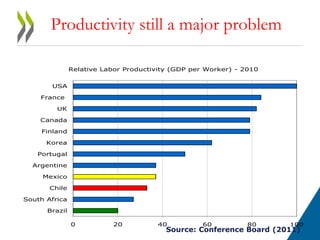
Productivity still a major problem 
Relative Labor Productivity (GDP per Worker) - 2010 
0 20 40 60 80 100 
Source: Conference Board (2011) 
USA 
France 
UK 
Canada 
Finland 
Korea 
Portugal 
Argentine 
Mexico 
Chile 
South Africa 
Brazil
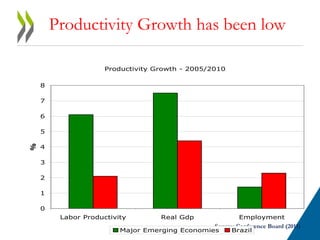
Productivity Growth has been low 
Productivity Growth - 2005/2010 
Source: Conference Board (2011) 
8 
7 
6 
5 
4 
3 
2 
1 
0 
Labor Productivity Real Gdp Employment 
% 
Major Emerging Economies Brazil
Labor Productivity: Industry
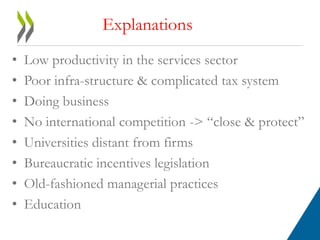
Explanations 
• Low productivity in the services sector 
• Poor infra-structure & complicated tax system 
• Doing business 
• No international competition -> “close & protect” 
• Universities distant from firms 
• Bureaucratic incentives legislation 
• Old-fashioned managerial practices 
• Education
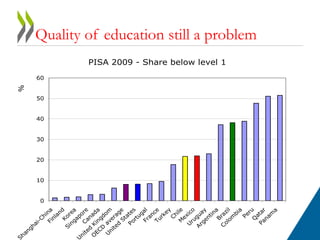
Quality of education still a problem 
PISA 2009 - Share below level 1 
60 
50 
40 
30 
20 
10 
0 
Finland 
Shanghai-China 
Canada 
United Kingdom 
Korea 
Singapore 
United States 
OECD average 
Portugal 
Chile 
Mexico 
Uruguay 
France 
Turkey 
Brazil 
Colombia 
Argentina 
Peru 
Qatar 
Panama 
%
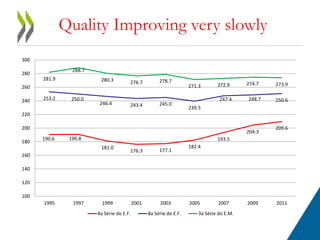
Quality Improving very slowly 
190.6 190.8 
181.0 
176.3 177.1 
182.4 
193.5 
204.3 
209.6 
253.2 250.0 
246.4 243.4 245.0 
239.5 
247.4 248.7 250.6 
281.9 
288.7 
280.3 276.7 278.7 
271.3 272.9 274.7 273.9 
300 
280 
260 
240 
220 
200 
180 
160 
140 
120 
100 
1995 1997 1999 2001 2003 2005 2007 2009 2011 
4a Série do E.F. 8a Série do E.F. 3a Série do E.M.
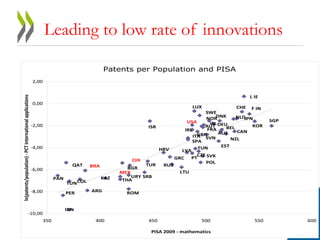
Leading to low rate of innovations 
12 
Patents per Population and PISA 
USA 
CHE 
NOR JPN 
SGP 
DEU KOR 
FRA 
GBR 
NLD 
SWE 
CAN 
ITA 
F IN 
AUS 
SPA 
ISR 
DNK 
AUT BEL 
BRA RUS 
IRL 
TUR 
NZL 
LUX 
TUN 
POL 
MEX 
CZE 
SVN 
GRC PT CHI 
PAN URY 
THA 
L IE 
ISL 
HRV 
QAT 
COL 
SVK 
EST 
BGR 
LVA 
KAZ SRB 
ARG 
IDN 
LTU 
ROM 
TUN 
PER 
2,00 
0,00 
-2,00 
-4,00 
-6,00 
-8,00 
-10,00 
350 400 450 500 550 600 
PISA 2009 - mathematics 
ln(patents/population) - PCT international applications
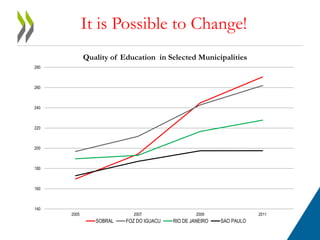
It is Possible to Change! 
280 
260 
240 
220 
200 
180 
160 
140 
Quality of Education in Selected Municipalities 
2005 2007 2009 2011 
SOBRAL FOZ DO IGUACU RIO DE JANEIRO SAO PAULO
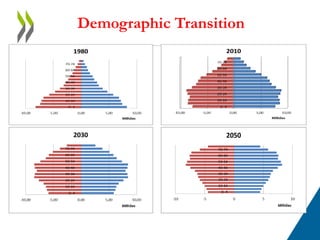
Demographic Transition
Implications of Demography 
• Education -> more money, need fewer teachers? 
• Health -> more money, more beds available? 
• Crime -> less crime? 
• Labor Market -> less people? 
• Pensions -> public deficit? 
• Imigration -> problem or solution?
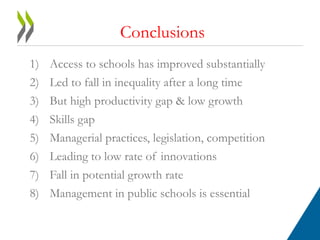
Conclusions 
1) Access to schools has improved substantially 
2) Led to fall in inequality after a long time 
3) But high productivity gap & low growth 
4) Skills gap 
5) Managerial practices, legislation, competition 
6) Leading to low rate of innovations 
7) Fall in potential growth rate 
8) Management in public schools is essential
Naercio Menezes Filho 
Professor of Economics 
Insper Institute of Education and Research 
University of Sao Paulo 
naercioamf@insper.edu.br

2013.11.15_OECD-ECLAC Regional Consultation_naercio menezes

  • 1.
    OECD/ECLAC REGIONAL CONSULTATION Inclusive Growth in Latin America and the Caribbean Education and Inclusive Growth in Brazil Naercio Menezes Filho Insper Institute and University of Sao Paulo
  • 2.
    Introduction Labor Market Innovation Poverty EDUCATION Economic Growth Inequality Bolsa-Familia S D Doing Business
  • 3.
    Recent improvements inEducation Net Enrollment Rate 100% 90% 80% 70% 60% 50% 40% 30% 20% 10% 0% 1992 1993 1994 1995 1996 1997 1998 1999 2000 2001 2002 2003 2004 2005 2006 2007 2008 2009 Fundamental HighSchool College
  • 4.
    Falling education wagedifferentials Growth in differentials wrt 1992 1,25 1,20 1,15 1,10 1,05 1,00 0,95 0,90 0,85 0,80 1992 1993 1994* 1995 1996 1997 1998 1999 2000* 2001 2002 2003 2004 2005 2006 2007 2008 2009 Fundamental High School College
  • 5.
    Leading to afall in inequality Income Ratios 80 70 60 50 40 30 20 10 0 1992 1993 1995 1996 1997 1998 1999 2001 2002 2003 2004 2005 2006 2007 2008 2009 20% richest/20% poorest 10% richest/10% poorest
  • 6.
    Productivity still amajor problem Relative Labor Productivity (GDP per Worker) - 2010 0 20 40 60 80 100 Source: Conference Board (2011) USA France UK Canada Finland Korea Portugal Argentine Mexico Chile South Africa Brazil
  • 7.
    Productivity Growth hasbeen low Productivity Growth - 2005/2010 Source: Conference Board (2011) 8 7 6 5 4 3 2 1 0 Labor Productivity Real Gdp Employment % Major Emerging Economies Brazil
  • 8.
  • 9.
    Explanations • Lowproductivity in the services sector • Poor infra-structure & complicated tax system • Doing business • No international competition -> “close & protect” • Universities distant from firms • Bureaucratic incentives legislation • Old-fashioned managerial practices • Education
  • 10.
    Quality of educationstill a problem PISA 2009 - Share below level 1 60 50 40 30 20 10 0 Finland Shanghai-China Canada United Kingdom Korea Singapore United States OECD average Portugal Chile Mexico Uruguay France Turkey Brazil Colombia Argentina Peru Qatar Panama %
  • 11.
    Quality Improving veryslowly 190.6 190.8 181.0 176.3 177.1 182.4 193.5 204.3 209.6 253.2 250.0 246.4 243.4 245.0 239.5 247.4 248.7 250.6 281.9 288.7 280.3 276.7 278.7 271.3 272.9 274.7 273.9 300 280 260 240 220 200 180 160 140 120 100 1995 1997 1999 2001 2003 2005 2007 2009 2011 4a Série do E.F. 8a Série do E.F. 3a Série do E.M.
  • 12.
    Leading to lowrate of innovations 12 Patents per Population and PISA USA CHE NOR JPN SGP DEU KOR FRA GBR NLD SWE CAN ITA F IN AUS SPA ISR DNK AUT BEL BRA RUS IRL TUR NZL LUX TUN POL MEX CZE SVN GRC PT CHI PAN URY THA L IE ISL HRV QAT COL SVK EST BGR LVA KAZ SRB ARG IDN LTU ROM TUN PER 2,00 0,00 -2,00 -4,00 -6,00 -8,00 -10,00 350 400 450 500 550 600 PISA 2009 - mathematics ln(patents/population) - PCT international applications
  • 13.
    It is Possibleto Change! 280 260 240 220 200 180 160 140 Quality of Education in Selected Municipalities 2005 2007 2009 2011 SOBRAL FOZ DO IGUACU RIO DE JANEIRO SAO PAULO
  • 14.
  • 15.
    Implications of Demography • Education -> more money, need fewer teachers? • Health -> more money, more beds available? • Crime -> less crime? • Labor Market -> less people? • Pensions -> public deficit? • Imigration -> problem or solution?
  • 16.
    Conclusions 1) Accessto schools has improved substantially 2) Led to fall in inequality after a long time 3) But high productivity gap & low growth 4) Skills gap 5) Managerial practices, legislation, competition 6) Leading to low rate of innovations 7) Fall in potential growth rate 8) Management in public schools is essential
  • 17.
    Naercio Menezes Filho Professor of Economics Insper Institute of Education and Research University of Sao Paulo naercioamf@insper.edu.br