Fossils
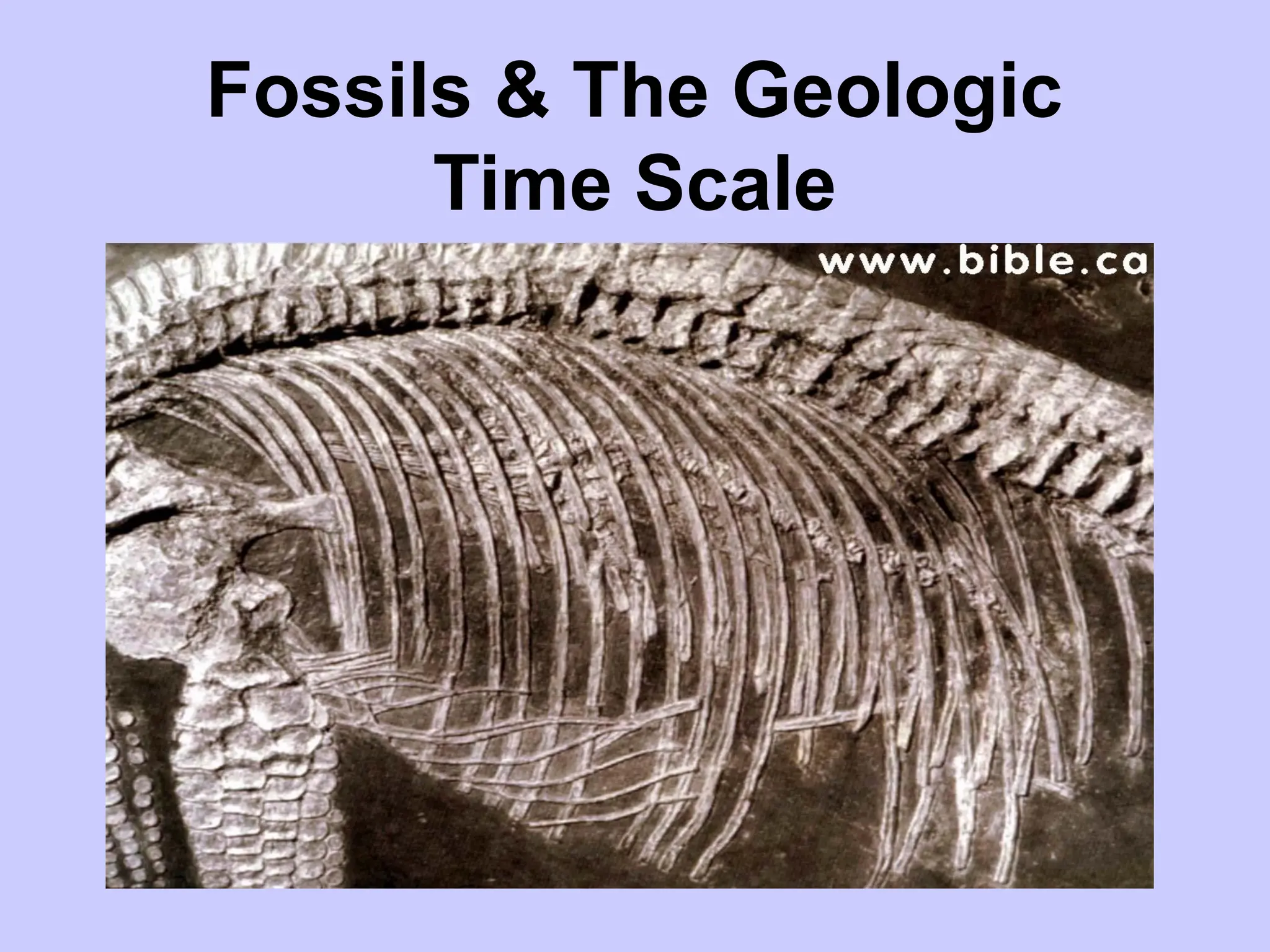
Preserved remains ortraces of an organism that
lived in the past.
Fossils are formed when organisms die and are
buried in sediment. Eventually the sediment builds
up and hardens to become sedimentary rock.
3.
Kinds of Fossils
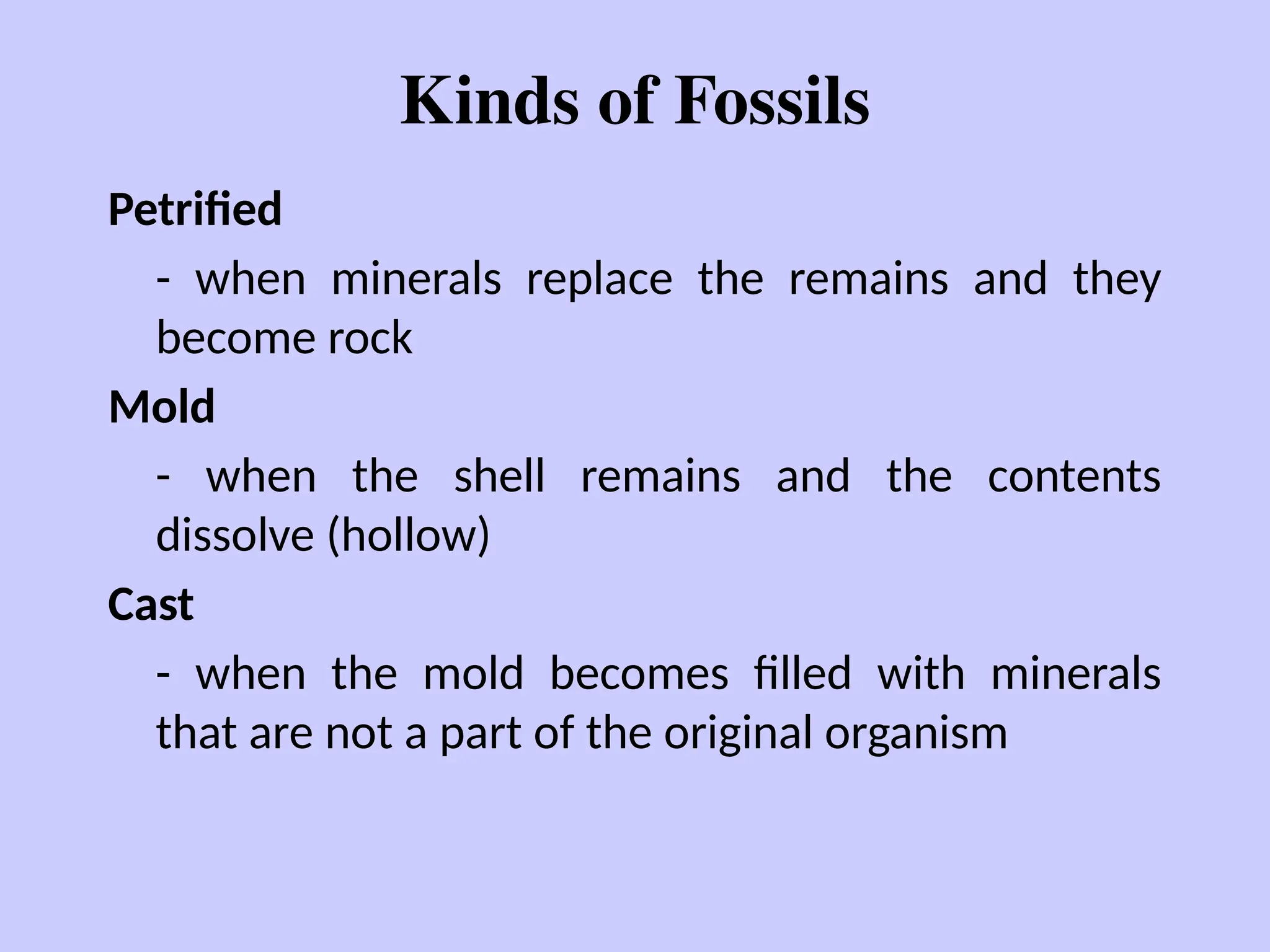
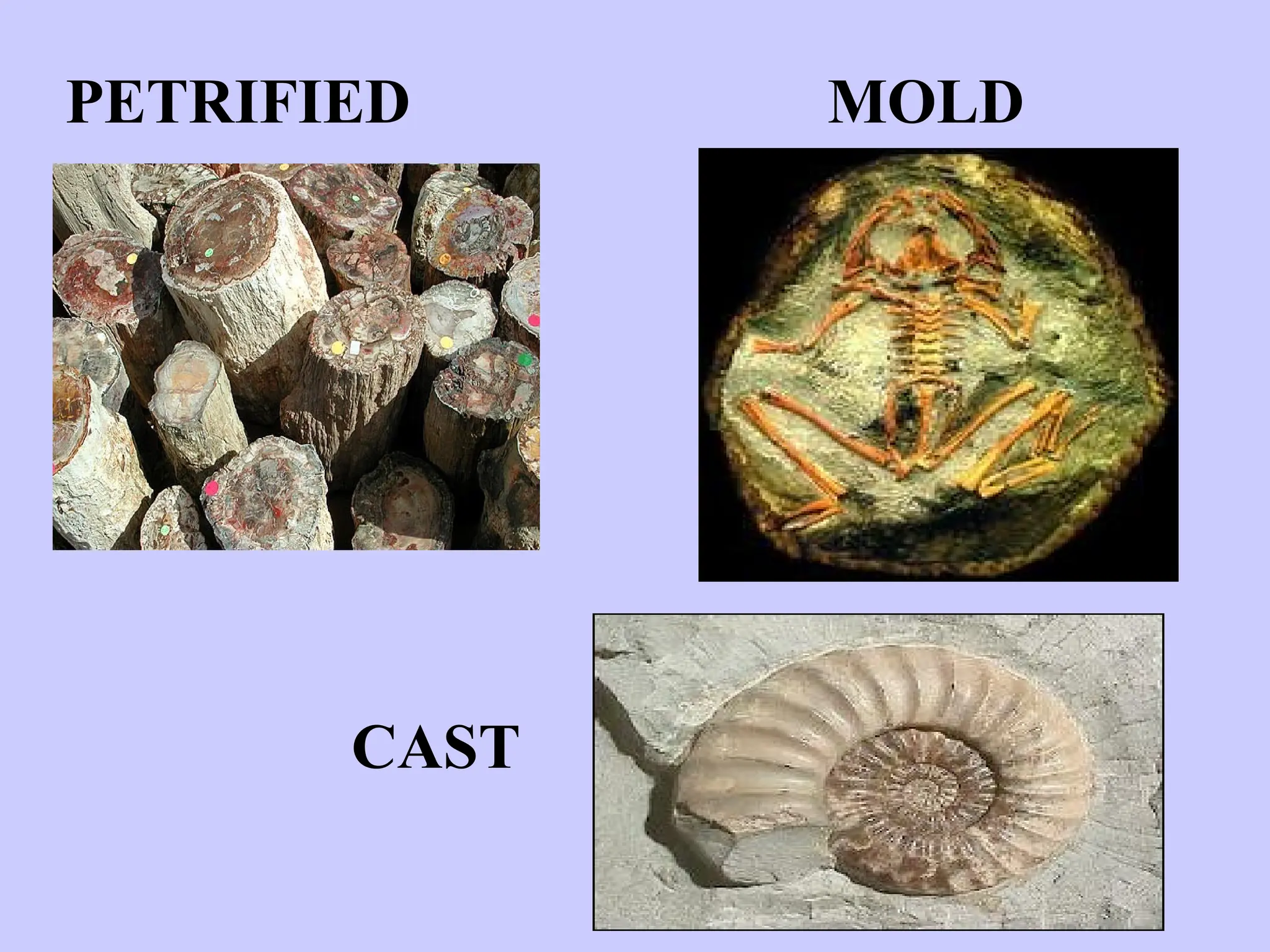
Petrified
-when minerals replace the remains and they
become rock
Mold
- when the shell remains and the contents
dissolve (hollow)
Cast
- when the mold becomes filled with minerals
that are not a part of the original organism
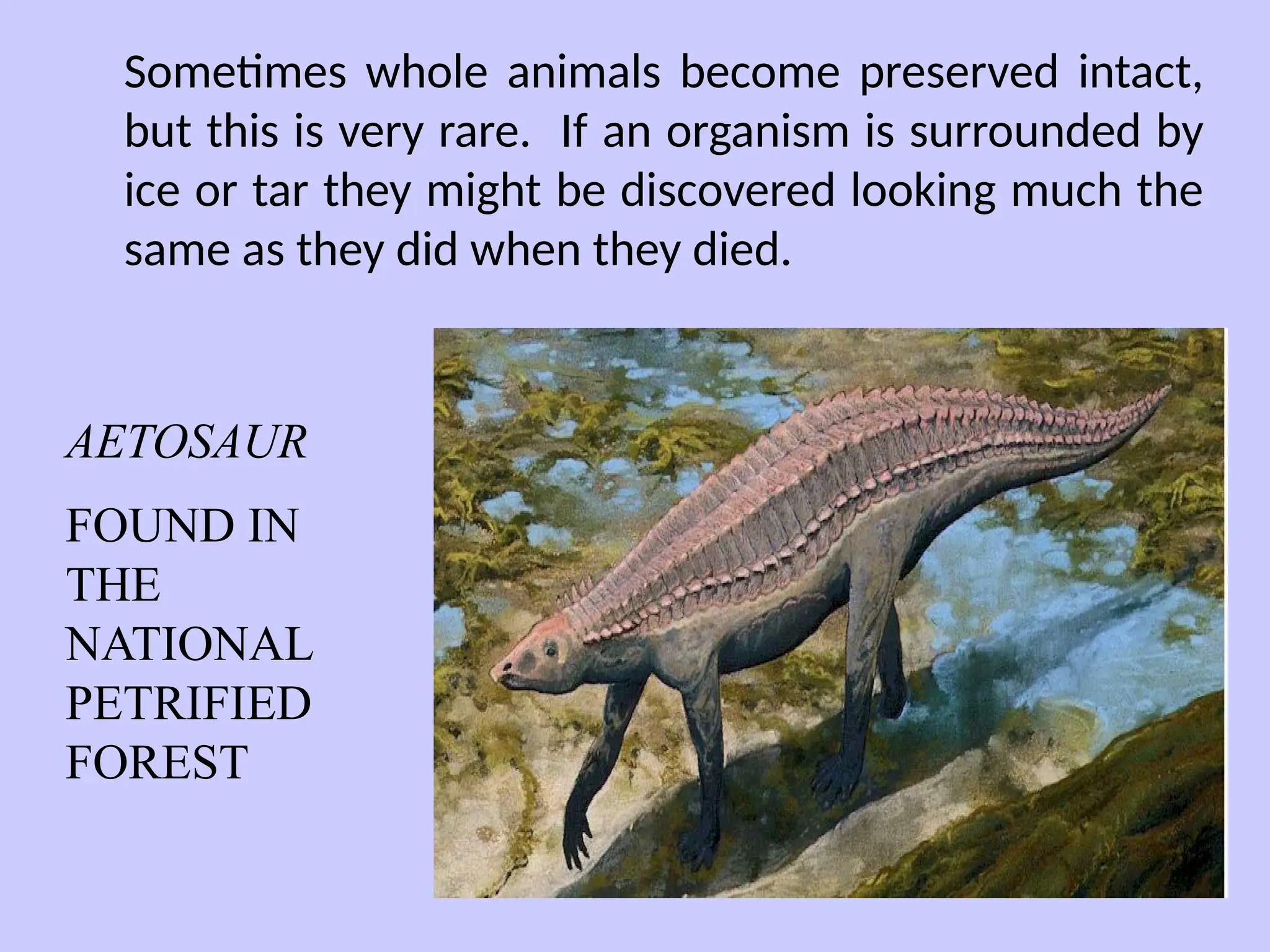
Sometimes whole animalsbecome preserved intact,
but this is very rare. If an organism is surrounded by
ice or tar they might be discovered looking much the
same as they did when they died.
AETOSAUR
FOUND IN
THE
NATIONAL
PETRIFIED
FOREST
6.
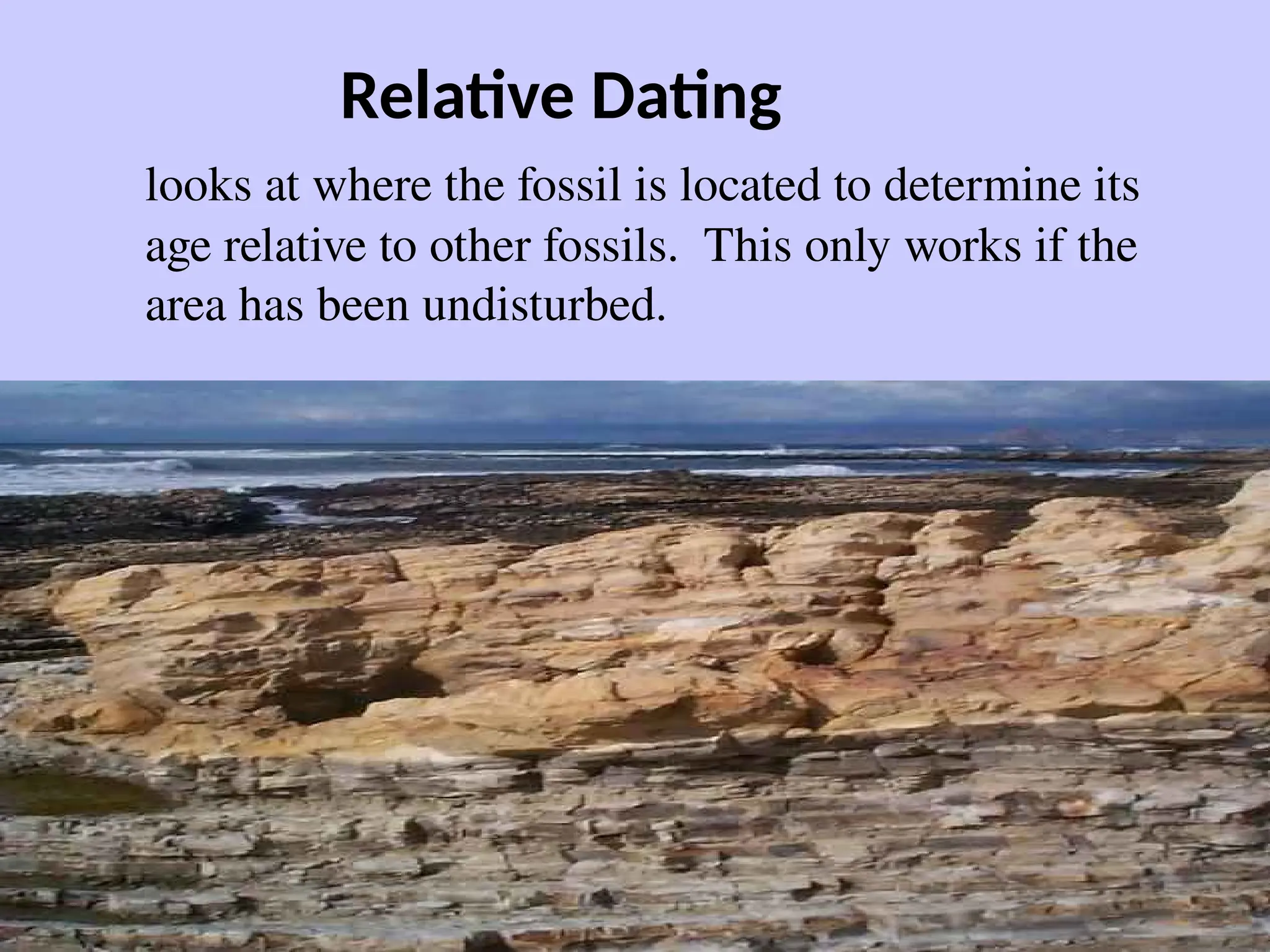
Relative Dating
looks atwhere the fossil is located to determine its
age relative to other fossils. This only works if the
area has been undisturbed.
7.
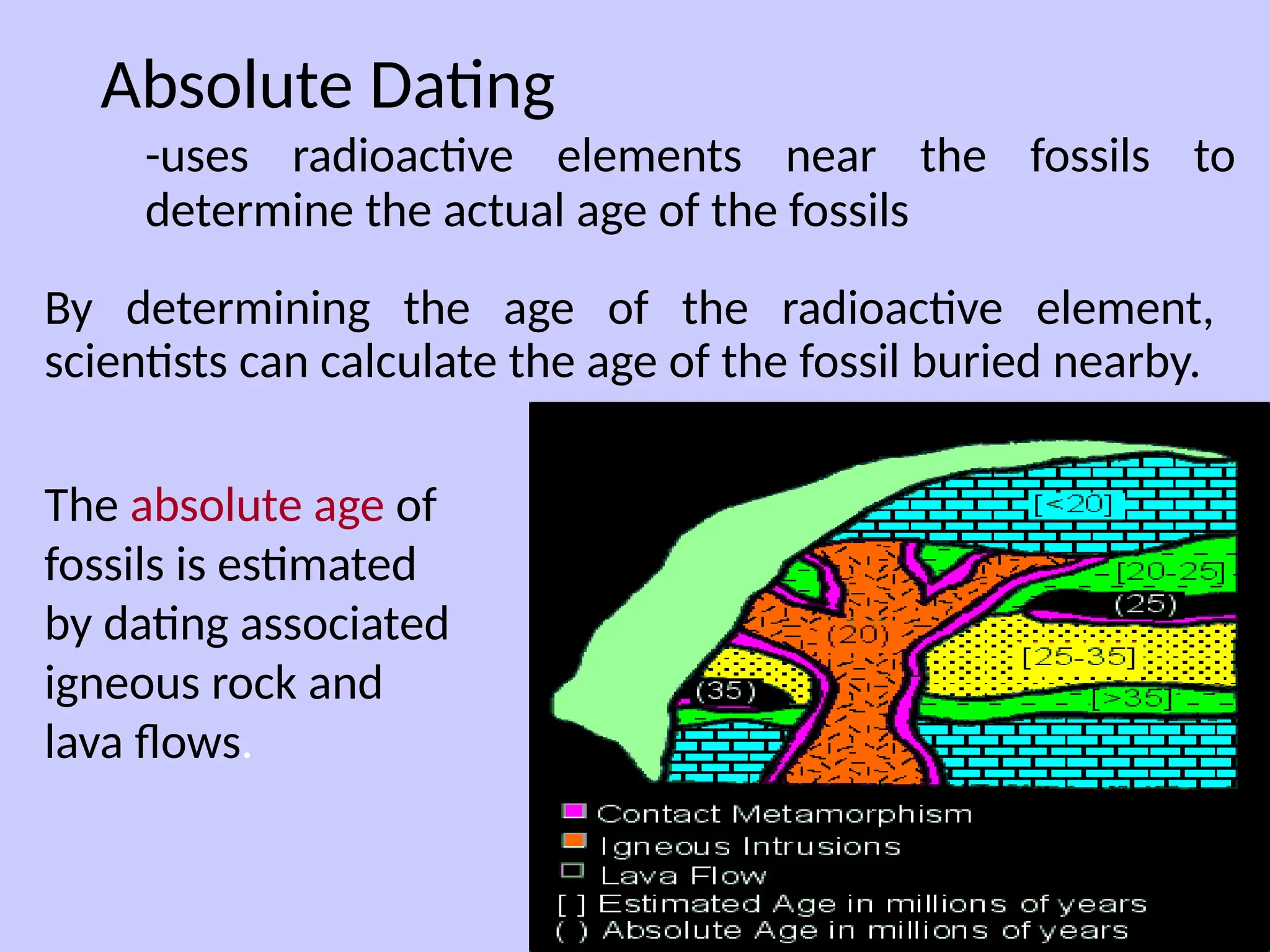
Absolute Dating
-uses radioactiveelements near the fossils to
determine the actual age of the fossils
By determining the age of the radioactive element,
scientists can calculate the age of the fossil buried nearby.
The absolute age of
fossils is estimated
by dating associated
igneous rock and
lava flows.
8.
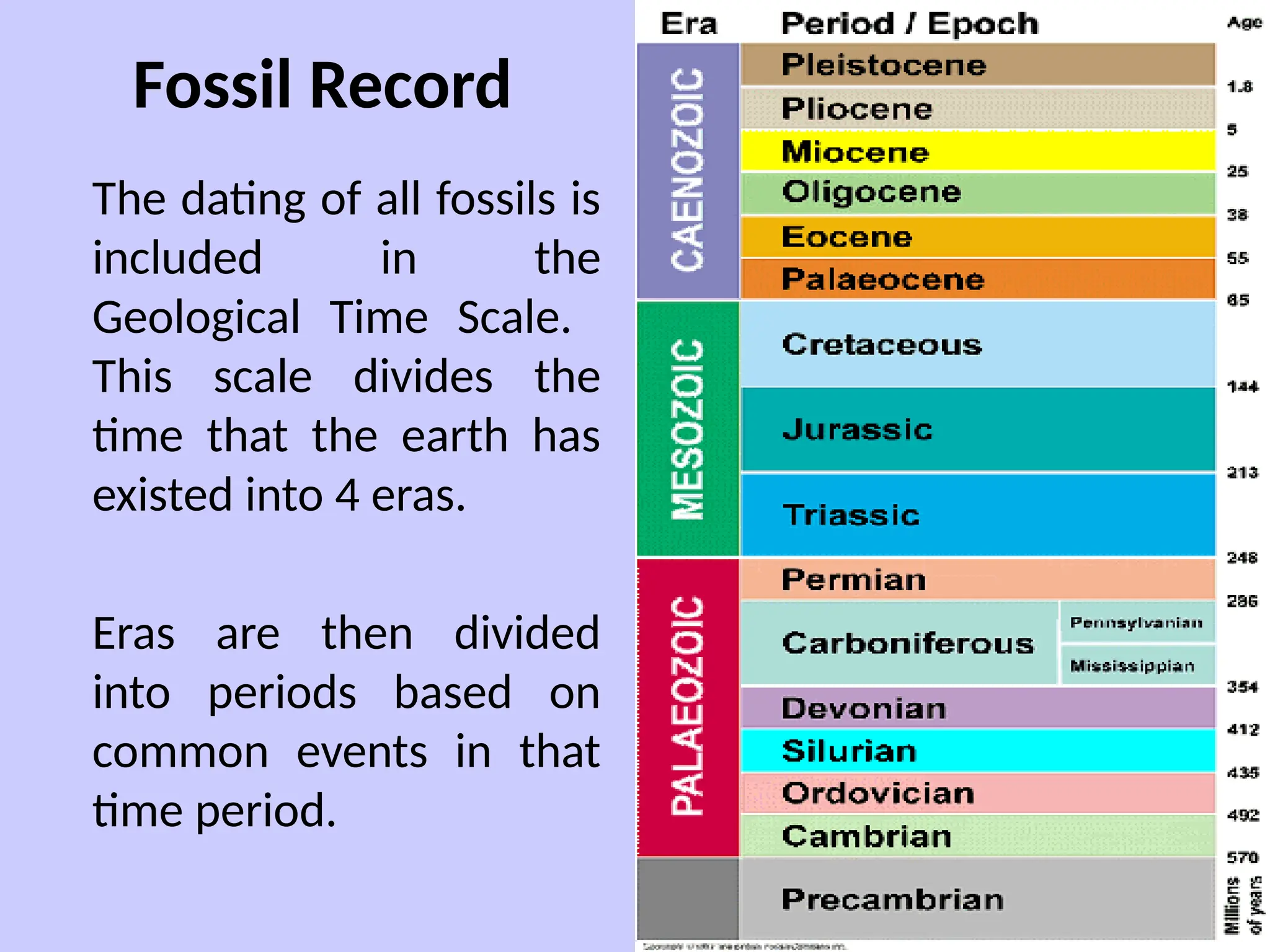
Fossil Record
The datingof all fossils is
included in the
Geological Time Scale.
This scale divides the
time that the earth has
existed into 4 eras.
Eras are then divided
into periods based on
common events in that
time period.
9.
GEOLOGIC PERIODS OFTHE EARTH
The geologic time scale provides a system of
chronologic measurement relating stratigraphy to
time that is used by geologists, paleontologists
and other earth scientists to describe the timing
and relationships between events that have
occurred during the history of the Earth.
The geological or deep time of Earth's past has
been organized into various units according to
events which took place in each period.
10.
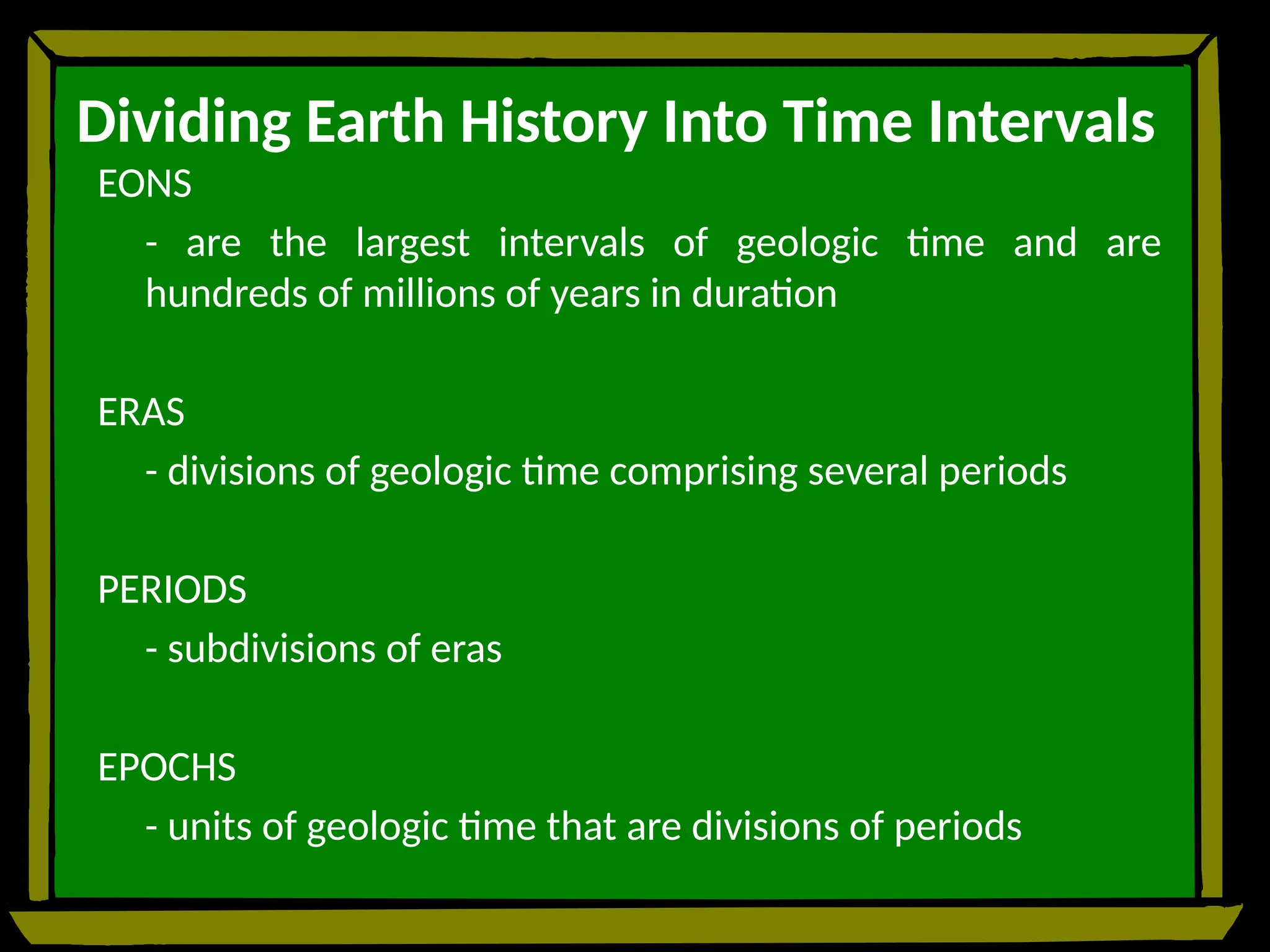
Dividing Earth HistoryInto Time Intervals
EONS
- are the largest intervals of geologic time and are
hundreds of millions of years in duration
ERAS
- divisions of geologic time comprising several periods
PERIODS
- subdivisions of eras
EPOCHS
- units of geologic time that are divisions of periods
11.
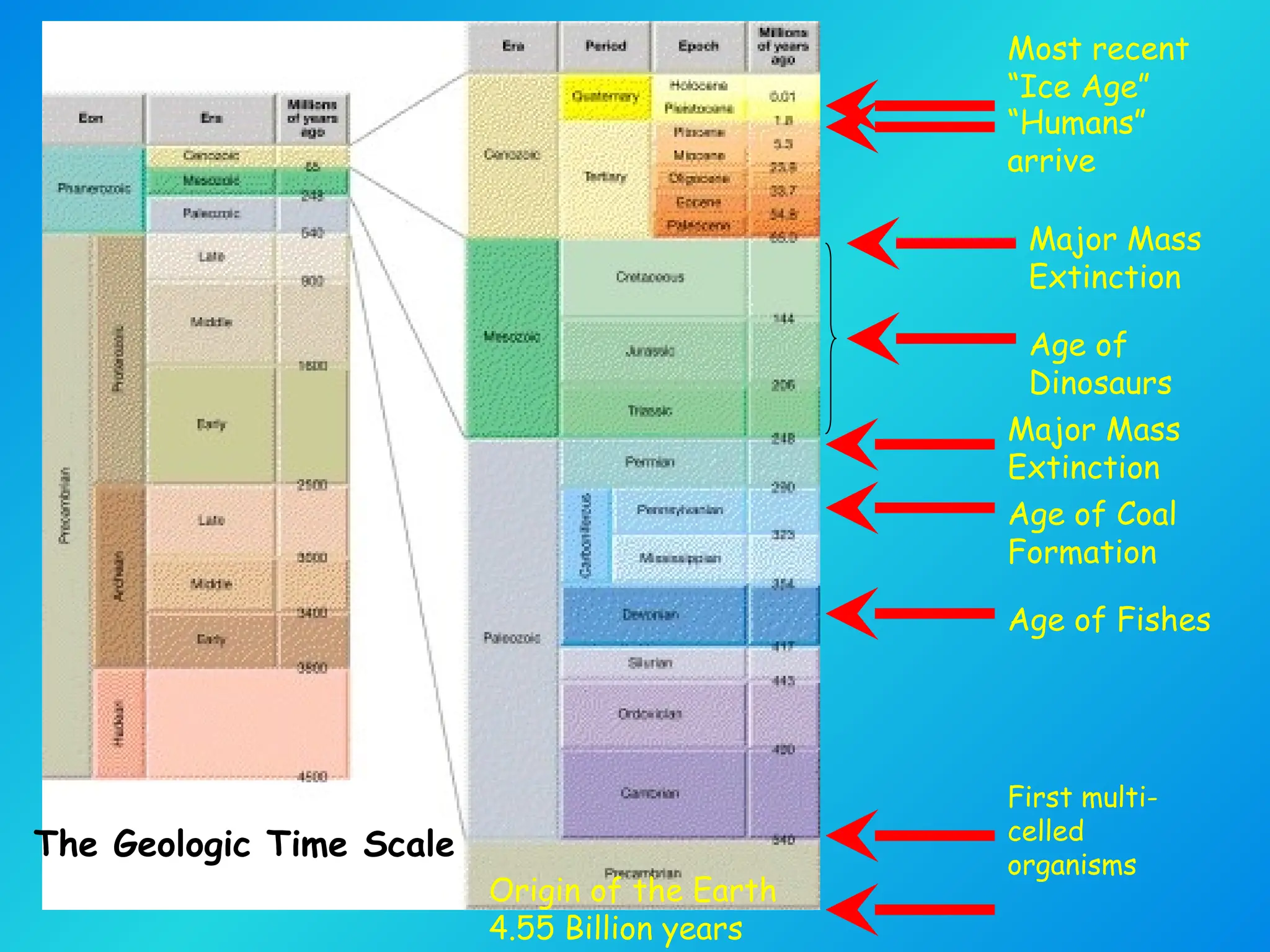
The Geologic TimeScale
Origin of the Earth
4.55 Billion years
First multi-
celled
organisms
Age of Fishes
Age of Coal
Formation
Major Mass
Extinction
Age of
Dinosaurs
Major Mass
Extinction
“Humans”
arrive
Most recent
“Ice Age”
During the Precambrian…
-oldest known mineral
- formation of Earth and Moon
- oldest rock and oldest probable microfossils
- the atmosphere become oxygenic
- Columbia is the primordial supercontinent
- platform covers expand
- possible "Snowball Earth" period
17.
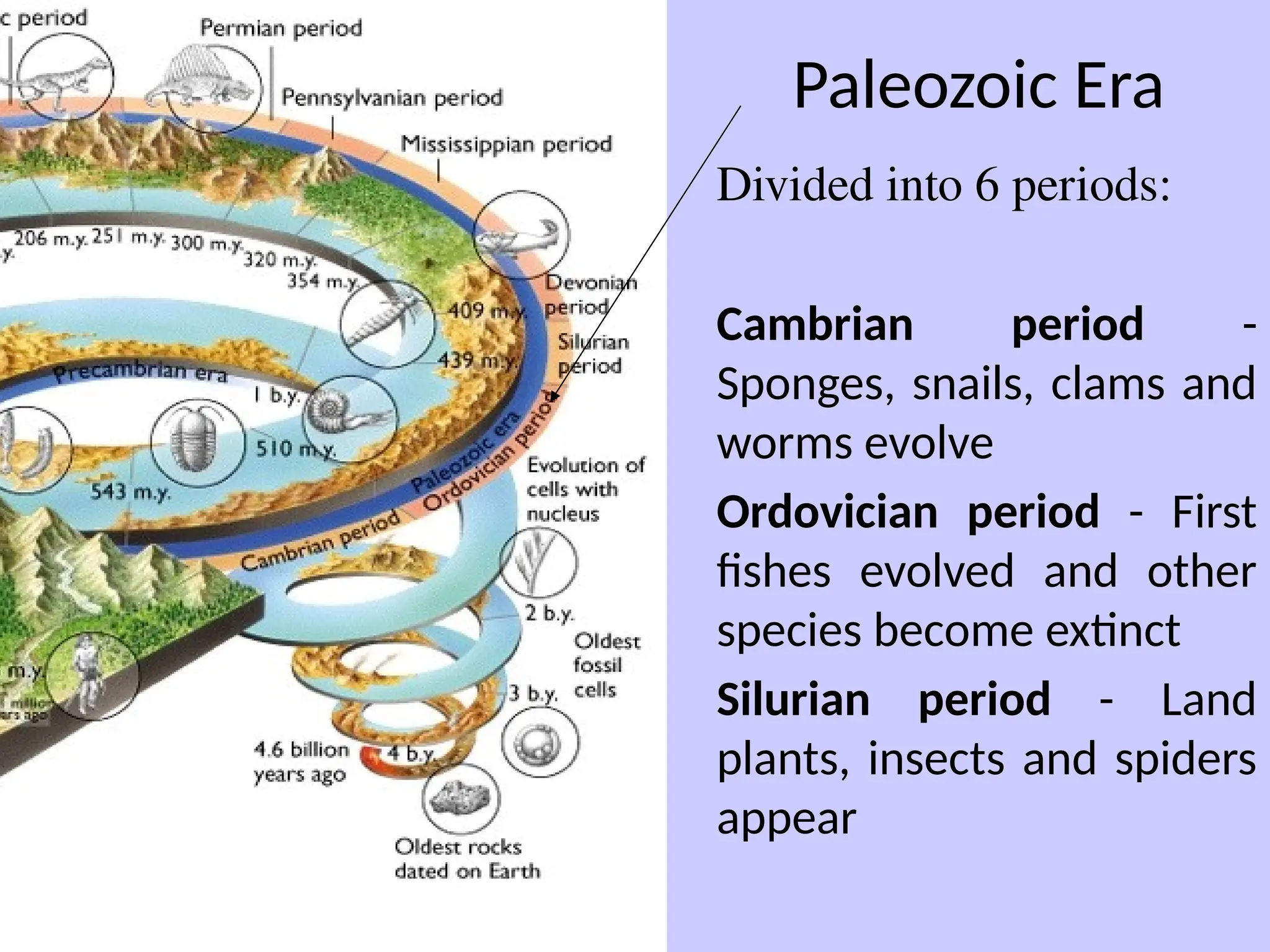
Paleozoic Era
Divided into6 periods:
Cambrian period -
Sponges, snails, clams and
worms evolve
Ordovician period - First
fishes evolved and other
species become extinct
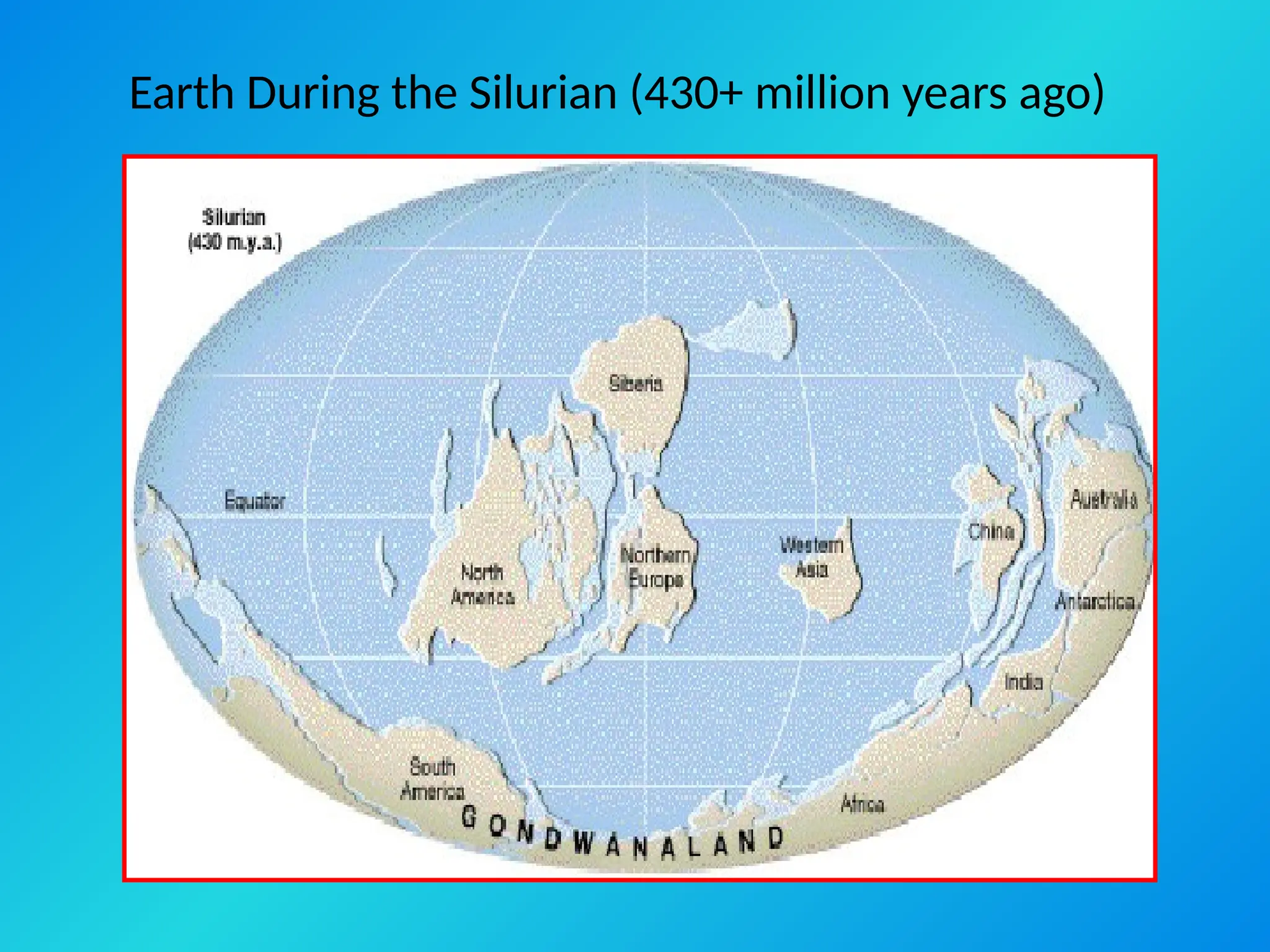
Silurian period - Land
plants, insects and spiders
appear
18.
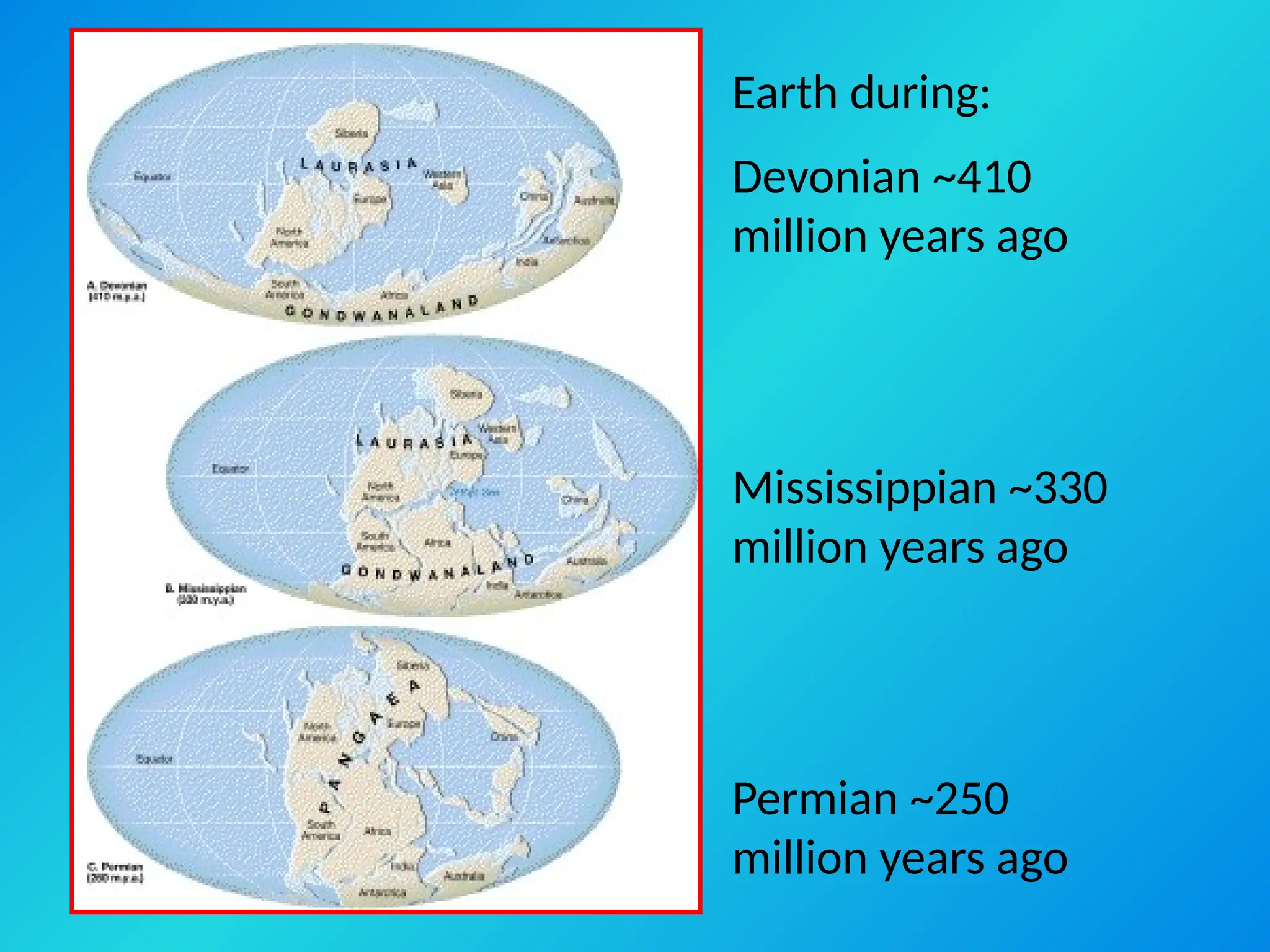
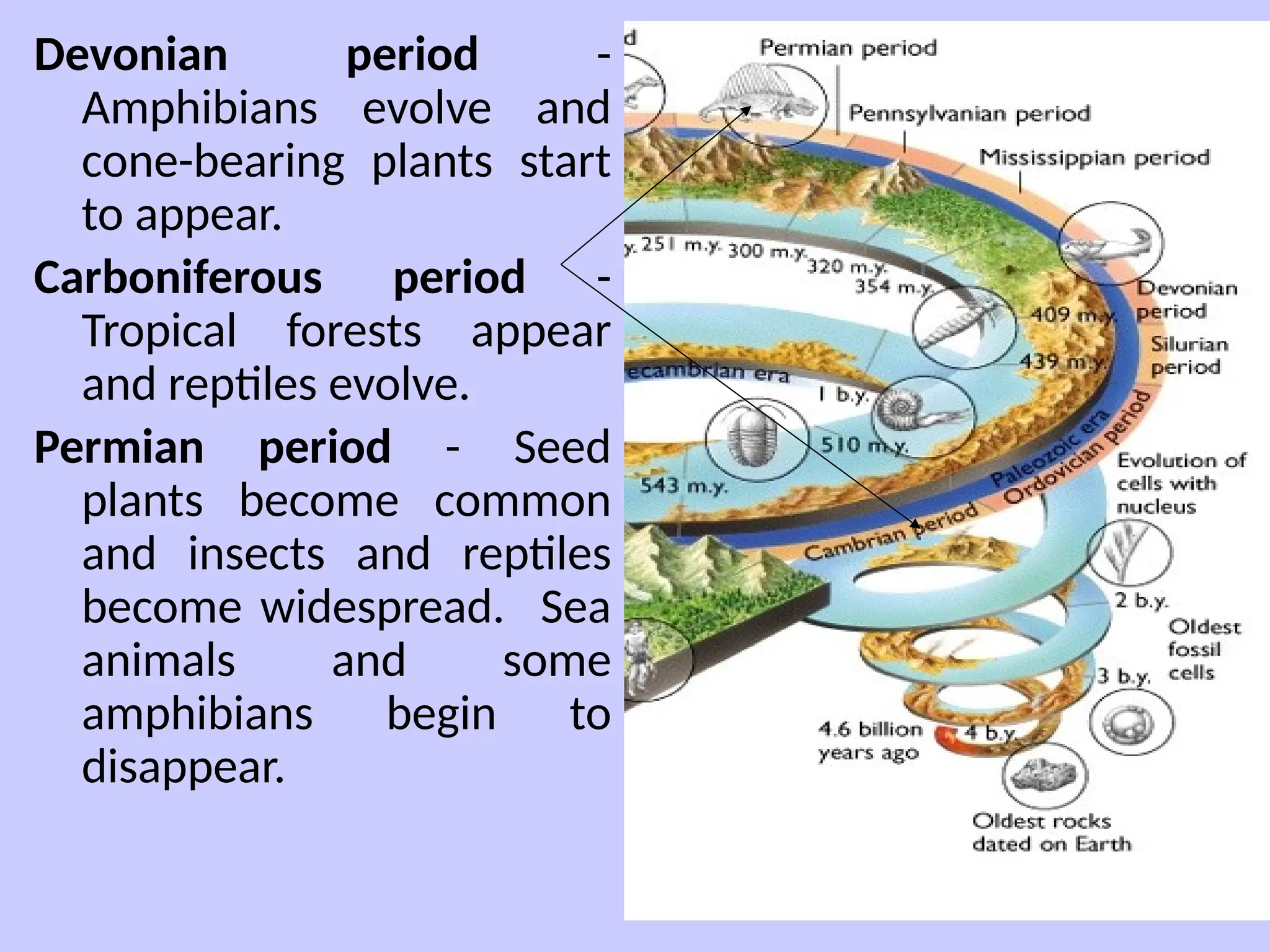
Devonian period -
Amphibiansevolve and
cone-bearing plants start
to appear.
Carboniferous period -
Tropical forests appear
and reptiles evolve.
Permian period - Seed
plants become common
and insects and reptiles
become widespread. Sea
animals and some
amphibians begin to
disappear.
19.
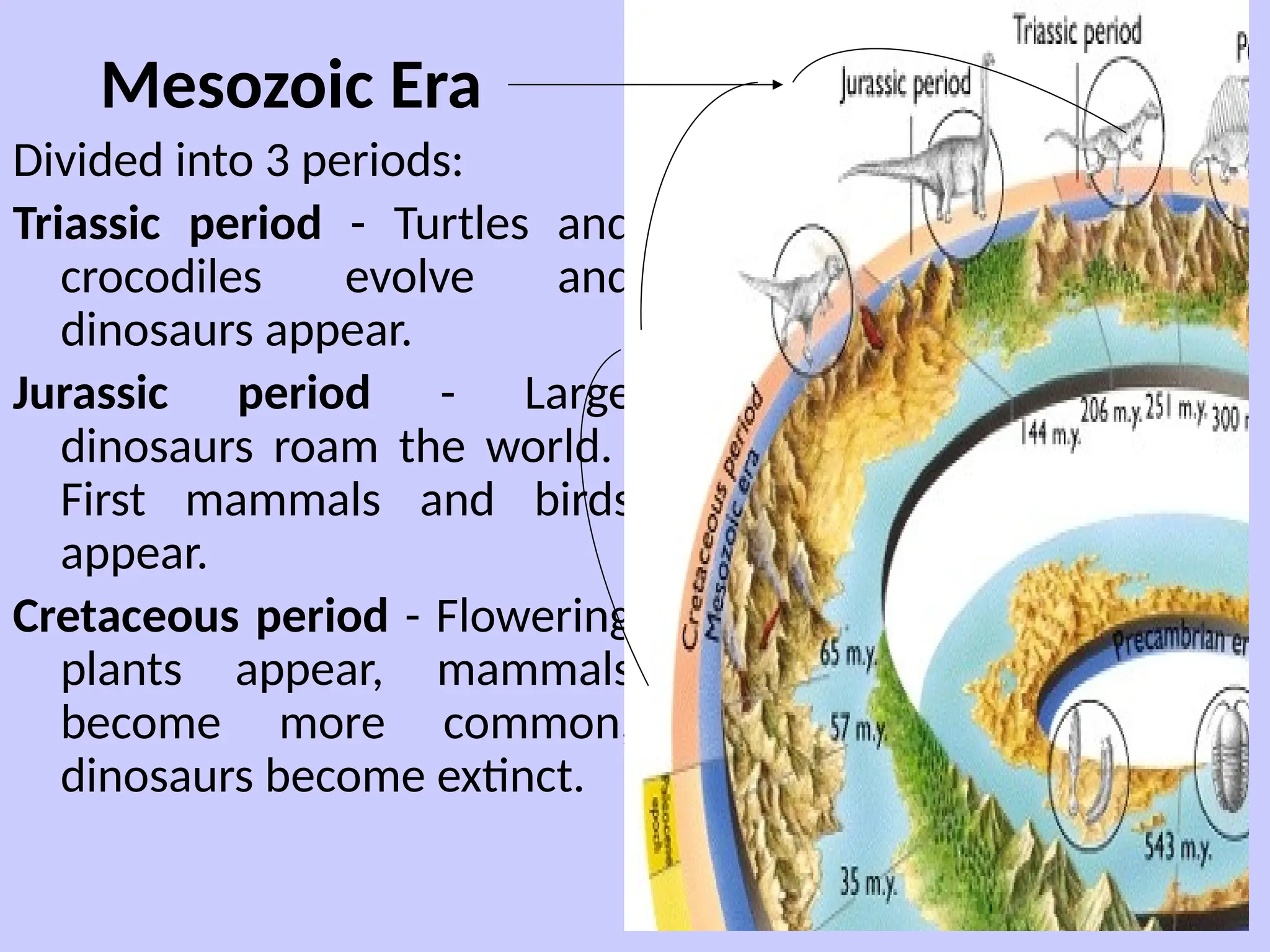
Mesozoic Era
Divided into3 periods:
Triassic period - Turtles and
crocodiles evolve and
dinosaurs appear.
Jurassic period - Large
dinosaurs roam the world.
First mammals and birds
appear.
Cretaceous period - Flowering
plants appear, mammals
become more common,
dinosaurs become extinct.
20.
During the MesozoicEra… (Triassic Period)
- archosaurs dominant on land as dinosaurs, in the
oceans as Ichthyosaurs and nothosaurs, and in the
air as pterosaurs
- while first mammals and crocodilia appear
- many large aquatic amphibians
- modern corals and teleost fish appear
21.
During the MesozoicEra… (Jurassic Period)
- first birds and lizards
- bivalves are abundant
-sea urchins very common, along with starfish
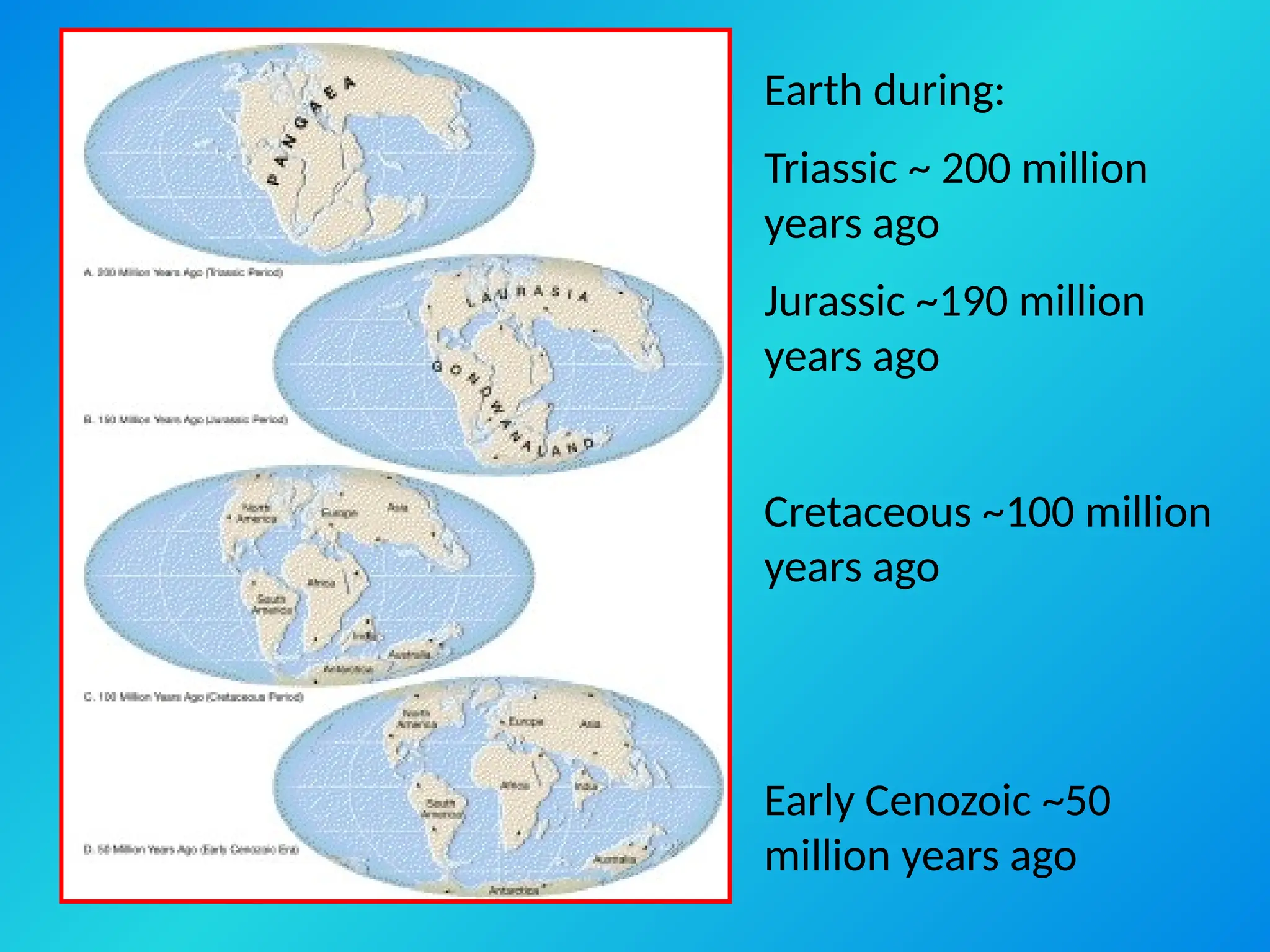
- Breakup of Pangaea into Gondwanaland and
Laurasia
22.
During the MesozoicEra… (Cretaceous Period)
- flowering plants proliferate
- many new types of dinosaurs evolve on land
- modern sharks appear in the sea
- primitive birds gradually replace pterosaurs
- break up of Gondwanaland
23.
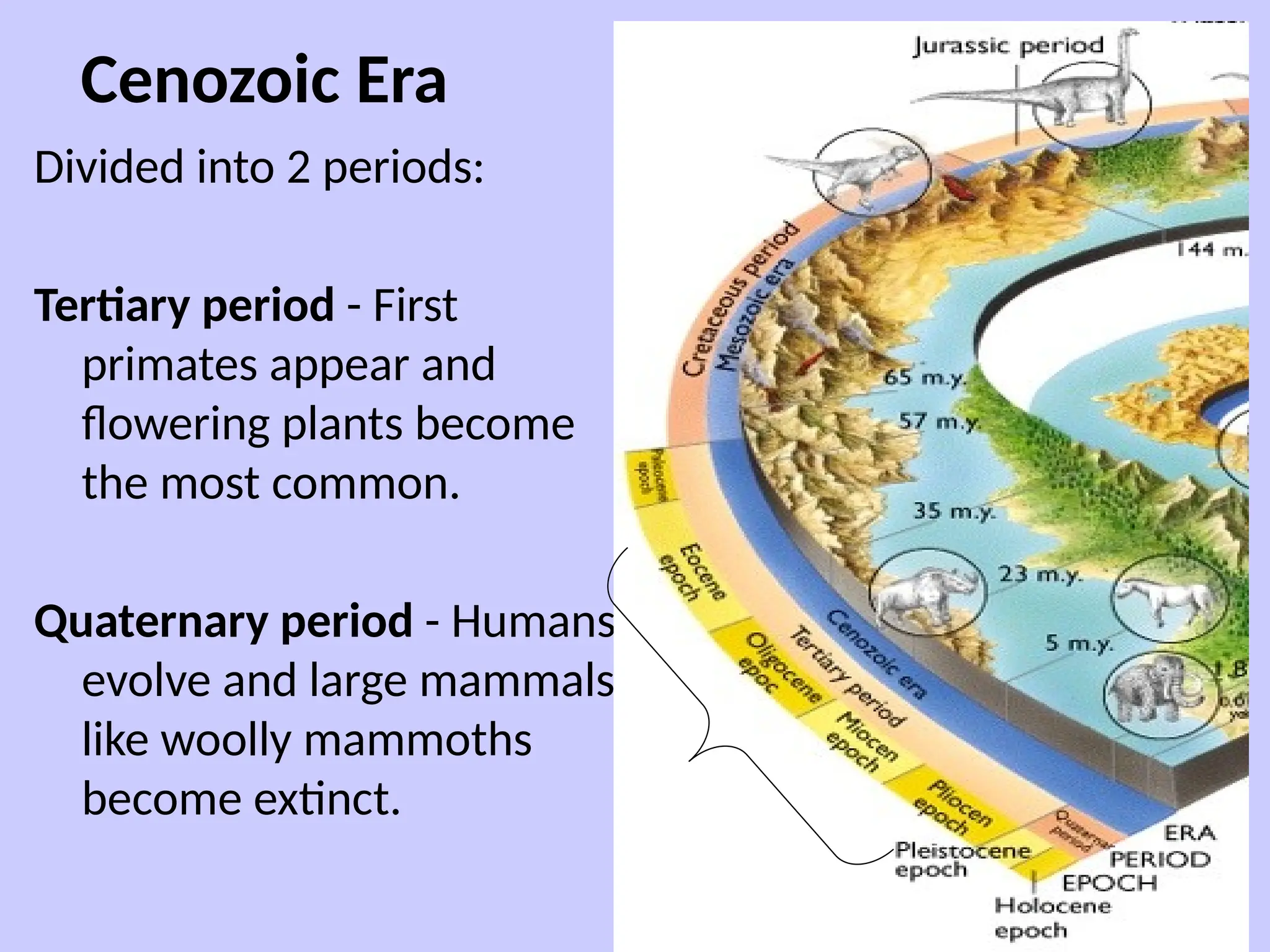
Cenozoic Era
Divided into2 periods:
Tertiary period - First
primates appear and
flowering plants become
the most common.
Quaternary period - Humans
evolve and large mammals
like woolly mammoths
become extinct.
24.
During the CenozoicEra… (Paleocene Epoch)
- modern plants appear
- mammals diversify into a number of primitive
lineages following the extinction of the dinosaurs
- Indian Subcontinent collides with Asia
25.
During the CenozoicEra… (Eocene Epoch)
- moderate, cooling climate
- primitive whales diversify
- first grasses
- settlement and decay of seafloor algae drawing
in massive amounts of atmospheric carbon dioxide
26.
During the CenozoicEra… (Oligocene Epoch)
- warm but cooling climate
- rapid evolution and diversification of fauna,
especially mammals
- major evolution and dispersal of modern types of
flowering plants
27.
During the CenozoicEra… (Miocene Epoch)
- modern mammal and bird families become
recognizable
- horses and mastodons diverse
- grasses become ubiquitous
- first apes appear
28.
During the CenozoicEra… (Pliocene Epoch)
- cool and dry climate
- Australopithecines, many of the existing genera
of mammals, and recent mollusks appear
- Homo habilis appears
29.
During the CenozoicEra… (Pleistocene Epoch)
- flourishing and then extinction of many large
mammals
- Evolution of anatomically modern humans
- Dawn of human stone-age cultures, with
increasing technical complexity relative to
previous ice age cultures, such as engravings and
clay statues
- Lake Toba supervolcano erupts 75000 years
before present, causing a volcanic winter that
pushes humanity to the brink of extinction
30.
During the CenozoicEra… (Holocene Epoch)
- the last glacial period ends
- rise of human civilization
- Sahara forms from savannah, and agriculture
begins, allowing humans to build cities
- Paleolithic/Neolithic (Stone Age) cultures begin
around 10000 BC, giving way to Copper Age (3500
BC) and Bronze Age (2500 BC)
- Cultures continue to grow in complexity and
technical advancement through the Iron Age
giving rise to many pre-historic cultures
throughout the world, eventually leading into
Classical Antiquity