Author(s): David Miller, M.D., Ph.D., 2009

License: Unless otherwise noted, this material is made available under the terms of
the Creative Commons Attribution–Noncommercial–Share Alike 3.0 License:
http://creativecommons.org/licenses/by-nc-sa/3.0/

We have reviewed this material in accordance with U.S. Copyright Law and have tried to maximize your ability to use,
share, and adapt it. The citation key on the following slide provides information about how you may share and adapt this
material.

Copyright holders of content included in this material should contact open.michigan@umich.edu with any questions,
corrections, or clarification regarding the use of content.

For more information about how to cite these materials visit http://open.umich.edu/education/about/terms-of-use.

Any medical information in this material is intended to inform and educate and is not a tool for self-diagnosis or a
replacement for medical evaluation, advice, diagnosis or treatment by a healthcare professional. Please speak to your
physician if you have questions about your medical condition.

Viewer discretion is advised: Some medical content is graphic and may not be suitable for all viewers.
Citation Key
                          for more information see: http://open.umich.edu/wiki/CitationPolicy


Use + Share + Adapt
  { Content the copyright holder, author, or law permits you to use, share and adapt. }
               Public Domain – Government: Works that are produced by the U.S. Government. (17 USC § 105)
               Public Domain – Expired: Works that are no longer protected due to an expired copyright term.
               Public Domain – Self Dedicated: Works that a copyright holder has dedicated to the public domain.

               Creative Commons – Zero Waiver

               Creative Commons – Attribution License
               Creative Commons – Attribution Share Alike License
               Creative Commons – Attribution Noncommercial License
               Creative Commons – Attribution Noncommercial Share Alike License
               GNU – Free Documentation License

Make Your Own Assessment
  { Content Open.Michigan believes can be used, shared, and adapted because it is ineligible for copyright. }
               Public Domain – Ineligible: Works that are ineligible for copyright protection in the U.S. (17 USC § 102(b)) *laws in
               your jurisdiction may differ
   { Content Open.Michigan has used under a Fair Use determination. }
               Fair Use: Use of works that is determined to be Fair consistent with the U.S. Copyright Act. (17 USC § 107) *laws in
               your jurisdiction may differ
               Our determination DOES NOT mean that all uses of this 3rd-party content are Fair Uses and we DO NOT guarantee
               that your use of the content is Fair.
               To use this content you should do your own independent analysis to determine whether or not your use will be Fair.
Central Nervous System (CNS) Viruses


       M1 Infectious Diseases/Microbiology Sequence

                David J. Miller, M.D., Ph.D.


Spring 2010
Objectives
•  Appreciate both common and unique features of CNS
   virus pathogenesis

•  Recognize the importance of early diagnostic testing
   and empiric therapy for suspected herpes simplex
   virus encephalitis

•  Know the arbovirus life cycle and those pathogens
   endemic in the U.S.

•  Know the indications and procedures for rabies post-
   exposure prophylaxis


  Reading assignment: Schaechter s 4th edition, chapters 32, 33, 35, and 41
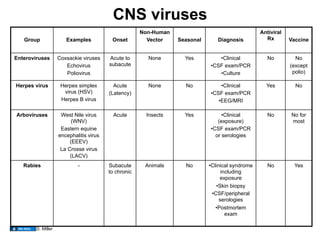
CNS viruses
                                                      Non-Human                                    Antiviral
   Group               Examples           Onset         Vector    Seasonal      Diagnosis            Rx        Vaccine


Enteroviruses       Coxsackie viruses    Acute to       None        Yes          • Clinical           No         No
                       Echovirus         subacute                            • CSF exam/PCR                    (except
                       Poliovirus                                                • Culture                      polio)

Herpes virus         Herpes simplex        Acute        None        No             • Clinical        Yes         No
                      virus (HSV)        (Latency)                           • CSF exam/PCR
                     Herpes B virus                                              • EEG/MRI

Arboviruses          West Nile virus       Acute       Insects      Yes            • Clinical         No       No for
                          (WNV)                                                  (exposure)                    most
                     Eastern equine                                          • CSF exam/PCR
                    encephalitis virus                                          or serologies
                         (EEEV)
                     La Crosse virus
                         (LACV)
   Rabies                   -            Subacute      Animals      No       • Clinical syndrome      No        Yes
                                         to chronic                                  including
                                                                                    exposure
                                                                                  • Skin biopsy
                                                                               • CSF/peripheral
                                                                                    serologies
                                                                                 • Postmortem
                                                                                       exam

        D. Miller
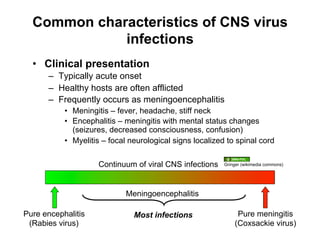
Common characteristics of CNS virus
             infections
  •  Clinical presentation
      –  Typically acute onset
      –  Healthy hosts are often afflicted
      –  Frequently occurs as meningoencephalitis
           •  Meningitis – fever, headache, stiff neck
           •  Encephalitis – meningitis with mental status changes
              (seizures, decreased consciousness, confusion)
           •  Myelitis – focal neurological signs localized to spinal cord

                     Continuum of viral CNS infections    Gringer (wikimedia commons)


                             Meningoencephalitis

Pure encephalitis              Most infections                 Pure meningitis
 (Rabies virus)                                               (Coxsackie virus)
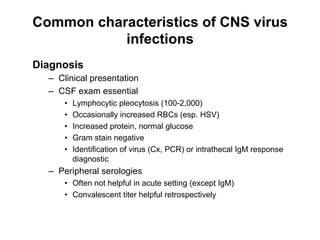
Common characteristics of CNS virus
           infections
Diagnosis
  –  Clinical presentation
  –  CSF exam essential
      •    Lymphocytic pleocytosis (100-2,000)
      •    Occasionally increased RBCs (esp. HSV)
      •    Increased protein, normal glucose
      •    Gram stain negative
      •    Identification of virus (Cx, PCR) or intrathecal IgM response
           diagnostic
  –  Peripheral serologies
      •  Often not helpful in acute setting (except IgM)
      •  Convalescent titer helpful retrospectively
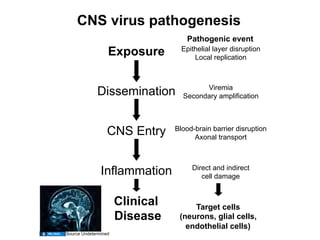
CNS virus pathogenesis
                                    Pathogenic event
                  Exposure         Epithelial layer disruption
                                       Local replication


                                         Viremia
             Dissemination         Secondary amplification


                  CNS Entry      Blood-brain barrier disruption
                                       Axonal transport


               Inflammation           Direct and indirect
                                         cell damage


                      Clinical        Target cells
                      Disease     (neurons, glial cells,
                                    endothelial cells)
Source Undetermined
29 year old male presents to the emergency room
in July because of increasing headache and stiff neck for
the past 2 days. He also complains of low grade fever
and eye pain, but no mental status changes or focal
neurological deficits. The patient works at a preschool,
and one week ago he had a cold that went away without
treatment. When you walk into the ER room and turn on
the lights to evaluate him he gives you the evil eye ,
rapidly puts his hands over his face, and wants to know
when he will get his pain medication. His physical exam
is unremarkable except for temperature of 38.4°C, mild
neck stiffness, and photophobia.
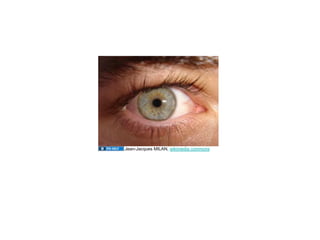
Jean-Jacques MILAN, wikimedia commons
29 year old male presents to the emergency room
in July because of increasing headache and stiff neck for
the past 2 days. He also complains of low grade fever
and eye pain, but no mental status changes or focal
neurological deficits. The patient works at a preschool,
and one week ago he had a cold that went away without
treatment. When you walk into the ER room and turn on
the lights to evaluate him he gives you the evil eye ,
rapidly puts his hands over his face, and wants to know
when he will get his pain medication. His physical exam
is unremarkable except for temperature of 38.4°C, mild
neck stiffness, and photophobia.

                 What do you do next?
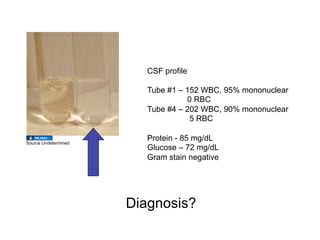
CSF profile

                         Tube #1 – 152 WBC, 95% mononuclear
                                   0 RBC
                         Tube #4 – 202 WBC, 90% mononuclear
                                    5 RBC

Source Undetermined
                         Protein - 85 mg/dL
                         Glucose – 72 mg/dL
                         Gram stain negative


                      Diagnosis?
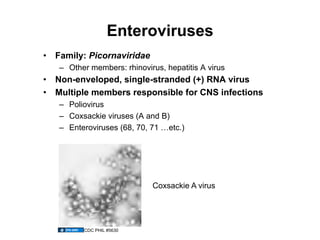
Enteroviruses
•  Family: Picornaviridae
   –  Other members: rhinovirus, hepatitis A virus
•  Non-enveloped, single-stranded (+) RNA virus
•  Multiple members responsible for CNS infections
   –  Poliovirus
   –  Coxsackie viruses (A and B)
   –  Enteroviruses (68, 70, 71 …etc.)


                             Coxsackie A virus


          CDC PHIL #5630
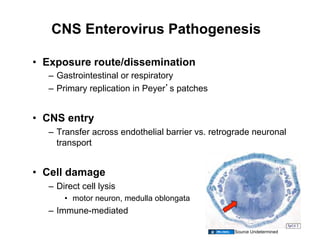
CNS Enterovirus Pathogenesis

•  Exposure route/dissemination
   –  Gastrointestinal or respiratory
   –  Primary replication in Peyer s patches


•  CNS entry
   –  Transfer across endothelial barrier vs. retrograde neuronal
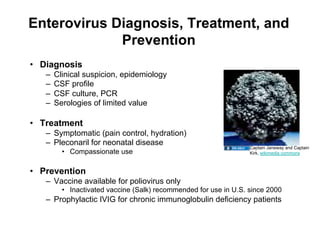
      transport


•  Cell damage
   –  Direct cell lysis
       •  motor neuron, medulla oblongata
   –  Immune-mediated

                                                   Source Undetermined
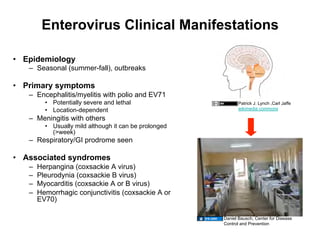
Enterovirus Clinical Manifestations

•  Epidemiology
   –  Seasonal (summer-fall), outbreaks

•  Primary symptoms
   –  Encephalitis/myelitis with polio and EV71
          •  Potentially severe and lethal                     Patrick J. Lynch ,Carl Jaffe
          •  Location-dependent                                wikimedia commons

   –  Meningitis with others
          •  Usually mild although it can be prolonged
             (>week)
   –  Respiratory/GI prodrome seen

•  Associated syndromes
   –    Herpangina (coxsackie A virus)
   –    Pleurodynia (coxsackie B virus)
   –    Myocarditis (coxsackie A or B virus)
   –    Hemorrhagic conjunctivitis (coxsackie A or
        EV70)

                                                         Daniel Bausch, Center for Disease
                                                         Control and Prevention
Enterovirus Susceptibility

•  Normal healthy people at risk

•  Neonates at risk for overwhelming disease
   –  Sepsis after intrapartum or perinatal exposure

•  Immunocompromised at risk for chronic
   meningoencephalitis
   –  Immunoglobulin deficiency
   –  Antibody response the primary mechanism for virus
      clearance
Enterovirus Diagnosis, Treatment, and
             Prevention
•  Diagnosis
   –    Clinical suspicion, epidemiology
   –    CSF profile
   –    CSF culture, PCR
   –    Serologies of limited value

•  Treatment
   –  Symptomatic (pain control, hydration)
   –  Pleconaril for neonatal disease
                                                                    Captain Janeway and Captain
          •  Compassionate use                                      Kirk, wikimedia commons


•  Prevention
   –  Vaccine available for poliovirus only
          •  Inactivated vaccine (Salk) recommended for use in U.S. since 2000
   –  Prophylactic IVIG for chronic immunoglobulin deficiency patients
78 year old female was brought to the emergency room
by her daughter because of confusion. Over the past
week the patient has been progressively forgetful, but
it was thought by the family just to be normal Alzheimer s .
However, the past 2 days she has had low grade fevers,
mild headache, and has been hallucinating and complaining
of strange smells. In the ER she has a generalized seizure.
On exam she has a low grade temperature (38.1°C), her
vital signs are stable, but she is postictal and minimally
responsiveness. CSF exam shows 350 WBCs (90%
mononuclear), 2,500 RBCs, normal glucose, and elevated
protein (100 mg/dL). Non-contrast head CT is negative.
MRI is obtained.
Source Undetermined
78 year old female was brought to the emergency room
by her daughter because of confusion. Over the past
week the patient has been progressively forgetful, but
it was thought by the family just to be normal Alzheimer s .
However, the past 2 days she has had low grade fevers,
mild headache, and has been hallucinating and complaining
of strange smells. In the ER she has a generalized seizure.
On exam she has a low grade temperature (38.1°C), her
vital signs are stable, but she is postictal and minimally
responsiveness. CSF exam shows 350 WBCs (90%
mononuclear), 2,500 RBCs, normal glucose, and elevated
protein (100 mg/dL). Non-contrast head CT is negative.
MRI is obtained.

                     Diagnosis?
Herpes Simplex Virus (HSV) Encephalitis


   •  Family: Herpesviridae
      –  Full lecture on this family later in course


   •  Both HSV-1 and HSV-2 can cause CNS disease

   •  Most common cause of sporadic (non-epidemic) viral
      encephalitis in the U.S.
HSV Encephalitis Pathogenesis

•  Exposure route/dissemination
   –  Primary exposure (cutaneous)
   –  Reactivation from latency (sensory ganglion)


•  CNS entry
   –  Direct neuronal spread


•  Cell damage
   –  Direct cell lysis and inflammatory responses
HSV Encephalitis Clinical
              Manifestations
•  Epidemiology
    –  Approximately 1,500 cases per year in U.S.
    –  Mortality rate without treatment >70%

•  Primary symptoms
    –  Fever, headache
    –  Progressive neurological symptoms
    –  Focal symptoms represent region of brain involvement (temporal lobe
       common)
    –  Mental status changes frequent
    –  Seizures

•  Meningitis and myelitis also seen
    –  Primary genital HSV
    –  Recurrences possible (Mollaret s meningitis)

•  Long-term neurological sequelae possible
    –  Especially without prompt therapy
HSV Encephalitis Diagnosis, Treatment,
          and Prevention
 •  Diagnosis
    –  Clinical suspicion (ACT quickly!)
    –  CSF profile
           •  Lymphocytic pleocytosis, increased RBCs common, high protein
    –    CSF PCR is gold-standard diagnostic test
    –    Peripheral serologies useless
    –    MRI helpful if positive but not specific for HSV
    –    EEG also helpful but not specific
           •  Localized spike and slow wave pattern

 •  Treatment
    –  Acyclovir – start empirically with meningitis antibacterials if
       any clinic suspicion

 •  Prevention
    –  No vaccine available
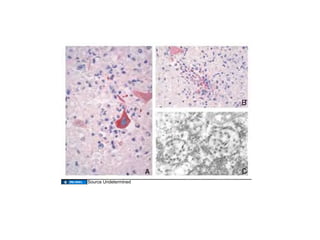
6 year old male was brought to the emergency room in
August by his parents with new onset seizures. He has
no past medical history and takes no medications. The
seizure started earlier today and came on without any
prodromal symptoms. No one else has been sick. The
family raised horses and the father noted that several
have been acting funny lately, but he hasn t called the
veterinarian. CSF profile shows a mild lymphocytic
pleocytosis and elevated protein, bacterial gram stain is
negative, and non-contrast head CT is unremarkable.
Head MRI shows diffuse inflammatory changes. Patient
is started on broad-spectrum antibiotics and anti-seizure
medications, but despite aggressive supportive care
never regains consciousness and dies one week later.
Source Undetermined
6 year old male was brought to the emergency room in
August by his parents with new onset seizures. He has
no past medical history and takes no medications. The
seizure started earlier today and came on without any
prodromal symptoms. No one else has been sick. The
family raised horses and the father noted that several
have been acting funny lately, but he hasn t called the
veterinarian. CSF profile shows a mild lymphocytic
pleocytosis and elevated protein, bacterial gram stain is
negative, and non-contrast head CT is unremarkable.
Head MRI shows diffuse inflammatory changes. Patient
is started on broad-spectrum antibiotics and anti-seizure
medications, but despite aggressive supportive care
never regains consciousness and dies one week later.

                     Diagnosis?
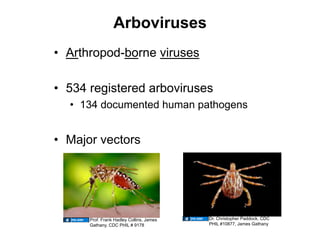
Arboviruses
•  Arthropod-borne viruses

•  534 registered arboviruses
  •  134 documented human pathogens


•  Major vectors


      Prof. Frank Hadley Collins, James   Dr. Christopher Paddock, CDC
      Gathany, CDC PHIL # 9178            PHIL #10877, James Gathany
Arbovirus Families
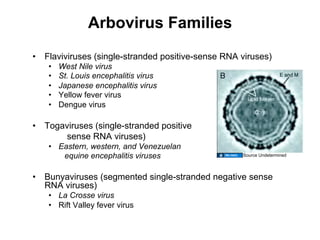
•  Flaviviruses (single-stranded positive-sense RNA viruses)
    •    West Nile virus
    •    St. Louis encephalitis virus
    •    Japanese encephalitis virus
    •    Yellow fever virus
    •    Dengue virus

•  Togaviruses (single-stranded positive
       sense RNA viruses)
    •  Eastern, western, and Venezuelan
        equine encephalitis viruses                 Source Undetermined


•  Bunyaviruses (segmented single-stranded negative sense
   RNA viruses)
    •  La Crosse virus
    •  Rift Valley fever virus
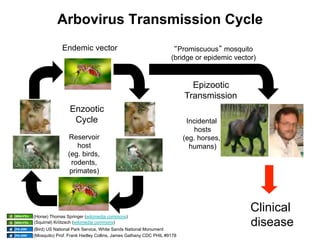
Arbovirus Transmission Cycle
             Endemic vector                                       Promiscuous mosquito
                                                                (bridge or epidemic vector)


                                                                        Epizootic
                                                                      Transmission
                 Enzootic
                  Cycle                                                Incidental
                                                                          hosts
                Reservoir                                             (eg. horses,
                    host                                                humans)
                (eg. birds,
                 rodents,
                 primates)


                                                                                         Clinical
(Horse) Thomas Springer (wikimedia commons)
(Squirrel) Krötzsch (wikimedia commons)
(Bird) US National Park Service, White Sands National Monument
                                                                                         disease
(Mosquito) Prof. Frank Hadley Collins, James Gathany CDC PHIL #9178
Arboviral Diseases in Humans

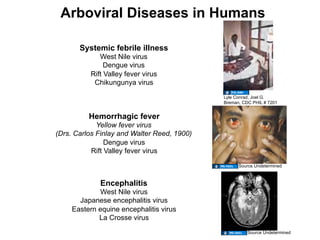
       Systemic febrile illness
             West Nile virus
               Dengue virus
          Rift Valley fever virus
           Chikungunya virus
                                             Lyle Conrad, Joel G.
                                             Breman, CDC PHIL # 7201


          Hemorrhagic fever
             Yellow fever virus
(Drs. Carlos Finlay and Walter Reed, 1900)
                Dengue virus
           Rift Valley fever virus

                                                   Source Undetermined


             Encephalitis
             West Nile virus
       Japanese encephalitis virus
     Eastern equine encephalitis virus
             La Crosse virus
                                                       Source Undetermined
Arbovirus Meningoencephalitis
                Pathogenesis

•  Exposure route/dissemination
   –    Replication within insect vector required
   –    Primary exposure is cutaneous
   –    Respiratory transmission demonstrated experimentally
   –    Local replication followed by viremia

•  CNS entry
   –  Hematogenous
          •  Traverse BBB endothelium through unknown mechanism
   –  Direct neuronal spread for respiratory exposure (olfactory bulb)

•  Cell damage
   –  Neurons are primary targets for many viruses
   –  Direct cell death and inflammatory responses
Arbovirus Epidemiology

•  Seasonal (summer/fall)

•  Incidence varies with virus and time

•  Extremes of age more susceptible to severe disease

•  Mortality rate varied with virus
    –  Eastern equine encephalitis virus (EEEV) ~50%
    –  West Nile virus (WNV) ~10%
    –  La Crosse virus (LACV) <1%
Arbovirus Meningoencephalitis Clinical
            Manifestations

•  Primary symptoms
   –  Most infections asymptomatic or produce non-specific viral
      syndrome
   –  Fever, headache, seizures
   –  Neuronal targets dictate clinical symtpoms
       •  Anterior motor neurons (WNV) – poliomyelitis
       •  Basal ganglia neurons (JEV) – Parkinsonian Sx


•  Long-term neurological sequelae possible
Arbovirus Meningoencephalitis
Diagnosis, Treatment, and Prevention
•  Diagnosis
   –  Clinical suspicion
   –  Social history/exposure/travel provide important clues
   –  CSF profile
       •  Lymphocytic pleocytosis, high protein
   –  CSF PCR, intrathecal IgM
   –  Acute and convalescent serologies useful for epidemiology

•  Treatment
   –  Supportive

•  Prevention
   –  Inactivated vaccine available for JEV
   –  Live attenuated YFV vaccine also available
   –  Vector control efforts
Arboviruses as Potential Bioweapons
•  High morbidity and mortality

•  No effective treatments (limited
   prevention)

•  Potential for aerosol transmission

•  Public anxiety elicited by insect-
   borne infectious diseases
   (especially central nervous system
   infections)

•  Genetics are easily manipulated
                                        Henry Mathews, CDC PHIL #1402
•  Simplified large-scale production
   and purification

•  CDC/NIAID category B agents
A patient of yours calls you at 3 AM in a panic. They
just found a live bat in their 1 year old daughter s room
and they are terrified about rabies. The bat was quickly
removed by opening the window and they don t think their
child was bitten (she was still sleeping). They want
to know what to do.


            What do you tell them?
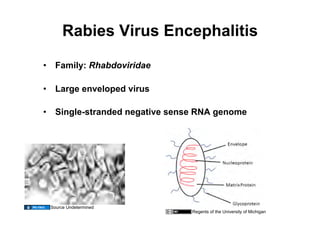
Rabies Virus Encephalitis

•  Family: Rhabdoviridae

•  Large enveloped virus

•  Single-stranded negative sense RNA genome


 Source Undetermined
                                Regents of the University of Michigan
Rabies Virus Encephalitis
             Pathogenesis
•  Exposure route
   –  Peripheral lesion with saliva exposure
   –  Long incubation period (weeks to years)

•  CNS entry
   -  Retrograde axonal transport from peripheral nerves
   -  Temporal pattern of presentation depends in part on length of
      inoculation site from CNS

•  Dissemination
   –  Anterograde transport often back through same axon
   –  Highly innervated salivary gland frequently involved

•  Neuronal damage
   –  Direct virus-induced injury with MINIMAL inflammatory responses
   –  Mild histopathological changes contrast to dramatic clinical
      symptoms
Rabies Virus Encephalitis Clinical
            Manifestations

•  Epidemiology
   –    Disease recognized for thousands of years (2300 B.C.)
   –    Only handful of cases in U.S. per year
   –    More common in underdeveloped countries
   –    Only 10-20% of true exposures will result in disease

•  Reservoir (U.S.)
   –  Bats, skunks, raccoons, and foxes
          •  32/35 U.S. cases (1958-2000) from bats
          •  26/32 cases without known bat bit
   –  Rodents, lagomorphs, and domestic dogs/cats almost never
      infected

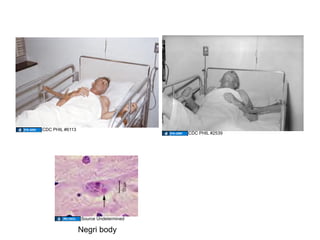
•  Primary symptoms
   –  Fever, dysphagia, hydrophobia, increased muscle tone
   –  Progression to coma and death
CDC PHIL #6113
                                       CDC PHIL #2539


                 Source Undetermined

                 Negri body
Rabies Virus Encephalitis Diagnosis,
     Treatment, and Prevention
•  Diagnosis
   –  Clinical suspicion with exposure history
   –  CSF profile (cell count, glucose, protein) often unhelpful
   –  CSF/tissue PCR
   –  DFA of neck skin biopsies
   –  Serologies can be helpful

•  Treatment
   –  None (universally fatal once symptoms develop)

•  Prevention
   –  Louis Pasteur developed first vaccine in late 1800 s
   –  Vaccination (inactivated virus) and post-exposure
      prophylaxis
Other CNS viruses
•  Other herpes viruses
   –    Epstein-Barr virus (EBV)
   –    Cytomegalovirus (CMV)
   –    Varicella zoster virus (VZV)
   –    Human herpes virus 6 (HHV-6)
   –    Herpes B virus (simian herpesvirus)

•  Mumps virus

•  Measles virus

•  Lymphocytic choriomeningitis virus (LCMV)

•  Human immunodeficiency virus (HIV)
Additional Source Information
                         for more information see: http://open.umich.edu/wiki/CitationPolicy

Slide 5: David Miller
Slide 6: Gringer, Wikimedia Commons, http://en.wikipedia.org/wiki/GNU_Free_Documentation_License
Slide 8: Source Undetermined
Slide 10: Jean-Jacques MILAN, Wikimedia Commons, http://commons.wikimedia.org/wiki/File:My_eye.jpg
Slide 12: Source Undetermined
Slide 13: CDC PHIL #5630
Slide 14: Source Undetermined
Slide 15: Patrick J. Lynch ,Carl Jaffe, Wikimedia Commons, http://commons.wikimedia.org/wiki/File:Brain_bulbar_region.svg, CC:BY,
      http://creativecommons.org/licenses/by/2.5/deed.en Daniel Bausch, Center for Disease Control and Prevention
Slide 17: Captain Janeway and Captain Kirk, Wikimedia Commons, http://commons.wikimedia.org/wiki/File:BEV_Structure.jpg
Slide 19: Source Undetermined
Slide 26: Source Undetermined
Slide 28: Prof. Frank Hadley Collins, James Gathany, CDC PHIL # 9178; Dr. Christopher Paddock, CDC PHIL #10877, James Gathany
Slide 29: Source Undetermined
Slide 30: (Mosquito) Prof. Frank Hadley Collins, James Gathany CDC PHIL #9178; (Bird) US National Park Service, White Sands National
      Monument; (Squirrel) Krötzsch, Wikimedia Commons, http://commons.wikimedia.org/wiki/File:Sciurus_niger_(on_fence).jpg,
      http://commons.wikimedia.org/wiki/Commons:GNU_Free_Documentation_License; (Horse) Thomas Springer, Wikimedia Commons,
      http://commons.wikimedia.org/wiki/File:Fellpony2.jpg, http://commons.wikimedia.org/wiki/Commons:GNU_Free_Documentation_License
Slide 31: Lyle Conrad, Joel G. Breman, CDC PHIL # 7201; Source Undetermined; Source Undetermined
Slide 36: Henry Mathews, CDC PHIL #1402
Slide 38: Source Undetermined; Regents of the University of Michigan, CC:BY, http://creativecommons.org/licenses/by/3.0/
Slide 41: CDC PHIL #6113; CDC PHIL #2539; Source Undetermined

04.17.09: CNS Viruses

  • 1.
    Author(s): David Miller,M.D., Ph.D., 2009 License: Unless otherwise noted, this material is made available under the terms of the Creative Commons Attribution–Noncommercial–Share Alike 3.0 License: http://creativecommons.org/licenses/by-nc-sa/3.0/ We have reviewed this material in accordance with U.S. Copyright Law and have tried to maximize your ability to use, share, and adapt it. The citation key on the following slide provides information about how you may share and adapt this material. Copyright holders of content included in this material should contact open.michigan@umich.edu with any questions, corrections, or clarification regarding the use of content. For more information about how to cite these materials visit http://open.umich.edu/education/about/terms-of-use. Any medical information in this material is intended to inform and educate and is not a tool for self-diagnosis or a replacement for medical evaluation, advice, diagnosis or treatment by a healthcare professional. Please speak to your physician if you have questions about your medical condition. Viewer discretion is advised: Some medical content is graphic and may not be suitable for all viewers.
  • 2.
    Citation Key for more information see: http://open.umich.edu/wiki/CitationPolicy Use + Share + Adapt { Content the copyright holder, author, or law permits you to use, share and adapt. } Public Domain – Government: Works that are produced by the U.S. Government. (17 USC § 105) Public Domain – Expired: Works that are no longer protected due to an expired copyright term. Public Domain – Self Dedicated: Works that a copyright holder has dedicated to the public domain. Creative Commons – Zero Waiver Creative Commons – Attribution License Creative Commons – Attribution Share Alike License Creative Commons – Attribution Noncommercial License Creative Commons – Attribution Noncommercial Share Alike License GNU – Free Documentation License Make Your Own Assessment { Content Open.Michigan believes can be used, shared, and adapted because it is ineligible for copyright. } Public Domain – Ineligible: Works that are ineligible for copyright protection in the U.S. (17 USC § 102(b)) *laws in your jurisdiction may differ { Content Open.Michigan has used under a Fair Use determination. } Fair Use: Use of works that is determined to be Fair consistent with the U.S. Copyright Act. (17 USC § 107) *laws in your jurisdiction may differ Our determination DOES NOT mean that all uses of this 3rd-party content are Fair Uses and we DO NOT guarantee that your use of the content is Fair. To use this content you should do your own independent analysis to determine whether or not your use will be Fair.
  • 3.
    Central Nervous System(CNS) Viruses M1 Infectious Diseases/Microbiology Sequence David J. Miller, M.D., Ph.D. Spring 2010
  • 4.
    Objectives •  Appreciate bothcommon and unique features of CNS virus pathogenesis •  Recognize the importance of early diagnostic testing and empiric therapy for suspected herpes simplex virus encephalitis •  Know the arbovirus life cycle and those pathogens endemic in the U.S. •  Know the indications and procedures for rabies post- exposure prophylaxis Reading assignment: Schaechter s 4th edition, chapters 32, 33, 35, and 41
  • 5.
    CNS viruses Non-Human Antiviral Group Examples Onset Vector Seasonal Diagnosis Rx Vaccine Enteroviruses Coxsackie viruses Acute to None Yes • Clinical No No Echovirus subacute • CSF exam/PCR (except Poliovirus • Culture polio) Herpes virus Herpes simplex Acute None No • Clinical Yes No virus (HSV) (Latency) • CSF exam/PCR Herpes B virus • EEG/MRI Arboviruses West Nile virus Acute Insects Yes • Clinical No No for (WNV) (exposure) most Eastern equine • CSF exam/PCR encephalitis virus or serologies (EEEV) La Crosse virus (LACV) Rabies - Subacute Animals No • Clinical syndrome No Yes to chronic including exposure • Skin biopsy • CSF/peripheral serologies • Postmortem exam D. Miller
  • 6.
    Common characteristics ofCNS virus infections •  Clinical presentation –  Typically acute onset –  Healthy hosts are often afflicted –  Frequently occurs as meningoencephalitis •  Meningitis – fever, headache, stiff neck •  Encephalitis – meningitis with mental status changes (seizures, decreased consciousness, confusion) •  Myelitis – focal neurological signs localized to spinal cord Continuum of viral CNS infections Gringer (wikimedia commons) Meningoencephalitis Pure encephalitis Most infections Pure meningitis (Rabies virus) (Coxsackie virus)
  • 7.
    Common characteristics ofCNS virus infections Diagnosis –  Clinical presentation –  CSF exam essential •  Lymphocytic pleocytosis (100-2,000) •  Occasionally increased RBCs (esp. HSV) •  Increased protein, normal glucose •  Gram stain negative •  Identification of virus (Cx, PCR) or intrathecal IgM response diagnostic –  Peripheral serologies •  Often not helpful in acute setting (except IgM) •  Convalescent titer helpful retrospectively
  • 8.
    CNS virus pathogenesis Pathogenic event Exposure Epithelial layer disruption Local replication Viremia Dissemination Secondary amplification CNS Entry Blood-brain barrier disruption Axonal transport Inflammation Direct and indirect cell damage Clinical Target cells Disease (neurons, glial cells, endothelial cells) Source Undetermined
  • 9.
    29 year oldmale presents to the emergency room in July because of increasing headache and stiff neck for the past 2 days. He also complains of low grade fever and eye pain, but no mental status changes or focal neurological deficits. The patient works at a preschool, and one week ago he had a cold that went away without treatment. When you walk into the ER room and turn on the lights to evaluate him he gives you the evil eye , rapidly puts his hands over his face, and wants to know when he will get his pain medication. His physical exam is unremarkable except for temperature of 38.4°C, mild neck stiffness, and photophobia.
  • 10.
  • 11.
    29 year oldmale presents to the emergency room in July because of increasing headache and stiff neck for the past 2 days. He also complains of low grade fever and eye pain, but no mental status changes or focal neurological deficits. The patient works at a preschool, and one week ago he had a cold that went away without treatment. When you walk into the ER room and turn on the lights to evaluate him he gives you the evil eye , rapidly puts his hands over his face, and wants to know when he will get his pain medication. His physical exam is unremarkable except for temperature of 38.4°C, mild neck stiffness, and photophobia. What do you do next?
  • 12.
    CSF profile Tube #1 – 152 WBC, 95% mononuclear 0 RBC Tube #4 – 202 WBC, 90% mononuclear 5 RBC Source Undetermined Protein - 85 mg/dL Glucose – 72 mg/dL Gram stain negative Diagnosis?
  • 13.
    Enteroviruses •  Family: Picornaviridae –  Other members: rhinovirus, hepatitis A virus •  Non-enveloped, single-stranded (+) RNA virus •  Multiple members responsible for CNS infections –  Poliovirus –  Coxsackie viruses (A and B) –  Enteroviruses (68, 70, 71 …etc.) Coxsackie A virus CDC PHIL #5630
  • 14.
    CNS Enterovirus Pathogenesis • Exposure route/dissemination –  Gastrointestinal or respiratory –  Primary replication in Peyer s patches •  CNS entry –  Transfer across endothelial barrier vs. retrograde neuronal transport •  Cell damage –  Direct cell lysis •  motor neuron, medulla oblongata –  Immune-mediated Source Undetermined
  • 15.
    Enterovirus Clinical Manifestations • Epidemiology –  Seasonal (summer-fall), outbreaks •  Primary symptoms –  Encephalitis/myelitis with polio and EV71 •  Potentially severe and lethal Patrick J. Lynch ,Carl Jaffe •  Location-dependent wikimedia commons –  Meningitis with others •  Usually mild although it can be prolonged (>week) –  Respiratory/GI prodrome seen •  Associated syndromes –  Herpangina (coxsackie A virus) –  Pleurodynia (coxsackie B virus) –  Myocarditis (coxsackie A or B virus) –  Hemorrhagic conjunctivitis (coxsackie A or EV70) Daniel Bausch, Center for Disease Control and Prevention
  • 16.
    Enterovirus Susceptibility •  Normalhealthy people at risk •  Neonates at risk for overwhelming disease –  Sepsis after intrapartum or perinatal exposure •  Immunocompromised at risk for chronic meningoencephalitis –  Immunoglobulin deficiency –  Antibody response the primary mechanism for virus clearance
  • 17.
    Enterovirus Diagnosis, Treatment,and Prevention •  Diagnosis –  Clinical suspicion, epidemiology –  CSF profile –  CSF culture, PCR –  Serologies of limited value •  Treatment –  Symptomatic (pain control, hydration) –  Pleconaril for neonatal disease Captain Janeway and Captain •  Compassionate use Kirk, wikimedia commons •  Prevention –  Vaccine available for poliovirus only •  Inactivated vaccine (Salk) recommended for use in U.S. since 2000 –  Prophylactic IVIG for chronic immunoglobulin deficiency patients
  • 18.
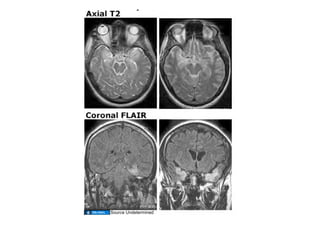
    78 year oldfemale was brought to the emergency room by her daughter because of confusion. Over the past week the patient has been progressively forgetful, but it was thought by the family just to be normal Alzheimer s . However, the past 2 days she has had low grade fevers, mild headache, and has been hallucinating and complaining of strange smells. In the ER she has a generalized seizure. On exam she has a low grade temperature (38.1°C), her vital signs are stable, but she is postictal and minimally responsiveness. CSF exam shows 350 WBCs (90% mononuclear), 2,500 RBCs, normal glucose, and elevated protein (100 mg/dL). Non-contrast head CT is negative. MRI is obtained.
  • 19.
  • 20.
    78 year oldfemale was brought to the emergency room by her daughter because of confusion. Over the past week the patient has been progressively forgetful, but it was thought by the family just to be normal Alzheimer s . However, the past 2 days she has had low grade fevers, mild headache, and has been hallucinating and complaining of strange smells. In the ER she has a generalized seizure. On exam she has a low grade temperature (38.1°C), her vital signs are stable, but she is postictal and minimally responsiveness. CSF exam shows 350 WBCs (90% mononuclear), 2,500 RBCs, normal glucose, and elevated protein (100 mg/dL). Non-contrast head CT is negative. MRI is obtained. Diagnosis?
  • 21.
    Herpes Simplex Virus(HSV) Encephalitis •  Family: Herpesviridae –  Full lecture on this family later in course •  Both HSV-1 and HSV-2 can cause CNS disease •  Most common cause of sporadic (non-epidemic) viral encephalitis in the U.S.
  • 22.
    HSV Encephalitis Pathogenesis • Exposure route/dissemination –  Primary exposure (cutaneous) –  Reactivation from latency (sensory ganglion) •  CNS entry –  Direct neuronal spread •  Cell damage –  Direct cell lysis and inflammatory responses
  • 23.
    HSV Encephalitis Clinical Manifestations •  Epidemiology –  Approximately 1,500 cases per year in U.S. –  Mortality rate without treatment >70% •  Primary symptoms –  Fever, headache –  Progressive neurological symptoms –  Focal symptoms represent region of brain involvement (temporal lobe common) –  Mental status changes frequent –  Seizures •  Meningitis and myelitis also seen –  Primary genital HSV –  Recurrences possible (Mollaret s meningitis) •  Long-term neurological sequelae possible –  Especially without prompt therapy
  • 24.
    HSV Encephalitis Diagnosis,Treatment, and Prevention •  Diagnosis –  Clinical suspicion (ACT quickly!) –  CSF profile •  Lymphocytic pleocytosis, increased RBCs common, high protein –  CSF PCR is gold-standard diagnostic test –  Peripheral serologies useless –  MRI helpful if positive but not specific for HSV –  EEG also helpful but not specific •  Localized spike and slow wave pattern •  Treatment –  Acyclovir – start empirically with meningitis antibacterials if any clinic suspicion •  Prevention –  No vaccine available
  • 25.
    6 year oldmale was brought to the emergency room in August by his parents with new onset seizures. He has no past medical history and takes no medications. The seizure started earlier today and came on without any prodromal symptoms. No one else has been sick. The family raised horses and the father noted that several have been acting funny lately, but he hasn t called the veterinarian. CSF profile shows a mild lymphocytic pleocytosis and elevated protein, bacterial gram stain is negative, and non-contrast head CT is unremarkable. Head MRI shows diffuse inflammatory changes. Patient is started on broad-spectrum antibiotics and anti-seizure medications, but despite aggressive supportive care never regains consciousness and dies one week later.
  • 26.
  • 27.
    6 year oldmale was brought to the emergency room in August by his parents with new onset seizures. He has no past medical history and takes no medications. The seizure started earlier today and came on without any prodromal symptoms. No one else has been sick. The family raised horses and the father noted that several have been acting funny lately, but he hasn t called the veterinarian. CSF profile shows a mild lymphocytic pleocytosis and elevated protein, bacterial gram stain is negative, and non-contrast head CT is unremarkable. Head MRI shows diffuse inflammatory changes. Patient is started on broad-spectrum antibiotics and anti-seizure medications, but despite aggressive supportive care never regains consciousness and dies one week later. Diagnosis?
  • 28.
    Arboviruses •  Arthropod-borne viruses • 534 registered arboviruses •  134 documented human pathogens •  Major vectors Prof. Frank Hadley Collins, James Dr. Christopher Paddock, CDC Gathany, CDC PHIL # 9178 PHIL #10877, James Gathany
  • 29.
    Arbovirus Families •  Flaviviruses(single-stranded positive-sense RNA viruses) •  West Nile virus •  St. Louis encephalitis virus •  Japanese encephalitis virus •  Yellow fever virus •  Dengue virus •  Togaviruses (single-stranded positive sense RNA viruses) •  Eastern, western, and Venezuelan equine encephalitis viruses Source Undetermined •  Bunyaviruses (segmented single-stranded negative sense RNA viruses) •  La Crosse virus •  Rift Valley fever virus
  • 30.
    Arbovirus Transmission Cycle Endemic vector Promiscuous mosquito (bridge or epidemic vector) Epizootic Transmission Enzootic Cycle Incidental hosts Reservoir (eg. horses, host humans) (eg. birds, rodents, primates) Clinical (Horse) Thomas Springer (wikimedia commons) (Squirrel) Krötzsch (wikimedia commons) (Bird) US National Park Service, White Sands National Monument disease (Mosquito) Prof. Frank Hadley Collins, James Gathany CDC PHIL #9178
  • 31.
    Arboviral Diseases inHumans Systemic febrile illness West Nile virus Dengue virus Rift Valley fever virus Chikungunya virus Lyle Conrad, Joel G. Breman, CDC PHIL # 7201 Hemorrhagic fever Yellow fever virus (Drs. Carlos Finlay and Walter Reed, 1900) Dengue virus Rift Valley fever virus Source Undetermined Encephalitis West Nile virus Japanese encephalitis virus Eastern equine encephalitis virus La Crosse virus Source Undetermined
  • 32.
    Arbovirus Meningoencephalitis Pathogenesis •  Exposure route/dissemination –  Replication within insect vector required –  Primary exposure is cutaneous –  Respiratory transmission demonstrated experimentally –  Local replication followed by viremia •  CNS entry –  Hematogenous •  Traverse BBB endothelium through unknown mechanism –  Direct neuronal spread for respiratory exposure (olfactory bulb) •  Cell damage –  Neurons are primary targets for many viruses –  Direct cell death and inflammatory responses
  • 33.
    Arbovirus Epidemiology •  Seasonal(summer/fall) •  Incidence varies with virus and time •  Extremes of age more susceptible to severe disease •  Mortality rate varied with virus –  Eastern equine encephalitis virus (EEEV) ~50% –  West Nile virus (WNV) ~10% –  La Crosse virus (LACV) <1%
  • 34.
    Arbovirus Meningoencephalitis Clinical Manifestations •  Primary symptoms –  Most infections asymptomatic or produce non-specific viral syndrome –  Fever, headache, seizures –  Neuronal targets dictate clinical symtpoms •  Anterior motor neurons (WNV) – poliomyelitis •  Basal ganglia neurons (JEV) – Parkinsonian Sx •  Long-term neurological sequelae possible
  • 35.
    Arbovirus Meningoencephalitis Diagnosis, Treatment,and Prevention •  Diagnosis –  Clinical suspicion –  Social history/exposure/travel provide important clues –  CSF profile •  Lymphocytic pleocytosis, high protein –  CSF PCR, intrathecal IgM –  Acute and convalescent serologies useful for epidemiology •  Treatment –  Supportive •  Prevention –  Inactivated vaccine available for JEV –  Live attenuated YFV vaccine also available –  Vector control efforts
  • 36.
    Arboviruses as PotentialBioweapons •  High morbidity and mortality •  No effective treatments (limited prevention) •  Potential for aerosol transmission •  Public anxiety elicited by insect- borne infectious diseases (especially central nervous system infections) •  Genetics are easily manipulated Henry Mathews, CDC PHIL #1402 •  Simplified large-scale production and purification •  CDC/NIAID category B agents
  • 37.
    A patient ofyours calls you at 3 AM in a panic. They just found a live bat in their 1 year old daughter s room and they are terrified about rabies. The bat was quickly removed by opening the window and they don t think their child was bitten (she was still sleeping). They want to know what to do. What do you tell them?
  • 38.
    Rabies Virus Encephalitis • Family: Rhabdoviridae •  Large enveloped virus •  Single-stranded negative sense RNA genome Source Undetermined Regents of the University of Michigan
  • 39.
    Rabies Virus Encephalitis Pathogenesis •  Exposure route –  Peripheral lesion with saliva exposure –  Long incubation period (weeks to years) •  CNS entry -  Retrograde axonal transport from peripheral nerves -  Temporal pattern of presentation depends in part on length of inoculation site from CNS •  Dissemination –  Anterograde transport often back through same axon –  Highly innervated salivary gland frequently involved •  Neuronal damage –  Direct virus-induced injury with MINIMAL inflammatory responses –  Mild histopathological changes contrast to dramatic clinical symptoms
  • 40.
    Rabies Virus EncephalitisClinical Manifestations •  Epidemiology –  Disease recognized for thousands of years (2300 B.C.) –  Only handful of cases in U.S. per year –  More common in underdeveloped countries –  Only 10-20% of true exposures will result in disease •  Reservoir (U.S.) –  Bats, skunks, raccoons, and foxes •  32/35 U.S. cases (1958-2000) from bats •  26/32 cases without known bat bit –  Rodents, lagomorphs, and domestic dogs/cats almost never infected •  Primary symptoms –  Fever, dysphagia, hydrophobia, increased muscle tone –  Progression to coma and death
  • 41.
    CDC PHIL #6113 CDC PHIL #2539 Source Undetermined Negri body
  • 42.
    Rabies Virus EncephalitisDiagnosis, Treatment, and Prevention •  Diagnosis –  Clinical suspicion with exposure history –  CSF profile (cell count, glucose, protein) often unhelpful –  CSF/tissue PCR –  DFA of neck skin biopsies –  Serologies can be helpful •  Treatment –  None (universally fatal once symptoms develop) •  Prevention –  Louis Pasteur developed first vaccine in late 1800 s –  Vaccination (inactivated virus) and post-exposure prophylaxis
  • 43.
    Other CNS viruses • Other herpes viruses –  Epstein-Barr virus (EBV) –  Cytomegalovirus (CMV) –  Varicella zoster virus (VZV) –  Human herpes virus 6 (HHV-6) –  Herpes B virus (simian herpesvirus) •  Mumps virus •  Measles virus •  Lymphocytic choriomeningitis virus (LCMV) •  Human immunodeficiency virus (HIV)
  • 44.
    Additional Source Information for more information see: http://open.umich.edu/wiki/CitationPolicy Slide 5: David Miller Slide 6: Gringer, Wikimedia Commons, http://en.wikipedia.org/wiki/GNU_Free_Documentation_License Slide 8: Source Undetermined Slide 10: Jean-Jacques MILAN, Wikimedia Commons, http://commons.wikimedia.org/wiki/File:My_eye.jpg Slide 12: Source Undetermined Slide 13: CDC PHIL #5630 Slide 14: Source Undetermined Slide 15: Patrick J. Lynch ,Carl Jaffe, Wikimedia Commons, http://commons.wikimedia.org/wiki/File:Brain_bulbar_region.svg, CC:BY, http://creativecommons.org/licenses/by/2.5/deed.en Daniel Bausch, Center for Disease Control and Prevention Slide 17: Captain Janeway and Captain Kirk, Wikimedia Commons, http://commons.wikimedia.org/wiki/File:BEV_Structure.jpg Slide 19: Source Undetermined Slide 26: Source Undetermined Slide 28: Prof. Frank Hadley Collins, James Gathany, CDC PHIL # 9178; Dr. Christopher Paddock, CDC PHIL #10877, James Gathany Slide 29: Source Undetermined Slide 30: (Mosquito) Prof. Frank Hadley Collins, James Gathany CDC PHIL #9178; (Bird) US National Park Service, White Sands National Monument; (Squirrel) Krötzsch, Wikimedia Commons, http://commons.wikimedia.org/wiki/File:Sciurus_niger_(on_fence).jpg, http://commons.wikimedia.org/wiki/Commons:GNU_Free_Documentation_License; (Horse) Thomas Springer, Wikimedia Commons, http://commons.wikimedia.org/wiki/File:Fellpony2.jpg, http://commons.wikimedia.org/wiki/Commons:GNU_Free_Documentation_License Slide 31: Lyle Conrad, Joel G. Breman, CDC PHIL # 7201; Source Undetermined; Source Undetermined Slide 36: Henry Mathews, CDC PHIL #1402 Slide 38: Source Undetermined; Regents of the University of Michigan, CC:BY, http://creativecommons.org/licenses/by/3.0/ Slide 41: CDC PHIL #6113; CDC PHIL #2539; Source Undetermined