

Contemporary Media Issues Introduction to Section B of the Exam Part Three
So what did we learn last time? That to do well in this exam you ’ve got to learn some potentially difficult media theory. You must write about the past, present and future of your topic in your exam. You ’ve got to be able to give examples AND a personal opinion on what the theorists have said. You also learnt a bit about Postmodern Media. I hope. Introduction to Section B – Review
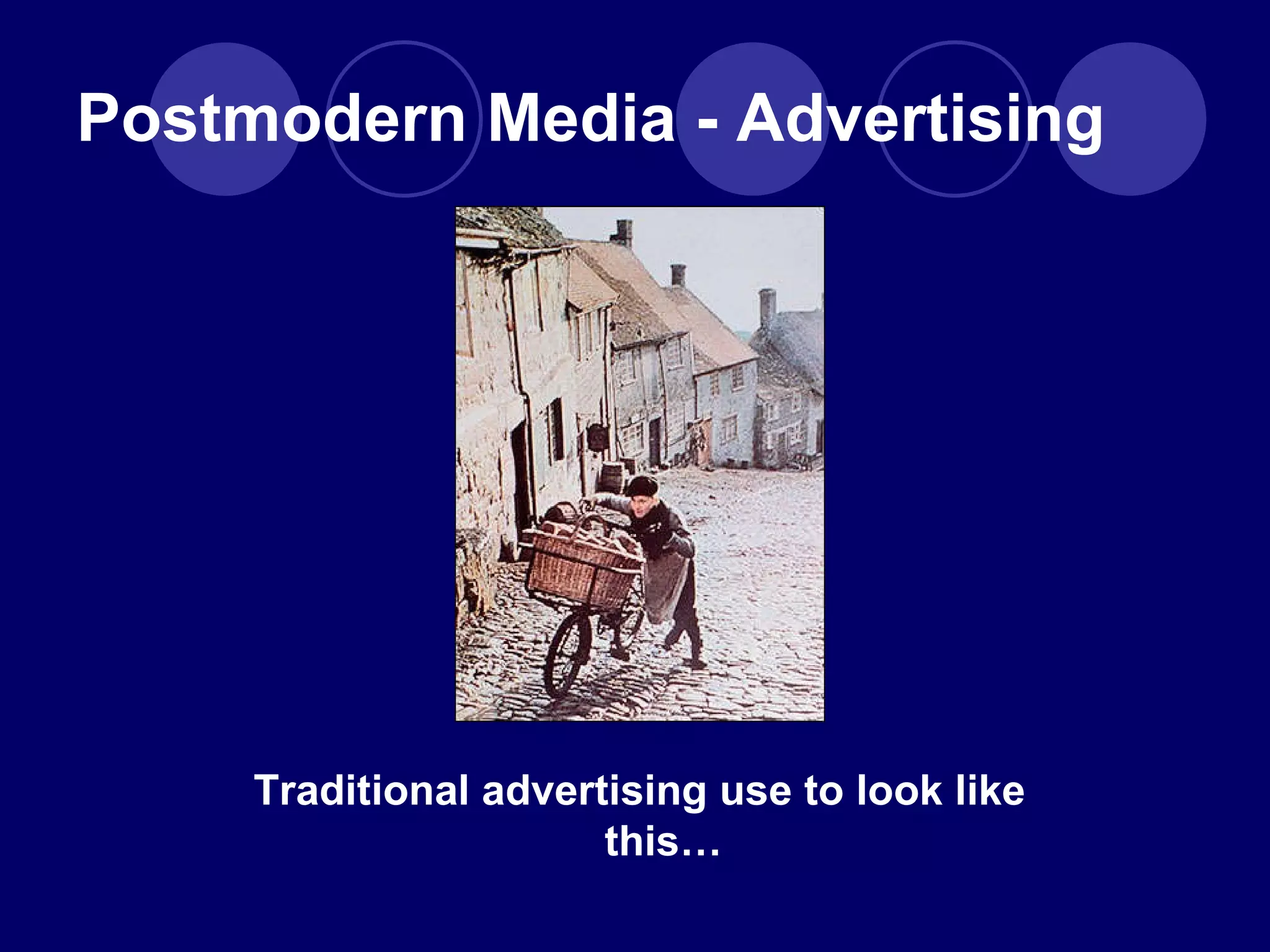
Postmodern Media - Advertising Traditional advertising use to look like this…
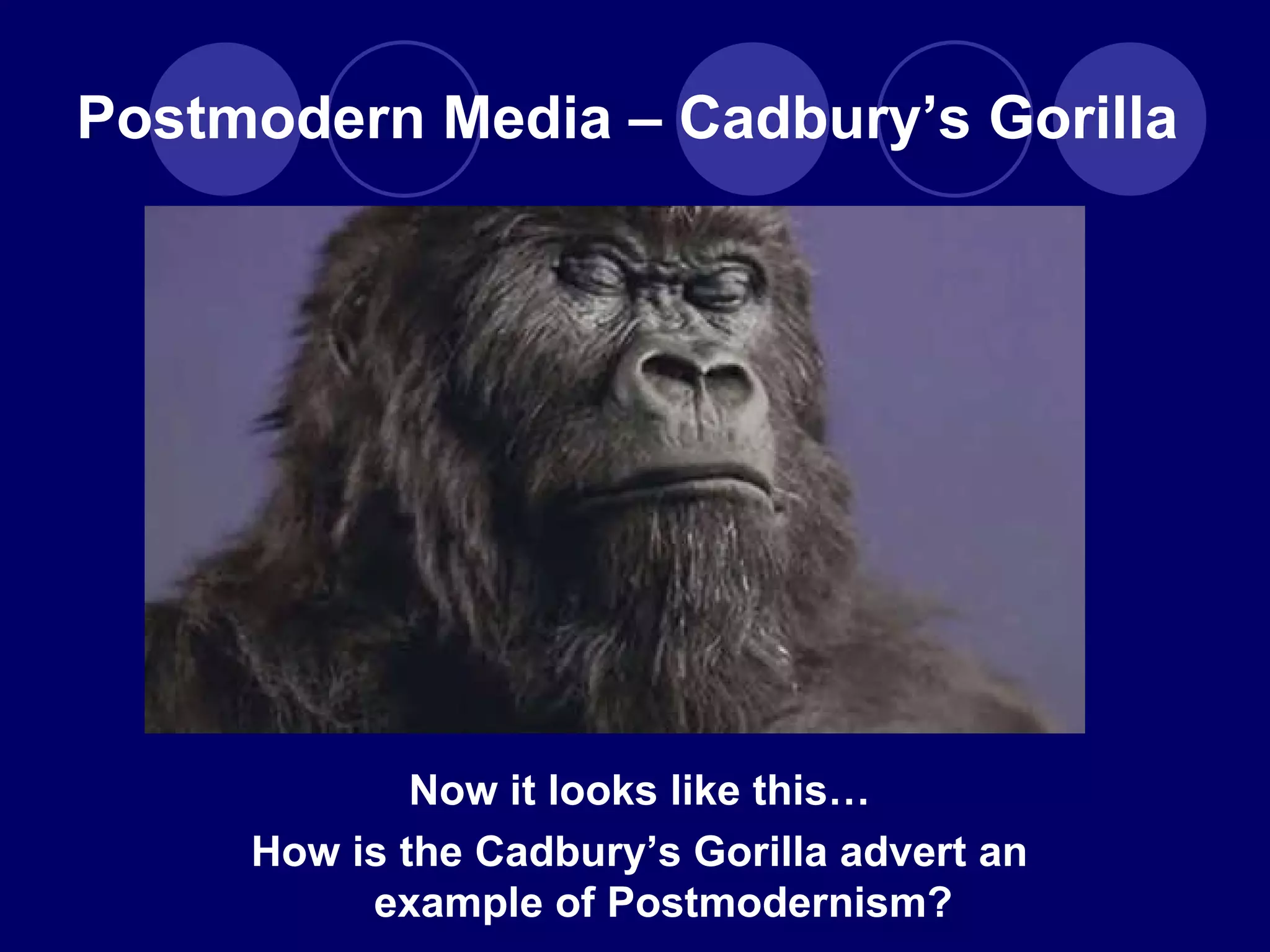
Postmodern Media – Cadbury ’s Gorilla Now it looks like this … How is the Cadbury ’s Gorilla advert an example of Postmodernism?
Postmodern Media - Advertising It ’s playing with the idea of representation making no attempt to appear ‘real’ or ‘true’ (Baudrillard) It exists in a  ‘fetishised hyperreality’  (Strinati) Like all advertising it is an example of  ‘the world of the commodity’  (Debord)  –  a  ‘spectacle’  that is empty and insubstantial It is a  parody  (or  pastiche ?) of  ‘traditional’ adverts that make claims about a products efficacy or usefulness or taste (Jameson) It ’s  intertextual  (Jameson) as it references the the song ‘In the Air Tonight’ and the writer (a famous drummer) Phil Collins It ’s playing with our idea of what an advert should be (postmodernism) It lacks seriousness and is merely about making surface associations between the brand and the audiences awareness The  ‘narrative’ is unrealistic (and unimportant) and it relies on the strangeness of the central image  to connect with the audience (Lyotard)
Introduction to Section B - Part Three You ’ll learn more about postmodern media; You ’ll learn about  cultural studies ; How broadband internet created Web 2.0 How that has started to change the world, almost; What  We-media   is and what  ‘ citizen journalism ’  is about …
Media Studies = Cultural Studies The theoretical idea behind Section B of the exam is to do with an academic approach called  ‘cultural studies’. It means you are not just looking at texts and what they 'mean' or how they are 'consumed' by people. You are looking at  the audience  and what it does with media.
By looking at how  culture  is used and transformed by  social groups , cultural studies sees people not simply as consumers, but as potential producers of  new   social values and cultural languages .  Toby Miller (2006)
Media Studies = Cultural Studies This quote raises three questions: What is culture? What are social groups? What are these new social values and cultural languages that are being created? So let ’s start with culture…
What is Culture? Whole books are devoted to just trying to answer this question! Chris Jenks (1993) described four definitions of culture: As a state of mind (the 'cultured' person); As a collective pursuit of civilisation  (an advanced culture is a society that has progressed);  As artistic and intellectual activity  (doing  ‘ art ’  and  ‘ drama ’  is  ‘ cultural ’  - this is perhaps the most common use of the term); As a social category - the things that people do, our ways of life.
What is Culture? We ’re most concerned with the last definition. The important thing for YOU to remember is that because we only study 'popular culture' we do not distinguish between what is and what is not 'cultural'. Postmodern Media sees little difference between  ‘high’ and ‘low’ culture.
We ’re going to use more adverts to put this new way of approaching media studies to the test. Remember we are looking at how  people  use the advert. In what ways is it  ‘cultural’? What social groups are represented in it and are likely to be the audience for it? Where are they likely to view this? What traditional social values does it emphasize? What cultural languages does it use? How is it postmodern? Cultural Studies – a new approach
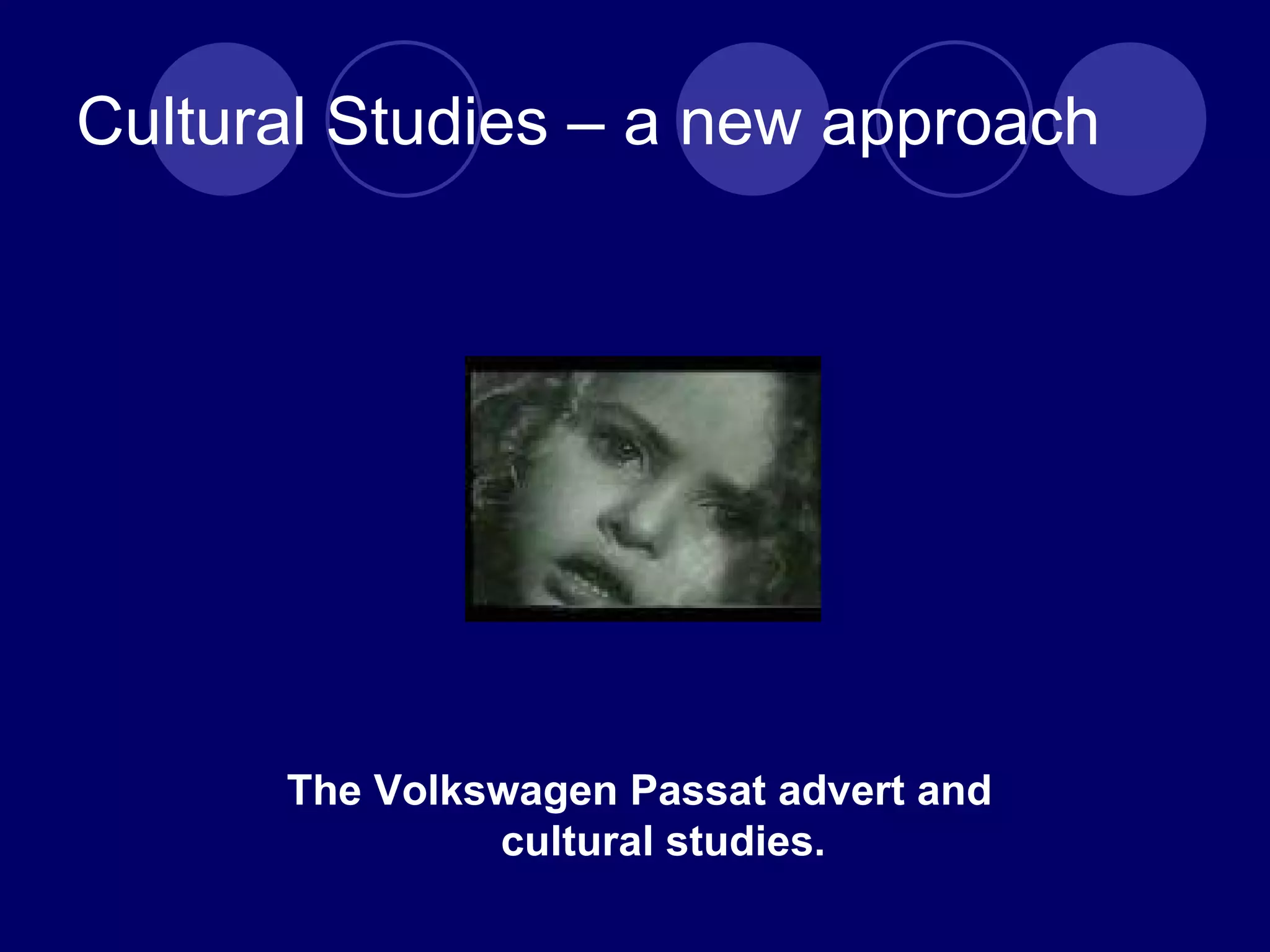
The Volkswagen Passat advert and cultural studies. Cultural Studies – a new approach
Postmodern Media – Volkswagon Passat In what ways is it  ‘cultural’? It ’s ‘artistic’ – use of b/w & blues music – it reflects society… What social groups are represented in it and are likely to be the audience for it? Family – white – wealthy – successful – stylish – American – New Yorkers Aspirational – parents – gender? – concerned with safety Where are they likely to view this? Then   - at home? – cinema?  Now  – YouTube – Internet - Website What traditional social values does it emphasize? Family – security – importance of childhood What cultural languages does it use? Art film – b/w – mise en scene – urban – camera work How is it postmodern?
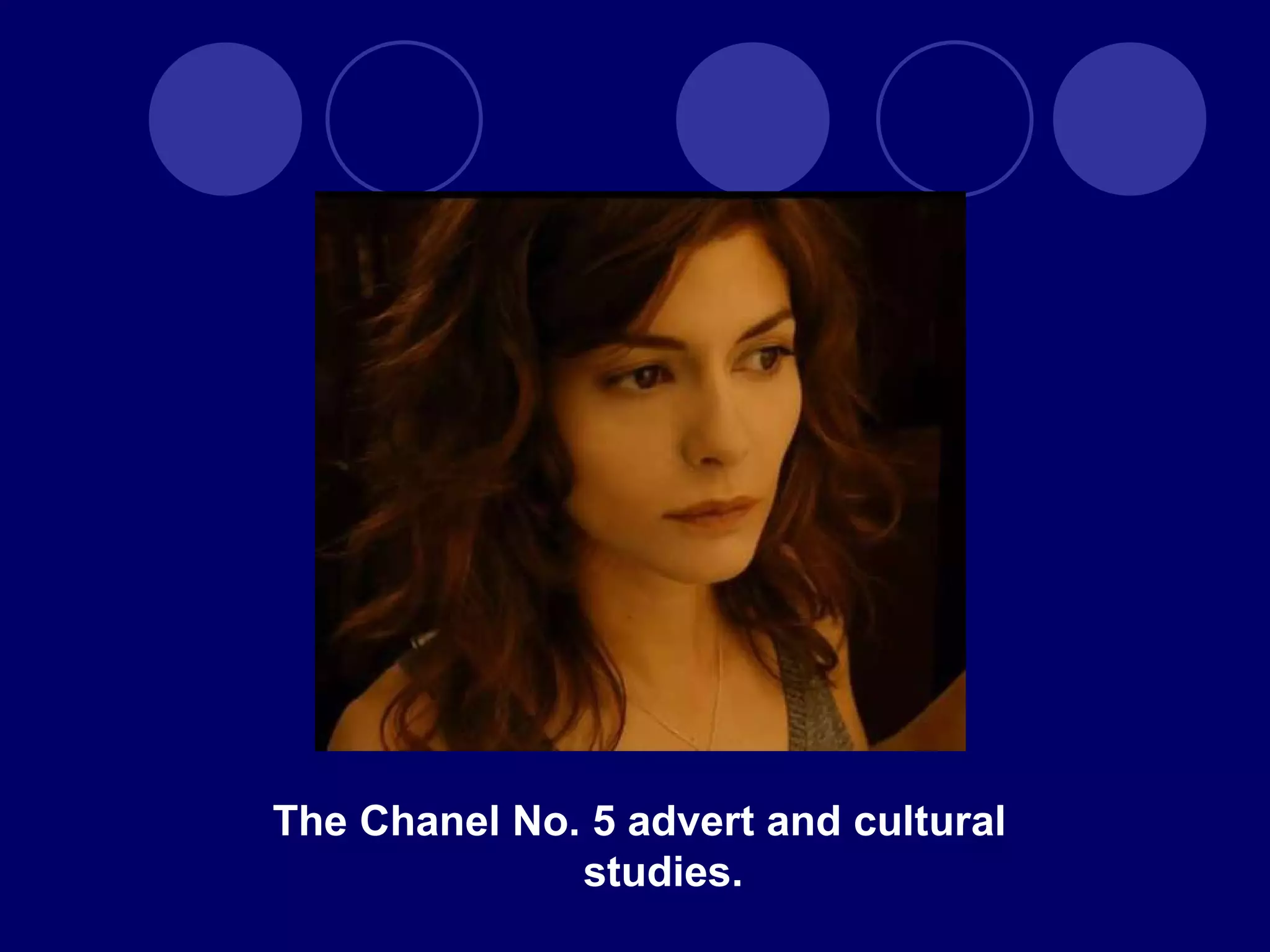
The Chanel No. 5 advert and cultural studies.
In what ways is it  ‘cultural’? What social groups are represented in it and are likely to be the audience for it? Where are they likely to view this? What traditional social values does it emphasize? What cultural languages does it use? How is it postmodern? Postmodern Media – Chanel No. 5
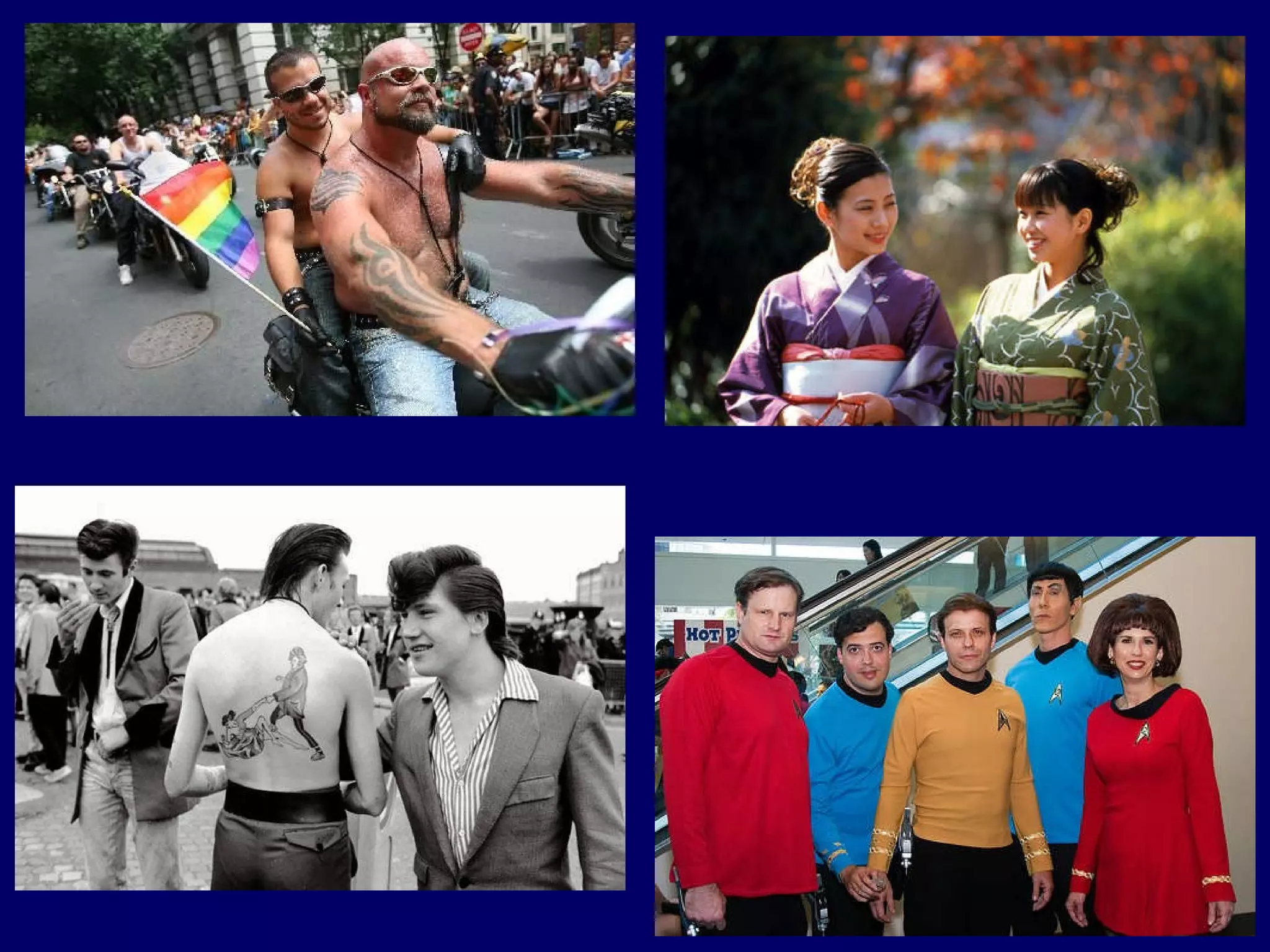
What are  ‘social groups’? Let ’s look in more detail at different kinds of social groups. This is all about representation. Wherever it is possible to give people a label based on collective characteristics or traits we can say they are part of a social group. Some examples…
 
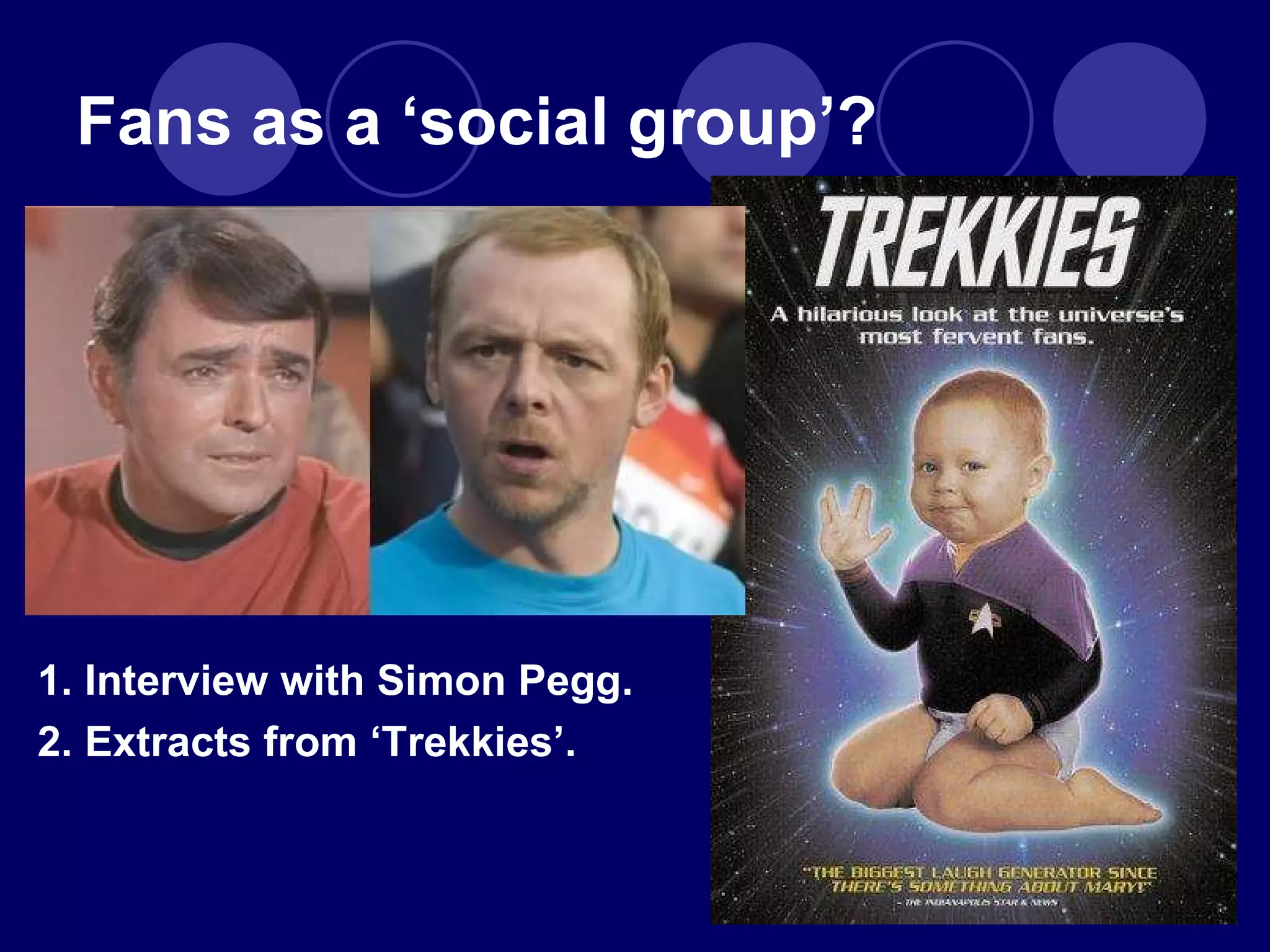
Fans as a  ‘social group’? 1. Interview with Simon Pegg. 2. Extracts from  ‘Trekkies’.
By looking at how  culture  is used and transformed by  social groups , cultural studies sees people not simply as consumers, but as potential producers of  new   social values and cultural languages .  Toby Miller (2006)
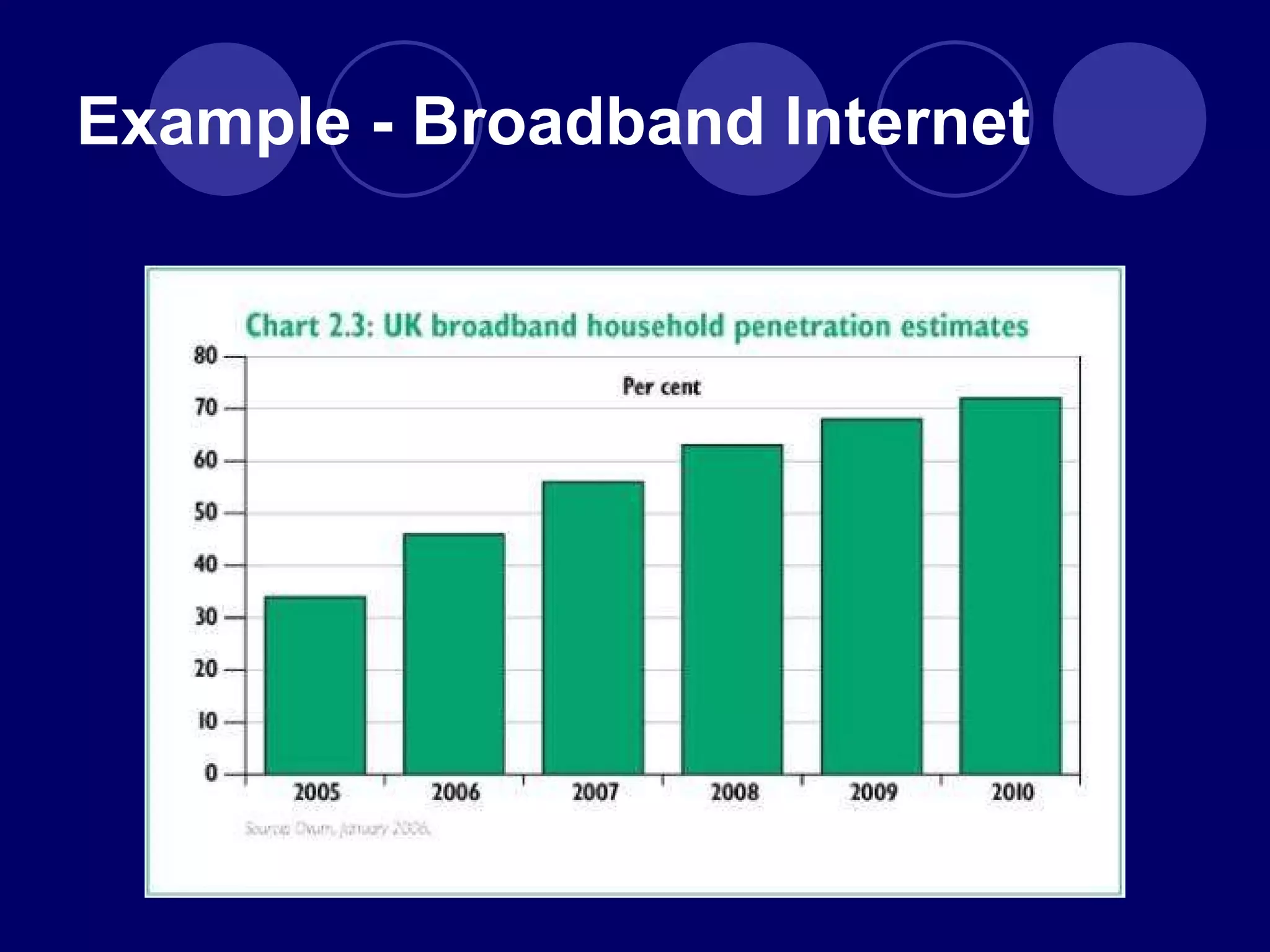
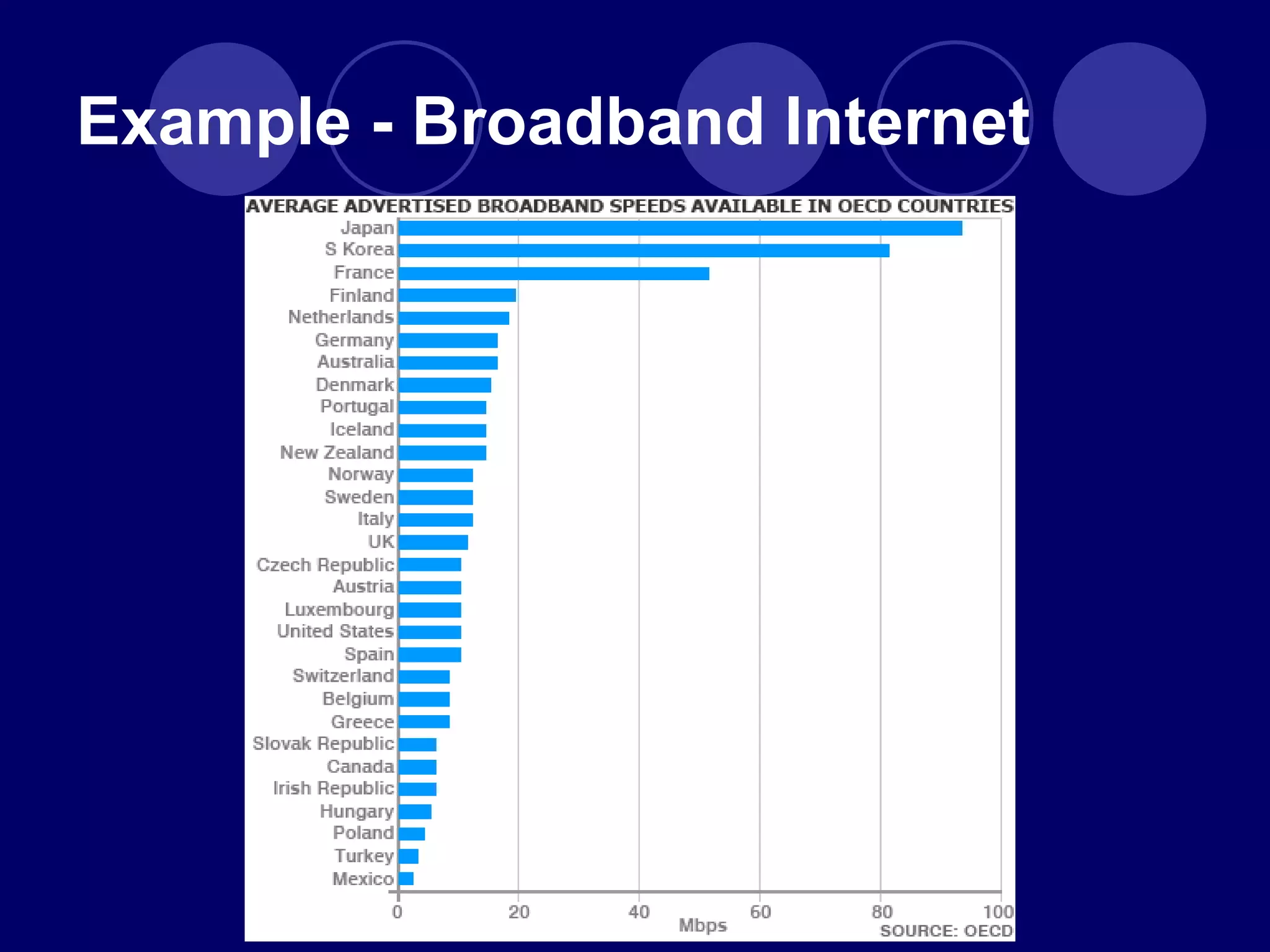
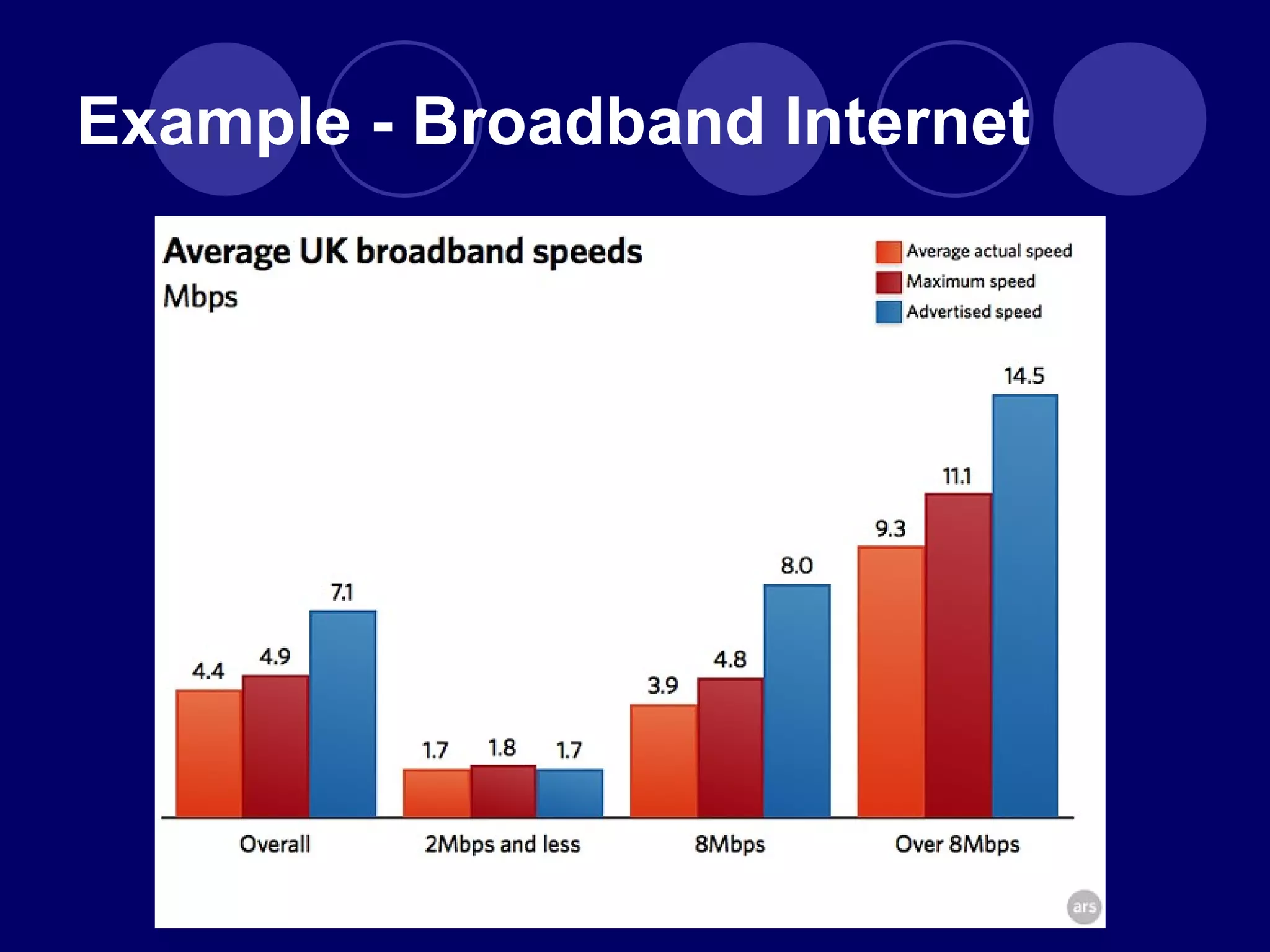
New Social Values and Cultural Languages The final part of Toby Miller ’s quote is all about audiences and how the  changing media world  is  changing audience habits . Consider the impact of  broadband internet  on how people use media – how has the gradual updating of the old BT telephone infrastructure (from Web 1.0 to Web 2.0) offered us the chance of creating something culturally new…? First, some charts…
Example - Broadband Internet
 
Example - Broadband Internet
Example - Broadband Internet So what do these charts tell us about changing social values and cultural languages? How has broadband changed the way we consume and produce media? Think about radio? Cinema? Newspapers and magazines? Music?
 
Web 2.0 is really about normal everyday people using the Web and creating things on it - forget the acronyms..  Richard MacManus (2005)  Definition – Web 2.0 Postmodern Media involves  an active audience
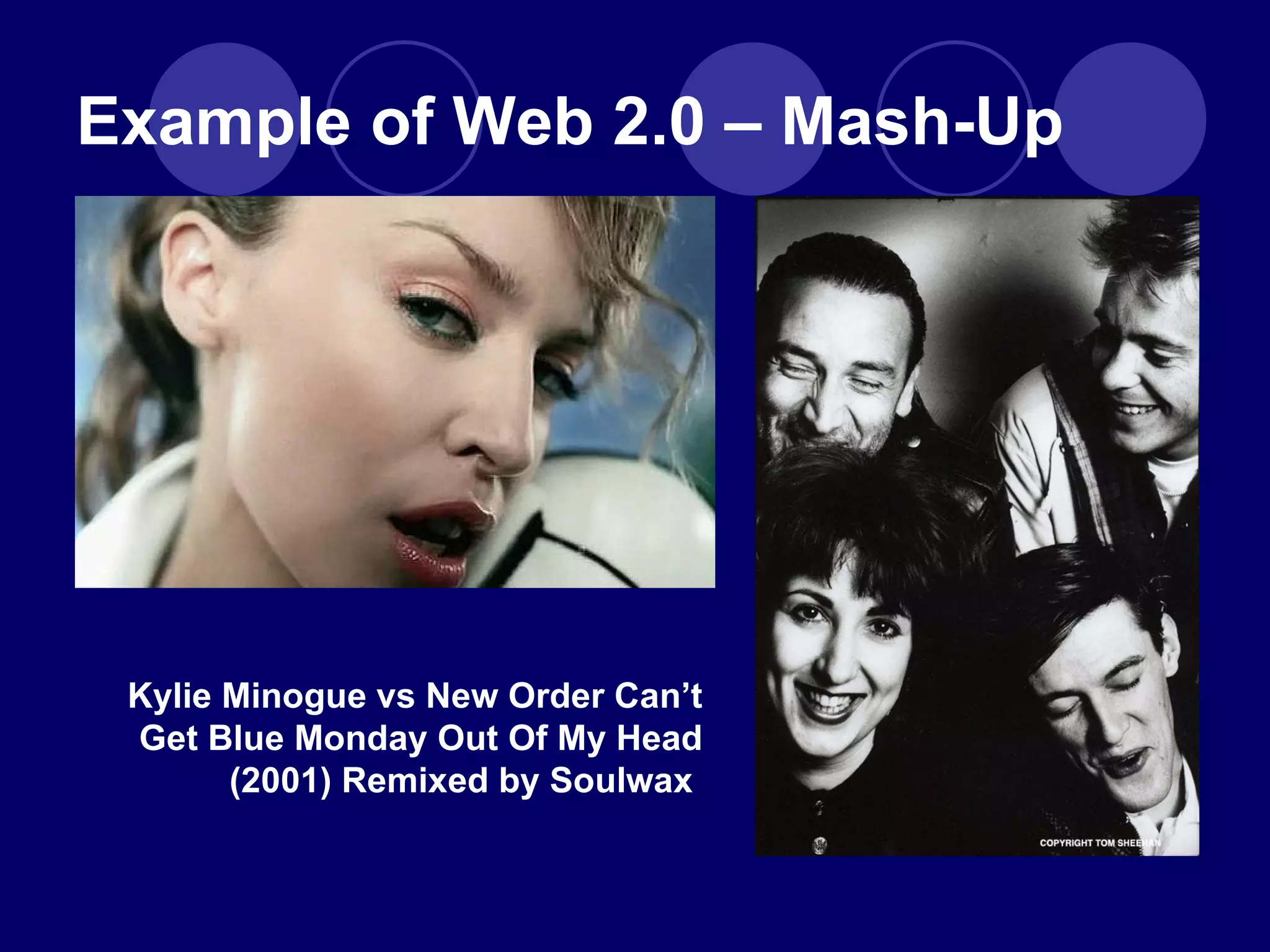
Example of Web 2.0 – Mash-Up Kylie Minogue vs New Order Can ’t Get Blue Monday Out Of My Head (2001) Remixed by Soulwax
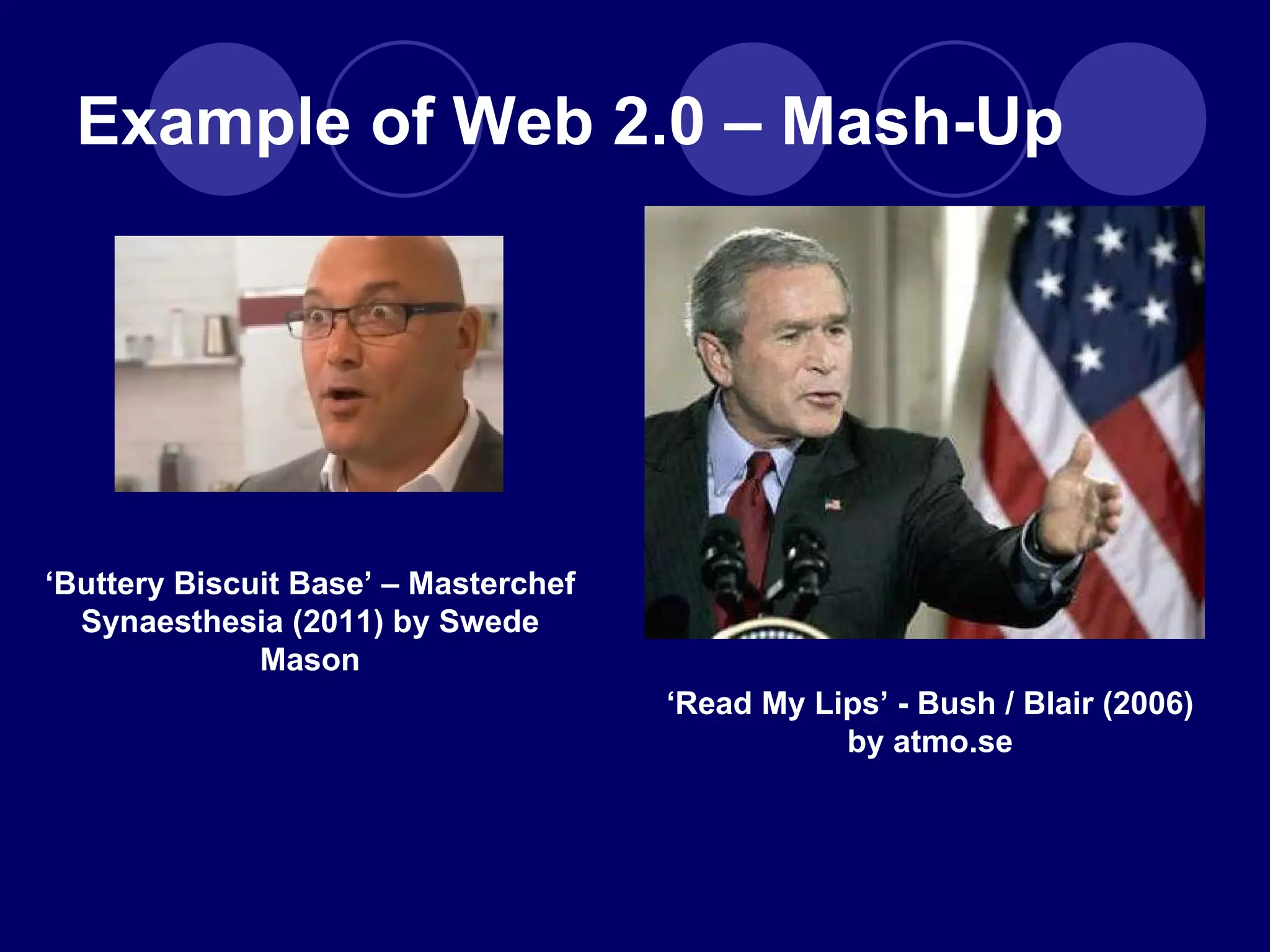
Example of Web 2.0 – Mash-Up ‘ Read My Lips’ - Bush / Blair (2006) by atmo.se ‘ Buttery Biscuit Base’  –  Masterchef Synaesthesia (2011) by Swede Mason
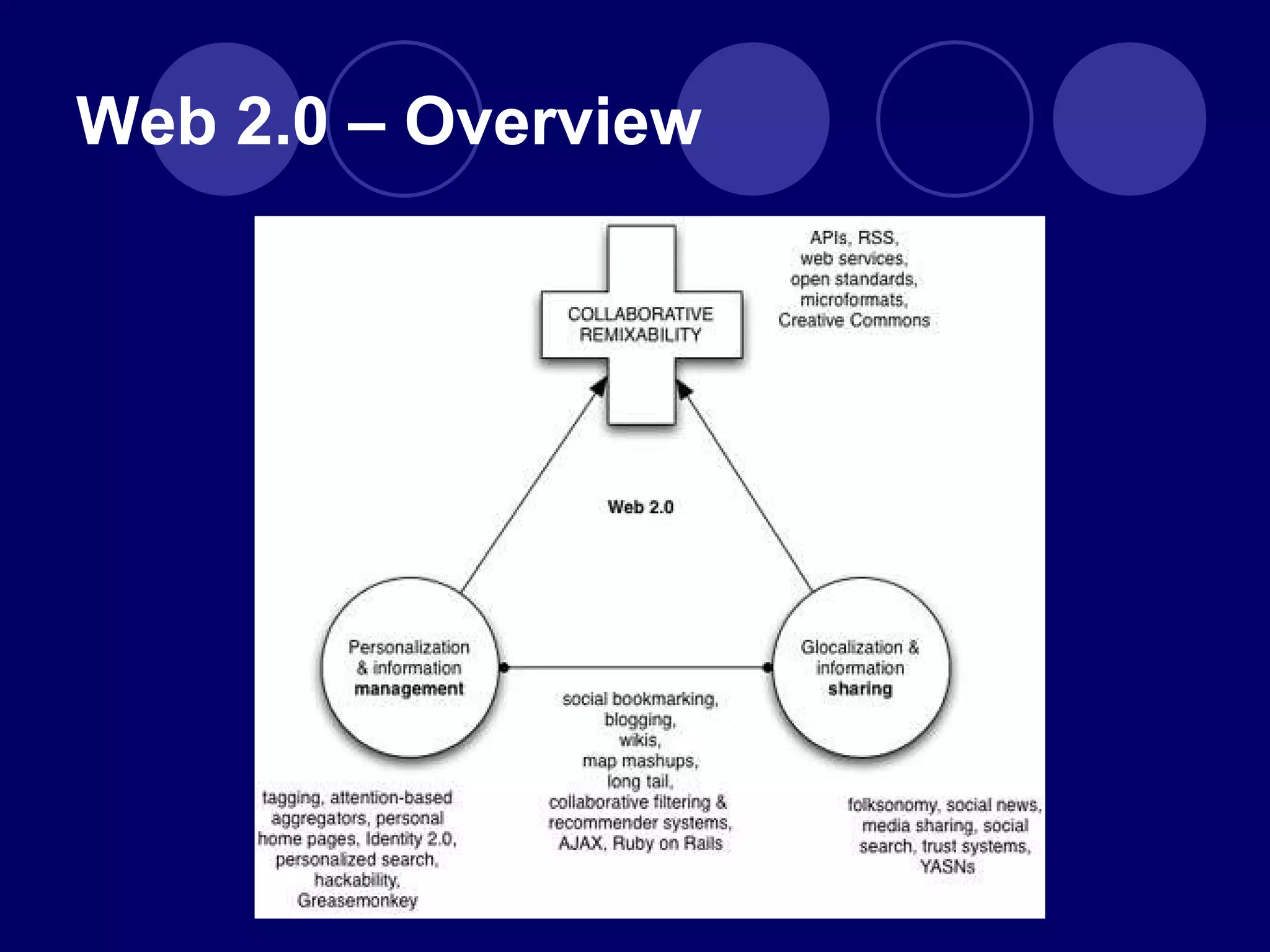
Web 2.0 – Overview
Do we 'watch television' in the traditional sense anymore? What about the powerful 'media institutions' that existed before the age of convergence? How do Web 2.0 sites allow you to share in a new way? Is this part of a new shared cultural language?  Is there even such a thing as 'audience' in this postmodern age?  Example - Broadband Internet
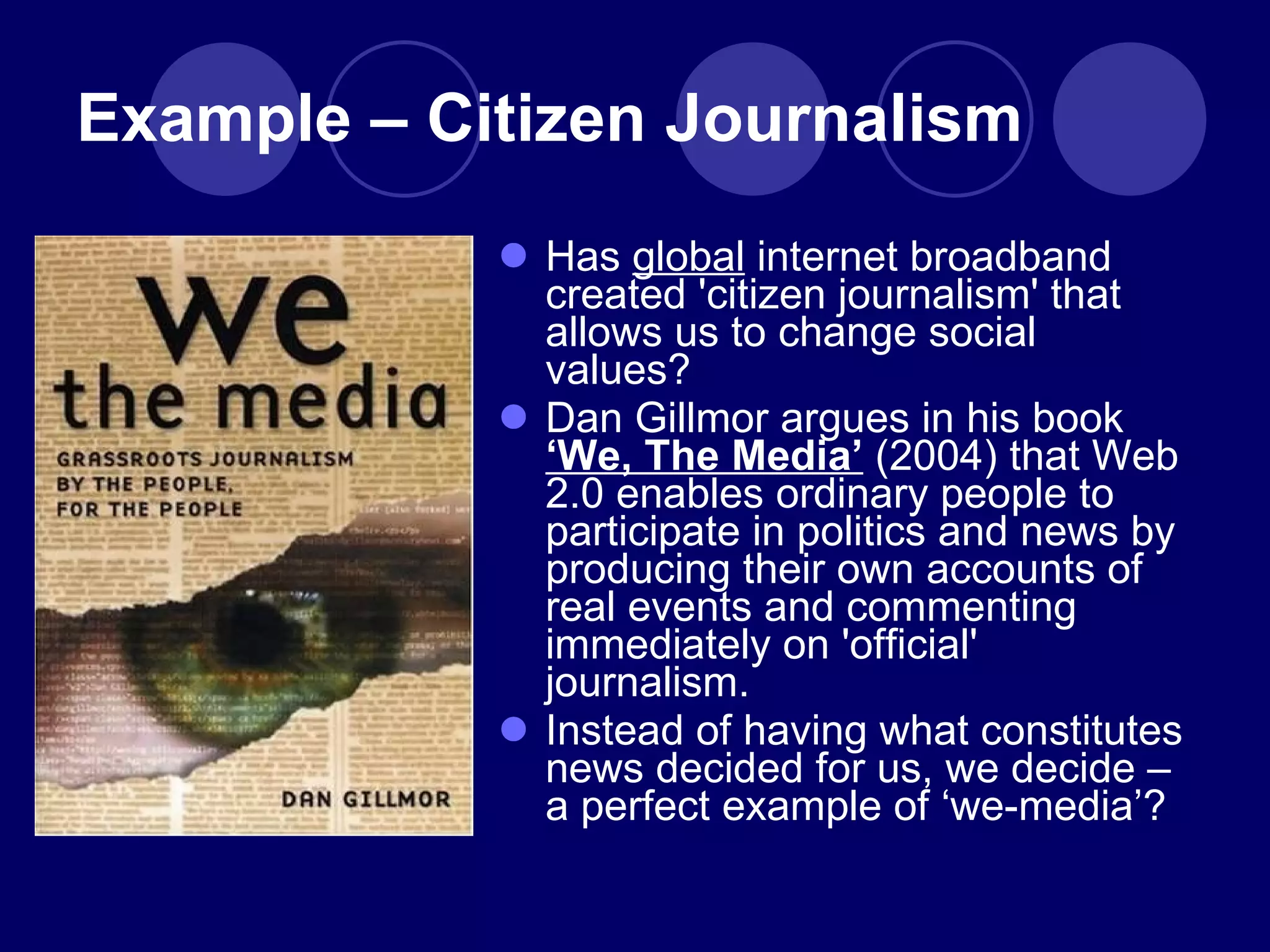
Example – Citizen Journalism Has  global  internet broadband created 'citizen journalism' that allows us to change social values? Dan Gillmor argues in his book  ‘We, The Media’  (2004) that Web 2.0 enables ordinary people to participate in politics and news by producing their own accounts of real events and commenting immediately on 'official' journalism. Instead of having what constitutes news decided for us, we decide – a perfect example of  ‘we-media’?
How do I know that  ‘citizen journalism’ is important? Examples… YouTube launches citizen journalism channel YouTube has launched YouTube Direct, a dedicated channel for citizen journalism, in an attempt to better connect news organisations with user generated content. Daily Telegraph 18 Nov 2009
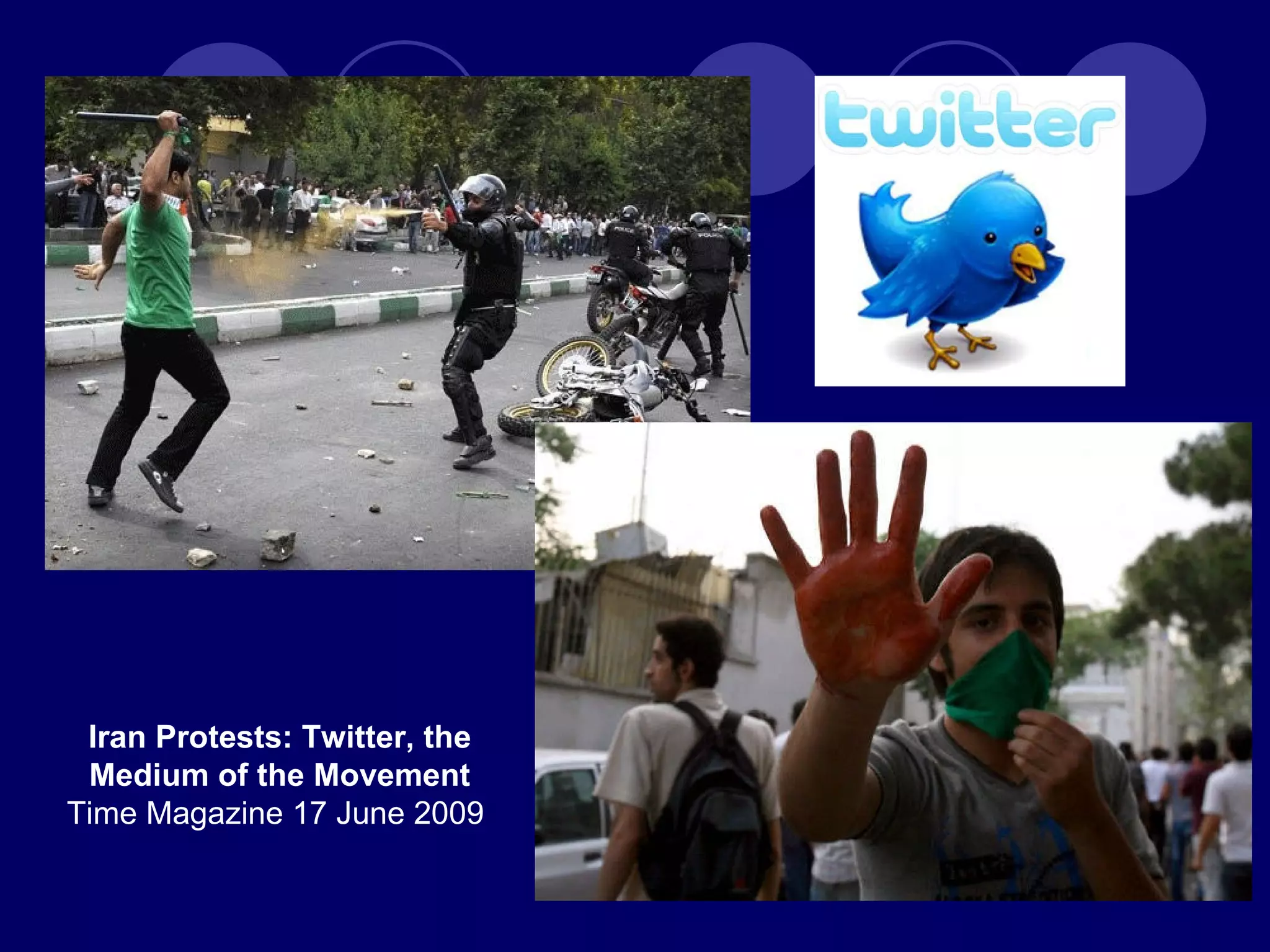
Iran Protests: Twitter, the Medium of the Movement Time Magazine 17 June 2009
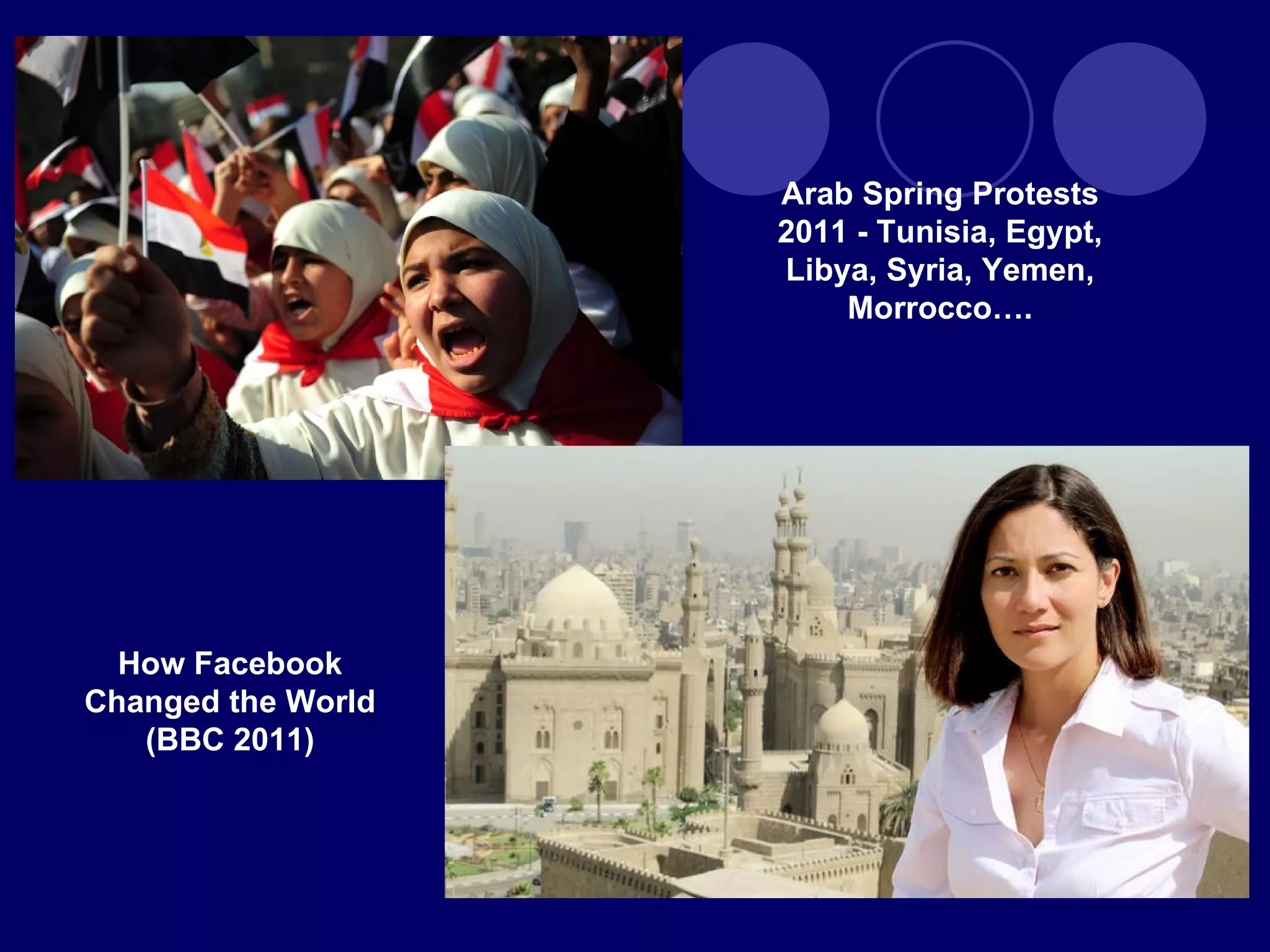
Arab Spring Protests 2011 - Tunisia, Egypt, Libya, Syria, Yemen, Morrocco …. How Facebook Changed the World (BBC 2011)
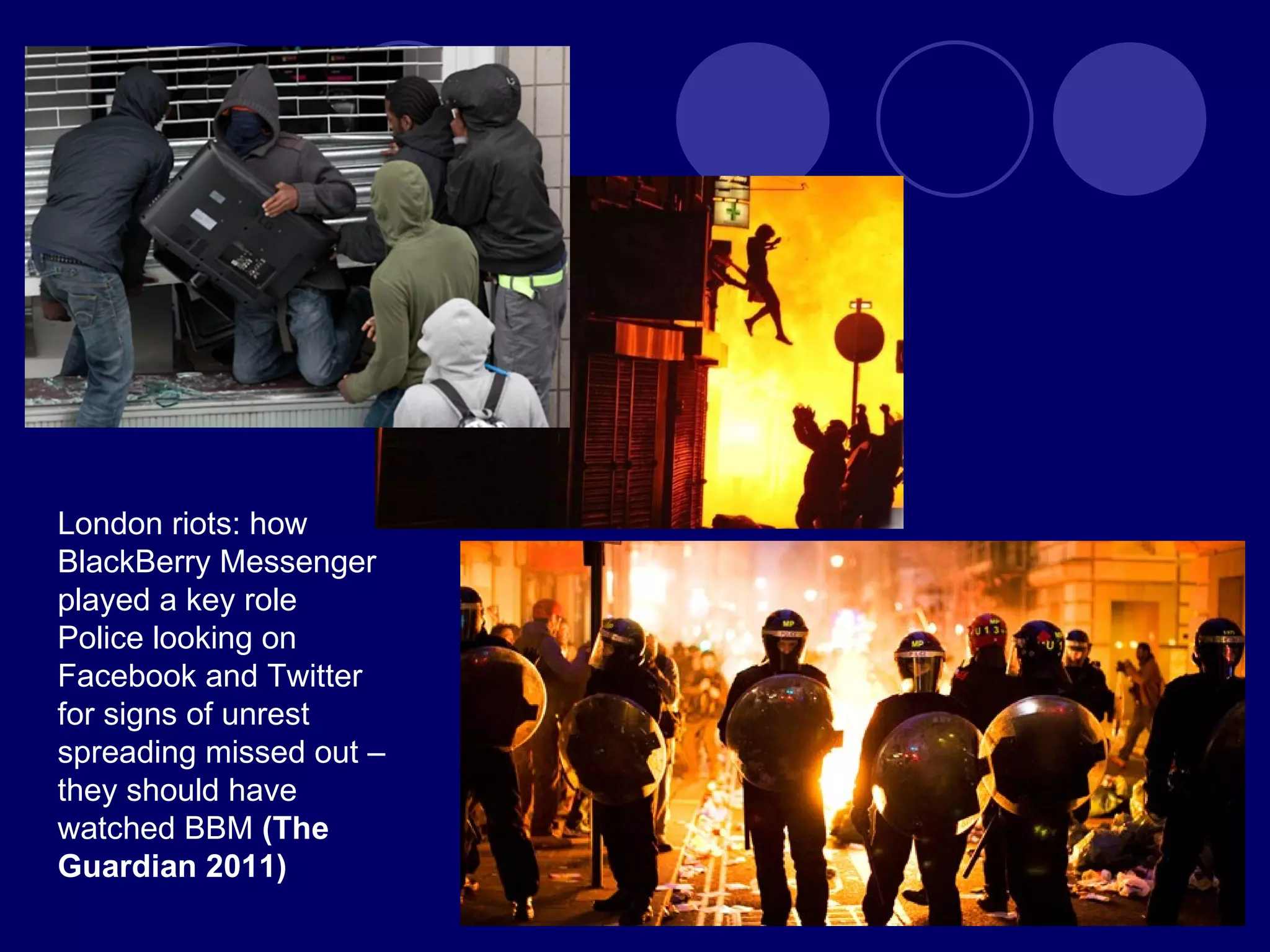
London riots: how BlackBerry Messenger played a key role Police looking on Facebook and Twitter for signs of unrest spreading missed out – they should have watched BBM  (The Guardian 2011)
Short Essay on Web 2.0 Time for some writing: How has the advent of Web 2.0 changed the way audiences create, communicate and consume media? Remember you ’ve got to write about the past, present and future – give examples – use theory to back up your ideas…

03. g325 contemporary media issues intro to section b - postmodern audiences

  • 1.
    Contemporary Media IssuesIntroduction to Section B of the Exam Part Three
  • 2.
    So what didwe learn last time? That to do well in this exam you ’ve got to learn some potentially difficult media theory. You must write about the past, present and future of your topic in your exam. You ’ve got to be able to give examples AND a personal opinion on what the theorists have said. You also learnt a bit about Postmodern Media. I hope. Introduction to Section B – Review
  • 3.
    Postmodern Media -Advertising Traditional advertising use to look like this…
  • 4.
    Postmodern Media –Cadbury ’s Gorilla Now it looks like this … How is the Cadbury ’s Gorilla advert an example of Postmodernism?
  • 5.
    Postmodern Media -Advertising It ’s playing with the idea of representation making no attempt to appear ‘real’ or ‘true’ (Baudrillard) It exists in a ‘fetishised hyperreality’ (Strinati) Like all advertising it is an example of ‘the world of the commodity’ (Debord) – a ‘spectacle’ that is empty and insubstantial It is a parody (or pastiche ?) of ‘traditional’ adverts that make claims about a products efficacy or usefulness or taste (Jameson) It ’s intertextual (Jameson) as it references the the song ‘In the Air Tonight’ and the writer (a famous drummer) Phil Collins It ’s playing with our idea of what an advert should be (postmodernism) It lacks seriousness and is merely about making surface associations between the brand and the audiences awareness The ‘narrative’ is unrealistic (and unimportant) and it relies on the strangeness of the central image to connect with the audience (Lyotard)
  • 6.
    Introduction to SectionB - Part Three You ’ll learn more about postmodern media; You ’ll learn about cultural studies ; How broadband internet created Web 2.0 How that has started to change the world, almost; What We-media is and what ‘ citizen journalism ’ is about …
  • 7.
    Media Studies =Cultural Studies The theoretical idea behind Section B of the exam is to do with an academic approach called ‘cultural studies’. It means you are not just looking at texts and what they 'mean' or how they are 'consumed' by people. You are looking at the audience and what it does with media.
  • 8.
    By looking athow culture is used and transformed by social groups , cultural studies sees people not simply as consumers, but as potential producers of new social values and cultural languages . Toby Miller (2006)
  • 9.
    Media Studies =Cultural Studies This quote raises three questions: What is culture? What are social groups? What are these new social values and cultural languages that are being created? So let ’s start with culture…
  • 10.
    What is Culture?Whole books are devoted to just trying to answer this question! Chris Jenks (1993) described four definitions of culture: As a state of mind (the 'cultured' person); As a collective pursuit of civilisation (an advanced culture is a society that has progressed); As artistic and intellectual activity (doing ‘ art ’ and ‘ drama ’ is ‘ cultural ’ - this is perhaps the most common use of the term); As a social category - the things that people do, our ways of life.
  • 11.
    What is Culture?We ’re most concerned with the last definition. The important thing for YOU to remember is that because we only study 'popular culture' we do not distinguish between what is and what is not 'cultural'. Postmodern Media sees little difference between ‘high’ and ‘low’ culture.
  • 12.
    We ’re goingto use more adverts to put this new way of approaching media studies to the test. Remember we are looking at how people use the advert. In what ways is it ‘cultural’? What social groups are represented in it and are likely to be the audience for it? Where are they likely to view this? What traditional social values does it emphasize? What cultural languages does it use? How is it postmodern? Cultural Studies – a new approach
  • 13.
    The Volkswagen Passatadvert and cultural studies. Cultural Studies – a new approach
  • 14.
    Postmodern Media –Volkswagon Passat In what ways is it ‘cultural’? It ’s ‘artistic’ – use of b/w & blues music – it reflects society… What social groups are represented in it and are likely to be the audience for it? Family – white – wealthy – successful – stylish – American – New Yorkers Aspirational – parents – gender? – concerned with safety Where are they likely to view this? Then - at home? – cinema? Now – YouTube – Internet - Website What traditional social values does it emphasize? Family – security – importance of childhood What cultural languages does it use? Art film – b/w – mise en scene – urban – camera work How is it postmodern?
  • 15.
    The Chanel No.5 advert and cultural studies.
  • 16.
    In what waysis it ‘cultural’? What social groups are represented in it and are likely to be the audience for it? Where are they likely to view this? What traditional social values does it emphasize? What cultural languages does it use? How is it postmodern? Postmodern Media – Chanel No. 5
  • 17.
    What are ‘social groups’? Let ’s look in more detail at different kinds of social groups. This is all about representation. Wherever it is possible to give people a label based on collective characteristics or traits we can say they are part of a social group. Some examples…
  • 18.
  • 19.
    Fans as a ‘social group’? 1. Interview with Simon Pegg. 2. Extracts from ‘Trekkies’.
  • 20.
    By looking athow culture is used and transformed by social groups , cultural studies sees people not simply as consumers, but as potential producers of new social values and cultural languages . Toby Miller (2006)
  • 21.
    New Social Valuesand Cultural Languages The final part of Toby Miller ’s quote is all about audiences and how the changing media world is changing audience habits . Consider the impact of broadband internet on how people use media – how has the gradual updating of the old BT telephone infrastructure (from Web 1.0 to Web 2.0) offered us the chance of creating something culturally new…? First, some charts…
  • 22.
  • 23.
  • 24.
  • 25.
  • 26.
    Example - BroadbandInternet So what do these charts tell us about changing social values and cultural languages? How has broadband changed the way we consume and produce media? Think about radio? Cinema? Newspapers and magazines? Music?
  • 27.
  • 28.
    Web 2.0 isreally about normal everyday people using the Web and creating things on it - forget the acronyms.. Richard MacManus (2005) Definition – Web 2.0 Postmodern Media involves an active audience
  • 29.
    Example of Web2.0 – Mash-Up Kylie Minogue vs New Order Can ’t Get Blue Monday Out Of My Head (2001) Remixed by Soulwax
  • 30.
    Example of Web2.0 – Mash-Up ‘ Read My Lips’ - Bush / Blair (2006) by atmo.se ‘ Buttery Biscuit Base’ – Masterchef Synaesthesia (2011) by Swede Mason
  • 31.
    Web 2.0 –Overview
  • 32.
    Do we 'watchtelevision' in the traditional sense anymore? What about the powerful 'media institutions' that existed before the age of convergence? How do Web 2.0 sites allow you to share in a new way? Is this part of a new shared cultural language? Is there even such a thing as 'audience' in this postmodern age? Example - Broadband Internet
  • 33.
    Example – CitizenJournalism Has global internet broadband created 'citizen journalism' that allows us to change social values? Dan Gillmor argues in his book ‘We, The Media’ (2004) that Web 2.0 enables ordinary people to participate in politics and news by producing their own accounts of real events and commenting immediately on 'official' journalism. Instead of having what constitutes news decided for us, we decide – a perfect example of ‘we-media’?
  • 34.
    How do Iknow that ‘citizen journalism’ is important? Examples… YouTube launches citizen journalism channel YouTube has launched YouTube Direct, a dedicated channel for citizen journalism, in an attempt to better connect news organisations with user generated content. Daily Telegraph 18 Nov 2009
  • 35.
    Iran Protests: Twitter,the Medium of the Movement Time Magazine 17 June 2009
  • 36.
    Arab Spring Protests2011 - Tunisia, Egypt, Libya, Syria, Yemen, Morrocco …. How Facebook Changed the World (BBC 2011)
  • 37.
    London riots: howBlackBerry Messenger played a key role Police looking on Facebook and Twitter for signs of unrest spreading missed out – they should have watched BBM (The Guardian 2011)
  • 38.
    Short Essay onWeb 2.0 Time for some writing: How has the advent of Web 2.0 changed the way audiences create, communicate and consume media? Remember you ’ve got to write about the past, present and future – give examples – use theory to back up your ideas…