Downloaded 595 times
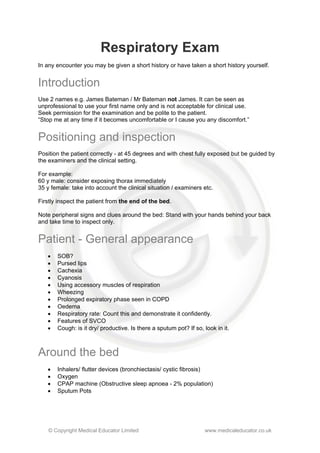

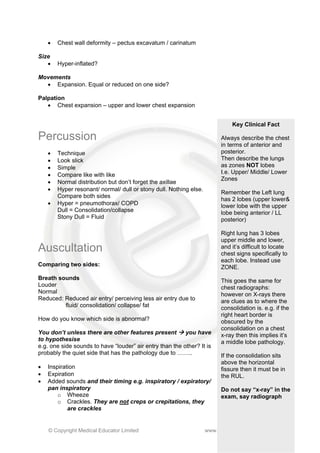
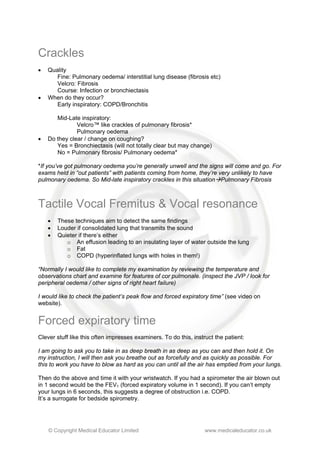
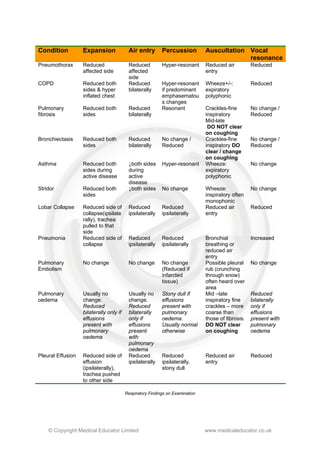


- The document provides guidance on performing a respiratory exam, including positioning the patient, inspecting the patient and areas around the bed, examining the hands, face, neck, chest, and auscultating breath sounds. - Key steps are inspecting for signs of distress, noting peripheral clues, assessing expansion and movements of the chest, percussion findings, breath sounds, and timing of crackles. - Performing techniques like assessing forced expiratory time can help evaluate for obstructive lung diseases like COPD.


![Pulmonary drug delivery system [PDDS]](https://cdn.slidesharecdn.com/ss_thumbnails/pulmonarydrugdeliverysystem-160619063517-thumbnail.jpg?width=640&height=640&fit=bounds)


![chapter 4 Physical diagnosis [Autosaved].pptx](https://cdn.slidesharecdn.com/ss_thumbnails/physicaldiagnosisautosaved-250416123318-d2df54aa-thumbnail.jpg?width=640&height=640&fit=bounds)


![Respiratory System PE-1 [Autosaved].ppttiteciex](https://cdn.slidesharecdn.com/ss_thumbnails/respiratorysystempe-1autosaved-250113170401-72d39633-thumbnail.jpg?width=640&height=640&fit=bounds)


