DR.AYESHA
BSPT, PPDPT. M.Phil (Gold Medalist)
Ergonomics and therapy- An
introduction
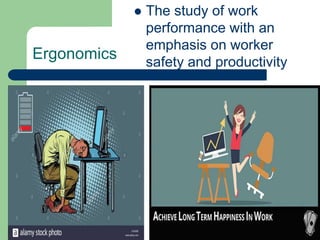
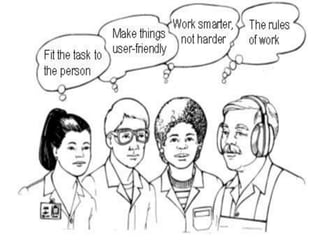
Ergonomics
 The study of work
performance with an
emphasis on worker
safety and productivity
Occupational therapy
 Skilled treatment helps
individuals achieve
independence in all facets of
their lives
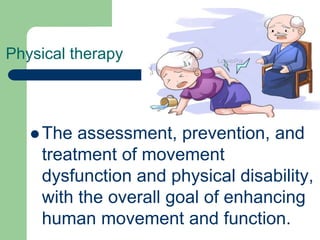
Physical therapy
 The assessment, prevention, and
treatment of movement
dysfunction and physical disability,
with the overall goal of enhancing
human movement and function.
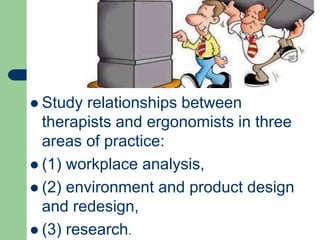
 Study relationships between
therapists and ergonomists in three
areas of practice:
 (1) workplace analysis,
 (2) environment and product design
and redesign,
 (3) research.
Historical background: OT
 Eradication of disease alone is insufficient for
complete recovery….
 ….Physical and mental exhaustion
 George Barton, an originator of
OT……………Strengthen himself physically and
mentally.
 1914 consolation house…..
 Dr. Adolph Meyer another originator of OT…
 Chicago pathology society meeting.
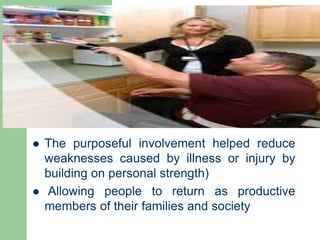
 The purposeful involvement helped reduce
weaknesses caused by illness or injury by
building on personal strength)
 Allowing people to return as productive
members of their families and society
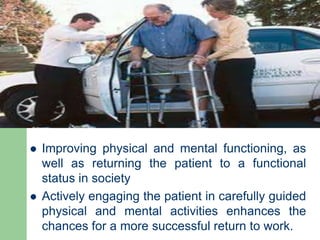
 Improving physical and mental functioning, as
well as returning the patient to a functional
status in society
 Actively engaging the patient in carefully guided
physical and mental activities enhances the
chances for a more successful return to work.
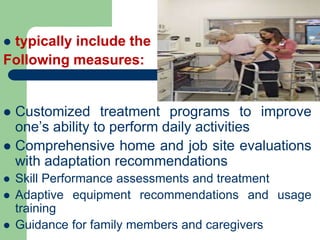
 typically include the
Following measures:
 Customized treatment programs to improve
one’s ability to perform daily activities
 Comprehensive home and job site evaluations
with adaptation recommendations
 Skill Performance assessments and treatment
 Adaptive equipment recommendations and usage
training
 Guidance for family members and caregivers
 Therapists must be aware of clients’ current physical,
cognitive, and psychologic limitations ; their potential
abilities and disabilities; and the physiologic
and psychologic demands of the clients’ activities (including
work).
 Aware of the performance competencies and
limitations without injuries to be able to assess
whether a client is functioning within normal
range.
 The use of purposeful activities (e.g., work
simulation) as treatment modalities.
Physical Therapy
 The American Women’s Physical Therapeutic
Association was founded in 1921
 American Physiotherapy Association in the 1930s,
 American Physical Therapy Association in the
1940s.
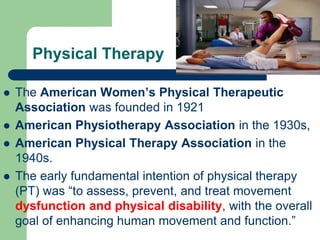
 The early fundamental intention of physical therapy
(PT) was “to assess, prevent, and treat movement
dysfunction and physical disability, with the overall
goal of enhancing human movement and function.”
 In terms of injury prevention, the overall goal
conforms the objectives delineated by
ergonomic engineers, particularly those who
design workplaces and equipment for physical
safety and effective work performance.
 That is, the goal of ergonomics, in terms of injury
prevention, is to design products, processes, and
places to enhance human performance while
simultaneously keeping the environment safe.
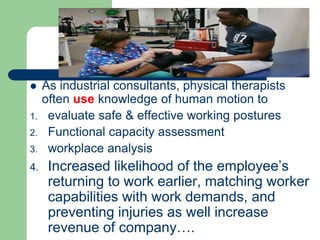
 As industrial consultants, physical therapists
often use knowledge of human motion to
1. evaluate safe & effective working postures
2. Functional capacity assessment
3. workplace analysis
4. Increased likelihood of the employee’s
returning to work earlier, matching worker
capabilities with work demands, and
preventing injuries as well increase
revenue of company….
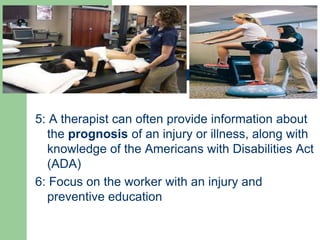
5: A therapist can often provide information about
the prognosis of an injury or illness, along with
knowledge of the Americans with Disabilities Act
(ADA)
6: Focus on the worker with an injury and
preventive education
Ergonomics
 First documented mention in 1857,
 when Wojciech Jastr-ze-bowski” published
“An Outline of Ergonomics, or The Science
of Work Based upon the Truths Drawn from
the Science of Nature.
 Idea from “Bible”……….
 He took idea of work and studied
Ergonomists include/ developed from the
common interests of a number of
professions:
 Psychology
 engineering
 industrial design
 Education
 Physiology
 Medicine ,health and rehabilitation sciences,
business administration, computer science, and
industrial hygiene.
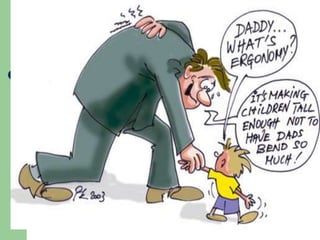
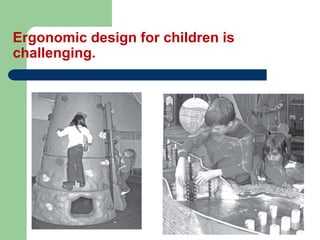
Ergonomic design for children is
challenging.
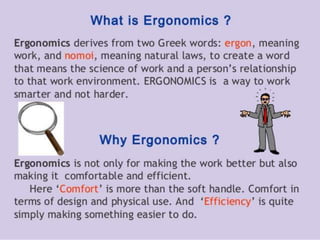
ERGONOMICS DEFINED
 Human factors (ergonomics): knowledge about
human abilities, human limitations, and other
human characteristics that are relevant to design
. Human factors engineering(ergonomics
implementation) is the application of human
factors information to the design of tools, machines,
systems, environments for safe, comfortable, and
effective human use.” Ergonomics focuses on
humans and their interactions with the environment
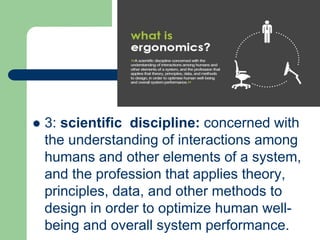
 3: scientific discipline: concerned with
the understanding of interactions among
humans and other elements of a system,
and the profession that applies theory,
principles, data, and other methods to
design in order to optimize human well-
being and overall system performance.
 Originally term ergonomics was not as
widely used in the United States and
Canada as in other parts the world.
 Used terms; human factors engineering,
human engineering, engineering
psychology, and human factors have all
been used, although the current term of
choice is human factors/ergonomics
Why use ergonomics
Ergonomists could use in patient safely by evaluating
 Safety practices, procedures, and records, including
deaths, injuries, and near-miss occurrences.
 Injuries, illnesses, turnover, and workers’ compensation
cases among the employees
 The health care practitioners’ perceptions regarding the
products they use and environments they work in
 Costs and revenues to see where they might have the
most impact on a redesign effort
The interrelationship between
therapists and ergonomists
 Therapists and
ergonomists share some
common interests, and
therapists can contribute
their unique strengths to
the practice of
ergonomics in 1:five
principal areas
 Ergonomics-for-one (individuals who
have a disability)
 Ergonomics for special population
 Prevention of musculoskeletal injuries
 Equipment design
 The Application of the ADA.
2: Work-Site
Analysis
 Therapists should be familiar with
the field of ergonomics as a whole
to understand terminology being
used
 Describe their own expertise, and
recognize when an ergonomist with
specialized training should be
consulted
 Workplace analysis aimed at
prevention of work-related
musculoskeletal trauma
 Workplace and tool design for
individuals with disabilities
 Research through the development
and use of databases.
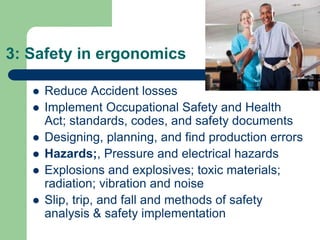
3: Safety in ergonomics
 Reduce Accident losses
 Implement Occupational Safety and Health
Act; standards, codes, and safety documents
 Designing, planning, and find production errors
 Hazards;, Pressure and electrical hazards
 Explosions and explosives; toxic materials;
radiation; vibration and noise
 Slip, trip, and fall and methods of safety
analysis & safety implementation
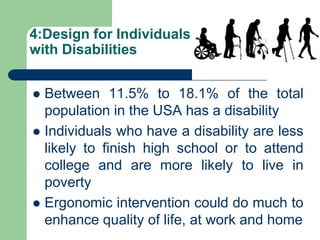
4:Design for Individuals
with Disabilities
 Between 11.5% to 18.1% of the total
population in the USA has a disability
 Individuals who have a disability are less
likely to finish high school or to attend
college and are more likely to live in
poverty
 Ergonomic intervention could do much to
enhance quality of life, at work and home
 Therapists gather information for a
database on various populations
with disabilities.
 Technologic aids for individuals are
expensive because small-scale
production is not cost-effective, so
find alternative…
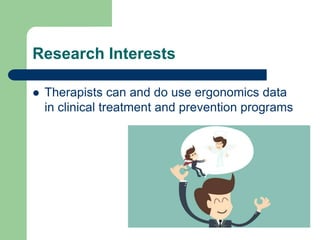
Research Interests
 Therapists can and do use ergonomics data
in clinical treatment and prevention programs

00 ergonomics-and-therapy-an-introduction (1).ppt

  • 1.
    DR.AYESHA BSPT, PPDPT. M.Phil(Gold Medalist) Ergonomics and therapy- An introduction
  • 2.
    Ergonomics  The studyof work performance with an emphasis on worker safety and productivity
  • 5.
    Occupational therapy  Skilledtreatment helps individuals achieve independence in all facets of their lives
  • 6.
    Physical therapy  Theassessment, prevention, and treatment of movement dysfunction and physical disability, with the overall goal of enhancing human movement and function.
  • 7.
     Study relationshipsbetween therapists and ergonomists in three areas of practice:  (1) workplace analysis,  (2) environment and product design and redesign,  (3) research.
  • 8.
    Historical background: OT Eradication of disease alone is insufficient for complete recovery….  ….Physical and mental exhaustion  George Barton, an originator of OT……………Strengthen himself physically and mentally.  1914 consolation house…..  Dr. Adolph Meyer another originator of OT…  Chicago pathology society meeting.
  • 9.
     The purposefulinvolvement helped reduce weaknesses caused by illness or injury by building on personal strength)  Allowing people to return as productive members of their families and society
  • 10.
     Improving physicaland mental functioning, as well as returning the patient to a functional status in society  Actively engaging the patient in carefully guided physical and mental activities enhances the chances for a more successful return to work.
  • 11.
     typically includethe Following measures:  Customized treatment programs to improve one’s ability to perform daily activities  Comprehensive home and job site evaluations with adaptation recommendations  Skill Performance assessments and treatment  Adaptive equipment recommendations and usage training  Guidance for family members and caregivers
  • 12.
     Therapists mustbe aware of clients’ current physical, cognitive, and psychologic limitations ; their potential abilities and disabilities; and the physiologic and psychologic demands of the clients’ activities (including work).  Aware of the performance competencies and limitations without injuries to be able to assess whether a client is functioning within normal range.  The use of purposeful activities (e.g., work simulation) as treatment modalities.
  • 13.
    Physical Therapy  TheAmerican Women’s Physical Therapeutic Association was founded in 1921  American Physiotherapy Association in the 1930s,  American Physical Therapy Association in the 1940s.  The early fundamental intention of physical therapy (PT) was “to assess, prevent, and treat movement dysfunction and physical disability, with the overall goal of enhancing human movement and function.”
  • 14.
     In termsof injury prevention, the overall goal conforms the objectives delineated by ergonomic engineers, particularly those who design workplaces and equipment for physical safety and effective work performance.  That is, the goal of ergonomics, in terms of injury prevention, is to design products, processes, and places to enhance human performance while simultaneously keeping the environment safe.
  • 15.
     As industrialconsultants, physical therapists often use knowledge of human motion to 1. evaluate safe & effective working postures 2. Functional capacity assessment 3. workplace analysis 4. Increased likelihood of the employee’s returning to work earlier, matching worker capabilities with work demands, and preventing injuries as well increase revenue of company….
  • 16.
    5: A therapistcan often provide information about the prognosis of an injury or illness, along with knowledge of the Americans with Disabilities Act (ADA) 6: Focus on the worker with an injury and preventive education
  • 18.
    Ergonomics  First documentedmention in 1857,  when Wojciech Jastr-ze-bowski” published “An Outline of Ergonomics, or The Science of Work Based upon the Truths Drawn from the Science of Nature.  Idea from “Bible”……….  He took idea of work and studied
  • 20.
    Ergonomists include/ developedfrom the common interests of a number of professions:  Psychology  engineering  industrial design  Education  Physiology  Medicine ,health and rehabilitation sciences, business administration, computer science, and industrial hygiene.
  • 21.
    Ergonomic design forchildren is challenging.
  • 22.
    ERGONOMICS DEFINED  Humanfactors (ergonomics): knowledge about human abilities, human limitations, and other human characteristics that are relevant to design . Human factors engineering(ergonomics implementation) is the application of human factors information to the design of tools, machines, systems, environments for safe, comfortable, and effective human use.” Ergonomics focuses on humans and their interactions with the environment
  • 23.
     3: scientificdiscipline: concerned with the understanding of interactions among humans and other elements of a system, and the profession that applies theory, principles, data, and other methods to design in order to optimize human well- being and overall system performance.
  • 24.
     Originally termergonomics was not as widely used in the United States and Canada as in other parts the world.  Used terms; human factors engineering, human engineering, engineering psychology, and human factors have all been used, although the current term of choice is human factors/ergonomics
  • 26.
    Why use ergonomics Ergonomistscould use in patient safely by evaluating  Safety practices, procedures, and records, including deaths, injuries, and near-miss occurrences.  Injuries, illnesses, turnover, and workers’ compensation cases among the employees  The health care practitioners’ perceptions regarding the products they use and environments they work in  Costs and revenues to see where they might have the most impact on a redesign effort
  • 27.
    The interrelationship between therapistsand ergonomists  Therapists and ergonomists share some common interests, and therapists can contribute their unique strengths to the practice of ergonomics in 1:five principal areas
  • 28.
     Ergonomics-for-one (individualswho have a disability)  Ergonomics for special population  Prevention of musculoskeletal injuries  Equipment design  The Application of the ADA.
  • 29.
    2: Work-Site Analysis  Therapistsshould be familiar with the field of ergonomics as a whole to understand terminology being used  Describe their own expertise, and recognize when an ergonomist with specialized training should be consulted
  • 30.
     Workplace analysisaimed at prevention of work-related musculoskeletal trauma  Workplace and tool design for individuals with disabilities  Research through the development and use of databases.
  • 31.
    3: Safety inergonomics  Reduce Accident losses  Implement Occupational Safety and Health Act; standards, codes, and safety documents  Designing, planning, and find production errors  Hazards;, Pressure and electrical hazards  Explosions and explosives; toxic materials; radiation; vibration and noise  Slip, trip, and fall and methods of safety analysis & safety implementation
  • 32.
    4:Design for Individuals withDisabilities  Between 11.5% to 18.1% of the total population in the USA has a disability  Individuals who have a disability are less likely to finish high school or to attend college and are more likely to live in poverty  Ergonomic intervention could do much to enhance quality of life, at work and home
  • 33.
     Therapists gatherinformation for a database on various populations with disabilities.  Technologic aids for individuals are expensive because small-scale production is not cost-effective, so find alternative…
  • 34.
    Research Interests  Therapistscan and do use ergonomics data in clinical treatment and prevention programs

Editor's Notes

  • #3 the study of people's efficiency in their working environment
  • #9 Gardening, ward, and shop work were mentioned, including raffi a and basket work, weaving, bookbinding, carpentry, and metal and leather working
  • #10 Thus, the OT rehabilitation process focused on improving physical and mental functioning, as well as returning the patient to a functional status in society
  • #19 Although the concept of ergonomics (also called human factors) existed during the Stone Age (humans constructed tools to fi t their own hands for hunting and gathering needs)