Self-Assessment By
Students
Sharing by Cheryl Lee
16 January 2015
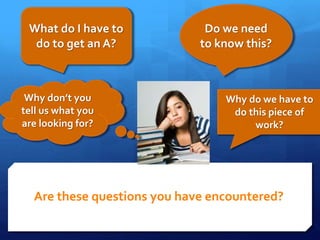
Are these questions you have encountered?
What do I have to
do to get an A?
Do we need
to know this?
Why do we have to
do this piece of
work?
Why don’t you
tell us what you
are looking for?
My journey into understanding the power of rubrics in
self-assessment
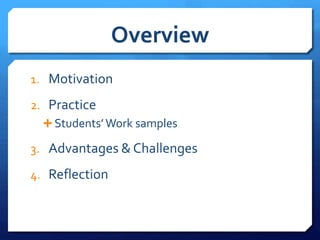
Overview
1. Motivation
2. Practice
 Students’ Work samples
3. Advantages & Challenges
4. Reflection
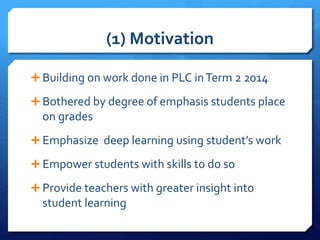
(1) Motivation
 Building on work done in PLC inTerm 2 2014
 Bothered by degree of emphasis students place
on grades
 Emphasize deep learning using student’s work
 Empower students with skills to do so
 Provide teachers with greater insight into
student learning
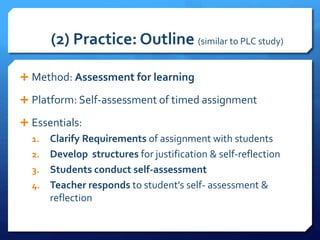
(2) Practice: Outline (similar to PLC study)
 Method: Assessment for learning
 Platform: Self-assessment of timed assignment
 Essentials:
1. Clarify Requirements of assignment with students
2. Develop structures for justification & self-reflection
3. Students conduct self-assessment
4. Teacher responds to student’s self- assessment &
reflection
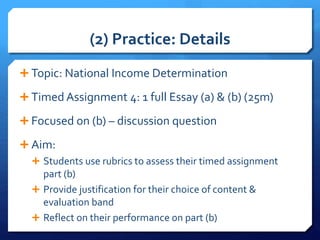
(2) Practice: Details
 Topic: National Income Determination
 Timed Assignment 4: 1 full Essay (a) & (b) (25m)
 Focused on (b) – discussion question
 Aim:
 Students use rubrics to assess their timed assignment
part (b)
 Provide justification for their choice of content &
evaluation band
 Reflect on their performance on part (b)
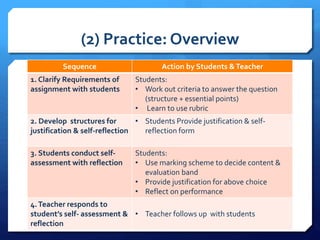
(2) Practice: Overview
Sequence Action by Students &Teacher
1. Clarify Requirements of
assignment with students
Students:
• Work out criteria to answer the question
(structure + essential points)
• Learn to use rubric
2. Develop structures for
justification & self-reflection
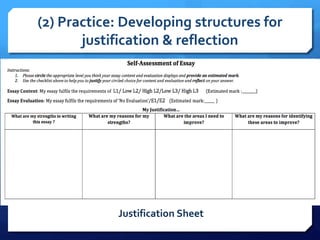
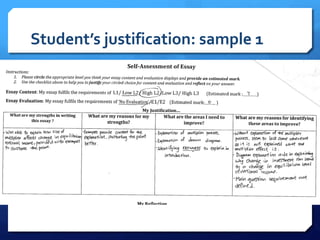
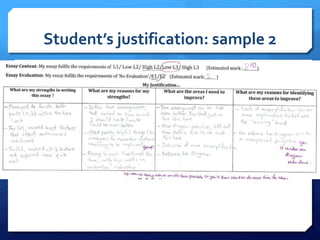
• Students Provide justification & self-
reflection form
3. Students conduct self-
assessment with reflection
Students:
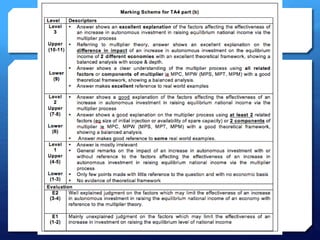
• Use marking scheme to decide content &
evaluation band
• Provide justification for above choice
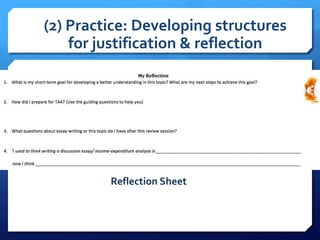
• Reflect on performance
4.Teacher responds to
student’s self- assessment &
reflection
• Teacher follows up with students
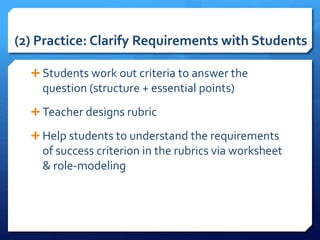
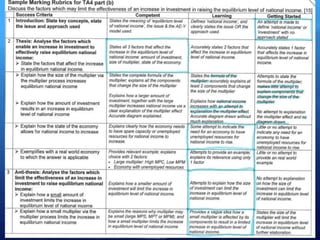
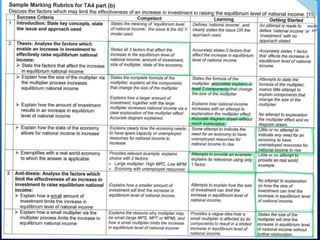
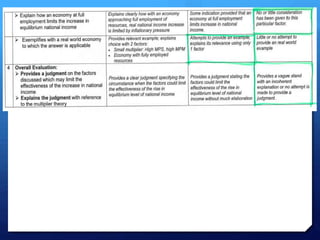
(2) Practice: Clarify Requirements with Students
 Students work out criteria to answer the
question (structure + essential points)
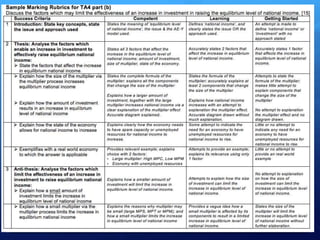
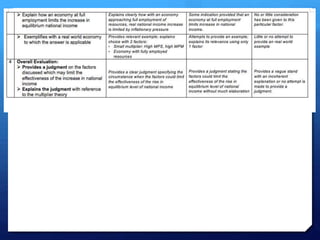
 Teacher designs rubric
 Help students to understand the requirements
of success criterion in the rubrics via worksheet
& role-modeling
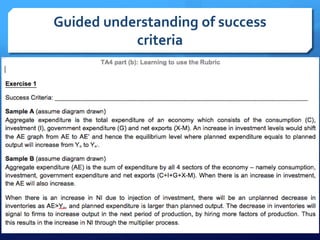
Guided understanding of success
criteria
(2) Practice: Developing structures for
justification & reflection
Justification Sheet
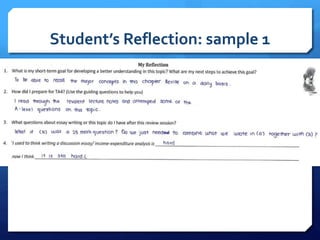
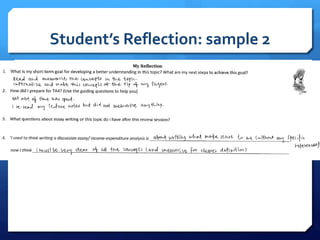
Reflection Sheet
(2) Practice: Developing structures
for justification & reflection
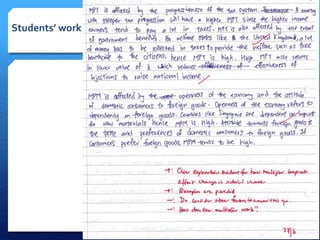
Students’ work
Student’s justification: sample 1
Student’s justification: sample 2
Student’s Reflection: sample 1
Student’s Reflection: sample 2
(2)Practice:Teacher follow-up
Student corrections
Comments on students’ justification &
reflection
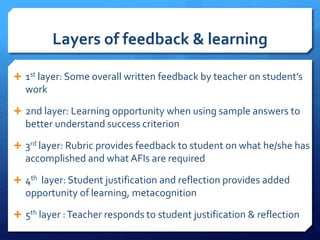
Layers of feedback & learning
 1st layer: Some overall written feedback by teacher on student’s
work
 2nd layer: Learning opportunity when using sample answers to
better understand success criterion
 3rd layer: Rubric provides feedback to student on what he/she has
accomplished and what AFIs are required
 4th layer: Student justification and reflection provides added
opportunity of learning, metacognition
 5th layer :Teacher responds to student justification & reflection
Measurements of student learning
Qualitative:
Written justifications,
Level of interrater agreement
Reflections,
Student corrections
(3) Advantages
Logistical: Quicker feedback for students
Pedagogical: Deepen understanding
Metacognitive: Aware of own strengths,
progress, gaps
Affective: Build shared ownership of learning
process, perceive tests as ‘useful feedback’
rather than just ‘grades’
Sadler, P. M., & Good, E. (2006).The impact of self- and peer-grading on student
learning. Educational Assessment, 11, 1–31.
Points to Ponder
Transparency of rubrics:
 Need for different models of performance
Does it inhibit creativity?
My Reflections
Importance of mindset change for
students
Importance of getting students to
understand the success criteria
Time required for lesson preparation
Moving forward …
Acknowledgements
• My 2014 PLCTeam
• Lesson Observers: Mrs Chin & Deborah

Q & A

Self assessment by students

  • 1.
    Self-Assessment By Students Sharing byCheryl Lee 16 January 2015
  • 2.
    Are these questionsyou have encountered? What do I have to do to get an A? Do we need to know this? Why do we have to do this piece of work? Why don’t you tell us what you are looking for?
  • 4.
    My journey intounderstanding the power of rubrics in self-assessment
  • 5.
    Overview 1. Motivation 2. Practice Students’ Work samples 3. Advantages & Challenges 4. Reflection
  • 6.
    (1) Motivation  Buildingon work done in PLC inTerm 2 2014  Bothered by degree of emphasis students place on grades  Emphasize deep learning using student’s work  Empower students with skills to do so  Provide teachers with greater insight into student learning
  • 7.
    (2) Practice: Outline(similar to PLC study)  Method: Assessment for learning  Platform: Self-assessment of timed assignment  Essentials: 1. Clarify Requirements of assignment with students 2. Develop structures for justification & self-reflection 3. Students conduct self-assessment 4. Teacher responds to student’s self- assessment & reflection
  • 8.
    (2) Practice: Details Topic: National Income Determination  Timed Assignment 4: 1 full Essay (a) & (b) (25m)  Focused on (b) – discussion question  Aim:  Students use rubrics to assess their timed assignment part (b)  Provide justification for their choice of content & evaluation band  Reflect on their performance on part (b)
  • 9.
    (2) Practice: Overview SequenceAction by Students &Teacher 1. Clarify Requirements of assignment with students Students: • Work out criteria to answer the question (structure + essential points) • Learn to use rubric 2. Develop structures for justification & self-reflection • Students Provide justification & self- reflection form 3. Students conduct self- assessment with reflection Students: • Use marking scheme to decide content & evaluation band • Provide justification for above choice • Reflect on performance 4.Teacher responds to student’s self- assessment & reflection • Teacher follows up with students
  • 10.
    (2) Practice: ClarifyRequirements with Students  Students work out criteria to answer the question (structure + essential points)  Teacher designs rubric  Help students to understand the requirements of success criterion in the rubrics via worksheet & role-modeling
  • 13.
    Guided understanding ofsuccess criteria
  • 15.
    (2) Practice: Developingstructures for justification & reflection Justification Sheet
  • 16.
    Reflection Sheet (2) Practice:Developing structures for justification & reflection
  • 17.
  • 21.
  • 22.
  • 23.
  • 24.
  • 25.
  • 26.
    Layers of feedback& learning  1st layer: Some overall written feedback by teacher on student’s work  2nd layer: Learning opportunity when using sample answers to better understand success criterion  3rd layer: Rubric provides feedback to student on what he/she has accomplished and what AFIs are required  4th layer: Student justification and reflection provides added opportunity of learning, metacognition  5th layer :Teacher responds to student justification & reflection
  • 27.
    Measurements of studentlearning Qualitative: Written justifications, Level of interrater agreement Reflections, Student corrections
  • 28.
    (3) Advantages Logistical: Quickerfeedback for students Pedagogical: Deepen understanding Metacognitive: Aware of own strengths, progress, gaps Affective: Build shared ownership of learning process, perceive tests as ‘useful feedback’ rather than just ‘grades’ Sadler, P. M., & Good, E. (2006).The impact of self- and peer-grading on student learning. Educational Assessment, 11, 1–31.
  • 29.
    Points to Ponder Transparencyof rubrics:  Need for different models of performance Does it inhibit creativity?
  • 30.
    My Reflections Importance ofmindset change for students Importance of getting students to understand the success criteria Time required for lesson preparation
  • 31.
  • 32.
    Acknowledgements • My 2014PLCTeam • Lesson Observers: Mrs Chin & Deborah 
  • 33.