AdministeringTPNThrough A Central Line
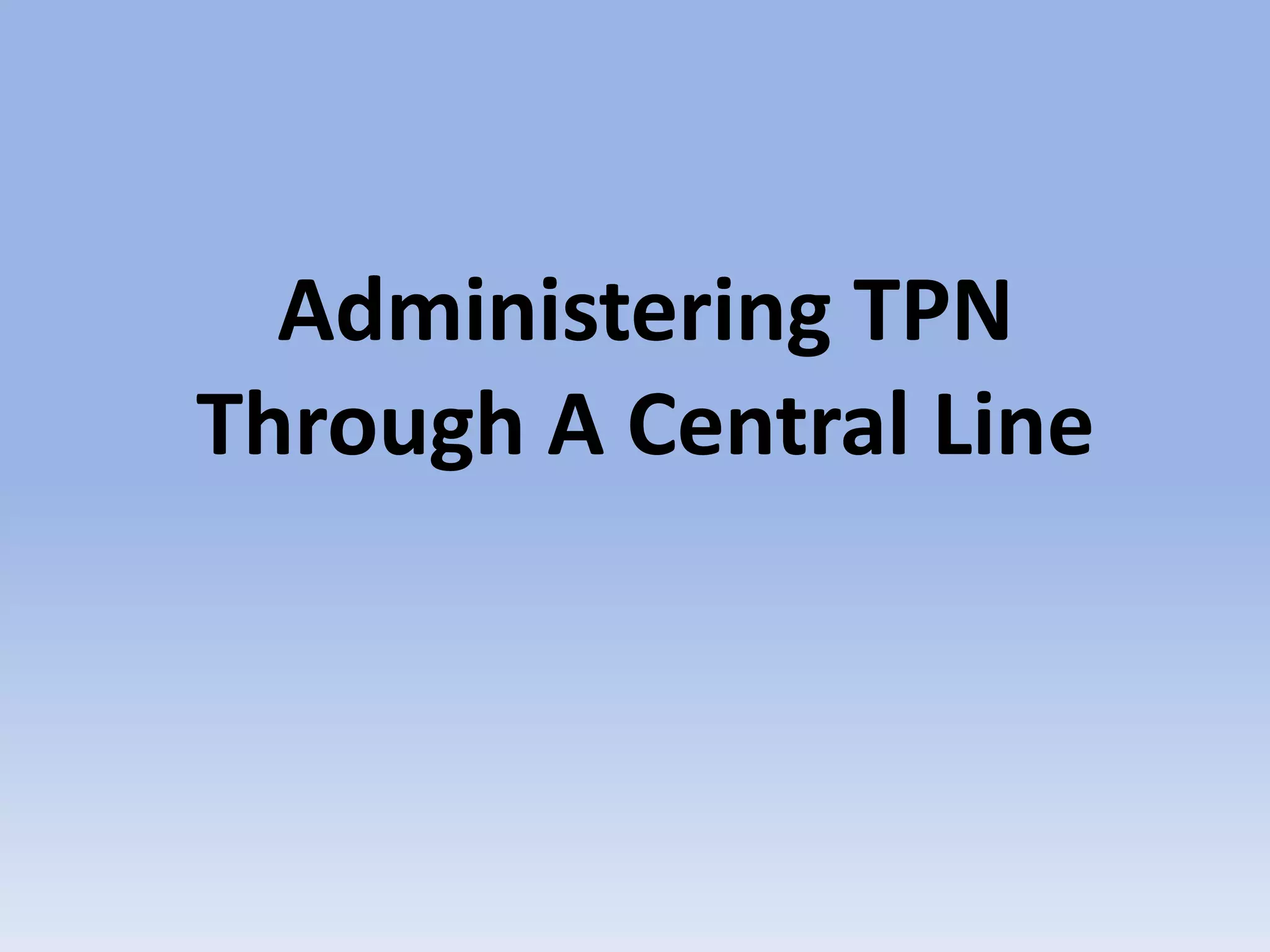
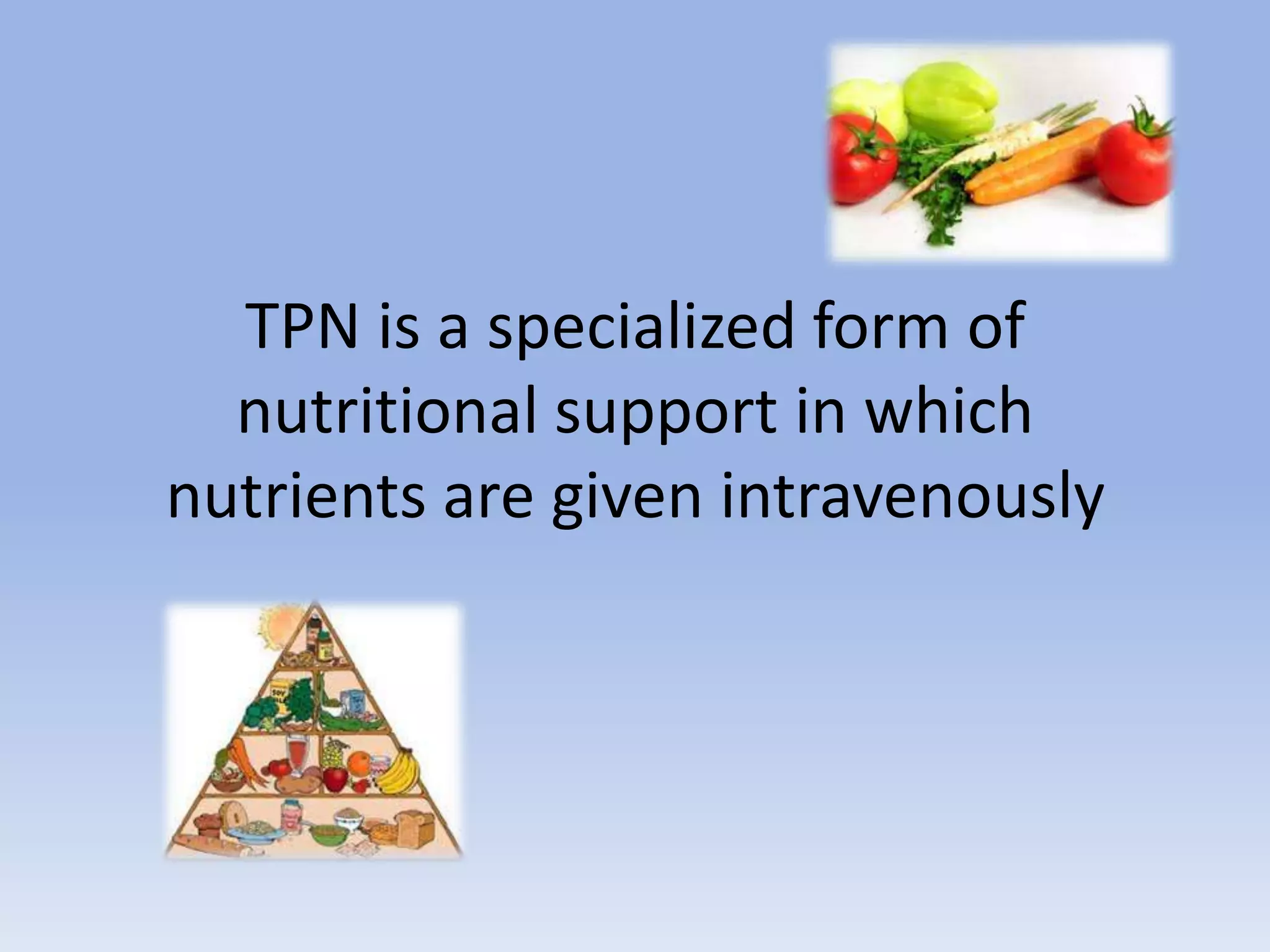
TPN is a specialized form of nutritional support in which nutrients are given intravenously
TPN is infused into a large-diameter vein, such as the superior vena cavaTPN solutions are usually hyperosmolar, and thus you have to administer them into a large-diameter vein to prevent sclerosis of vein tissue
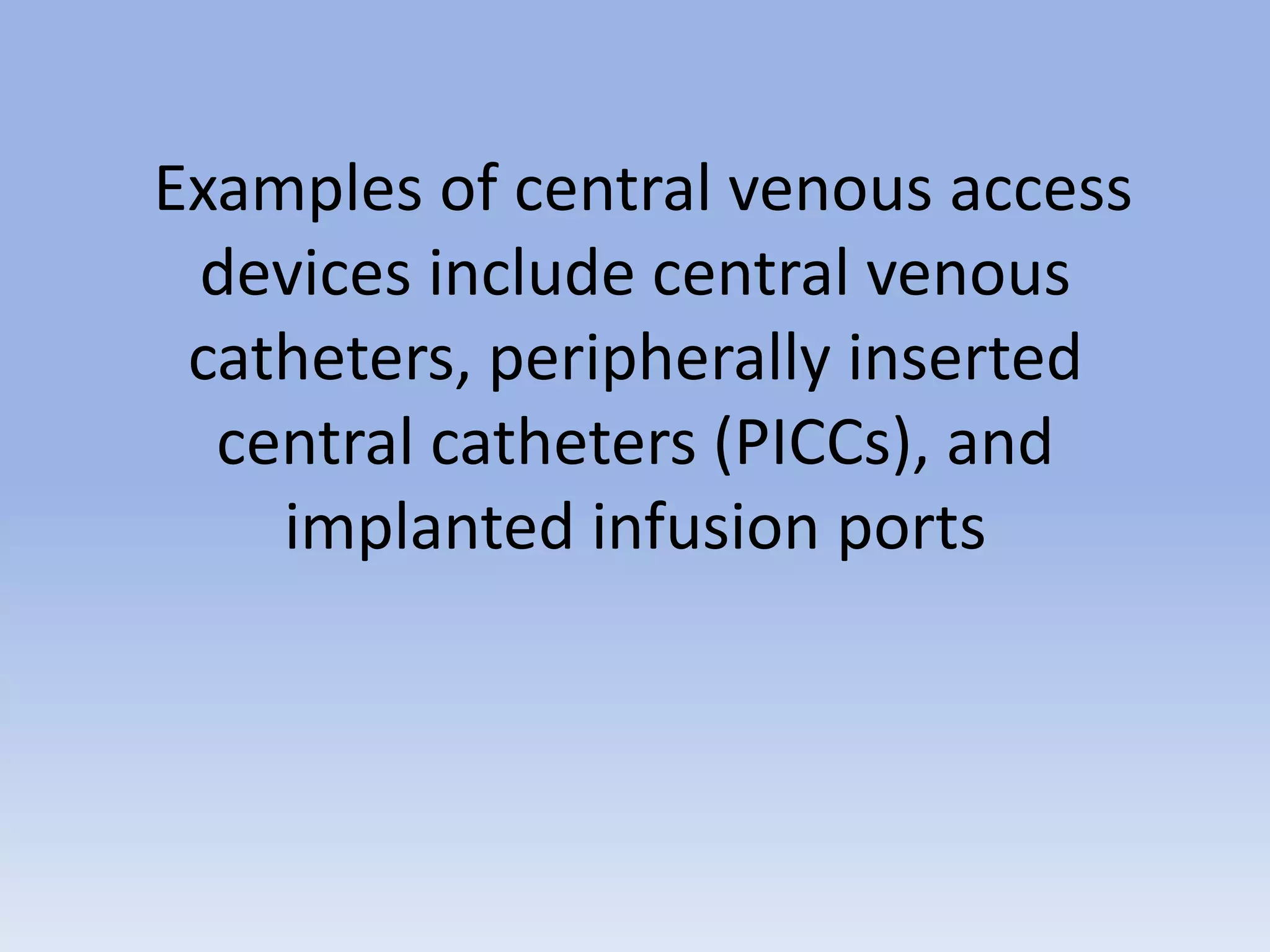
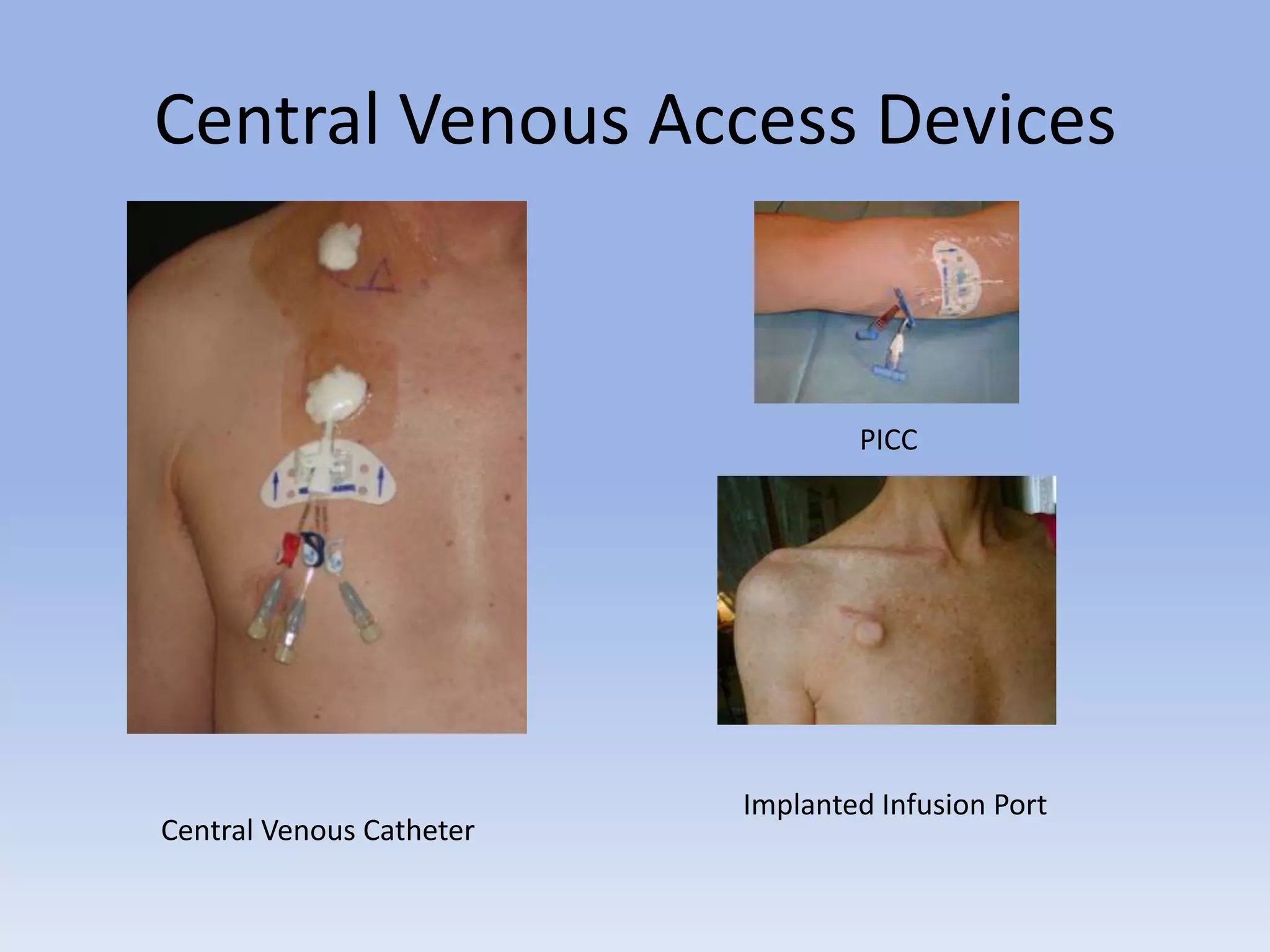
 Examples of central venous access devices include central venous catheters, peripherally inserted central catheters (PICCs), and implanted infusion ports
Central Venous Access DevicesPICCImplanted Infusion PortCentral Venous Catheter
Selection of the ideal vascular access device depends on client factors, device characteristics, therapeutic issues, and duration of therapy
Client FactorsCondition of veins
Hypercoagulability state
Skin disorders
Known allergies to catheter materials
Altered dexterity
Developmental disabilities
Needle phobia
Body image impairment
Previous experience with vascular access deviceDevice CharacteristicsDesign of device
Low risk for infection (e.g., antibacterial coatings)Therapeutic IssuesNumber of lumens
Durability
Characteristics of solutions or emulsions
Dextrose concentration >10% requires central vein access
Solution with osmolarity >600 mOsm/L requires central vein accessIndications for TPN Nonfunctional GI TractExtended Bowel RestPreoperative
Nonfunctional GI Tract• Massive small bowel resection/GI surgery/massive GI bleed• Paralytic ileus• Intestinal obstruction• Short bowel syndrome• Trauma to abdomen, head, or neck• Severe malabsorption• Intolerance to enteral feeding• Chemotherapy, radiation therapy, bone marrow transplantation
Extended Bowel Rest• Enterocutaneous fistula• Inflammatory bowel disease exacerbation• Severe diarrhea• Moderate to severe pancreatitis
Preoperative TPN• Preoperative bowel rest• Treatment for comorbid severe malnutrition in patients with nonfunctional GI tracts• Severely catabolic patients when GI tract nonusable for more than 4 to 5 days
Parenteral nutrition includes mixtures of carbohydrates (10% to 70% dextrose solution), amino acids (protein/nitrogen), fats (fatty acids), electrolytes, vitamins, and trace elements (e.g., zinc, copper, and chromium)
The TPN and mixture that is used depends on the clients needs This determination is made by the physician and nutritional support teamA doctors order is required to administer TPN
AssessmentAssess indications of and risks for protein-calorie malnutrition
Inspect condition of central vein access site
Assess vital signs, auscultate patient's lung sounds, and measure weight
Consult with physician and dietitian on calculation of calorie, protein, and fluid requirements for patient
Verify physician's order for nutrients, minerals, vitamins, trace elements, electrolytes, and added medications as well as flow rate. Check for compatibility of added medicationsPlanningExpected outcomes following completion of procedure:	A. Patient's ideal weight gain is usually between 1 and 3 	     lb.  per weekB. Serum glucose levels are less than 150 mg/dL or 	    maintained between 80 and 110 mg/dL. Check 	    physician's order for desired glucose range	C. Central venous access device is patent, and site is free 	    of pain, swelling, redness, or inflammation	D. Patient is afebrile2.    Explain purposes of TPN3.    If TPN solution is refrigerated, remove from refrigeration 1       hour before infusion

Administering TPN

  • 2.
  • 3.
    TPN is aspecialized form of nutritional support in which nutrients are given intravenously
  • 4.
    TPN is infusedinto a large-diameter vein, such as the superior vena cavaTPN solutions are usually hyperosmolar, and thus you have to administer them into a large-diameter vein to prevent sclerosis of vein tissue
  • 5.
    Examples ofcentral venous access devices include central venous catheters, peripherally inserted central catheters (PICCs), and implanted infusion ports
  • 6.
    Central Venous AccessDevicesPICCImplanted Infusion PortCentral Venous Catheter
  • 7.
    Selection of theideal vascular access device depends on client factors, device characteristics, therapeutic issues, and duration of therapy
  • 8.
  • 9.
  • 10.
  • 11.
    Known allergies tocatheter materials
  • 12.
  • 13.
  • 14.
  • 15.
  • 16.
    Previous experience withvascular access deviceDevice CharacteristicsDesign of device
  • 17.
    Low risk forinfection (e.g., antibacterial coatings)Therapeutic IssuesNumber of lumens
  • 18.
  • 19.
  • 20.
    Dextrose concentration >10%requires central vein access
  • 21.
    Solution with osmolarity>600 mOsm/L requires central vein accessIndications for TPN Nonfunctional GI TractExtended Bowel RestPreoperative
  • 22.
    Nonfunctional GI Tract•Massive small bowel resection/GI surgery/massive GI bleed• Paralytic ileus• Intestinal obstruction• Short bowel syndrome• Trauma to abdomen, head, or neck• Severe malabsorption• Intolerance to enteral feeding• Chemotherapy, radiation therapy, bone marrow transplantation
  • 23.
    Extended Bowel Rest•Enterocutaneous fistula• Inflammatory bowel disease exacerbation• Severe diarrhea• Moderate to severe pancreatitis
  • 24.
    Preoperative TPN• Preoperativebowel rest• Treatment for comorbid severe malnutrition in patients with nonfunctional GI tracts• Severely catabolic patients when GI tract nonusable for more than 4 to 5 days
  • 25.
    Parenteral nutrition includesmixtures of carbohydrates (10% to 70% dextrose solution), amino acids (protein/nitrogen), fats (fatty acids), electrolytes, vitamins, and trace elements (e.g., zinc, copper, and chromium)
  • 26.
    The TPN andmixture that is used depends on the clients needs This determination is made by the physician and nutritional support teamA doctors order is required to administer TPN
  • 27.
    AssessmentAssess indications ofand risks for protein-calorie malnutrition
  • 28.
    Inspect condition ofcentral vein access site
  • 29.
    Assess vital signs,auscultate patient's lung sounds, and measure weight
  • 30.
    Consult with physicianand dietitian on calculation of calorie, protein, and fluid requirements for patient
  • 31.
    Verify physician's orderfor nutrients, minerals, vitamins, trace elements, electrolytes, and added medications as well as flow rate. Check for compatibility of added medicationsPlanningExpected outcomes following completion of procedure: A. Patient's ideal weight gain is usually between 1 and 3 lb. per weekB. Serum glucose levels are less than 150 mg/dL or maintained between 80 and 110 mg/dL. Check physician's order for desired glucose range C. Central venous access device is patent, and site is free of pain, swelling, redness, or inflammation D. Patient is afebrile2. Explain purposes of TPN3. If TPN solution is refrigerated, remove from refrigeration 1 hour before infusion
  • 32.
    ImplementationStrict aseptic techniqueis requiredPerform hand hygiene and apply clean gloves
  • 33.
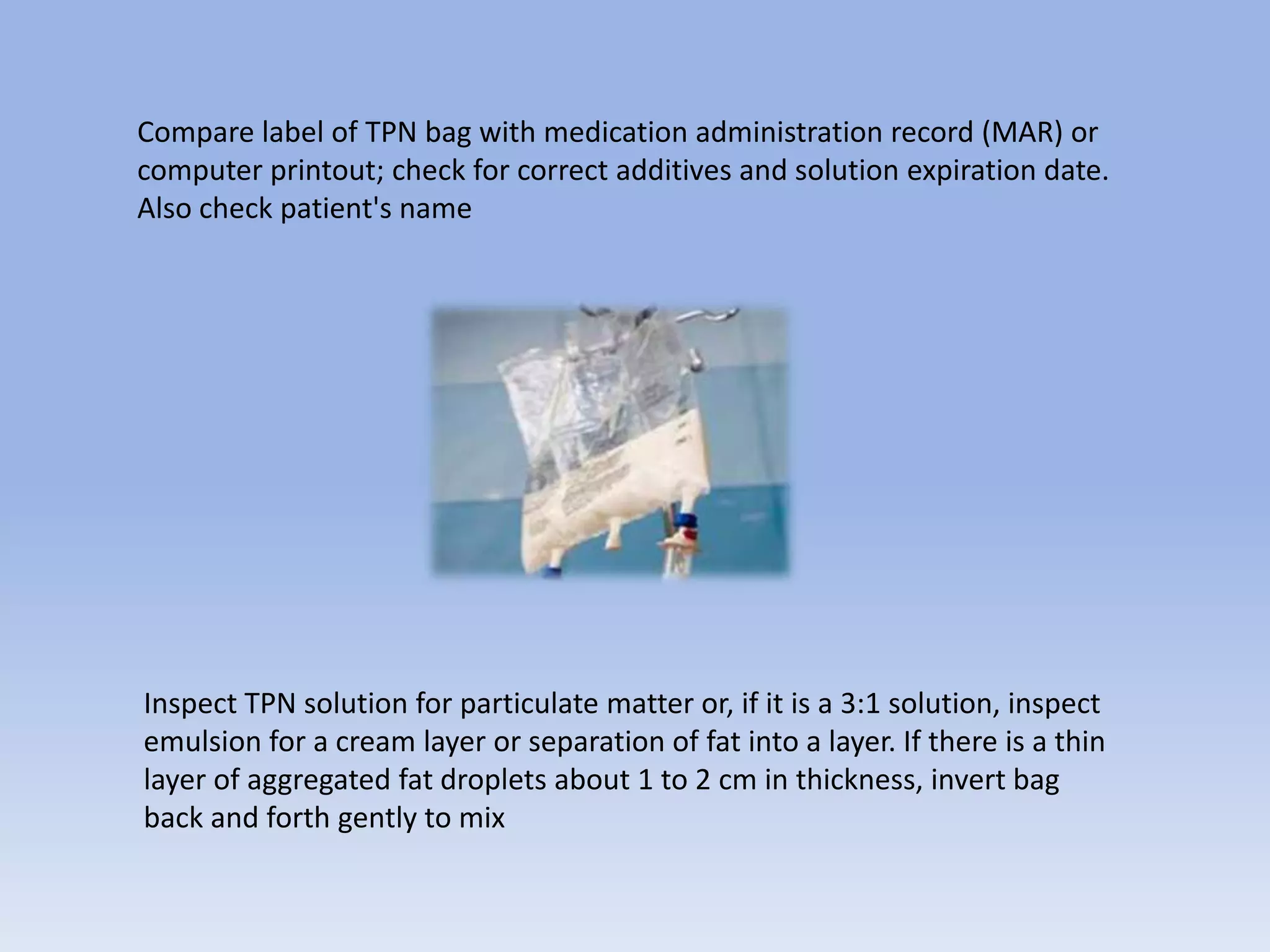
    Compare label ofTPN bag with medication administration record (MAR) or computer printout; check for correct additives and solution expiration date. Also check patient's nameInspect TPN solution for particulate matter or, if it is a 3:1 solution, inspect emulsion for a cream layer or separation of fat into a layer. If there is a thin layer of aggregated fat droplets about 1 to 2 cm in thickness, invert bag back and forth gently to mix
  • 34.
    Identify patient. Useat least two patient identifiers
  • 35.
    Attach appropriate filterto IV tubing.Prime tubing with TPN solution, making sure no air bubbles remain, and turn off flow with roller clamp. Connect end of tubing to appropriate port of central catheter, and label port. Open roller clamp to rate that maintains patency of line
  • 36.
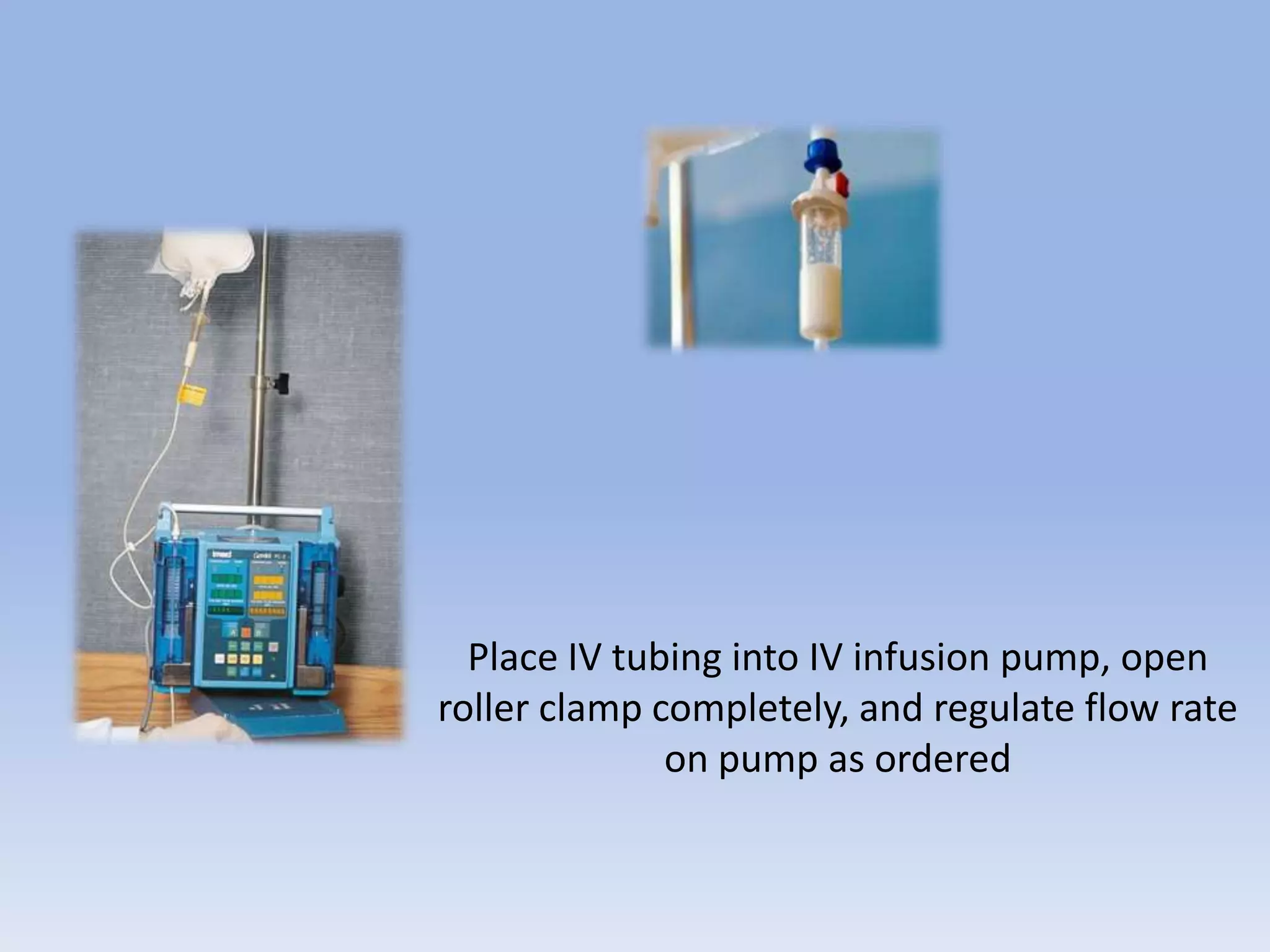
    Place IV tubinginto IV infusion pump, open roller clamp completely, and regulate flow rate on pump as ordered
  • 37.
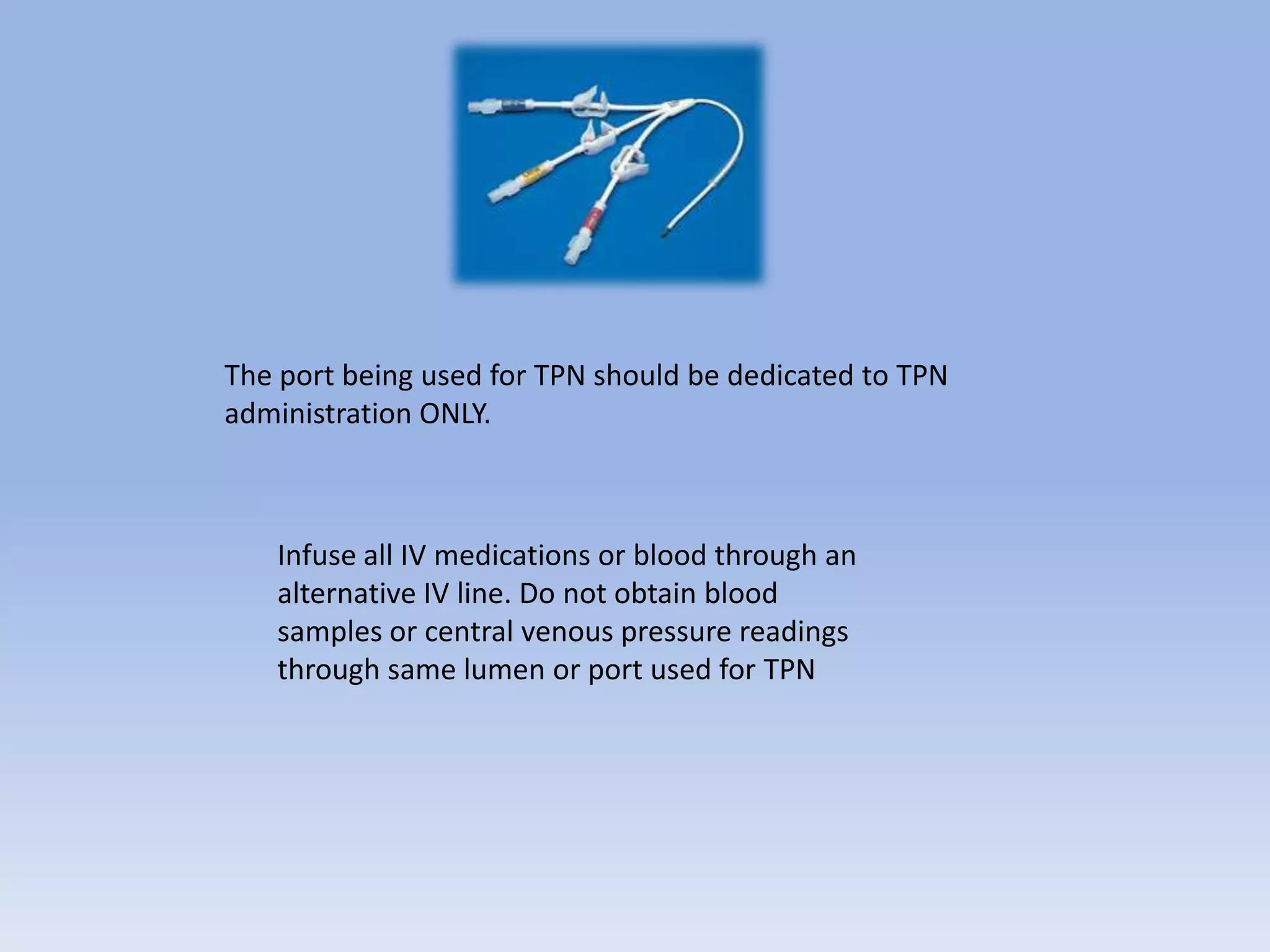
    The port beingused for TPN should be dedicated to TPN administration ONLY.Infuse all IV medications or blood through an alternative IV line. Do not obtain blood samples or central venous pressure readings through same lumen or port used for TPN
  • 38.
    Do not interruptTPN infusion (e.g., during showers, transport to procedure, blood transfusion), and be sure that rate does not exceed ordered rate
  • 39.
    Change infusing tubingand filter using strict aseptic technique. Change IV administration sets for TPN every 72 hours, for 3:1 and fat emulsions every 24 hours, and immediately upon suspected contamination
  • 40.
    Discard used supplies,and perform hand hygiene
  • 41.
    EvaluationMonitor flow rateroutinely, at least hourlyMonitor fluid intake every 8 hoursObtain daily weights or weights as orderedAssess for fluid retention; palpate skin of extremities, auscultate lung sounds
  • 42.
    Monitor patient's glucoselevel every 6 hours or as ordered, and monitor other laboratory parameters daily or as orderedInspect central venous access siteMonitor for fever, elevated white blood cell count and malaise
  • 43.
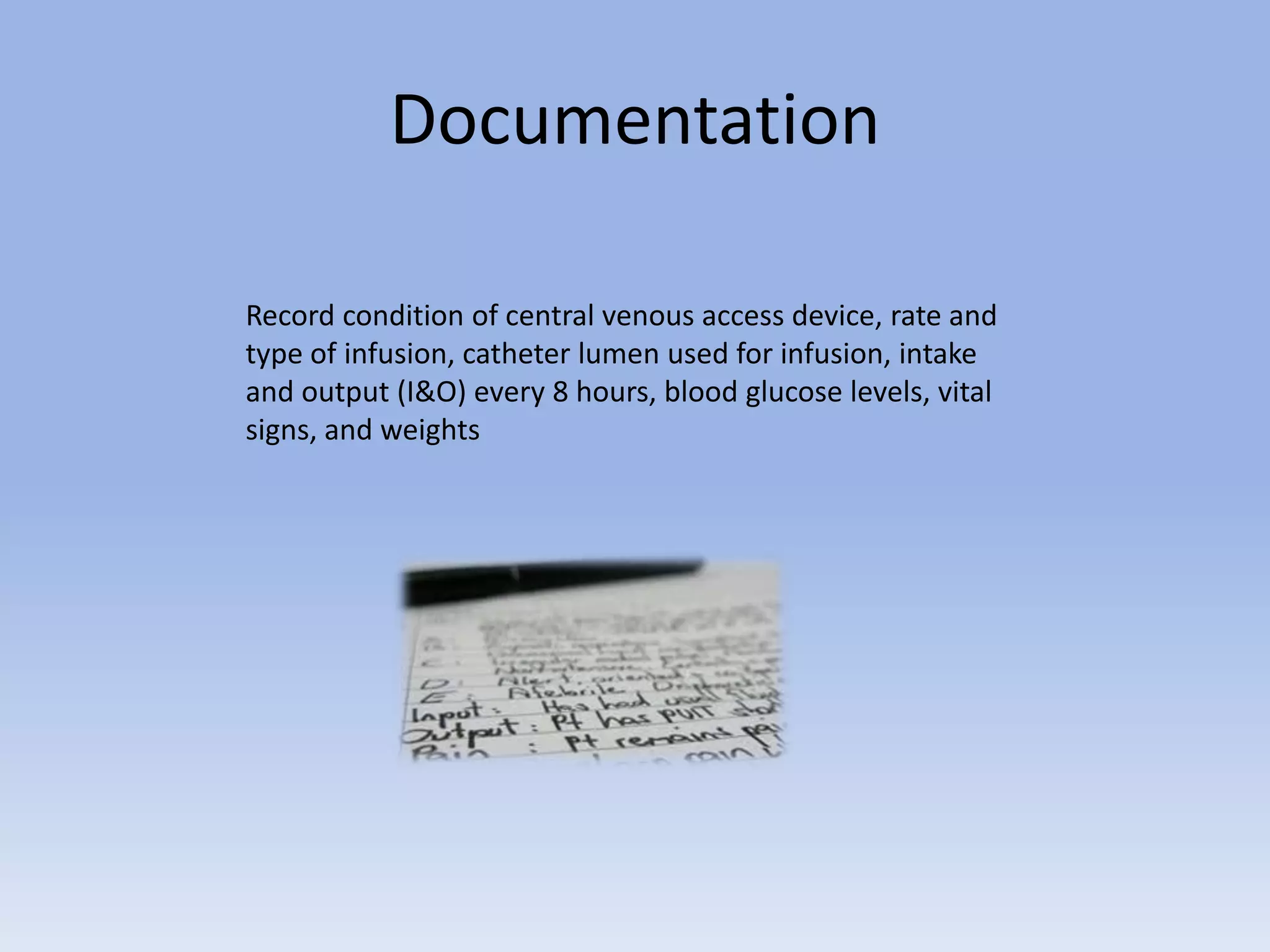
    DocumentationRecord condition ofcentral venous access device, rate and type of infusion, catheter lumen used for infusion, intake and output (I&O) every 8 hours, blood glucose levels, vital signs, and weights
  • 44.