Embed presentation
Downloaded 91 times


Edward Angle developed a classification system for malocclusions in 1899 that categorized them into three main classes based on the relationship of the mandible to the maxilla. Class I is considered normal with the mandible fitting correctly over the maxilla. Class II is when the mandible is positioned back from the maxilla, divided into two divisions. Class III is when the mandible is positioned forward from the maxilla. Angle described characteristics and causes for each class and subclassified them further. His system provides a framework for describing malocclusions based on skeletal relationships.
Introduction to Edward Angle's classification of malocclusion established in 1899.
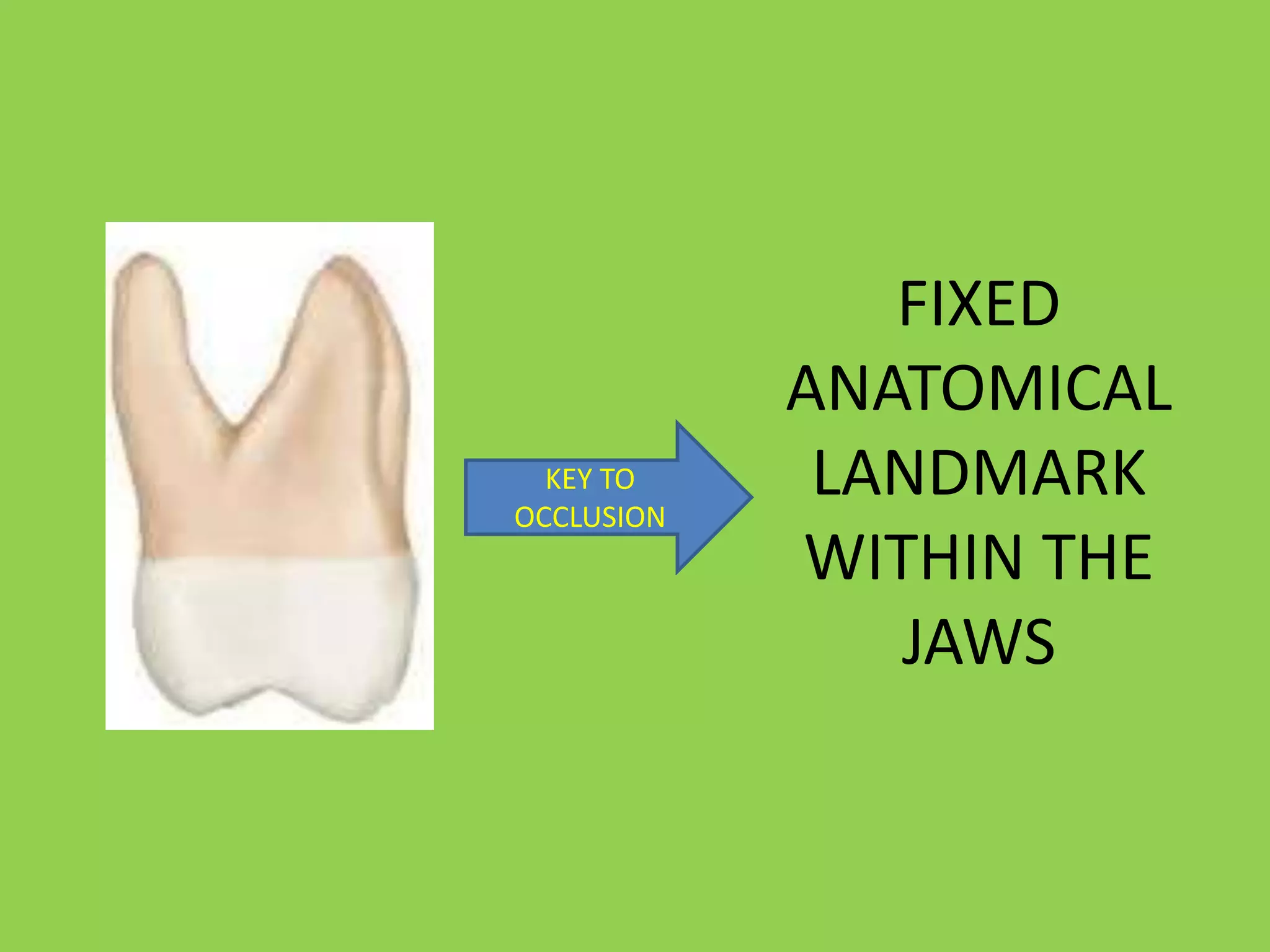
Focus on the fixed anatomical landmarks within the jaws that are essential for occlusion.
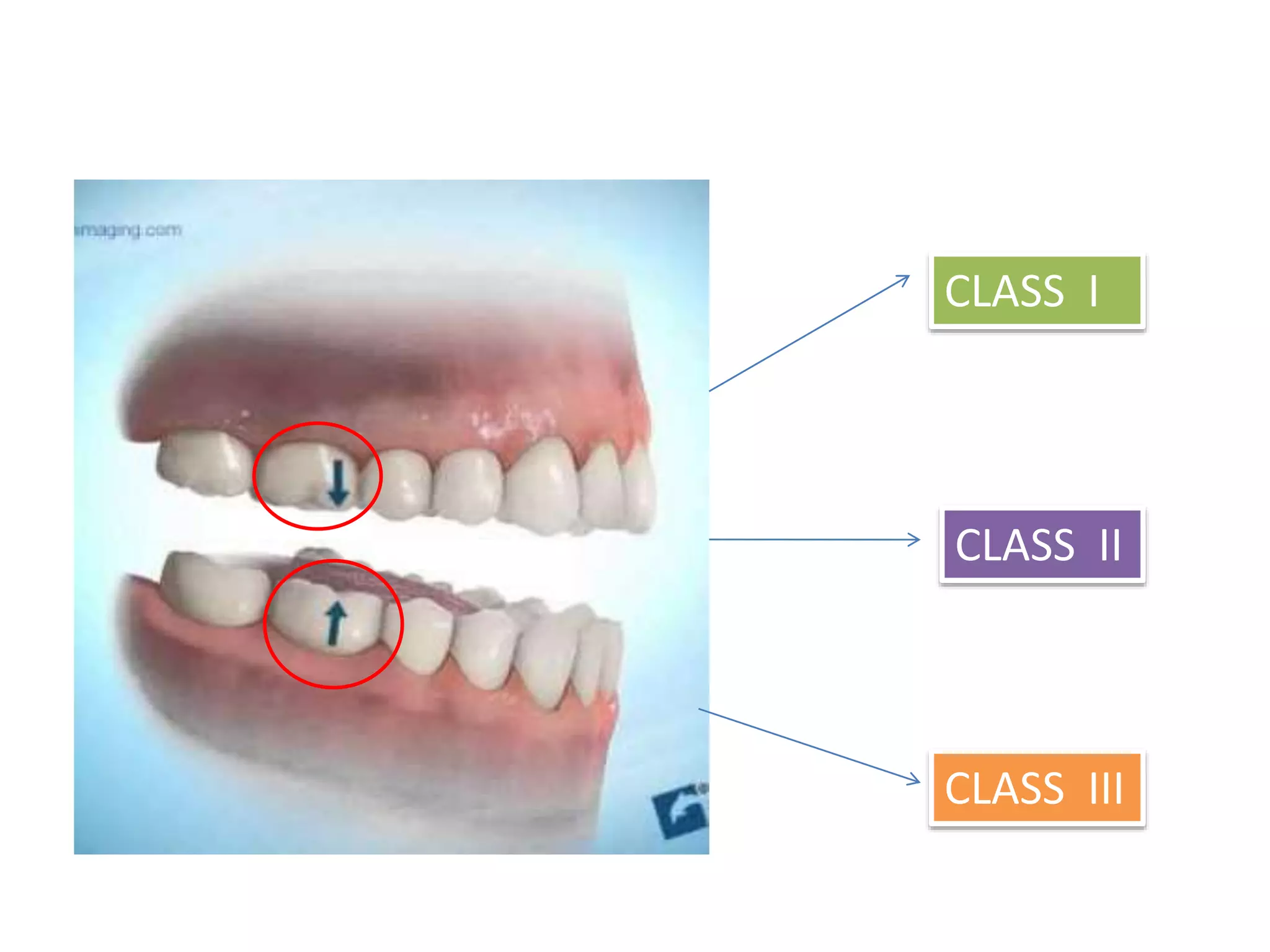
Overview of Angle's classification, which includes Class I, Class II, and Class III malocclusions.
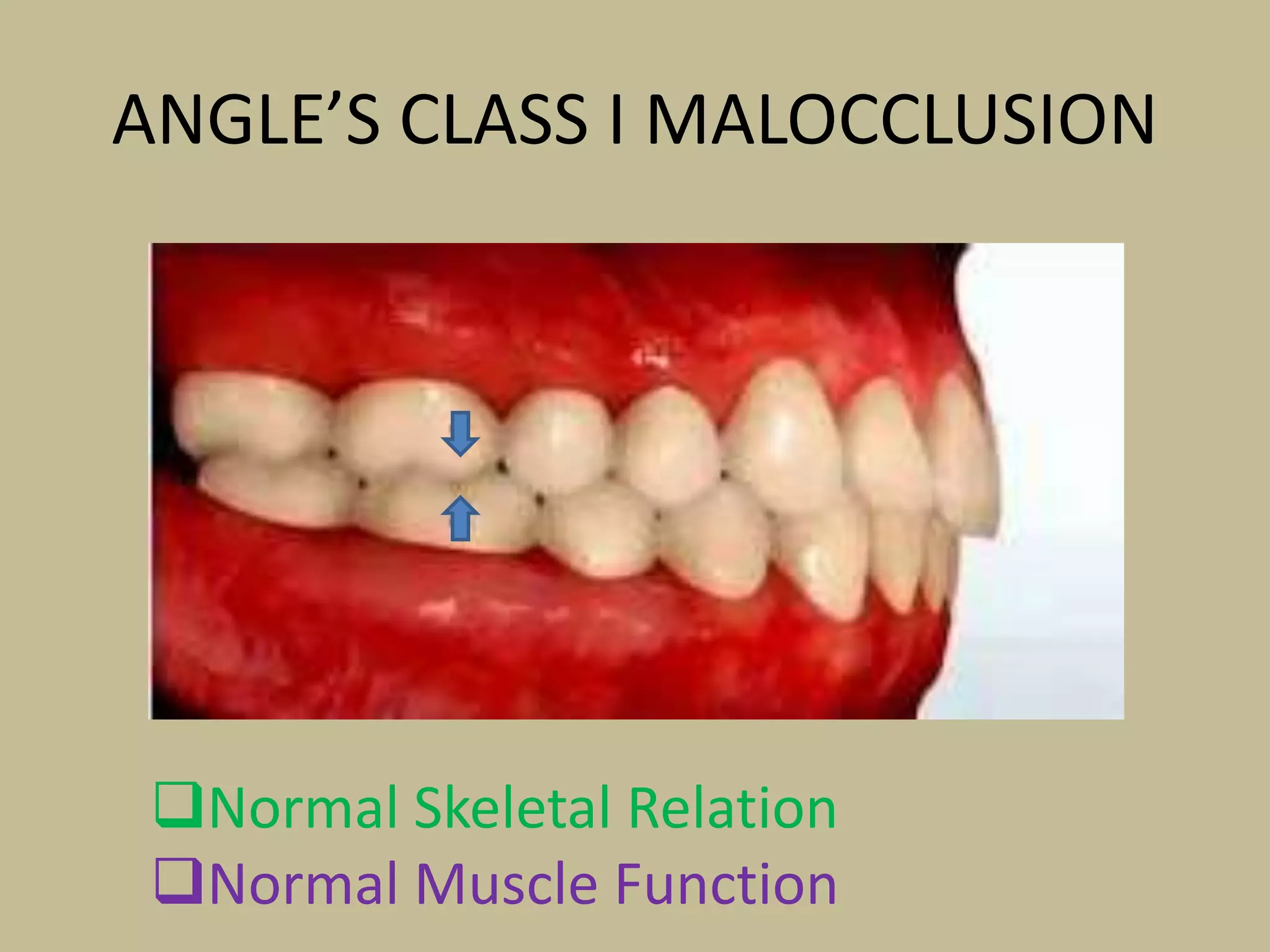
Details of Class I malocclusion characterized by normal skeletal relation and muscle function.
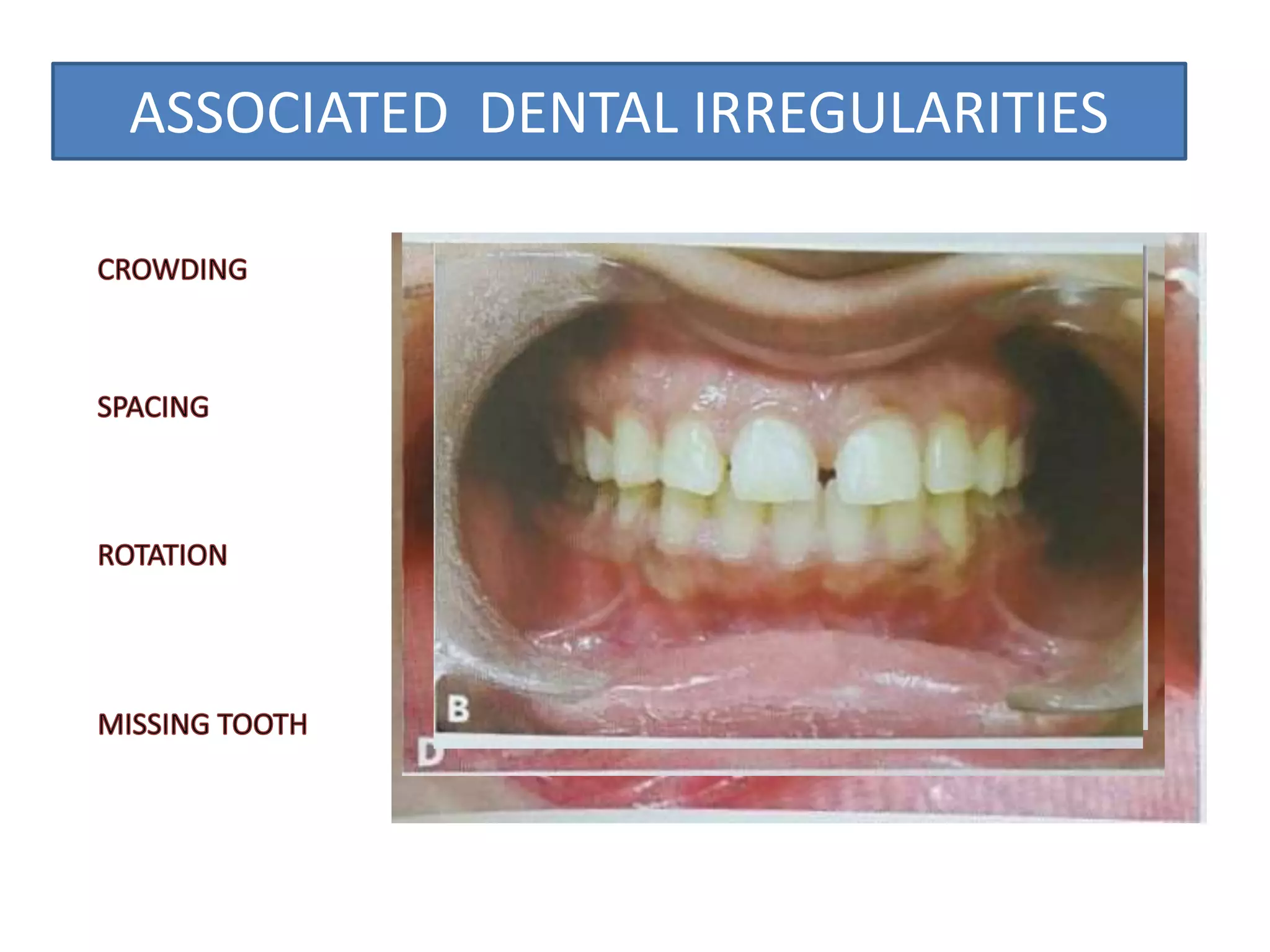
Associated dental irregularities found within Class I malocclusion.
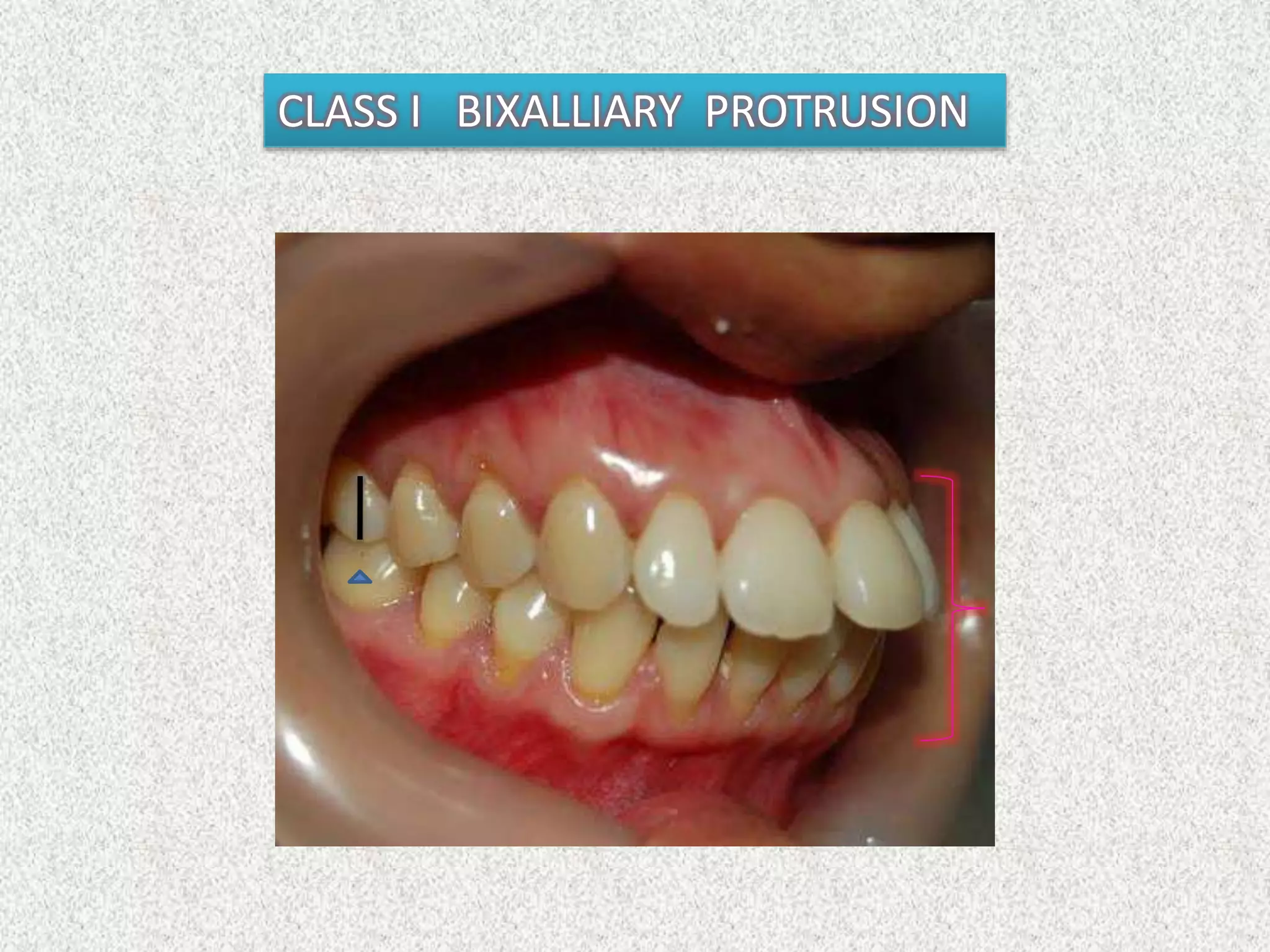
Explains Class I bimaxillary protrusion and its implications.
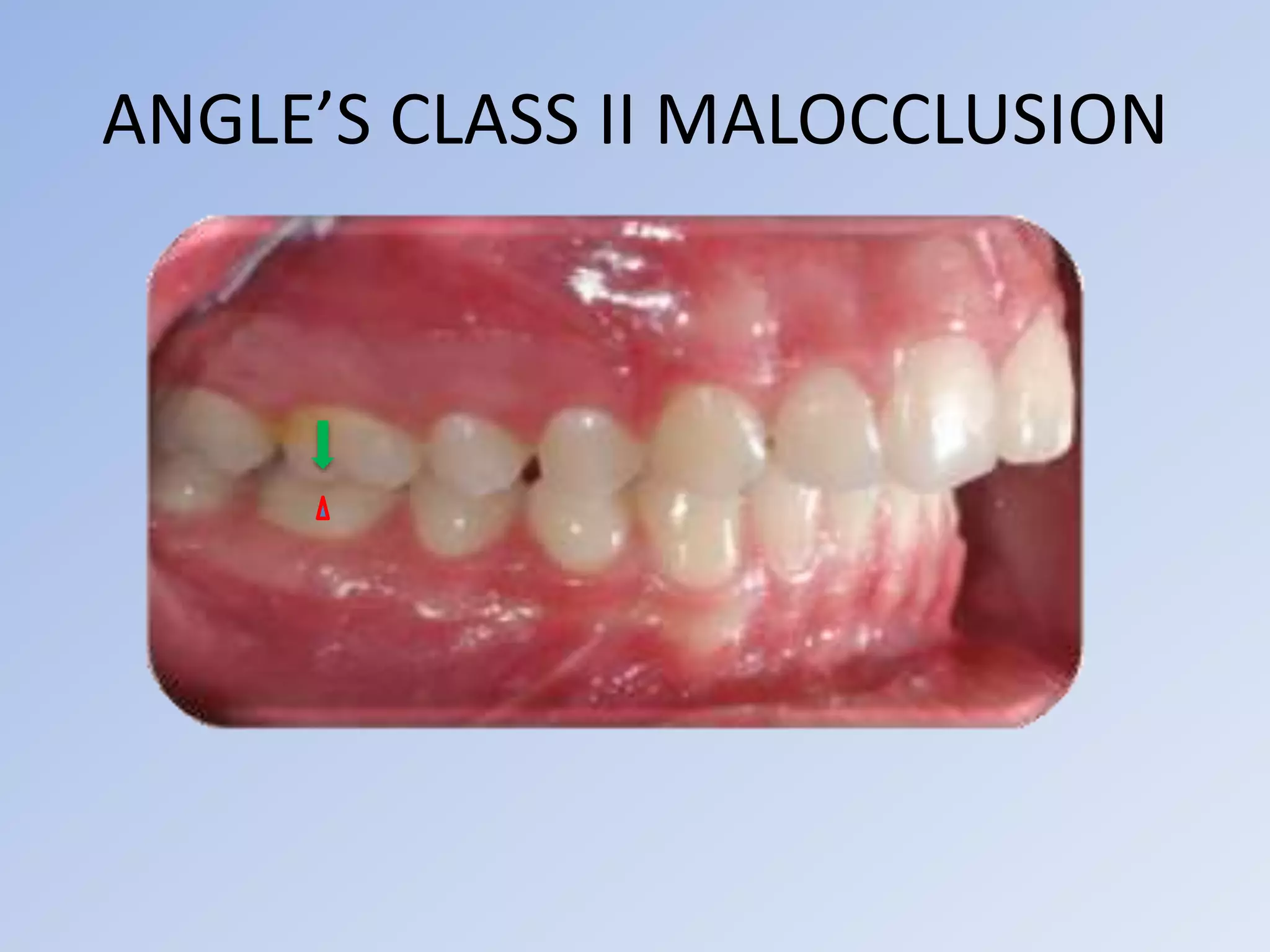
Introduction to Angle’s Class II malocclusion and its significance.
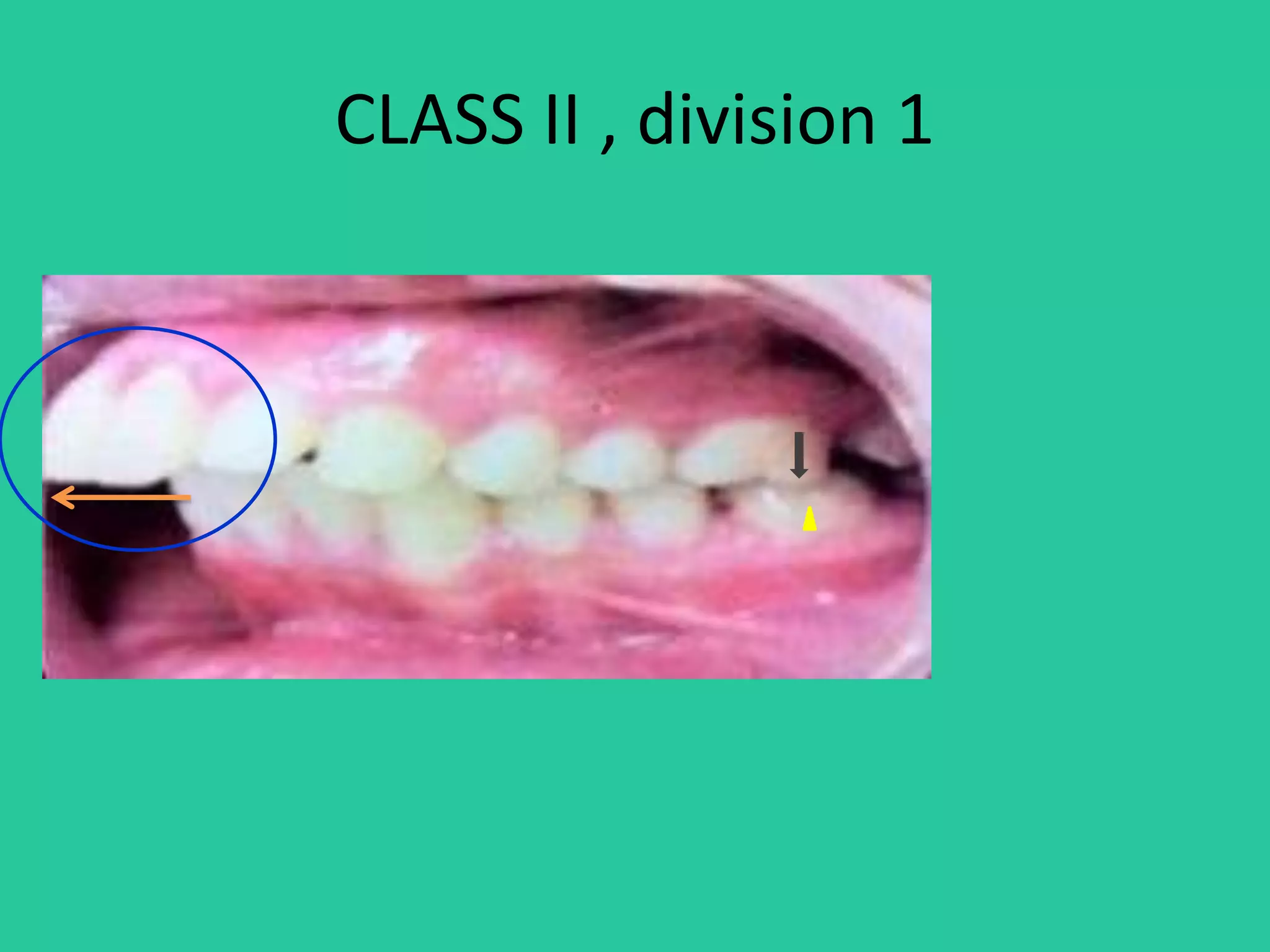
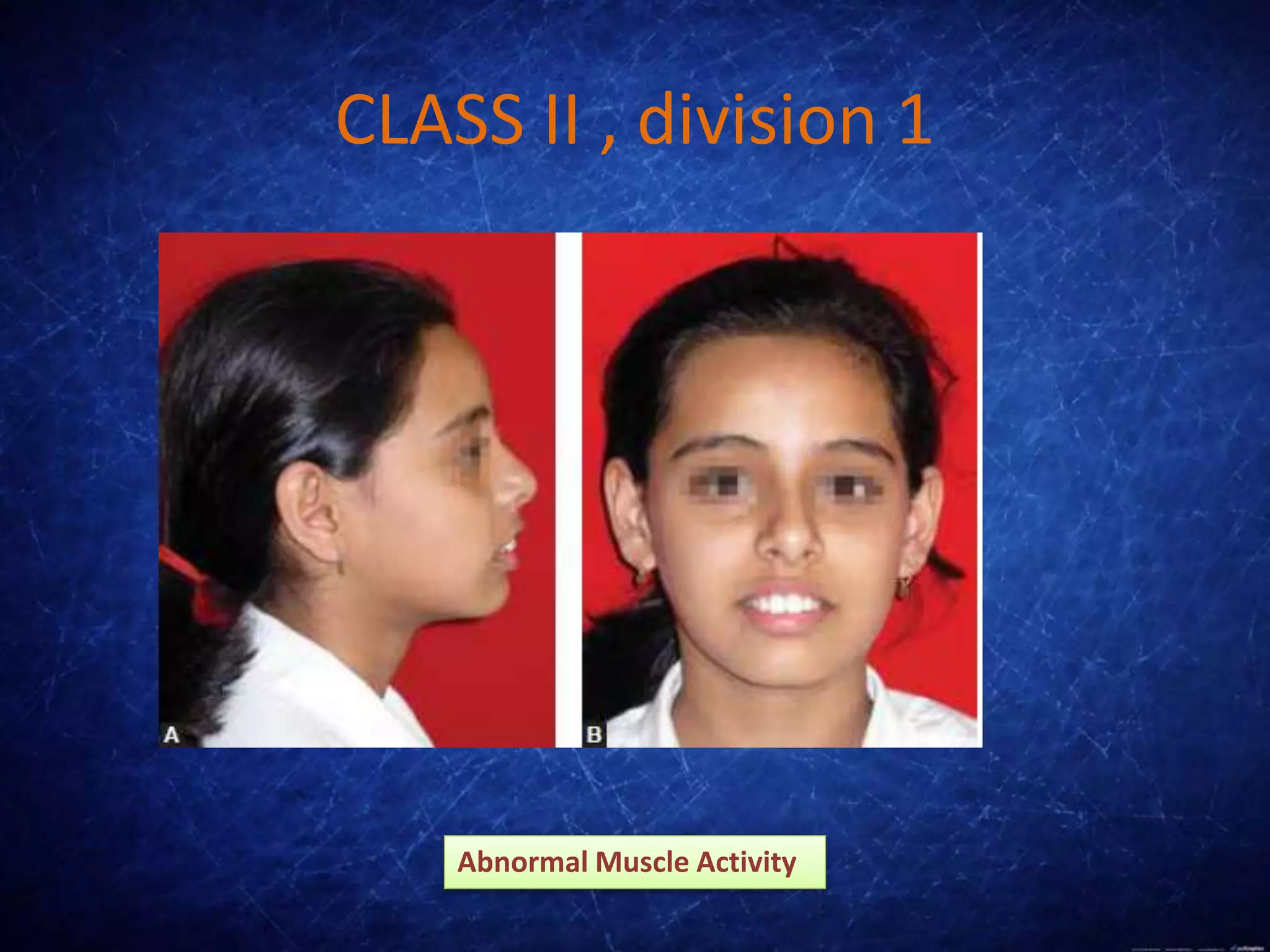
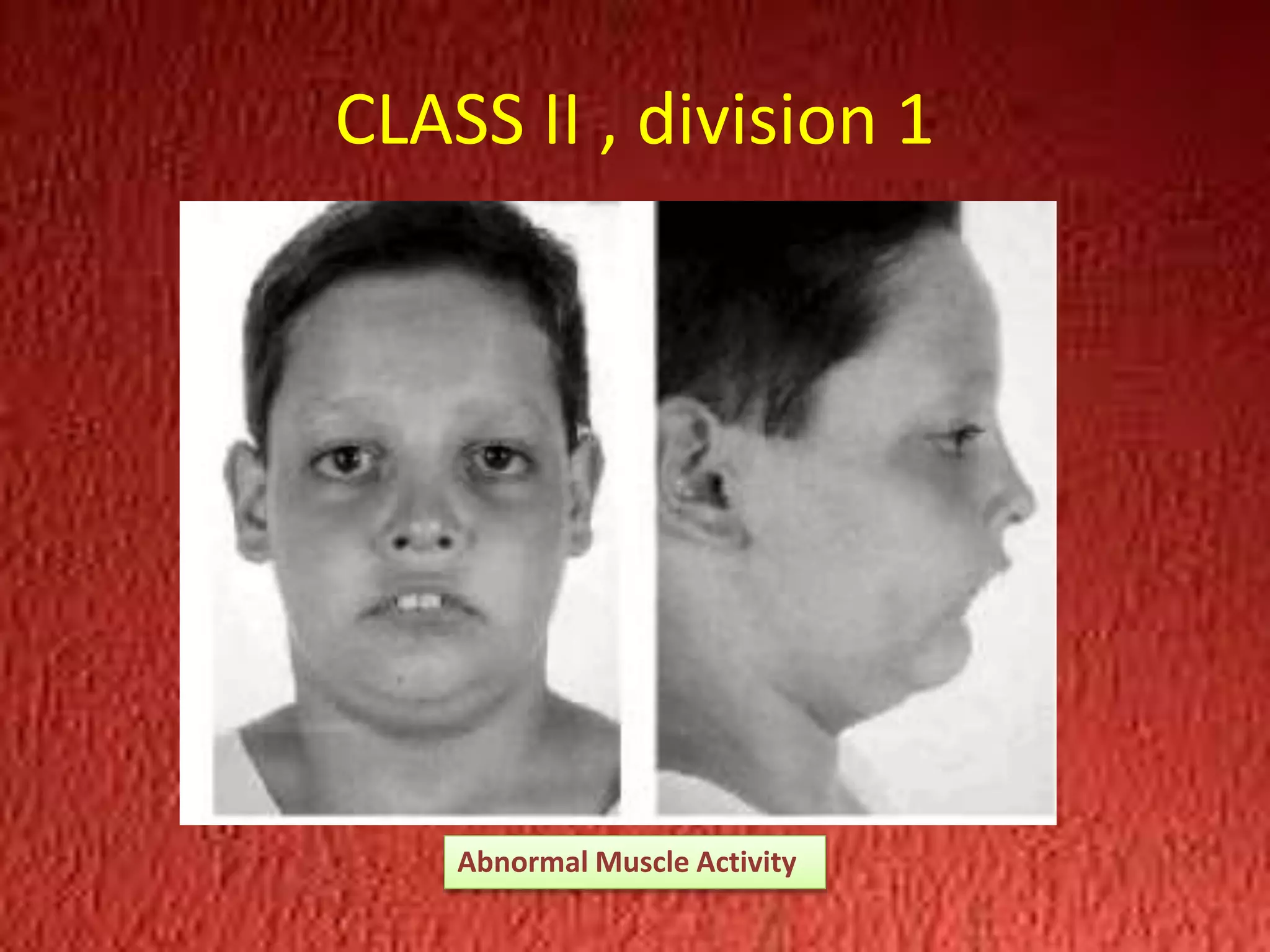
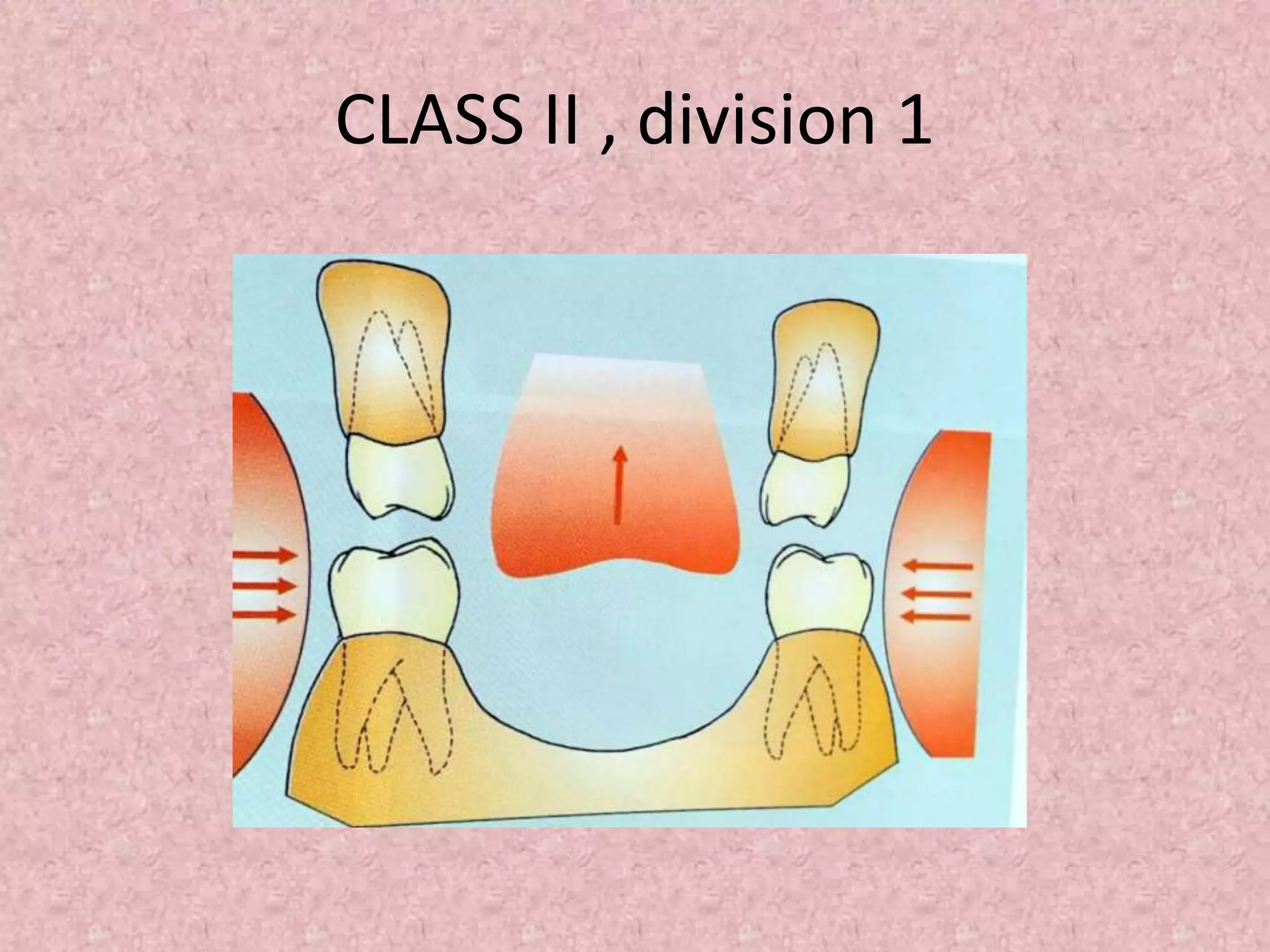
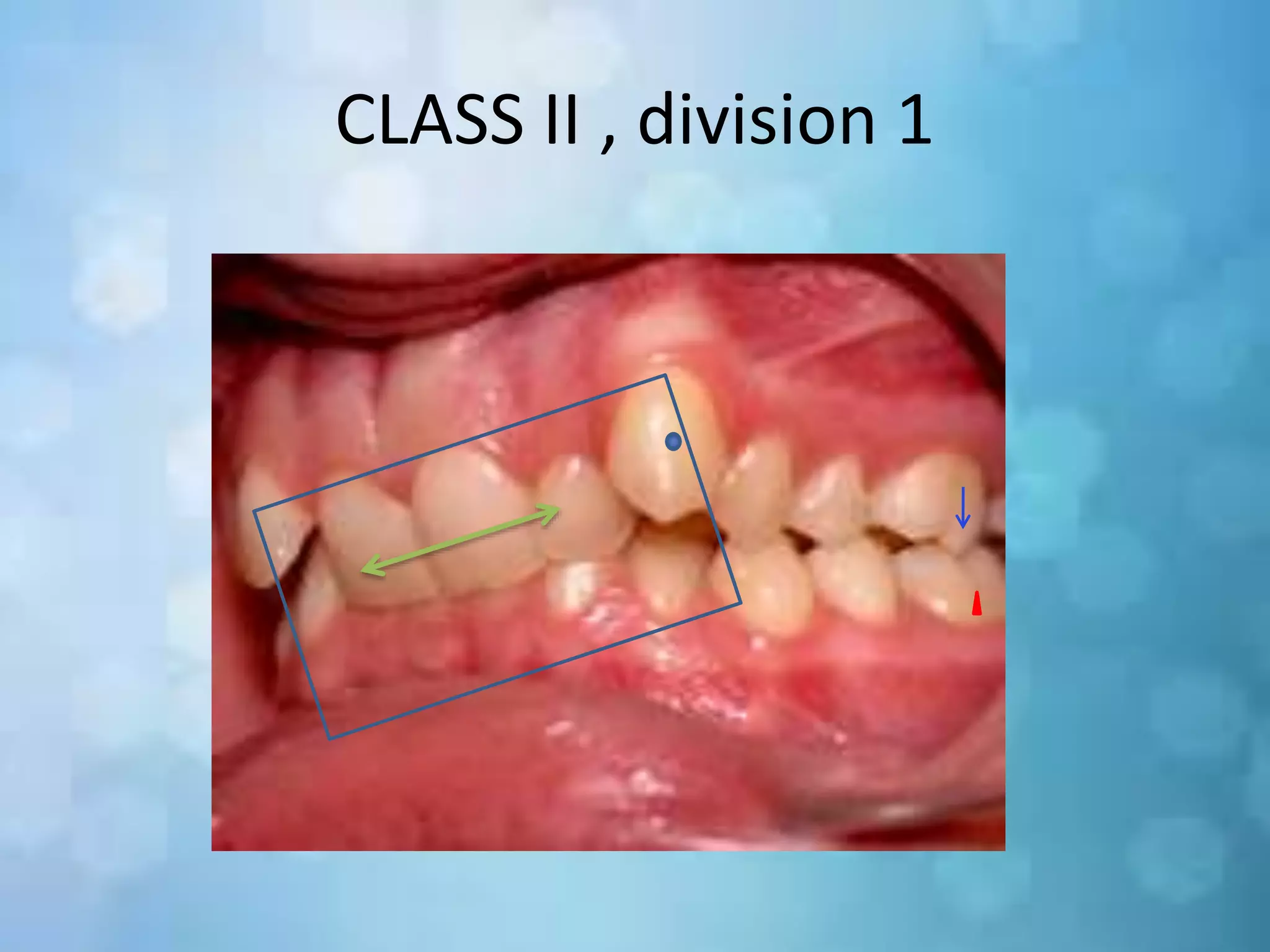
Details of Class II, Division 1 malocclusion.
Discussion on the abnormal muscle activity associated with Class II, Division 1 malocclusion.
Further exploration of muscle activity abnormalities in Class II, Division 1.
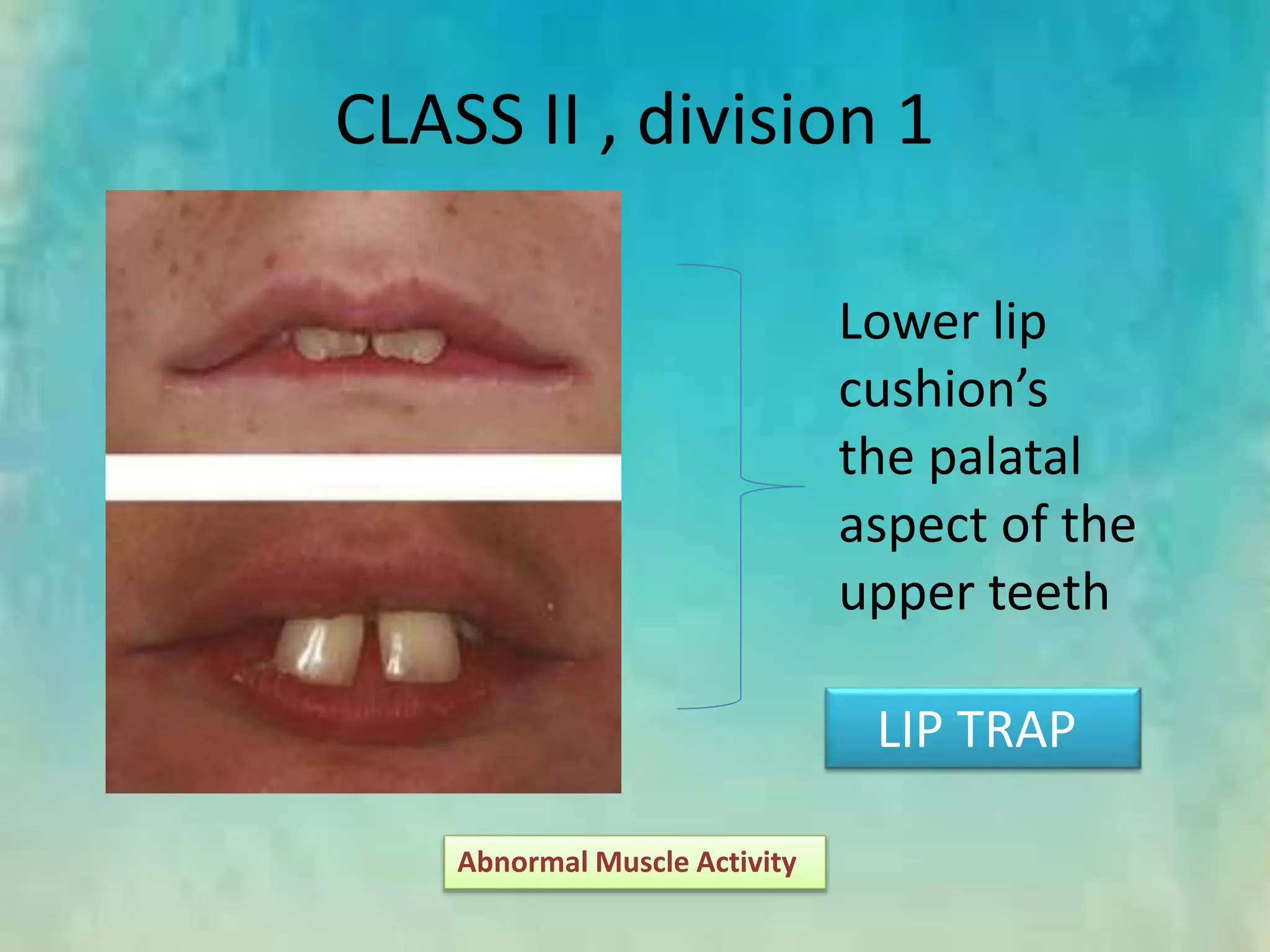
Describes how the lower lip cushions the palatal aspect of upper teeth, creating a lip trap effect.
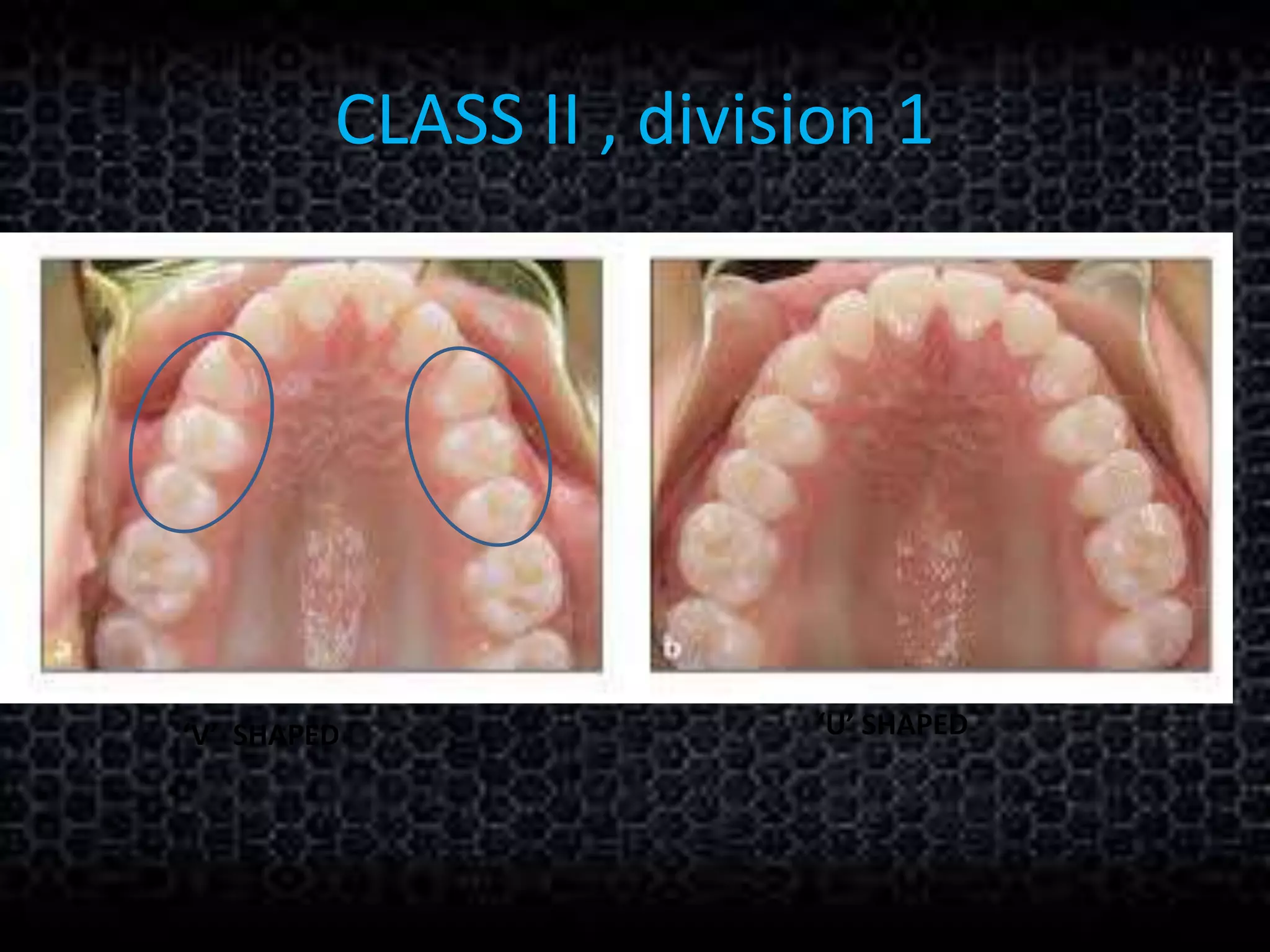
Characteristics of dental shapes in Class II, Division 1.
Discussion on 'V' shaped and 'U' shaped dental features in Class II, Division 1.
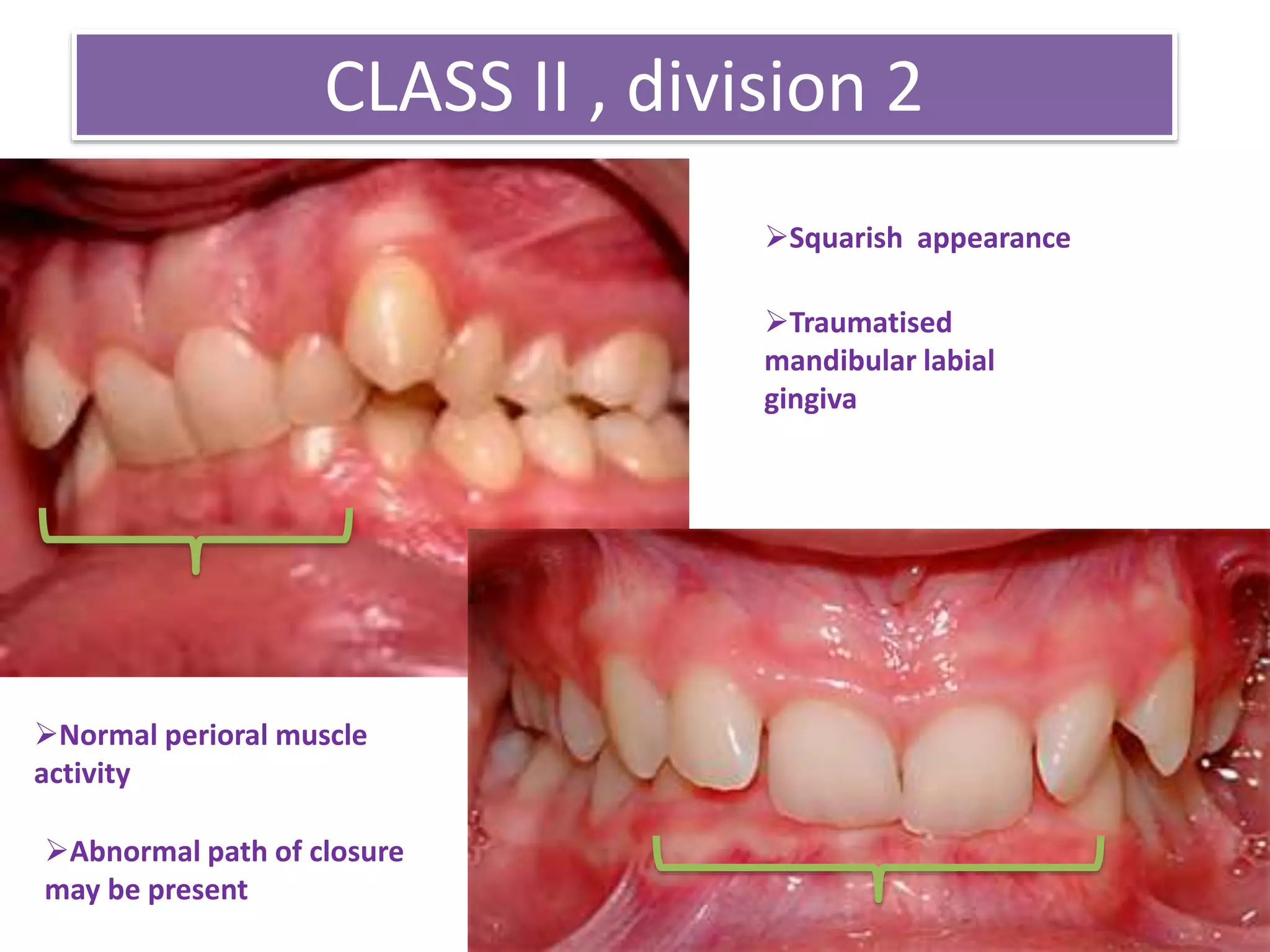
Introduction to Class II, Division 2 malocclusion and its features.
Revisiting Class II, Division 1 characteristics for clarity.
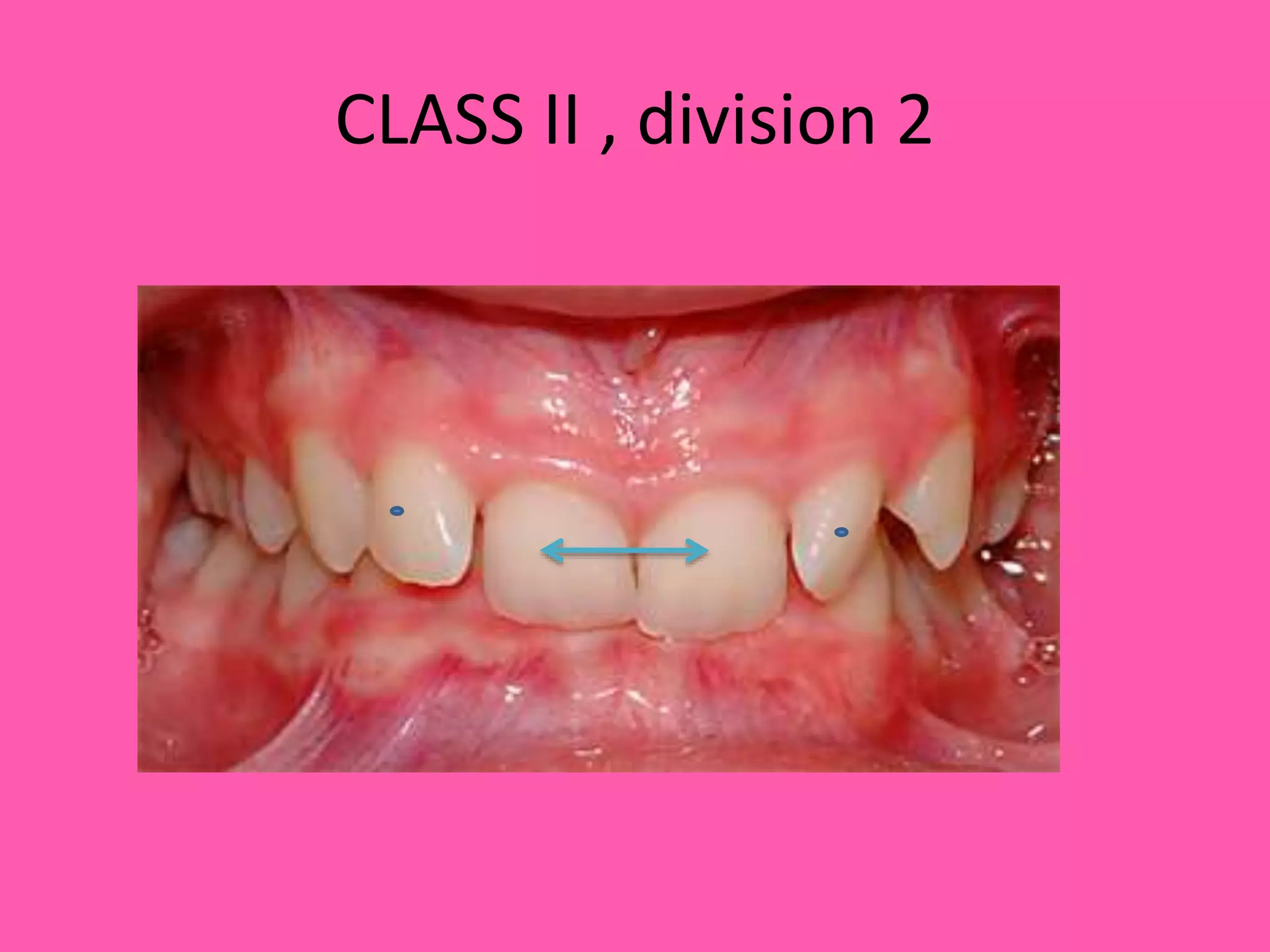
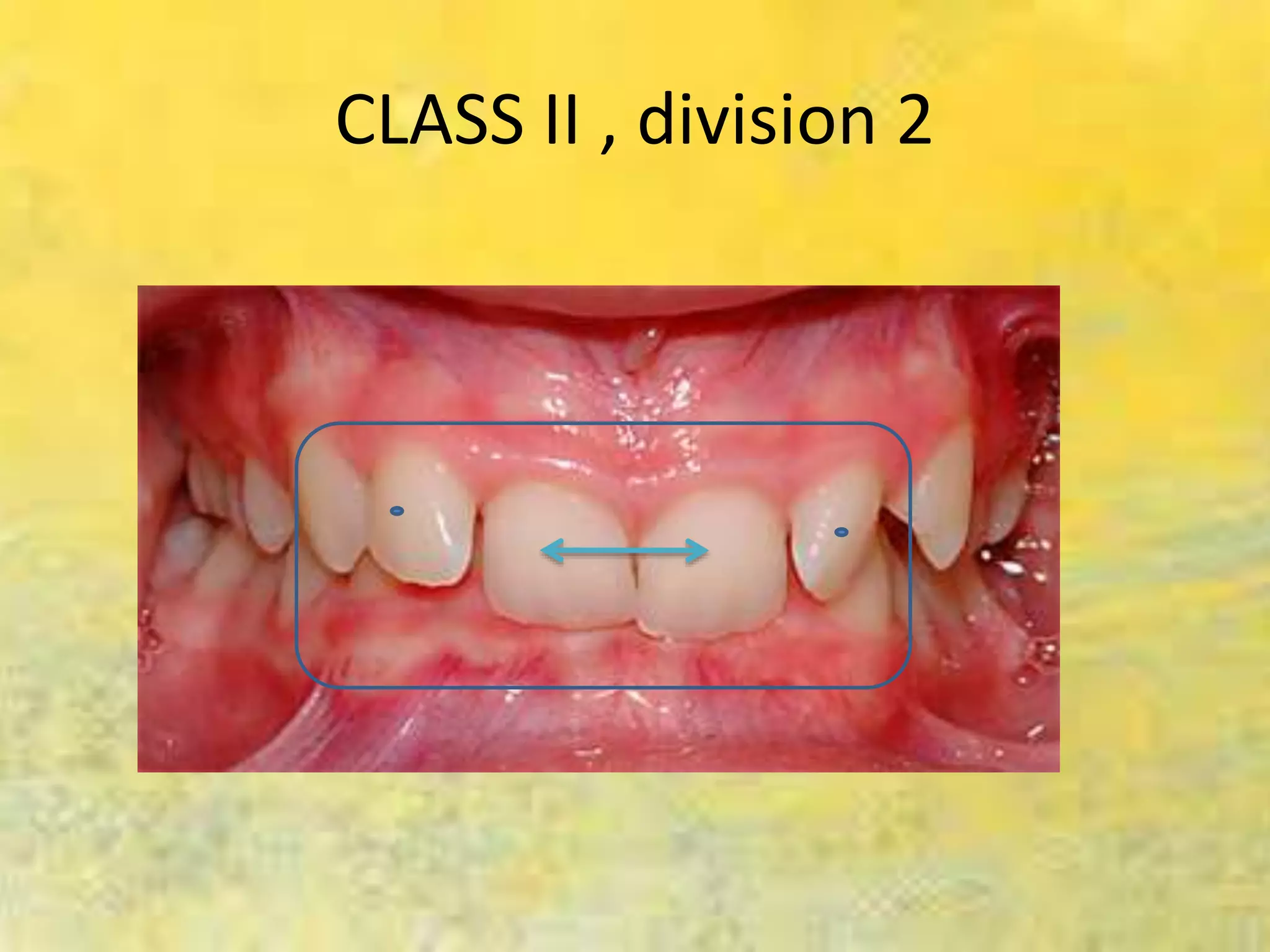
Insight into characteristics of Class II, Division 2 malocclusion.
Analysis of Class II, Division 2 presenting a squarish appearance and potential for trauma.
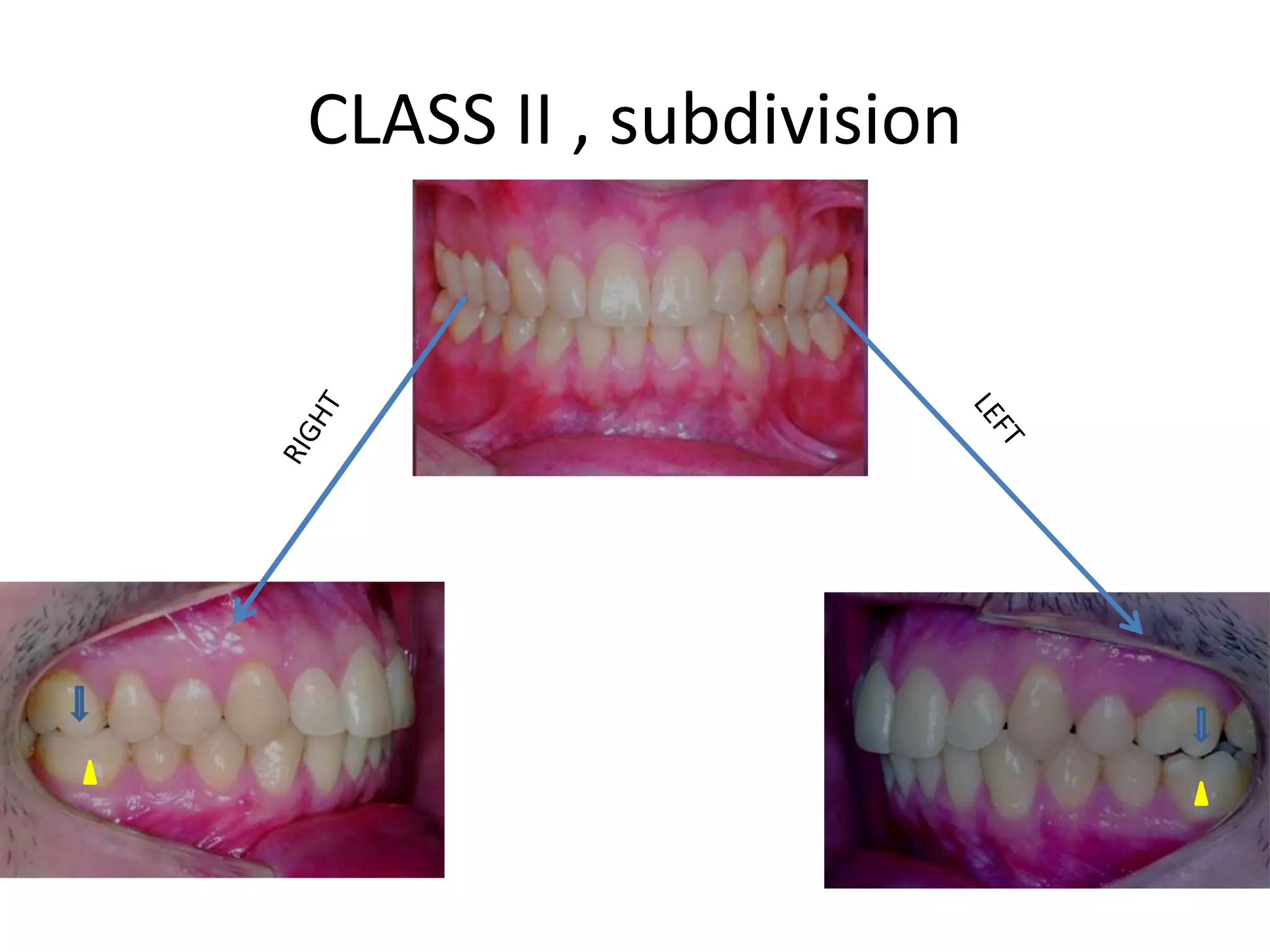
Overview of Class II malocclusion subdivision with its unique characteristics.
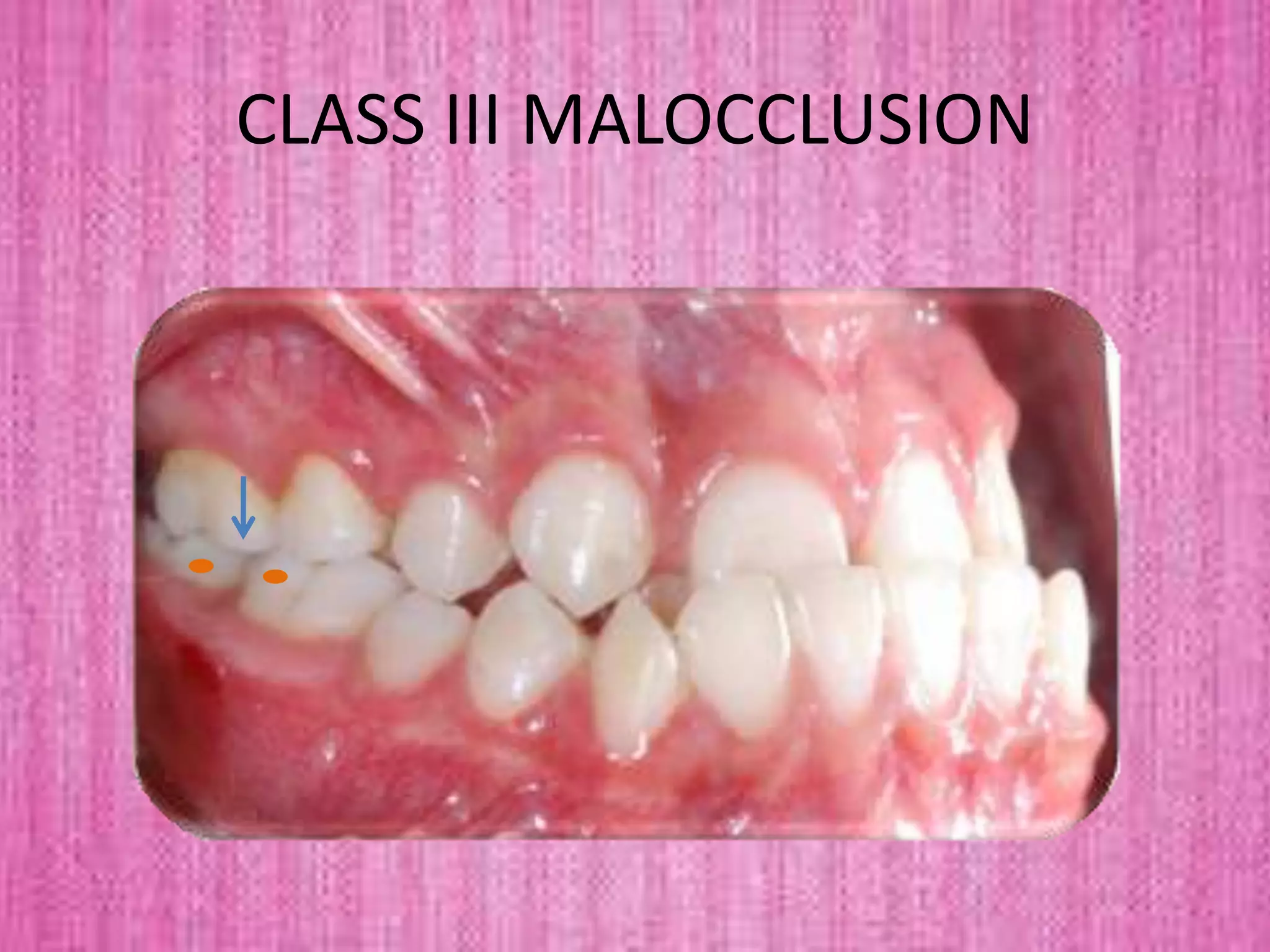
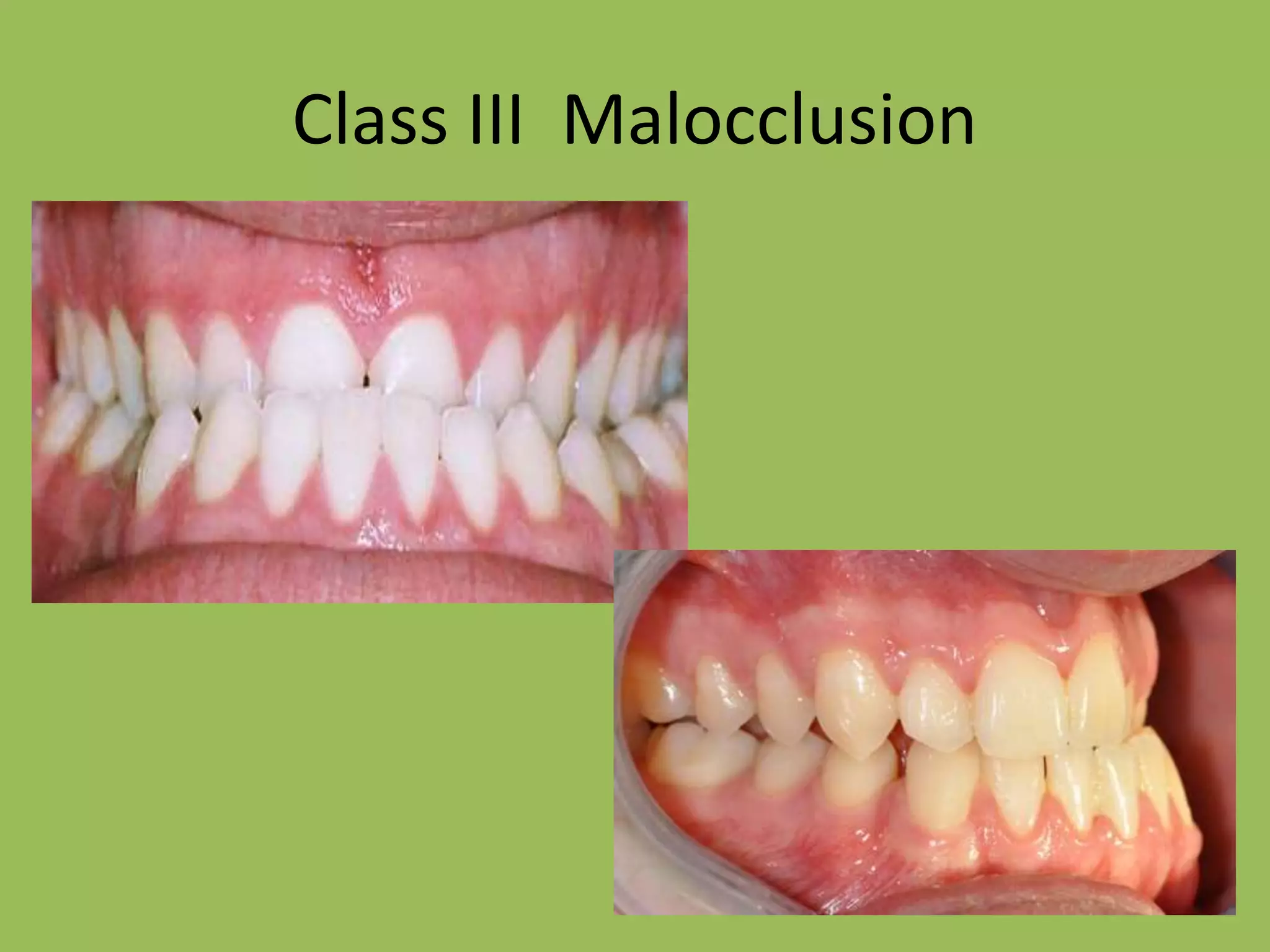
Introduction to Class III malocclusion and its implications.
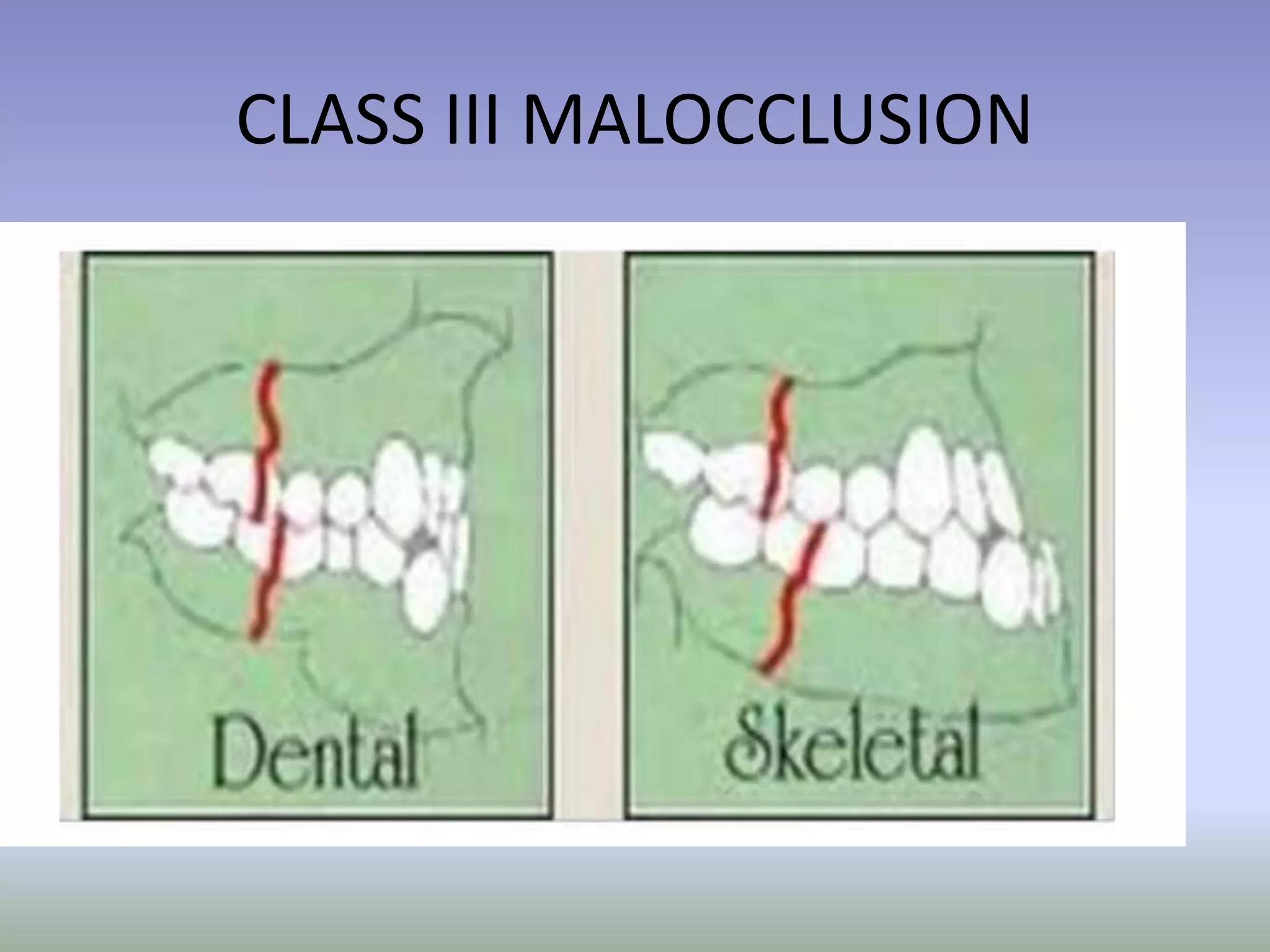
Further examination of Class III malocclusion characteristics.
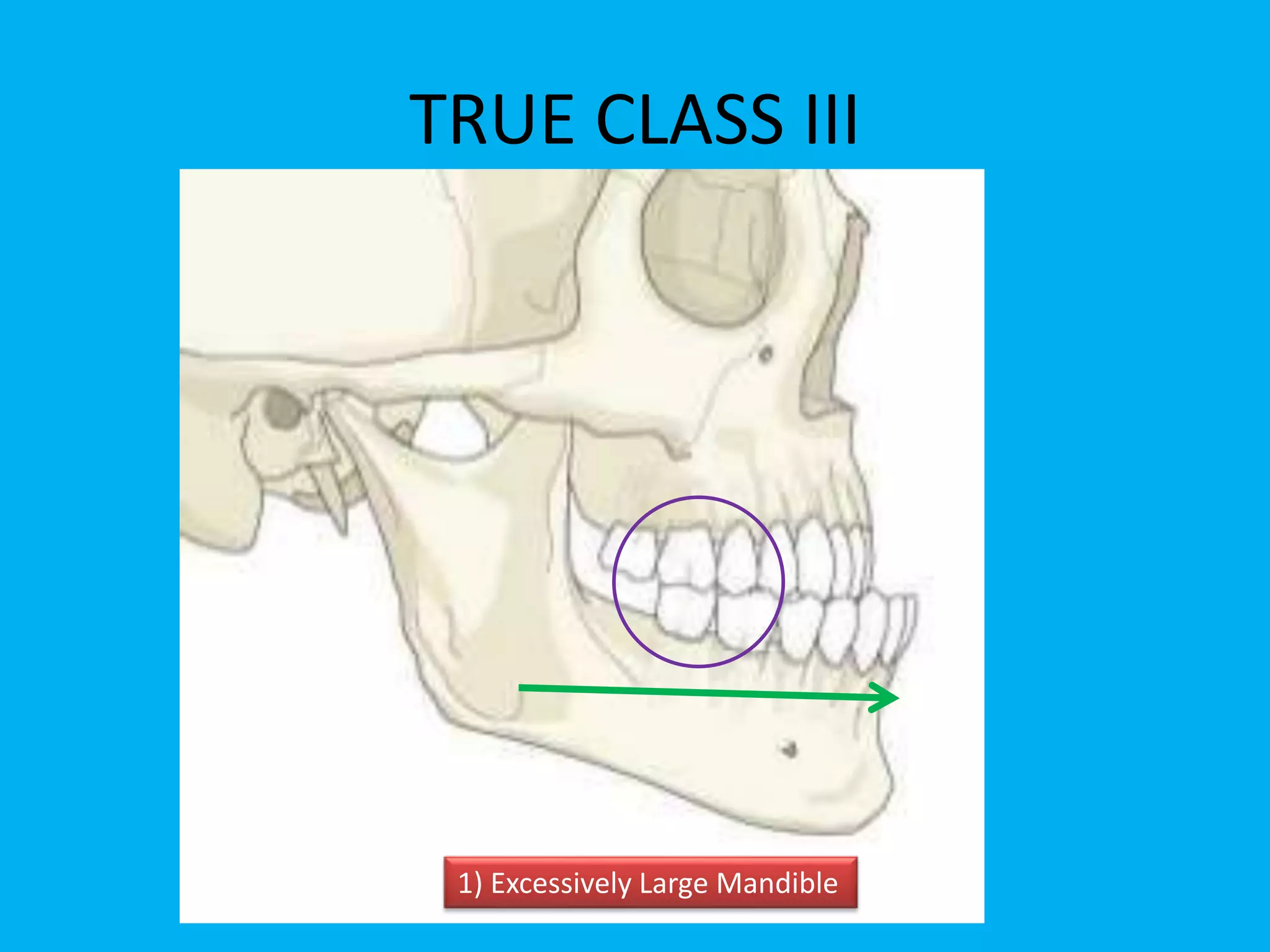
Discusses excessively large mandible as a characteristic of true Class III.
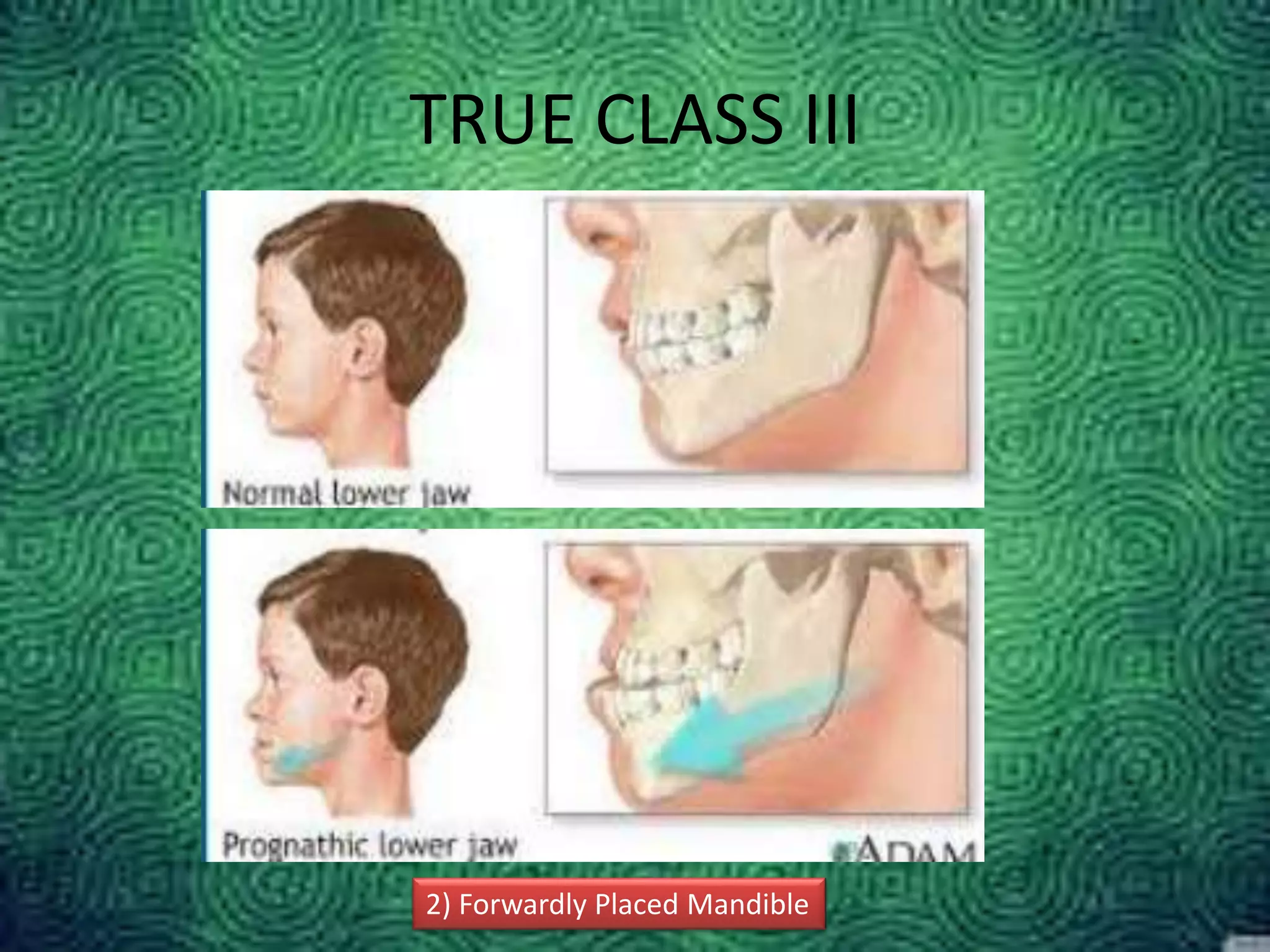
Focus on forwardly placed mandible as another feature of true Class III.
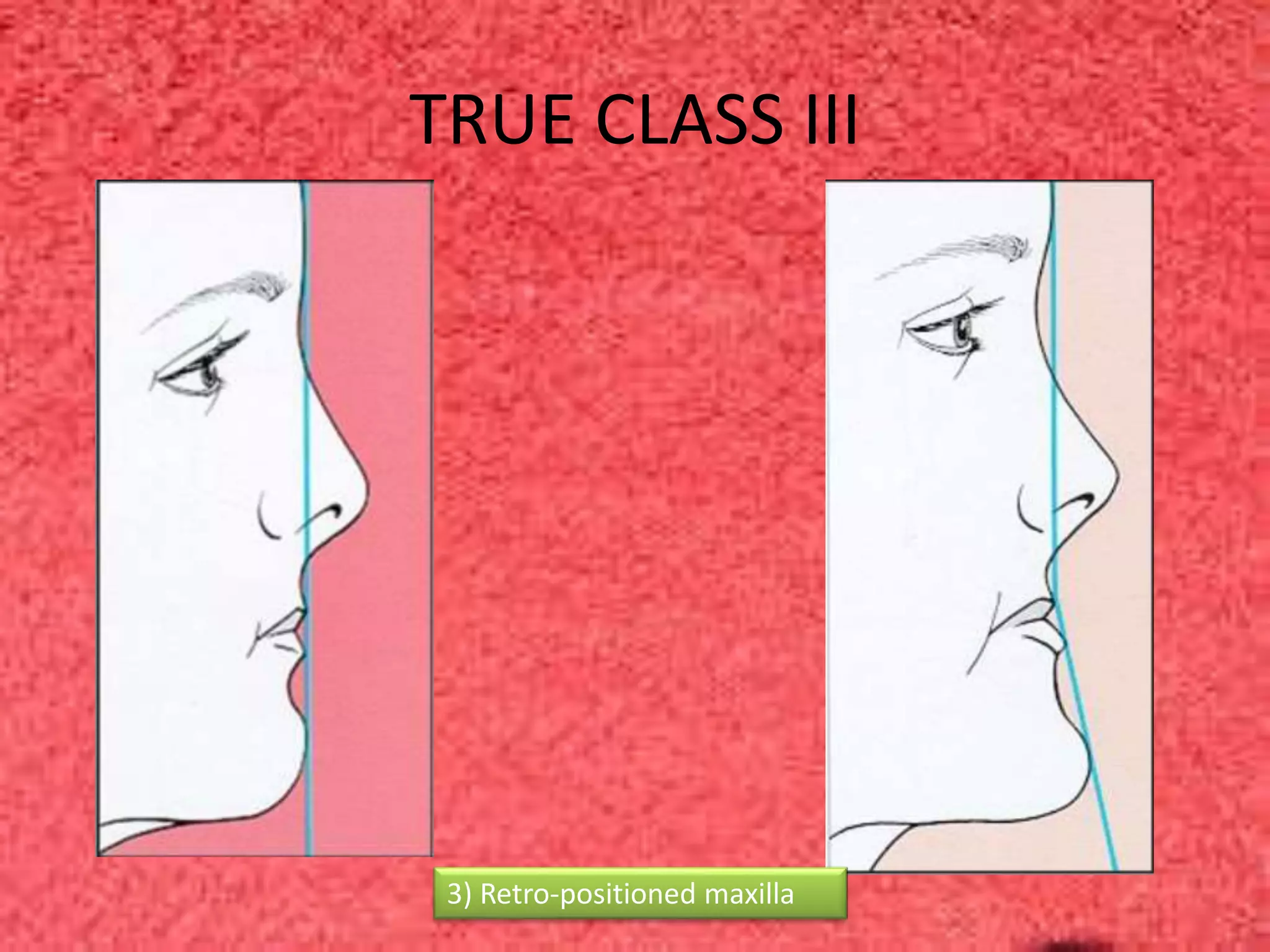
Insight into retro-positioned maxilla in cases of true Class III malocclusion.
Discussion on smaller than normal maxilla as part of true Class III characteristics.
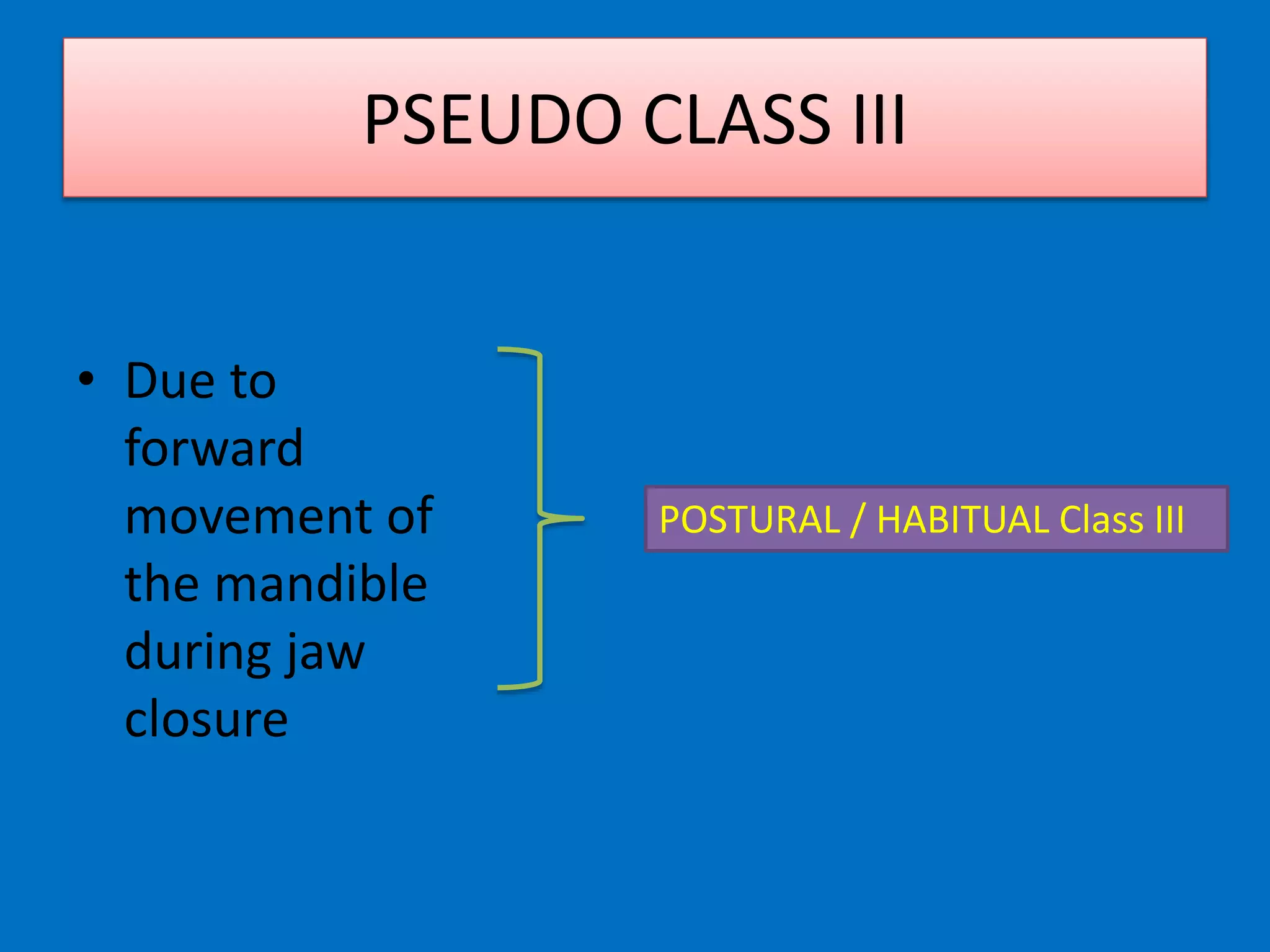
Focus on how Class III malocclusion evolution impacts jaw closure.
Identifies the forward movement of the mandible during jaw closure as a critical aspect.
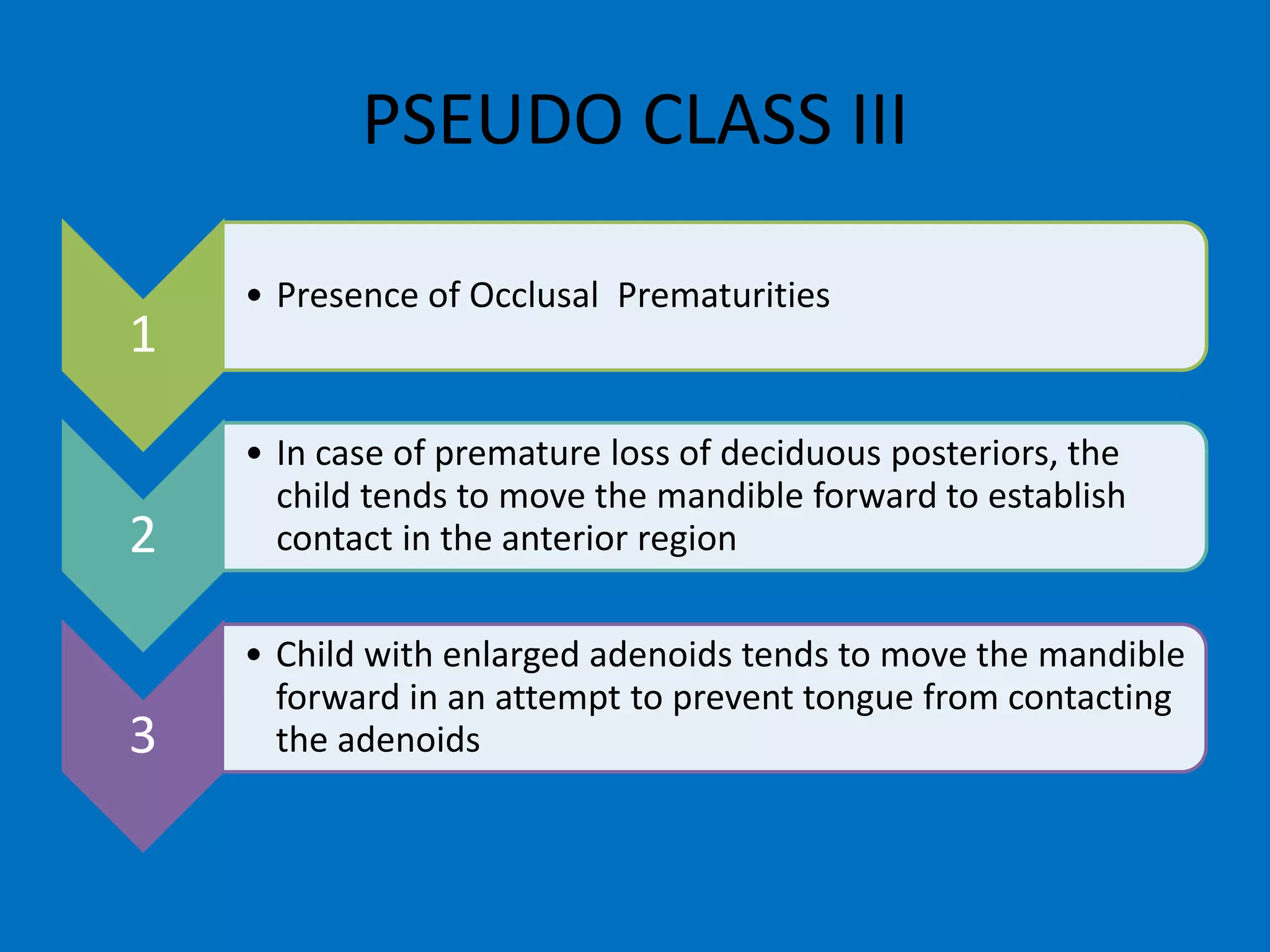
Describes specific causes of Pseudo Class III related to occlusal prematurities and dental loss.
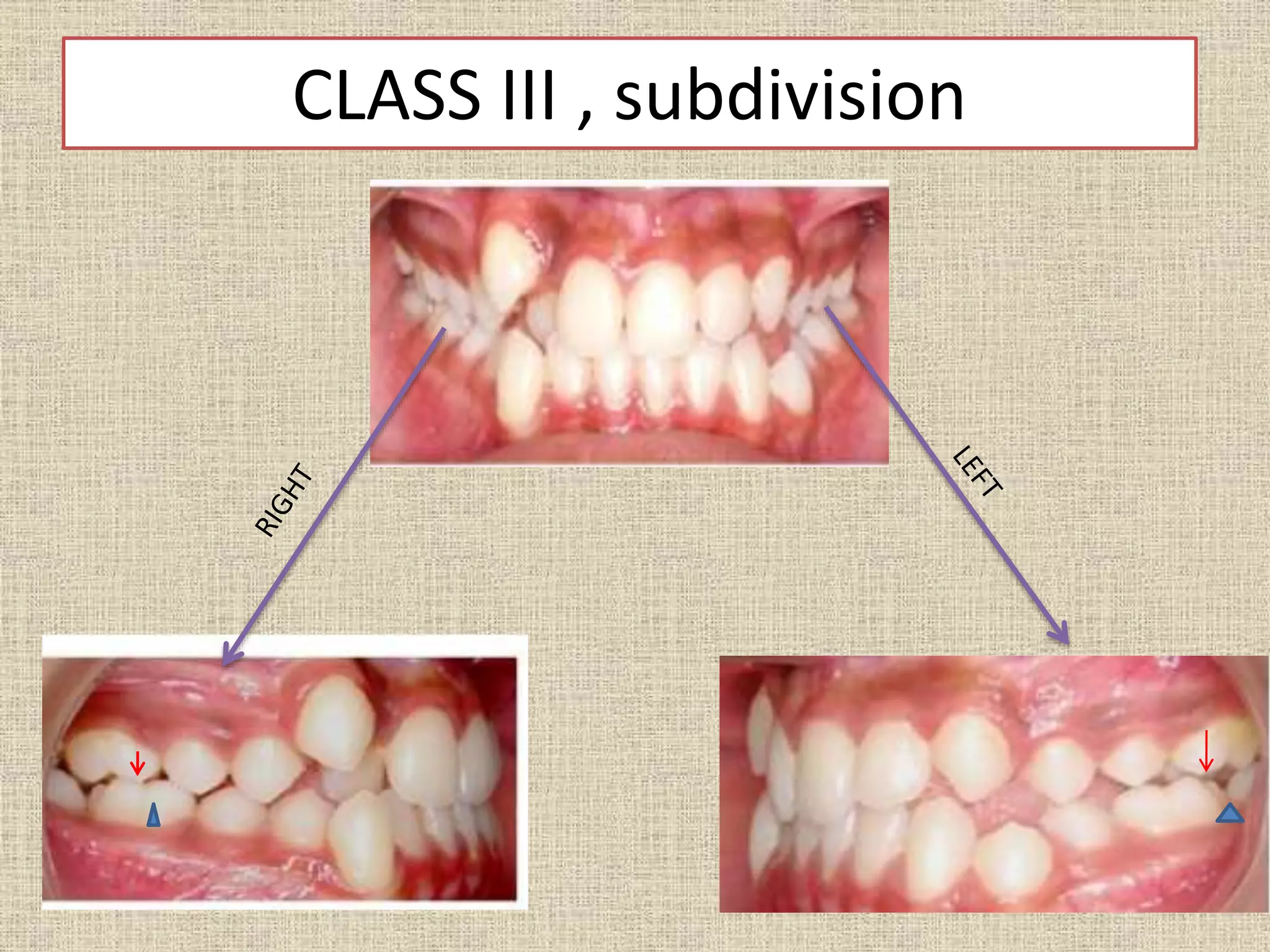
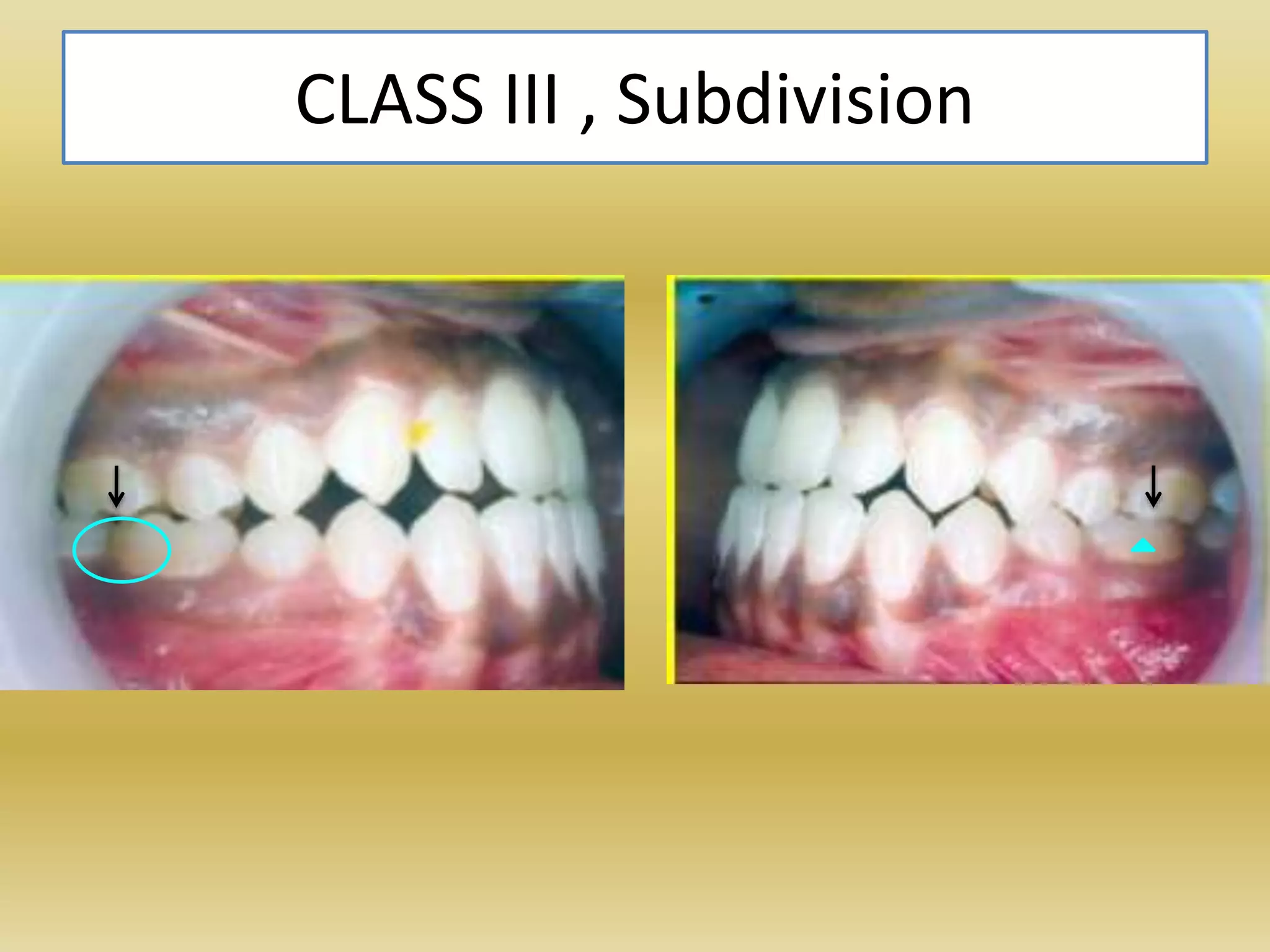
Details about the subdivision characteristics within Class III malocclusion.
Continued exploration of features defining Class III subdivisions.