
Biomedical sensors using optical
fibers

Presented to: Prof. Sharaf El-Din ElNahas
Preaented by: Eng. Sherif Mohamed
Ibrahim
Contents:
1.
2.
3.
4.
5.

6.
7.

2

Why Using Optical Sensor.
Characteristics of FOSS .
Pressure Sensor.
Temperature Sensor.
Blood Flow.
Conclusion.
References.

Introduction

Pressure
Sensor

Temperature
Sensor

Blood Flow

Conclusion

References
Why Using Optical Sensors
 If the electronics must be located far from the

bedside.
 Immunity
to
electromagnetic
interferences
generated from the electronics equipment.
 They can be easily installed in areas which are
difficult to reach.
 Another property is the absence of crosstalk
between close fibers.

3

Introduction
Introduction

Pressure
Sensor

Temperature
Sensor

Blood Flow

Conclusion

References
Why Using Optical Sensors
 They perform as well as or better than electric

instrumentation.
 Fiber-optic sensors is attractive for the measurement
of a wide variety of physical and chemical
parameters.
 Fiber Optic Sensors (FOSS), being relatively easy to
manufacture and therefore inexpensive

4

Introduction

Pressure
Sensor

Temperature
Sensor

Blood Flow

Conclusion

References
Characteristics of FOSS
• Flexibility.

• Lightness.
• Suitable material, glass or plastic.
• Non-toxic and can be used for continuous

measurements.
• Safety for the patient, ensured by optical fiber
dielectricity and by the low light power used for
sensing purposes.
• low-cost installation and maintenance.

5

Introduction

Pressure
Sensor

Temperature
Sensor

Blood Flow

Conclusion

References
Pressure Sensor

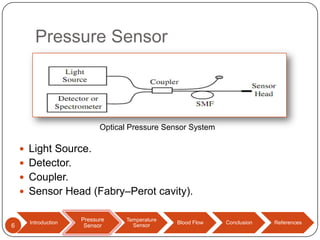
Optical Pressure Sensor System

 Light Source.
 Detector.
 Coupler.

 Sensor Head (Fabry–Perot cavity).

6

Introduction

Pressure
Pressure
Sensor
Sensor

Temperature
Sensor

Blood Flow

Conclusion

References
Pressure Sensor

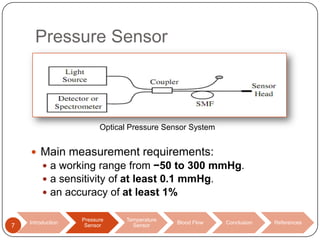
Optical Pressure Sensor System

 Main measurement requirements:
 a working range from −50 to 300 mmHg.
 a sensitivity of at least 0.1 mmHg.
 an accuracy of at least 1%

7

Introduction

Pressure
Sensor

Temperature
Sensor

Blood Flow

Conclusion

References
Pressure Sensor
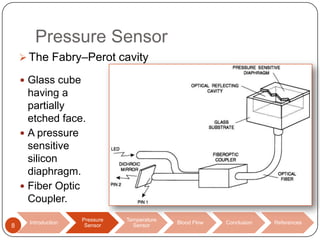
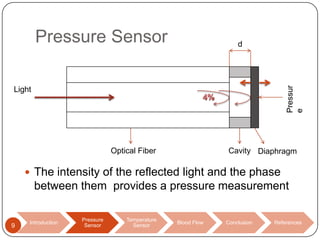
 The Fabry–Perot cavity
 Glass cube

having a
partially
etched face.
 A pressure
sensitive
silicon
diaphragm.
 Fiber Optic
Coupler.
8

Introduction

Pressure
Sensor

Temperature
Sensor

Blood Flow

Conclusion

References
Pressure Sensor

Pressur
e

d

Light

Optical Fiber

Cavity Diaphragm

 The intensity of the reflected light and the phase

between them provides a pressure measurement

9

Introduction

Pressure
Sensor

Temperature
Sensor

Blood Flow

Conclusion

References
Pressure Sensor
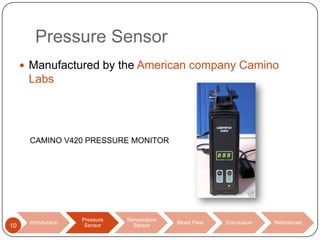
 Manufactured by the American company Camino

Labs

CAMINO V420 PRESSURE MONITOR

10

Introduction

Pressure
Sensor

Temperature
Sensor

Blood Flow

Conclusion

References
Temperature Sensor
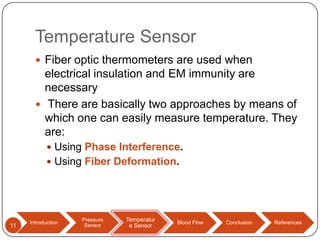
 Fiber optic thermometers are used when

electrical insulation and EM immunity are
necessary
 There are basically two approaches by means of
which one can easily measure temperature. They
are:
 Using Phase Interference.
 Using Fiber Deformation.

11

Introduction

Pressure
Sensor

Temperatur
Temperature
e Sensor
Sensor

Blood Flow

Conclusion

References
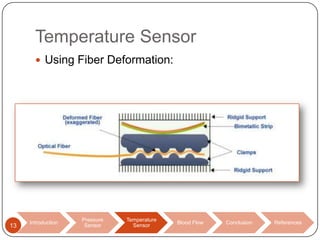
Temperature Sensor
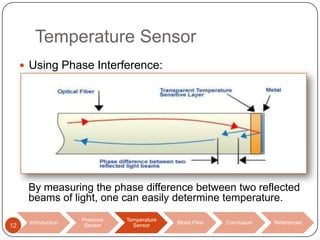
 Using Phase Interference:

By measuring the phase difference between two reflected
beams of light, one can easily determine temperature.
12

Introduction

Pressure
Sensor

Temperature
Sensor

Blood Flow

Conclusion

References
Temperature Sensor
 Using Fiber Deformation:

13

Introduction

Pressure
Sensor

Temperature
Sensor

Blood Flow

Conclusion

References
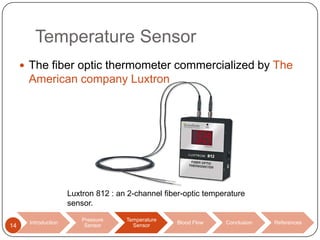
Temperature Sensor
 The fiber optic thermometer commercialized by The

American company Luxtron

Luxtron 812 : an 2-channel fiber-optic temperature
sensor.
14

Introduction

Pressure
Sensor

Temperature
Sensor

Blood Flow

Conclusion

References
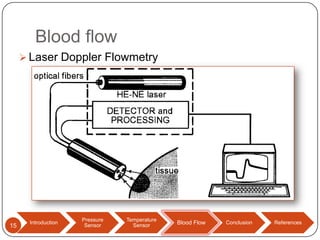
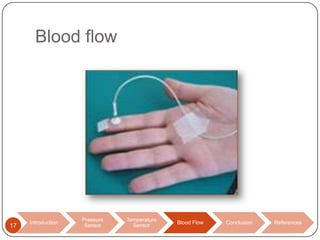
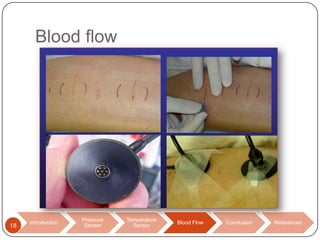
Blood flow
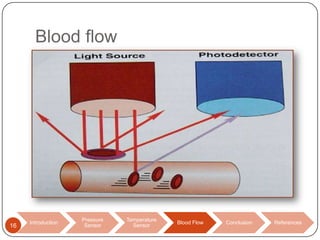
 Laser Doppler Flowmetry

15

Introduction

Pressure
Sensor

Temperature
Sensor

Blood Flow
Blood Flow

Conclusion

References
Blood flow

16

Introduction

Pressure
Sensor

Temperature
Sensor

Blood Flow

Conclusion

References
Blood flow

17

Introduction

Pressure
Sensor

Temperature
Sensor

Blood Flow

Conclusion

References
Blood flow

18

Introduction

Pressure
Sensor

Temperature
Sensor

Blood Flow

Conclusion

References
Blood flow
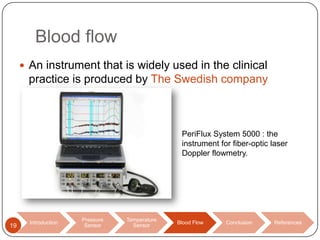
 An instrument that is widely used in the clinical

practice is produced by The Swedish company
Perimed.

PeriFlux System 5000 : the
instrument for fiber-optic laser
Doppler flowmetry.

19

Introduction

Pressure
Sensor

Temperature
Sensor

Blood Flow

Conclusion

References
Conclusion
 Fiber-optic sensors is attractive for the






20

measurement of a wide variety of physical and
chemical parameters.
low-cost installation and maintenance.
In more cases better than electric
instrumentation.
Lower cost.
Can be easily managed by both doctors and
patients.

Introduction

Pressure
Sensor

Temperature
Sensor

Blood Flow

Conclusion
Conclusion

References
References
 Papers
1.

2.

3.

4.

21

Introduction

Anna Grazia Mignaniy and Francesco Baldini
1995, Biomedical sensors using optical fibres, Istituto di
Ricerca sulle Onde Elettromagnetiche ‘Nello Carrara’ 64, I50127, Italy.
M.Życzkowski, B.Uziębło-Życzkowska, L.Dziuda
K.Różanowski 2007, BIO-MEDICAL SENSIG USING FIBER
OPTIC SENSORS, Military University of
Technology, Institute of Optoelectronics, Kaliskiego Str.
2, 00-908 Warsaw, Poland.
Qingxu YU and Xinlei ZHOU 2011, Pressure Sensor Based
on the Fiber-Optic Extrinsic Fabry-Perot
Interferometer, School of Physics and Optoelectronic
Technology, Dalian University of
Technology, Dalian, 116023, P.R. China.
Lee C.L. Chin, William M.Whelan, and I. Alex Vitkin
2011, Optical Fiber Sensors for Biomedical
Applications, Optical-Thermal Response of Laser-Irradiated
Tissue, 2nd ed., Temperature
DOI 10.1007/978-90-481-8831Pressure
Blood Flow
Conclusion
References
References
Sensor
4_17,Sensor
Physics Department, Odette Cancer
Centre, Toronto, ON, Canada
References
 Review Article
1.

Dakshita Joy Vaghela, Ashish Amit Sinha 2011, Pulse
oximetry and laser Doppler flowmetry for diagnosis of
pulpal vitality, Departments of Conservative Dentistry
and Endodontics and Pedodontics, Kothiwal Dental
College Research Centre and Hospital, Moradabad,
India

 Websites

Blood Flow Meters - Young Do Medical Instruments
Co.,Ltd, retrieved 2007.
2. Producer fiber optical thermometers - Optocon AG.
retrieved 10 April 2012.
3. Fiber Optic Thermometers – AutomationWiki. retrieved
Pressure
Temperature
Introduction 26 February 2013.
Blood Flow
Conclusion
References
Sensor
Sensor
1.

22
Thank You

23

Biomedical Optical Sensor

  • 1.
    Biomedical sensors usingoptical fibers Presented to: Prof. Sharaf El-Din ElNahas Preaented by: Eng. Sherif Mohamed Ibrahim
  • 2.
    Contents: 1. 2. 3. 4. 5. 6. 7. 2 Why Using OpticalSensor. Characteristics of FOSS . Pressure Sensor. Temperature Sensor. Blood Flow. Conclusion. References. Introduction Pressure Sensor Temperature Sensor Blood Flow Conclusion References
  • 3.
    Why Using OpticalSensors  If the electronics must be located far from the bedside.  Immunity to electromagnetic interferences generated from the electronics equipment.  They can be easily installed in areas which are difficult to reach.  Another property is the absence of crosstalk between close fibers. 3 Introduction Introduction Pressure Sensor Temperature Sensor Blood Flow Conclusion References
  • 4.
    Why Using OpticalSensors  They perform as well as or better than electric instrumentation.  Fiber-optic sensors is attractive for the measurement of a wide variety of physical and chemical parameters.  Fiber Optic Sensors (FOSS), being relatively easy to manufacture and therefore inexpensive 4 Introduction Pressure Sensor Temperature Sensor Blood Flow Conclusion References
  • 5.
    Characteristics of FOSS •Flexibility. • Lightness. • Suitable material, glass or plastic. • Non-toxic and can be used for continuous measurements. • Safety for the patient, ensured by optical fiber dielectricity and by the low light power used for sensing purposes. • low-cost installation and maintenance. 5 Introduction Pressure Sensor Temperature Sensor Blood Flow Conclusion References
  • 6.
    Pressure Sensor Optical PressureSensor System  Light Source.  Detector.  Coupler.  Sensor Head (Fabry–Perot cavity). 6 Introduction Pressure Pressure Sensor Sensor Temperature Sensor Blood Flow Conclusion References
  • 7.
    Pressure Sensor Optical PressureSensor System  Main measurement requirements:  a working range from −50 to 300 mmHg.  a sensitivity of at least 0.1 mmHg.  an accuracy of at least 1% 7 Introduction Pressure Sensor Temperature Sensor Blood Flow Conclusion References
  • 8.
    Pressure Sensor  TheFabry–Perot cavity  Glass cube having a partially etched face.  A pressure sensitive silicon diaphragm.  Fiber Optic Coupler. 8 Introduction Pressure Sensor Temperature Sensor Blood Flow Conclusion References
  • 9.
    Pressure Sensor Pressur e d Light Optical Fiber CavityDiaphragm  The intensity of the reflected light and the phase between them provides a pressure measurement 9 Introduction Pressure Sensor Temperature Sensor Blood Flow Conclusion References
  • 10.
    Pressure Sensor  Manufacturedby the American company Camino Labs CAMINO V420 PRESSURE MONITOR 10 Introduction Pressure Sensor Temperature Sensor Blood Flow Conclusion References
  • 11.
    Temperature Sensor  Fiberoptic thermometers are used when electrical insulation and EM immunity are necessary  There are basically two approaches by means of which one can easily measure temperature. They are:  Using Phase Interference.  Using Fiber Deformation. 11 Introduction Pressure Sensor Temperatur Temperature e Sensor Sensor Blood Flow Conclusion References
  • 12.
    Temperature Sensor  UsingPhase Interference: By measuring the phase difference between two reflected beams of light, one can easily determine temperature. 12 Introduction Pressure Sensor Temperature Sensor Blood Flow Conclusion References
  • 13.
    Temperature Sensor  UsingFiber Deformation: 13 Introduction Pressure Sensor Temperature Sensor Blood Flow Conclusion References
  • 14.
    Temperature Sensor  Thefiber optic thermometer commercialized by The American company Luxtron Luxtron 812 : an 2-channel fiber-optic temperature sensor. 14 Introduction Pressure Sensor Temperature Sensor Blood Flow Conclusion References
  • 15.
    Blood flow  LaserDoppler Flowmetry 15 Introduction Pressure Sensor Temperature Sensor Blood Flow Blood Flow Conclusion References
  • 16.
  • 17.
  • 18.
  • 19.
    Blood flow  Aninstrument that is widely used in the clinical practice is produced by The Swedish company Perimed. PeriFlux System 5000 : the instrument for fiber-optic laser Doppler flowmetry. 19 Introduction Pressure Sensor Temperature Sensor Blood Flow Conclusion References
  • 20.
    Conclusion  Fiber-optic sensorsis attractive for the     20 measurement of a wide variety of physical and chemical parameters. low-cost installation and maintenance. In more cases better than electric instrumentation. Lower cost. Can be easily managed by both doctors and patients. Introduction Pressure Sensor Temperature Sensor Blood Flow Conclusion Conclusion References
  • 21.
    References  Papers 1. 2. 3. 4. 21 Introduction Anna GraziaMignaniy and Francesco Baldini 1995, Biomedical sensors using optical fibres, Istituto di Ricerca sulle Onde Elettromagnetiche ‘Nello Carrara’ 64, I50127, Italy. M.Życzkowski, B.Uziębło-Życzkowska, L.Dziuda K.Różanowski 2007, BIO-MEDICAL SENSIG USING FIBER OPTIC SENSORS, Military University of Technology, Institute of Optoelectronics, Kaliskiego Str. 2, 00-908 Warsaw, Poland. Qingxu YU and Xinlei ZHOU 2011, Pressure Sensor Based on the Fiber-Optic Extrinsic Fabry-Perot Interferometer, School of Physics and Optoelectronic Technology, Dalian University of Technology, Dalian, 116023, P.R. China. Lee C.L. Chin, William M.Whelan, and I. Alex Vitkin 2011, Optical Fiber Sensors for Biomedical Applications, Optical-Thermal Response of Laser-Irradiated Tissue, 2nd ed., Temperature DOI 10.1007/978-90-481-8831Pressure Blood Flow Conclusion References References Sensor 4_17,Sensor Physics Department, Odette Cancer Centre, Toronto, ON, Canada
  • 22.
    References  Review Article 1. DakshitaJoy Vaghela, Ashish Amit Sinha 2011, Pulse oximetry and laser Doppler flowmetry for diagnosis of pulpal vitality, Departments of Conservative Dentistry and Endodontics and Pedodontics, Kothiwal Dental College Research Centre and Hospital, Moradabad, India  Websites Blood Flow Meters - Young Do Medical Instruments Co.,Ltd, retrieved 2007. 2. Producer fiber optical thermometers - Optocon AG. retrieved 10 April 2012. 3. Fiber Optic Thermometers – AutomationWiki. retrieved Pressure Temperature Introduction 26 February 2013. Blood Flow Conclusion References Sensor Sensor 1. 22
  • 23.