An Leabharlann UCD
Julia Barrett julia.barrett@ucd.ie
UCD James Joyce Library
The Establishment and
Development of UCD
Library’s Research
Services Unit: Successes
and Challenges
Julia Barrett,
Head of Research Services,
UCD Library
Before 2012
• Adhoc situation
• Fledgling services
based in various
library units
– Mapping (OSi Agent)
– Institutional
Repository
– Bibliometrics
– Digital Library
(externally funded
project)
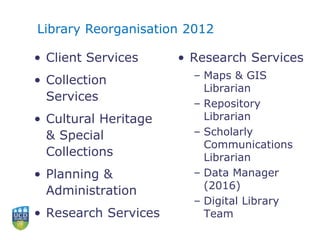
• Client Services
• Collection
Services
• Cultural Heritage
& Special
Collections
• Planning &
Administration
• Research Services
• Research Services
– Maps & GIS
Librarian
– Repository
Librarian
– Scholarly
Communications
Librarian
– Data Manager
(2016)
– Digital Library
Team
Library Reorganisation 2012
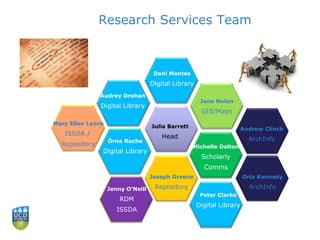
Research Services Team
Michelle Dalton
Scholarly
Comms
Jane Nolan
GIS/Maps
Julia Barrett
Head
Joseph Greene
Repository
Órna Roche
Digital Library
Dani Montes
Digital Library
Audrey Drohan
Digital Library
Mary Ellen Lyons
ISSDA /
Repository
Andrew Clinch
ArchInfo
Orla Kennedy
ArchInfoJenny O’Neill
RDM
ISSDA
Peter Clarke
Digital Library
What Services?
• What are the drivers & trends?
• What is the demand / need?
Why?
• How do we find out?
• Who else is doing this (or bits
of this) on campus? Who else
do we need both within the
library and outside of the
library to help provide a
complete service?
• Where are the gaps?
• What partnership model?
UCD Strategic Objectives
• The Research Services Unit is responsible for
developing and delivering specialist and
innovative services to researchers in UCD
• These support UCD’s overall strategic objectives,
particularly:
– Objective 1: “Increase the quality, quantity and
impact of our research, scholarship and innovation”
Funders’ Requirements
• Science today is in transition – from a relatively
closed, disciplinary and profession-based system,
toward an open and interdisciplinary structure where
knowledge creation is more directly accessible to
stakeholders across society
• The European Commission sees the shift to an open
science system as a source of competitive advantage
for Europe
• Open Access (publications and data) requirements
Demand / Need : Surveys
• Geographic Information Systems (GIS), 2012
– Location of spatial data in UCD
– Types of data held
– Levels of access (who and on what basis)
– Issues
• Obtaining, storing etc.
– Future directions of GIS service development in UCD
• GIS Group (cross-campus)
– Researchers, Schools, ITS etc.
• Key findings
– Increased levels of support & training
– Access to data & software
– Central repository / server
Research Data
Services 2016
– Survey and
Focus Group
Demand / Need: Confusion & Frustration
• How does EC define a Repository?
– Publisher’s website?
– Project website?
– ResearchGate?
• Can I link our project website to the IR?
• Gold v. Green
• Conceptual understanding of storage / access /
preservation / open science
• How to handle multi-institutions and OA
requirements?
Successes
• Staffing
– Roles
• Facilitates develop of skills expertise in rapidly
changing world
– Skills
• Own staff
• PhD students
• External “Digital Humanities” consultant
– Cannot always be developed through re-skilling
– May not necessarily require a library qualification
– Expertise
• Specialists
• Services
• Partnerships
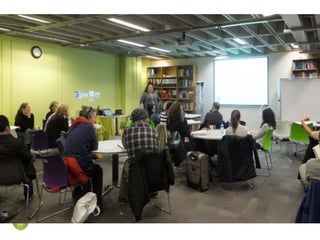
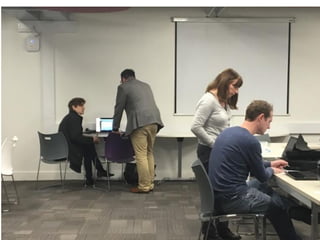
Workshops
• GIS
• Data visualisation
• RDM
• Patents/IP
• Social media
• Bibliometrics
• Publishing strategies
• Increase the Impact of Your
Research Through an Effective
Publishing Strategy
• Google Tools for Discovery,
Analysis and Presentation of
Digital Scholarship
• Writing a Data Management
Plan with DMPonline
• Social Media for Researchers:
Information session and
academic panel discussion
• Introduction to ArcGIS :
Visualising Environmental
Data Using ArcGIS and
MapGenie
Workshops
• GIS
• Data visualisation
• RDM
• Patents/IP
• Social media
• Bibliometrics
• Publishing strategies
• Increase the Impact of Your
Research Through an Effective
Publishing Strategy
• Google Tools for Discovery,
Analysis and Presentation of
Digital Scholarship
• Writing a Data Management
Plan with DMPonline
• Social Media for Researchers:
Information session and
academic panel discussion
• Introduction to ArcGIS :
Visualising Environmental
Data Using ArcGIS and
MapGenie
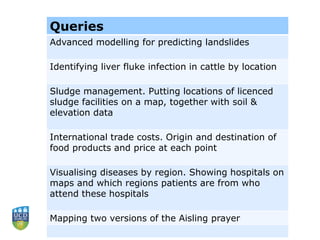
Queries
Advanced modelling for predicting landslides
Identifying liver fluke infection in cattle by location
Sludge management. Putting locations of licenced
sludge facilities on a map, together with soil &
elevation data
International trade costs. Origin and destination of
food products and price at each point
Visualising diseases by region. Showing hospitals on
maps and which regions patients are from who
attend these hospitals
Mapping two versions of the Aisling prayer
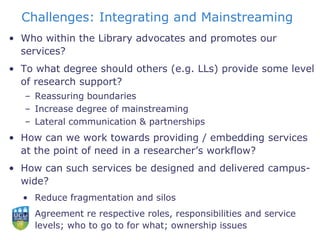
Challenges: Integrating and Mainstreaming
• Who within the Library advocates and promotes our
services?
• To what degree should others (e.g. LLs) provide some level
of research support?
– Reassuring boundaries
– Increase degree of mainstreaming
– Lateral communication & partnerships
• How can we work towards providing / embedding services
at the point of need in a researcher’s workflow?
• How can such services be designed and delivered campus-
wide?
• Reduce fragmentation and silos
• Agreement re respective roles, responsibilities and service
levels; who to go to for what; ownership issues
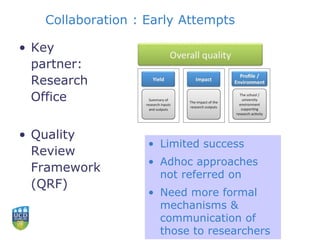
Collaboration : Early Attempts
• Key
partner:
Research
Office
• Quality
Review
Framework
(QRF)
• Limited success
• Adhoc approaches
not referred on
• Need more formal
mechanisms &
communication of
those to researchers
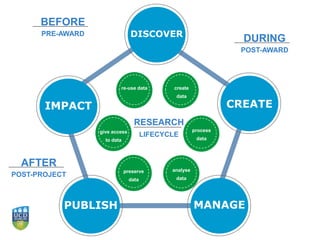
CREATE
DISCOVER
IMPACT
PUBLISH MANAGE
BEFORE
PRE-AWARD
DURING
POST-AWARD
AFTER
POST-PROJECT
analyse
data
RESEARCH
LIFECYCLE
re-use data create
data
give access
to data
process
data
preserve
data
analyse
data
CREATE
DISCOVER
IMPACT
PUBLISH MANAGE
BEFORE
PRE-AWARD
DURING
POST-AWARD
AFTER
POST-PROJECT
analyse
data
RESEARCH
LIFECYCLE
re-use data create
data
give access
to data
process
data
preserve
data
analyse
data
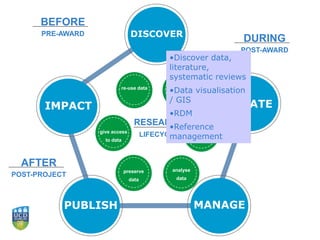
•Discover data,
literature,
systematic reviews
•Data visualisation
/ GIS
•RDM
•Reference
management
CREATE
DISCOVER
IMPACT
PUBLISH MANAGE
BEFORE
PRE-AWARD
DURING
POST-AWARD
AFTER
POST-PROJECT
analyse
data
RESEARCH
LIFECYCLE
re-use data create
data
give access
to data
process
data
preserve
data
analyse
data
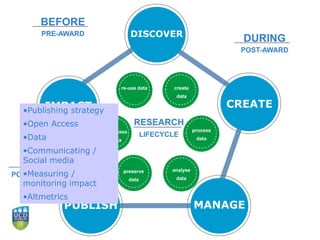
•Publishing strategy
•Open Access
•Data
•Communicating /
Social media
•Measuring /
monitoring impact
•Altmetrics
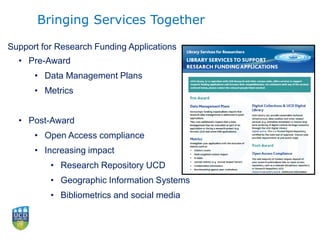
• Pre-Award
• Data Management Plans
• Metrics
• Post-Award
• Open Access compliance
• Increasing impact
• Research Repository UCD
• Geographic Information Systems
• Bibliometrics and social media
Support for Research Funding Applications
Bringing Services Together
Bringing Partners Together
• Extend drop-in clinics
e.g. RDM
– Include partners e.g.
Research Ethics and
Research IT
• Seminars / information
sessions
– Include research
“champions”
– Include research
managers / administrators
Challenges: Relevance and Impact
• Relevance
– “I honestly did not know about open access until this
survey.”
• Impact
– Use all measures – quantitative and qualitative
– Surveys, emails, twitter analysis
• How have you used the data and information that you
have obtained from ISSDA?
• How has attendance at the clinics / workshops been of
value to you?
• How did using GIS benefit or add value to your research?
• Case studies
Demonstrate Value and Impact
“As a literary scholar working with ecologists to promote
research on the cultural value of our coastlines, the
[Library’s] GIS clinic was invaluable in showing me how to
produce multi-layered maps which visualise the
relationship between culture and ecology. The clinic
provided an accessible step-by-step guide to GIS
mapping, a tool which is very rarely used in my discipline.
The maps I have made as a direct result of the clinic have
already been used in conference presentations and
research funding applications, and have helped to make
my research more accessible to scholars outside my field.”
(Prof. John Brannigan, School of English, Drama & Film)
Political Dimension
• The library as curator of institutional identity:
possible partners are Archives, Office of the
President, Estate Services, Communications/PR
– Official Publications
• President’s Reports, Statutes, Calendar, exam papers etc.
– Student Publications
• St. Stephen’s, Hermes, University Observer, College
Tribune
• Helps to demonstrate Library expertise in creating
accessible, visible and curated digital collections
• Helps to build relationships with powerful non-
academic units
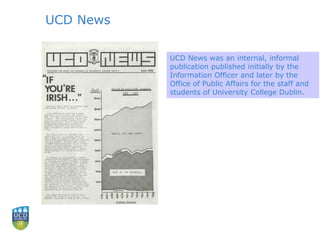
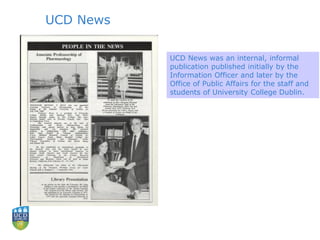
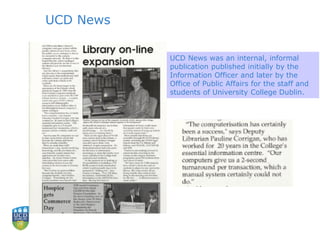
UCD News
UCD News was an internal, informal
publication published initially by the
Information Officer and later by the
Office of Public Affairs for the staff and
students of University College Dublin.
UCD News
UCD News was an internal, informal
publication published initially by the
Information Officer and later by the
Office of Public Affairs for the staff and
students of University College Dublin.
UCD News
UCD News was an internal, informal
publication published initially by the
Information Officer and later by the
Office of Public Affairs for the staff and
students of University College Dublin.
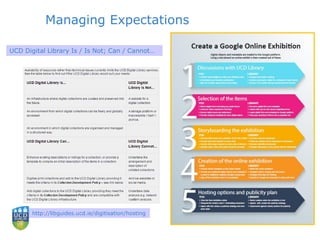
Challenges: Managing Expectations
• What we can and cannot do
• What we expect you to do
• Moving into new areas (e.g. digital tools) where
no dedicated staff
• Combining experimental with sustainable &
scaleable
• Training v. consultations (showing v. doing)
• Understanding & meeting user expectations
• Prioritisation – we can’t do everything
Managing Expectations
http://libguides.ucd.ie/digitisation/hosting
UCD Digital Library Is / Is Not; Can / Cannot…
Final Thoughts
• Link to University’s
strategy, especially the
impact agenda
• Identify drivers, needs &
gaps, especially those that
tie in to University’s
objectives (e.g. H2020)
• Identify any opportunities
that Library can create to
support these
• Reach out to all possible
partners….Library is only
one partner
• Identify the steps that can
be taken at all levels –
bottom up, top down…multi-
level relationships
• Ensure collaboration is
embedded – not just lip
service
• Take time to build & manage
relationships
– Formal, informal
• Articulate value / benefits –
demonstrate how we add
value to the research
process, save the researcher
time by integrating into their
workflow
• Identify & work with
champions; use of pilots;
Picture Credits
• Pixabay
– www.pixabay.com

The Establishment and Development of UCD Library's Research Services Unit: Successes and Challenges

  • 1.
    An Leabharlann UCD JuliaBarrett julia.barrett@ucd.ie UCD James Joyce Library The Establishment and Development of UCD Library’s Research Services Unit: Successes and Challenges Julia Barrett, Head of Research Services, UCD Library
  • 2.
    Before 2012 • Adhocsituation • Fledgling services based in various library units – Mapping (OSi Agent) – Institutional Repository – Bibliometrics – Digital Library (externally funded project)
  • 3.
    • Client Services •Collection Services • Cultural Heritage & Special Collections • Planning & Administration • Research Services • Research Services – Maps & GIS Librarian – Repository Librarian – Scholarly Communications Librarian – Data Manager (2016) – Digital Library Team Library Reorganisation 2012
  • 4.
    Research Services Team MichelleDalton Scholarly Comms Jane Nolan GIS/Maps Julia Barrett Head Joseph Greene Repository Órna Roche Digital Library Dani Montes Digital Library Audrey Drohan Digital Library Mary Ellen Lyons ISSDA / Repository Andrew Clinch ArchInfo Orla Kennedy ArchInfoJenny O’Neill RDM ISSDA Peter Clarke Digital Library
  • 5.
    What Services? • Whatare the drivers & trends? • What is the demand / need? Why? • How do we find out? • Who else is doing this (or bits of this) on campus? Who else do we need both within the library and outside of the library to help provide a complete service? • Where are the gaps? • What partnership model?
  • 6.
    UCD Strategic Objectives •The Research Services Unit is responsible for developing and delivering specialist and innovative services to researchers in UCD • These support UCD’s overall strategic objectives, particularly: – Objective 1: “Increase the quality, quantity and impact of our research, scholarship and innovation”
  • 7.
    Funders’ Requirements • Sciencetoday is in transition – from a relatively closed, disciplinary and profession-based system, toward an open and interdisciplinary structure where knowledge creation is more directly accessible to stakeholders across society • The European Commission sees the shift to an open science system as a source of competitive advantage for Europe • Open Access (publications and data) requirements
  • 8.
    Demand / Need: Surveys • Geographic Information Systems (GIS), 2012 – Location of spatial data in UCD – Types of data held – Levels of access (who and on what basis) – Issues • Obtaining, storing etc. – Future directions of GIS service development in UCD • GIS Group (cross-campus) – Researchers, Schools, ITS etc. • Key findings – Increased levels of support & training – Access to data & software – Central repository / server Research Data Services 2016 – Survey and Focus Group
  • 9.
    Demand / Need:Confusion & Frustration • How does EC define a Repository? – Publisher’s website? – Project website? – ResearchGate? • Can I link our project website to the IR? • Gold v. Green • Conceptual understanding of storage / access / preservation / open science • How to handle multi-institutions and OA requirements?
  • 10.
    Successes • Staffing – Roles •Facilitates develop of skills expertise in rapidly changing world – Skills • Own staff • PhD students • External “Digital Humanities” consultant – Cannot always be developed through re-skilling – May not necessarily require a library qualification – Expertise • Specialists • Services • Partnerships
  • 11.
    Workshops • GIS • Datavisualisation • RDM • Patents/IP • Social media • Bibliometrics • Publishing strategies • Increase the Impact of Your Research Through an Effective Publishing Strategy • Google Tools for Discovery, Analysis and Presentation of Digital Scholarship • Writing a Data Management Plan with DMPonline • Social Media for Researchers: Information session and academic panel discussion • Introduction to ArcGIS : Visualising Environmental Data Using ArcGIS and MapGenie
  • 13.
    Workshops • GIS • Datavisualisation • RDM • Patents/IP • Social media • Bibliometrics • Publishing strategies • Increase the Impact of Your Research Through an Effective Publishing Strategy • Google Tools for Discovery, Analysis and Presentation of Digital Scholarship • Writing a Data Management Plan with DMPonline • Social Media for Researchers: Information session and academic panel discussion • Introduction to ArcGIS : Visualising Environmental Data Using ArcGIS and MapGenie
  • 14.
    Queries Advanced modelling forpredicting landslides Identifying liver fluke infection in cattle by location Sludge management. Putting locations of licenced sludge facilities on a map, together with soil & elevation data International trade costs. Origin and destination of food products and price at each point Visualising diseases by region. Showing hospitals on maps and which regions patients are from who attend these hospitals Mapping two versions of the Aisling prayer
  • 15.
    Challenges: Integrating andMainstreaming • Who within the Library advocates and promotes our services? • To what degree should others (e.g. LLs) provide some level of research support? – Reassuring boundaries – Increase degree of mainstreaming – Lateral communication & partnerships • How can we work towards providing / embedding services at the point of need in a researcher’s workflow? • How can such services be designed and delivered campus- wide? • Reduce fragmentation and silos • Agreement re respective roles, responsibilities and service levels; who to go to for what; ownership issues
  • 16.
    Collaboration : EarlyAttempts • Key partner: Research Office • Quality Review Framework (QRF) • Limited success • Adhoc approaches not referred on • Need more formal mechanisms & communication of those to researchers
  • 17.
  • 18.
    CREATE DISCOVER IMPACT PUBLISH MANAGE BEFORE PRE-AWARD DURING POST-AWARD AFTER POST-PROJECT analyse data RESEARCH LIFECYCLE re-use datacreate data give access to data process data preserve data analyse data •Discover data, literature, systematic reviews •Data visualisation / GIS •RDM •Reference management
  • 19.
    CREATE DISCOVER IMPACT PUBLISH MANAGE BEFORE PRE-AWARD DURING POST-AWARD AFTER POST-PROJECT analyse data RESEARCH LIFECYCLE re-use datacreate data give access to data process data preserve data analyse data •Publishing strategy •Open Access •Data •Communicating / Social media •Measuring / monitoring impact •Altmetrics
  • 20.
    • Pre-Award • DataManagement Plans • Metrics • Post-Award • Open Access compliance • Increasing impact • Research Repository UCD • Geographic Information Systems • Bibliometrics and social media Support for Research Funding Applications Bringing Services Together
  • 21.
    Bringing Partners Together •Extend drop-in clinics e.g. RDM – Include partners e.g. Research Ethics and Research IT • Seminars / information sessions – Include research “champions” – Include research managers / administrators
  • 22.
    Challenges: Relevance andImpact • Relevance – “I honestly did not know about open access until this survey.” • Impact – Use all measures – quantitative and qualitative – Surveys, emails, twitter analysis • How have you used the data and information that you have obtained from ISSDA? • How has attendance at the clinics / workshops been of value to you? • How did using GIS benefit or add value to your research? • Case studies
  • 23.
    Demonstrate Value andImpact “As a literary scholar working with ecologists to promote research on the cultural value of our coastlines, the [Library’s] GIS clinic was invaluable in showing me how to produce multi-layered maps which visualise the relationship between culture and ecology. The clinic provided an accessible step-by-step guide to GIS mapping, a tool which is very rarely used in my discipline. The maps I have made as a direct result of the clinic have already been used in conference presentations and research funding applications, and have helped to make my research more accessible to scholars outside my field.” (Prof. John Brannigan, School of English, Drama & Film)
  • 24.
    Political Dimension • Thelibrary as curator of institutional identity: possible partners are Archives, Office of the President, Estate Services, Communications/PR – Official Publications • President’s Reports, Statutes, Calendar, exam papers etc. – Student Publications • St. Stephen’s, Hermes, University Observer, College Tribune • Helps to demonstrate Library expertise in creating accessible, visible and curated digital collections • Helps to build relationships with powerful non- academic units
  • 25.
    UCD News UCD Newswas an internal, informal publication published initially by the Information Officer and later by the Office of Public Affairs for the staff and students of University College Dublin.
  • 26.
    UCD News UCD Newswas an internal, informal publication published initially by the Information Officer and later by the Office of Public Affairs for the staff and students of University College Dublin.
  • 27.
    UCD News UCD Newswas an internal, informal publication published initially by the Information Officer and later by the Office of Public Affairs for the staff and students of University College Dublin.
  • 28.
    Challenges: Managing Expectations •What we can and cannot do • What we expect you to do • Moving into new areas (e.g. digital tools) where no dedicated staff • Combining experimental with sustainable & scaleable • Training v. consultations (showing v. doing) • Understanding & meeting user expectations • Prioritisation – we can’t do everything
  • 29.
  • 30.
    Final Thoughts • Linkto University’s strategy, especially the impact agenda • Identify drivers, needs & gaps, especially those that tie in to University’s objectives (e.g. H2020) • Identify any opportunities that Library can create to support these • Reach out to all possible partners….Library is only one partner • Identify the steps that can be taken at all levels – bottom up, top down…multi- level relationships • Ensure collaboration is embedded – not just lip service • Take time to build & manage relationships – Formal, informal • Articulate value / benefits – demonstrate how we add value to the research process, save the researcher time by integrating into their workflow • Identify & work with champions; use of pilots;
  • 31.