Absolute Age 
***Copy down anything in 
black 
5R
Absolute Age 
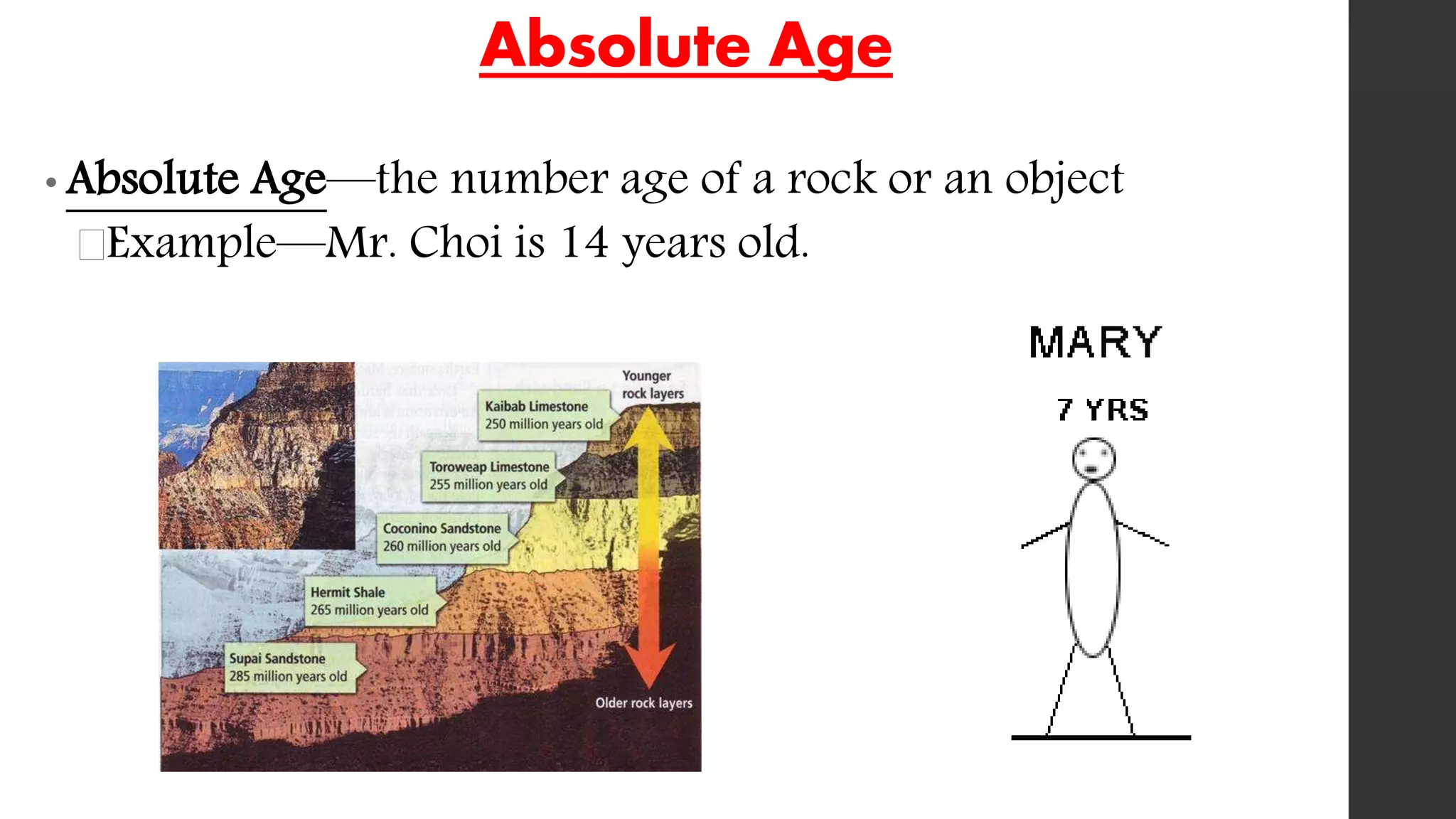
• Absolute Age—the number age of a rock or an object 
Example—Mr. Choi is 14 years old.
Estimating how much time has passed 
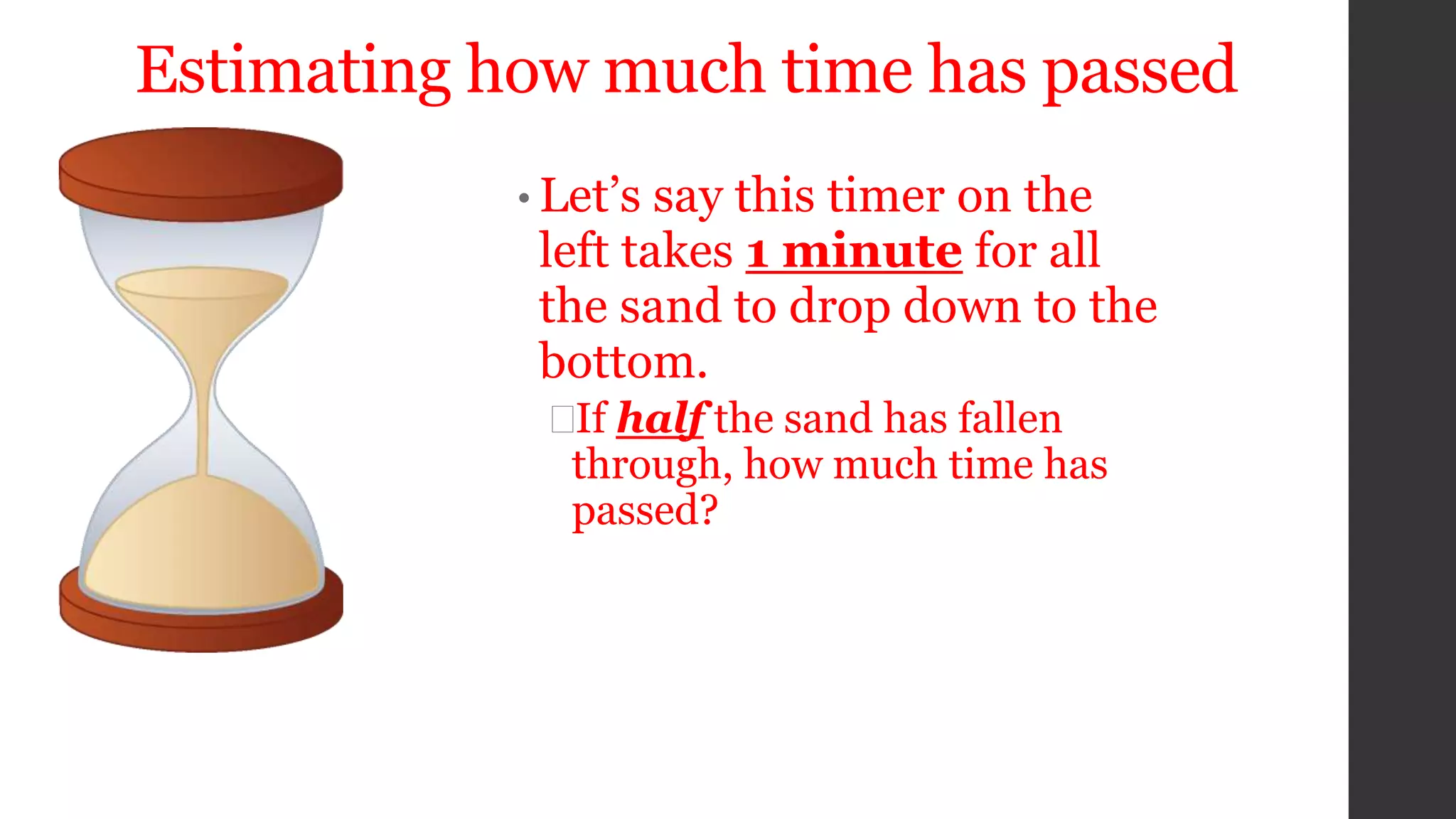
• Let’s say this timer on the 
left takes 1 minute for all 
the sand to drop down to the 
bottom. 
If half the sand has fallen 
through, how much time has 
passed?
Estimating how much time has passed 
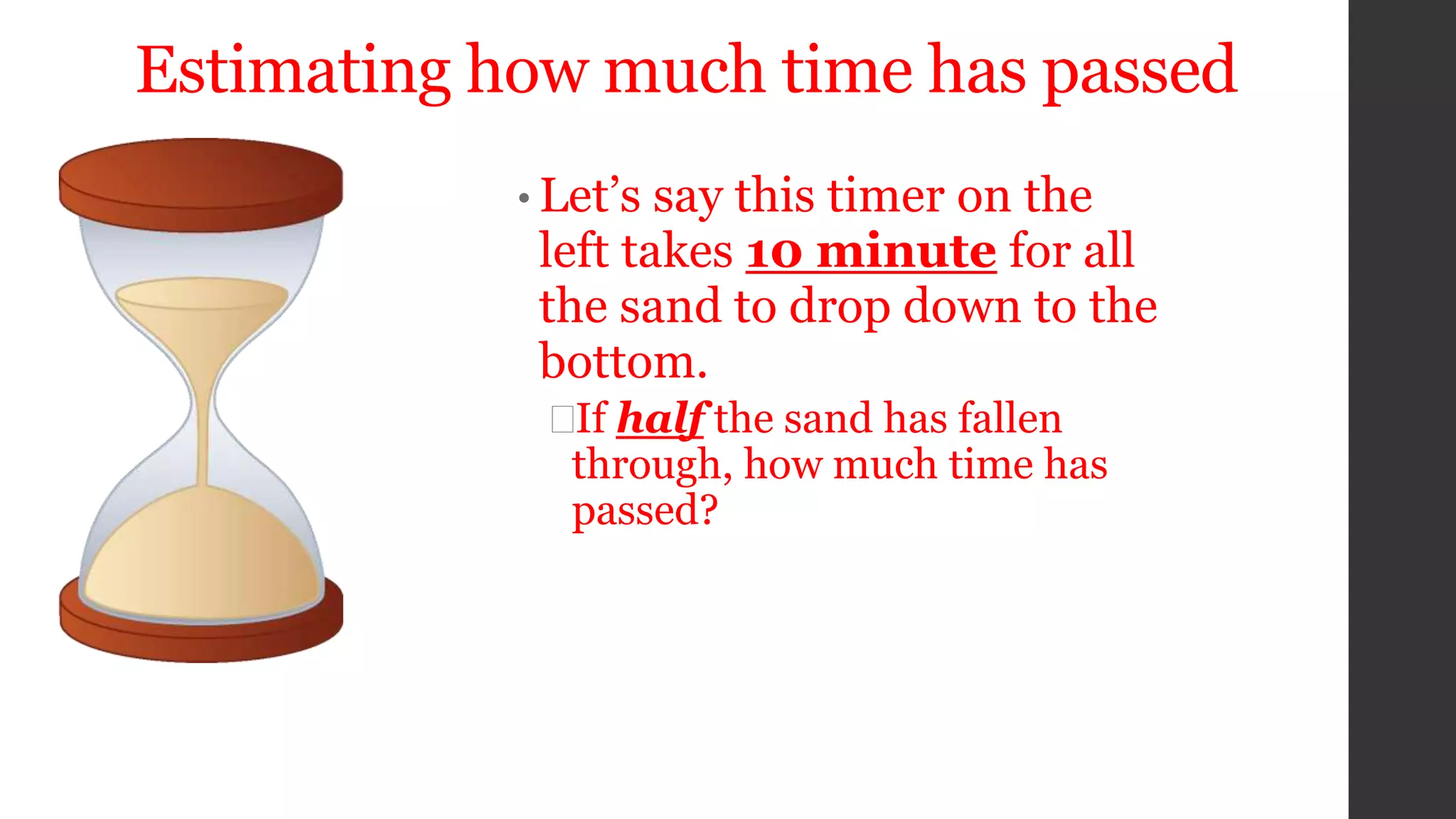
• Let’s say this timer on the 
left takes 10 minute for all 
the sand to drop down to the 
bottom. 
If half the sand has fallen 
through, how much time has 
passed?
Estimating how much time has passed 
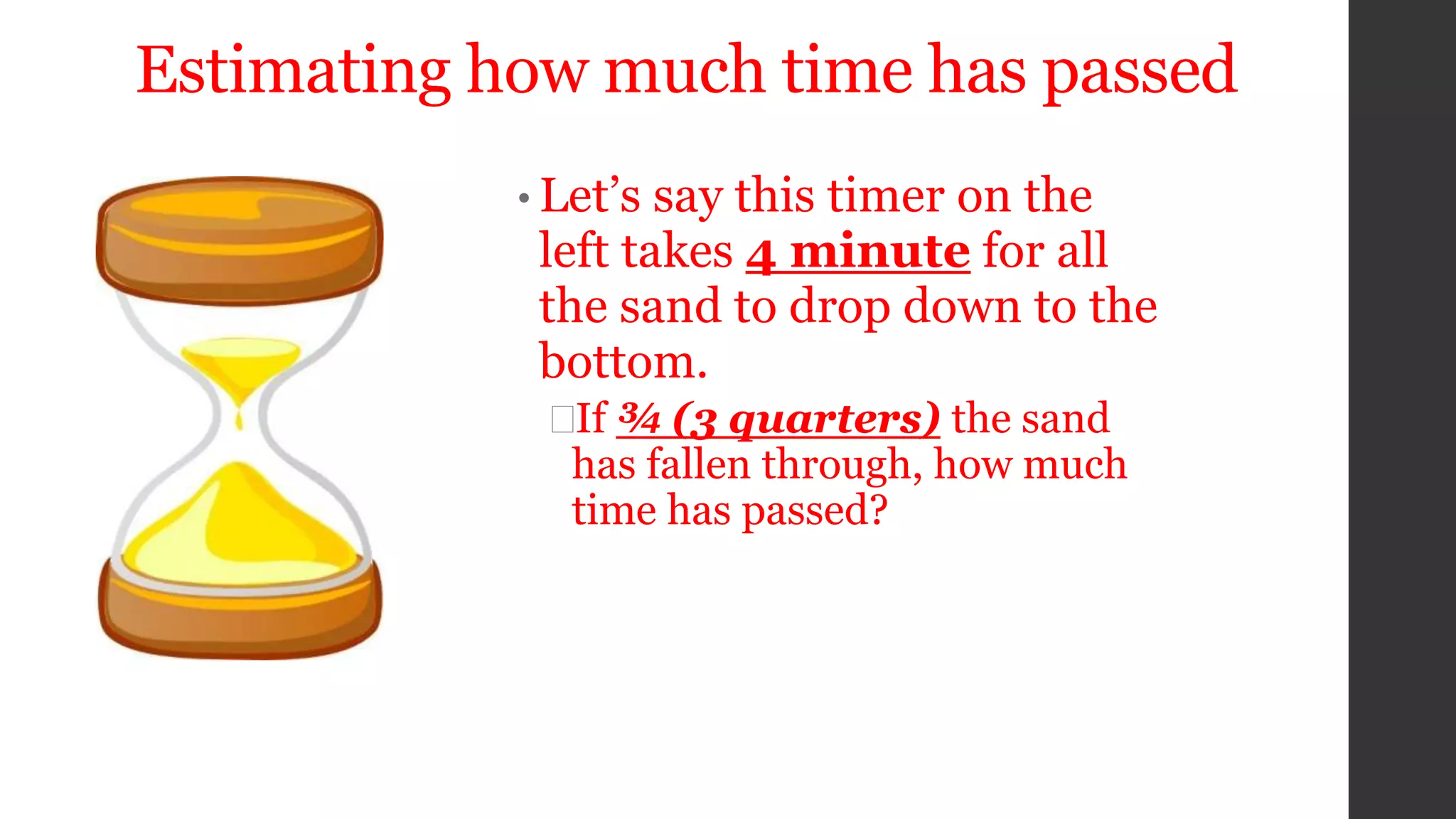
• Let’s say this timer on the 
left takes 4 minute for all 
the sand to drop down to the 
bottom. 
If ¾ (3 quarters) the sand 
has fallen through, how much 
time has passed?
Estimating Earth’s age and other fossils 
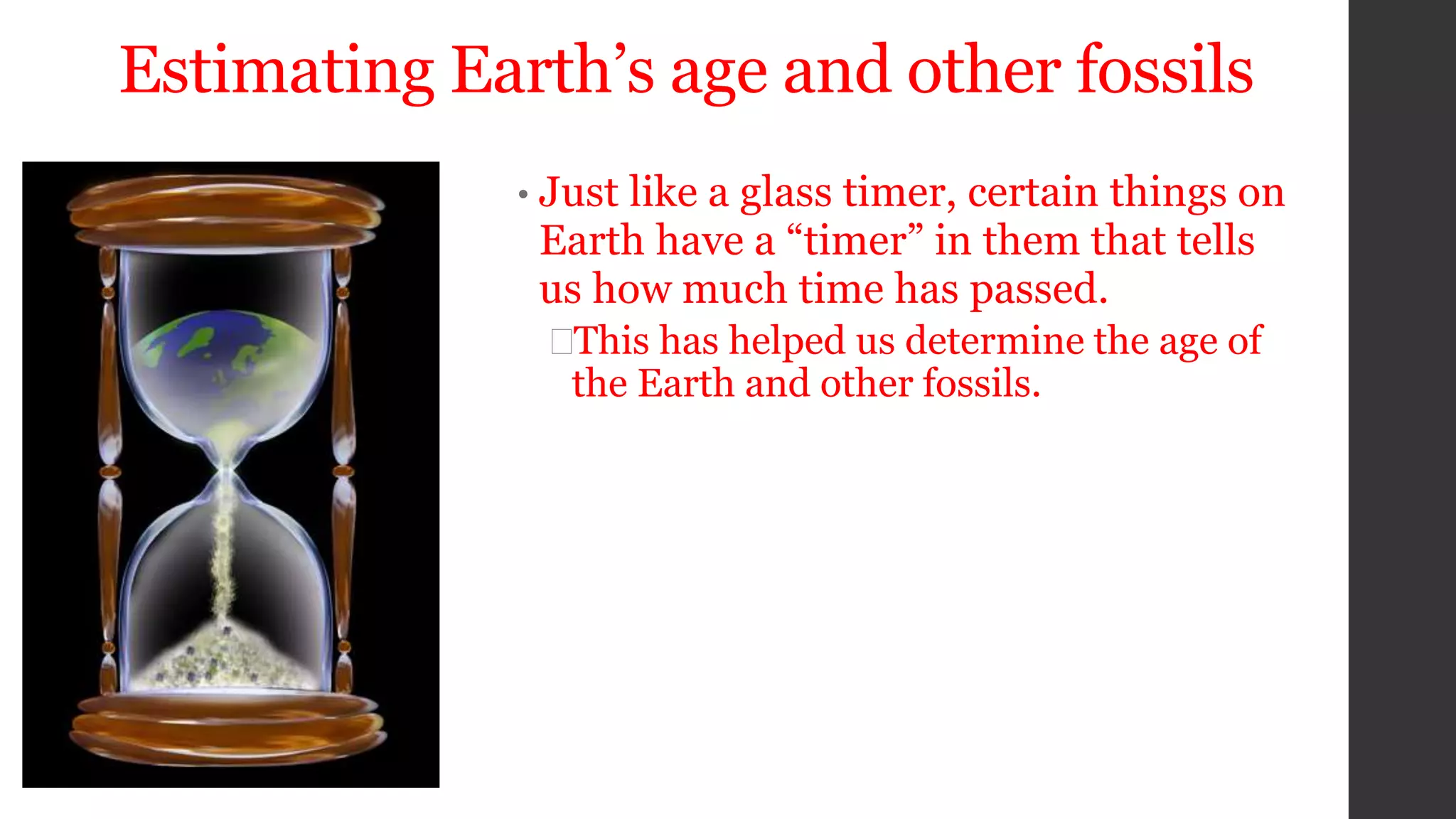
• Just like a glass timer, certain things on 
Earth have a “timer” in them that tells 
us how much time has passed. 
This has helped us determine the age of 
the Earth and other fossils.
Absolute Age 
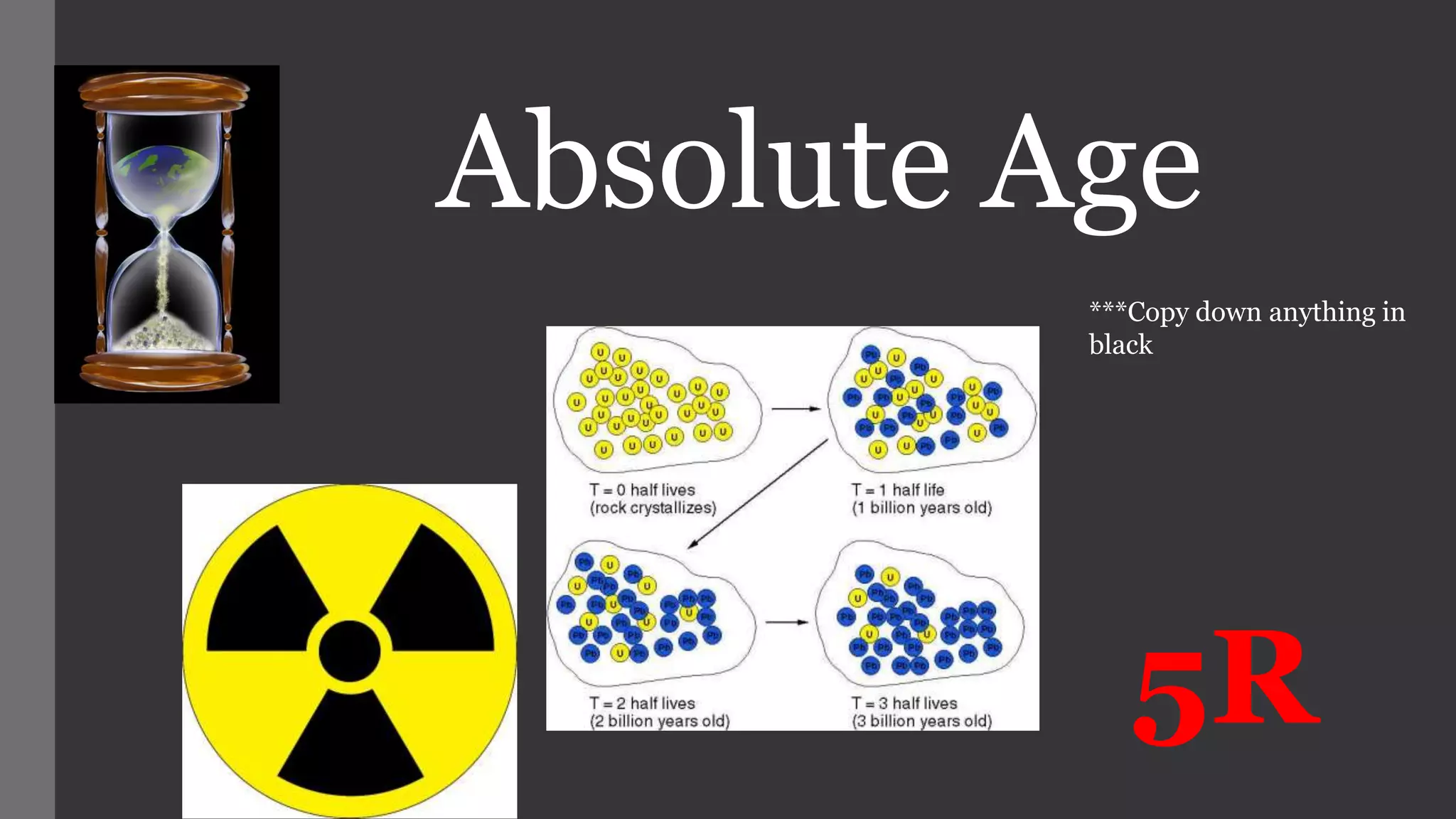
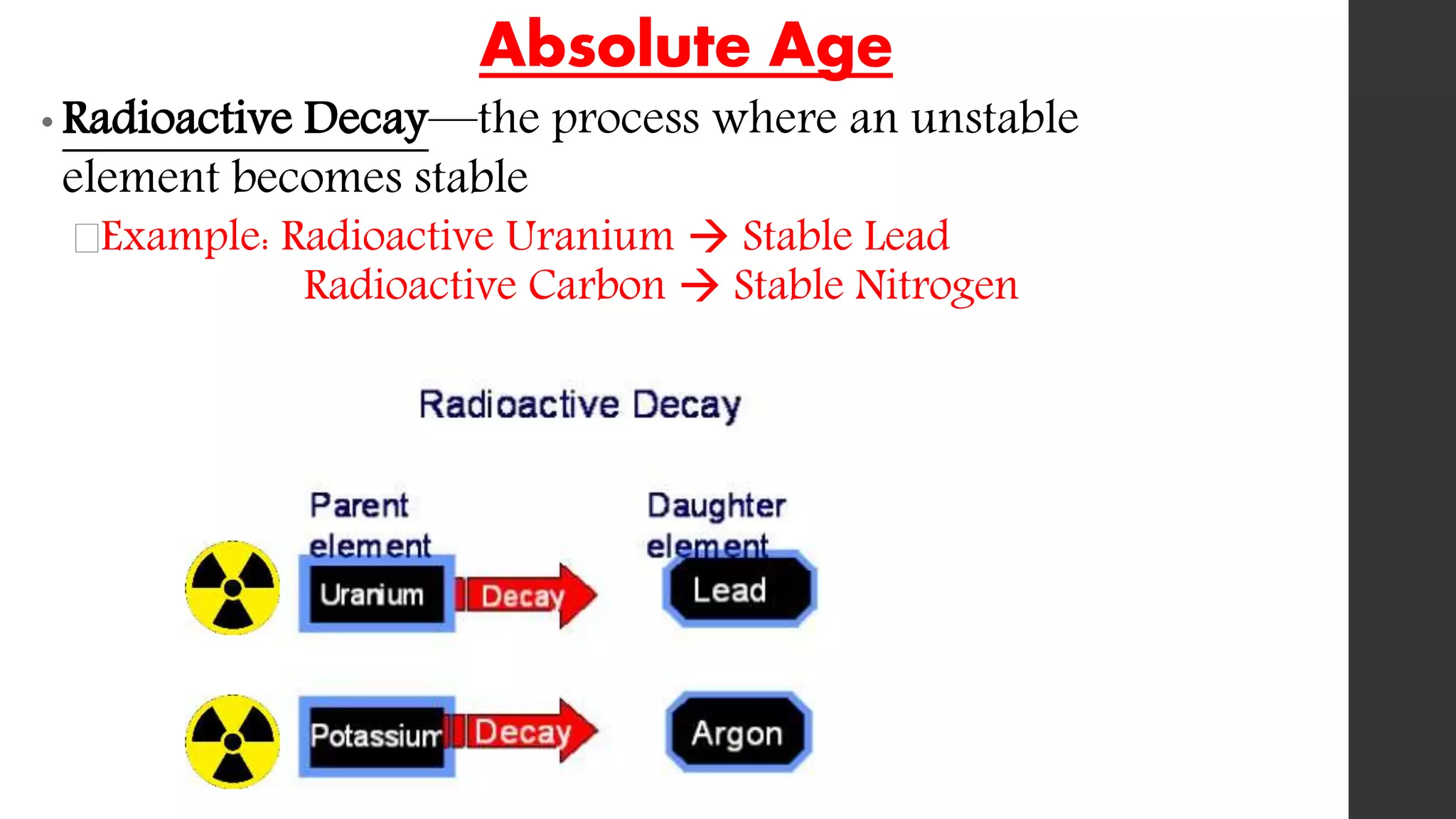
• Radioactive Decay—the process where an unstable 
element becomes stable 
Example: Radioactive Uranium  Stable Lead 
Radioactive Carbon  Stable Nitrogen
Absolute Age 
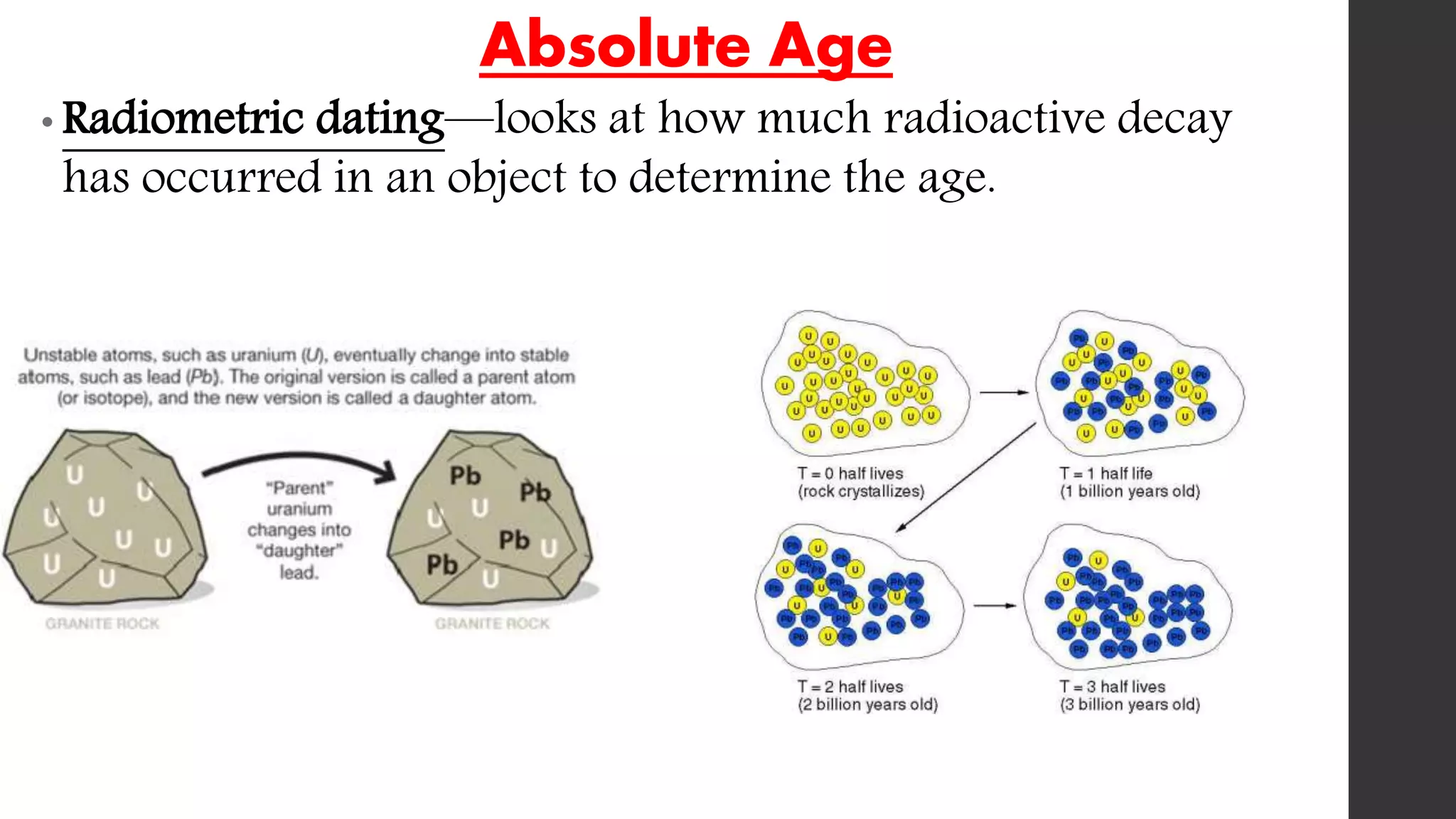
• Radiometric dating—looks at how much radioactive decay 
has occurred in an object to determine the age.
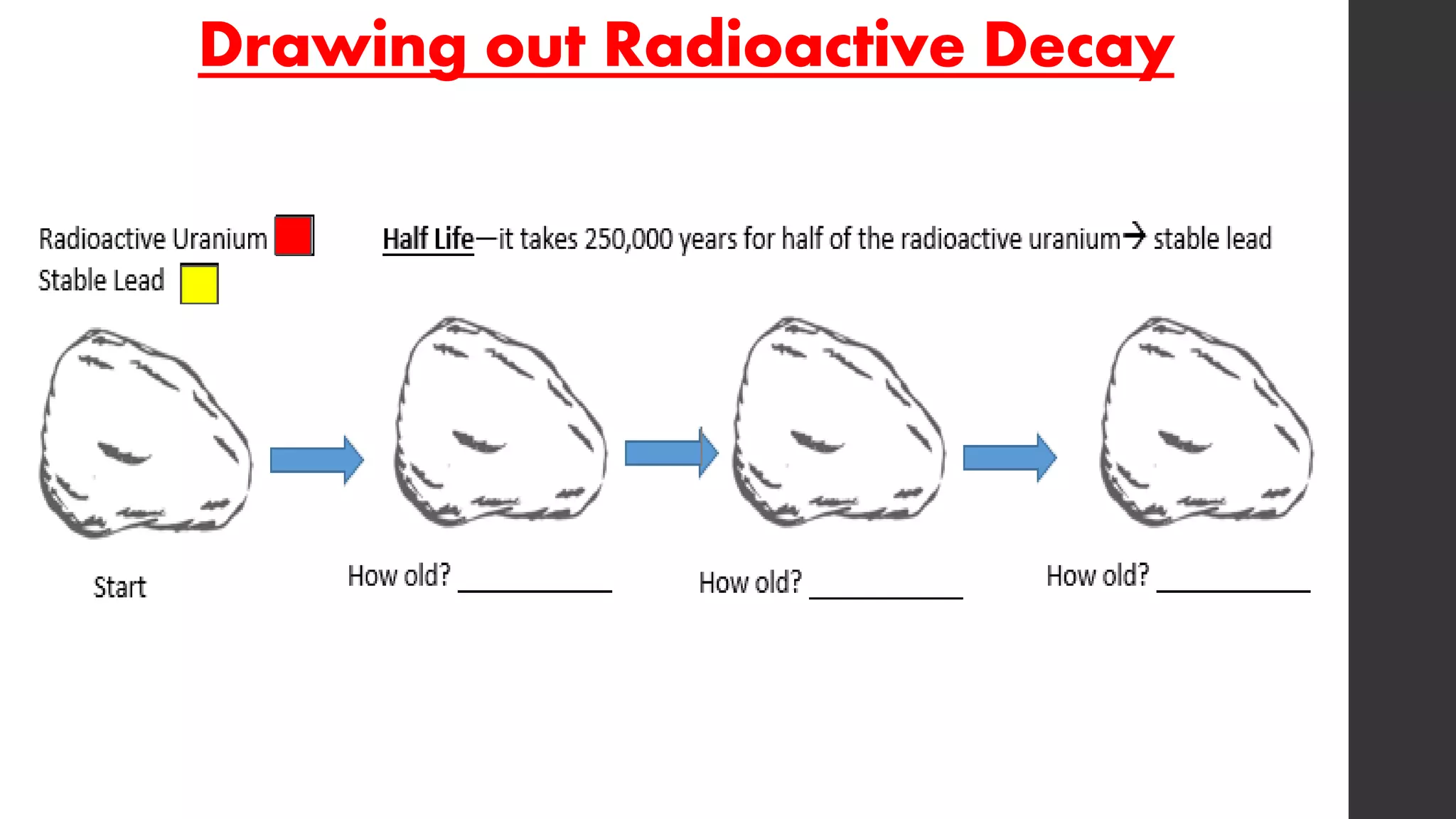
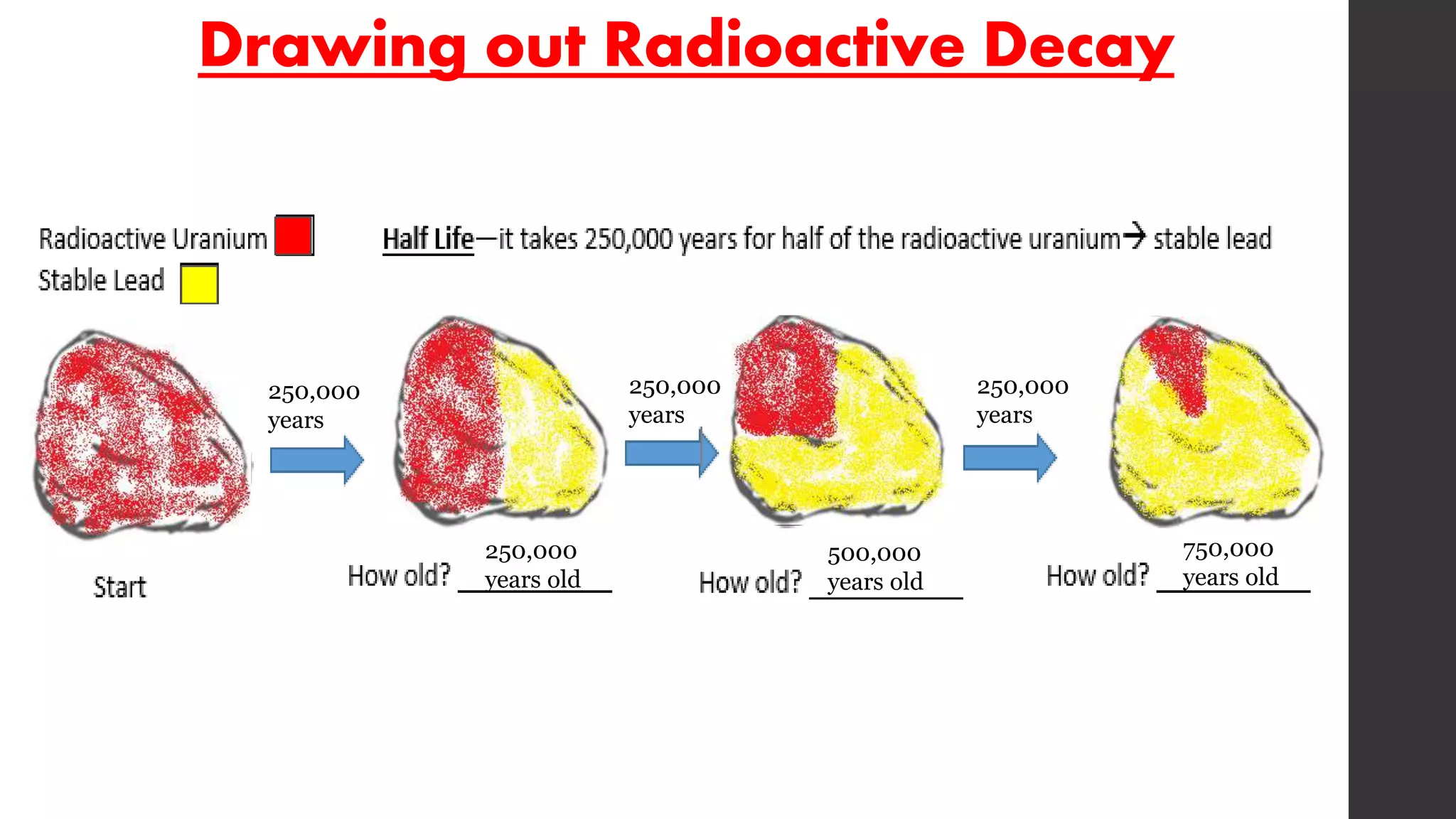
Drawing out Radioactive Decay
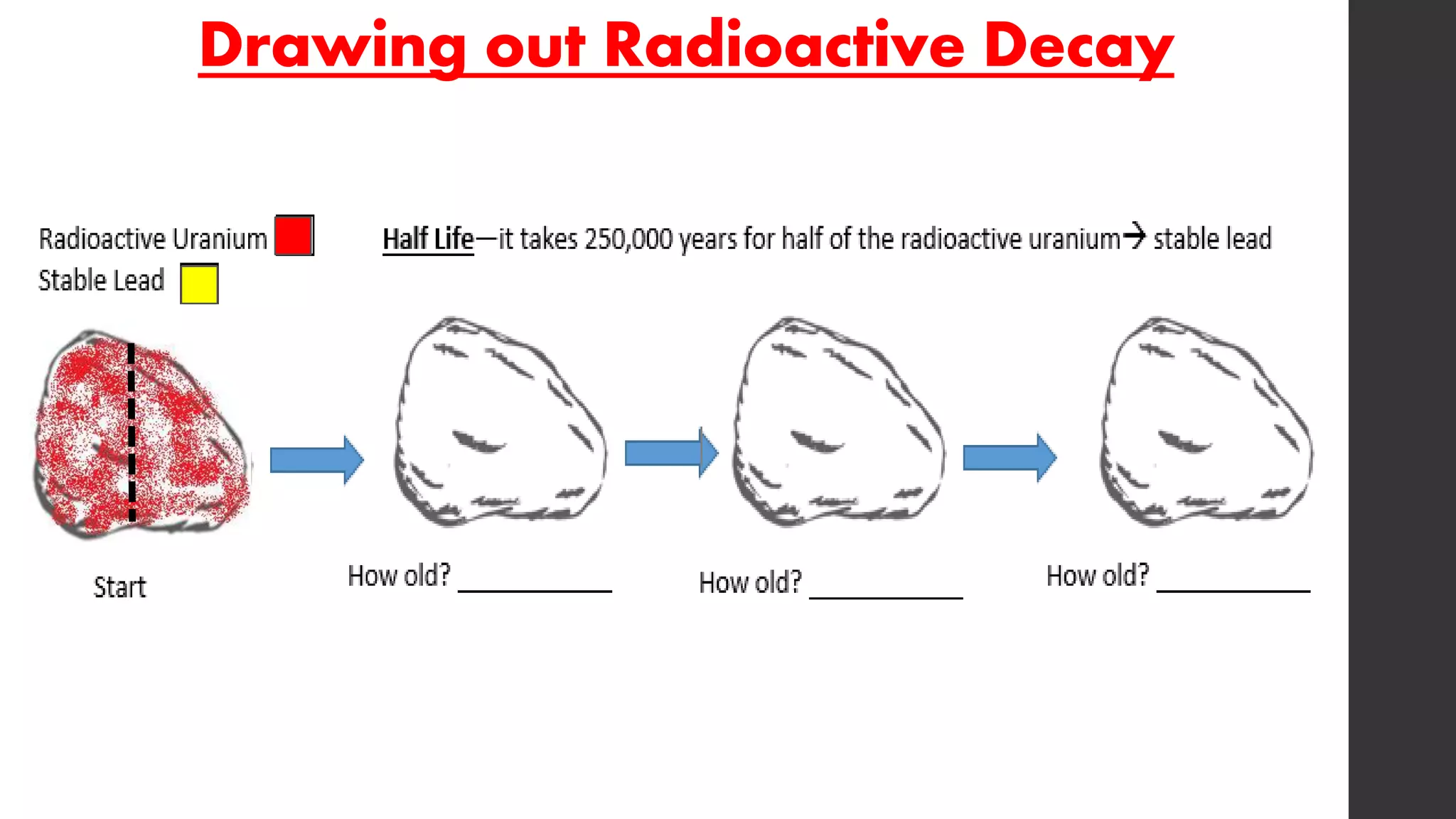
Drawing out Radioactive Decay 
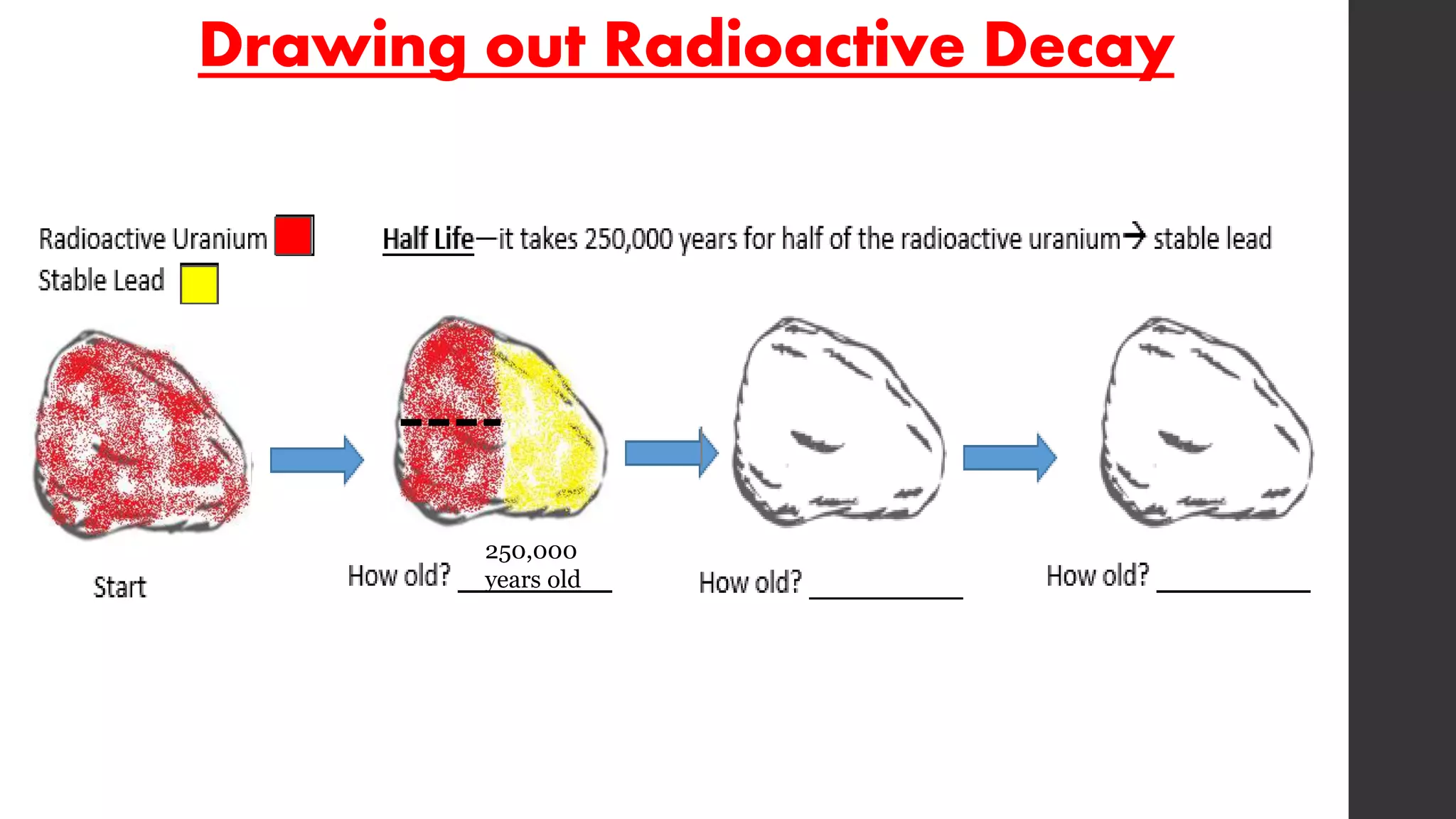
250,000 
years old
Drawing out Radioactive Decay 
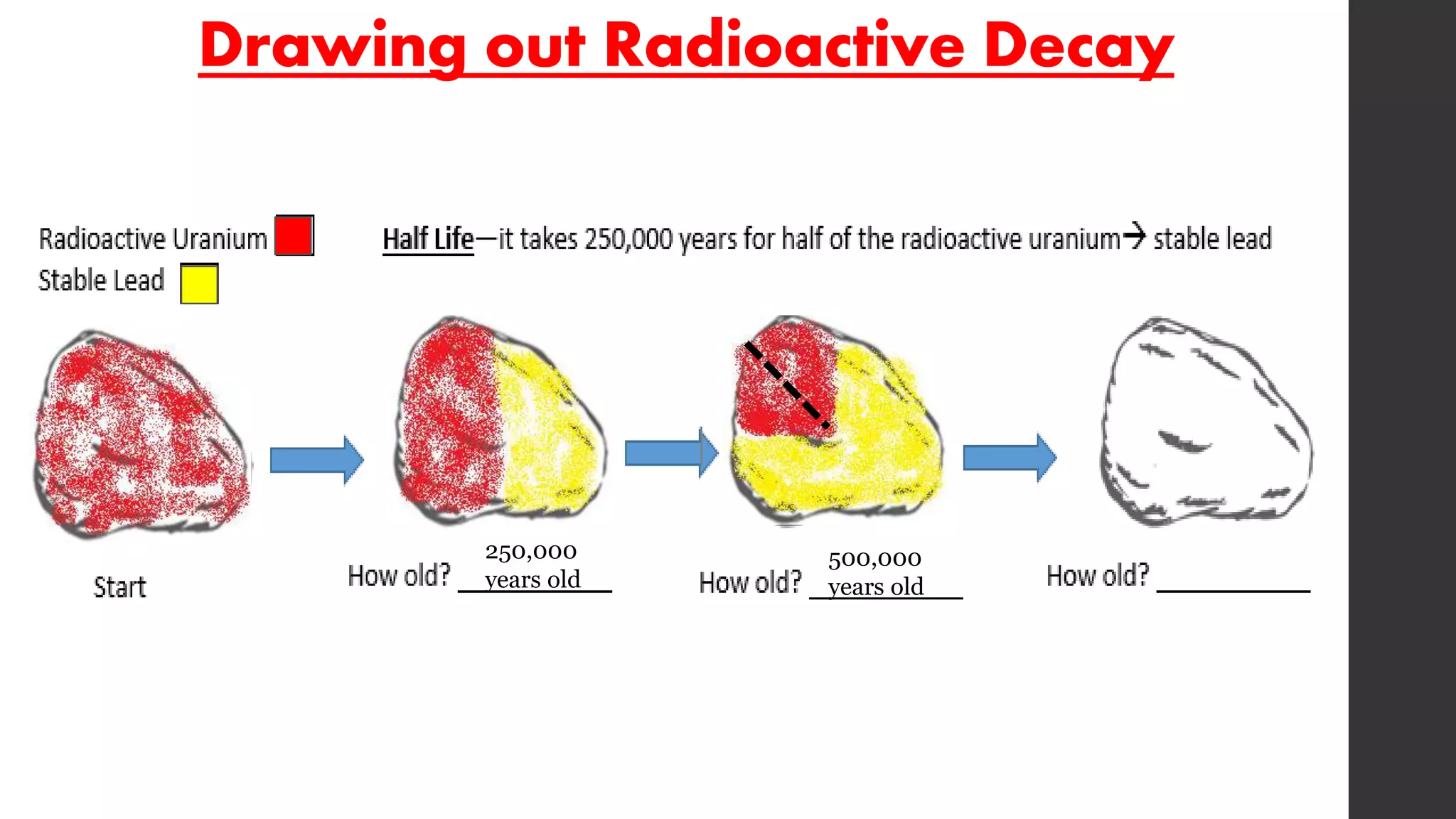
250,000 
years old 
500,000 
years old
Drawing out Radioactive Decay 
750,000 
years old 
250,000 
years 
250,000 
years 
250,000 
years 
250,000 
years old 
500,000 
years old

Absolute dating 6th

  • 1.
    Absolute Age ***Copydown anything in black 5R
  • 2.
    Absolute Age •Absolute Age—the number age of a rock or an object Example—Mr. Choi is 14 years old.
  • 3.
    Estimating how muchtime has passed • Let’s say this timer on the left takes 1 minute for all the sand to drop down to the bottom. If half the sand has fallen through, how much time has passed?
  • 4.
    Estimating how muchtime has passed • Let’s say this timer on the left takes 10 minute for all the sand to drop down to the bottom. If half the sand has fallen through, how much time has passed?
  • 5.
    Estimating how muchtime has passed • Let’s say this timer on the left takes 4 minute for all the sand to drop down to the bottom. If ¾ (3 quarters) the sand has fallen through, how much time has passed?
  • 6.
    Estimating Earth’s ageand other fossils • Just like a glass timer, certain things on Earth have a “timer” in them that tells us how much time has passed. This has helped us determine the age of the Earth and other fossils.
  • 7.
    Absolute Age •Radioactive Decay—the process where an unstable element becomes stable Example: Radioactive Uranium  Stable Lead Radioactive Carbon  Stable Nitrogen
  • 8.
    Absolute Age •Radiometric dating—looks at how much radioactive decay has occurred in an object to determine the age.
  • 9.
  • 10.
  • 11.
    Drawing out RadioactiveDecay 250,000 years old
  • 12.
    Drawing out RadioactiveDecay 250,000 years old 500,000 years old
  • 13.
    Drawing out RadioactiveDecay 750,000 years old 250,000 years 250,000 years 250,000 years 250,000 years old 500,000 years old