
ADOPTION OF TECHNOLOGIES FOR
INCREASING PRODUCTIVITY & QUALITY
IN FRUITS CROPS
Directorate of Extension Education
G.B.P.U.A.&T., Pantnagar- 263 145
U.S. Nagar (Uttarakhand)
Dr R P Singh
Professor Extension Education
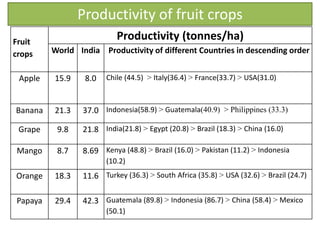
Fruit
crops
Productivity (tonnes/ha)
World India Productivity of different Countries in descending order
Apple 15.9 8.0 Chile (44.5) ˃ Italy(36.4) ˃ France(33.7) ˃ USA(31.0)
Banana 21.3 37.0 Indonesia(58.9) ˃ Guatemala(40.9) ˃ Philippines (33.3)
Grape 9.8 21.8 India(21.8) ˃ Egypt (20.8) ˃ Brazil (18.3) ˃ China (16.0)
Mango 8.7 8.69 Kenya (48.8) ˃ Brazil (16.0) ˃ Pakistan (11.2) ˃ Indonesia
(10.2)
Orange 18.3 11.6 Turkey (36.3) ˃ South Africa (35.8) ˃ USA (32.6) ˃ Brazil (24.7)
Papaya 29.4 42.3 Guatemala (89.8) ˃ Indonesia (86.7) ˃ China (58.4) ˃ Mexico
(50.1)
Productivity of fruit crops
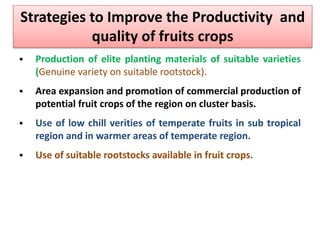
 Production of elite planting materials of suitable varieties
(Genuine variety on suitable rootstock).
 Area expansion and promotion of commercial production of
potential fruit crops of the region on cluster basis.
 Use of low chill verities of temperate fruits in sub tropical
region and in warmer areas of temperate region.
 Use of suitable rootstocks available in fruit crops.
Strategies to Improve the Productivity and
quality of fruits crops
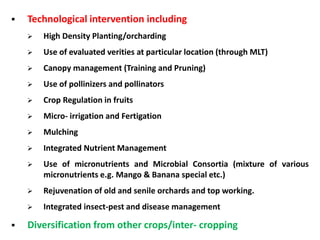
 Technological intervention including
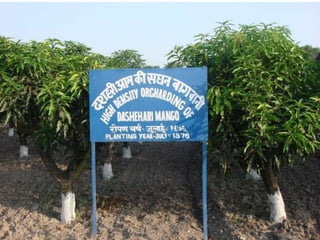
 High Density Planting/orcharding
 Use of evaluated verities at particular location (through MLT)
 Canopy management (Training and Pruning)
 Use of pollinizers and pollinators
 Crop Regulation in fruits
 Micro- irrigation and Fertigation
 Mulching
 Integrated Nutrient Management
 Use of micronutrients and Microbial Consortia (mixture of various
micronutrients e.g. Mango & Banana special etc.)
 Rejuvenation of old and senile orchards and top working.
 Integrated insect-pest and disease management
 Diversification from other crops/inter- cropping
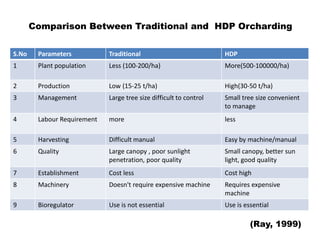
Comparison Between Traditional and HDP Orcharding
(Ray, 1999)
S.No Parameters Traditional HDP
1 Plant population Less (100-200/ha) More(500-100000/ha)
2 Production Low (15-25 t/ha) High(30-50 t/ha)
3 Management Large tree size difficult to control Small tree size convenient
to manage
4 Labour Requirement more less
5 Harvesting Difficult manual Easy by machine/manual
6 Quality Large canopy , poor sunlight
penetration, poor quality
Small canopy, better sun
light, good quality
7 Establishment Cost less Cost high
8 Machinery Doesn't require expensive machine Requires expensive
machine
9 Bioregulator Use is not essential Use is essential
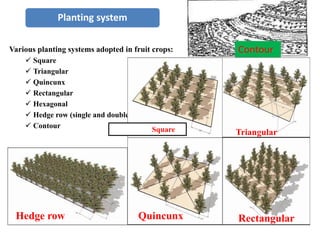
Various planting systems adopted in fruit crops:
 Square
 Triangular
 Quincunx
 Rectangular
 Hexagonal
 Hedge row (single and double) Cluster planting
 Contour Square Triangular
Quincunx RectangularHedge row
Planting system
Contour
CANOPY MANAGEMENT (Training and
Pruning) IN FRUITS CROPS
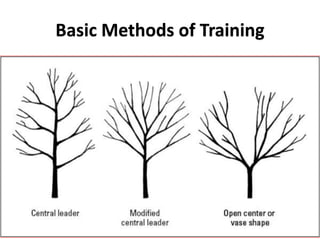
Basic Methods of Training
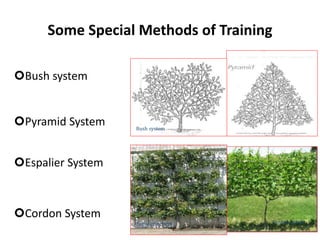
Some Special Methods of Training
Bush system
Pyramid System
Espalier System
Cordon System
Bush system
Espalier system Cordon system
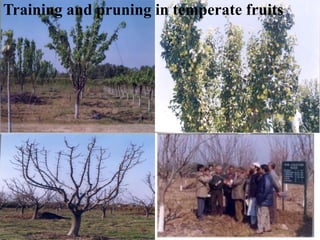
Training and pruning in temperate fruits
Use of pollinizers and pollinators :
Most of the varieties require cross pollination for good
fruit set and higher productivity.
Peach:
 All cultivars are self-fertile except J.H. Hale,
June Elberta, Halberta, Candoka, Chinese Cling, Giant.
Apricot:
Commercial apricots are largely self-fruitful, partially self
fertile and completely sterile but self-incompatible
varieties are available in China and Russia.
Mulching in Fruit Crops
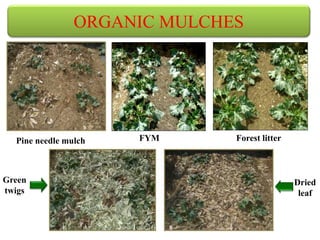
Pine needle mulch FYM Forest litter
Green
twigs
Dried
leaf
ORGANIC MULCHES
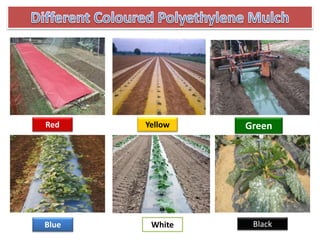
BlackBlue
Red Green
White
Yellow
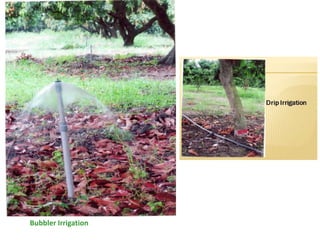
Micro irrigation and fertigation in
fruit crops
Bubbler Irrigation
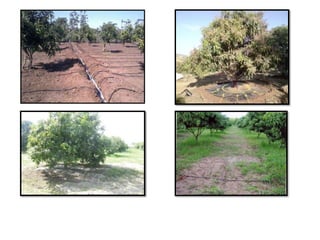
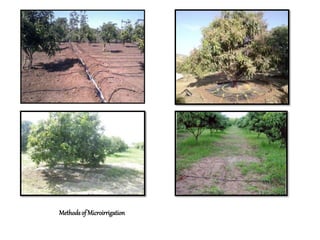
Methods of Microirrigation
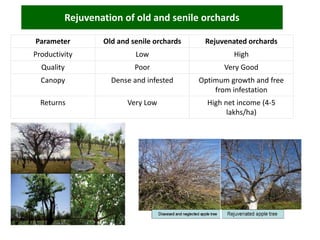
Rejuvenation of old and senile orchards and
top working
Rejuvenation of old and senile orchards
Parameter Old and senile orchards Rejuvenated orchards
Productivity Low High
Quality Poor Very Good
Canopy Dense and infested Optimum growth and free
from infestation
Returns Very Low High net income (4-5
lakhs/ha)
Rejuvenation of almond Rejuvenation of apple
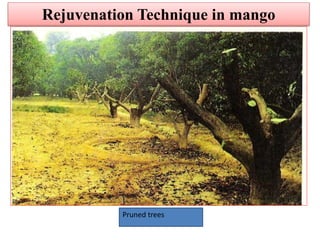
Pruned trees
Rejuvenation Technique in mango
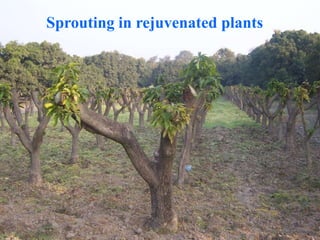
Sprouting in rejuvenated plants
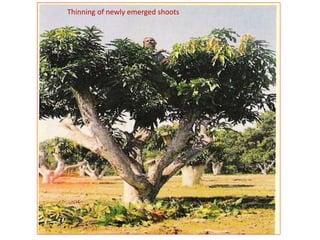
Thinning of newly emerged shoots
Diversification from other crops/ inter-
cropping
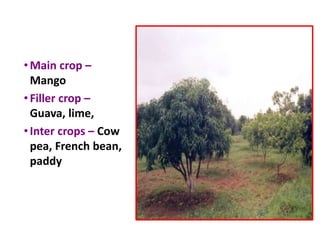
•Main crop –
Mango
•Filler crop –
Guava, lime,
•Inter crops – Cow
pea, French bean,
paddy
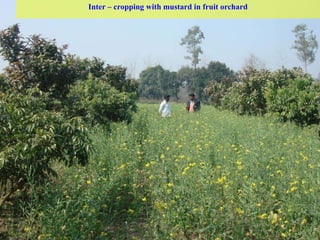
Inter-cropping with mustard
Inter – cropping with mustard in fruit orchard
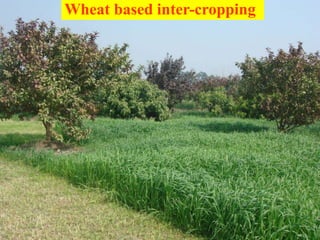
Wheat based inter-cropping
Development through horticulture in changing scenario

Development through horticulture in changing scenario

  • 1.
    ADOPTION OF TECHNOLOGIESFOR INCREASING PRODUCTIVITY & QUALITY IN FRUITS CROPS Directorate of Extension Education G.B.P.U.A.&T., Pantnagar- 263 145 U.S. Nagar (Uttarakhand) Dr R P Singh Professor Extension Education
  • 2.
    Fruit crops Productivity (tonnes/ha) World IndiaProductivity of different Countries in descending order Apple 15.9 8.0 Chile (44.5) ˃ Italy(36.4) ˃ France(33.7) ˃ USA(31.0) Banana 21.3 37.0 Indonesia(58.9) ˃ Guatemala(40.9) ˃ Philippines (33.3) Grape 9.8 21.8 India(21.8) ˃ Egypt (20.8) ˃ Brazil (18.3) ˃ China (16.0) Mango 8.7 8.69 Kenya (48.8) ˃ Brazil (16.0) ˃ Pakistan (11.2) ˃ Indonesia (10.2) Orange 18.3 11.6 Turkey (36.3) ˃ South Africa (35.8) ˃ USA (32.6) ˃ Brazil (24.7) Papaya 29.4 42.3 Guatemala (89.8) ˃ Indonesia (86.7) ˃ China (58.4) ˃ Mexico (50.1) Productivity of fruit crops
  • 3.
     Production ofelite planting materials of suitable varieties (Genuine variety on suitable rootstock).  Area expansion and promotion of commercial production of potential fruit crops of the region on cluster basis.  Use of low chill verities of temperate fruits in sub tropical region and in warmer areas of temperate region.  Use of suitable rootstocks available in fruit crops. Strategies to Improve the Productivity and quality of fruits crops
  • 4.
     Technological interventionincluding  High Density Planting/orcharding  Use of evaluated verities at particular location (through MLT)  Canopy management (Training and Pruning)  Use of pollinizers and pollinators  Crop Regulation in fruits  Micro- irrigation and Fertigation  Mulching  Integrated Nutrient Management  Use of micronutrients and Microbial Consortia (mixture of various micronutrients e.g. Mango & Banana special etc.)  Rejuvenation of old and senile orchards and top working.  Integrated insect-pest and disease management  Diversification from other crops/inter- cropping
  • 5.
    Comparison Between Traditionaland HDP Orcharding (Ray, 1999) S.No Parameters Traditional HDP 1 Plant population Less (100-200/ha) More(500-100000/ha) 2 Production Low (15-25 t/ha) High(30-50 t/ha) 3 Management Large tree size difficult to control Small tree size convenient to manage 4 Labour Requirement more less 5 Harvesting Difficult manual Easy by machine/manual 6 Quality Large canopy , poor sunlight penetration, poor quality Small canopy, better sun light, good quality 7 Establishment Cost less Cost high 8 Machinery Doesn't require expensive machine Requires expensive machine 9 Bioregulator Use is not essential Use is essential
  • 7.
    Various planting systemsadopted in fruit crops:  Square  Triangular  Quincunx  Rectangular  Hexagonal  Hedge row (single and double) Cluster planting  Contour Square Triangular Quincunx RectangularHedge row Planting system Contour
  • 8.
    CANOPY MANAGEMENT (Trainingand Pruning) IN FRUITS CROPS
  • 9.
  • 10.
    Some Special Methodsof Training Bush system Pyramid System Espalier System Cordon System Bush system Espalier system Cordon system
  • 11.
    Training and pruningin temperate fruits
  • 12.
    Use of pollinizersand pollinators : Most of the varieties require cross pollination for good fruit set and higher productivity. Peach:  All cultivars are self-fertile except J.H. Hale, June Elberta, Halberta, Candoka, Chinese Cling, Giant. Apricot: Commercial apricots are largely self-fruitful, partially self fertile and completely sterile but self-incompatible varieties are available in China and Russia.
  • 13.
  • 14.
    Pine needle mulchFYM Forest litter Green twigs Dried leaf ORGANIC MULCHES
  • 15.
  • 16.
    Micro irrigation andfertigation in fruit crops
  • 17.
  • 19.
  • 20.
    Rejuvenation of oldand senile orchards and top working
  • 21.
    Rejuvenation of oldand senile orchards Parameter Old and senile orchards Rejuvenated orchards Productivity Low High Quality Poor Very Good Canopy Dense and infested Optimum growth and free from infestation Returns Very Low High net income (4-5 lakhs/ha) Rejuvenation of almond Rejuvenation of apple
  • 22.
  • 23.
  • 24.
    Thinning of newlyemerged shoots
  • 25.
    Diversification from othercrops/ inter- cropping
  • 26.
    •Main crop – Mango •Fillercrop – Guava, lime, •Inter crops – Cow pea, French bean, paddy
  • 27.
    Inter-cropping with mustard Inter– cropping with mustard in fruit orchard
  • 28.