It is traction of the foetal head by a created
negative pressure through a cup applied to
the head.
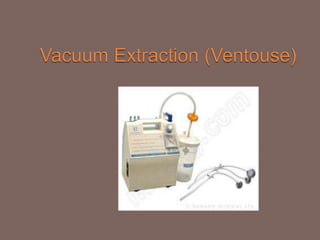
Vacuum extractor is composed of:
A specially designed cup with a diameter of 3, 4, 5
or 6 cm.
A rubber tube attaching the cup to a glass bottle
with a screw in between to release the negative
pressure.
A manometer fitted in the mouth of the glass bottle
to declare the negative pressure.
Another rubber tube connecting the bottle to a
suction piece which may be manual or electronic
creating a negative pressure that should not
exceed - 0.8 kg per cm2.
Alternative its forceps delivery
Occipitotransverse or posterior position
Delay in descent of the head in case of the
second baby of twins.
Delay in late first stage of labour
During caesarean section: It may be used
to extract the foetal head through the
uterine incision.
* Moderate or severe cephalopelvic
disproportion.
* Other presentations than vertex.
* Premature infants.
* Intact membranes.
* Suspected fetal coagulation
* Suspected fetal macrosomia
Should not be slightest bony resistance
below the head
The head of a singleton baby should be
engaged
Cervix should be atleast 6cm dialated
www.freelivedoctor.com
* Lithotomy position.
*Antiseptic measures for the vagina, vulva
and perineum.
* Vaginal examination to check pelvic
capacity, cervical dilatation, presentation,
position, station and degree of flexion of
the head and that the membranes are
ruptured.
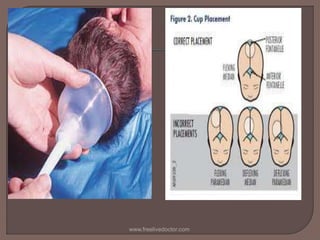
* Application of the cup: The largest cup that can
easily passed is introduced sideways into the
vagina by pressing it backwards against the
perineum. It is then applied as near as possible to
the posterior fontanelle over the mid sagittal line
with its edge 3 cm from the anterior fontanelle.
This position will promote flexion of the head and
brings the smallest diameters of the foetal skull
into the maternal passages. Be sure that there is
no cervical or vaginal tissues nor the umbilical cord
or a limb in complex presentation is included in the
cup.
www.freelivedoctor.com
* Creating the negative pressure: holding the
cup in place, the negative pressure is
gradually increased by 0.2 kg/cm2 every 1
minute until - 0.8 kg/cm2 is attained. This
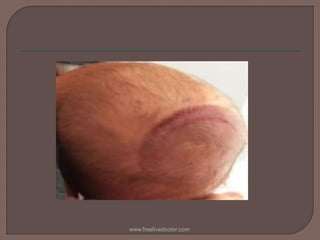
creates an artificial caput within the cup.
* Traction: on the handle is made perpendicular
to the cup and intermittently during uterine
contractions, the direction of pull is changing
as the head descends through the birth canal
* Release of the cup: when the head is
delivered the vacuum is reduced as slowly
as it was created using the screw as this
diminishes the risk of scalp damage.
Bird’s safety rules for vacuum extraction:
* The head must be completely or partially
delivered with no more than 3 pulls.
* The head is at least begin to move with the
first pull.
* The cup must not be applied more than
twice.
* Application of the cup must not exceed 20
minutes.
www.freelivedoctor.com
Maternal:
> Vaginal and cervical lacerations.
> Annular detachment of the cervix, cervical
incompetence and may be future prolapse
if used with incompletely dilated cervix.
* Foetal:
>Cephalohaematoma.
>Scalp lacerations.
> Rarely, intracranial haemorrhage.
* Anesthesia is not required so it is preferred in cardiac and
pulmonary patient.
* The ventouse is not occupying a space beside the head as
forceps.
* Less compression force (0.77 kg/cm2) compared to forceps (1.3
kg/cm2) so injuries to the head is less common.
* Less genital tract lacerations.
* Can be applied before full cervical dilatation.
* It can be applied on non-engaged head.
Require maternal effort
Equipment more complex and may fail
Take time in fetal distress
Cannot be used in preterm
More cephal heamatoma
www.freelivedoctor.com

Vacuum extraction

  • 2.
    It is tractionof the foetal head by a created negative pressure through a cup applied to the head.
  • 3.
    Vacuum extractor iscomposed of: A specially designed cup with a diameter of 3, 4, 5 or 6 cm. A rubber tube attaching the cup to a glass bottle with a screw in between to release the negative pressure. A manometer fitted in the mouth of the glass bottle to declare the negative pressure. Another rubber tube connecting the bottle to a suction piece which may be manual or electronic creating a negative pressure that should not exceed - 0.8 kg per cm2.
  • 4.
    Alternative its forcepsdelivery Occipitotransverse or posterior position Delay in descent of the head in case of the second baby of twins. Delay in late first stage of labour During caesarean section: It may be used to extract the foetal head through the uterine incision.
  • 5.
    * Moderate orsevere cephalopelvic disproportion. * Other presentations than vertex. * Premature infants. * Intact membranes. * Suspected fetal coagulation * Suspected fetal macrosomia
  • 6.
    Should not beslightest bony resistance below the head The head of a singleton baby should be engaged Cervix should be atleast 6cm dialated www.freelivedoctor.com
  • 7.
    * Lithotomy position. *Antisepticmeasures for the vagina, vulva and perineum. * Vaginal examination to check pelvic capacity, cervical dilatation, presentation, position, station and degree of flexion of the head and that the membranes are ruptured.
  • 8.
    * Application ofthe cup: The largest cup that can easily passed is introduced sideways into the vagina by pressing it backwards against the perineum. It is then applied as near as possible to the posterior fontanelle over the mid sagittal line with its edge 3 cm from the anterior fontanelle. This position will promote flexion of the head and brings the smallest diameters of the foetal skull into the maternal passages. Be sure that there is no cervical or vaginal tissues nor the umbilical cord or a limb in complex presentation is included in the cup.
  • 9.
  • 10.
    * Creating thenegative pressure: holding the cup in place, the negative pressure is gradually increased by 0.2 kg/cm2 every 1 minute until - 0.8 kg/cm2 is attained. This creates an artificial caput within the cup. * Traction: on the handle is made perpendicular to the cup and intermittently during uterine contractions, the direction of pull is changing as the head descends through the birth canal
  • 11.
    * Release ofthe cup: when the head is delivered the vacuum is reduced as slowly as it was created using the screw as this diminishes the risk of scalp damage.
  • 12.
    Bird’s safety rulesfor vacuum extraction: * The head must be completely or partially delivered with no more than 3 pulls. * The head is at least begin to move with the first pull. * The cup must not be applied more than twice. * Application of the cup must not exceed 20 minutes.
  • 13.
  • 14.
    Maternal: > Vaginal andcervical lacerations. > Annular detachment of the cervix, cervical incompetence and may be future prolapse if used with incompletely dilated cervix.
  • 15.
    * Foetal: >Cephalohaematoma. >Scalp lacerations. >Rarely, intracranial haemorrhage.
  • 16.
    * Anesthesia isnot required so it is preferred in cardiac and pulmonary patient. * The ventouse is not occupying a space beside the head as forceps. * Less compression force (0.77 kg/cm2) compared to forceps (1.3 kg/cm2) so injuries to the head is less common. * Less genital tract lacerations. * Can be applied before full cervical dilatation. * It can be applied on non-engaged head.
  • 17.
    Require maternal effort Equipmentmore complex and may fail Take time in fetal distress Cannot be used in preterm More cephal heamatoma www.freelivedoctor.com