Zero Energy Building
Presented By –
Nabila, Kashfia Tajmim 15-29043-1
Akter Tanjila 15-29069-1
Rawdah 15-28283-1
Sagir, Chy. Miftah Mahmood 14-25933-1
Khan, Md. Nafis Ul Hoq 14-27150-2
To-
Mr. Rethwan Faiz Sir
Assistant Professor, Faculty of Engineering
American International University-Bangladesh
• What is Zero Energy Building?
• Design and Construction
• Basic Construction of a Zero Energy Building
• Energy Harvest
• Net Zero Energy Building connected to grid
• Zero Energy Building versus Green Building
• Where can Zero Energy concept be applied?
• Advantages and Disadvantages
Contents
• A zero-energy building is a building with zero net energy
consumption.
• Generates more energy than it consumes.
• Buildings contribute less overall greenhouse gases to the
atmosphere than a similar non zero-energy building.
• Reduce carbon emissions and dependence on fossil fuels
which is the Zero Net-Energy Consumption Principle.
What is Zero Energy Building?
* Passive solar building design:
Walls, floors and windows distribute heat during winter and
reject the solar heat during summer.
* Building energy simulation:
Predicts the performance of ZNE building depending on the
energy usage before it is built.
* Energy saving features:
Includes heating and cooling loads, insulation and ventilation
depending on climate zones.
Design and construction
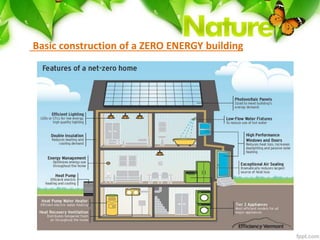
Basic construction of a ZERO ENERGY building
• Choosing a site with the necessary assets and
knowing about its limitations.
The Site
• Zero energy should be designed in such way that more Sun
Rays can be used.
More exposure to Sunlight
• Solar cells
• Wind Turbines
• Solar Thermal Collectors linked to Seasonal Thermal Energy
Storage
• Solar Thermal Collectors – collects by absorbing sunlight.
• Seasonal Thermal Energy Storage (STES) – storage of heat or
cold up to several months.
To cope with the fluctuation demand Zero Energy Buildings are connected
to the electricity grid.
Energy Harvest
• Solar panels placed on the rooftop absorbing as
much of the energy from the sunlight.
• The energy can be used for cooking, heating, etc…
Solar Energy
Wind Energy
Thermal Energy
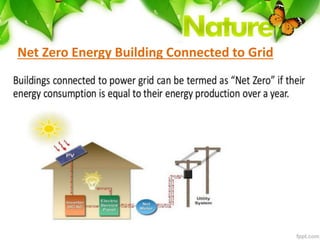
Net Zero Energy Building Connected to Grid
• Green Building is a building process depending on
the environment and efficient resources available.
• Green Building reduces negative impact on the
environment.
• Zero Energy Building reduces more energy usage and
greenhouse gases emission.
• Zero Energy building may not be considered GREEN
in all areas.
‘Zero energy building’ versus ‘Green building’
• Residential areas
• Commercial Buildings
• Industries
• New Construction and existing buildings
Where can ‘ZERO-ENERGY’ concept be
adapted?
• Increased comfort .
• Free of future energy cost increment.
• Reduced total cost of ownership due to improved
energy efficiency.
• Reduced total net monthly cost of living.
• Reduced risk of loss from grid blackouts.
Advantages
• Initial costs can be higher.
• Very few designers or builders have the necessary
skills or experience to build ZEB.
• New energy rating systems are being introduced.
• Solar Energy capture is only applicable for sun prone
areas.
Disadvantages
• https://energy.gov/eere/buildings/downloads/comm
on-definition-zero-energy-buildings
• http://zeroenergyproject.org/build/twelve-steps-
affordable-zero-energy-home-construction-design/
• https://living-future.org/net-zero/
References
Thank You

Zero Energy Building.

  • 1.
  • 2.
    Zero Energy Building PresentedBy – Nabila, Kashfia Tajmim 15-29043-1 Akter Tanjila 15-29069-1 Rawdah 15-28283-1 Sagir, Chy. Miftah Mahmood 14-25933-1 Khan, Md. Nafis Ul Hoq 14-27150-2 To- Mr. Rethwan Faiz Sir Assistant Professor, Faculty of Engineering American International University-Bangladesh
  • 3.
    • What isZero Energy Building? • Design and Construction • Basic Construction of a Zero Energy Building • Energy Harvest • Net Zero Energy Building connected to grid • Zero Energy Building versus Green Building • Where can Zero Energy concept be applied? • Advantages and Disadvantages Contents
  • 4.
    • A zero-energybuilding is a building with zero net energy consumption. • Generates more energy than it consumes. • Buildings contribute less overall greenhouse gases to the atmosphere than a similar non zero-energy building. • Reduce carbon emissions and dependence on fossil fuels which is the Zero Net-Energy Consumption Principle. What is Zero Energy Building?
  • 5.
    * Passive solarbuilding design: Walls, floors and windows distribute heat during winter and reject the solar heat during summer. * Building energy simulation: Predicts the performance of ZNE building depending on the energy usage before it is built. * Energy saving features: Includes heating and cooling loads, insulation and ventilation depending on climate zones. Design and construction
  • 6.
    Basic construction ofa ZERO ENERGY building
  • 7.
    • Choosing asite with the necessary assets and knowing about its limitations. The Site
  • 8.
    • Zero energyshould be designed in such way that more Sun Rays can be used. More exposure to Sunlight
  • 9.
    • Solar cells •Wind Turbines • Solar Thermal Collectors linked to Seasonal Thermal Energy Storage • Solar Thermal Collectors – collects by absorbing sunlight. • Seasonal Thermal Energy Storage (STES) – storage of heat or cold up to several months. To cope with the fluctuation demand Zero Energy Buildings are connected to the electricity grid. Energy Harvest
  • 10.
    • Solar panelsplaced on the rooftop absorbing as much of the energy from the sunlight. • The energy can be used for cooking, heating, etc… Solar Energy
  • 11.
  • 12.
  • 13.
    Net Zero EnergyBuilding Connected to Grid
  • 14.
    • Green Buildingis a building process depending on the environment and efficient resources available. • Green Building reduces negative impact on the environment. • Zero Energy Building reduces more energy usage and greenhouse gases emission. • Zero Energy building may not be considered GREEN in all areas. ‘Zero energy building’ versus ‘Green building’
  • 15.
    • Residential areas •Commercial Buildings • Industries • New Construction and existing buildings Where can ‘ZERO-ENERGY’ concept be adapted?
  • 16.
    • Increased comfort. • Free of future energy cost increment. • Reduced total cost of ownership due to improved energy efficiency. • Reduced total net monthly cost of living. • Reduced risk of loss from grid blackouts. Advantages
  • 17.
    • Initial costscan be higher. • Very few designers or builders have the necessary skills or experience to build ZEB. • New energy rating systems are being introduced. • Solar Energy capture is only applicable for sun prone areas. Disadvantages
  • 18.
  • 19.