Downloaded 138 times


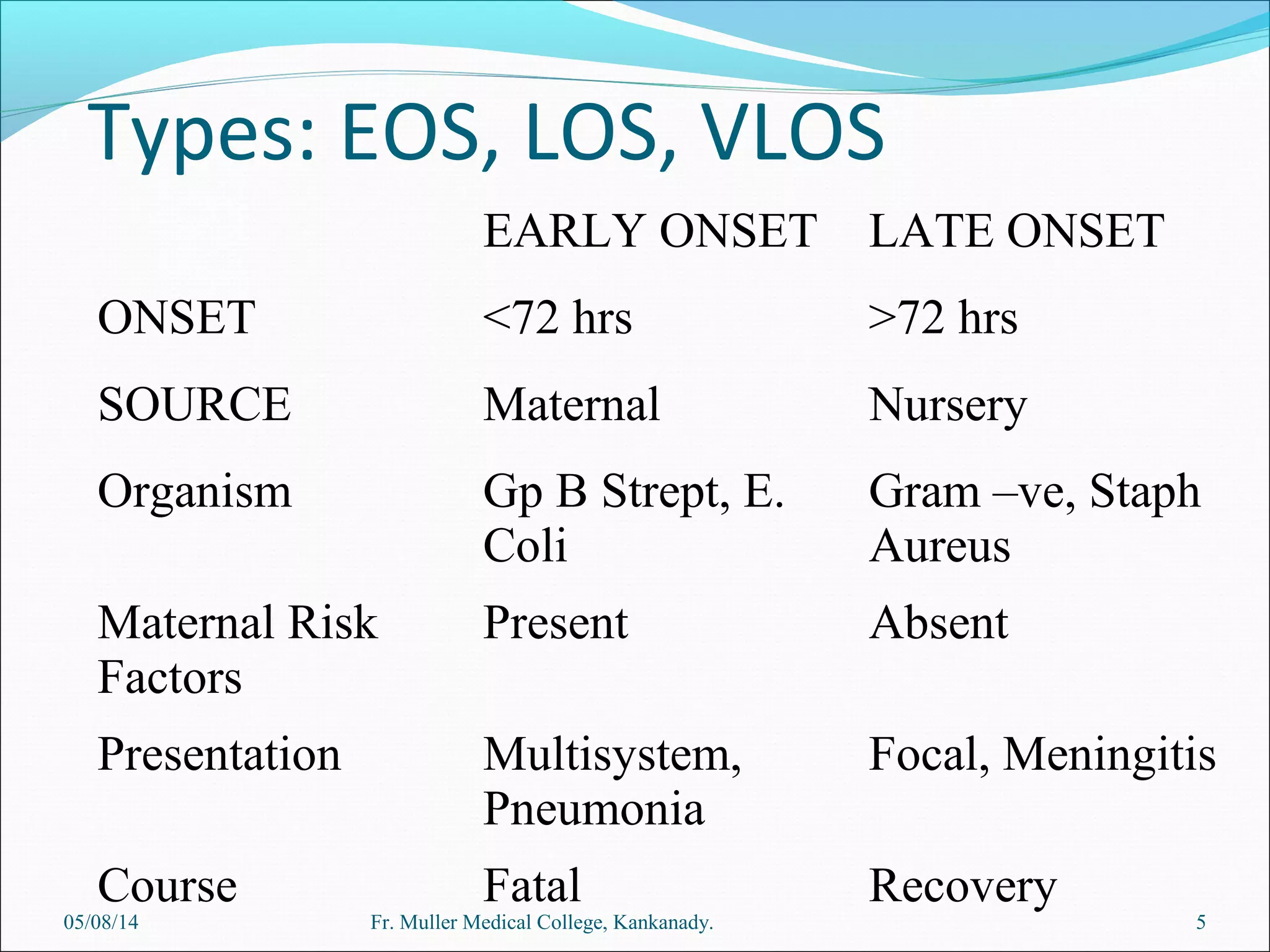


Neonatal sepsis is defined as a clinical syndrome of infection occurring in the first month of life, characterized by non-specific signs and symptoms. It can involve septicemia, pneumonia, or meningitis. Common causative organisms include E. coli, Staphylococcus aureus, Group B Streptococcus, and Klebsiella species. Risk factors include prematurity, prolonged rupture of membranes, and maternal fever. Diagnosis involves a sepsis screen of a complete blood count, blood culture, and C-reactive protein level. Treatment involves broad-spectrum antibiotics like ampicillin and gentamicin or cefotaxim and amikacin with supportive care. Outcomes depend on gestational age,


![Sepsis neonatal [autoguardado]](https://cdn.slidesharecdn.com/ss_thumbnails/sepsisneonatalautoguardado-170318103240-thumbnail.jpg?width=640&height=640&fit=bounds)


