






Sepsis Neonatal
SERVICIO DE PEDIATRÍA - INTERNADO
HOSPITAL DE VENTANILLA
WUINNY A. LI HOLGUÍN.
Lima, marzo del 2017
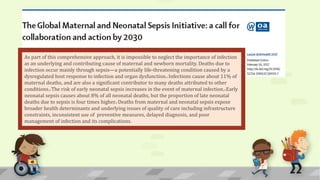
As part of this comprehensive approach, it is impossible to neglect the importance of infection
as an underlying and contributing cause of maternal and newborn mortality. Deaths due to
infection occur mainly through sepsis—a potentially life-threatening condition caused by a
dysregulated host response to infection and organ dysfunction.2 Infections cause about 11% of
maternal deaths, and are also a significant contributor to many deaths attributed to other
conditions.3 The risk of early neonatal sepsis increases in the event of maternal infection.4 Early
neonatal sepsis causes about 8% of all neonatal deaths, but the proportion of late neonatal
deaths due to sepsis is four times higher.5 Deaths from maternal and neonatal sepsis expose
broader health determinants and underlying issues of quality of care including infrastructure
constraints, inconsistent use of preventive measures, delayed diagnosis, and poor
management of infection and its complications.
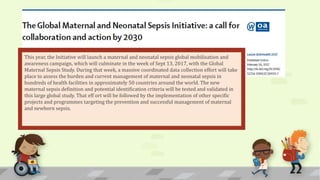
This year, the Initiative will launch a maternal and neonatal sepsis global mobilisation and
awareness campaign, which will culminate in the week of Sept 13, 2017, with the Global
Maternal Sepsis Study. During that week, a massive coordinated data collection effort will take
place to assess the burden and current management of maternal and neonatal sepsis in
hundreds of health facilities in approximately 50 countries around the world. The new
maternal sepsis definition and potential identification criteria will be tested and validated in
this large global study. That eff ort will be followed by the implementation of other specific
projects and programmes targeting the prevention and successful management of maternal
and newborn sepsis.
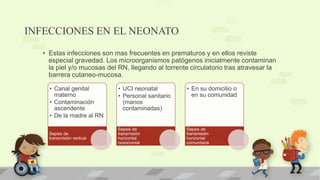
INFECCIONES EN EL NEONATO
• Estas infecciones son mas frecuentes en prematuros y en ellos reviste
especial gravedad. Los microorganismos patógenos inicialmente contaminan
la piel y/o mucosas del RN, llegando al torrente circulatorio tras atravesar la
barrera cutaneo-mucosa.
• Canal genital
materno
• Contaminación
ascendente
• De la madre al RN
Sepsis de
transmisión vertical
• UCI neonatal
• Personal sanitario
(manos
contaminadas)
Sepsis de
transmisión
horizontal
nosocomial
• En su domicilio o
en su comunidad
Sepsis de
transmisión
horizontal
comunitaria
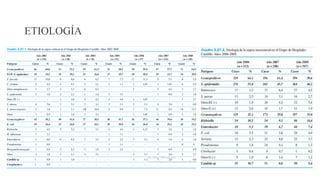
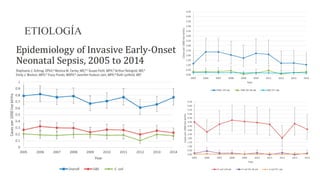
ETIOLOGÍA
ETIOLOGÍA
PATOGENIA
• Hematógena o
Transplacentaria o
Infección fonicular
• Sitios proximales: LA
Infecciones
prenatales o
congénitas
• Vía ascendente
• RPM 18 horas
• Aspiración / Deglución de
secreciones por el canal
post parto.
• Sepsis neonatal /
Complicaciones
obstétricas
Infecciones
perinatales
• Ambiente
• Alimentos
• Ropa
Infecciones
postnatales
 Período embrionario:
Endoarteritis – Malformaciones
 Período Fetal: Necrosis celular
PATOGENIA
ANTIINFLAMATORIO
• Parálisis inmunológica
• Sd rpta antiinflamatoria
compensatoria
• Mayor riesgo de
sobreinfecciones (catéter o
heridas)
PRO
INFLAMATORIA
• Choque profundo
• Fulminante
EFECTO DELETÉREO:
 Activación SER
 Pérdida de integridad
microvascular
 Disfunción de órganos
distantes del sitio de
injuria inicial
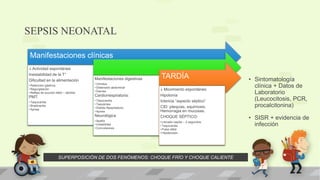
SEPSIS NEONATAL
• Sintomatología
clínica + Datos de
Laboratorio
(Leucocitosis, PCR,
procalcitonina)
• SISR + evidencia de
infección
Manifestaciones clínicas
 Actividad espontánea
Inestabilidad de la T°
Dificultad en la alimentación
• Retención gástrica
• Regurgitación
• Reflejo de succión débil – abolido
PMT:
• Taquicardia
• Bradicardia
• Apnea
Manifestaciones digestivas
• Vómitos
• Distensión abdominal
• Diarrea
Cardiorrespiratoria:
• Taquicardia
• Taquipnea
• Distrés Respirtatorio
• Apnea
Neurológica
• Apatía
• Irritabilidad
• Convulsiones
TARDÍA
 Movimiento espontáneo
Hipotonía
Ictericia “aspecto séptico”
CID: ptequias, equimosis,
Hemorragia en mucosas.
CHOQUE SÉPTICO:
• Llenado capilar  2 segundos
• Taquicardia
• Pulso débil
• Hipotensión
SUPERPOSICIÓN DE DOS FENÓMENOS: CHOQUE FRÍO Y CHOQUE CALIENTE
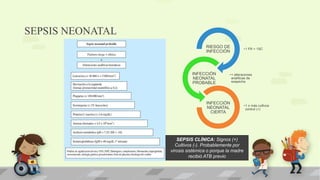
SEPSIS NEONATAL
•1 FR + 1SC
RIESGO DE
INFECCIÓN
•+ alteraciones
analíticas de
sospecha
INFECCIÓN
NEONATAL
PROBABLE
•1 o más cultivos
control (+)
INFECCIÓN
NEONATAL
CIERTA
SEPSIS NEONATAL
•1 FR + 1SC
RIESGO DE
INFECCIÓN
•+ alteraciones
analíticas de
sospecha
INFECCIÓN
NEONATAL
PROBABLE
•1 o más cultivos
control (+)
INFECCIÓN
NEONATAL
CIERTA
SEPSIS CLÍNICA: Signos (+)
Cultivos (-). Probablemente por
virosis sistémica o porque la madre
recibió ATB previo
SEPSIS NEONATAL
SEPSIS NEONATAL
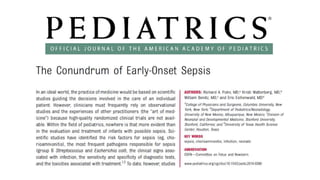
• The Eunice Kennedy Shriver National Institute of Child Health and Human
Development Neonatal Network and the Vermont Oxford Network define
neonatal early-onset sepsis (EOS) as the onset of signs and symptoms of
sepsis with an associated positive culture result at or before age 72 hours.
Late-onset sepsis (LOS) is defined as the onset of signs or symptoms of
sepsis after age 72 hours.
• The diagnosis of neonatal sepsis is challenging because early signs and
symptoms are often subtle and nonspecific, yet prognosis depends on early
detection and treatment. Furthermore, the symptoms of many noninfectious
common neonatal conditions can mimic those of sepsis, complicating the
diagnosis of sepsis.
SEPSIS NEONATAL
• The gold standard for diagnosing sepsis is a positive result on culture from
blood or another sterile body fluid, such as cerebrospinal fluid (CSF) or urine.
It has been estimated that cases with a positive blood culture result represent
less than 40% of all neonatal sepsis because of inadequate blood volume
sampled, transient or low-grade bacteremia, or antibiotic transferred from a
mother who received antibiotics during the intrapartum period. A single
aerobic blood culture of sufficient volume (1 mL) has a 98% probability to isolate
an organism even in infants with low-level bacteremia (4 CFU/mL).
• The complete white blood cell (WBC) count with differential is routinely used to
assist in the diagnosis of sepsis; however, multiple studies have determined that
the WBC, immature-to-total neutrophil (I/T) ratio, and platelet count have
low sensitivities and specificities.
SEPSIS NEONATAL
• Two very large retrospective, multicenter database studies found that low WBC
counts and high I/T ratios were associated with increasing odds of infection in
EOS. High and low WBC counts, high absolute neutrophil count, high I/T
ratios, and low platelet counts were associated with LOS.
• A single blood cellcount–derived index did not have proven sensitivity to reliably
include or exclude EOS or LOS in neonates. The absolute immature neutrophil
count and absolute neutrophil count have suboptimal sensitivity and decreased
predictive accuracy for EOS because elevation does not consistently distinguish
an inflammatory response from a noninfectious origin. The I/T ratio is a more
sensitive indicator of sepsis; however, single assessments have a better
negative predictive value (NPV) (99%) than positive predictive value (PPV)
(25%). The I/T ratio is elevated in a quarter to half of presumptively uninfected
neonates. Overall, neutrophil indexes seem to be more helpful for excluding
infants without infection than for including infants with infection.
SEPSIS NEONATAL
• Rapid diagnostic biomarkers of sepsis to differentiate septic from nonseptic
neonates may allow timely discontinuation of antibiotic therapy, thus avoiding
their prolonged use and preventing emergence of antibiotic resistant bacteria.
In addition, prolonged empiric antibiotic use has been associated with
increased risk of necrotizing enterocolitis, LOS, and death.
• Acute-phase proteins, components of the complement system, chemokines,
cytokines, adhesion molecules, and cell surfacemarkers have all been
investigated as biomarkers of neonatal sepsis. The most widely studied and
most promising markers include C-reactive protein (CRP), interleukin (IL)
6, IL-8, procalcitonin (PCT), and tumor necrosis factor a (TNF-a).
SEPSIS NEONATAL
PROCALCITONINA
 Aumenta de 6 – 18 horas después de la noxa y alcanza un pico en 8-60 horas
después.
 PCR es sintetizada por el feto y RN. Sin embargo, estudios han demostrado que
sus niveles están disminuidos en los pretérmino. Hay un mínimo transporte de
PCR materno al feto por eso es que es un marcador ideal para Sepsis de
aparición temprana en neonatos.
 EOS: Es el mejor marcador de sepsis neonatal entre las 24-48 h desde el inicio
de la infección, con una sensibilidad de 84% y una especificidad del 96%.
 LOS: PCR se usa como un biomarcador específico de infección neonatal. Es
más sensible y específico en el dx de Sepsis que el índice de I/T y el valor
absolute de Neutrófilos. Sin embargo, también se eleva en otras condiciones no
infecciosas como: Aspiración meconial, HIV, asfixia perinatal.
SEPSIS NEONATAL
IL-6
 Aumenta de 2-3 horas y regresa a sus VN en 6-8 horas.
 Producido por Macrófagos, células endoteliales y fibroblastos en respuesta la
inflamación.
 Es el mejor marcador inductor de la síntesis de proteínas de fase aguda
pediátricas, incluyendo PCR y fibrinógeno.
 Su concentración no está influenciada por la edad gestacional}
 Presenta una alta sensibilidad en diagnosticar sepsis de aparición temprana
y tardía.
SEPSIS NEONATAL
IL-8
 Producido por Macrófagos, células endoteliales y fibroblastos en respuesta la
inflamación, parecido a la IL-6.
 Su concentración no está influenciada por la edad gestacional ni por infantes
post-término.
 Su sensibilidad y especificidad disminuyen tras 24-48 horas de la infección.
 EOS: S-78%, E-91%, VPP-100% y VPN 84%.
SEPSIS NEONATAL
TNF-a
 Citcina proinflamatoria que estimula la producción de IL-6 y que está
aumentada en sepsis neonatal.
 Es moderadamente adecuada para el dx de EOS (S:66% E:76%) y LOS
(S:68%, E:89%).
 Aunque es un buen marcador de sepsis neonatal, es menos útil que otras
citosinas como IL-6 y la IL-8.
SEPSIS NEONATAL
Procalcitonina
 Reactante de fase aguda roducida por monocitos y hepatocitos 4-6 horas
después de la exposición a los antígenos bacterianos.
 Sus valores incrementan en los primeros días después del nacimiento de
forma fisiológica, su valor es limitado en el diagnóstico de EOS.
 Los pretérmino tienen valores más elevados de PCT comparados con los
infantes a término.
 EOS: S-76% y E-76% y para LOS: S-90% y E-88%.
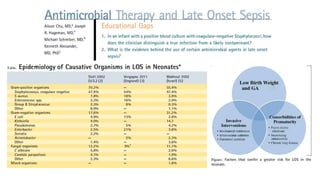
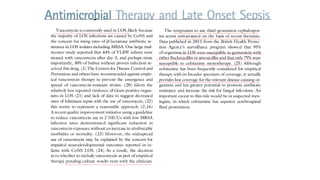
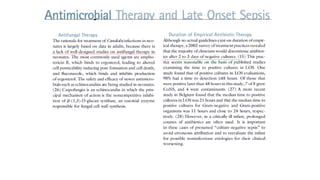
TERAPIA ANTIBIÓTICA EMPÍRICA:
 Objetivo: erradicar lo más temprano posible el microorganismo causante.
 R/B: Altera la microbiota neonatal, potencialmente torna más susceptible al
neoanto de infecciones oportunistas, aumento del riego de Resistencia.
 El ATB dirigido al microorganismo causante.
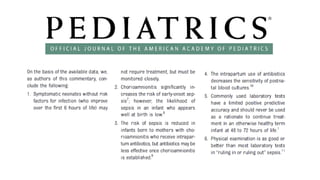
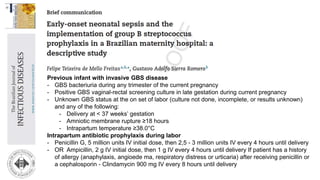
Previous infant with invasive GBS disease
- GBS bacteriuria during any trimester of the current pregnancy
- Positive GBS vaginal-rectal screening culture in late gestation during current pregnancy
- Unknown GBS status at the on set of labor (culture not done, incomplete, or results unknown)
and any of the following:
- Delivery at < 37 weeks’ gestation
- Amniotic membrane rupture ≥18 hours
- Intrapartum temperature ≥38.0°C
Intrapartum antibiotic prophylaxis during labor
- Penicillin G, 5 million units IV initial dose, then 2,5 - 3 million units IV every 4 hours until delivery
- OR Ampicillin, 2 g IV initial dose, then 1 g IV every 4 hours until delivery If patient has a history
of allergy (anaphylaxis, angioede ma, respiratory distress or urticaria) after receiving penicillin or
a cephalosporin - Clindamycin 900 mg IV every 8 hours until delivery
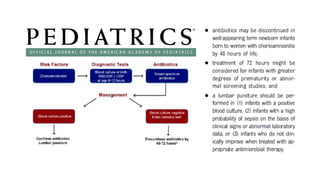
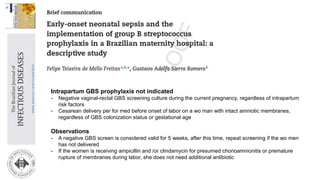
Intrapartum GBS prophylaxis not indicated
- Negative vaginal-rectal GBS screening culture during the current pregnancy, regardless of intrapartum
risk factors
- Cesarean delivery per for med before onset of labor on a wo man with intact amniotic membranes,
regardless of GBS colonization status or gestational age
Observations
- A negative GBS screen is considered valid for 5 weeks, after this time, repeat screening if the wo men
has not delivered
- If the women is receiving ampicillin and /or clindamycin for presumed chorioamnionitis or premature
rupture of membranes during labor, she does not need additional antibiotic
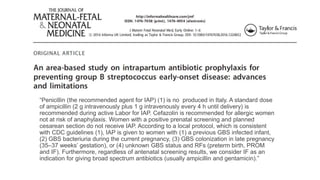
“Penicillin (the recommended agent for IAP) (1) is no produced in Italy. A standard dose
of ampicillin (2 g intravenously plus 1 g intravenously every 4 h until delivery) is
recommended during active Labor for IAP. Cefazolin is recommended for allergic women
not at risk of anaphylaxis. Women with a positive prenatal screening and planned
cesarean section do not receive IAP. According to a local protocol, which is consistent
with CDC guidelines (1), IAP is given to women with (1) a previous GBS infected infant,
(2) GBS bacteriuria during the current pregnancy, (3) GBS colonization in late pregnancy
(35–37 weeks’ gestation), or (4) unknown GBS status and RFs (preterm birth, PROM
and IF). Furthermore, regardless of antenatal screening results, we consider IF as an
indication for giving broad spectrum antibiotics (usually ampicillin and gentamicin).”

Sepsis neonatal [autoguardado]

  • 1.
    Sepsis Neonatal SERVICIO DEPEDIATRÍA - INTERNADO HOSPITAL DE VENTANILLA WUINNY A. LI HOLGUÍN. Lima, marzo del 2017
  • 2.
    As part ofthis comprehensive approach, it is impossible to neglect the importance of infection as an underlying and contributing cause of maternal and newborn mortality. Deaths due to infection occur mainly through sepsis—a potentially life-threatening condition caused by a dysregulated host response to infection and organ dysfunction.2 Infections cause about 11% of maternal deaths, and are also a significant contributor to many deaths attributed to other conditions.3 The risk of early neonatal sepsis increases in the event of maternal infection.4 Early neonatal sepsis causes about 8% of all neonatal deaths, but the proportion of late neonatal deaths due to sepsis is four times higher.5 Deaths from maternal and neonatal sepsis expose broader health determinants and underlying issues of quality of care including infrastructure constraints, inconsistent use of preventive measures, delayed diagnosis, and poor management of infection and its complications.
  • 3.
    This year, theInitiative will launch a maternal and neonatal sepsis global mobilisation and awareness campaign, which will culminate in the week of Sept 13, 2017, with the Global Maternal Sepsis Study. During that week, a massive coordinated data collection effort will take place to assess the burden and current management of maternal and neonatal sepsis in hundreds of health facilities in approximately 50 countries around the world. The new maternal sepsis definition and potential identification criteria will be tested and validated in this large global study. That eff ort will be followed by the implementation of other specific projects and programmes targeting the prevention and successful management of maternal and newborn sepsis.
  • 4.
    INFECCIONES EN ELNEONATO • Estas infecciones son mas frecuentes en prematuros y en ellos reviste especial gravedad. Los microorganismos patógenos inicialmente contaminan la piel y/o mucosas del RN, llegando al torrente circulatorio tras atravesar la barrera cutaneo-mucosa. • Canal genital materno • Contaminación ascendente • De la madre al RN Sepsis de transmisión vertical • UCI neonatal • Personal sanitario (manos contaminadas) Sepsis de transmisión horizontal nosocomial • En su domicilio o en su comunidad Sepsis de transmisión horizontal comunitaria
  • 5.
  • 6.
  • 7.
    PATOGENIA • Hematógena o Transplacentariao Infección fonicular • Sitios proximales: LA Infecciones prenatales o congénitas • Vía ascendente • RPM 18 horas • Aspiración / Deglución de secreciones por el canal post parto. • Sepsis neonatal / Complicaciones obstétricas Infecciones perinatales • Ambiente • Alimentos • Ropa Infecciones postnatales  Período embrionario: Endoarteritis – Malformaciones  Período Fetal: Necrosis celular
  • 8.
    PATOGENIA ANTIINFLAMATORIO • Parálisis inmunológica •Sd rpta antiinflamatoria compensatoria • Mayor riesgo de sobreinfecciones (catéter o heridas) PRO INFLAMATORIA • Choque profundo • Fulminante EFECTO DELETÉREO:  Activación SER  Pérdida de integridad microvascular  Disfunción de órganos distantes del sitio de injuria inicial
  • 9.
    SEPSIS NEONATAL • Sintomatología clínica+ Datos de Laboratorio (Leucocitosis, PCR, procalcitonina) • SISR + evidencia de infección Manifestaciones clínicas  Actividad espontánea Inestabilidad de la T° Dificultad en la alimentación • Retención gástrica • Regurgitación • Reflejo de succión débil – abolido PMT: • Taquicardia • Bradicardia • Apnea Manifestaciones digestivas • Vómitos • Distensión abdominal • Diarrea Cardiorrespiratoria: • Taquicardia • Taquipnea • Distrés Respirtatorio • Apnea Neurológica • Apatía • Irritabilidad • Convulsiones TARDÍA  Movimiento espontáneo Hipotonía Ictericia “aspecto séptico” CID: ptequias, equimosis, Hemorragia en mucosas. CHOQUE SÉPTICO: • Llenado capilar  2 segundos • Taquicardia • Pulso débil • Hipotensión SUPERPOSICIÓN DE DOS FENÓMENOS: CHOQUE FRÍO Y CHOQUE CALIENTE
  • 10.
    SEPSIS NEONATAL •1 FR+ 1SC RIESGO DE INFECCIÓN •+ alteraciones analíticas de sospecha INFECCIÓN NEONATAL PROBABLE •1 o más cultivos control (+) INFECCIÓN NEONATAL CIERTA
  • 11.
    SEPSIS NEONATAL •1 FR+ 1SC RIESGO DE INFECCIÓN •+ alteraciones analíticas de sospecha INFECCIÓN NEONATAL PROBABLE •1 o más cultivos control (+) INFECCIÓN NEONATAL CIERTA SEPSIS CLÍNICA: Signos (+) Cultivos (-). Probablemente por virosis sistémica o porque la madre recibió ATB previo
  • 12.
  • 13.
    SEPSIS NEONATAL • TheEunice Kennedy Shriver National Institute of Child Health and Human Development Neonatal Network and the Vermont Oxford Network define neonatal early-onset sepsis (EOS) as the onset of signs and symptoms of sepsis with an associated positive culture result at or before age 72 hours. Late-onset sepsis (LOS) is defined as the onset of signs or symptoms of sepsis after age 72 hours. • The diagnosis of neonatal sepsis is challenging because early signs and symptoms are often subtle and nonspecific, yet prognosis depends on early detection and treatment. Furthermore, the symptoms of many noninfectious common neonatal conditions can mimic those of sepsis, complicating the diagnosis of sepsis.
  • 14.
    SEPSIS NEONATAL • Thegold standard for diagnosing sepsis is a positive result on culture from blood or another sterile body fluid, such as cerebrospinal fluid (CSF) or urine. It has been estimated that cases with a positive blood culture result represent less than 40% of all neonatal sepsis because of inadequate blood volume sampled, transient or low-grade bacteremia, or antibiotic transferred from a mother who received antibiotics during the intrapartum period. A single aerobic blood culture of sufficient volume (1 mL) has a 98% probability to isolate an organism even in infants with low-level bacteremia (4 CFU/mL). • The complete white blood cell (WBC) count with differential is routinely used to assist in the diagnosis of sepsis; however, multiple studies have determined that the WBC, immature-to-total neutrophil (I/T) ratio, and platelet count have low sensitivities and specificities.
  • 15.
    SEPSIS NEONATAL • Twovery large retrospective, multicenter database studies found that low WBC counts and high I/T ratios were associated with increasing odds of infection in EOS. High and low WBC counts, high absolute neutrophil count, high I/T ratios, and low platelet counts were associated with LOS. • A single blood cellcount–derived index did not have proven sensitivity to reliably include or exclude EOS or LOS in neonates. The absolute immature neutrophil count and absolute neutrophil count have suboptimal sensitivity and decreased predictive accuracy for EOS because elevation does not consistently distinguish an inflammatory response from a noninfectious origin. The I/T ratio is a more sensitive indicator of sepsis; however, single assessments have a better negative predictive value (NPV) (99%) than positive predictive value (PPV) (25%). The I/T ratio is elevated in a quarter to half of presumptively uninfected neonates. Overall, neutrophil indexes seem to be more helpful for excluding infants without infection than for including infants with infection.
  • 16.
    SEPSIS NEONATAL • Rapiddiagnostic biomarkers of sepsis to differentiate septic from nonseptic neonates may allow timely discontinuation of antibiotic therapy, thus avoiding their prolonged use and preventing emergence of antibiotic resistant bacteria. In addition, prolonged empiric antibiotic use has been associated with increased risk of necrotizing enterocolitis, LOS, and death. • Acute-phase proteins, components of the complement system, chemokines, cytokines, adhesion molecules, and cell surfacemarkers have all been investigated as biomarkers of neonatal sepsis. The most widely studied and most promising markers include C-reactive protein (CRP), interleukin (IL) 6, IL-8, procalcitonin (PCT), and tumor necrosis factor a (TNF-a).
  • 17.
    SEPSIS NEONATAL PROCALCITONINA  Aumentade 6 – 18 horas después de la noxa y alcanza un pico en 8-60 horas después.  PCR es sintetizada por el feto y RN. Sin embargo, estudios han demostrado que sus niveles están disminuidos en los pretérmino. Hay un mínimo transporte de PCR materno al feto por eso es que es un marcador ideal para Sepsis de aparición temprana en neonatos.  EOS: Es el mejor marcador de sepsis neonatal entre las 24-48 h desde el inicio de la infección, con una sensibilidad de 84% y una especificidad del 96%.  LOS: PCR se usa como un biomarcador específico de infección neonatal. Es más sensible y específico en el dx de Sepsis que el índice de I/T y el valor absolute de Neutrófilos. Sin embargo, también se eleva en otras condiciones no infecciosas como: Aspiración meconial, HIV, asfixia perinatal.
  • 18.
    SEPSIS NEONATAL IL-6  Aumentade 2-3 horas y regresa a sus VN en 6-8 horas.  Producido por Macrófagos, células endoteliales y fibroblastos en respuesta la inflamación.  Es el mejor marcador inductor de la síntesis de proteínas de fase aguda pediátricas, incluyendo PCR y fibrinógeno.  Su concentración no está influenciada por la edad gestacional}  Presenta una alta sensibilidad en diagnosticar sepsis de aparición temprana y tardía.
  • 19.
    SEPSIS NEONATAL IL-8  Producidopor Macrófagos, células endoteliales y fibroblastos en respuesta la inflamación, parecido a la IL-6.  Su concentración no está influenciada por la edad gestacional ni por infantes post-término.  Su sensibilidad y especificidad disminuyen tras 24-48 horas de la infección.  EOS: S-78%, E-91%, VPP-100% y VPN 84%.
  • 20.
    SEPSIS NEONATAL TNF-a  Citcinaproinflamatoria que estimula la producción de IL-6 y que está aumentada en sepsis neonatal.  Es moderadamente adecuada para el dx de EOS (S:66% E:76%) y LOS (S:68%, E:89%).  Aunque es un buen marcador de sepsis neonatal, es menos útil que otras citosinas como IL-6 y la IL-8.
  • 21.
    SEPSIS NEONATAL Procalcitonina  Reactantede fase aguda roducida por monocitos y hepatocitos 4-6 horas después de la exposición a los antígenos bacterianos.  Sus valores incrementan en los primeros días después del nacimiento de forma fisiológica, su valor es limitado en el diagnóstico de EOS.  Los pretérmino tienen valores más elevados de PCT comparados con los infantes a término.  EOS: S-76% y E-76% y para LOS: S-90% y E-88%.
  • 26.
    TERAPIA ANTIBIÓTICA EMPÍRICA: Objetivo: erradicar lo más temprano posible el microorganismo causante.  R/B: Altera la microbiota neonatal, potencialmente torna más susceptible al neoanto de infecciones oportunistas, aumento del riego de Resistencia.  El ATB dirigido al microorganismo causante.
  • 29.
    Previous infant withinvasive GBS disease - GBS bacteriuria during any trimester of the current pregnancy - Positive GBS vaginal-rectal screening culture in late gestation during current pregnancy - Unknown GBS status at the on set of labor (culture not done, incomplete, or results unknown) and any of the following: - Delivery at < 37 weeks’ gestation - Amniotic membrane rupture ≥18 hours - Intrapartum temperature ≥38.0°C Intrapartum antibiotic prophylaxis during labor - Penicillin G, 5 million units IV initial dose, then 2,5 - 3 million units IV every 4 hours until delivery - OR Ampicillin, 2 g IV initial dose, then 1 g IV every 4 hours until delivery If patient has a history of allergy (anaphylaxis, angioede ma, respiratory distress or urticaria) after receiving penicillin or a cephalosporin - Clindamycin 900 mg IV every 8 hours until delivery
  • 30.
    Intrapartum GBS prophylaxisnot indicated - Negative vaginal-rectal GBS screening culture during the current pregnancy, regardless of intrapartum risk factors - Cesarean delivery per for med before onset of labor on a wo man with intact amniotic membranes, regardless of GBS colonization status or gestational age Observations - A negative GBS screen is considered valid for 5 weeks, after this time, repeat screening if the wo men has not delivered - If the women is receiving ampicillin and /or clindamycin for presumed chorioamnionitis or premature rupture of membranes during labor, she does not need additional antibiotic
  • 31.
    “Penicillin (the recommendedagent for IAP) (1) is no produced in Italy. A standard dose of ampicillin (2 g intravenously plus 1 g intravenously every 4 h until delivery) is recommended during active Labor for IAP. Cefazolin is recommended for allergic women not at risk of anaphylaxis. Women with a positive prenatal screening and planned cesarean section do not receive IAP. According to a local protocol, which is consistent with CDC guidelines (1), IAP is given to women with (1) a previous GBS infected infant, (2) GBS bacteriuria during the current pregnancy, (3) GBS colonization in late pregnancy (35–37 weeks’ gestation), or (4) unknown GBS status and RFs (preterm birth, PROM and IF). Furthermore, regardless of antenatal screening results, we consider IF as an indication for giving broad spectrum antibiotics (usually ampicillin and gentamicin).”