



Team Formation Tech
Ramy noor
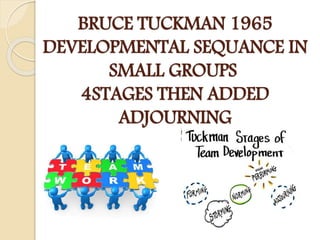
BRUCE TUCKMAN 1965
DEVELOPMENTAL SEQUANCE IN
SMALL GROUPS
4STAGES THEN ADDED
ADJOURNING
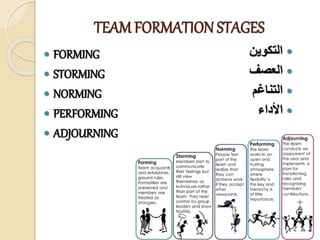
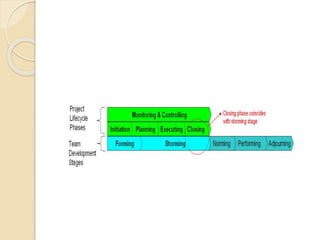
TEAM FORMATION STAGES
 FORMING
 STORMING
 NORMING
 PERFORMING
 ADJOURNING
‫التكوين‬
‫العصف‬
‫التناغم‬
‫األداء‬
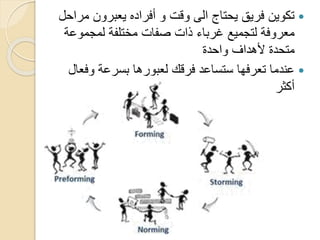
‫م‬ ‫يعبرون‬ ‫أفراده‬ ‫و‬ ‫وقت‬ ‫الى‬ ‫يحتاج‬ ‫فريق‬ ‫تكوين‬‫راحل‬
‫لمجمو‬ ‫مختلفة‬ ‫صفات‬ ‫ذات‬ ‫غرباء‬ ‫لتجميع‬ ‫معروفة‬‫عة‬
‫واحدة‬ ‫ألهداف‬ ‫متحدة‬
‫وف‬ ‫بسرعة‬ ‫لعبورها‬ ‫فرقك‬ ‫ستساعد‬ ‫تعرفها‬ ‫عندما‬‫عال‬
‫أكثر‬
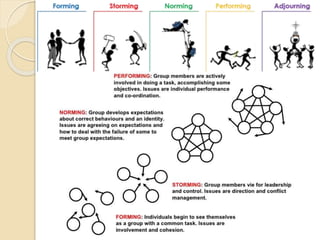
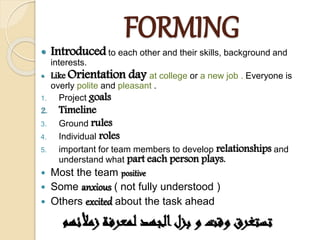
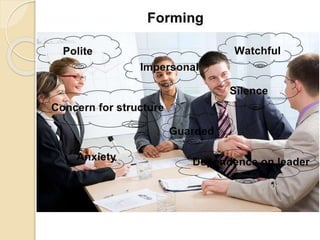
FORMING
 Introduced to each other and their skills, background and
interests.
 Like Orientation day at college or a new job . Everyone is
overly polite and pleasant .
1. Project goals
2. Timeline
3. Ground rules
4. Individual roles
5. important for team members to develop relationships and
understand what part each person plays.
 Most the team positive
 Some anxious ( not fully understood )
 Others excited about the task ahead
‫زمألئ‬ ‫لمعرفة‬ ‫الجهد‬‫بزل‬ ‫و‬ ‫وقت‬ ‫تستغرق‬‫هم‬
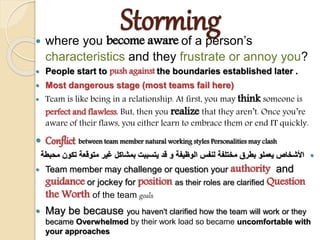
Storming where you become aware of a person’s
characteristics and they frustrate or annoy you?
 People start to push against the boundaries established later .
 Most dangerous stage (most teams fail here)
 Team is like being in a relationship. At first, you may think someone is
perfect and flawless. But, then you realize that they aren’t. Once you’re
aware of their flaws, you either learn to embrace them or end IT quickly.
 Conflict between team member natural working styles Personalities may clash
‫ت‬ ‫متوقعة‬ ‫غير‬ ‫بمشاكل‬ ‫يتسببت‬ ‫قد‬ ‫و‬ ‫الوظيفة‬ ‫لنفس‬ ‫مختلفة‬ ‫بطرق‬ ‫يعملو‬ ‫األشخاص‬‫محبطة‬ ‫كون‬
 Team member may challenge or question your authority and
guidance or jockey for position as their roles are clarified Question
the Worth of the team goals
 May be because you haven't clarified how the team will work or they
became Overwhelmed by their work load so became uncomfortable with
your approaches
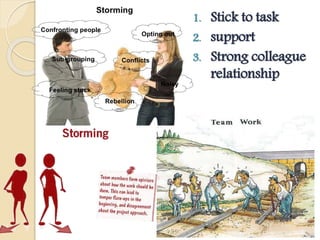
1. Stick to task
2. support
3. Strong colleague
relationship
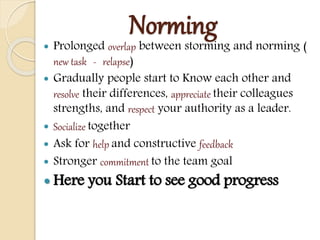
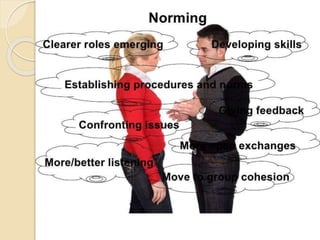
Norming
 Prolonged overlap between storming and norming (
new task - relapse)
 Gradually people start to Know each other and
resolve their differences, appreciate their colleagues
strengths, and respect your authority as a leader.
 Socialize together
 Ask for help and constructive feedback
 Stronger commitment to the team goal
 Here you Start to see good progress
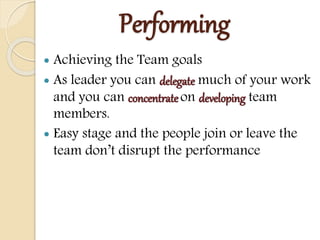
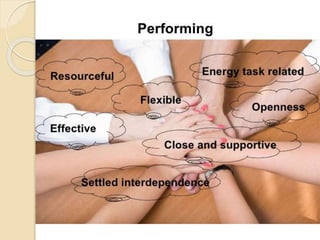
Performing
 Achieving the Team goals
 As leader you can delegate much of your work
and you can concentrate on developing team
members.
 Easy stage and the people join or leave the
team don’t disrupt the performance
Adjourning
 Eventually
 Project team exist for only a fixed period and even
permanent teams may dispended through organizational
restructuring
 Member like routine and close working relation shipfind this
stage difficult
Using the Tool
 As a team leader, your aim is to help your
people perform well, as quickly as possible. To
do this, you'll need to change your approach at
each stage.
 Follow the steps below to ensure that you're
doing the right thing at the right time:
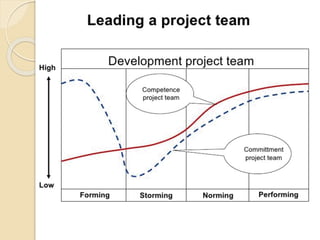
 Identify the stage of team development that
your team is at from the descriptions above.
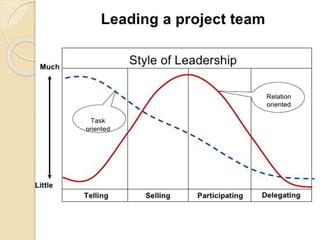
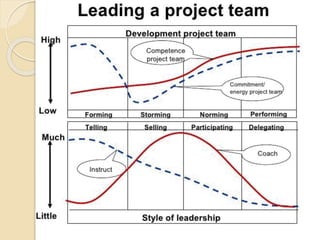
 Now consider what you need to do to move
towards the performing stage. Figure 1, below,
will help you understand your role, and think
about how you can move the team forward.
 Schedule regular reviews of where your team is,
and adjust your behavior and leadership
approach appropriately
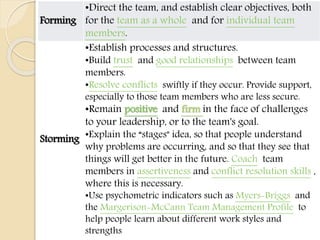
Forming
•Direct the team, and establish clear objectives, both
for the team as a whole and for individual team
members.
Storming
•Establish processes and structures.
•Build trust and good relationships between team
members.
•Resolve conflicts swiftly if they occur. Provide support,
especially to those team members who are less secure.
•Remain positive and firm in the face of challenges
to your leadership, or to the team's goal.
•Explain the “stages" idea, so that people understand
why problems are occurring, and so that they see that
things will get better in the future. Coach team
members in assertiveness and conflict resolution skills ,
where this is necessary.
•Use psychometric indicators such as Myers-Briggs and
the Margerison-McCann Team Management Profile to
help people learn about different work styles and
strengths
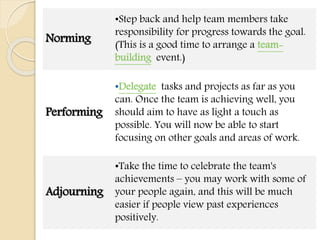
Norming
•Step back and help team members take
responsibility for progress towards the goal.
(This is a good time to arrange a team-
building event.)
Performing
•Delegate tasks and projects as far as you
can. Once the team is achieving well, you
should aim to have as light a touch as
possible. You will now be able to start
focusing on other goals and areas of work.
Adjourning
•Take the time to celebrate the team's
achievements – you may work with some of
your people again, and this will be much
easier if people view past experiences
positively.
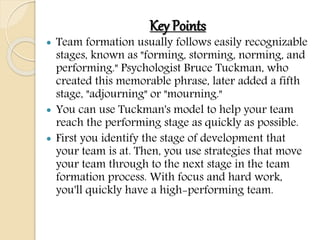
Key Points
 Team formation usually follows easily recognizable
stages, known as "forming, storming, norming, and
performing." Psychologist Bruce Tuckman, who
created this memorable phrase, later added a fifth
stage, "adjourning" or "mourning."
 You can use Tuckman's model to help your team
reach the performing stage as quickly as possible.
 First you identify the stage of development that
your team is at. Then, you use strategies that move
your team through to the next stage in the team
formation process. With focus and hard work,
you'll quickly have a high-performing team.
Team formation stages

Team formation stages

  • 1.
  • 2.
    BRUCE TUCKMAN 1965 DEVELOPMENTALSEQUANCE IN SMALL GROUPS 4STAGES THEN ADDED ADJOURNING
  • 5.
    TEAM FORMATION STAGES FORMING  STORMING  NORMING  PERFORMING  ADJOURNING ‫التكوين‬ ‫العصف‬ ‫التناغم‬ ‫األداء‬
  • 6.
    ‫م‬ ‫يعبرون‬ ‫أفراده‬‫و‬ ‫وقت‬ ‫الى‬ ‫يحتاج‬ ‫فريق‬ ‫تكوين‬‫راحل‬ ‫لمجمو‬ ‫مختلفة‬ ‫صفات‬ ‫ذات‬ ‫غرباء‬ ‫لتجميع‬ ‫معروفة‬‫عة‬ ‫واحدة‬ ‫ألهداف‬ ‫متحدة‬ ‫وف‬ ‫بسرعة‬ ‫لعبورها‬ ‫فرقك‬ ‫ستساعد‬ ‫تعرفها‬ ‫عندما‬‫عال‬ ‫أكثر‬
  • 7.
    FORMING  Introduced toeach other and their skills, background and interests.  Like Orientation day at college or a new job . Everyone is overly polite and pleasant . 1. Project goals 2. Timeline 3. Ground rules 4. Individual roles 5. important for team members to develop relationships and understand what part each person plays.  Most the team positive  Some anxious ( not fully understood )  Others excited about the task ahead ‫زمألئ‬ ‫لمعرفة‬ ‫الجهد‬‫بزل‬ ‫و‬ ‫وقت‬ ‫تستغرق‬‫هم‬
  • 9.
    Storming where youbecome aware of a person’s characteristics and they frustrate or annoy you?  People start to push against the boundaries established later .  Most dangerous stage (most teams fail here)  Team is like being in a relationship. At first, you may think someone is perfect and flawless. But, then you realize that they aren’t. Once you’re aware of their flaws, you either learn to embrace them or end IT quickly.  Conflict between team member natural working styles Personalities may clash ‫ت‬ ‫متوقعة‬ ‫غير‬ ‫بمشاكل‬ ‫يتسببت‬ ‫قد‬ ‫و‬ ‫الوظيفة‬ ‫لنفس‬ ‫مختلفة‬ ‫بطرق‬ ‫يعملو‬ ‫األشخاص‬‫محبطة‬ ‫كون‬  Team member may challenge or question your authority and guidance or jockey for position as their roles are clarified Question the Worth of the team goals  May be because you haven't clarified how the team will work or they became Overwhelmed by their work load so became uncomfortable with your approaches
  • 10.
    1. Stick totask 2. support 3. Strong colleague relationship
  • 11.
    Norming  Prolonged overlapbetween storming and norming ( new task - relapse)  Gradually people start to Know each other and resolve their differences, appreciate their colleagues strengths, and respect your authority as a leader.  Socialize together  Ask for help and constructive feedback  Stronger commitment to the team goal  Here you Start to see good progress
  • 13.
    Performing  Achieving theTeam goals  As leader you can delegate much of your work and you can concentrate on developing team members.  Easy stage and the people join or leave the team don’t disrupt the performance
  • 15.
    Adjourning  Eventually  Projectteam exist for only a fixed period and even permanent teams may dispended through organizational restructuring  Member like routine and close working relation shipfind this stage difficult
  • 22.
    Using the Tool As a team leader, your aim is to help your people perform well, as quickly as possible. To do this, you'll need to change your approach at each stage.  Follow the steps below to ensure that you're doing the right thing at the right time:  Identify the stage of team development that your team is at from the descriptions above.  Now consider what you need to do to move towards the performing stage. Figure 1, below, will help you understand your role, and think about how you can move the team forward.  Schedule regular reviews of where your team is, and adjust your behavior and leadership approach appropriately
  • 23.
    Forming •Direct the team,and establish clear objectives, both for the team as a whole and for individual team members. Storming •Establish processes and structures. •Build trust and good relationships between team members. •Resolve conflicts swiftly if they occur. Provide support, especially to those team members who are less secure. •Remain positive and firm in the face of challenges to your leadership, or to the team's goal. •Explain the “stages" idea, so that people understand why problems are occurring, and so that they see that things will get better in the future. Coach team members in assertiveness and conflict resolution skills , where this is necessary. •Use psychometric indicators such as Myers-Briggs and the Margerison-McCann Team Management Profile to help people learn about different work styles and strengths
  • 24.
    Norming •Step back andhelp team members take responsibility for progress towards the goal. (This is a good time to arrange a team- building event.) Performing •Delegate tasks and projects as far as you can. Once the team is achieving well, you should aim to have as light a touch as possible. You will now be able to start focusing on other goals and areas of work. Adjourning •Take the time to celebrate the team's achievements – you may work with some of your people again, and this will be much easier if people view past experiences positively.
  • 25.
    Key Points  Teamformation usually follows easily recognizable stages, known as "forming, storming, norming, and performing." Psychologist Bruce Tuckman, who created this memorable phrase, later added a fifth stage, "adjourning" or "mourning."  You can use Tuckman's model to help your team reach the performing stage as quickly as possible.  First you identify the stage of development that your team is at. Then, you use strategies that move your team through to the next stage in the team formation process. With focus and hard work, you'll quickly have a high-performing team.