Dispersion of Light Projectee - Nishtha Pathak Class - 10 th  ‘B’
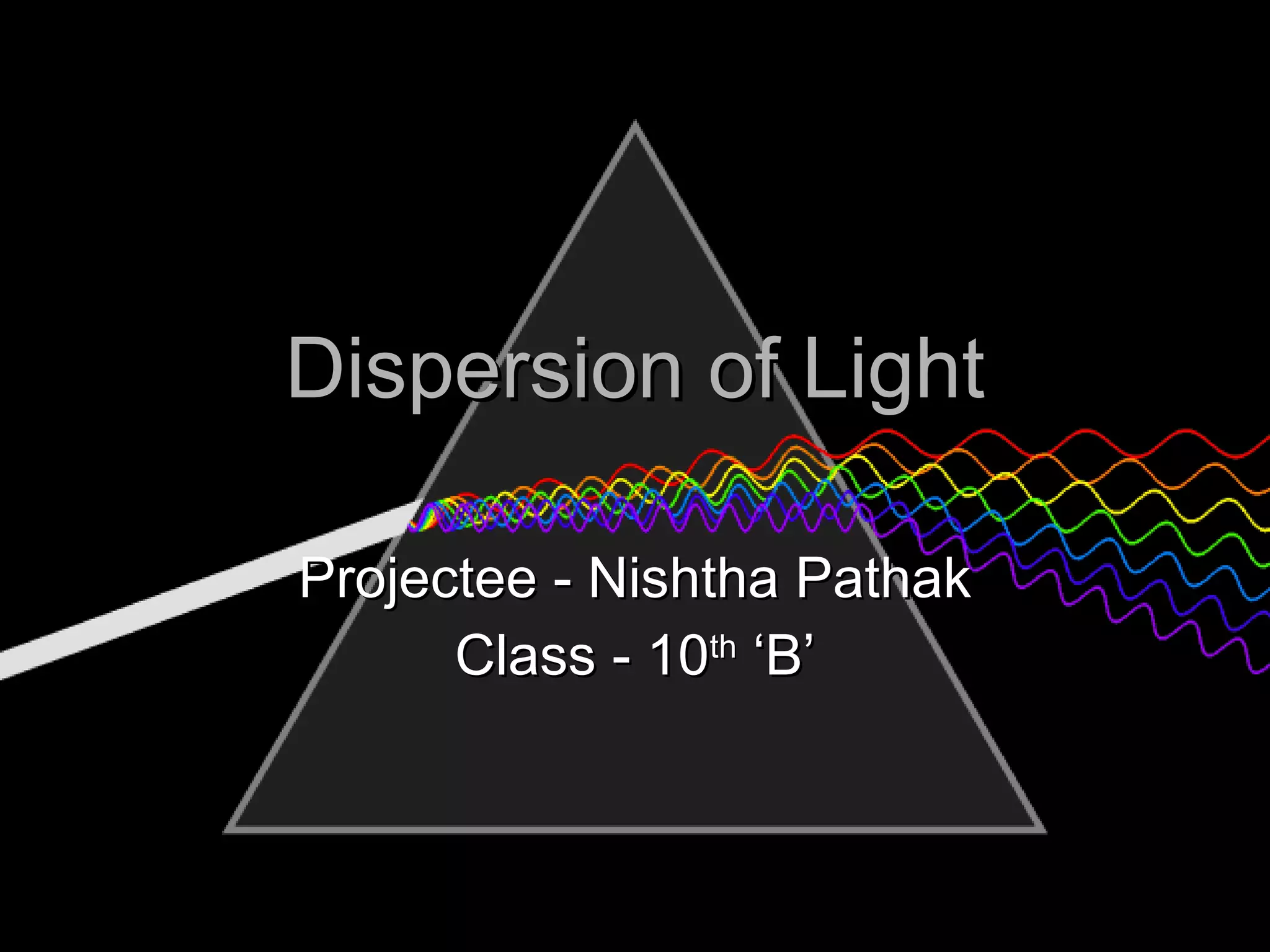
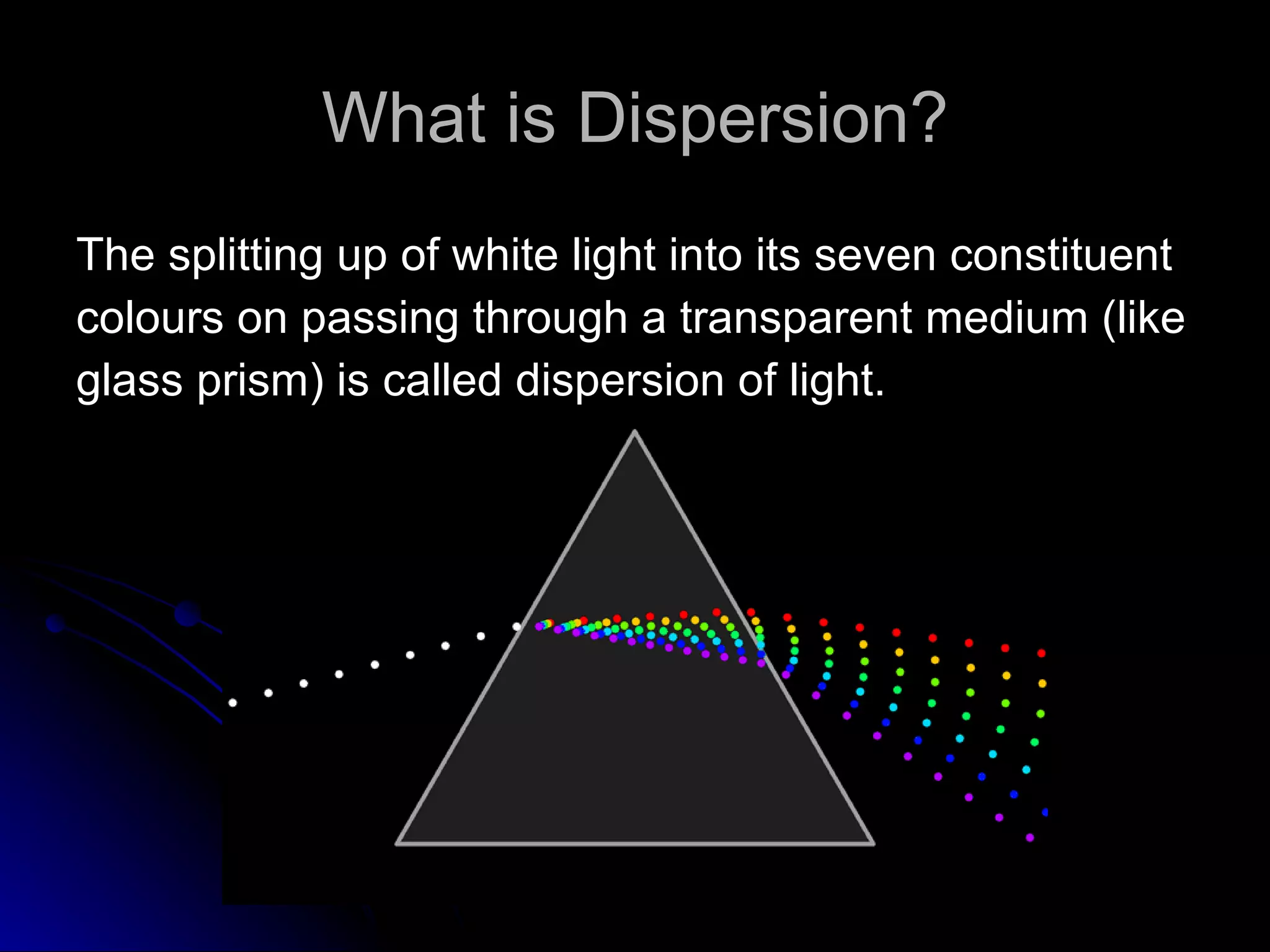
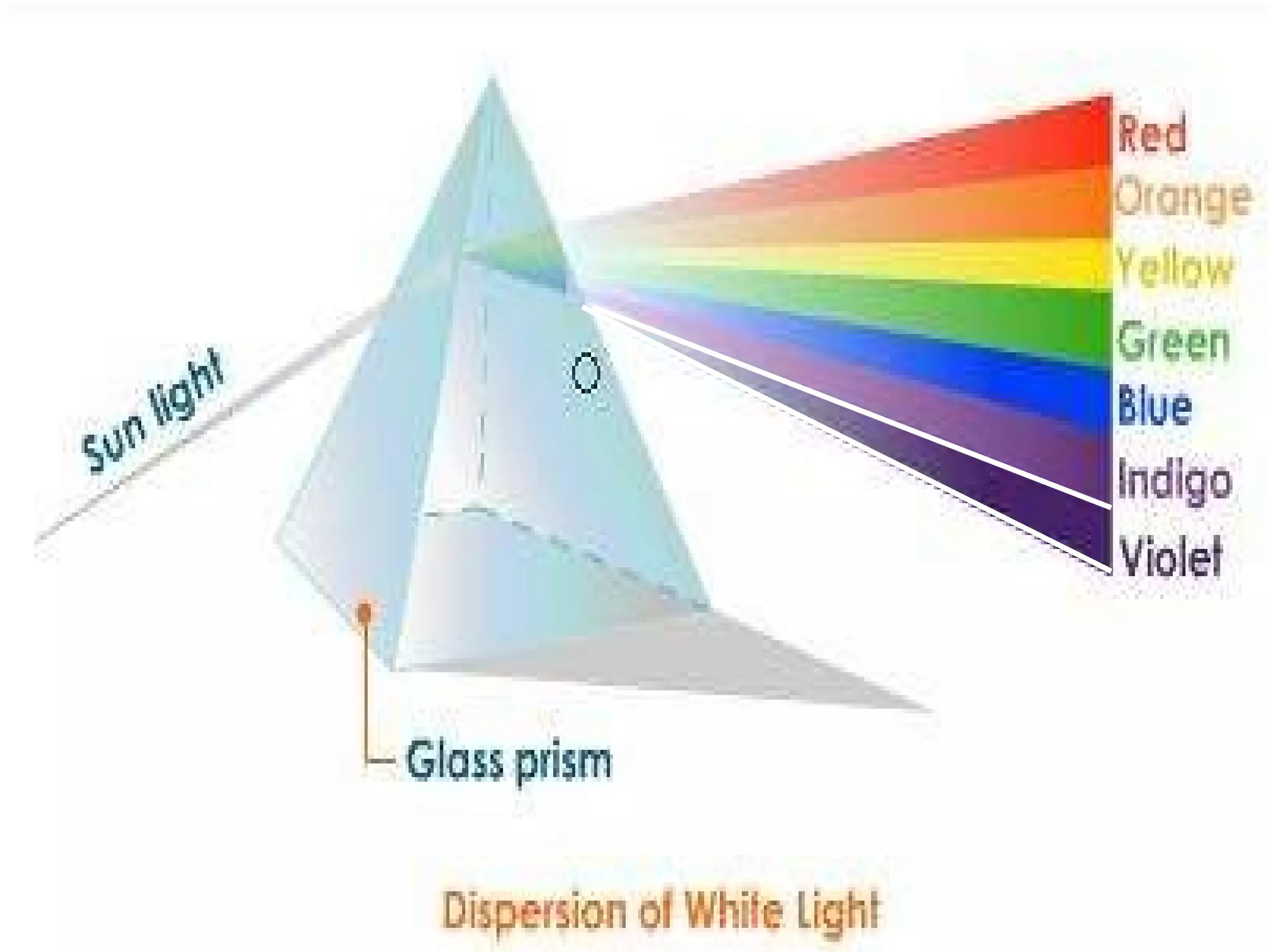
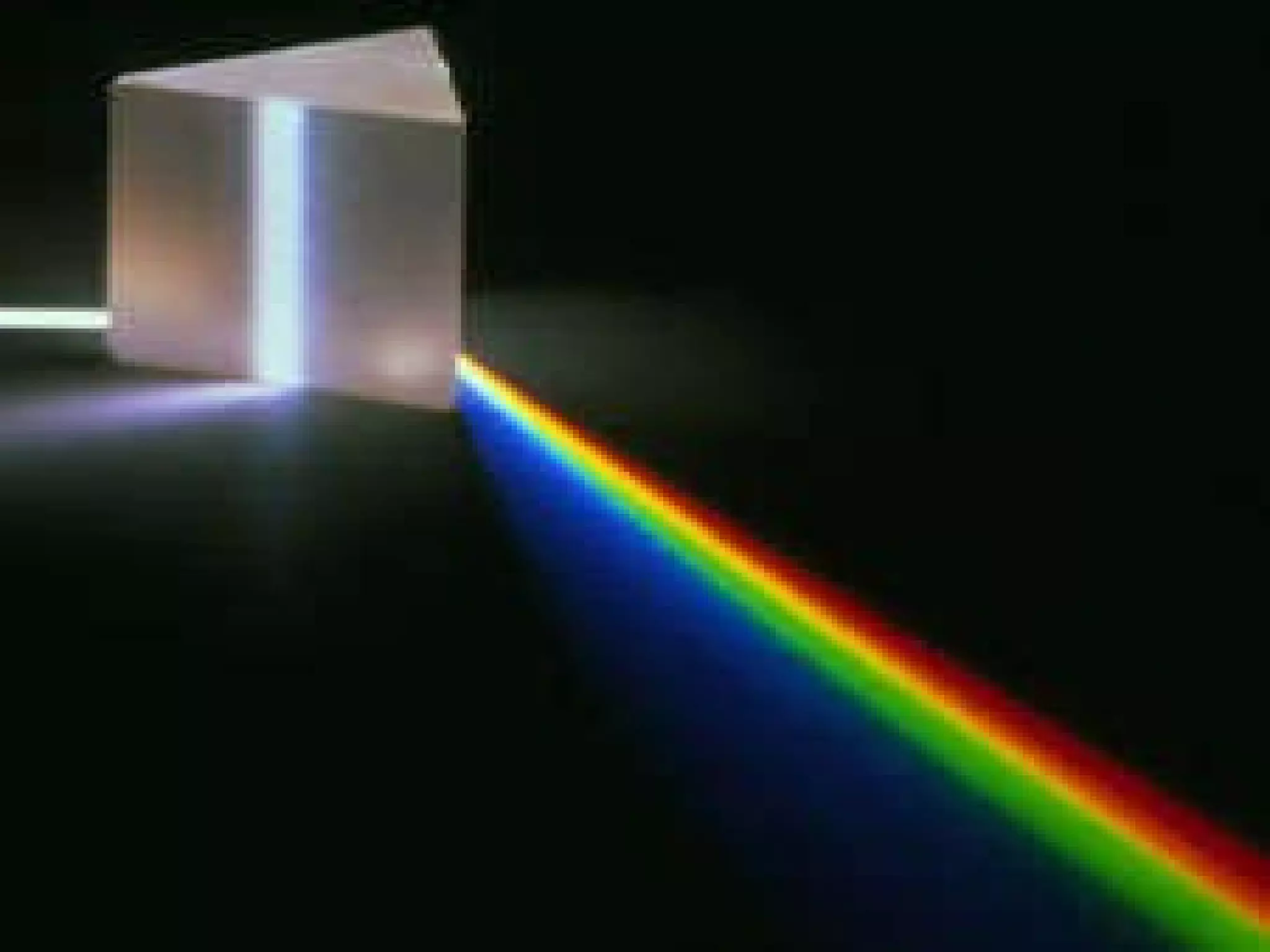
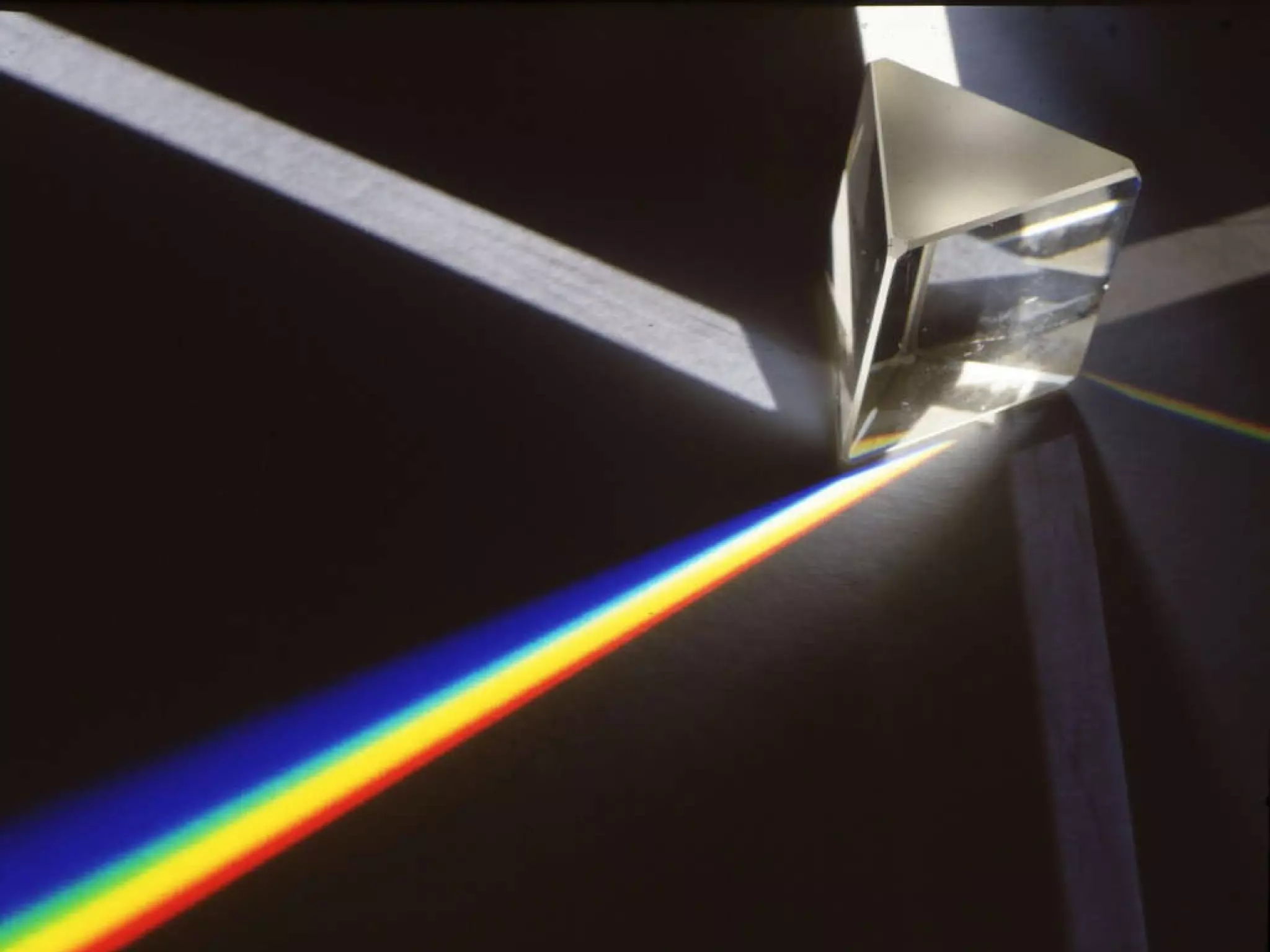
What is Dispersion? The splitting up of white light into its seven constituent  colours on passing through a transparent medium (like  glass prism) is called dispersion of light.
Cause of Dispersion The dispersion of white light occurs because colours of  white light travel at different speeds through the glass  prism. The amount of refraction depends on the speed  of coloured light in glass. Now, since the different  colours travel at different speeds, they are refracted by  different angles on passing through the glass prism.  So, when white light consisting of seven colours falls  on a glass prism, each colour in it is refracted by a  different angle, with a the result that seven colours  spread out to form a spectrum.
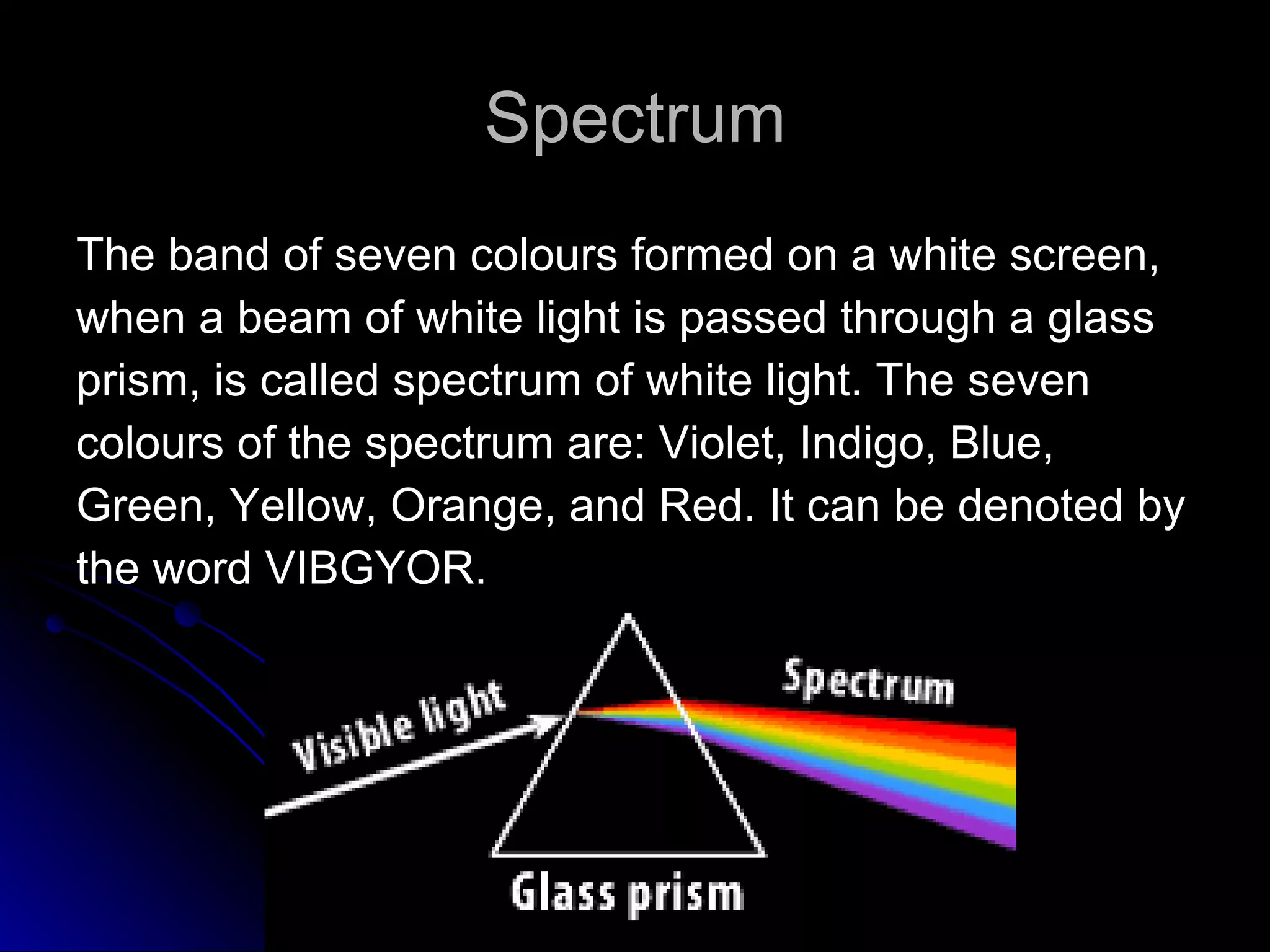
Spectrum The band of seven colours formed on a white screen,  when a beam of white light is passed through a glass  prism, is called spectrum of white light. The seven  colours of the spectrum are: Violet, Indigo, Blue,  Green, Yellow, Orange, and Red. It can be denoted by  the word VIBGYOR.
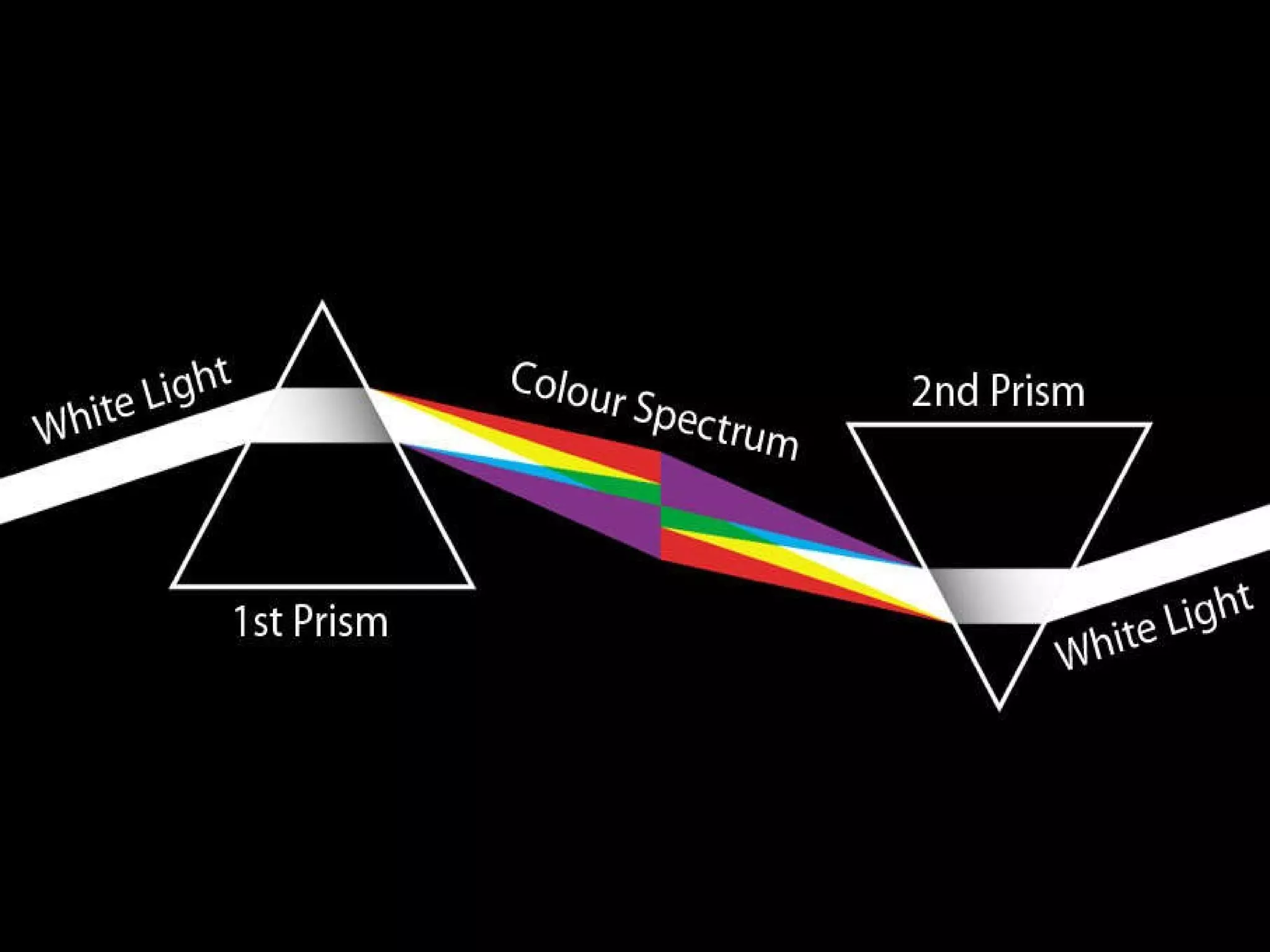
Newton’s Experiment Newton performed an experiment to show that white  light consist of colours. A white light ray is passed  through a prism to split it into the colours of the  spectrum. The different coloured light is allowed to  pass through an identical prism kept in inverted  position. The light emerging out of second prism was  found to be white indicating that the light ray consist of  colours.
 
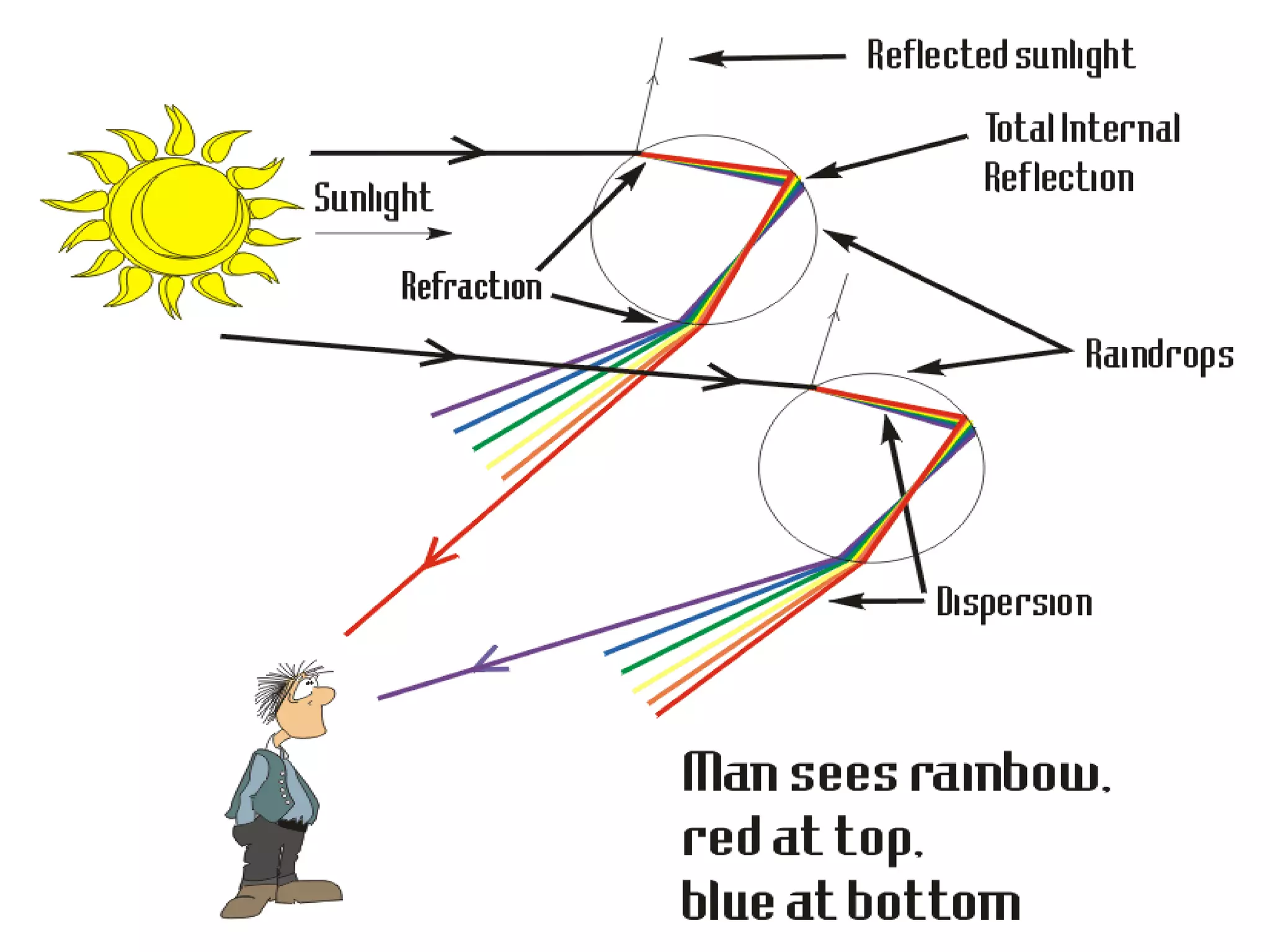
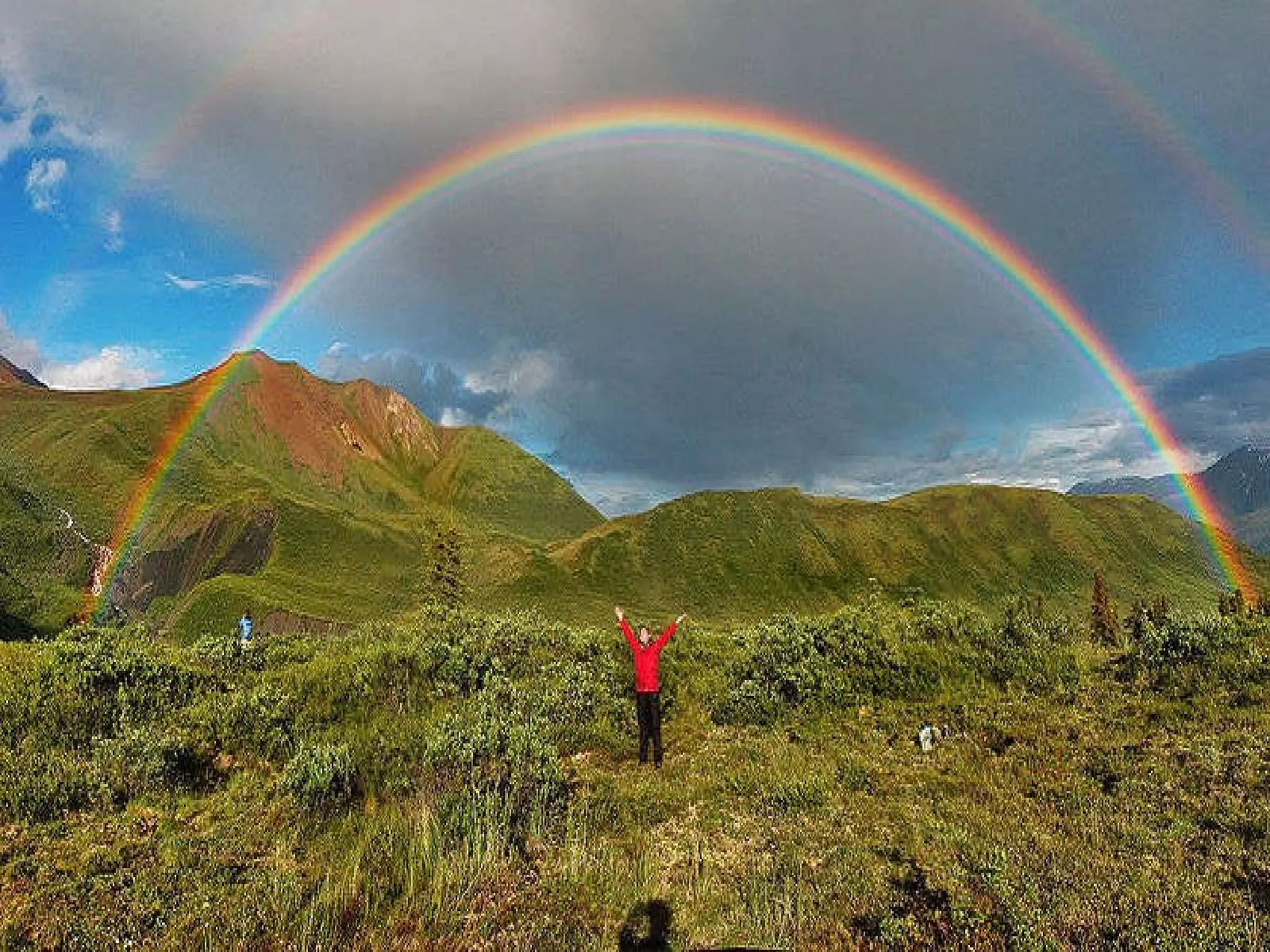
Rainbow A rainbow is a natural spectrum appearing in the sky  after a rain shower. It is caused by dispersion of  sunlight by tiny water droplets present in the  atmosphere. A rainbow is always formed in a direction  opposite  to that of the Sun. The water droplets acts  like a small prism. They refract and disperse the  incident sunlight, then reflect it internally, and finally  refract it again when it comes out of the raindrop. Due  to the dispersion of light and internal reflection,  different colours reach the observer’s eye.
 
 
Lets Find Out More Facts
What is the range of visible light? Range of visible light – 0.4 microns to 0.7 microns. Visible light has a large number of radiations having wavelengths ranging from 0.4 microns to 0.7 microns. That is, red light has a large wavelength compared to violet light.
Which component deviates maximum? The violet colour has the minimum speed in prism, so the violet colour is deviated the maximum.
 
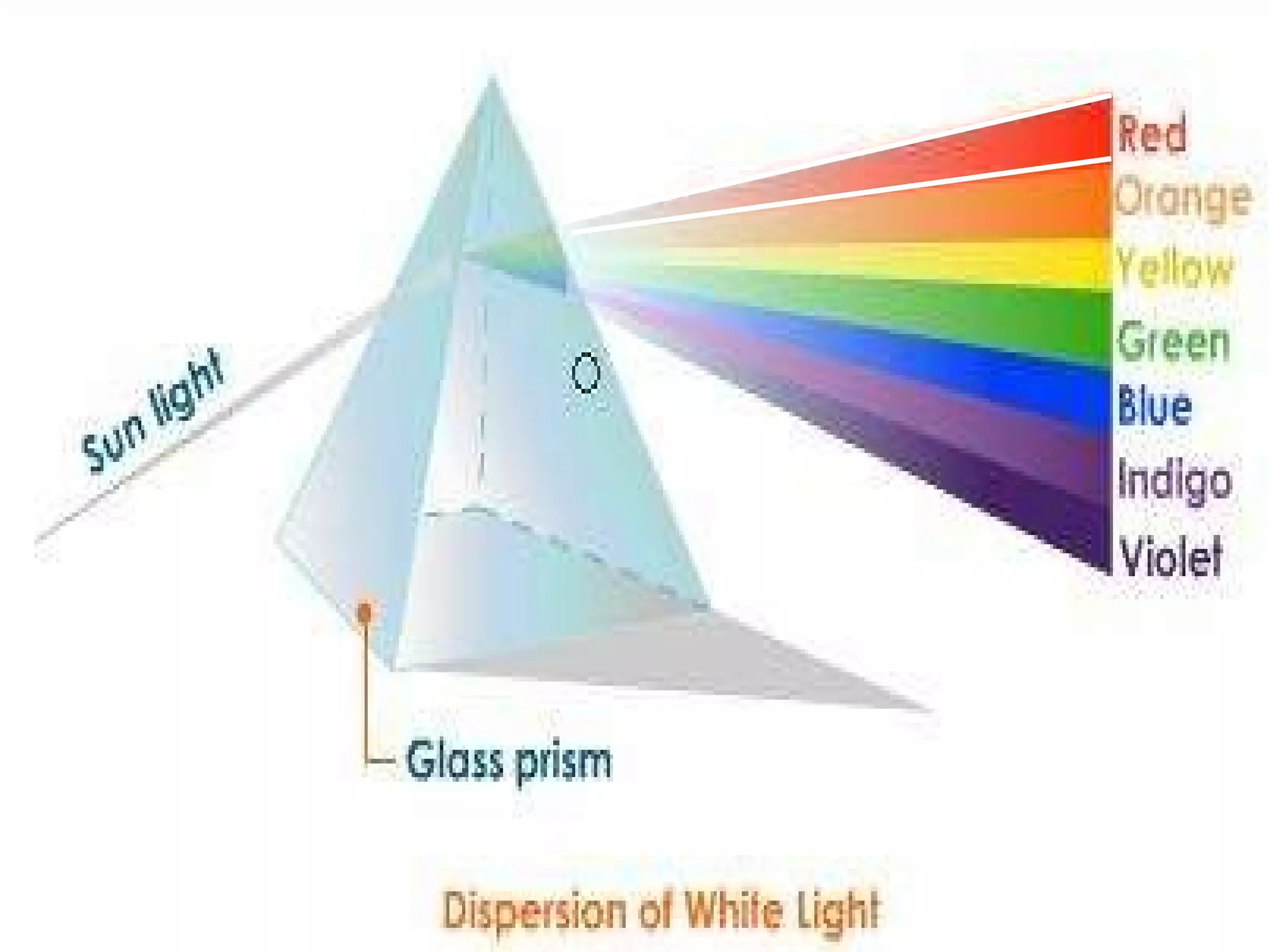
Which component deviates minimum? The red colour has the maximum speed in prism, so the red colour is deviated the minimum.
 
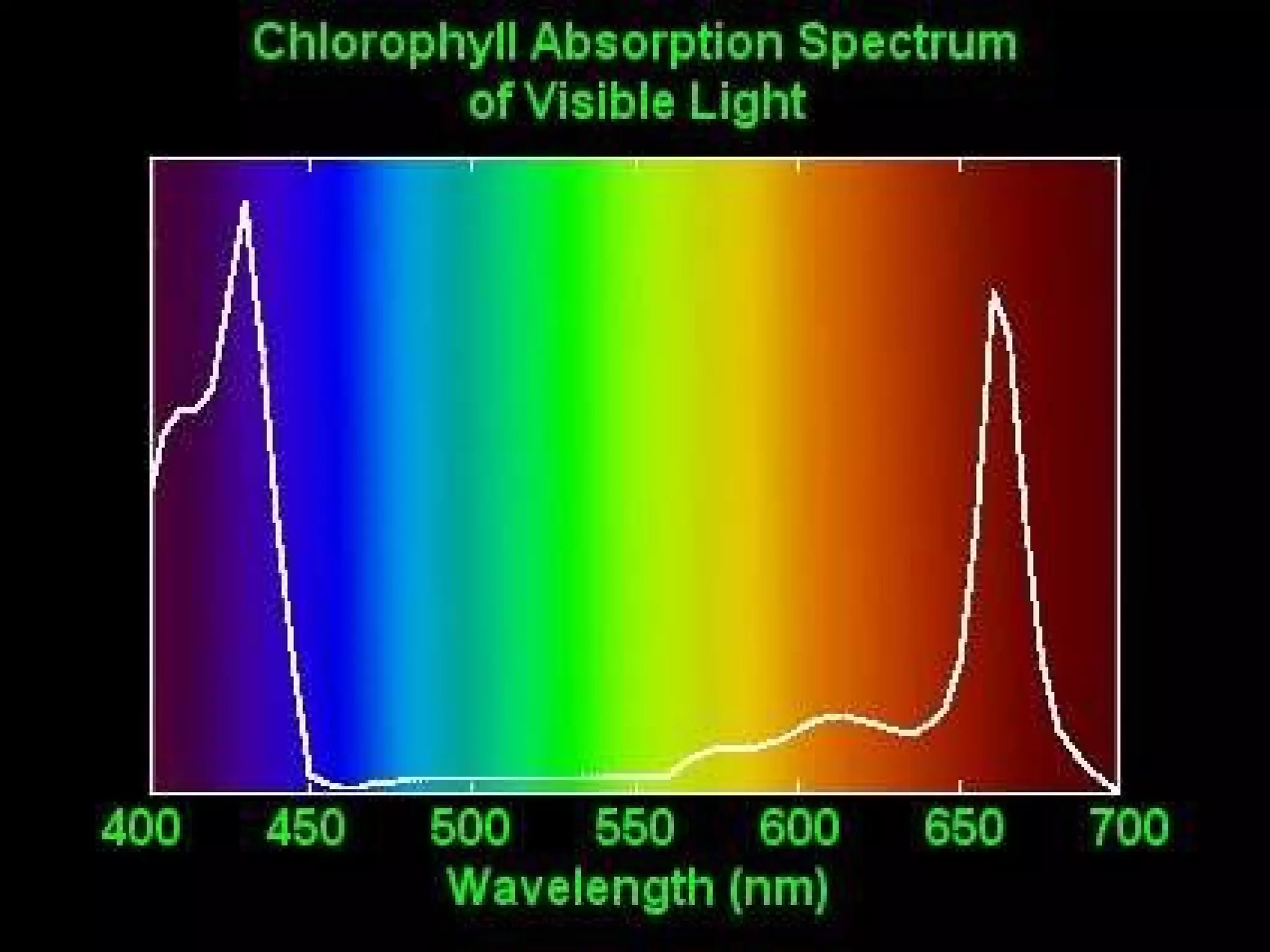
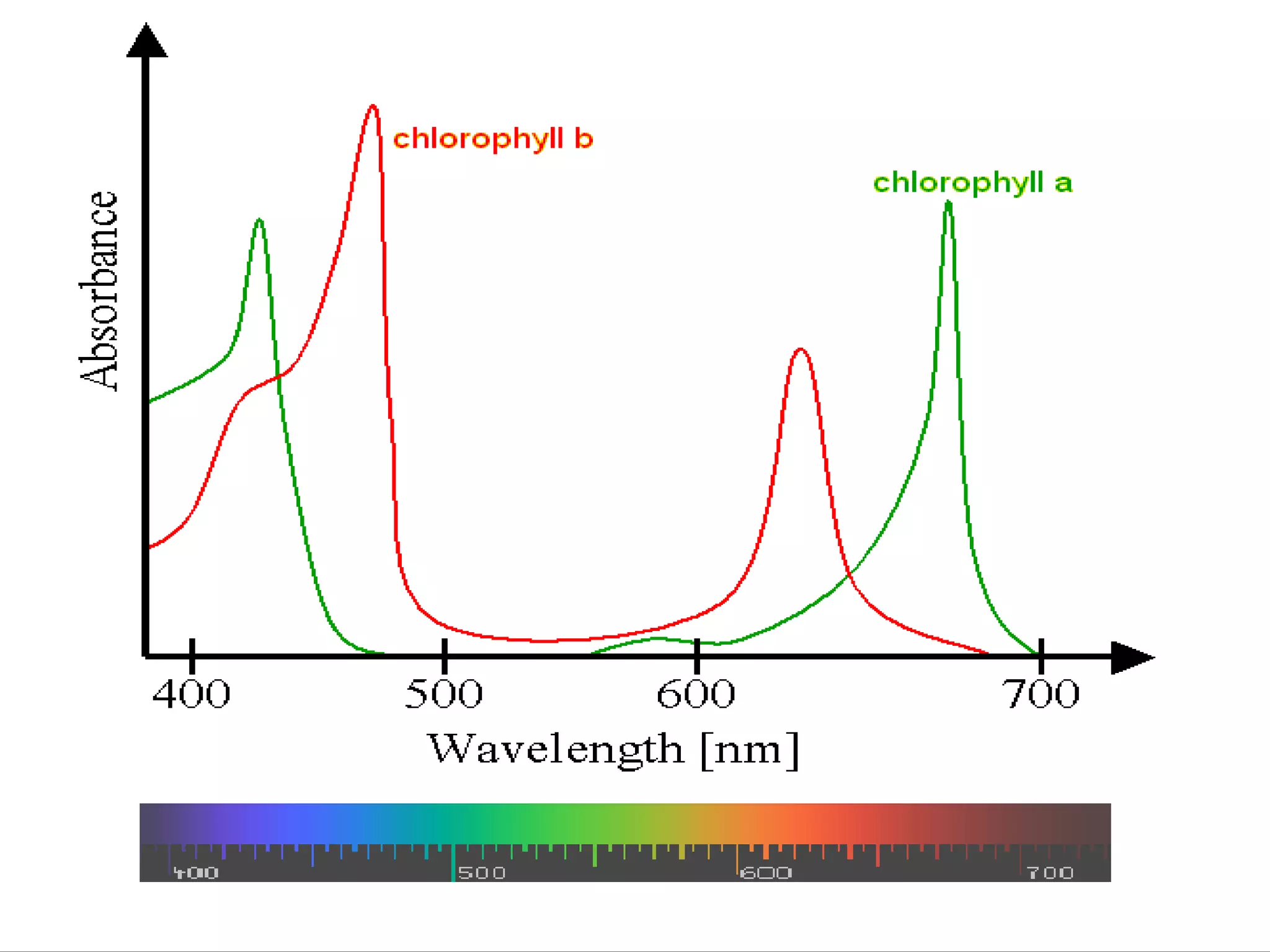
Rate of photosynthesis? Wavelength of the component that increases the rate of photosynthesis - 0.7 microns. The rate of photosynthesis is the most in the presence of red light.
 
Which colour doesn’t affect the rate of photosynthesis? Component which does not affect the rate of photosynthesis - green light. The rate of photosynthesis is zero in the presence of green light.
 
What is the nature of the spectrum emerging out of the first prism? Nature of the spectrum emerging out of the first prism - a band or spectrum of seven colours is obtained. The prism splits white light into seven colours.
 
What is the nature of the spectrum emerging out of the second prism? Nature of the spectrum emerging out of the second prism – white light is obtained. The seven colours of the visible spectrum combine to form white light.


Dispersion of light

  • 1.
    Dispersion of LightProjectee - Nishtha Pathak Class - 10 th ‘B’
  • 2.
    What is Dispersion?The splitting up of white light into its seven constituent colours on passing through a transparent medium (like glass prism) is called dispersion of light.
  • 3.
    Cause of DispersionThe dispersion of white light occurs because colours of white light travel at different speeds through the glass prism. The amount of refraction depends on the speed of coloured light in glass. Now, since the different colours travel at different speeds, they are refracted by different angles on passing through the glass prism. So, when white light consisting of seven colours falls on a glass prism, each colour in it is refracted by a different angle, with a the result that seven colours spread out to form a spectrum.
  • 4.
    Spectrum The bandof seven colours formed on a white screen, when a beam of white light is passed through a glass prism, is called spectrum of white light. The seven colours of the spectrum are: Violet, Indigo, Blue, Green, Yellow, Orange, and Red. It can be denoted by the word VIBGYOR.
  • 5.
    Newton’s Experiment Newtonperformed an experiment to show that white light consist of colours. A white light ray is passed through a prism to split it into the colours of the spectrum. The different coloured light is allowed to pass through an identical prism kept in inverted position. The light emerging out of second prism was found to be white indicating that the light ray consist of colours.
  • 6.
  • 7.
    Rainbow A rainbowis a natural spectrum appearing in the sky after a rain shower. It is caused by dispersion of sunlight by tiny water droplets present in the atmosphere. A rainbow is always formed in a direction opposite to that of the Sun. The water droplets acts like a small prism. They refract and disperse the incident sunlight, then reflect it internally, and finally refract it again when it comes out of the raindrop. Due to the dispersion of light and internal reflection, different colours reach the observer’s eye.
  • 8.
  • 9.
  • 10.
    Lets Find OutMore Facts
  • 11.
    What is therange of visible light? Range of visible light – 0.4 microns to 0.7 microns. Visible light has a large number of radiations having wavelengths ranging from 0.4 microns to 0.7 microns. That is, red light has a large wavelength compared to violet light.
  • 12.
    Which component deviatesmaximum? The violet colour has the minimum speed in prism, so the violet colour is deviated the maximum.
  • 13.
  • 14.
    Which component deviatesminimum? The red colour has the maximum speed in prism, so the red colour is deviated the minimum.
  • 15.
  • 16.
    Rate of photosynthesis?Wavelength of the component that increases the rate of photosynthesis - 0.7 microns. The rate of photosynthesis is the most in the presence of red light.
  • 17.
  • 18.
    Which colour doesn’taffect the rate of photosynthesis? Component which does not affect the rate of photosynthesis - green light. The rate of photosynthesis is zero in the presence of green light.
  • 19.
  • 20.
    What is thenature of the spectrum emerging out of the first prism? Nature of the spectrum emerging out of the first prism - a band or spectrum of seven colours is obtained. The prism splits white light into seven colours.
  • 21.
  • 22.
    What is thenature of the spectrum emerging out of the second prism? Nature of the spectrum emerging out of the second prism – white light is obtained. The seven colours of the visible spectrum combine to form white light.
  • 23.
  • 24.