HALLMARKS OF CANCER
Dr Nishith Modi
What are ‘ hallmarks of cancer ‘ ?
• Biologic capabilities acquired by cancer cells during the multistep
process of development of human tumors
• Essential Alterations In Cell Physiology That Collectively Lead To
Malignant Growth Of A Normal Cells.
• Described by Douglas Hanahan & Robert Weinberg in 2000
Originally six hallmarks of cancer proposed :
• Self-sufficiency in growth signals
• Insensitivity to growth-inhibitory (antigrowth) signals.
•
• Evading apoptosis.
• Limitless replicative potential.
• Sustained angiogenesis.
• Tissue invasion and metastasis.
• With development in genetics and epigenetics Hanahan and
Weinberg again redefined “Hallmarks of cancer” in 2011.
Two additional hallmarks of cancer are:
• Evading immune destruction.
• Deregulating cellular metabolism or energetics.
EIGHT HALLMARKS OF CANCER
1. Sustained Proliferative Signalling
• Cancer cells : ‘master of their own destinies’
• Normal cells require growth signals to enter from a quiescent state
into an active proliferative state.
• These signals are transmitted into the cell through transmembrane
receptors that binds to a particular class of signaling molecules.
• Tumor cells generate their own growth signals and thereby reducing
their dependence on external stimulation from their normal tissue
microenvironment.
Sustained Proliferative Signaling
• Many cancer cells acquire the ability to synthesize abundance of GFs to
which they are responsive, creating a positive feedback signaling loop
Alteration of extracellular
growth signals
• Receptor overexpression may enable the cancer cell to become
hyperresponsive to ambient levels of GF that normally would not trigger
proliferation
Alternation of
transcellular receptor of
those signals
• Alterations in components of the downstream cytoplasmic circuitry that
receives and processes the signals emitted by GF receptors can release a
flux of signals into cells, without ongoing stimulation by their normal
upstream regulators
Alternation of intracellular
circuits that translate
those signals into action.
• Somatic Mutations activate additional downstream pathways that
promote sustained growth
• RAS-RAF-MAPK PATHWAY
• 90% Pancreatic adenocarcinomas carry mutant K-RAS alleles
• 40% melanomas contain activating mutations affecting B-RAF
Sustained Proliferative Signaling
Disruptions of Negative-Feedback Mechanisms that Attenuate Proliferative
Signaling –
• Defect in negative feed back mechanism leads to uncontrolled proliferative
signaling .
• The prototype of this type of regulation involves the RAS oncoprotein.
• The oncogenic mutations of RAS genes impair the intrinsic GTPase activity
of RAS that normally serves to turn its activity off, ensuring that active
signal transmission is transient.
Sustained Proliferative Signaling
Excessive Proliferative Signaling Can Trigger Cell Senescence
• Excessively elevated signaling by oncoproteins, such as RAS, MYC, and RAF
in a normal cell provoke protective response such as induction of cell
death.
• Alternatively, cancer cells expressing high levels of these oncoproteins may
be forced to enter into the nonproliferative but viable state called
senescence.
• Whenever these tumor cells get the favorable microenvironment they
enter into proliferative phase.
Sustained Proliferative Signaling
2. Evading Growth Suppressors
• Growth suppressors are acting as the break mechanism to
overrule the initiation or “turning off” of cell division.
• The two prototype tumor suppressor genes encode the
retinoblastoma (RB)-associated and P53 proteins.
• The RB protein integrates signals from diverse extracellular
and intracellular sources and, in response, decides whether
or not a cell should proceed through its growth and division
cycle.
Evading Growth Suppressors
Mechanisms of Contact Inhibition and Its Evasion –
• Healthy cell stops dividing when comes in contact with
other cells but cancer cell does not.
Evading Growth Suppressors
• Merlin, the cytoplasmic NF2 gene product, activate contact
inhibition by coupling cell-surface adhesion molecules like E-
cadherin to transmembrane receptor tyrosine kinases.
• Merlin strengthens the adhesiveness of cadherin-mediated
cell-to-cell attachments and thus inhibits the mitogenic
signals.
• Thus, the mutation of NF-2 gene results in loss of this
property and thus grow in uncontrolled manner.
Evading Growth Suppressors
• Merlin, the cytoplasmic NF2 gene product, activate contact
inhibition by coupling cell-surface adhesion molecules like E-
cadherin to transmembrane receptor tyrosine kinases.
• Merlin strengthens the adhesiveness of cadherin-mediated
cell-to-cell attachments and thus inhibits the mitogenic
signals.
• Thus, the mutation of NF-2 gene results in loss of this
property and thus grow in uncontrolled manner.
Evading Growth Suppressors
• Role of TGF-B
• In normal cells, its exposure blocks their progression
through the G1 phase of cell cycle; in many late stage
tumors, however, its signalling is redirected away from
suppression to activation of a cellular program termed
“epithelial to mesenchymal transition”
3. Resisting Cell Death
• Normally when cells become old or damaged they are
programmed to die in a process called apoptosis.
• But cancer cells escapes normal cell death and continue to
accumulate in the body.
• Tumor cells develops a variety of strategies to escape
apoptosis.
Resisting Cell Death
Cancer cells acquires anti apoptotic regulators:-
• Most common is the loss of P53 tumor suppressor function,
which eliminates this critical damage sensor from the
apoptosis-inducing circuit.
• Alternatively, tumors may escape apoptosis by increasing
the expression of antiapoptotic regulators (Bcl-2, Bcl-XL Mcl-
1).
• By downregulating proapoptotic Bcl-2–related factors (Bax,
Bim,Apaf-1 ).
Resisting Cell Death
Autophagy Mediates Both Tumor Cell Survival and Death –
• Nutrient starvation, radiotherapy, and certain cytotoxic drugs can
induce elevated levels of autophagy that apparently protect cancer
cells via resistance to apoptosis.
• Moreover, severely stressed cancer cells have been shown to shrink
via autophagy to a state of reversible dormancy.
• This particular survival response may enable the cancer cells to
survive during anticancer therapy or during shortage of nutrition.
Resisting Cell Death
Necrosis has proinflammatory & tumor promoting potential
• Necrotic cells can release bioactive regulatory factors which
can directly stimulate viable neighbouring cells to proliferate
4. Enabling Replicative Immortality
• In normal cell division, a small portion of the end of each
chromosome called telomere, is lost every time DNA is
copied.
• Loss of telomere reaches a critical point and cell will no
longer divide and replicate and undergo p53 dependent cell
cycle arrest or apoptosis. In this way healthy cells self limit
their replication.
• But in cancer cells activation of an enzyme called
telomerase can maintain telomeres and allow cells to
replicate limitlessly.
5. Inducing Angiogenesis
The formation of new blood vessels out of pre-existing capillaries.
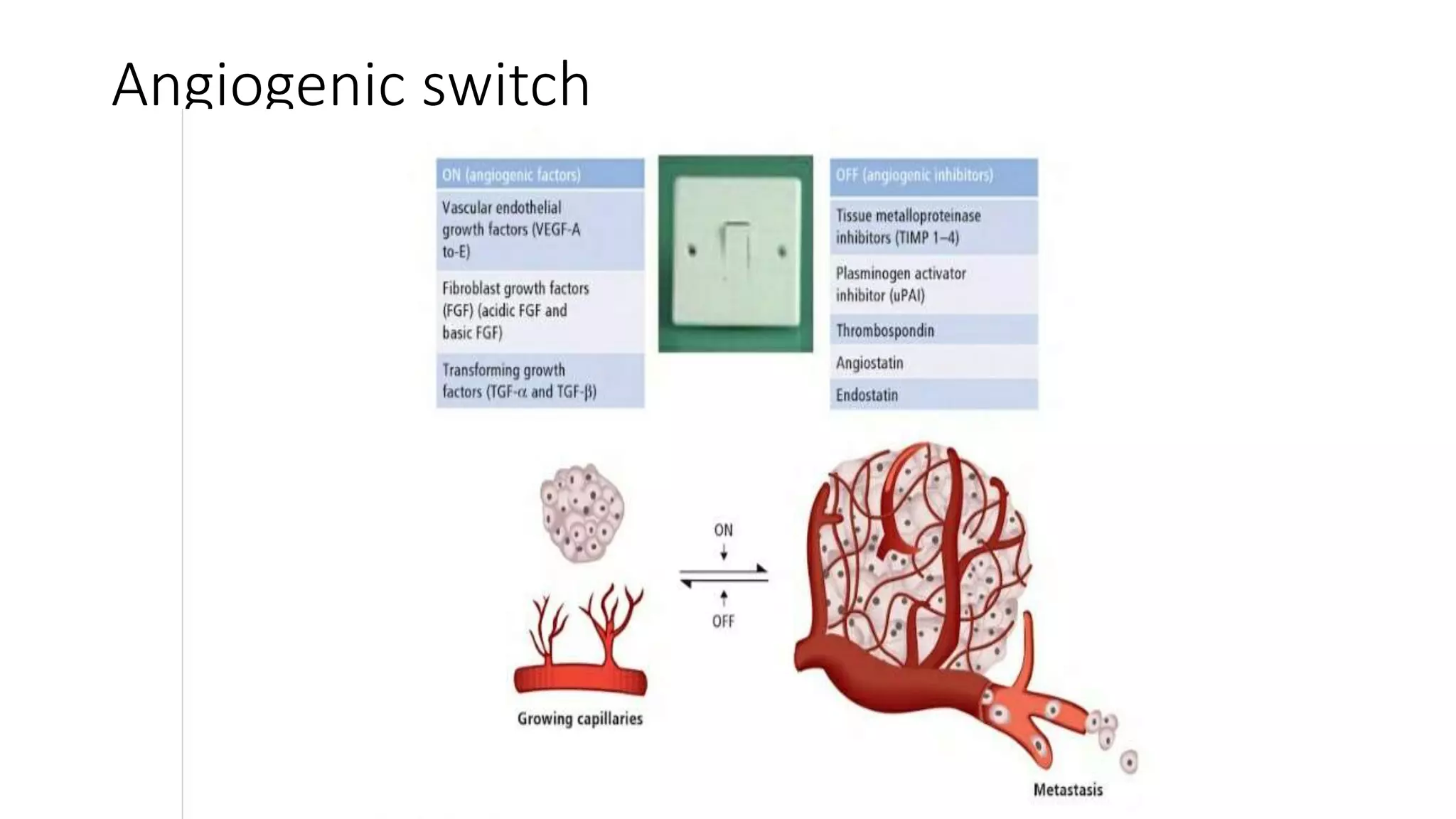
ANGIOGENIC SWITCH OF TUMORS
INVOLVES : Sprouting
Splitting
Remodeling of the existing vessels
WHY IT IS IMPORTANT?
 Supply of oxygen and nutrients
 Removal of waste products
TUMOR ANGIOGENESIS
Three major steps
(A) Initiation of the angiogenic response.
(B) Endothelial cell(EC) migration, proliferation and tube formation.
(C) Finally the maturation of the neovasculature.
23
(A) Initiation of the angiogenic response
• The first step in the formation of a capillary sprout from a pre-existing
mature blood vessel. This occurs as a consequence of proangiogenic
growth factors secreted by the tumor cell population.
• Proteolytic enzymes such as MMPs,Cathepsins etc.
• localized degradation of the surrounding basement membrane
(B) Endothelial cell(EC) migration, proliferation and
tube formation
• Next step is stimulus directed migration of ECs towards tumor mass
emanating from tumor itself
• Followed by division of ECs and lengthening the stalk of ECs sprout
• Lumen formation occurs with completion of capillary sprouts and
loops
(C) Maturation of the neovasculature.
• Single layer of periendothelial smooth muscle cells that
wraps around the endothelial cells are known as pericytes.
• Critical for the development of new mature vascular
network.
• Provide mechanical support, stability, regulate the diameter
of vessel and vascular permeability.
Angiogenic switch
• Epigenetic induction Genetic induction
Hypoxia, low Ph, mutant p53,VHL
cytokines(IL-6),bFGF, activated oncogene
Sex hormones
VEGF A and VEGF165
VEGFR-1 VEGF-2 VEGF-3 Lymphogenesis
Vascular permeability, Migration,
Mobilization, Proliferation,
Survival
• Pericytes Are Important Components of the Tumor
Neovasculature-
• They provide important mechanical and physiologic support to the
endothelial cells
• Pericyte also secrete PDGF which helps in recruitment of pericytes
and smooth muscle cells.
• A Variety of Bone Marrow-Derived Cells Contribute to
tumor Angiogenesis-
• These include cells of the innate immune system including
macrophages, neutrophils, mast cells, and myeloid progenitor.
• This tumor associated inflammatory cells can help to trigger the
angiogenic switch by providing tumor microenvironment and
secreate various growth factors.
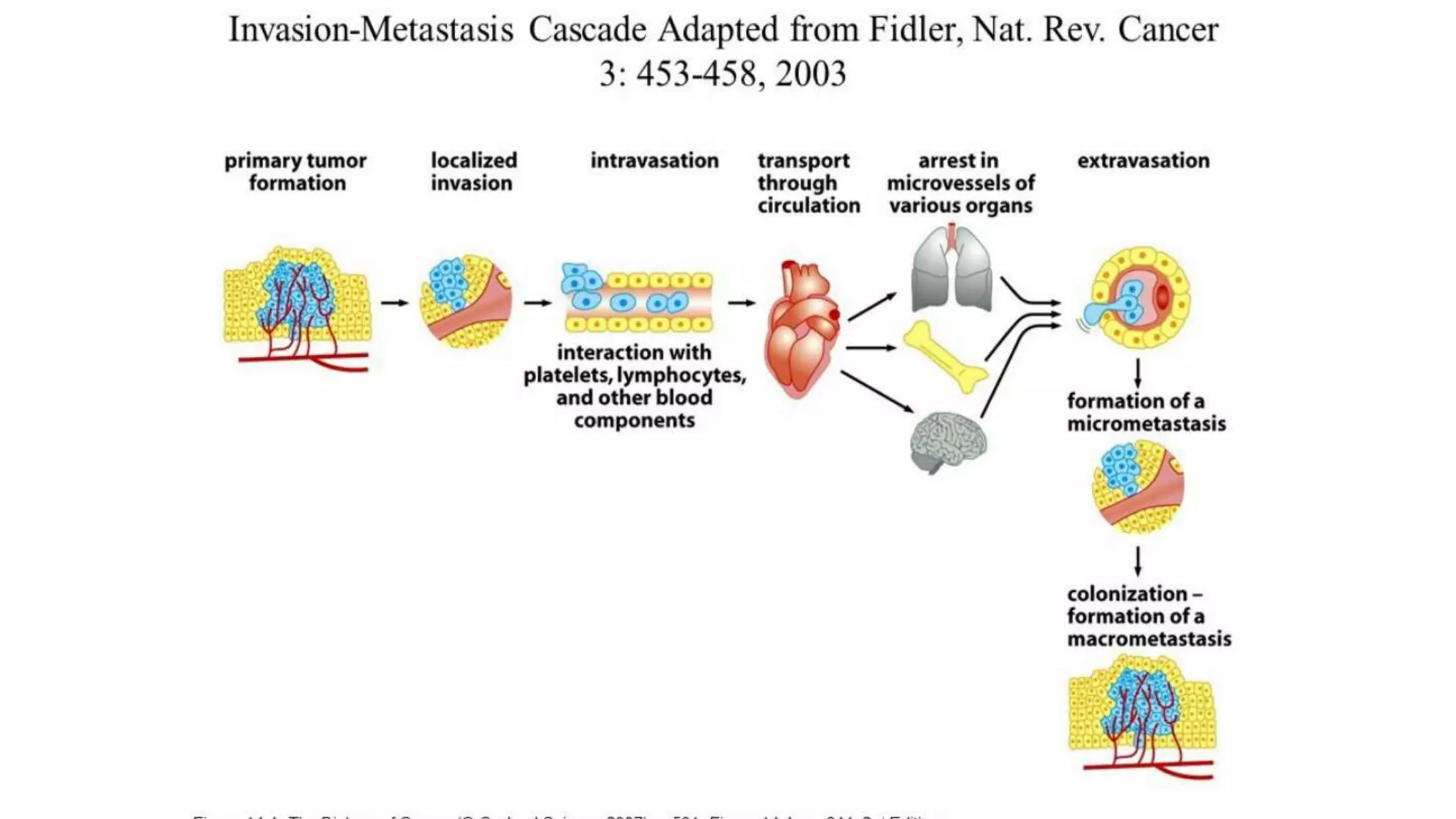
Steps in activating invasion and metastasis
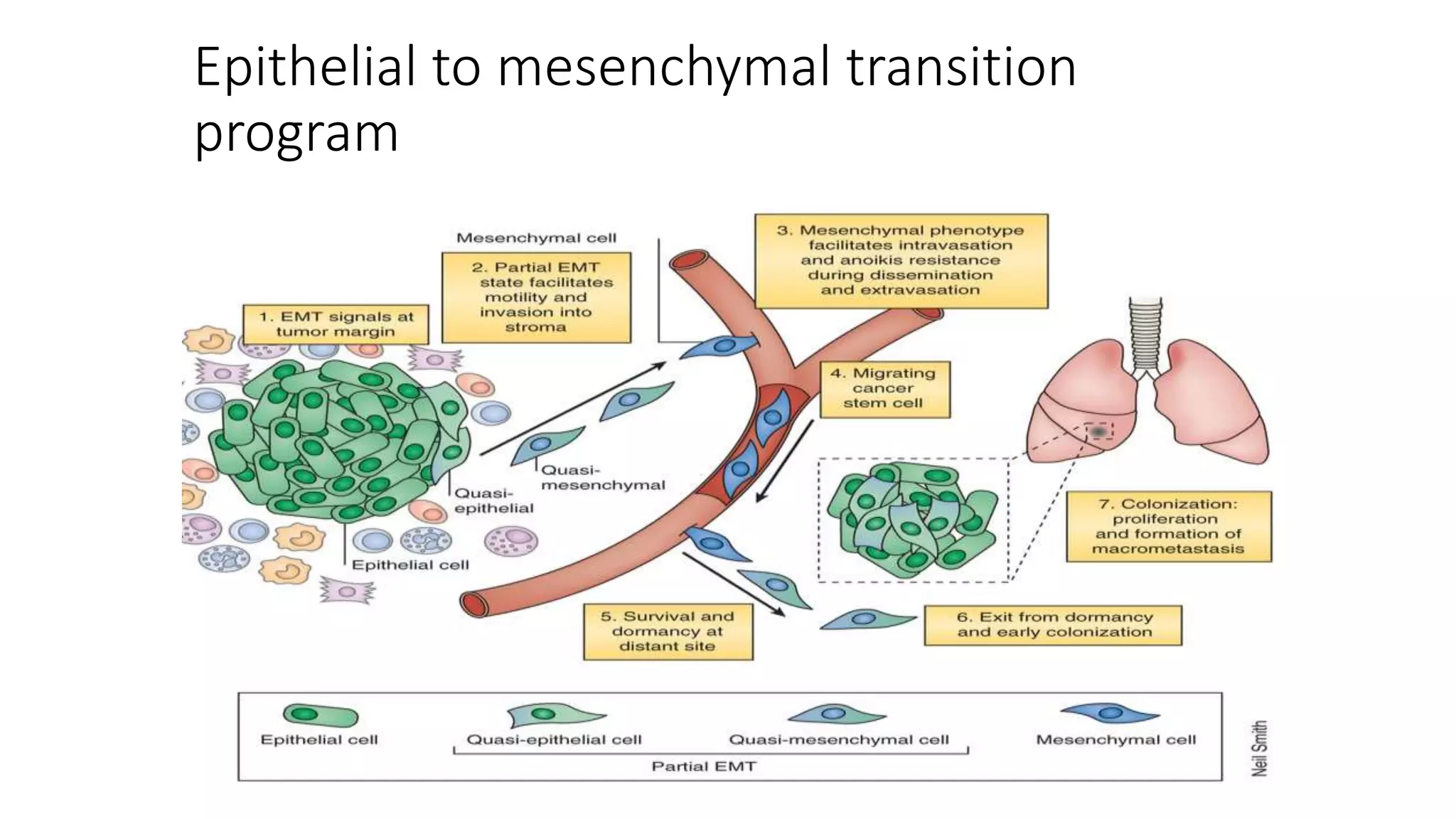
• Carcinoma development and acquire invasive potential
• Tumor supressor genes mutation
• Proto oncogene mutations
• Expansion of growth and invasion of basement membrane
• Enhanced protease activity(e.g. MMPs)
• Enhanced cell motility / interaction with sarrounding tissue.
• Decreased cell to cell adhesion and contact( e.g.E-cadherin loss)
• Intravasation and transport through BM
• Intravasation through BM into blood vessel.
• Interaction with vascular cells
• Survival in circulation / immune eversion
• Arrest and extravasation at secoundary site
• Tumor cells interact with vascular cells.
• Invasion into secondary tissue and formation of micro or
macrometastasis
• Intraction and adaptation to tissue microenvironment.
• Establishment of new vasculature.
• Secondary tumor establishment or dormancy.
Epithelial to mesenchymal transition
program
Reprogramming Energy Metabolism
• Cancer metabolism is different than normal tissue
metabolism. First time it was noted in 1920 by biochemist
Otto Warburg that when cancer cells are provided with
glucose , they generate large amount of lactate regardless of
whether oxygen is present or not.
• This metabolic difference is referred as THE WARBURG
EFFECT……
• the normal cells utilize aerobic respiration to completely
catabolize glucose and generate cellular energy.
• Cancer cells rely primarily on glycolysis for their metabolism
to make lactate and it is called aerobic glycolysis..
• Aerobic gylcolysis also generates ATP but less than aerobic
respiration.
• Cancer cells metabolize glucose for purpose other than generating
ATPs.
• Lactate produced from aerobic gylcolysis causes acidification of
tumor cell which has been shown to promote invasion and
metastasis.
• Lactate can also act as a nutrient for some cells in the tumor.
Mutation in metabolic enzymes
causing cancer
• FH[fumarate hydratase]– metabolizes fumarate in
TCA…mutation leads to RCC ,leiomyomas.
• IDH [ isocitrate dehydrogenase]– in glioma, glioblastoma,
AML, myelodysplastic syndrome,ALL, prostate, colorectal
cancer.
Targeting metabolism to treat cancer
• Folate– it can enhance cell proliferation. So antifolate is
used as chemotherapy.
• Metformin– recently two studies have shown that cancer
related mortality is decreased with metformin use—may be
toxic to the cancer cell—may decrease the effect of IGF-1 on
cell growth.
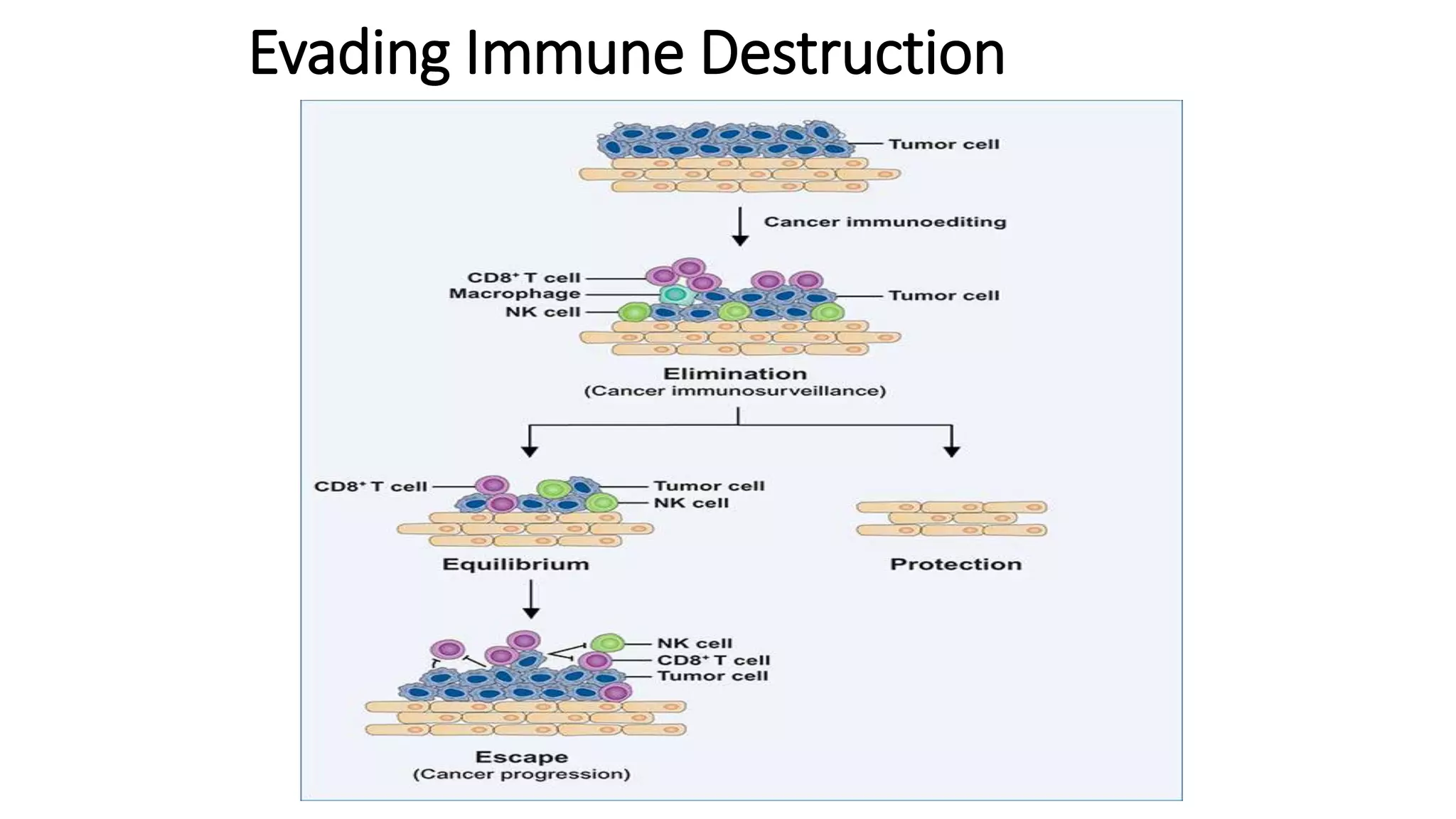
Evading Immune Destruction
Mechanisms by which tumor cells escape immune
recognization and destruction:
• Low immunogenicity of tumor cells –
• Failure to produce tumor antigen
• Mutation in MHC gene needed for antigen processing.
• Inability to recognize tumor cells by immune system.
Evading Immune Destruction
• Tumor induced immune supression-
• Factors secreted by tumor cells eg. TGF-b inhibit T cells directly.
• Tumor induced privileged site-
• Factors secreted by tumor cells create a physical barrier to the
immune system.
• Tumor treated as self antigen-
• Tumor antigens are taken up and presented by APCs in absence of
co-stimulation taken as self antigens and escape from immune
destruction.
Genome Instability and Mutation
• DNA damage or mutation in a normal cell results in cell cycle
arrest followed by DNA repair or apoptosis.
• Interference in this process may occur either by lack of
recognizing and repair of damaged DNA or abnormal
gatekeeping of cell cycle.
• Genomic instability and mutation acts as enabling hallmark
of cancer i.e facilitator of hallmark capabilities.
Genome Instability and Mutation
• These mutations can include change in nucleic acid
sequence, chromosomal rearrangements or aneuploidy.
• DNA damage from external cause or impaired DNA repair
mechanism due to epigenetic mechanism such as DNA
methylation and histone modifications.
• Cancer cells generally have severe chromosomal
abnormalities
Genome Instability and Mutation
• Based on the level of disruption types of gene instablity are-
• Nucleotide instablity-
• Include nucleotide substitution, deletion or insertion
• E.g. xeroderma pigmentosum, MYH associated polyposis
• Microsatellite instablity-
• Include defect in mismatch repair leads to contraction or
expansion of microsatellite
• E.g. Lynch syndrome
Genome Instability and Mutation
• Chromosomal instablity-
• Most prominent form
• 90% of human cancer exhibiting chromosomal abnormalities.it
include chromosomal anuploidy, amplifications, deletions,
translocations and inversions.
• E.g. Breast, prostate, non small cell lung cancer, leukaemia,
neuroblastoma etc.
• Defects in these caretaker genes results in-
• DNA damage and inactivation of repair machinery
• Inability to inactivate mutagenic molecules resulting in DNA
damage.
• CGH (comparative genomic hybridization)- one method of
molecular genetic analysis to compare patient DNA to
reference DNA to check the gains and losses of gene copies
in the patients cell genome by using florescent dye .
Tumor-Promoting Inflammation
• Virtually every tumor contains immune cells present at
varying densities.
• Such immune responses are largely thought to reflect an
attempt by the immune system to eradicate tumors
• However, tumor-associated inflammatory response is shown
to have paradoxical effect of enhancing tumorigenesis and
progression.
Tumor-Promoting Inflammation
• Inflammation can contribute to multiple hallmark
capabilities by supplying bioactive molecules for favourable
tumor microenvironment including:
• Growth factors that sustain proliferative signaling
• Survival factors that limit cell death
• Proangiogenic factors
• Extracellular matrix-modifying enzymes that facilitate
angiogenesis, invasion and metastasis.
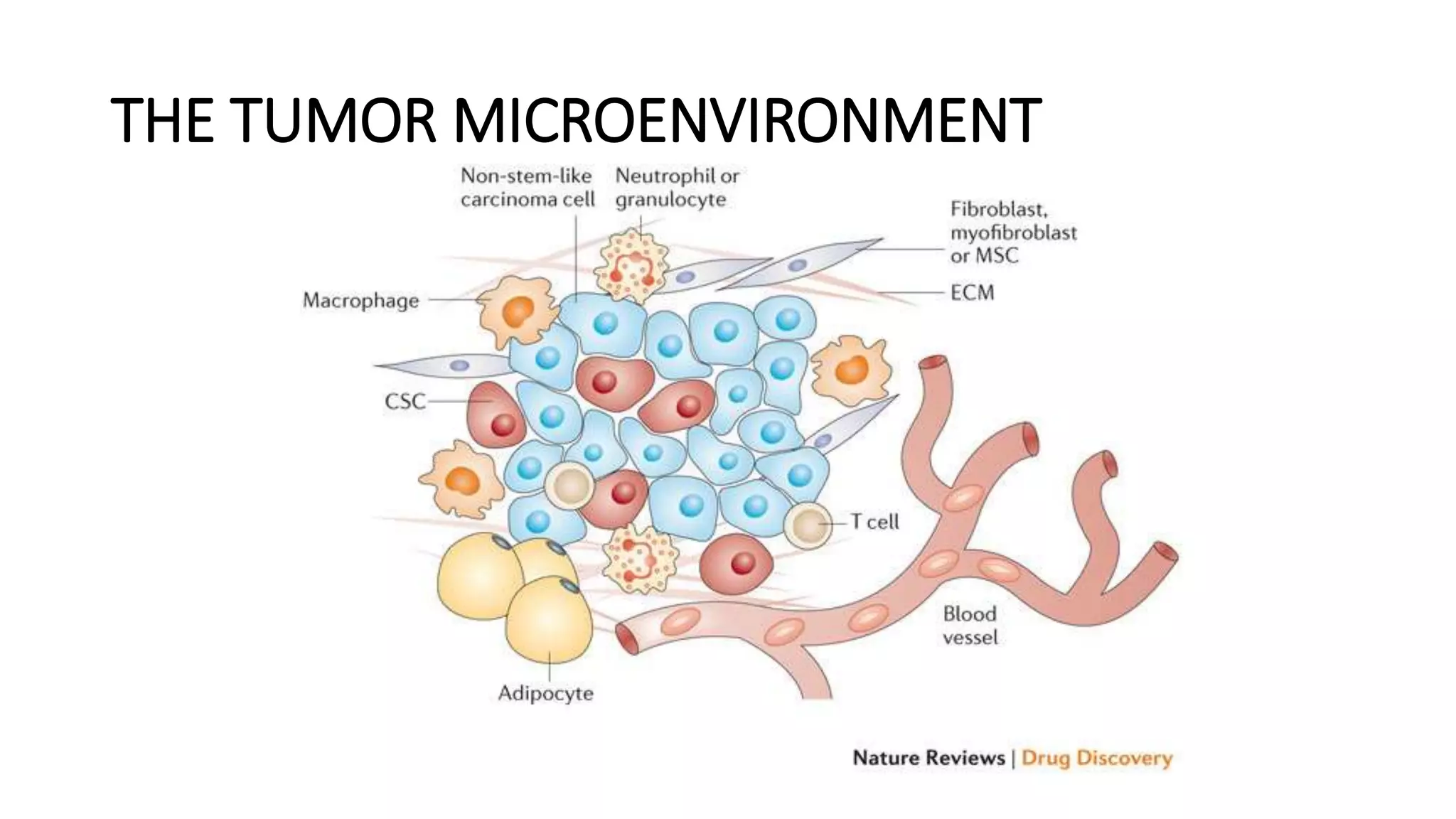
THE TUMOR MICROENVIRONMENT
Cancer-Associated Fibroblasts
• Cancer-associated fibroblasts (CAFs) constitutes at least two
distinct cell types:
• Cells with similarities to the fibroblasts that provides structural
support to most of normal epithelial tissues
• Myofibroblasts, whose biologic roles and properties differ
markedly from those of the widely distributed tissue-derived
fibroblasts.
• They have been demonstrated to enhance tumor
phenotypes, notably cancer cell proliferation, angiogenesis,
invasion, and metastasis.
Endothelial Cells
• Forming the tumor-associated vasculature.
• Activated (angiogenic) tumor vasculature has been revealed
as a functional suppressor of cytotoxic T cells thus, tumor
endothelial cells can contribute to the hallmark capability
for evading immune destruction.
Pericytes
• Specialized mesenchymal cell type with fingerlike
projections that wrap around the endothelial tubing of
blood vessels.
• Provide supportive framework to endothelial cells.
Immune Inflammatory Cells
• Macrophage subtypes, mast cells, neutrophils as well as T
and B lymphocytes
• EGF, VEGF-A/C, FGF2, chemokines, cytokines , MMP-9,
cysteine cathepsin proteases etc.
• facilitate tissue invasion, and to support the metastatic
dissemination and seeding of cancer cells.
Stem and Progenitor Cells of the Tumor
Stroma
• Also known as cancer initiating cell.
• Cell type capable of initiating and sustaining growth of the
tumor.
• These fraction of tumor cells were capable of tumor
development and have great proliferative within a tumor.
Co evolution of the Tumor
Microenvironment During Carcinogenesis
• Tumor microenvironment is not static and undergo co evolution
with time.
• Continuous changes in composition of stroma-associated cell
types.
• Second, as cancer cells enter into different locations, they
encounter distinct stromal microenvironments.
• Thus, the microenvironment in the interior of a primary tumor
will likely be distinct both from locally invasive breakout lesions
and from the one encountered by disseminated cells in distant
organs.
THERAPEUTIC TARGETING OF THE HALLMARKS
OF CANCER

Chapter 3 hallmarks of cancer

  • 1.
  • 2.
    What are ‘hallmarks of cancer ‘ ? • Biologic capabilities acquired by cancer cells during the multistep process of development of human tumors • Essential Alterations In Cell Physiology That Collectively Lead To Malignant Growth Of A Normal Cells. • Described by Douglas Hanahan & Robert Weinberg in 2000
  • 3.
    Originally six hallmarksof cancer proposed : • Self-sufficiency in growth signals • Insensitivity to growth-inhibitory (antigrowth) signals. • • Evading apoptosis. • Limitless replicative potential. • Sustained angiogenesis. • Tissue invasion and metastasis.
  • 4.
    • With developmentin genetics and epigenetics Hanahan and Weinberg again redefined “Hallmarks of cancer” in 2011. Two additional hallmarks of cancer are: • Evading immune destruction. • Deregulating cellular metabolism or energetics.
  • 5.
  • 6.
    1. Sustained ProliferativeSignalling • Cancer cells : ‘master of their own destinies’ • Normal cells require growth signals to enter from a quiescent state into an active proliferative state. • These signals are transmitted into the cell through transmembrane receptors that binds to a particular class of signaling molecules. • Tumor cells generate their own growth signals and thereby reducing their dependence on external stimulation from their normal tissue microenvironment.
  • 7.
    Sustained Proliferative Signaling •Many cancer cells acquire the ability to synthesize abundance of GFs to which they are responsive, creating a positive feedback signaling loop Alteration of extracellular growth signals • Receptor overexpression may enable the cancer cell to become hyperresponsive to ambient levels of GF that normally would not trigger proliferation Alternation of transcellular receptor of those signals • Alterations in components of the downstream cytoplasmic circuitry that receives and processes the signals emitted by GF receptors can release a flux of signals into cells, without ongoing stimulation by their normal upstream regulators Alternation of intracellular circuits that translate those signals into action.
  • 8.
    • Somatic Mutationsactivate additional downstream pathways that promote sustained growth • RAS-RAF-MAPK PATHWAY • 90% Pancreatic adenocarcinomas carry mutant K-RAS alleles • 40% melanomas contain activating mutations affecting B-RAF Sustained Proliferative Signaling
  • 9.
    Disruptions of Negative-FeedbackMechanisms that Attenuate Proliferative Signaling – • Defect in negative feed back mechanism leads to uncontrolled proliferative signaling . • The prototype of this type of regulation involves the RAS oncoprotein. • The oncogenic mutations of RAS genes impair the intrinsic GTPase activity of RAS that normally serves to turn its activity off, ensuring that active signal transmission is transient. Sustained Proliferative Signaling
  • 10.
    Excessive Proliferative SignalingCan Trigger Cell Senescence • Excessively elevated signaling by oncoproteins, such as RAS, MYC, and RAF in a normal cell provoke protective response such as induction of cell death. • Alternatively, cancer cells expressing high levels of these oncoproteins may be forced to enter into the nonproliferative but viable state called senescence. • Whenever these tumor cells get the favorable microenvironment they enter into proliferative phase. Sustained Proliferative Signaling
  • 11.
    2. Evading GrowthSuppressors • Growth suppressors are acting as the break mechanism to overrule the initiation or “turning off” of cell division. • The two prototype tumor suppressor genes encode the retinoblastoma (RB)-associated and P53 proteins. • The RB protein integrates signals from diverse extracellular and intracellular sources and, in response, decides whether or not a cell should proceed through its growth and division cycle.
  • 12.
    Evading Growth Suppressors Mechanismsof Contact Inhibition and Its Evasion – • Healthy cell stops dividing when comes in contact with other cells but cancer cell does not.
  • 13.
    Evading Growth Suppressors •Merlin, the cytoplasmic NF2 gene product, activate contact inhibition by coupling cell-surface adhesion molecules like E- cadherin to transmembrane receptor tyrosine kinases. • Merlin strengthens the adhesiveness of cadherin-mediated cell-to-cell attachments and thus inhibits the mitogenic signals. • Thus, the mutation of NF-2 gene results in loss of this property and thus grow in uncontrolled manner.
  • 14.
    Evading Growth Suppressors •Merlin, the cytoplasmic NF2 gene product, activate contact inhibition by coupling cell-surface adhesion molecules like E- cadherin to transmembrane receptor tyrosine kinases. • Merlin strengthens the adhesiveness of cadherin-mediated cell-to-cell attachments and thus inhibits the mitogenic signals. • Thus, the mutation of NF-2 gene results in loss of this property and thus grow in uncontrolled manner.
  • 15.
    Evading Growth Suppressors •Role of TGF-B • In normal cells, its exposure blocks their progression through the G1 phase of cell cycle; in many late stage tumors, however, its signalling is redirected away from suppression to activation of a cellular program termed “epithelial to mesenchymal transition”
  • 16.
    3. Resisting CellDeath • Normally when cells become old or damaged they are programmed to die in a process called apoptosis. • But cancer cells escapes normal cell death and continue to accumulate in the body. • Tumor cells develops a variety of strategies to escape apoptosis.
  • 17.
    Resisting Cell Death Cancercells acquires anti apoptotic regulators:- • Most common is the loss of P53 tumor suppressor function, which eliminates this critical damage sensor from the apoptosis-inducing circuit. • Alternatively, tumors may escape apoptosis by increasing the expression of antiapoptotic regulators (Bcl-2, Bcl-XL Mcl- 1). • By downregulating proapoptotic Bcl-2–related factors (Bax, Bim,Apaf-1 ).
  • 18.
    Resisting Cell Death AutophagyMediates Both Tumor Cell Survival and Death – • Nutrient starvation, radiotherapy, and certain cytotoxic drugs can induce elevated levels of autophagy that apparently protect cancer cells via resistance to apoptosis. • Moreover, severely stressed cancer cells have been shown to shrink via autophagy to a state of reversible dormancy. • This particular survival response may enable the cancer cells to survive during anticancer therapy or during shortage of nutrition.
  • 19.
    Resisting Cell Death Necrosishas proinflammatory & tumor promoting potential • Necrotic cells can release bioactive regulatory factors which can directly stimulate viable neighbouring cells to proliferate
  • 20.
    4. Enabling ReplicativeImmortality • In normal cell division, a small portion of the end of each chromosome called telomere, is lost every time DNA is copied. • Loss of telomere reaches a critical point and cell will no longer divide and replicate and undergo p53 dependent cell cycle arrest or apoptosis. In this way healthy cells self limit their replication. • But in cancer cells activation of an enzyme called telomerase can maintain telomeres and allow cells to replicate limitlessly.
  • 22.
    5. Inducing Angiogenesis Theformation of new blood vessels out of pre-existing capillaries. ANGIOGENIC SWITCH OF TUMORS INVOLVES : Sprouting Splitting Remodeling of the existing vessels WHY IT IS IMPORTANT?  Supply of oxygen and nutrients  Removal of waste products
  • 23.
    TUMOR ANGIOGENESIS Three majorsteps (A) Initiation of the angiogenic response. (B) Endothelial cell(EC) migration, proliferation and tube formation. (C) Finally the maturation of the neovasculature. 23
  • 24.
    (A) Initiation ofthe angiogenic response • The first step in the formation of a capillary sprout from a pre-existing mature blood vessel. This occurs as a consequence of proangiogenic growth factors secreted by the tumor cell population. • Proteolytic enzymes such as MMPs,Cathepsins etc. • localized degradation of the surrounding basement membrane
  • 25.
    (B) Endothelial cell(EC)migration, proliferation and tube formation • Next step is stimulus directed migration of ECs towards tumor mass emanating from tumor itself • Followed by division of ECs and lengthening the stalk of ECs sprout • Lumen formation occurs with completion of capillary sprouts and loops
  • 26.
    (C) Maturation ofthe neovasculature. • Single layer of periendothelial smooth muscle cells that wraps around the endothelial cells are known as pericytes. • Critical for the development of new mature vascular network. • Provide mechanical support, stability, regulate the diameter of vessel and vascular permeability.
  • 27.
  • 28.
    • Epigenetic inductionGenetic induction Hypoxia, low Ph, mutant p53,VHL cytokines(IL-6),bFGF, activated oncogene Sex hormones VEGF A and VEGF165 VEGFR-1 VEGF-2 VEGF-3 Lymphogenesis Vascular permeability, Migration, Mobilization, Proliferation, Survival
  • 31.
    • Pericytes AreImportant Components of the Tumor Neovasculature- • They provide important mechanical and physiologic support to the endothelial cells • Pericyte also secrete PDGF which helps in recruitment of pericytes and smooth muscle cells. • A Variety of Bone Marrow-Derived Cells Contribute to tumor Angiogenesis- • These include cells of the innate immune system including macrophages, neutrophils, mast cells, and myeloid progenitor. • This tumor associated inflammatory cells can help to trigger the angiogenic switch by providing tumor microenvironment and secreate various growth factors.
  • 33.
    Steps in activatinginvasion and metastasis • Carcinoma development and acquire invasive potential • Tumor supressor genes mutation • Proto oncogene mutations • Expansion of growth and invasion of basement membrane • Enhanced protease activity(e.g. MMPs) • Enhanced cell motility / interaction with sarrounding tissue. • Decreased cell to cell adhesion and contact( e.g.E-cadherin loss)
  • 34.
    • Intravasation andtransport through BM • Intravasation through BM into blood vessel. • Interaction with vascular cells • Survival in circulation / immune eversion
  • 35.
    • Arrest andextravasation at secoundary site • Tumor cells interact with vascular cells. • Invasion into secondary tissue and formation of micro or macrometastasis • Intraction and adaptation to tissue microenvironment. • Establishment of new vasculature. • Secondary tumor establishment or dormancy.
  • 37.
    Epithelial to mesenchymaltransition program
  • 39.
    Reprogramming Energy Metabolism •Cancer metabolism is different than normal tissue metabolism. First time it was noted in 1920 by biochemist Otto Warburg that when cancer cells are provided with glucose , they generate large amount of lactate regardless of whether oxygen is present or not. • This metabolic difference is referred as THE WARBURG EFFECT……
  • 40.
    • the normalcells utilize aerobic respiration to completely catabolize glucose and generate cellular energy. • Cancer cells rely primarily on glycolysis for their metabolism to make lactate and it is called aerobic glycolysis..
  • 42.
    • Aerobic gylcolysisalso generates ATP but less than aerobic respiration. • Cancer cells metabolize glucose for purpose other than generating ATPs. • Lactate produced from aerobic gylcolysis causes acidification of tumor cell which has been shown to promote invasion and metastasis. • Lactate can also act as a nutrient for some cells in the tumor.
  • 43.
    Mutation in metabolicenzymes causing cancer • FH[fumarate hydratase]– metabolizes fumarate in TCA…mutation leads to RCC ,leiomyomas. • IDH [ isocitrate dehydrogenase]– in glioma, glioblastoma, AML, myelodysplastic syndrome,ALL, prostate, colorectal cancer.
  • 44.
    Targeting metabolism totreat cancer • Folate– it can enhance cell proliferation. So antifolate is used as chemotherapy. • Metformin– recently two studies have shown that cancer related mortality is decreased with metformin use—may be toxic to the cancer cell—may decrease the effect of IGF-1 on cell growth.
  • 45.
  • 46.
    Evading Immune Destruction Mechanismsby which tumor cells escape immune recognization and destruction: • Low immunogenicity of tumor cells – • Failure to produce tumor antigen • Mutation in MHC gene needed for antigen processing. • Inability to recognize tumor cells by immune system.
  • 47.
    Evading Immune Destruction •Tumor induced immune supression- • Factors secreted by tumor cells eg. TGF-b inhibit T cells directly. • Tumor induced privileged site- • Factors secreted by tumor cells create a physical barrier to the immune system. • Tumor treated as self antigen- • Tumor antigens are taken up and presented by APCs in absence of co-stimulation taken as self antigens and escape from immune destruction.
  • 48.
    Genome Instability andMutation • DNA damage or mutation in a normal cell results in cell cycle arrest followed by DNA repair or apoptosis. • Interference in this process may occur either by lack of recognizing and repair of damaged DNA or abnormal gatekeeping of cell cycle. • Genomic instability and mutation acts as enabling hallmark of cancer i.e facilitator of hallmark capabilities.
  • 49.
    Genome Instability andMutation • These mutations can include change in nucleic acid sequence, chromosomal rearrangements or aneuploidy. • DNA damage from external cause or impaired DNA repair mechanism due to epigenetic mechanism such as DNA methylation and histone modifications. • Cancer cells generally have severe chromosomal abnormalities
  • 50.
    Genome Instability andMutation • Based on the level of disruption types of gene instablity are- • Nucleotide instablity- • Include nucleotide substitution, deletion or insertion • E.g. xeroderma pigmentosum, MYH associated polyposis • Microsatellite instablity- • Include defect in mismatch repair leads to contraction or expansion of microsatellite • E.g. Lynch syndrome
  • 51.
    Genome Instability andMutation • Chromosomal instablity- • Most prominent form • 90% of human cancer exhibiting chromosomal abnormalities.it include chromosomal anuploidy, amplifications, deletions, translocations and inversions. • E.g. Breast, prostate, non small cell lung cancer, leukaemia, neuroblastoma etc.
  • 52.
    • Defects inthese caretaker genes results in- • DNA damage and inactivation of repair machinery • Inability to inactivate mutagenic molecules resulting in DNA damage. • CGH (comparative genomic hybridization)- one method of molecular genetic analysis to compare patient DNA to reference DNA to check the gains and losses of gene copies in the patients cell genome by using florescent dye .
  • 53.
    Tumor-Promoting Inflammation • Virtuallyevery tumor contains immune cells present at varying densities. • Such immune responses are largely thought to reflect an attempt by the immune system to eradicate tumors • However, tumor-associated inflammatory response is shown to have paradoxical effect of enhancing tumorigenesis and progression.
  • 54.
    Tumor-Promoting Inflammation • Inflammationcan contribute to multiple hallmark capabilities by supplying bioactive molecules for favourable tumor microenvironment including: • Growth factors that sustain proliferative signaling • Survival factors that limit cell death • Proangiogenic factors • Extracellular matrix-modifying enzymes that facilitate angiogenesis, invasion and metastasis.
  • 55.
  • 56.
    Cancer-Associated Fibroblasts • Cancer-associatedfibroblasts (CAFs) constitutes at least two distinct cell types: • Cells with similarities to the fibroblasts that provides structural support to most of normal epithelial tissues • Myofibroblasts, whose biologic roles and properties differ markedly from those of the widely distributed tissue-derived fibroblasts. • They have been demonstrated to enhance tumor phenotypes, notably cancer cell proliferation, angiogenesis, invasion, and metastasis.
  • 57.
    Endothelial Cells • Formingthe tumor-associated vasculature. • Activated (angiogenic) tumor vasculature has been revealed as a functional suppressor of cytotoxic T cells thus, tumor endothelial cells can contribute to the hallmark capability for evading immune destruction.
  • 58.
    Pericytes • Specialized mesenchymalcell type with fingerlike projections that wrap around the endothelial tubing of blood vessels. • Provide supportive framework to endothelial cells.
  • 59.
    Immune Inflammatory Cells •Macrophage subtypes, mast cells, neutrophils as well as T and B lymphocytes • EGF, VEGF-A/C, FGF2, chemokines, cytokines , MMP-9, cysteine cathepsin proteases etc. • facilitate tissue invasion, and to support the metastatic dissemination and seeding of cancer cells.
  • 60.
    Stem and ProgenitorCells of the Tumor Stroma • Also known as cancer initiating cell. • Cell type capable of initiating and sustaining growth of the tumor. • These fraction of tumor cells were capable of tumor development and have great proliferative within a tumor.
  • 61.
    Co evolution ofthe Tumor Microenvironment During Carcinogenesis • Tumor microenvironment is not static and undergo co evolution with time. • Continuous changes in composition of stroma-associated cell types. • Second, as cancer cells enter into different locations, they encounter distinct stromal microenvironments. • Thus, the microenvironment in the interior of a primary tumor will likely be distinct both from locally invasive breakout lesions and from the one encountered by disseminated cells in distant organs.
  • 62.
    THERAPEUTIC TARGETING OFTHE HALLMARKS OF CANCER