Predisposing factors
1. Obesity
2. Female sex hormones – estrogen & OCPs
3. Increasing age
4. Pregnancy
5. Drugs- octreotide, clofibrate
6. High fat diet
7. Diabetes mellitus
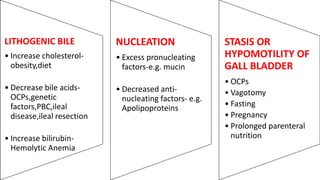
LITHOGENIC BILE
• Increase cholesterol-
obesity,diet
• Decrease bile acids-
OCPs,genetic
factors,PBC,ileal
disease,ileal resection
• Increase bilirubin-
Hemolytic Anemia
NUCLEATION
• Excess pronucleating
factors-e.g. mucin
• Decreased anti-
nucleating factors- e.g.
Apolipoproteins
STASIS OR
HYPOMOTILITY OF
GALL BLADDER
• OCPs
• Vagotomy
• Fasting
• Pregnancy
• Prolonged parenteral
nutrition
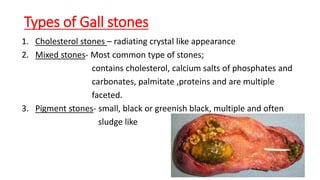
Types of Gall stones
1. Cholesterol stones – radiating crystal like appearance
2. Mixed stones- Most common type of stones;
contains cholesterol, calcium salts of phosphates and
carbonates, palmitate ,proteins and are multiple
faceted.
3. Pigment stones- small, black or greenish black, multiple and often
sludge like
Pigment stones
Black pigment stones
• Most common
• Formed in gall bladder
• Made of Calcium
bilirubinate,phosphate,bicarbona
te
• Common in hemolytic
disorders,cirrhosis
• Multiple , small & hard in
consistency
Brown pigment stones
• Rarely form in gall bladder
• Formed in bile duct
• Related to bile stasis &
infected bile
• E.coli, Bacteroides
Clinical features
• More common in females
• Fat,fertile,forty,flatulent
• 10% Gallstones are RADIO-OPAQUE
• Asymptomatic in 10 to 20% cases
• Symptoms-
• Biliary colic- Right hypochondrium & epigastrium, radiating to
chest,back & shoulder, severe , on & off, spasmodic, occurs within
hours after meal,usually self limiting and recurring,precipitated by
fatty meal.
• vomiting
• Fever
• Increased WBCs
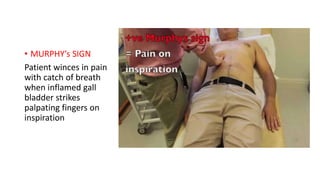
• MURPHY’s SIGN
Patient winces in pain
with catch of breath
when inflamed gall
bladder strikes
palpating fingers on
inspiration
Complications of Gall stones
In Gall Bladder-
• Acute cholecystitis
• Chronic cholecystitis
• Empyema of gall bladder
• Mucocele gall bladder
• Perforation – leading to
biliary peritonitis
• Gangrene of gall bladder
• Carcinoma
In Bile duct-
• Obstructive jaundice
• Cholangitis
• Acute pancreatitis
In Intestine-
• Acute intestinal
obstruction
Management
Investigations
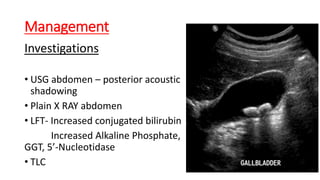
• USG abdomen – posterior acoustic
shadowing
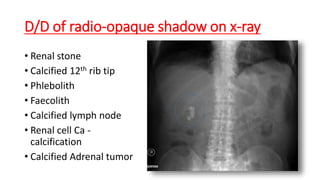
• Plain X RAY abdomen
• LFT- Increased conjugated bilirubin
Increased Alkaline Phosphate,
GGT, 5’-Nucleotidase
• TLC
D/D of radio-opaque shadow on x-ray
• Renal stone
• Calcified 12th rib tip
• Phlebolith
• Faecolith
• Calcified lymph node
• Renal cell Ca -
calcification
• Calcified Adrenal tumor
Treatment
• Medical therapy-
• GALL STONE DISSOLUTION
• Ursodeoxycholic acid (UDCA) – with a functioning
Gall bladder with stone less than 10 mm
• 10-15 mg/kg/day
• Pigment stones are non responsive to medical
therapy
Surgical therapy
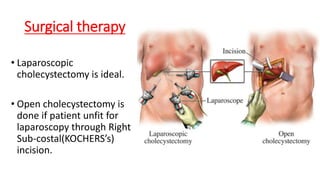
• Laparoscopic
cholecystectomy is ideal.
• Open cholecystectomy is
done if patient unfit for
laparoscopy through Right
Sub-costal(KOCHERS’s)
incision.
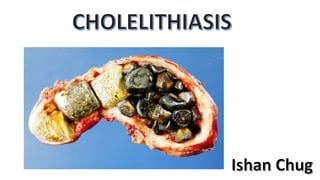
Cholelithiasis

Cholelithiasis

  • 2.
    Predisposing factors 1. Obesity 2.Female sex hormones – estrogen & OCPs 3. Increasing age 4. Pregnancy 5. Drugs- octreotide, clofibrate 6. High fat diet 7. Diabetes mellitus
  • 3.
    LITHOGENIC BILE • Increasecholesterol- obesity,diet • Decrease bile acids- OCPs,genetic factors,PBC,ileal disease,ileal resection • Increase bilirubin- Hemolytic Anemia NUCLEATION • Excess pronucleating factors-e.g. mucin • Decreased anti- nucleating factors- e.g. Apolipoproteins STASIS OR HYPOMOTILITY OF GALL BLADDER • OCPs • Vagotomy • Fasting • Pregnancy • Prolonged parenteral nutrition
  • 4.
    Types of Gallstones 1. Cholesterol stones – radiating crystal like appearance 2. Mixed stones- Most common type of stones; contains cholesterol, calcium salts of phosphates and carbonates, palmitate ,proteins and are multiple faceted. 3. Pigment stones- small, black or greenish black, multiple and often sludge like
  • 5.
    Pigment stones Black pigmentstones • Most common • Formed in gall bladder • Made of Calcium bilirubinate,phosphate,bicarbona te • Common in hemolytic disorders,cirrhosis • Multiple , small & hard in consistency Brown pigment stones • Rarely form in gall bladder • Formed in bile duct • Related to bile stasis & infected bile • E.coli, Bacteroides
  • 6.
    Clinical features • Morecommon in females • Fat,fertile,forty,flatulent • 10% Gallstones are RADIO-OPAQUE • Asymptomatic in 10 to 20% cases • Symptoms- • Biliary colic- Right hypochondrium & epigastrium, radiating to chest,back & shoulder, severe , on & off, spasmodic, occurs within hours after meal,usually self limiting and recurring,precipitated by fatty meal. • vomiting • Fever • Increased WBCs
  • 7.
    • MURPHY’s SIGN Patientwinces in pain with catch of breath when inflamed gall bladder strikes palpating fingers on inspiration
  • 8.
    Complications of Gallstones In Gall Bladder- • Acute cholecystitis • Chronic cholecystitis • Empyema of gall bladder • Mucocele gall bladder • Perforation – leading to biliary peritonitis • Gangrene of gall bladder • Carcinoma In Bile duct- • Obstructive jaundice • Cholangitis • Acute pancreatitis In Intestine- • Acute intestinal obstruction
  • 9.
    Management Investigations • USG abdomen– posterior acoustic shadowing • Plain X RAY abdomen • LFT- Increased conjugated bilirubin Increased Alkaline Phosphate, GGT, 5’-Nucleotidase • TLC
  • 10.
    D/D of radio-opaqueshadow on x-ray • Renal stone • Calcified 12th rib tip • Phlebolith • Faecolith • Calcified lymph node • Renal cell Ca - calcification • Calcified Adrenal tumor
  • 11.
    Treatment • Medical therapy- •GALL STONE DISSOLUTION • Ursodeoxycholic acid (UDCA) – with a functioning Gall bladder with stone less than 10 mm • 10-15 mg/kg/day • Pigment stones are non responsive to medical therapy
  • 12.
    Surgical therapy • Laparoscopic cholecystectomyis ideal. • Open cholecystectomy is done if patient unfit for laparoscopy through Right Sub-costal(KOCHERS’s) incision.