What do your ideas look like?

The next time you have an idea, grab a piece of paper
 and sketch it out. Now take a look. How did you
 translate it from your brain to the page? Did you
 write a paragraph? Draw a picture? Make a diagram?
 Now ask a coworker to sketch the same idea –
 chances are, their page will look very different from
 yours.
What do your ideas look like?

There are many different kinds of thinkers. More
 often than not, we wind up working with people
 who understand the world in vastly different ways
 from ourselves. It’s what we mean when we say,
 “great ideas can come from anywhere.”
  Sometimes, what’s obvious in one mode of
 thinking is remarkably complex in another. By
 putting different kinds of thinkers on a problem,
 we can compose a greater range of creative
 solutions.
What do your ideas look like?

I’ve found a list of the ten most prevalent types of
 thinking you’re likely to encounter . I don’t mean
 to say that every individual falls into one category
 or another. Most people can think across several
 modes, depending on the situation, but everyone
 tends to have a few styles they’re most
 comfortable in… no one is equally adept at them
 all. Great agencies build diverse teams that can
 approach a problem from several angles.
1. Storyteller
1. Storyteller
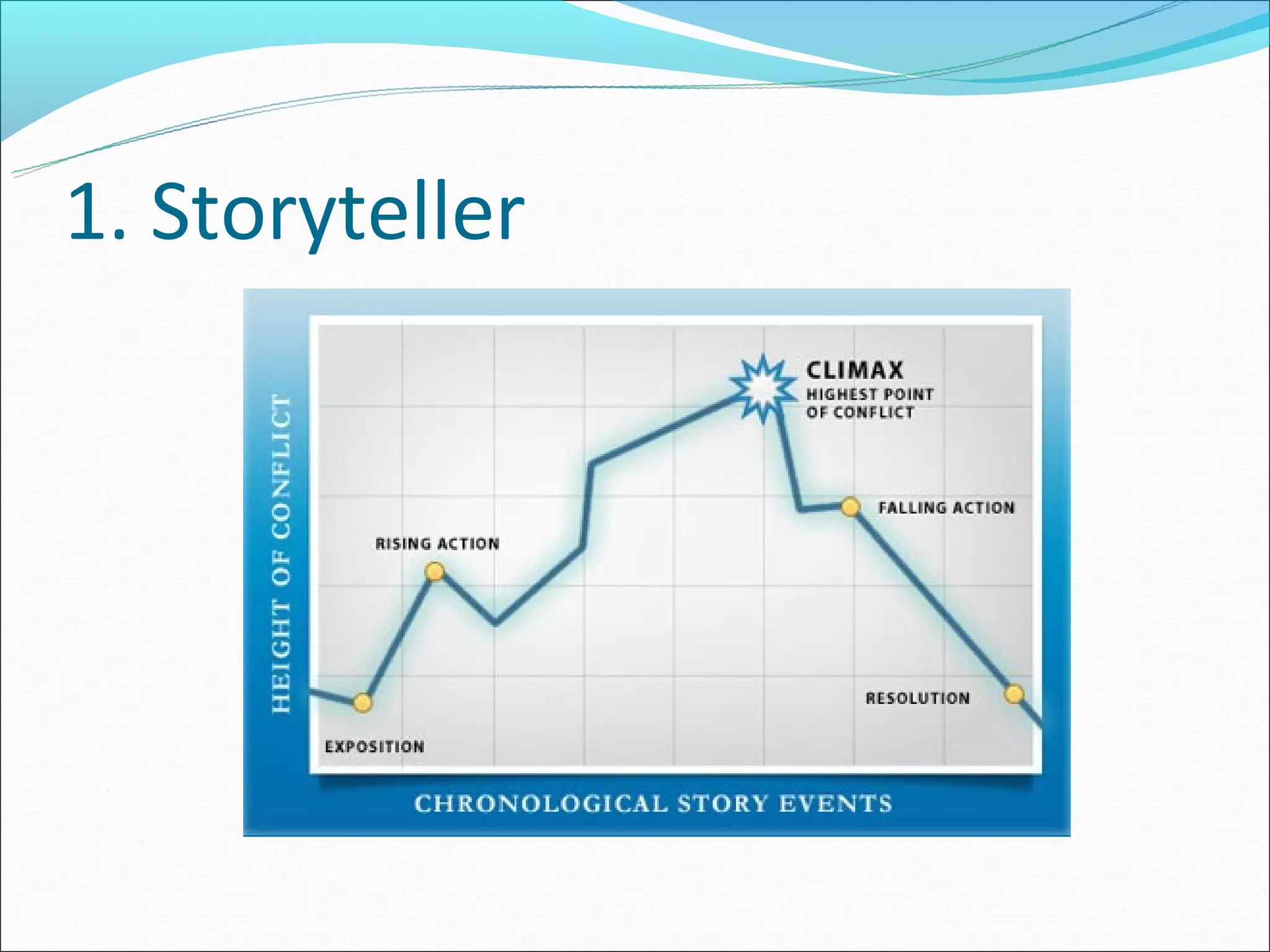
Storytellers like to think in narratives. Ideas are
  usually linear and have distinct beginnings, middles
  and ends. Most traditional creative copywriters tend
  to think this way, excellent for narrative media like
  TV but can be a bit of a struggle in less narrative-
  based digital media.
2. Visually Minded
2. Visually Minded
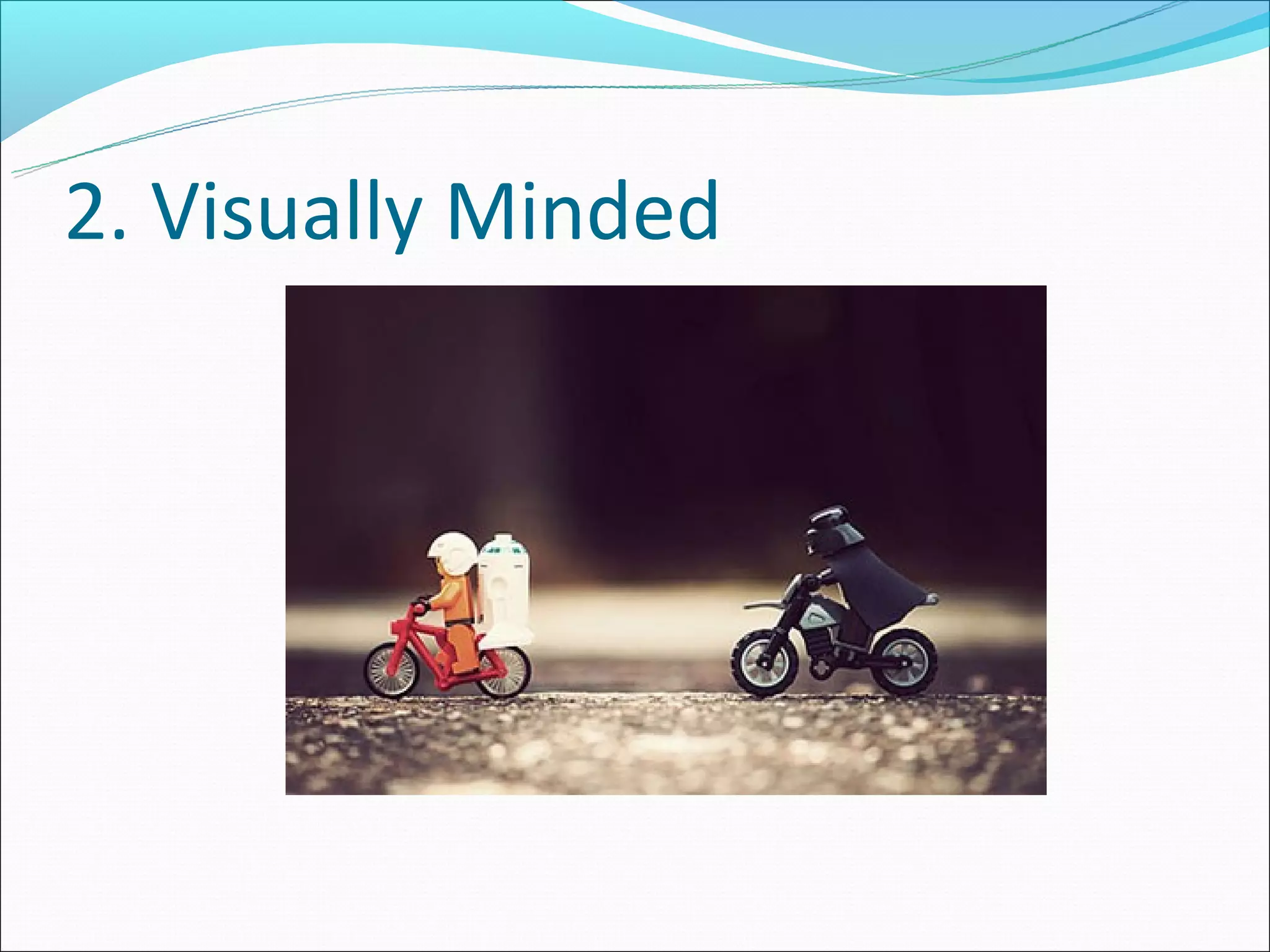
A picture is worth a thousand words. Visual thinkers
 are adept at conveying a larger idea through carefully
 chosen visuals. It’s no surprise they make great art
 directors and designers.
3. Systems Oriented
3. Systems Oriented
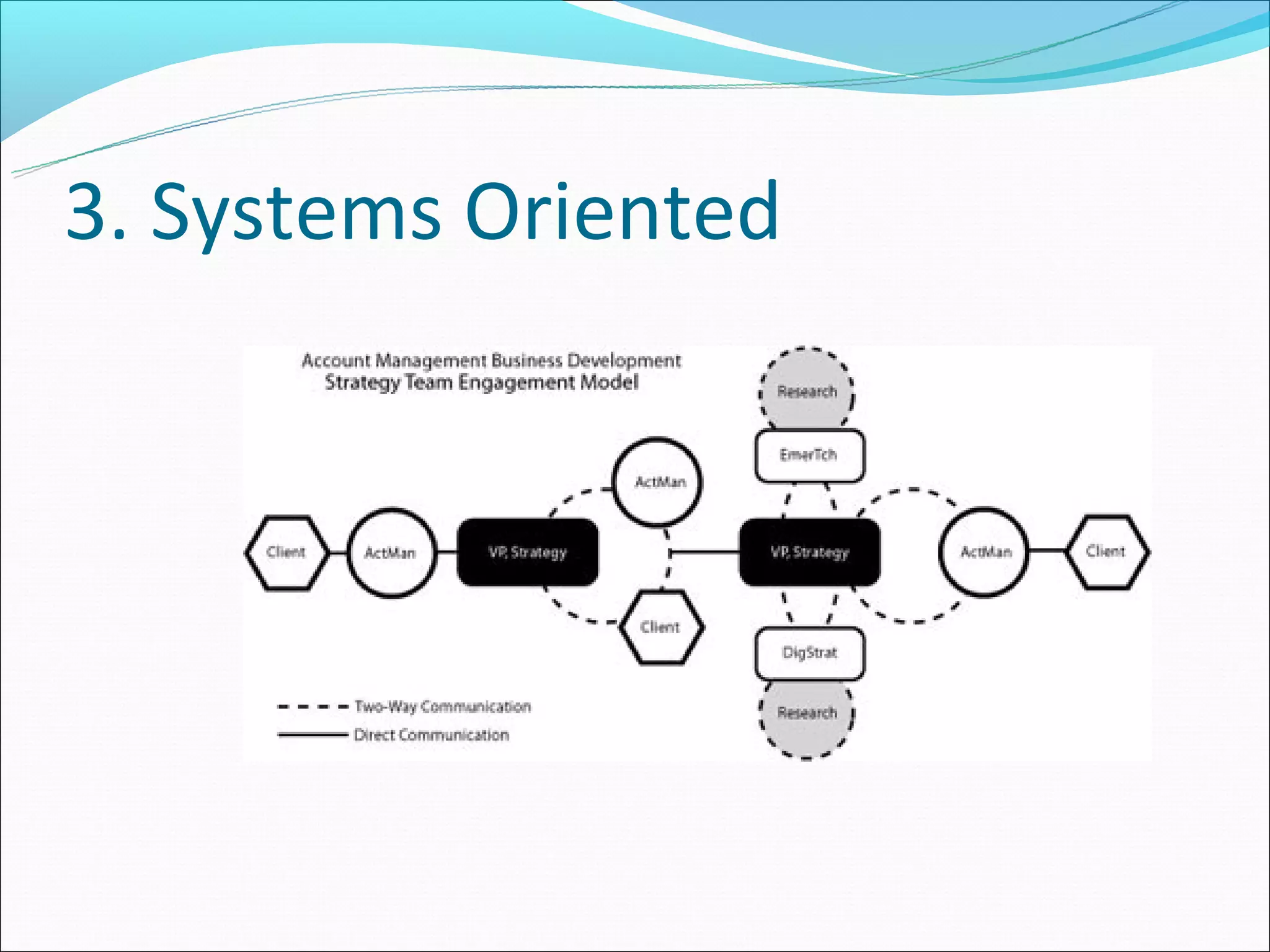
System thinkers fuss over the relationships between
 things. Instead of developing a big narrative, they try to
 map out and understand how all the moving parts fit
 together. They love flowcharts and diagrams.
This type of thinking is readily apparent in the platform
 strategies of digital brands like Apple, Adobe and Google.
 The true value of each company is predicated not just on
 their individual products, but how all their products work
 together seamlessly. Planning and understanding that
 connection is where system thinker’s shine.
4. Associative
4. Associative
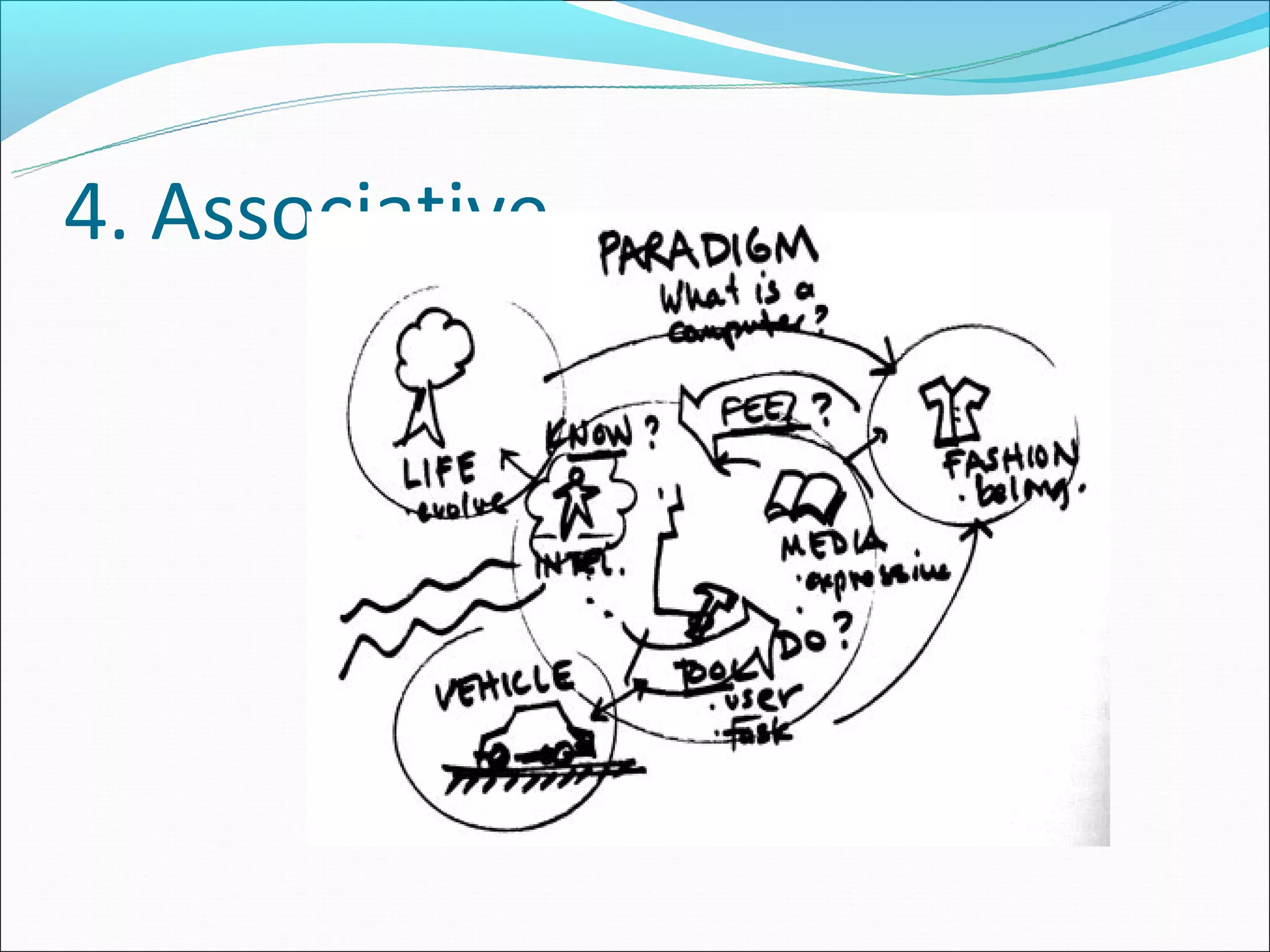
Associative thinkers look at the patterns between
 things. They have a tendency to express themselves
 through metaphor and proxy. They often lay out
 ideas in a chaotic fashion and are extremely prone to
 digressions. For example, there is a famous
 “digression” scene from Catcher in the Rye.
4. Associative
[Mr. Vinson] could drive you crazy sometimes,
 him and the goddam class. I mean he’d keep
 telling you to unify and simplify all the time.
 Some things you just can’t do that to…. It’s nice
 when somebody tells you about their uncle.
 Especially when they start out telling you about
 their father’s farm and then all of a sudden get
 more interested in their uncle. I mean it’s dirty to
 keep yelling ‘Digression!’ at him when he’s all nice
 and excited. I don’t know. It’s hard to explain.
5. Logical
5. Logical
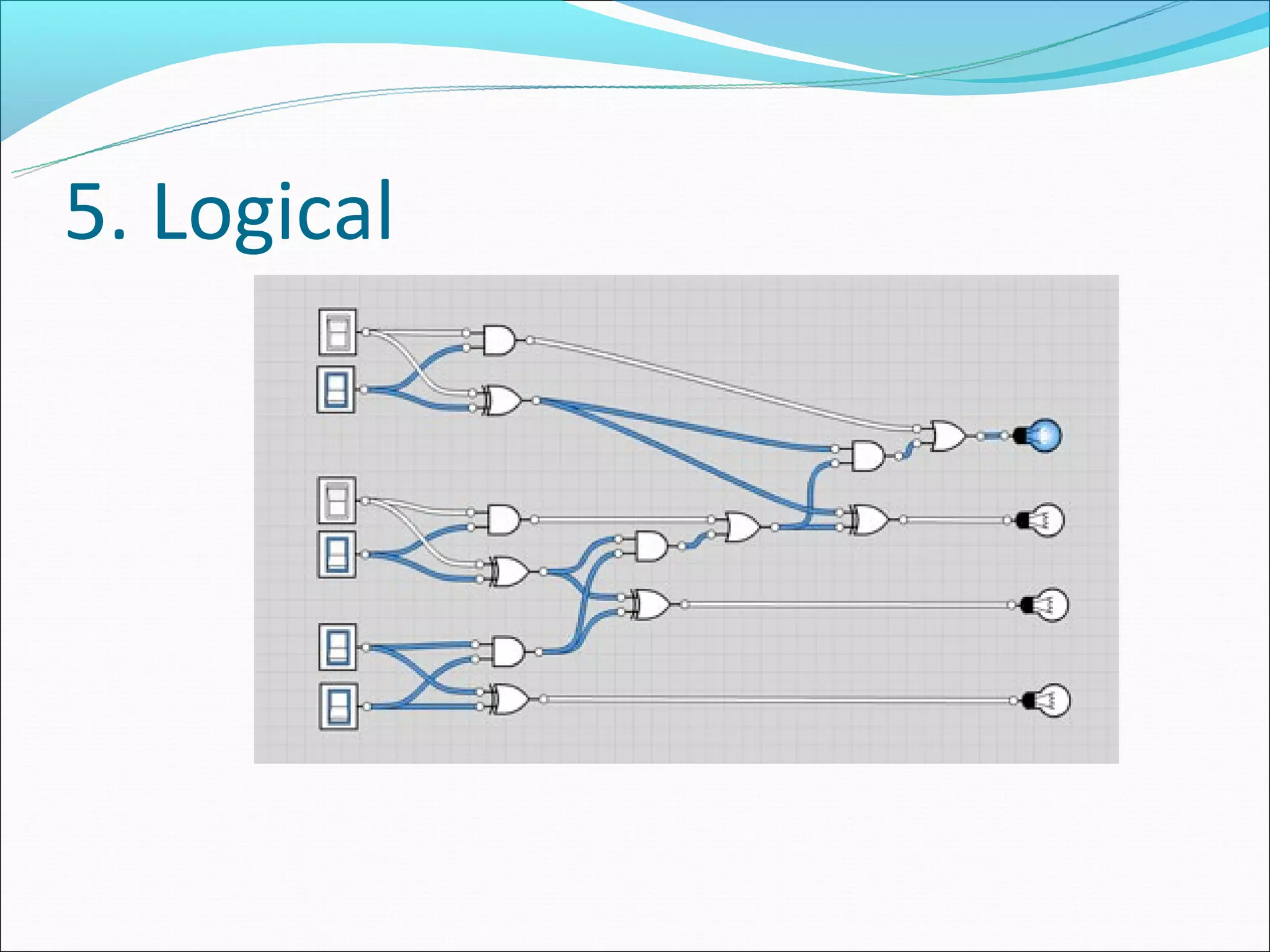
Logical thinkers break problems down into a series of
 choices. They focus heavily on the structure of
 decision-making, often establishing rubrics, filters
 and other tools that can not only institutionalize
 knowledge, but be used to teach computers how to
 automate tasks.
Not only are they great programmers, but they also
 make some mean spreadsheets.
6. Organizers
6. Organizers
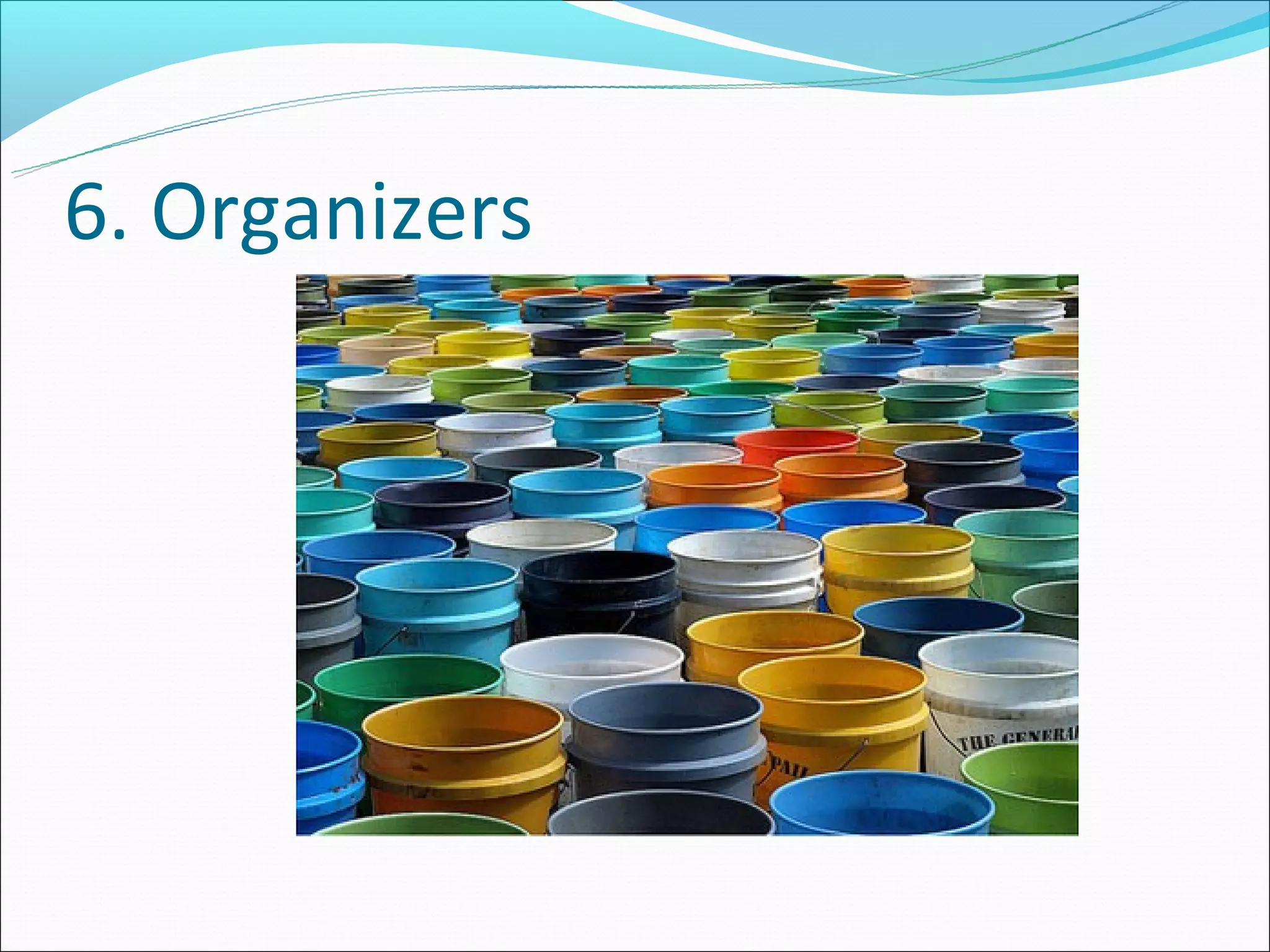
Have you ever met someone who had a knack for
 simplifying complex lists into simple categories?
 They probably fall here. Organizers are excellent
 and grouping and bucketing ideas, personnel,
 files… you name it. They have a habit of breaking
 things down by function, which makes them
 excellent programmers, but also excellent project
 and account managers as well.
They tend to have the most amazing file cabinets
 and binders.
7. Architects
7. Architects
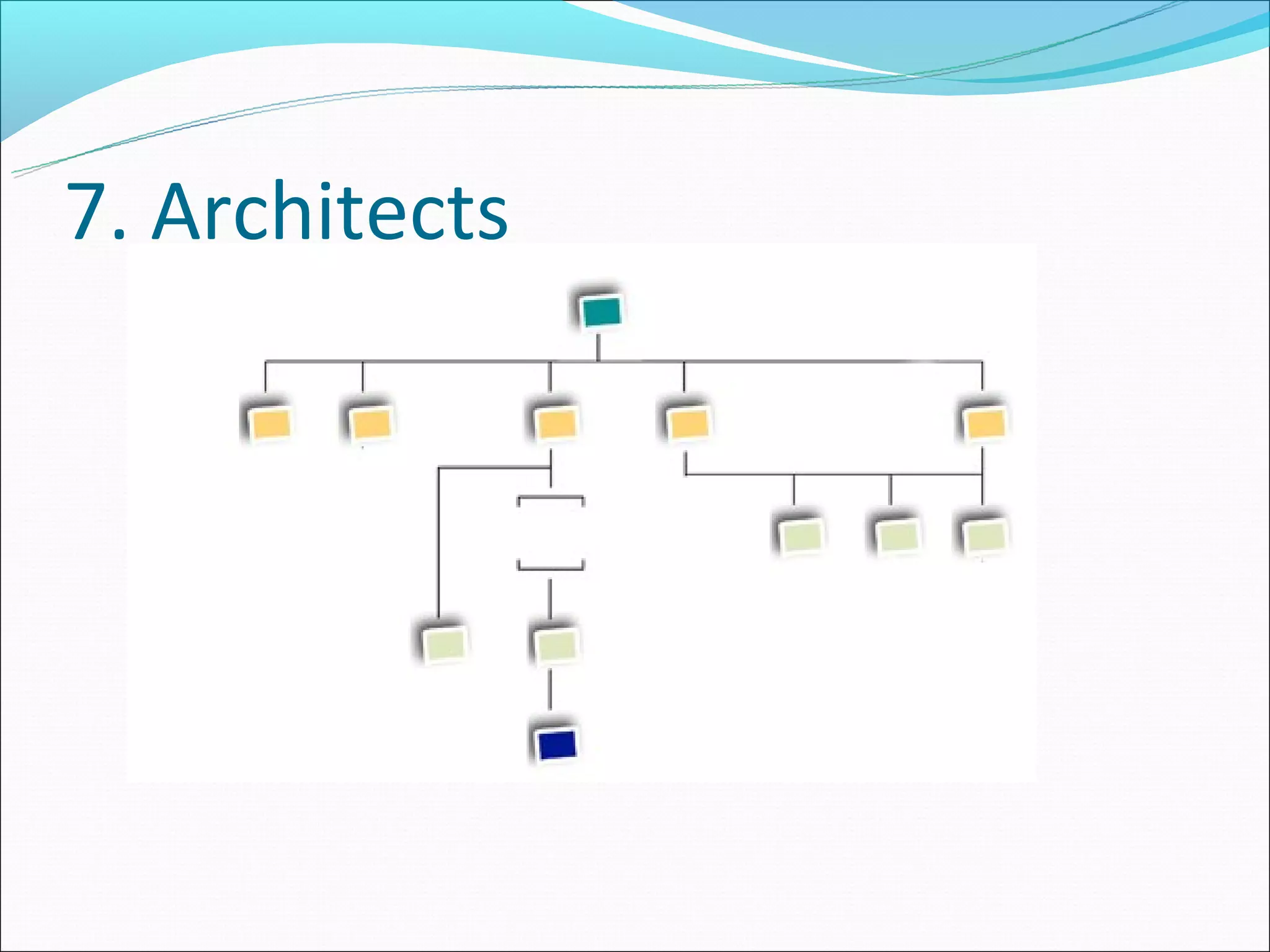
This mode of thinking is very similar to that of the
 organizers, but instead of grouping by function, they
 arrange in terms of hierarchy. Traditionally, this is
 called Information Architecture and produces the
 kind of tree layout shown above.
8. Intuitives
8. Intuitives
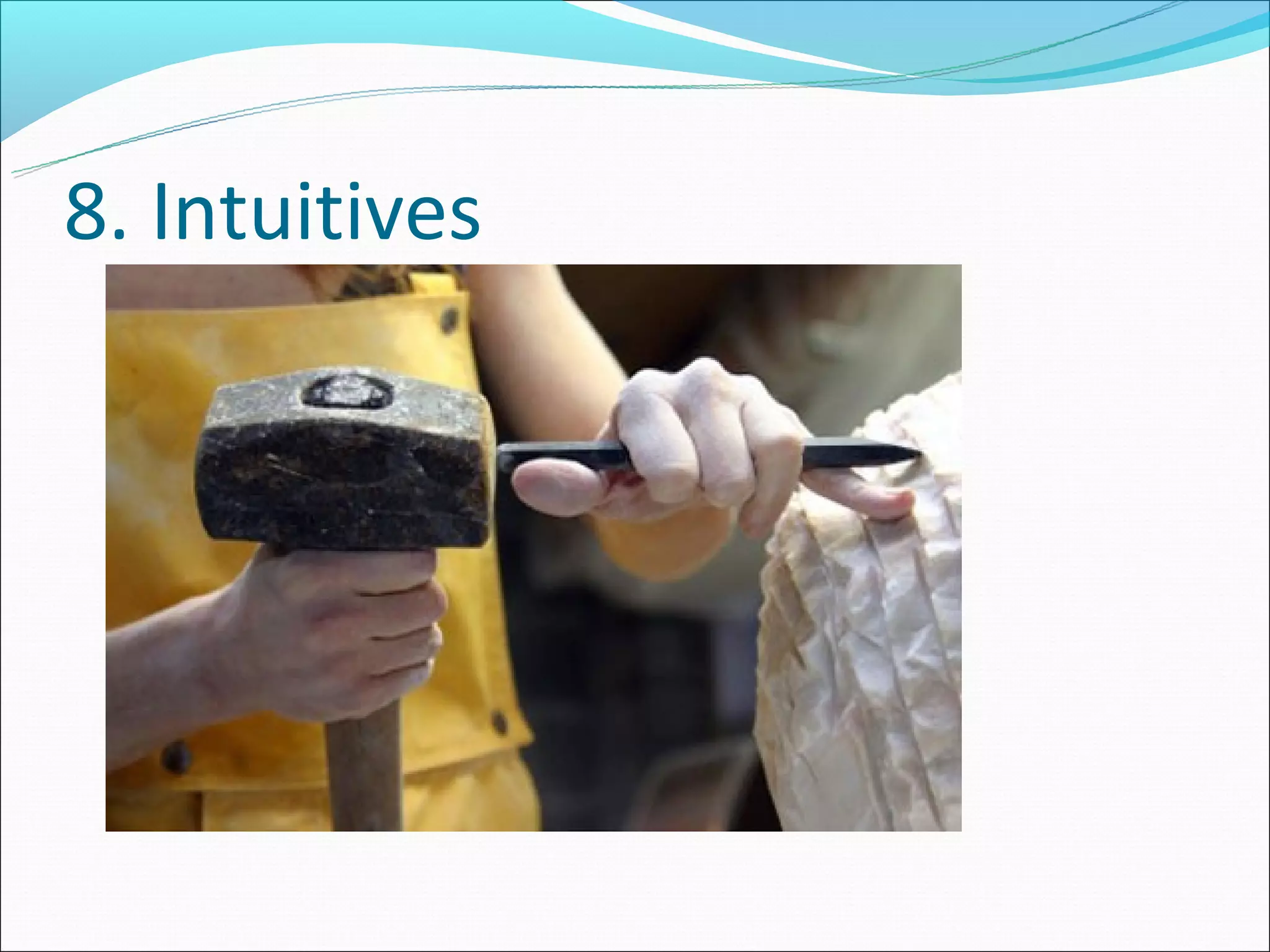
Like a sculptor, intuitives often start with a rough
 idea of what they’re trying to create. As they
 gradually mould their creation, it begins to take form,
 often in unexpected (and wonderful) ways. They
 know they’re done when it “feels right.”
8. Intuitives
Bill Moggridge, founder of IDEO, explains:
“If you think about the structure of the mind, there just
  seems to be a small amount that is above the water—
  equivalent to an iceberg—which is the explicit part…
  Most academic subjects are designed to live in that
  explicit part that sticks out of the water.
8. Intuitives
If you can find a way to harness, towards a productive
 goal, the rest of it, the subconscious [understanding],
 the tacit knowledge, the behavior—just doing it and
 the intuition—all those, then you can bring in the rest
 of the iceberg. And that is hugely valuable…. I mean
 every scientist is an intuitive person, and most “ahas”
 come from intuition anyway.”
8. Intuitives
They are known to cause panic attacks in more
 structured thinkers who prefer to have a concrete
 sense of where they’re going.
9. Leaders
9. Leaders
Leaders are goal-oriented individuals. They lay
 out the objectives and the timeline and lead the
 troops into the breach. They may not have
 charted a course, but they have a clear-eyed
 understanding of where the team is now and
 where it needs to go.
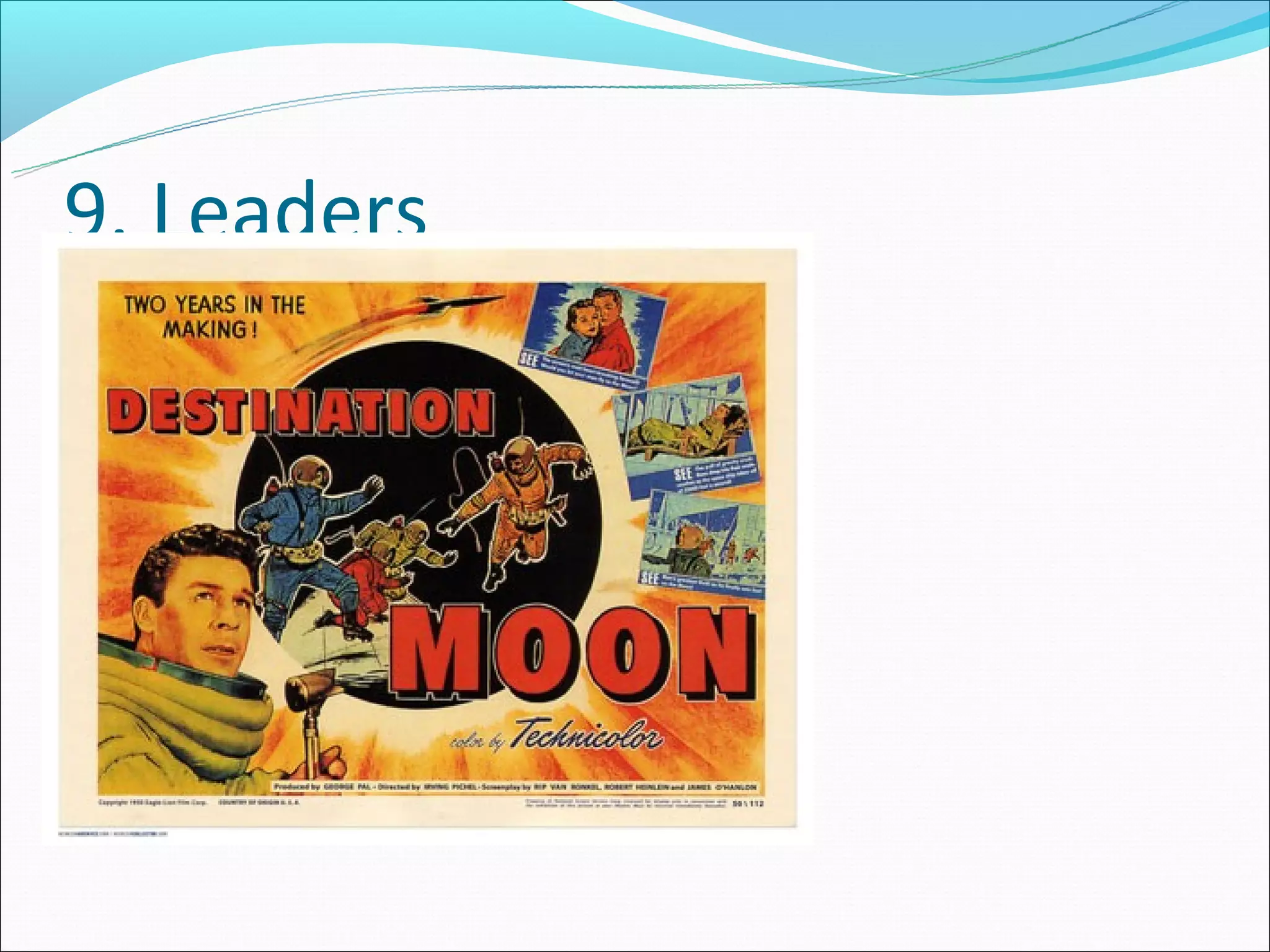
In films, montage-time helps bridge the gap
 between the inspirational speech and ultimate
 success. In the real world, they rely on the
 dedication of their team to get to the finish.
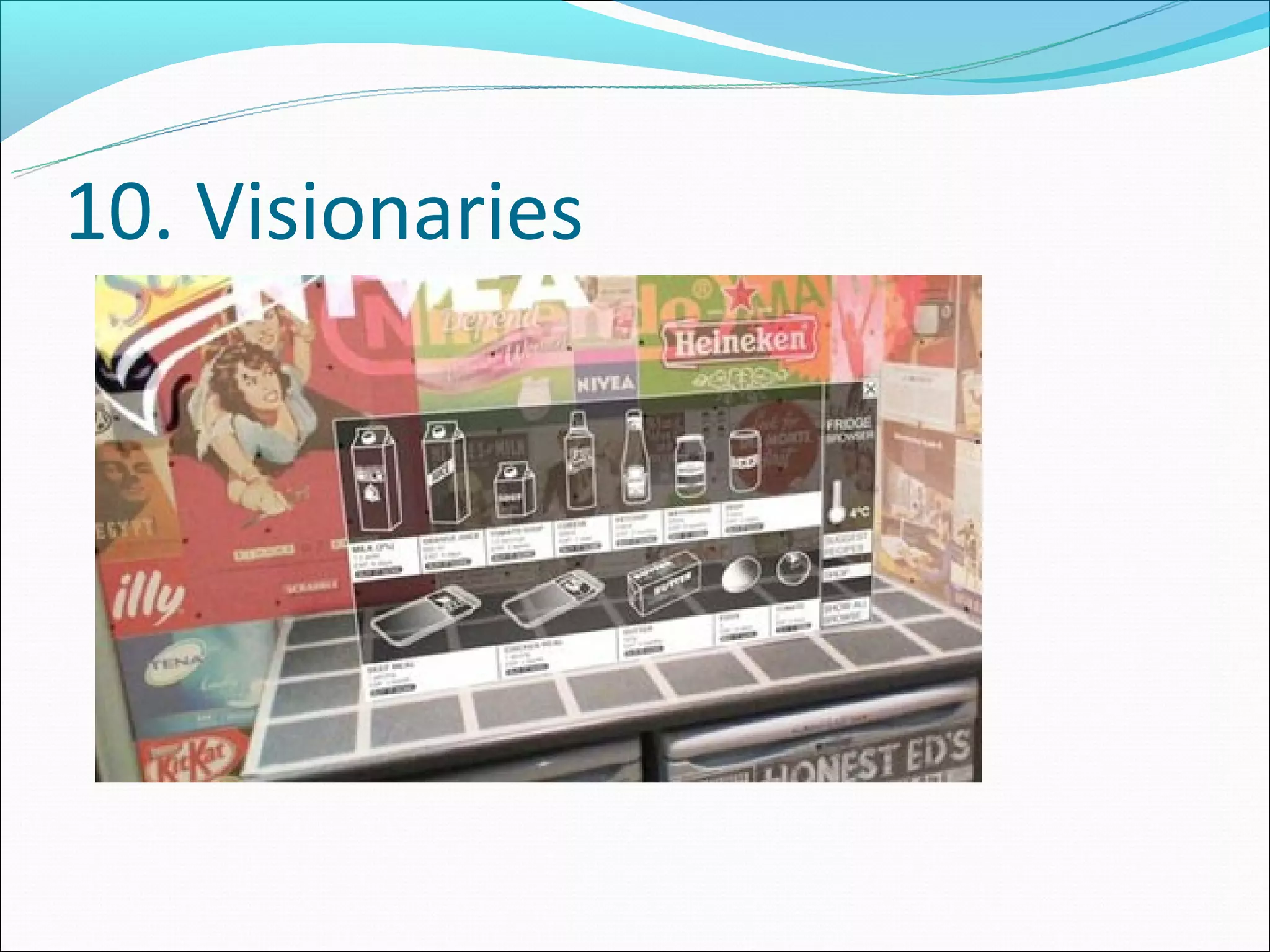
10. Visionaries
10. Visionaries
Similar to leaders, but far less grounded, visionaries
 imagine how things could be without regard for
 feasibility. Often, their ideas inspire more grounded
 thinkers to take bold, innovative steps.
Conclusion
It’s good to take note of the different kinds of
 thinkers around you. Pay attention to how your
 coworkers diagram their thoughts and keep it in mind
 when assigning tasks to teams of individuals. Instead
 of pushing likeminded individuals together (i.e. a
 brainstorm of programmers) try deliberately forming
 differently minded teams.
Interesting things happen when you pair two or three
 very different types of minds together. Sometimes, all
 greatness needs is a little perspective.
Thanks
RB

Ten types of thinking

  • 2.
    What do yourideas look like? The next time you have an idea, grab a piece of paper and sketch it out. Now take a look. How did you translate it from your brain to the page? Did you write a paragraph? Draw a picture? Make a diagram? Now ask a coworker to sketch the same idea – chances are, their page will look very different from yours.
  • 3.
    What do yourideas look like? There are many different kinds of thinkers. More often than not, we wind up working with people who understand the world in vastly different ways from ourselves. It’s what we mean when we say, “great ideas can come from anywhere.” Sometimes, what’s obvious in one mode of thinking is remarkably complex in another. By putting different kinds of thinkers on a problem, we can compose a greater range of creative solutions.
  • 4.
    What do yourideas look like? I’ve found a list of the ten most prevalent types of thinking you’re likely to encounter . I don’t mean to say that every individual falls into one category or another. Most people can think across several modes, depending on the situation, but everyone tends to have a few styles they’re most comfortable in… no one is equally adept at them all. Great agencies build diverse teams that can approach a problem from several angles.
  • 5.
  • 6.
    1. Storyteller Storytellers liketo think in narratives. Ideas are usually linear and have distinct beginnings, middles and ends. Most traditional creative copywriters tend to think this way, excellent for narrative media like TV but can be a bit of a struggle in less narrative- based digital media.
  • 7.
  • 8.
    2. Visually Minded Apicture is worth a thousand words. Visual thinkers are adept at conveying a larger idea through carefully chosen visuals. It’s no surprise they make great art directors and designers.
  • 9.
  • 10.
    3. Systems Oriented Systemthinkers fuss over the relationships between things. Instead of developing a big narrative, they try to map out and understand how all the moving parts fit together. They love flowcharts and diagrams. This type of thinking is readily apparent in the platform strategies of digital brands like Apple, Adobe and Google. The true value of each company is predicated not just on their individual products, but how all their products work together seamlessly. Planning and understanding that connection is where system thinker’s shine.
  • 11.
  • 12.
    4. Associative Associative thinkerslook at the patterns between things. They have a tendency to express themselves through metaphor and proxy. They often lay out ideas in a chaotic fashion and are extremely prone to digressions. For example, there is a famous “digression” scene from Catcher in the Rye.
  • 13.
    4. Associative [Mr. Vinson]could drive you crazy sometimes, him and the goddam class. I mean he’d keep telling you to unify and simplify all the time. Some things you just can’t do that to…. It’s nice when somebody tells you about their uncle. Especially when they start out telling you about their father’s farm and then all of a sudden get more interested in their uncle. I mean it’s dirty to keep yelling ‘Digression!’ at him when he’s all nice and excited. I don’t know. It’s hard to explain.
  • 14.
  • 15.
    5. Logical Logical thinkersbreak problems down into a series of choices. They focus heavily on the structure of decision-making, often establishing rubrics, filters and other tools that can not only institutionalize knowledge, but be used to teach computers how to automate tasks. Not only are they great programmers, but they also make some mean spreadsheets.
  • 16.
  • 17.
    6. Organizers Have youever met someone who had a knack for simplifying complex lists into simple categories? They probably fall here. Organizers are excellent and grouping and bucketing ideas, personnel, files… you name it. They have a habit of breaking things down by function, which makes them excellent programmers, but also excellent project and account managers as well. They tend to have the most amazing file cabinets and binders.
  • 18.
  • 19.
    7. Architects This modeof thinking is very similar to that of the organizers, but instead of grouping by function, they arrange in terms of hierarchy. Traditionally, this is called Information Architecture and produces the kind of tree layout shown above.
  • 20.
  • 21.
    8. Intuitives Like asculptor, intuitives often start with a rough idea of what they’re trying to create. As they gradually mould their creation, it begins to take form, often in unexpected (and wonderful) ways. They know they’re done when it “feels right.”
  • 22.
    8. Intuitives Bill Moggridge,founder of IDEO, explains: “If you think about the structure of the mind, there just seems to be a small amount that is above the water— equivalent to an iceberg—which is the explicit part… Most academic subjects are designed to live in that explicit part that sticks out of the water.
  • 23.
    8. Intuitives If youcan find a way to harness, towards a productive goal, the rest of it, the subconscious [understanding], the tacit knowledge, the behavior—just doing it and the intuition—all those, then you can bring in the rest of the iceberg. And that is hugely valuable…. I mean every scientist is an intuitive person, and most “ahas” come from intuition anyway.”
  • 24.
    8. Intuitives They areknown to cause panic attacks in more structured thinkers who prefer to have a concrete sense of where they’re going.
  • 25.
  • 26.
    9. Leaders Leaders aregoal-oriented individuals. They lay out the objectives and the timeline and lead the troops into the breach. They may not have charted a course, but they have a clear-eyed understanding of where the team is now and where it needs to go. In films, montage-time helps bridge the gap between the inspirational speech and ultimate success. In the real world, they rely on the dedication of their team to get to the finish.
  • 27.
  • 28.
    10. Visionaries Similar toleaders, but far less grounded, visionaries imagine how things could be without regard for feasibility. Often, their ideas inspire more grounded thinkers to take bold, innovative steps.
  • 29.
    Conclusion It’s good totake note of the different kinds of thinkers around you. Pay attention to how your coworkers diagram their thoughts and keep it in mind when assigning tasks to teams of individuals. Instead of pushing likeminded individuals together (i.e. a brainstorm of programmers) try deliberately forming differently minded teams. Interesting things happen when you pair two or three very different types of minds together. Sometimes, all greatness needs is a little perspective.
  • 30.