Feudal Japan
Students will be able to…
• Explain the development of feudalism in Japan
• Describe how power shifted from the nobles
to the nobles in the 1100’s
• Explain how Japanese society became a
military society
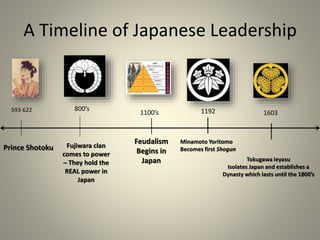
A Timeline of Japanese Leadership
593-622
Prince Shotoku
800’s
Fujiwara clan
comes to power
– They hold the
REAL power in
Japan
1100’s
Feudalism
Begins in
Japan
Minamoto Yoritomo
Becomes first Shogun
1192 1603
Tokugawa Ieyasu
Isolates Japan and establishes a
Dynasty which lasts until the 1800’s
Central Government Grows Week
• Japan remained strong
and untied for centuries
• Fujiwara clan came to
power and remained
Japan’s most powerful
family for almost 300
years.
• 1100’s the power of
central government and
the Fujiwara clan declined
– Running out of money
– Lost authority over large
land owners
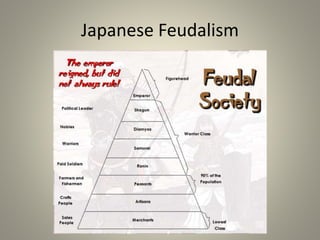
Feudalism:
• A political and social system of local rule in
which lords (Daimyo in Japan) gave land to
vassals in exchange for service.
Japanese Feudalism
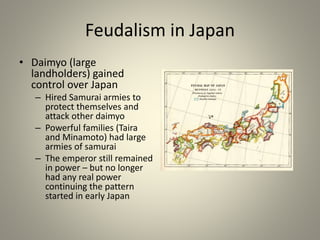
Feudalism in Japan
• Daimyo (large
landholders) gained
control over Japan
– Hired Samurai armies to
protect themselves and
attack other daimyo
– Powerful families (Taira
and Minamoto) had large
armies of samurai
– The emperor still remained
in power – but no longer
had any real power
continuing the pattern
started in early Japan
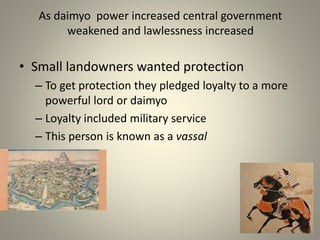
As daimyo power increased central government
weakened and lawlessness increased
• Small landowners wanted protection
– To get protection they pledged loyalty to a more
powerful lord or daimyo
– Loyalty included military service
– This person is known as a vassal
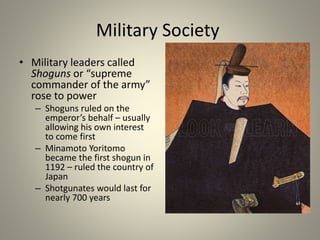
Military Society
• Military leaders called
Shoguns or “supreme
commander of the army”
rose to power
– Shoguns ruled on the
emperor’s behalf – usually
allowing his own interest
to come first
– Minamoto Yoritomo
became the first shogun in
1192 – ruled the country of
Japan
– Shotgunates would last for
nearly 700 years
Samurai
• Warriors
• Vowed to fight for their lord
even if they could not protect
their family
• Honorable death more
important than long life
• Women were often warriors
• Lived by a code of honor called
Bushido: loyalty, honor, and
bravery – became the
unwritten code of conduct for
all Japanese
• Zen Buddhism an important
aspect of their lives
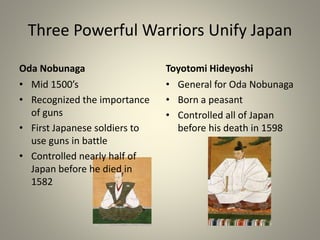
Three Powerful Warriors Unify Japan
Oda Nobunaga
• Mid 1500’s
• Recognized the importance
of guns
• First Japanese soldiers to
use guns in battle
• Controlled nearly half of
Japan before he died in
1582
Toyotomi Hideyoshi
• General for Oda Nobunaga
• Born a peasant
• Controlled all of Japan
before his death in 1598
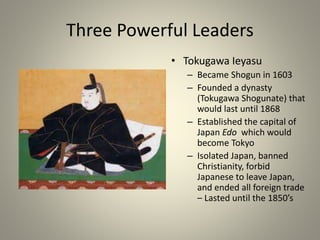
Three Powerful Leaders
• Tokugawa Ieyasu
– Became Shogun in 1603
– Founded a dynasty
(Tokugawa Shogunate) that
would last until 1868
– Established the capital of
Japan Edo which would
become Tokyo
– Isolated Japan, banned
Christianity, forbid
Japanese to leave Japan,
and ended all foreign trade
– Lasted until the 1850’s
Why it Matters…
• Japan remains strongly united today. It
continues to limit immigration and controls
the country’s dealings with foreigners

Feudal japan

  • 1.
  • 2.
    Students will beable to… • Explain the development of feudalism in Japan • Describe how power shifted from the nobles to the nobles in the 1100’s • Explain how Japanese society became a military society
  • 3.
    A Timeline ofJapanese Leadership 593-622 Prince Shotoku 800’s Fujiwara clan comes to power – They hold the REAL power in Japan 1100’s Feudalism Begins in Japan Minamoto Yoritomo Becomes first Shogun 1192 1603 Tokugawa Ieyasu Isolates Japan and establishes a Dynasty which lasts until the 1800’s
  • 4.
    Central Government GrowsWeek • Japan remained strong and untied for centuries • Fujiwara clan came to power and remained Japan’s most powerful family for almost 300 years. • 1100’s the power of central government and the Fujiwara clan declined – Running out of money – Lost authority over large land owners
  • 5.
    Feudalism: • A politicaland social system of local rule in which lords (Daimyo in Japan) gave land to vassals in exchange for service.
  • 6.
  • 7.
    Feudalism in Japan •Daimyo (large landholders) gained control over Japan – Hired Samurai armies to protect themselves and attack other daimyo – Powerful families (Taira and Minamoto) had large armies of samurai – The emperor still remained in power – but no longer had any real power continuing the pattern started in early Japan
  • 8.
    As daimyo powerincreased central government weakened and lawlessness increased • Small landowners wanted protection – To get protection they pledged loyalty to a more powerful lord or daimyo – Loyalty included military service – This person is known as a vassal
  • 9.
    Military Society • Militaryleaders called Shoguns or “supreme commander of the army” rose to power – Shoguns ruled on the emperor’s behalf – usually allowing his own interest to come first – Minamoto Yoritomo became the first shogun in 1192 – ruled the country of Japan – Shotgunates would last for nearly 700 years
  • 10.
    Samurai • Warriors • Vowedto fight for their lord even if they could not protect their family • Honorable death more important than long life • Women were often warriors • Lived by a code of honor called Bushido: loyalty, honor, and bravery – became the unwritten code of conduct for all Japanese • Zen Buddhism an important aspect of their lives
  • 11.
    Three Powerful WarriorsUnify Japan Oda Nobunaga • Mid 1500’s • Recognized the importance of guns • First Japanese soldiers to use guns in battle • Controlled nearly half of Japan before he died in 1582 Toyotomi Hideyoshi • General for Oda Nobunaga • Born a peasant • Controlled all of Japan before his death in 1598
  • 12.
    Three Powerful Leaders •Tokugawa Ieyasu – Became Shogun in 1603 – Founded a dynasty (Tokugawa Shogunate) that would last until 1868 – Established the capital of Japan Edo which would become Tokyo – Isolated Japan, banned Christianity, forbid Japanese to leave Japan, and ended all foreign trade – Lasted until the 1850’s
  • 13.
    Why it Matters… •Japan remains strongly united today. It continues to limit immigration and controls the country’s dealings with foreigners