Three Banners of
Feudalism
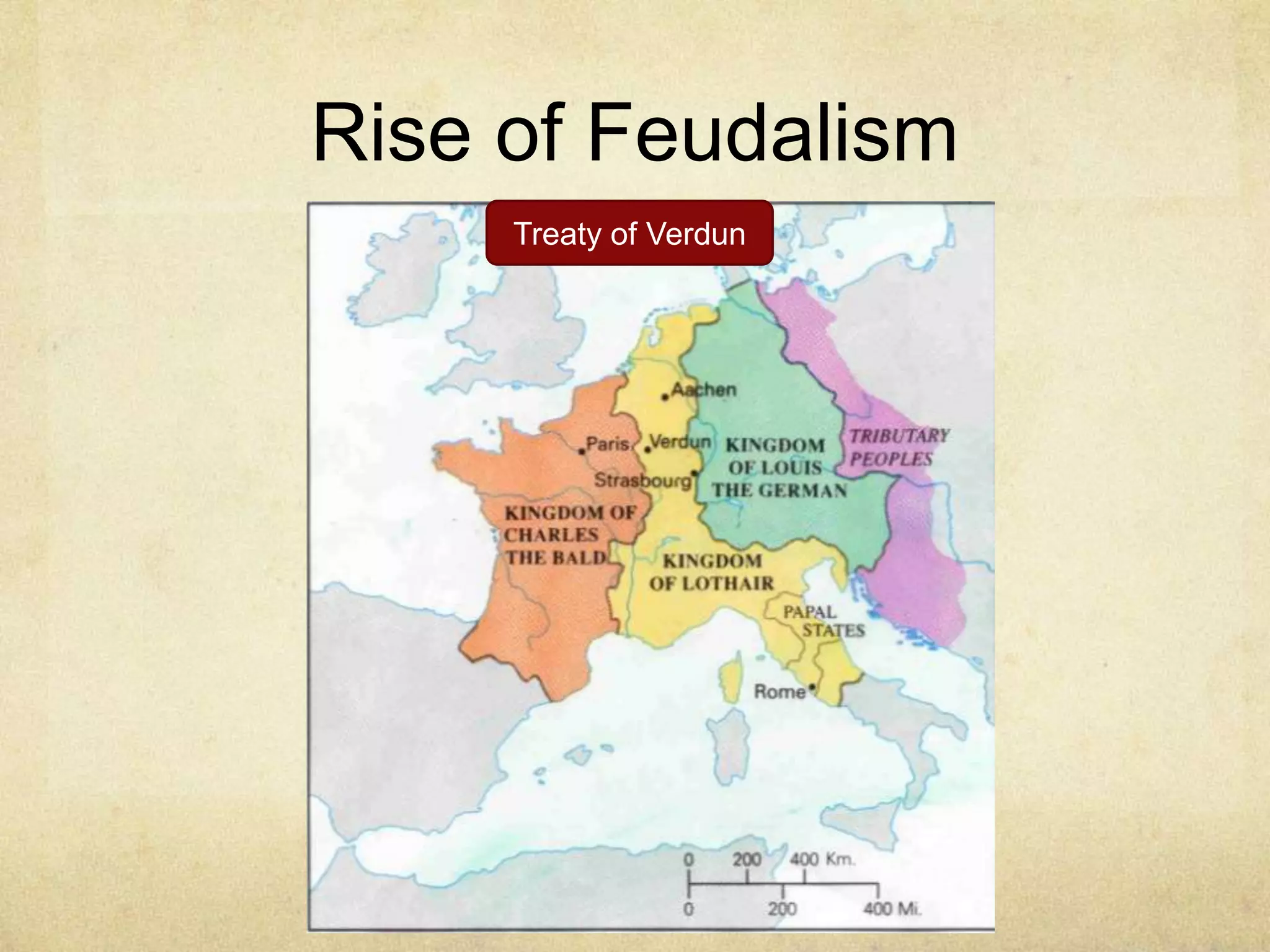
Rise of Feudalism
Treaty of Verdun
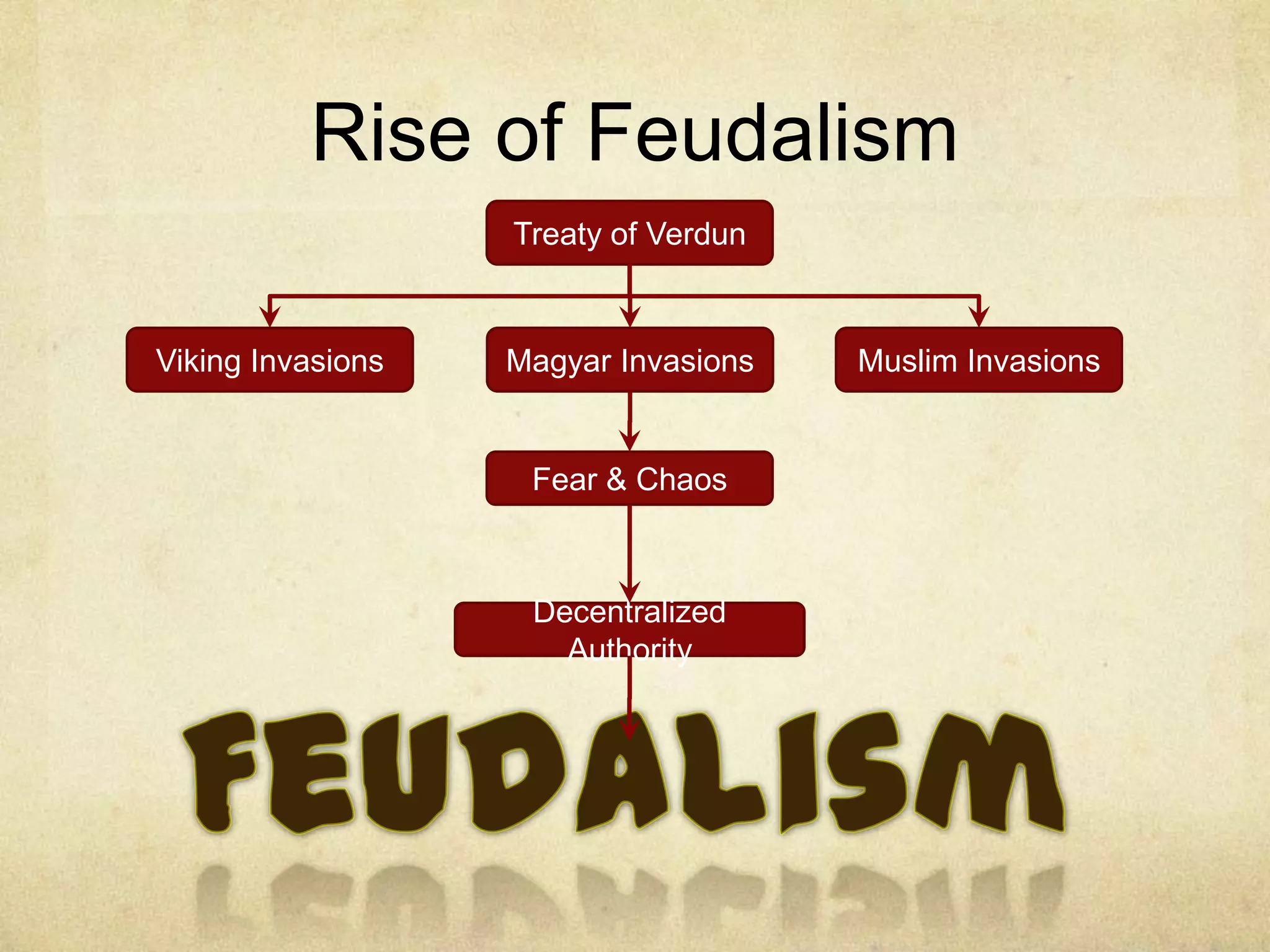
Rise of Feudalism
Treaty of Verdun
Viking Invasions Magyar Invasions Muslim Invasions
Fear & Chaos
Decentralized
Authority
I. Lord-Vassal Relationship
A. Only for the Nobility
B. Reciprocal Relationship
Higher Up (Lord) Lower Down (Vassal)
Gives
• land (fief)
• power/authority
• right to collect taxes
• loyalty
• military service
• taxes
Gets
• loyalty
• honor
• military protection
• land
• power/authority
• right to collect taxes
I. Lord-Vassal Relationship
Lord
Vassal
Lord
Vassal
Lord
Vassal
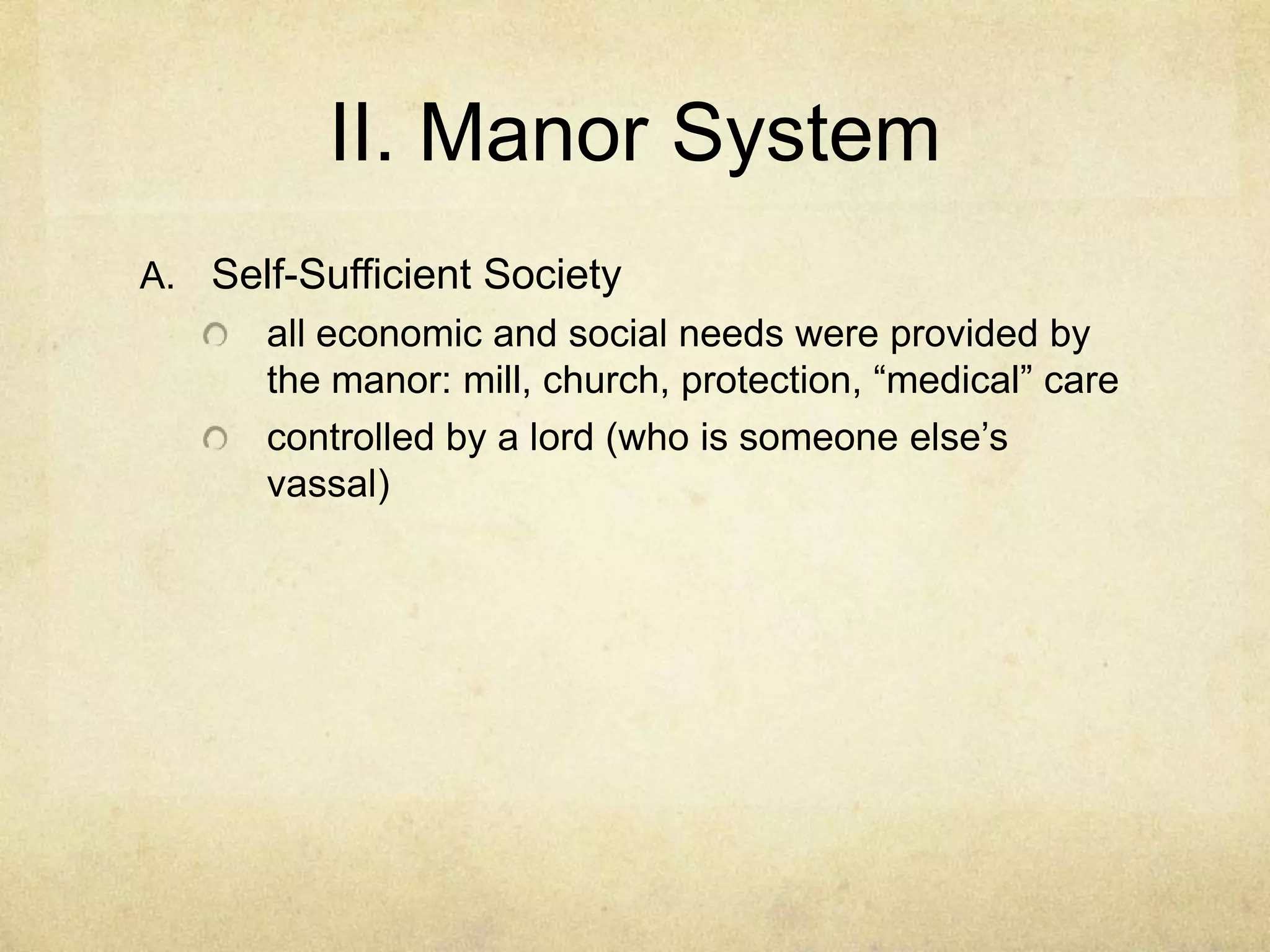
II. Manor System
A. Self-Sufficient Society
all economic and social needs were provided by
the manor
controlled by a lord (who is someone else’s
vassal)
source of natural resources such as
timber, mineral deposits (such as iron), agriculture
II. Manor System
B. Serfdom
Very restrictive: cannot leave; need permission to marry
Reciprocal relationship
Lord of the Manor Serf
Gives
• small tract of land
• protection
• all basic necessities
• labor
• pays taxes
• loyalty
• sometimes military
service
Gets
• labor
• taxes
• loyalty
• small tract of land
• protection
• all basic necessities
Government Order
Political Power is based on ownership of the land
The owner of the land makes the rules and laws
for the people who live on that land
Government Order
a serf must answer to the lord of the manor
the lord of the manor must answer to his lord
(who granted him his manor)
the higher lord must answer to the king who
controls all of the lands
Each lord had a degree of autonomy over his
land
Social Structure
1. monarch
considered to own all the land
2. powerful lords
dukes and counts
held the largest fiefs
3. vassals
those who pledged loyalty to a lord in exchange
for land
in some cases, a vassal to a duke or count may
also have his own vassals
Social Structure
4. knights
mounted soldiers
vassals to landowners
pledged loyalty and military service in exchange
for a castle to defend and pay (often times in the
form of loot from raids)
may be lords themselves
held to a code of chivalry (bravery, loyalty, and
truthfulness)
Social Structure
5. peasants
majority of the population
laborers
many were SERFS, peasants bound to the land
of their lord
in exchange for their labor and loyalty and a fee, a
serf received a roof over his head, access to
basic services, and protection
Economic System
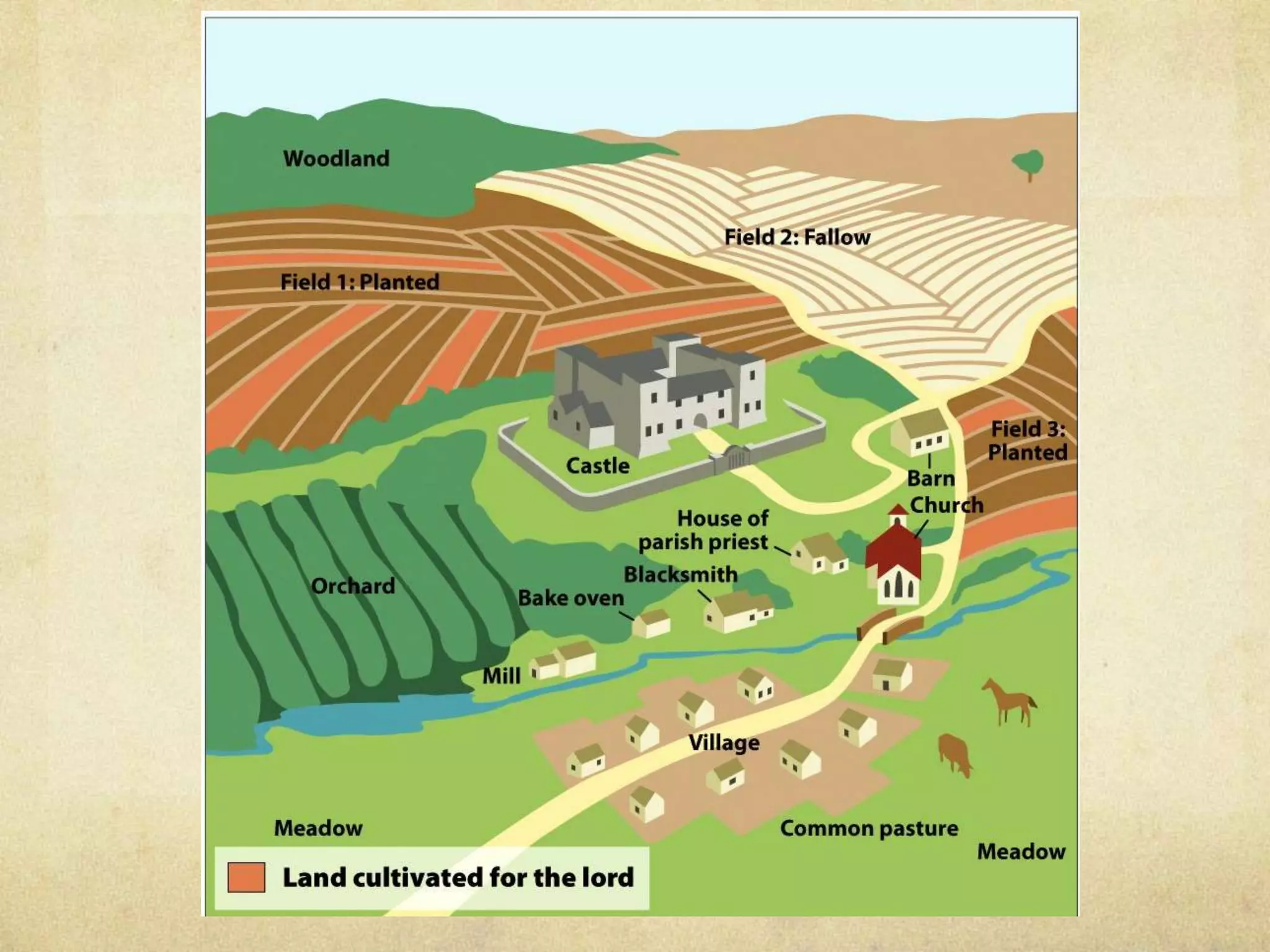
Self-Sufficiency
1. manors are designed to provide all the needs of its
inhabitants
2. manors had:
well (for water)
blacksmith (metal working, tools and weapons)
church (and sacraments)
mill (for grinding grain)
farms
often times their were woods for hunting and timber
sometimes there were quarries for mining stone

Three Banners of Feudalism

  • 1.
  • 2.
  • 3.
    Rise of Feudalism Treatyof Verdun Viking Invasions Magyar Invasions Muslim Invasions Fear & Chaos Decentralized Authority
  • 4.
    I. Lord-Vassal Relationship A.Only for the Nobility B. Reciprocal Relationship Higher Up (Lord) Lower Down (Vassal) Gives • land (fief) • power/authority • right to collect taxes • loyalty • military service • taxes Gets • loyalty • honor • military protection • land • power/authority • right to collect taxes
  • 5.
  • 6.
    II. Manor System A.Self-Sufficient Society all economic and social needs were provided by the manor controlled by a lord (who is someone else’s vassal) source of natural resources such as timber, mineral deposits (such as iron), agriculture
  • 8.
    II. Manor System B.Serfdom Very restrictive: cannot leave; need permission to marry Reciprocal relationship Lord of the Manor Serf Gives • small tract of land • protection • all basic necessities • labor • pays taxes • loyalty • sometimes military service Gets • labor • taxes • loyalty • small tract of land • protection • all basic necessities
  • 9.
    Government Order Political Poweris based on ownership of the land The owner of the land makes the rules and laws for the people who live on that land
  • 10.
    Government Order a serfmust answer to the lord of the manor the lord of the manor must answer to his lord (who granted him his manor) the higher lord must answer to the king who controls all of the lands Each lord had a degree of autonomy over his land
  • 11.
    Social Structure 1. monarch consideredto own all the land 2. powerful lords dukes and counts held the largest fiefs 3. vassals those who pledged loyalty to a lord in exchange for land in some cases, a vassal to a duke or count may also have his own vassals
  • 12.
    Social Structure 4. knights mountedsoldiers vassals to landowners pledged loyalty and military service in exchange for a castle to defend and pay (often times in the form of loot from raids) may be lords themselves held to a code of chivalry (bravery, loyalty, and truthfulness)
  • 13.
    Social Structure 5. peasants majorityof the population laborers many were SERFS, peasants bound to the land of their lord in exchange for their labor and loyalty and a fee, a serf received a roof over his head, access to basic services, and protection
  • 14.
    Economic System Self-Sufficiency 1. manorsare designed to provide all the needs of its inhabitants 2. manors had: well (for water) blacksmith (metal working, tools and weapons) church (and sacraments) mill (for grinding grain) farms often times their were woods for hunting and timber sometimes there were quarries for mining stone