Craniotomy
By Mae Krasniewicz
Background
• Prehistoric
• Paul Broca
• Name changes
depending on the area
of the brain
Background
• Craniectomy
• Burr hole
• Retro-sigmold
“Keyhole” Craniotomy
• Supra-orbital
“Eyebrow” Craniotomy
Background
Types of conditions addressed by this procedure:
• Tumors
• Blood clots
• Epilepsy
• Nerve Damage
• Brain Injury
• Stroke
Anatomical & Physiological Considerations
• Focuses on the brain
and cranium
• Affects nervous
system
• Addresses alertness,
thought processing,
involuntary movements,
etc.
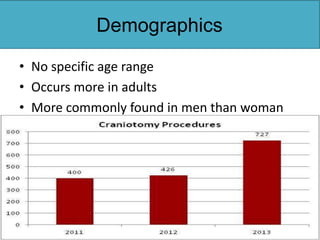
Demographics
• No specific age range
• Occurs more in adults
• More commonly found in men than woman
Affect on the Body & Mind
• Functional changes depend on what part of
the brain is being performed on
• Recovery time is
1-4 weeks
• Daily life
hopefully gets
easier
Affect on the Body & Mind
Risks:
• Infection
• Hemorrhage
• Seizures
• Brain swelling
Benefits:
• Being cured of the issue
• Less discomfort
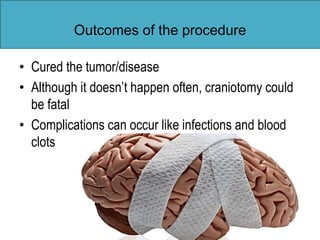
Outcomes of the procedure
• Cured the tumor/disease
• Although it doesn’t happen often, craniotomy could
be fatal
• Complications can occur like infections and blood
clots
Surgical Procedure
Popular conditions craniotomy attempts to fix:
• Brain Tumors
• Aneurysms
• Epilepsy
Surgical Procedure
• Before craniotomy, surgeries performed on the skull
were done through drilling holes into the skull
4 main approaches:
• Drilling
• Sawing
• Scraping
• Grooving
Surgical Procedure
• General anesthesia
is administered to
the patient
• An incision is made,
usually behind the
hairline
Surgical Procedure
• The skin and
muscles are lifted
off of the bone and
pinned back
• Cut and removes
the bone flap so
that the dura is
revealed
Surgical Procedure
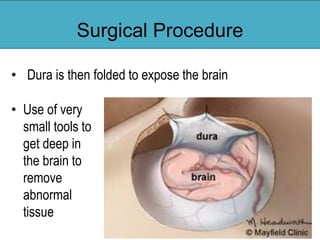
• Use of very
small tools to
get deep in
the brain to
remove
abnormal
tissue
• Dura is then folded to expose the brain
Surgical Procedure
• Dura is closed with
sutures
• Bone flap is placed
back and secured
with screws and
plates
• Bandage the scar
Surgical Procedure
• 40,000 – 150,000$
• Requires more time
in the hospital to
recover
Surgical Procedure
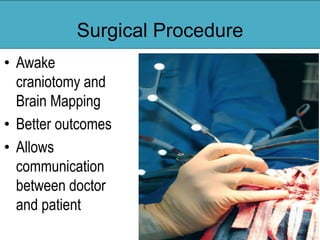
• Awake
craniotomy and
Brain Mapping
• Better outcomes
• Allows
communication
between doctor
and patient
Conclusion
• One of the most interesting things that I learned is
how many different Craniotomies there are
• The most important resources I used was Hopkins
Medicine and Mayfield Clinic
Conclusion
• I’m still wondering about the mortality rate
of all the different craniotomies
• I think everyone should learn about how
common brain surgeries are
Bibliography
• "ABC: A History of Craniotomy." Phisick. Phisick, 14 Nov. 2011. Web. 1 May 2015.
• "Ancient Skulls Ancient Skills." Phisick. Phisick, 9 Nov. 2011. Web. 1 May 2015.
• “Awake Craniotomy.” Barnes Jewish. Barnes-Jewish Hospital, n.d. Web 1 May 2015.
• "Brain Surgery." Healthline. Healthline Networks Inc, n.d. Web. 1 May 2015.
• "Brain Surgery Cost." CostHelper. CostHelper, n.d. Web. 1 May 2015.
• "Craniectomy." Rochester. University of Rochester Medical Center, n.d. Web. 1 May 2015.
• "Craniotomy." Chicago Institute of Neurosurgery and Neuroresearch. 20 May. 2005. 24 Jul. 2009
• "Craniotomy." MDGuidlines. Reed Group, n.d. Web. 1 May 2015.
• "Craniotomy by Karam Chand Method." Neurosurgic. Neurosurgic, 25 Feb. 2014. Web. 1 May 2015.
• "Craniotomy Techniques." Phisick. Phisick, 9 Nov. 2011. Web. 1 May 2015.
• "Craniotomy Through the Ages." NCBI. National Center for Biotechnology Information, June 2007.
Web. 1 May 2015.
• "Demographics." Surgery. N.p., n.d. Web. 24 Nov. 2009.
• Warnick, Ron, MD, ed. "Craniotomy." Mayfield Clinic. Mayfield Clinic, n.d. Web. 1 Feb. 2013.
• "What is Craniotomy?" Hopkins Medicine. Johns Hopkins University, Johns Hopkins Hospital, Johns
Hopkins Health System, n.d. Web. 1 May 2015.

Craniotomy

  • 1.
  • 2.
    Background • Prehistoric • PaulBroca • Name changes depending on the area of the brain
  • 3.
    Background • Craniectomy • Burrhole • Retro-sigmold “Keyhole” Craniotomy • Supra-orbital “Eyebrow” Craniotomy
  • 4.
    Background Types of conditionsaddressed by this procedure: • Tumors • Blood clots • Epilepsy • Nerve Damage • Brain Injury • Stroke
  • 5.
    Anatomical & PhysiologicalConsiderations • Focuses on the brain and cranium • Affects nervous system • Addresses alertness, thought processing, involuntary movements, etc.
  • 6.
    Demographics • No specificage range • Occurs more in adults • More commonly found in men than woman
  • 7.
    Affect on theBody & Mind • Functional changes depend on what part of the brain is being performed on • Recovery time is 1-4 weeks • Daily life hopefully gets easier
  • 8.
    Affect on theBody & Mind Risks: • Infection • Hemorrhage • Seizures • Brain swelling Benefits: • Being cured of the issue • Less discomfort
  • 9.
    Outcomes of theprocedure • Cured the tumor/disease • Although it doesn’t happen often, craniotomy could be fatal • Complications can occur like infections and blood clots
  • 10.
    Surgical Procedure Popular conditionscraniotomy attempts to fix: • Brain Tumors • Aneurysms • Epilepsy
  • 11.
    Surgical Procedure • Beforecraniotomy, surgeries performed on the skull were done through drilling holes into the skull 4 main approaches: • Drilling • Sawing • Scraping • Grooving
  • 12.
    Surgical Procedure • Generalanesthesia is administered to the patient • An incision is made, usually behind the hairline
  • 13.
    Surgical Procedure • Theskin and muscles are lifted off of the bone and pinned back • Cut and removes the bone flap so that the dura is revealed
  • 14.
    Surgical Procedure • Useof very small tools to get deep in the brain to remove abnormal tissue • Dura is then folded to expose the brain
  • 15.
    Surgical Procedure • Durais closed with sutures • Bone flap is placed back and secured with screws and plates • Bandage the scar
  • 16.
    Surgical Procedure • 40,000– 150,000$ • Requires more time in the hospital to recover
  • 17.
    Surgical Procedure • Awake craniotomyand Brain Mapping • Better outcomes • Allows communication between doctor and patient
  • 18.
    Conclusion • One ofthe most interesting things that I learned is how many different Craniotomies there are • The most important resources I used was Hopkins Medicine and Mayfield Clinic
  • 19.
    Conclusion • I’m stillwondering about the mortality rate of all the different craniotomies • I think everyone should learn about how common brain surgeries are
  • 20.
    Bibliography • "ABC: AHistory of Craniotomy." Phisick. Phisick, 14 Nov. 2011. Web. 1 May 2015. • "Ancient Skulls Ancient Skills." Phisick. Phisick, 9 Nov. 2011. Web. 1 May 2015. • “Awake Craniotomy.” Barnes Jewish. Barnes-Jewish Hospital, n.d. Web 1 May 2015. • "Brain Surgery." Healthline. Healthline Networks Inc, n.d. Web. 1 May 2015. • "Brain Surgery Cost." CostHelper. CostHelper, n.d. Web. 1 May 2015. • "Craniectomy." Rochester. University of Rochester Medical Center, n.d. Web. 1 May 2015. • "Craniotomy." Chicago Institute of Neurosurgery and Neuroresearch. 20 May. 2005. 24 Jul. 2009 • "Craniotomy." MDGuidlines. Reed Group, n.d. Web. 1 May 2015. • "Craniotomy by Karam Chand Method." Neurosurgic. Neurosurgic, 25 Feb. 2014. Web. 1 May 2015. • "Craniotomy Techniques." Phisick. Phisick, 9 Nov. 2011. Web. 1 May 2015. • "Craniotomy Through the Ages." NCBI. National Center for Biotechnology Information, June 2007. Web. 1 May 2015. • "Demographics." Surgery. N.p., n.d. Web. 24 Nov. 2009. • Warnick, Ron, MD, ed. "Craniotomy." Mayfield Clinic. Mayfield Clinic, n.d. Web. 1 Feb. 2013. • "What is Craniotomy?" Hopkins Medicine. Johns Hopkins University, Johns Hopkins Hospital, Johns Hopkins Health System, n.d. Web. 1 May 2015.

Editor's Notes

  • #3  A craniotomy is named for the specific region of the skull where the bone is removed. For example, if the craniotomy is opened in the frontal bone, it is called a frontal craniotomy) A craniotomy is named for the specific region of the skull where the bone is removed. For example, if the craniotomy is opened in the frontal bone, it is called a frontal craniotomy Cranio-latin for top of the brain Paul broca – father of neurology, helped with the later discovery of surgeries performed on the brain Prehistoric
  • #4 Craniectomy is where they cut the brain to relieve it so it is not squeezed, happens in strokes and tramatic brain injury. Burr hole is making only a small hole in the skull instead of removing a portion
  • #6 Your whole body is affected by the procedure because its your brain and your brain controls basically your whole body but the main system it affects is the nervous system
  • #8 8 weeks being the full recovery