

Prof. John D. Moore. Ph.D.
American Military University
LONG TERM DEPLOYMENTS:
Soldiers Under Stress
Families in Crisis
Knowledge Objectives
• Identify key stressors for soldiers and affected
loved ones
• Recognize how deployment impacts
relationships with spouses & significant others
• Examine the impact on children & the family
• Explore healthy ways of coping with stress
• Identify warning signs of PTSD
• Determine a path to recovery for PTSD
Deployments, Stress & Relationships
Stress Prevention & Coping Tools
Warning signs of acute stress & PTSD
Conclusion
1
2
3
4 Working Towards Recovery
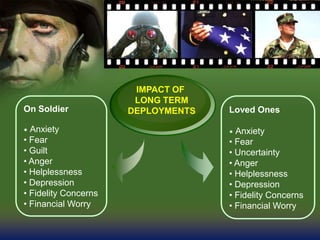
Loved Ones
• Anxiety
• Fear
• Uncertainty
• Anger
• Helplessness
• Depression
• Fidelity Concerns
• Financial Worry
IMPACT OF
LONG TERM
DEPLOYMENTSOn Soldier
• Anxiety
• Fear
• Guilt
• Anger
• Helplessness
• Depression
• Fidelity Concerns
• Financial Worry
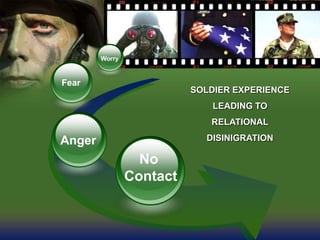
No
Contact
Anger
Fear
Worry
SOLDIER EXPERIENCE
LEADING TO
RELATIONAL
DISINIGRATION
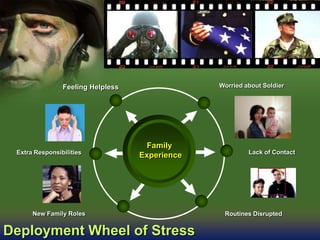
Extra Responsibilities
New Family Roles Routines Disrupted
Lack of Contact
Feeling Helpless Worried about Soldier
Title
Family
Experience
Deployment Wheel of Stress
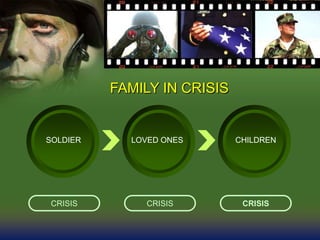
Your Text here CHILDREN
CRISIS CRISIS CRISIS
LOVED ONESSOLDIER
FAMILY IN CRISIS
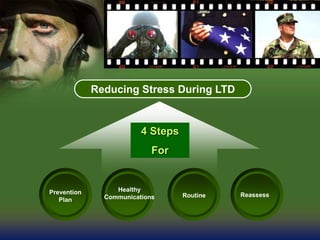
Reducing Stress During LTD
Healthy
Communications ReassessRoutine
Prevention
Plan
4 Steps
For
Step One:
Develop a stress prevention plan
1. Anticipate ahead of time that a deployment will happen
2. Brainstorm as to what modes of communication might be available
3. Let soldier make first contact and report best times for communication
4. Set a time and date for each communication session and if at all
possible, stick with it
5. Realize that schedules change for both parties and flexibility is a must!
Step Two:
healthy communications
1. Share important information that is relevant to the family unit
2. Express what each person needs
3. Share true feelings and expressions of love & commitment
4. Tell the truth if problems have occurred with children – don’t sugar
coat a problem
5. Avoid falling into the trap of becoming “glued” to the T.V.
6. Avoid rehashing old arguments
7. Reconfirm the next communication session
Step Three:
Establish a routine
1. Stay involved with prior family commitments (worship services, etc)
2. Celebrate the holidays
3. Set aside one day a week for a family event
4. If possible, connect with other military families on a regular basis
5. Have another family member continue acting as a mentor during the
soldier’s departure
6. Explore the idea of creating connection activities
Step Four:
Reassess your plan
1. Is the plan working?
2. What can be changed?
3. What cannot be changed?
4. Look for new opportunities that may appear
Posttraumatic Stress Disorder
A. The person has been exposed to a traumatic event in which both of the following were present:
1. Person experienced, witnessed, or was confronted with an event or events that involved actual or threatened death or
serious injury, or a threat to the physical integrity of self or others
2. Person's response involved intense fear, helplessness, or horror. Note: In children, this may be expressed instead by
disorganized or agitated behavior
B. The traumatic event is persistently re-experienced in one (or more) of the following ways:
1. recurrent and intrusive distressing recollections of the event, including images, thoughts, or perceptions. Note: In young
children, repetitive play may occur in which themes or aspects of the trauma are expressed.
2. recurrent distressing dreams of the event. Note: In children, there may be frightening dreams without recognizable
content.
3. acting or feeling as if the traumatic event were recurring (includes a sense of reliving the experience, illusions,
hallucinations, and Dissociative flashback episodes, including those that occur on awakening or when intoxicated). Note:
In young children, trauma-specific reenactment may occur.
CON’T NEXT SLIDE
Posttraumatic Stress Disorder CON’T
4. intense psychological distress at exposure to internal or external cues that symbolize or resemble an aspect of the
traumatic event
5. physiological reactivity on exposure to internal or external cues that symbolize or resemble an aspect of the traumatic
event
C. Persistent avoidance of stimuli associated with the trauma and numbing of general responsiveness (not
present before the trauma), as indicated by three (or more) of the following:
1. efforts to avoid thoughts, feelings, or conversations associated with the trauma
2. efforts to avoid activities, places, or people that arouse recollections of the trauma
3. inability to recall an important aspect of the trauma
4. markedly diminished interest or participation in significant activities
5. feeling of detachment or estrangement from others
6. restricted range of affect (e.g., unable to have loving feelings)
7. sense of a foreshortened future (e.g., does not expect to have a career, marriage, children, or a normal life span)
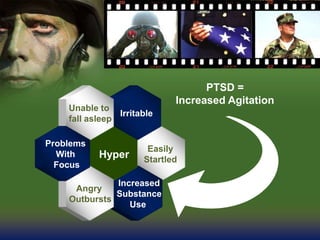
Easily
Startled
Irritable
Increased
Substance
Use
Hyper
Unable to
fall asleep
Angry
Outbursts
Problems
With
Focus
PTSD =
Increased Agitation
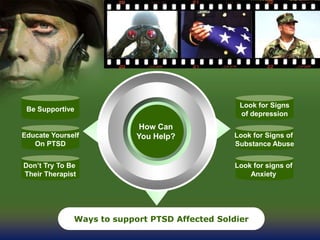
Be Supportive
How Can
You Help?
Look for signs of
Anxiety
Look for Signs of
Substance Abuse
Look for Signs
of depression
Ways to support PTSD Affected Soldier
Educate Yourself
On PTSD
Don’t Try To Be
Their Therapist
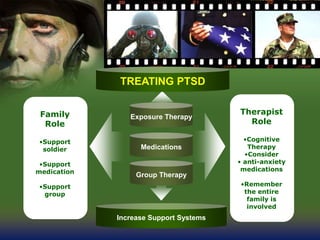
Increase Support Systems
Family
Role
•Support
soldier
•Support
medication
•Support
group
Therapist
Role
•Cognitive
Therapy
•Consider
• anti-anxiety
medications
•Remember
the entire
family is
involved
TREATING PTSD
Group Therapy
Medications
Exposure Therapy
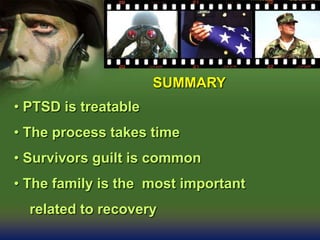
SUMMARY
• PTSD is treatable
• The process takes time
• Survivors guilt is common
• The family is the most important
related to recovery
Click on Text Below to
Connect with Other Military
Learners and Faculty
Long Term Deployments and Stress

Long Term Deployments and Stress

  • 1.
    Prof. John D.Moore. Ph.D. American Military University LONG TERM DEPLOYMENTS: Soldiers Under Stress Families in Crisis
  • 2.
    Knowledge Objectives • Identifykey stressors for soldiers and affected loved ones • Recognize how deployment impacts relationships with spouses & significant others • Examine the impact on children & the family • Explore healthy ways of coping with stress • Identify warning signs of PTSD • Determine a path to recovery for PTSD
  • 3.
    Deployments, Stress &Relationships Stress Prevention & Coping Tools Warning signs of acute stress & PTSD Conclusion 1 2 3 4 Working Towards Recovery
  • 4.
    Loved Ones • Anxiety •Fear • Uncertainty • Anger • Helplessness • Depression • Fidelity Concerns • Financial Worry IMPACT OF LONG TERM DEPLOYMENTSOn Soldier • Anxiety • Fear • Guilt • Anger • Helplessness • Depression • Fidelity Concerns • Financial Worry
  • 5.
  • 6.
    Extra Responsibilities New FamilyRoles Routines Disrupted Lack of Contact Feeling Helpless Worried about Soldier Title Family Experience Deployment Wheel of Stress
  • 7.
    Your Text hereCHILDREN CRISIS CRISIS CRISIS LOVED ONESSOLDIER FAMILY IN CRISIS
  • 8.
    Reducing Stress DuringLTD Healthy Communications ReassessRoutine Prevention Plan 4 Steps For
  • 9.
    Step One: Develop astress prevention plan 1. Anticipate ahead of time that a deployment will happen 2. Brainstorm as to what modes of communication might be available 3. Let soldier make first contact and report best times for communication 4. Set a time and date for each communication session and if at all possible, stick with it 5. Realize that schedules change for both parties and flexibility is a must!
  • 10.
    Step Two: healthy communications 1.Share important information that is relevant to the family unit 2. Express what each person needs 3. Share true feelings and expressions of love & commitment 4. Tell the truth if problems have occurred with children – don’t sugar coat a problem 5. Avoid falling into the trap of becoming “glued” to the T.V. 6. Avoid rehashing old arguments 7. Reconfirm the next communication session
  • 11.
    Step Three: Establish aroutine 1. Stay involved with prior family commitments (worship services, etc) 2. Celebrate the holidays 3. Set aside one day a week for a family event 4. If possible, connect with other military families on a regular basis 5. Have another family member continue acting as a mentor during the soldier’s departure 6. Explore the idea of creating connection activities
  • 12.
    Step Four: Reassess yourplan 1. Is the plan working? 2. What can be changed? 3. What cannot be changed? 4. Look for new opportunities that may appear
  • 13.
    Posttraumatic Stress Disorder A.The person has been exposed to a traumatic event in which both of the following were present: 1. Person experienced, witnessed, or was confronted with an event or events that involved actual or threatened death or serious injury, or a threat to the physical integrity of self or others 2. Person's response involved intense fear, helplessness, or horror. Note: In children, this may be expressed instead by disorganized or agitated behavior B. The traumatic event is persistently re-experienced in one (or more) of the following ways: 1. recurrent and intrusive distressing recollections of the event, including images, thoughts, or perceptions. Note: In young children, repetitive play may occur in which themes or aspects of the trauma are expressed. 2. recurrent distressing dreams of the event. Note: In children, there may be frightening dreams without recognizable content. 3. acting or feeling as if the traumatic event were recurring (includes a sense of reliving the experience, illusions, hallucinations, and Dissociative flashback episodes, including those that occur on awakening or when intoxicated). Note: In young children, trauma-specific reenactment may occur. CON’T NEXT SLIDE
  • 14.
    Posttraumatic Stress DisorderCON’T 4. intense psychological distress at exposure to internal or external cues that symbolize or resemble an aspect of the traumatic event 5. physiological reactivity on exposure to internal or external cues that symbolize or resemble an aspect of the traumatic event C. Persistent avoidance of stimuli associated with the trauma and numbing of general responsiveness (not present before the trauma), as indicated by three (or more) of the following: 1. efforts to avoid thoughts, feelings, or conversations associated with the trauma 2. efforts to avoid activities, places, or people that arouse recollections of the trauma 3. inability to recall an important aspect of the trauma 4. markedly diminished interest or participation in significant activities 5. feeling of detachment or estrangement from others 6. restricted range of affect (e.g., unable to have loving feelings) 7. sense of a foreshortened future (e.g., does not expect to have a career, marriage, children, or a normal life span)
  • 15.
  • 16.
    Be Supportive How Can YouHelp? Look for signs of Anxiety Look for Signs of Substance Abuse Look for Signs of depression Ways to support PTSD Affected Soldier Educate Yourself On PTSD Don’t Try To Be Their Therapist
  • 17.
    Increase Support Systems Family Role •Support soldier •Support medication •Support group Therapist Role •Cognitive Therapy •Consider •anti-anxiety medications •Remember the entire family is involved TREATING PTSD Group Therapy Medications Exposure Therapy
  • 18.
    SUMMARY • PTSD istreatable • The process takes time • Survivors guilt is common • The family is the most important related to recovery
  • 19.
    Click on TextBelow to Connect with Other Military Learners and Faculty

Editor's Notes

  • #2 Good morning. It is an extreme honor to be here with you this morning to explore a topic that is something I am sure many of you can relate to. In the work that I do at American Military University, as well as in my own private practice as a counselor, I can tell you that LTD can be for many people – including the soldier and family, one of the most stressful events that can occur during the course of a lifetime. The truth is that during LTD, there is a time when emotional CHAOS sets in. And how could things not be chaotic? A soldier is being deployed to an often times dangerous situation – where fear and uncertainty about the person’s well-being is a very real concern. And so yes – CHAOS often is the single word that is used to describe the time of deployment. But there is a silver lining here … because CHAOS is the point in time when change is most likely.