1
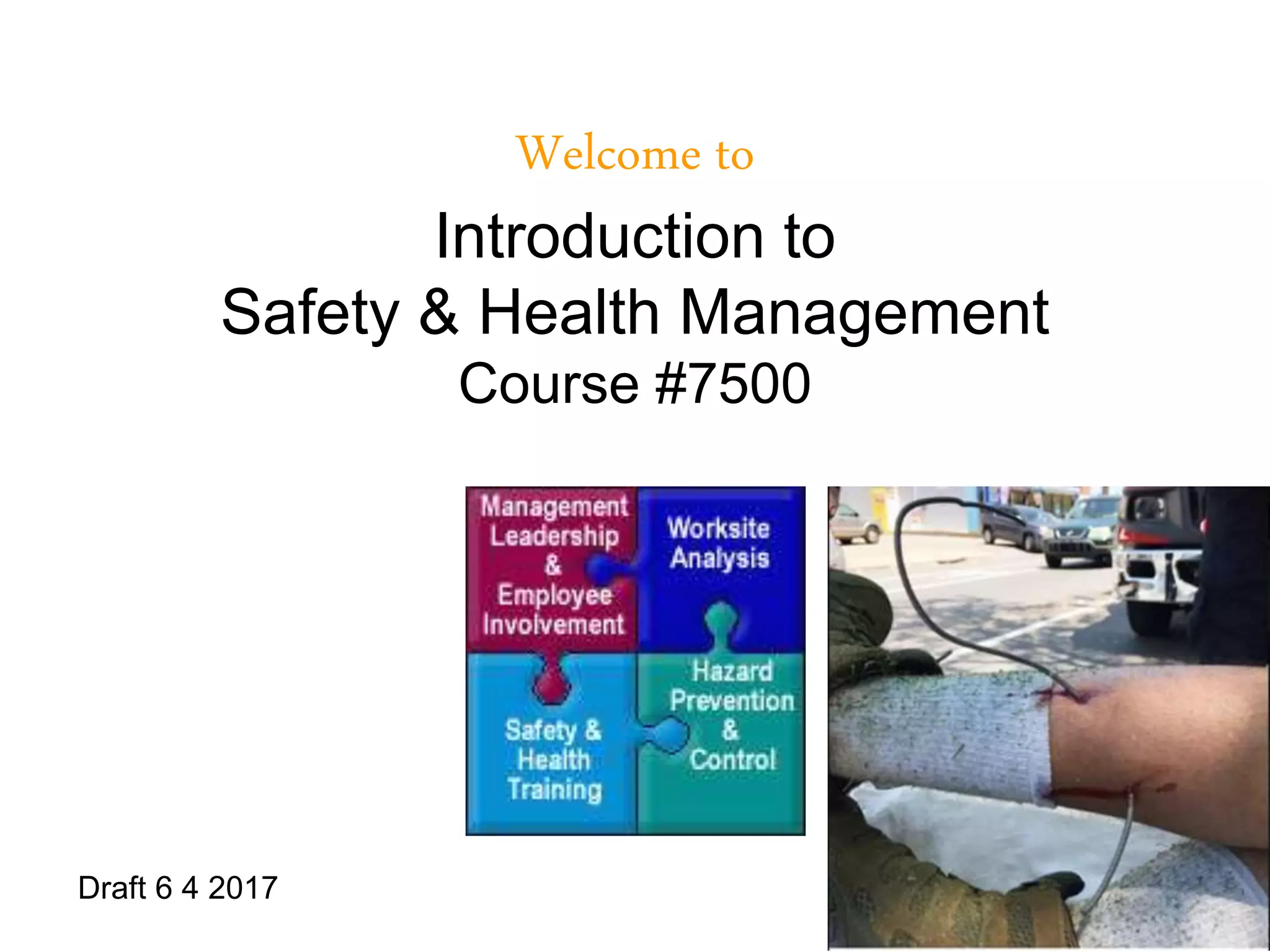
Welcome to
Introduction to
Safety & Health Management
Course #7500
Draft 6 4 2017
2
2
Objectives
At the end of the workshop, you will be
able to:
1. Explain the benefits of implementing a safety
and health management system.
2. Identify the core elements of an effective safety
and health management system.
3. Describe the key processes in each program
element.
3
Peter
Drucker
• The term "management by objectives" was first
popularized in his 1954 book 'The Practice of
Management'.
• MBO is often achieved using set targets
• Objectives for MBO must be Specific, Measurable,
Achievable, Realistic, and Time-Specific.
4
4
Form Groups
 Introductions
 Elect a group leader
 Select a spokesperson
 Recorders
 Name your group
5
5
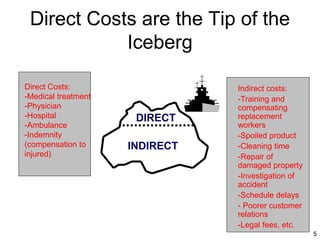
Direct Costs are the Tip of the
Iceberg
DIRECT
INDIRECT
Direct Costs:
-Medical treatment
-Physician
-Hospital
-Ambulance
-Indemnity
(compensation to
injured)
Indirect costs:
-Training and
compensating
replacement
workers
-Spoiled product
-Cleaning time
-Repair of
damaged property
-Investigation of
accident
-Schedule delays
- Poorer customer
relations
-Legal fees, etc.
6
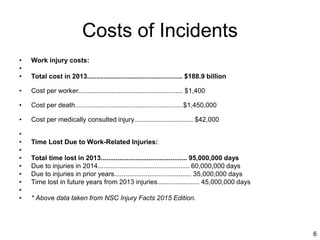
Costs of Incidents
• Work injury costs:
•
• Total cost in 2013.................................................... $188.9 billion
• Cost per worker......................................................... $1,400
• Cost per death...........................................................$1,450,000
• Cost per medically consulted injury................................ $42,000
•
• Time Lost Due to Work-Related Injuries:
•
• Total time lost in 2013............................................... 95,000,000 days
• Due to injuries in 2014.................................................. 60,000,000 days
• Due to injuries in prior years.......................................... 35,000,000 days
• Time lost in future years from 2013 injuries....................... 45,000,000 days
•
• * Above data taken from NSC Injury Facts 2015 Edition.
7
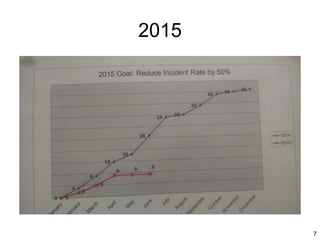
2015
8
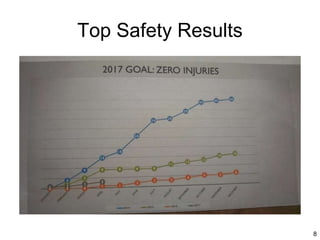
Top Safety Results
9
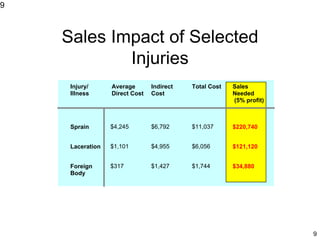
Sales Impact of Selected
Injuries
Injury/
Illness
Average
Direct Cost
Indirect
Cost
Total Cost Sales
Needed
(5% profit)
Sprain $4,245 $6,792 $11,037 $220,740
Laceration $1,101 $4,955 $6,056 $121,120
Foreign
Body
$317 $1,427 $1,744 $34,880
9
10
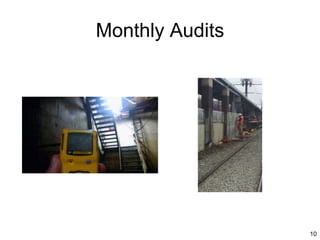
Monthly Audits
11
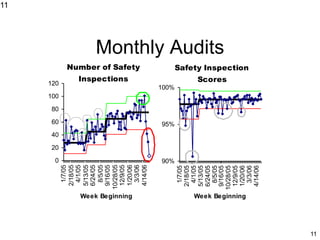
Monthly Audits
0
20
40
60
80
100
120
1/7/05
2/18/05
4/1/05
5/13/05
6/24/05
8/5/05
9/16/05
10/28/05
12/9/05
1/20/06
3/3/06
4/14/06
Week Beginning
Number of Safety
Inspections
90%
95%
100%
1/7/05
2/18/05
4/1/05
5/13/05
6/24/05
8/5/05
9/16/05
10/28/05
12/9/05
1/20/06
3/3/06
4/14/06
Week Beginning
Safety Inspection
Scores
11
12
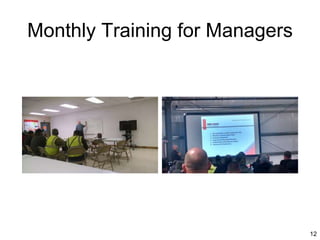
Monthly Training for Managers
13
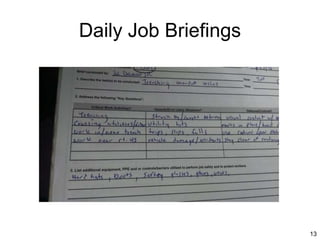
Daily Job Briefings
14
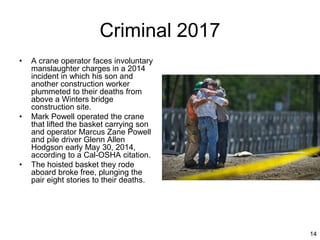
Criminal 2017
• A crane operator faces involuntary
manslaughter charges in a 2014
incident in which his son and
another construction worker
plummeted to their deaths from
above a Winters bridge
construction site.
• Mark Powell operated the crane
that lifted the basket carrying son
and operator Marcus Zane Powell
and pile driver Glenn Allen
Hodgson early May 30, 2014,
according to a Cal-OSHA citation.
• The hoisted basket they rode
aboard broke free, plunging the
pair eight stories to their deaths.
15
Criminal Update 2017
• Wilmer Cueva, 51, of
Elmwood Park, New
Jersey, a foreman for
Sky Materials, was
convicted of criminally
negligent homicide and
reckless endangerment
in the death of Carlos
Moncayo, 22 during
excavation at a
Restoration Hardware
site.
• Sentencing 1-3 years.
16
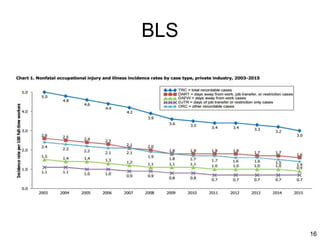
BLS
17
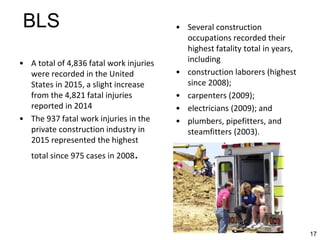
BLS
• A total of 4,836 fatal work injuries
were recorded in the United
States in 2015, a slight increase
from the 4,821 fatal injuries
reported in 2014
• The 937 fatal work injuries in the
private construction industry in
2015 represented the highest
total since 975 cases in 2008.
• Several construction
occupations recorded their
highest fatality total in years,
including
• construction laborers (highest
since 2008);
• carpenters (2009);
• electricians (2009); and
• plumbers, pipefitters, and
steamfitters (2003).
18
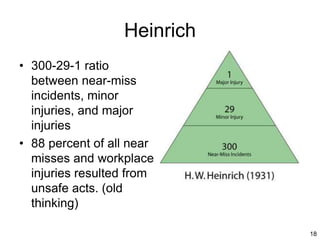
Heinrich
• 300-29-1 ratio
between near-miss
incidents, minor
injuries, and major
injuries
• 88 percent of all near
misses and workplace
injuries resulted from
unsafe acts. (old
thinking)
19
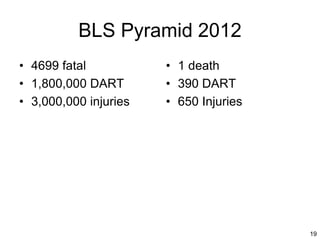
BLS Pyramid 2012
• 4699 fatal
• 1,800,000 DART
• 3,000,000 injuries
• 1 death
• 390 DART
• 650 Injuries
20
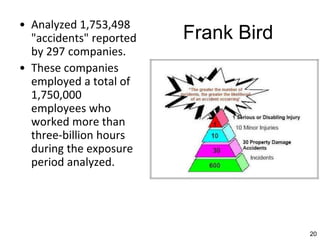
Frank Bird
• Analyzed 1,753,498
"accidents" reported
by 297 companies.
• These companies
employed a total of
1,750,000
employees who
worked more than
three-billion hours
during the exposure
period analyzed.
21
Michael Wood
• The only thing Heinrich's
Pyramid gets right (I think) is
that dangerous work practices
and deficient safety controls
rarely cause a fatality every
time, so the death that occurs
is often the result of an activity
that has been repeated, over
and over.
• I think we often face the same
problem with "low
probability/high severity" safety
risks -- like explosions,
lockout/tagout issues, etc. The
focus on frequency of past
claims blinds them to what
should be obvious risks
• But the notion that that same
activity will generate a bunch
of minor injuries and a smaller
group of more serious injuries
is simply wrong
• - Michael Wood
22
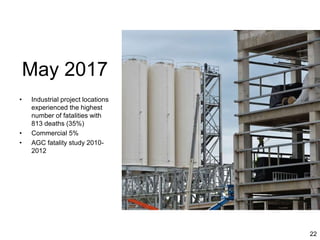
May 2017
• Industrial project locations
experienced the highest
number of fatalities with
813 deaths (35%)
• Commercial 5%
• AGC fatality study 2010-
2012
23
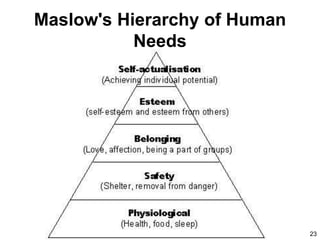
Maslow's Hierarchy of Human
Needs
24
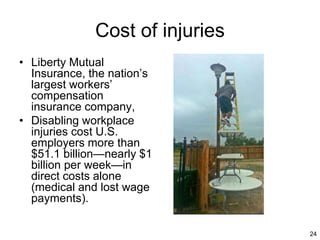
Cost of injuries
• Liberty Mutual
Insurance, the nation’s
largest workers’
compensation
insurance company,
• Disabling workplace
injuries cost U.S.
employers more than
$51.1 billion—nearly $1
billion per week—in
direct costs alone
(medical and lost wage
payments).
25
Costs per Type
• According to the latest Workplace Safety Index, the 10
leading causes*, and direct costs, of the most disabling
workplace injuries in 2012, included:
• Overexertion involving outside source - $15.1 billion
• Falls on same level - $9.19 billion
• Struck by object or equipment - $5.3 billion
• Falls to lower level - $5.12 billion
• Other exertions or bodily reactions - $4.27 billion
• Roadway incidents involving motorized land vehicle - $3.18
billion
• Slip or trip without fall - $2.17 billion
• Caught in/compressed by equipment or objects - $2.1 billion
• Repetitive motions involving micro-tasks - $1.84 billion
• Struck against object or equipment - $1.76 billion
26
26
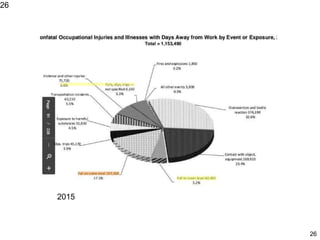
2015
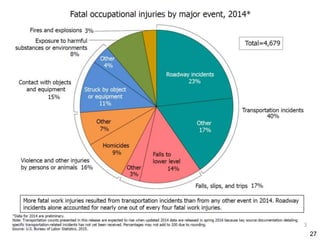
27
28
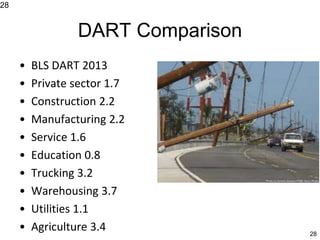
DART Comparison
• BLS DART 2013
• Private sector 1.7
• Construction 2.2
• Manufacturing 2.2
• Service 1.6
• Education 0.8
• Trucking 3.2
• Warehousing 3.7
• Utilities 1.1
• Agriculture 3.4
28
29
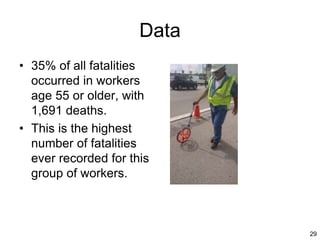
Data
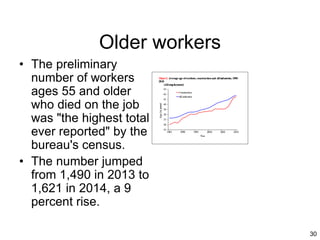
• 35% of all fatalities
occurred in workers
age 55 or older, with
1,691 deaths.
• This is the highest
number of fatalities
ever recorded for this
group of workers.
30
Older workers
• The preliminary
number of workers
ages 55 and older
who died on the job
was "the highest total
ever reported" by the
bureau's census.
• The number jumped
from 1,490 in 2013 to
1,621 in 2014, a 9
percent rise.
31
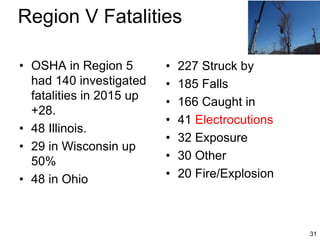
Region V Fatalities
• OSHA in Region 5
had 140 investigated
fatalities in 2015 up
+28.
• 48 Illinois.
• 29 in Wisconsin up
50%
• 48 in Ohio
• 227 Struck by
• 185 Falls
• 166 Caught in
• 41 Electrocutions
• 32 Exposure
• 30 Other
• 20 Fire/Explosion
32
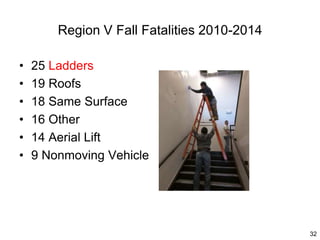
Region V Fall Fatalities 2010-2014
• 25 Ladders
• 19 Roofs
• 18 Same Surface
• 16 Other
• 14 Aerial Lift
• 9 Nonmoving Vehicle
33
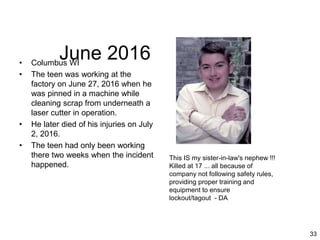
June 2016• Columbus WI
• The teen was working at the
factory on June 27, 2016 when he
was pinned in a machine while
cleaning scrap from underneath a
laser cutter in operation.
• He later died of his injuries on July
2, 2016.
• The teen had only been working
there two weeks when the incident
happened.
This IS my sister-in-law's nephew !!!
Killed at 17 ... all because of
company not following safety rules,
providing proper training and
equipment to ensure
lockout/tagout - DA
34
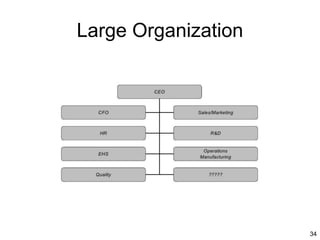
Large Organization
35
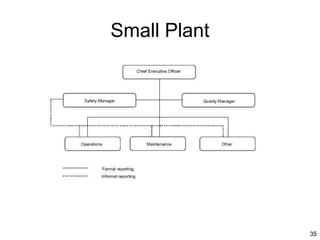
Small Plant
36
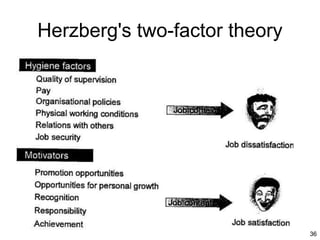
Herzberg's two-factor theory
37
38
38
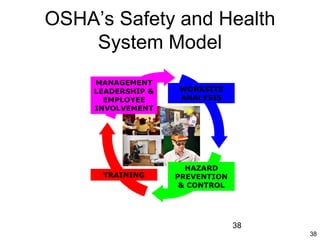
OSHA’s Safety and Health
System Model
MANAGEMENT
LEADERSHIP &
EMPLOYEE
INVOLVEMENT
WORKSITE
ANALYSIS
HAZARD
PREVENTION
& CONTROL
TRAINING
39
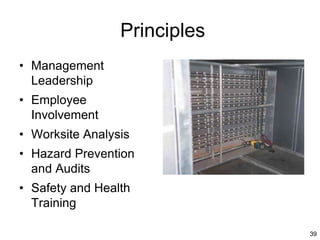
Principles
• Management
Leadership
• Employee
Involvement
• Worksite Analysis
• Hazard Prevention
and Audits
• Safety and Health
Training
40
40
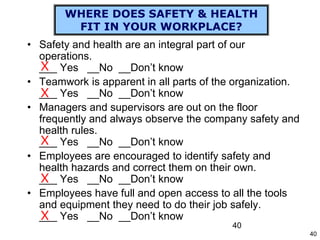
• Safety and health are an integral part of our
operations.
___ Yes __No __Don’t knowSlide
• Teamwork is apparent in all parts of the organization.
___ Yes __No __Don’t know
• Managers and supervisors are out on the floor
frequently and always observe the company safety and
health rules.
___ Yes __No __Don’t know
• Employees are encouraged to identify safety and
health hazards and correct them on their own.
___ Yes __No __Don’t know
• Employees have full and open access to all the tools
and equipment they need to do their job safely.
___ Yes __No __Don’t know
WHERE DOES SAFETY & HEALTH
FIT IN YOUR WORKPLACE?
X
X
X
X
X
41
41
Safety & Health Culture
• All individuals within the organization believe
they have a right to a safe and healthy
workplace
• Each person accepts personal responsibility for
ensuring his or her own safety and health.
• Everyone believes he or she has a duty to
protect the safety and health of others.
42
42
Element 1 – Management Leadership &
Employee Involvement
• Management leadership - Motivating
force and resources
• Employee involvement - Means
through which workers express their
own commitment to safety and health
43
43
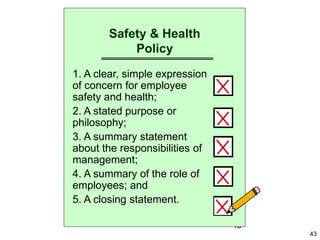
1. A clear, simple expression
of concern for employee
safety and health;
2. A stated purpose or
philosophy;
3. A summary statement
about the responsibilities of
management;
4. A summary of the role of
employees; and
5. A closing statement.
Safety & Health
Policy
44
44
Why Should Employees be
Involved?
• Workers know potential hazards and have
a vested interest in effective protection.
• Group input provides a wider range of
experience.
• Employees are more likely to support and
use programs in which they have input.
45
45
Why Should Employees be
Involved?
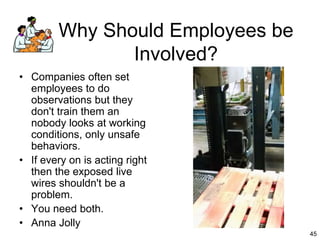
• Companies often set
employees to do
observations but they
don't train them an
nobody looks at working
conditions, only unsafe
behaviors.
• If every on is acting right
then the exposed live
wires shouldn't be a
problem.
• You need both.
• Anna Jolly
46
Hawthorne Effect
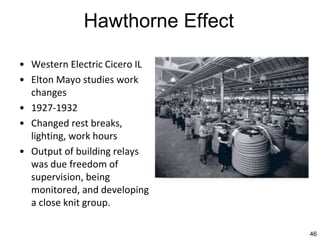
• Western Electric Cicero IL
• Elton Mayo studies work
changes
• 1927-1932
• Changed rest breaks,
lighting, work hours
• Output of building relays
was due freedom of
supervision, being
monitored, and developing
a close knit group.
47
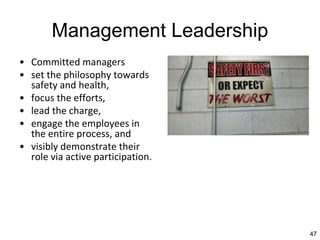
Management Leadership
• Committed managers
• set the philosophy towards
safety and health,
• focus the efforts,
• lead the charge,
• engage the employees in
the entire process, and
• visibly demonstrate their
role via active participation.
48
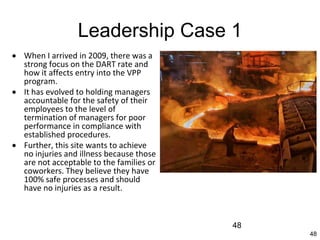
Leadership Case 1
 When I arrived in 2009, there was a
strong focus on the DART rate and
how it affects entry into the VPP
program.
 It has evolved to holding managers
accountable for the safety of their
employees to the level of
termination of managers for poor
performance in compliance with
established procedures.
 Further, this site wants to achieve
no injuries and illness because those
are not acceptable to the families or
coworkers. They believe they have
100% safe processes and should
have no injuries as a result.
48
49
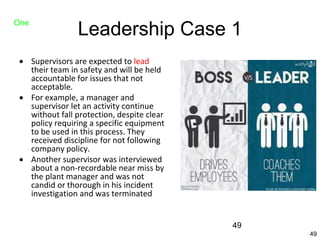
Leadership Case 1
 Supervisors are expected to lead
their team in safety and will be held
accountable for issues that not
acceptable.
 For example, a manager and
supervisor let an activity continue
without fall protection, despite clear
policy requiring a specific equipment
to be used in this process. They
received discipline for not following
company policy.
 Another supervisor was interviewed
about a non-recordable near miss by
the plant manager and was not
candid or thorough in his incident
investigation and was terminated
One
49
50
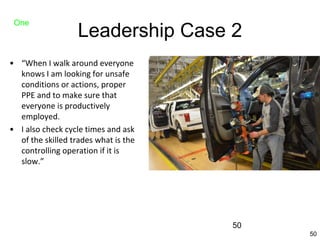
Leadership Case 2
• “When I walk around everyone
knows I am looking for unsafe
conditions or actions, proper
PPE and to make sure that
everyone is productively
employed.
• I also check cycle times and ask
of the skilled trades what is the
controlling operation if it is
slow.”
One
50
51
51
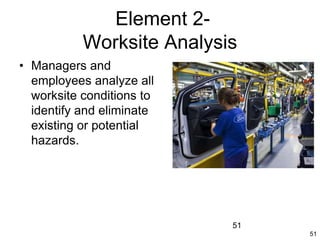
Element 2-
Worksite Analysis
• Managers and
employees analyze all
worksite conditions to
identify and eliminate
existing or potential
hazards.
52
52
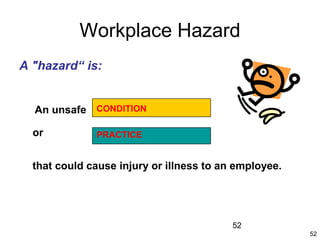
Workplace Hazard
A "hazard“ is:
An unsafe
that could cause injury or illness to an employee.
or
CONDITION
PRACTICE
53
53
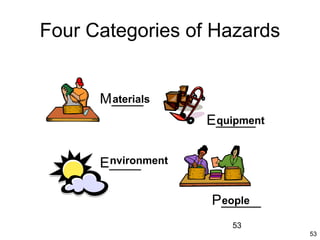
Four Categories of Hazards
M____
E_____
E____
P_____
aterials
nvironment
quipment
eople
54
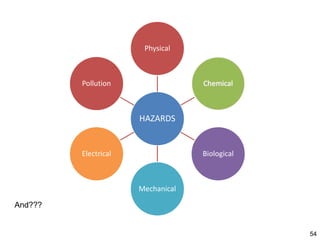
HAZARDS
Physical
Chemical
Biological
Mechanical
Electrical
Pollution
And???
55
55
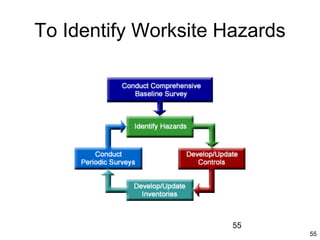
To Identify Worksite Hazards
56
56
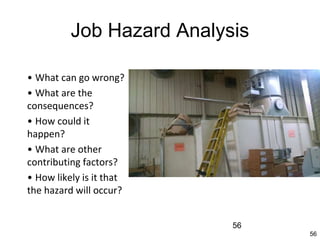
Job Hazard Analysis
• What can go wrong?
• What are the
consequences?
• How could it
happen?
• What are other
contributing factors?
• How likely is it that
the hazard will occur?
57
Worksite Analysis
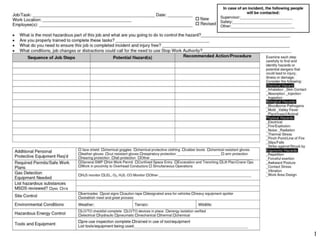
• Conduct Job Safety
Analysis
58
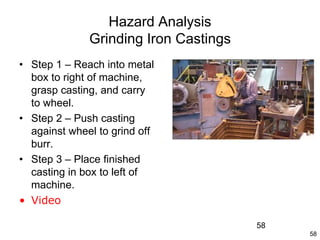
Hazard Analysis
Grinding Iron Castings
• Step 1 – Reach into metal
box to right of machine,
grasp casting, and carry
to wheel.
• Step 2 – Push casting
against wheel to grind off
burr.
• Step 3 – Place finished
casting in box to left of
machine.
• Video
58
59
59
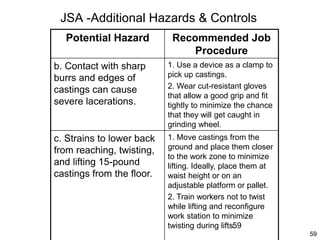
JSA -Additional Hazards & Controls
Potential Hazard Recommended Job
Procedure
b. Contact with sharp
burrs and edges of
castings can cause
severe lacerations.
1. Use a device as a clamp to
pick up castings.
2. Wear cut-resistant gloves
that allow a good grip and fit
tightly to minimize the chance
that they will get caught in
grinding wheel.
c. Strains to lower back
from reaching, twisting,
and lifting 15-pound
castings from the floor.
1. Move castings from the
ground and place them closer
to the work zone to minimize
lifting. Ideally, place them at
waist height or on an
adjustable platform or pallet.
2. Train workers not to twist
while lifting and reconfigure
work station to minimize
twisting during lifts.
60
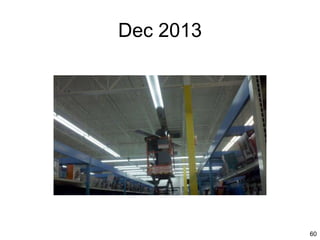
Dec 2013
61
62
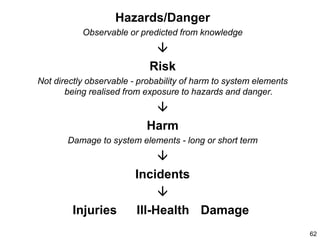
Hazards/Danger
Observable or predicted from knowledge

Risk
Not directly observable - probability of harm to system elements
being realised from exposure to hazards and danger.

Harm
Damage to system elements - long or short term

Incidents

Injuries Ill-Health Damage
63
63
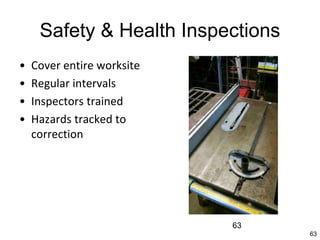
Safety & Health Inspections
• Cover entire worksite
• Regular intervals
• Inspectors trained
• Hazards tracked to
correction
64
64
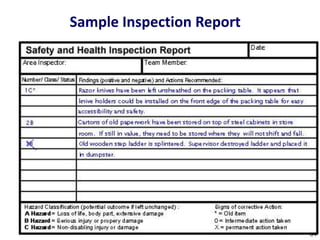
Sample Inspection Report
65
65
66
66
67
67
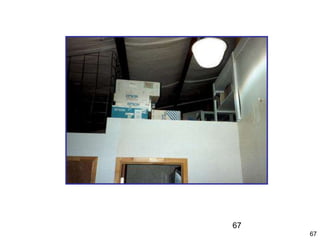
68
68
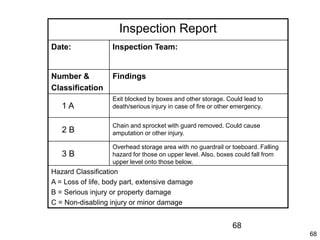
Inspection Report
Date: Inspection Team:
Number &
Classification
Findings
Hazard Classification
A = Loss of life, body part, extensive damage
B = Serious injury or property damage
C = Non-disabling injury or minor damage
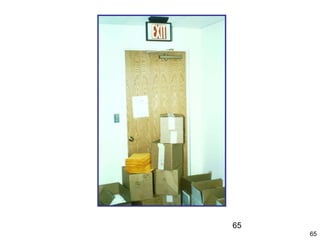
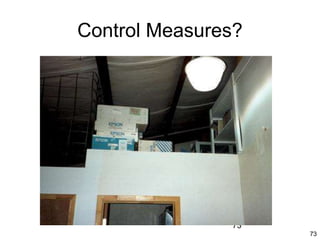
Exit blocked by boxes and other storage. Could lead to
death/serious injury in case of fire or other emergency.1 A
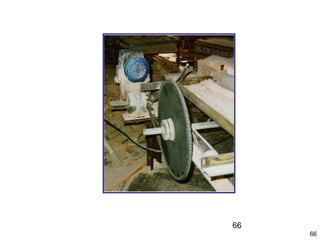
2 B
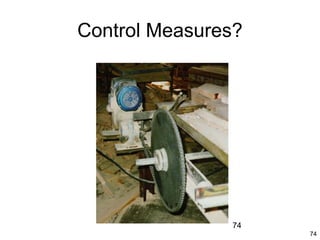
Chain and sprocket with guard removed. Could cause
amputation or other injury.
3 B
Overhead storage area with no guardrail or toeboard. Falling
hazard for those on upper level. Also, boxes could fall from
upper level onto those below.
69
69
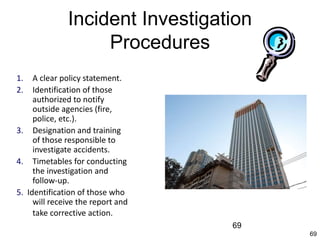
Incident Investigation
Procedures
1. A clear policy statement.
2. Identification of those
authorized to notify
outside agencies (fire,
police, etc.).
3. Designation and training
of those responsible to
investigate accidents.
4. Timetables for conducting
the investigation and
follow-up.
5. Identification of those who
will receive the report and
take corrective action.
70
70
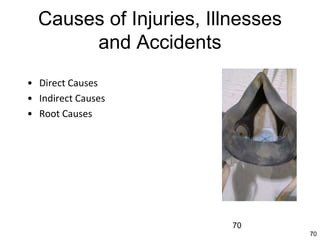
Causes of Injuries, Illnesses
and Accidents
• Direct Causes
• Indirect Causes
• Root Causes
71
71
Ike on Loan
Answers
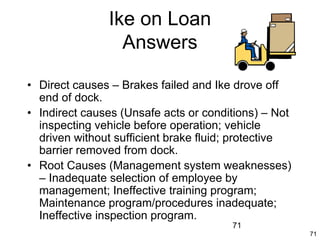
• Direct causes – Brakes failed and Ike drove off
end of dock.
• Indirect causes (Unsafe acts or conditions) – Not
inspecting vehicle before operation; vehicle
driven without sufficient brake fluid; protective
barrier removed from dock.
• Root Causes (Management system weaknesses)
– Inadequate selection of employee by
management; Ineffective training program;
Maintenance program/procedures inadequate;
Ineffective inspection program.
72
72
Element 3 –
Hazard Prevention and Control
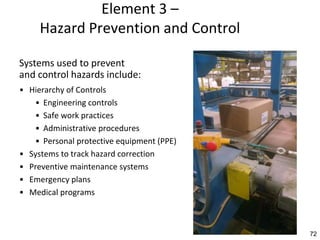
• Hierarchy of Controls
• Engineering controls
• Safe work practices
• Administrative procedures
• Personal protective equipment (PPE)
• Systems to track hazard correction
• Preventive maintenance systems
• Emergency plans
• Medical programs
Systems used to prevent
and control hazards include:
73
73
Control Measures?
74
74
Control Measures?
75
75
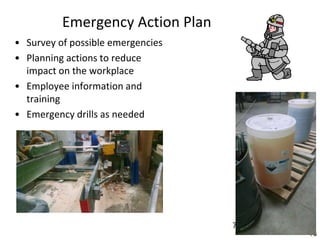
Emergency Action Plan
• Survey of possible emergencies
• Planning actions to reduce
impact on the workplace
• Employee information and
training
• Emergency drills as needed
76
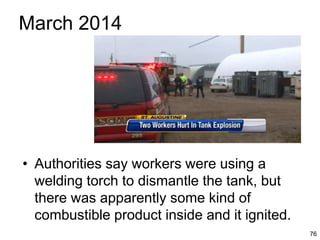
March 2014
• Authorities say workers were using a
welding torch to dismantle the tank, but
there was apparently some kind of
combustible product inside and it ignited.
77
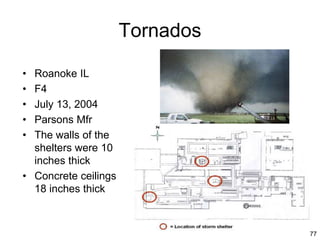
Tornados
• Roanoke IL
• F4
• July 13, 2004
• Parsons Mfr
• The walls of the
shelters were 10
inches thick
• Concrete ceilings
18 inches thick
78
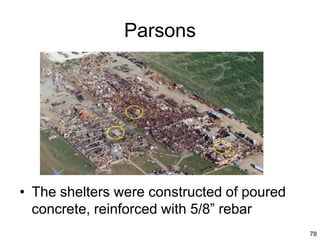
Parsons
• The shelters were constructed of poured
concrete, reinforced with 5/8” rebar
79
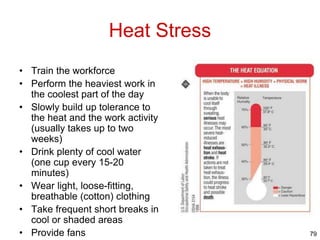
Heat Stress
• Train the workforce
• Perform the heaviest work in
the coolest part of the day
• Slowly build up tolerance to
the heat and the work activity
(usually takes up to two
weeks)
• Drink plenty of cool water
(one cup every 15-20
minutes)
• Wear light, loose-fitting,
breathable (cotton) clothing
• Take frequent short breaks in
cool or shaded areas
• Provide fans
80
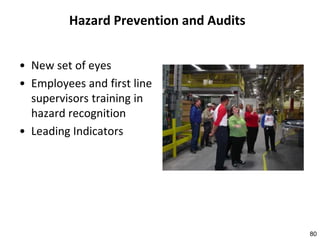
Hazard Prevention and Audits
• New set of eyes
• Employees and first line
supervisors training in
hazard recognition
• Leading Indicators
81
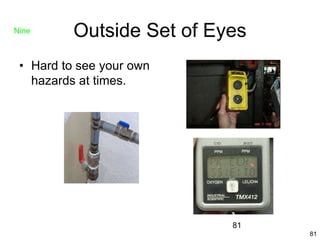
Outside Set of Eyes
• Hard to see your own
hazards at times.
Nine
81
82
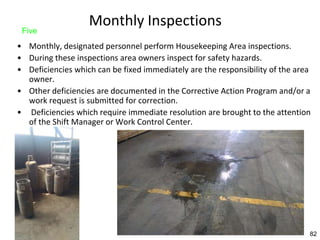
Monthly Inspections
• Monthly, designated personnel perform Housekeeping Area inspections.
• During these inspections area owners inspect for safety hazards.
• Deficiencies which can be fixed immediately are the responsibility of the area
owner.
• Other deficiencies are documented in the Corrective Action Program and/or a
work request is submitted for correction.
• Deficiencies which require immediate resolution are brought to the attention
of the Shift Manager or Work Control Center.
Five
82
83
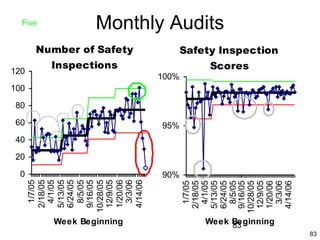
Monthly Audits
0
20
40
60
80
100
120
1/7/05
2/18/05
4/1/05
5/13/05
6/24/05
8/5/05
9/16/05
10/28/05
12/9/05
1/20/06
3/3/06
4/14/06
Week Beginning
Number of Safety
Inspections
90%
95%
100%
1/7/05
2/18/05
4/1/05
5/13/05
6/24/05
8/5/05
9/16/05
10/28/05
12/9/05
1/20/06
3/3/06
4/14/06
Week Beginning
Safety Inspection
Scores
Five
83
84
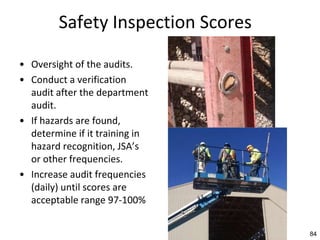
Safety Inspection Scores
• Oversight of the audits.
• Conduct a verification
audit after the department
audit.
• If hazards are found,
determine if it training in
hazard recognition, JSA’s
or other frequencies.
• Increase audit frequencies
(daily) until scores are
acceptable range 97-100%
84
85
Complex
86
Simpler
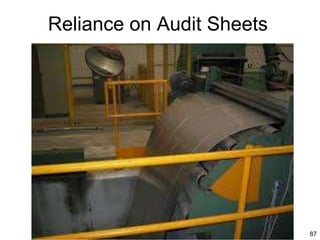
87
Reliance on Audit Sheets
88
88
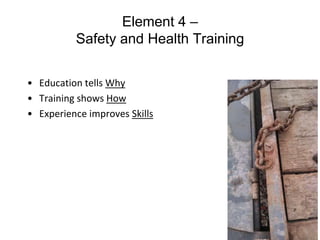
Element 4 –
Safety and Health Training
• Education tells Why
• Training shows How
• Experience improves Skills
89
89
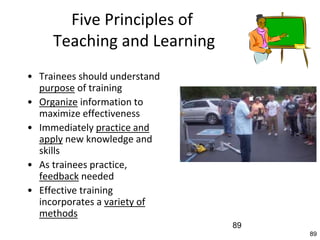
Five Principles of
Teaching and Learning
• Trainees should understand
purpose of training
• Organize information to
maximize effectiveness
• Immediately practice and
apply new knowledge and
skills
• As trainees practice,
feedback needed
• Effective training
incorporates a variety of
methods
90
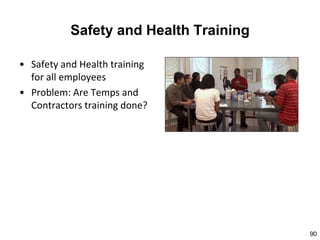
Safety and Health Training
• Safety and Health training
for all employees
• Problem: Are Temps and
Contractors training done?
91
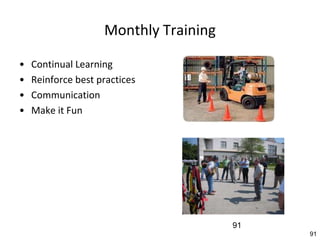
Monthly Training
• Continual Learning
• Reinforce best practices
• Communication
• Make it Fun
91
92
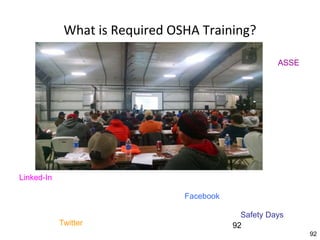
What is Required OSHA Training?
Linked-In
Facebook
ASSE
Twitter
Safety Days
92
93
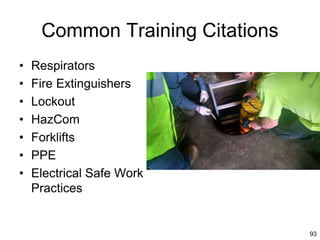
Common Training Citations
• Respirators
• Fire Extinguishers
• Lockout
• HazCom
• Forklifts
• PPE
• Electrical Safe Work
Practices
94
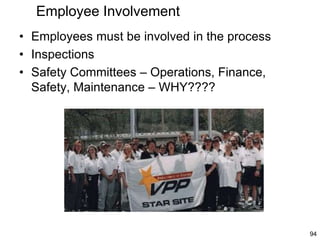
Employee Involvement
• Employees must be involved in the process
• Inspections
• Safety Committees – Operations, Finance,
Safety, Maintenance – WHY????
95
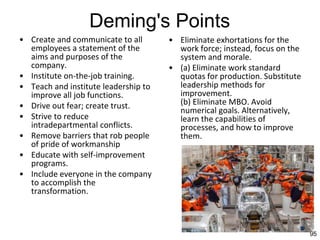
Deming's Points
• Create and communicate to all
employees a statement of the
aims and purposes of the
company.
• Institute on-the-job training.
• Teach and institute leadership to
improve all job functions.
• Drive out fear; create trust.
• Strive to reduce
intradepartmental conflicts.
• Remove barriers that rob people
of pride of workmanship
• Educate with self-improvement
programs.
• Include everyone in the company
to accomplish the
transformation.
• Eliminate exhortations for the
work force; instead, focus on the
system and morale.
• (a) Eliminate work standard
quotas for production. Substitute
leadership methods for
improvement.
(b) Eliminate MBO. Avoid
numerical goals. Alternatively,
learn the capabilities of
processes, and how to improve
them.
96
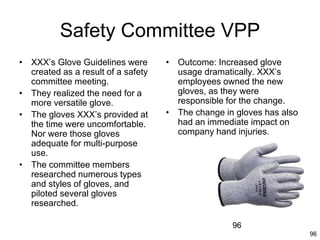
Safety Committee VPP
• XXX’s Glove Guidelines were
created as a result of a safety
committee meeting.
• They realized the need for a
more versatile glove.
• The gloves XXX’s provided at
the time were uncomfortable.
Nor were those gloves
adequate for multi-purpose
use.
• The committee members
researched numerous types
and styles of gloves, and
piloted several gloves
researched.
• Outcome: Increased glove
usage dramatically. XXX’s
employees owned the new
gloves, as they were
responsible for the change.
• The change in gloves has also
had an immediate impact on
company hand injuries.
96
97
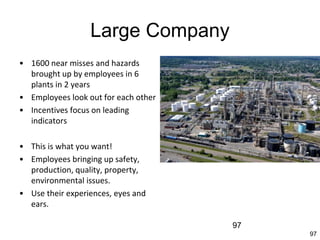
Large Company
• 1600 near misses and hazards
brought up by employees in 6
plants in 2 years
• Employees look out for each other
• Incentives focus on leading
indicators
• This is what you want!
• Employees bringing up safety,
production, quality, property,
environmental issues.
• Use their experiences, eyes and
ears.
97
98
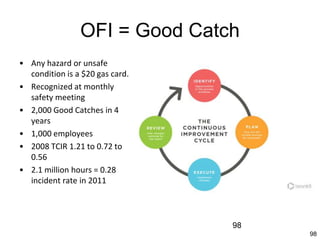
OFI = Good Catch
• Any hazard or unsafe
condition is a $20 gas card.
• Recognized at monthly
safety meeting
• 2,000 Good Catches in 4
years
• 1,000 employees
• 2008 TCIR 1.21 to 0.72 to
0.56
• 2.1 million hours = 0.28
incident rate in 2011
98
99
Work Comp
• NOC Code
• 3632 --------------- Machine Shop -------------- $6.00 per $100 of payroll
• 3400 --------------- Metal Stamping ------------ $6.98 per $100 of payroll
• 2881 --------------- Furniture/Cabinet Mfg. --- $4.35 per $100 of payroll
• 3372 --------------- Electro Plating -------------- $5.85 per $100 of payroll
100
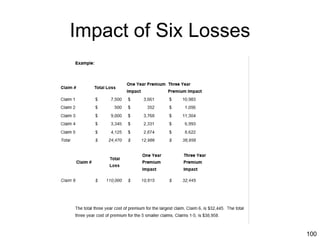
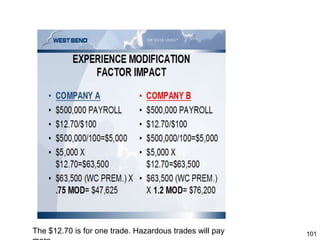
Impact of Six Losses
101The $12.70 is for one trade. Hazardous trades will pay
102
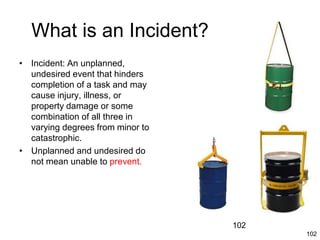
What is an Incident?
• Incident: An unplanned,
undesired event that hinders
completion of a task and may
cause injury, illness, or
property damage or some
combination of all three in
varying degrees from minor to
catastrophic.
• Unplanned and undesired do
not mean unable to prevent.
102
103
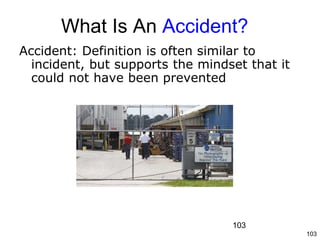
What Is An Accident?
Accident: Definition is often similar to
incident, but supports the mindset that it
could not have been prevented
103
104
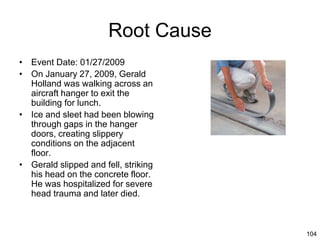
Root Cause
• Event Date: 01/27/2009
• On January 27, 2009, Gerald
Holland was walking across an
aircraft hanger to exit the
building for lunch.
• Ice and sleet had been blowing
through gaps in the hanger
doors, creating slippery
conditions on the adjacent
floor.
• Gerald slipped and fell, striking
his head on the concrete floor.
He was hospitalized for severe
head trauma and later died.
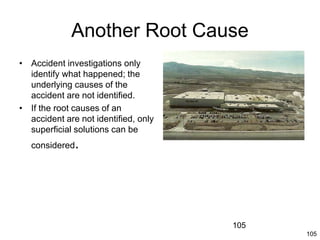
105
Another Root Cause
• Accident investigations only
identify what happened; the
underlying causes of the
accident are not identified.
• If the root causes of an
accident are not identified, only
superficial solutions can be
considered.
105
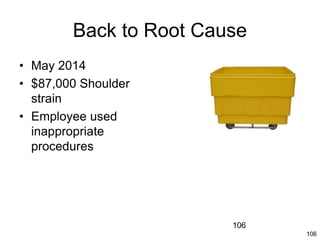
106
Back to Root Cause
• May 2014
• $87,000 Shoulder
strain
• Employee used
inappropriate
procedures
106
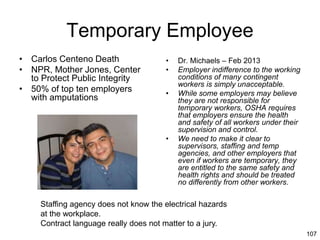
107
Temporary Employee
• Carlos Centeno Death
• NPR, Mother Jones, Center
to Protect Public Integrity
• 50% of top ten employers
with amputations
• Dr. Michaels – Feb 2013
• Employer indifference to the working
conditions of many contingent
workers is simply unacceptable.
• While some employers may believe
they are not responsible for
temporary workers, OSHA requires
that employers ensure the health
and safety of all workers under their
supervision and control.
• We need to make it clear to
supervisors, staffing and temp
agencies, and other employers that
even if workers are temporary, they
are entitled to the same safety and
health rights and should be treated
no differently from other workers.
Staffing agency does not know the electrical hazards
at the workplace.
Contract language really does not matter to a jury.
108
General Duty Clause
– Process Safety
– Combustible Dust
– Ergonomics
– Workplace Violence
– New chemicals (not
listed on Z tables)
– Lower Chemicals
– Arc Flash – Arc Blast
– Heat Illness
– Fall Protection
• “We are pleased that
Fiberdome agreed to
adopt the industry
recognized 50-ppm
(parts per million) limit
and believe that all
responsible and safety
conscious employers
who use styrene should
consider doing the
same thing.
• Aug 2014
109
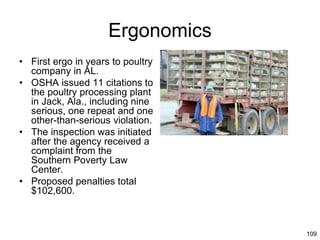
Ergonomics
• First ergo in years to poultry
company in AL.
• OSHA issued 11 citations to
the poultry processing plant
in Jack, Ala., including nine
serious, one repeat and one
other-than-serious violation.
• The inspection was initiated
after the agency received a
complaint from the
Southern Poverty Law
Center.
• Proposed penalties total
$102,600.
110
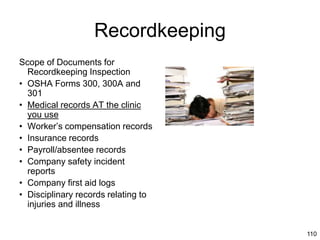
Recordkeeping
Scope of Documents for
Recordkeeping Inspection
• OSHA Forms 300, 300A and
301
• Medical records AT the clinic
you use
• Worker’s compensation records
• Insurance records
• Payroll/absentee records
• Company safety incident
reports
• Company first aid logs
• Disciplinary records relating to
injuries and illness
110 | © 2013 Seyfarth Shaw LLP
111
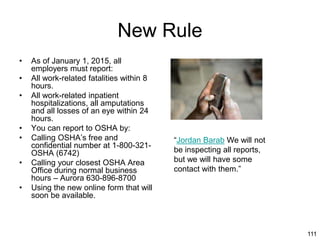
New Rule
• As of January 1, 2015, all
employers must report:
• All work-related fatalities within 8
hours.
• All work-related inpatient
hospitalizations, all amputations
and all losses of an eye within 24
hours.
• You can report to OSHA by:
• Calling OSHA’s free and
confidential number at 1-800-321-
OSHA (6742)
• Calling your closest OSHA Area
Office during normal business
hours – Aurora 630-896-8700
• Using the new online form that will
soon be available.
“Jordan Barab We will not
be inspecting all reports,
but we will have some
contact with them.”
112
Further
• Only fatalities occurring
within 30 days of the
work-related incident
must be reported to
OSHA.
• Further, for an inpatient
hospitalization,
amputation or loss of
an eye, these incidents
must be reported to
OSHA only if they occur
within 24 hours of the
work-related incident.
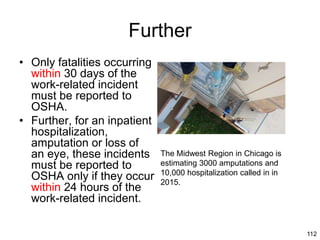
The Midwest Region in Chicago is
estimating 3000 amputations and
10,000 hospitalization called in in
2015.
113
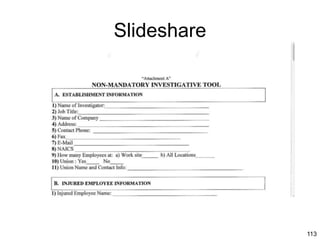
Slideshare
114
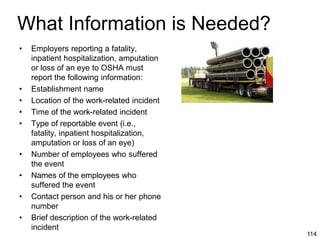
What Information is Needed?
• Employers reporting a fatality,
inpatient hospitalization, amputation
or loss of an eye to OSHA must
report the following information:
• Establishment name
• Location of the work-related incident
• Time of the work-related incident
• Type of reportable event (i.e.,
fatality, inpatient hospitalization,
amputation or loss of an eye)
• Number of employees who suffered
the event
• Names of the employees who
suffered the event
• Contact person and his or her phone
number
• Brief description of the work-related
incident
115
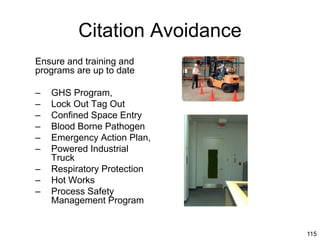
Citation Avoidance
Ensure and training and
programs are up to date
– GHS Program,
– Lock Out Tag Out
– Confined Space Entry
– Blood Borne Pathogen
– Emergency Action Plan,
– Powered Industrial
Truck
– Respiratory Protection
– Hot Works
– Process Safety
Management Program
116
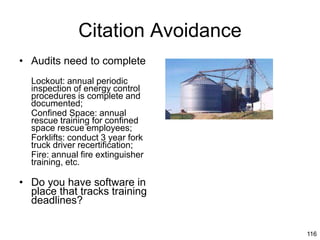
Citation Avoidance
• Audits need to complete
Lockout: annual periodic
inspection of energy control
procedures is complete and
documented;
Confined Space: annual
rescue training for confined
space rescue employees;
Forklifts: conduct 3 year fork
truck driver recertification;
Fire: annual fire extinguisher
training, etc.
• Do you have software in
place that tracks training
deadlines?
117
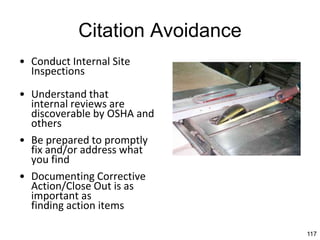
Citation Avoidance
• Conduct Internal Site
Inspections
• Understand that
internal reviews are
discoverable by OSHA and
others
• Be prepared to promptly
fix and/or address what
you find
• Documenting Corrective
Action/Close Out is as
important as
finding action items
118
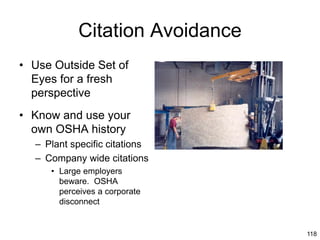
Citation Avoidance
• Use Outside Set of
Eyes for a fresh
perspective
• Know and use your
own OSHA history
– Plant specific citations
– Company wide citations
• Large employers
beware. OSHA
perceives a corporate
disconnect
119
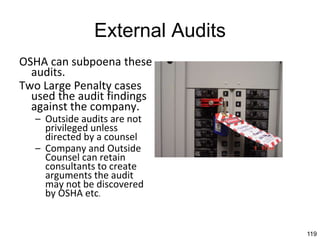
External Audits
OSHA can subpoena these
audits.
Two Large Penalty cases
used the audit findings
against the company.
– Outside audits are not
privileged unless
directed by a counsel
– Company and Outside
Counsel can retain
consultants to create
arguments the audit
may not be discovered
by OSHA etc.
120
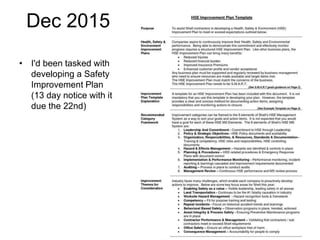
Dec 2015
• I'd been tasked with
developing a Safety
Improvement Plan
(13 day notice with it
due the 22nd)
121
122
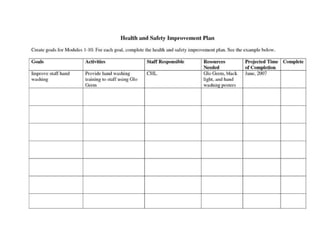
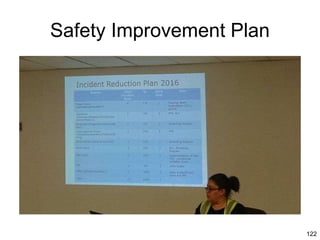
Safety Improvement Plan
123
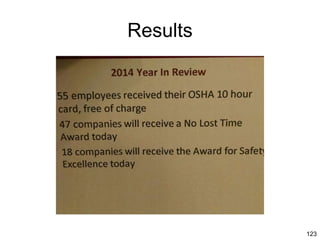
Results
124
124
Summary
This workshop has covered:
• The benefits of implementing a safety
and health management system;
• The core elements of an effective safety
and health management system; and,
• The key processes within each program
element.
125
125
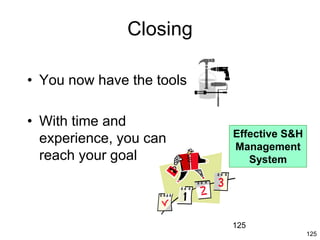
Closing
• You now have the tools
• With time and
experience, you can
reach your goal
Effective S&H
Management
System
126
Questions?

Industrial safety management

  • 1.
    1 Welcome to Introduction to Safety& Health Management Course #7500 Draft 6 4 2017
  • 2.
    2 2 Objectives At the endof the workshop, you will be able to: 1. Explain the benefits of implementing a safety and health management system. 2. Identify the core elements of an effective safety and health management system. 3. Describe the key processes in each program element.
  • 3.
    3 Peter Drucker • The term"management by objectives" was first popularized in his 1954 book 'The Practice of Management'. • MBO is often achieved using set targets • Objectives for MBO must be Specific, Measurable, Achievable, Realistic, and Time-Specific.
  • 4.
    4 4 Form Groups  Introductions Elect a group leader  Select a spokesperson  Recorders  Name your group
  • 5.
    5 5 Direct Costs arethe Tip of the Iceberg DIRECT INDIRECT Direct Costs: -Medical treatment -Physician -Hospital -Ambulance -Indemnity (compensation to injured) Indirect costs: -Training and compensating replacement workers -Spoiled product -Cleaning time -Repair of damaged property -Investigation of accident -Schedule delays - Poorer customer relations -Legal fees, etc.
  • 6.
    6 Costs of Incidents •Work injury costs: • • Total cost in 2013.................................................... $188.9 billion • Cost per worker......................................................... $1,400 • Cost per death...........................................................$1,450,000 • Cost per medically consulted injury................................ $42,000 • • Time Lost Due to Work-Related Injuries: • • Total time lost in 2013............................................... 95,000,000 days • Due to injuries in 2014.................................................. 60,000,000 days • Due to injuries in prior years.......................................... 35,000,000 days • Time lost in future years from 2013 injuries....................... 45,000,000 days • • * Above data taken from NSC Injury Facts 2015 Edition.
  • 7.
  • 8.
  • 9.
    9 Sales Impact ofSelected Injuries Injury/ Illness Average Direct Cost Indirect Cost Total Cost Sales Needed (5% profit) Sprain $4,245 $6,792 $11,037 $220,740 Laceration $1,101 $4,955 $6,056 $121,120 Foreign Body $317 $1,427 $1,744 $34,880 9
  • 10.
  • 11.
    11 Monthly Audits 0 20 40 60 80 100 120 1/7/05 2/18/05 4/1/05 5/13/05 6/24/05 8/5/05 9/16/05 10/28/05 12/9/05 1/20/06 3/3/06 4/14/06 Week Beginning Numberof Safety Inspections 90% 95% 100% 1/7/05 2/18/05 4/1/05 5/13/05 6/24/05 8/5/05 9/16/05 10/28/05 12/9/05 1/20/06 3/3/06 4/14/06 Week Beginning Safety Inspection Scores 11
  • 12.
  • 13.
  • 14.
    14 Criminal 2017 • Acrane operator faces involuntary manslaughter charges in a 2014 incident in which his son and another construction worker plummeted to their deaths from above a Winters bridge construction site. • Mark Powell operated the crane that lifted the basket carrying son and operator Marcus Zane Powell and pile driver Glenn Allen Hodgson early May 30, 2014, according to a Cal-OSHA citation. • The hoisted basket they rode aboard broke free, plunging the pair eight stories to their deaths.
  • 15.
    15 Criminal Update 2017 •Wilmer Cueva, 51, of Elmwood Park, New Jersey, a foreman for Sky Materials, was convicted of criminally negligent homicide and reckless endangerment in the death of Carlos Moncayo, 22 during excavation at a Restoration Hardware site. • Sentencing 1-3 years.
  • 16.
  • 17.
    17 BLS • A totalof 4,836 fatal work injuries were recorded in the United States in 2015, a slight increase from the 4,821 fatal injuries reported in 2014 • The 937 fatal work injuries in the private construction industry in 2015 represented the highest total since 975 cases in 2008. • Several construction occupations recorded their highest fatality total in years, including • construction laborers (highest since 2008); • carpenters (2009); • electricians (2009); and • plumbers, pipefitters, and steamfitters (2003).
  • 18.
    18 Heinrich • 300-29-1 ratio betweennear-miss incidents, minor injuries, and major injuries • 88 percent of all near misses and workplace injuries resulted from unsafe acts. (old thinking)
  • 19.
    19 BLS Pyramid 2012 •4699 fatal • 1,800,000 DART • 3,000,000 injuries • 1 death • 390 DART • 650 Injuries
  • 20.
    20 Frank Bird • Analyzed1,753,498 "accidents" reported by 297 companies. • These companies employed a total of 1,750,000 employees who worked more than three-billion hours during the exposure period analyzed.
  • 21.
    21 Michael Wood • Theonly thing Heinrich's Pyramid gets right (I think) is that dangerous work practices and deficient safety controls rarely cause a fatality every time, so the death that occurs is often the result of an activity that has been repeated, over and over. • I think we often face the same problem with "low probability/high severity" safety risks -- like explosions, lockout/tagout issues, etc. The focus on frequency of past claims blinds them to what should be obvious risks • But the notion that that same activity will generate a bunch of minor injuries and a smaller group of more serious injuries is simply wrong • - Michael Wood
  • 22.
    22 May 2017 • Industrialproject locations experienced the highest number of fatalities with 813 deaths (35%) • Commercial 5% • AGC fatality study 2010- 2012
  • 23.
  • 24.
    24 Cost of injuries •Liberty Mutual Insurance, the nation’s largest workers’ compensation insurance company, • Disabling workplace injuries cost U.S. employers more than $51.1 billion—nearly $1 billion per week—in direct costs alone (medical and lost wage payments).
  • 25.
    25 Costs per Type •According to the latest Workplace Safety Index, the 10 leading causes*, and direct costs, of the most disabling workplace injuries in 2012, included: • Overexertion involving outside source - $15.1 billion • Falls on same level - $9.19 billion • Struck by object or equipment - $5.3 billion • Falls to lower level - $5.12 billion • Other exertions or bodily reactions - $4.27 billion • Roadway incidents involving motorized land vehicle - $3.18 billion • Slip or trip without fall - $2.17 billion • Caught in/compressed by equipment or objects - $2.1 billion • Repetitive motions involving micro-tasks - $1.84 billion • Struck against object or equipment - $1.76 billion
  • 26.
  • 27.
  • 28.
    28 DART Comparison • BLSDART 2013 • Private sector 1.7 • Construction 2.2 • Manufacturing 2.2 • Service 1.6 • Education 0.8 • Trucking 3.2 • Warehousing 3.7 • Utilities 1.1 • Agriculture 3.4 28
  • 29.
    29 Data • 35% ofall fatalities occurred in workers age 55 or older, with 1,691 deaths. • This is the highest number of fatalities ever recorded for this group of workers.
  • 30.
    30 Older workers • Thepreliminary number of workers ages 55 and older who died on the job was "the highest total ever reported" by the bureau's census. • The number jumped from 1,490 in 2013 to 1,621 in 2014, a 9 percent rise.
  • 31.
    31 Region V Fatalities •OSHA in Region 5 had 140 investigated fatalities in 2015 up +28. • 48 Illinois. • 29 in Wisconsin up 50% • 48 in Ohio • 227 Struck by • 185 Falls • 166 Caught in • 41 Electrocutions • 32 Exposure • 30 Other • 20 Fire/Explosion
  • 32.
    32 Region V FallFatalities 2010-2014 • 25 Ladders • 19 Roofs • 18 Same Surface • 16 Other • 14 Aerial Lift • 9 Nonmoving Vehicle
  • 33.
    33 June 2016• ColumbusWI • The teen was working at the factory on June 27, 2016 when he was pinned in a machine while cleaning scrap from underneath a laser cutter in operation. • He later died of his injuries on July 2, 2016. • The teen had only been working there two weeks when the incident happened. This IS my sister-in-law's nephew !!! Killed at 17 ... all because of company not following safety rules, providing proper training and equipment to ensure lockout/tagout - DA
  • 34.
  • 35.
  • 36.
  • 37.
  • 38.
    38 38 OSHA’s Safety andHealth System Model MANAGEMENT LEADERSHIP & EMPLOYEE INVOLVEMENT WORKSITE ANALYSIS HAZARD PREVENTION & CONTROL TRAINING
  • 39.
    39 Principles • Management Leadership • Employee Involvement •Worksite Analysis • Hazard Prevention and Audits • Safety and Health Training
  • 40.
    40 40 • Safety andhealth are an integral part of our operations. ___ Yes __No __Don’t knowSlide • Teamwork is apparent in all parts of the organization. ___ Yes __No __Don’t know • Managers and supervisors are out on the floor frequently and always observe the company safety and health rules. ___ Yes __No __Don’t know • Employees are encouraged to identify safety and health hazards and correct them on their own. ___ Yes __No __Don’t know • Employees have full and open access to all the tools and equipment they need to do their job safely. ___ Yes __No __Don’t know WHERE DOES SAFETY & HEALTH FIT IN YOUR WORKPLACE? X X X X X
  • 41.
    41 41 Safety & HealthCulture • All individuals within the organization believe they have a right to a safe and healthy workplace • Each person accepts personal responsibility for ensuring his or her own safety and health. • Everyone believes he or she has a duty to protect the safety and health of others.
  • 42.
    42 42 Element 1 –Management Leadership & Employee Involvement • Management leadership - Motivating force and resources • Employee involvement - Means through which workers express their own commitment to safety and health
  • 43.
    43 43 1. A clear,simple expression of concern for employee safety and health; 2. A stated purpose or philosophy; 3. A summary statement about the responsibilities of management; 4. A summary of the role of employees; and 5. A closing statement. Safety & Health Policy
  • 44.
    44 44 Why Should Employeesbe Involved? • Workers know potential hazards and have a vested interest in effective protection. • Group input provides a wider range of experience. • Employees are more likely to support and use programs in which they have input.
  • 45.
    45 45 Why Should Employeesbe Involved? • Companies often set employees to do observations but they don't train them an nobody looks at working conditions, only unsafe behaviors. • If every on is acting right then the exposed live wires shouldn't be a problem. • You need both. • Anna Jolly
  • 46.
    46 Hawthorne Effect • WesternElectric Cicero IL • Elton Mayo studies work changes • 1927-1932 • Changed rest breaks, lighting, work hours • Output of building relays was due freedom of supervision, being monitored, and developing a close knit group.
  • 47.
    47 Management Leadership • Committedmanagers • set the philosophy towards safety and health, • focus the efforts, • lead the charge, • engage the employees in the entire process, and • visibly demonstrate their role via active participation.
  • 48.
    48 Leadership Case 1 When I arrived in 2009, there was a strong focus on the DART rate and how it affects entry into the VPP program.  It has evolved to holding managers accountable for the safety of their employees to the level of termination of managers for poor performance in compliance with established procedures.  Further, this site wants to achieve no injuries and illness because those are not acceptable to the families or coworkers. They believe they have 100% safe processes and should have no injuries as a result. 48
  • 49.
    49 Leadership Case 1 Supervisors are expected to lead their team in safety and will be held accountable for issues that not acceptable.  For example, a manager and supervisor let an activity continue without fall protection, despite clear policy requiring a specific equipment to be used in this process. They received discipline for not following company policy.  Another supervisor was interviewed about a non-recordable near miss by the plant manager and was not candid or thorough in his incident investigation and was terminated One 49
  • 50.
    50 Leadership Case 2 •“When I walk around everyone knows I am looking for unsafe conditions or actions, proper PPE and to make sure that everyone is productively employed. • I also check cycle times and ask of the skilled trades what is the controlling operation if it is slow.” One 50
  • 51.
    51 51 Element 2- Worksite Analysis •Managers and employees analyze all worksite conditions to identify and eliminate existing or potential hazards.
  • 52.
    52 52 Workplace Hazard A "hazard“is: An unsafe that could cause injury or illness to an employee. or CONDITION PRACTICE
  • 53.
    53 53 Four Categories ofHazards M____ E_____ E____ P_____ aterials nvironment quipment eople
  • 54.
  • 55.
  • 56.
    56 56 Job Hazard Analysis •What can go wrong? • What are the consequences? • How could it happen? • What are other contributing factors? • How likely is it that the hazard will occur?
  • 57.
  • 58.
    58 Hazard Analysis Grinding IronCastings • Step 1 – Reach into metal box to right of machine, grasp casting, and carry to wheel. • Step 2 – Push casting against wheel to grind off burr. • Step 3 – Place finished casting in box to left of machine. • Video 58
  • 59.
    59 59 JSA -Additional Hazards& Controls Potential Hazard Recommended Job Procedure b. Contact with sharp burrs and edges of castings can cause severe lacerations. 1. Use a device as a clamp to pick up castings. 2. Wear cut-resistant gloves that allow a good grip and fit tightly to minimize the chance that they will get caught in grinding wheel. c. Strains to lower back from reaching, twisting, and lifting 15-pound castings from the floor. 1. Move castings from the ground and place them closer to the work zone to minimize lifting. Ideally, place them at waist height or on an adjustable platform or pallet. 2. Train workers not to twist while lifting and reconfigure work station to minimize twisting during lifts.
  • 60.
  • 61.
  • 62.
    62 Hazards/Danger Observable or predictedfrom knowledge  Risk Not directly observable - probability of harm to system elements being realised from exposure to hazards and danger.  Harm Damage to system elements - long or short term  Incidents  Injuries Ill-Health Damage
  • 63.
    63 63 Safety & HealthInspections • Cover entire worksite • Regular intervals • Inspectors trained • Hazards tracked to correction
  • 64.
  • 65.
  • 66.
  • 67.
  • 68.
    68 68 Inspection Report Date: InspectionTeam: Number & Classification Findings Hazard Classification A = Loss of life, body part, extensive damage B = Serious injury or property damage C = Non-disabling injury or minor damage Exit blocked by boxes and other storage. Could lead to death/serious injury in case of fire or other emergency.1 A 2 B Chain and sprocket with guard removed. Could cause amputation or other injury. 3 B Overhead storage area with no guardrail or toeboard. Falling hazard for those on upper level. Also, boxes could fall from upper level onto those below.
  • 69.
    69 69 Incident Investigation Procedures 1. Aclear policy statement. 2. Identification of those authorized to notify outside agencies (fire, police, etc.). 3. Designation and training of those responsible to investigate accidents. 4. Timetables for conducting the investigation and follow-up. 5. Identification of those who will receive the report and take corrective action.
  • 70.
    70 70 Causes of Injuries,Illnesses and Accidents • Direct Causes • Indirect Causes • Root Causes
  • 71.
    71 71 Ike on Loan Answers •Direct causes – Brakes failed and Ike drove off end of dock. • Indirect causes (Unsafe acts or conditions) – Not inspecting vehicle before operation; vehicle driven without sufficient brake fluid; protective barrier removed from dock. • Root Causes (Management system weaknesses) – Inadequate selection of employee by management; Ineffective training program; Maintenance program/procedures inadequate; Ineffective inspection program.
  • 72.
    72 72 Element 3 – HazardPrevention and Control • Hierarchy of Controls • Engineering controls • Safe work practices • Administrative procedures • Personal protective equipment (PPE) • Systems to track hazard correction • Preventive maintenance systems • Emergency plans • Medical programs Systems used to prevent and control hazards include:
  • 73.
  • 74.
  • 75.
    75 75 Emergency Action Plan •Survey of possible emergencies • Planning actions to reduce impact on the workplace • Employee information and training • Emergency drills as needed
  • 76.
    76 March 2014 • Authoritiessay workers were using a welding torch to dismantle the tank, but there was apparently some kind of combustible product inside and it ignited.
  • 77.
    77 Tornados • Roanoke IL •F4 • July 13, 2004 • Parsons Mfr • The walls of the shelters were 10 inches thick • Concrete ceilings 18 inches thick
  • 78.
    78 Parsons • The shelterswere constructed of poured concrete, reinforced with 5/8” rebar
  • 79.
    79 Heat Stress • Trainthe workforce • Perform the heaviest work in the coolest part of the day • Slowly build up tolerance to the heat and the work activity (usually takes up to two weeks) • Drink plenty of cool water (one cup every 15-20 minutes) • Wear light, loose-fitting, breathable (cotton) clothing • Take frequent short breaks in cool or shaded areas • Provide fans
  • 80.
    80 Hazard Prevention andAudits • New set of eyes • Employees and first line supervisors training in hazard recognition • Leading Indicators
  • 81.
    81 Outside Set ofEyes • Hard to see your own hazards at times. Nine 81
  • 82.
    82 Monthly Inspections • Monthly,designated personnel perform Housekeeping Area inspections. • During these inspections area owners inspect for safety hazards. • Deficiencies which can be fixed immediately are the responsibility of the area owner. • Other deficiencies are documented in the Corrective Action Program and/or a work request is submitted for correction. • Deficiencies which require immediate resolution are brought to the attention of the Shift Manager or Work Control Center. Five 82
  • 83.
    83 Monthly Audits 0 20 40 60 80 100 120 1/7/05 2/18/05 4/1/05 5/13/05 6/24/05 8/5/05 9/16/05 10/28/05 12/9/05 1/20/06 3/3/06 4/14/06 Week Beginning Numberof Safety Inspections 90% 95% 100% 1/7/05 2/18/05 4/1/05 5/13/05 6/24/05 8/5/05 9/16/05 10/28/05 12/9/05 1/20/06 3/3/06 4/14/06 Week Beginning Safety Inspection Scores Five 83
  • 84.
    84 Safety Inspection Scores •Oversight of the audits. • Conduct a verification audit after the department audit. • If hazards are found, determine if it training in hazard recognition, JSA’s or other frequencies. • Increase audit frequencies (daily) until scores are acceptable range 97-100% 84
  • 85.
  • 86.
  • 87.
  • 88.
    88 88 Element 4 – Safetyand Health Training • Education tells Why • Training shows How • Experience improves Skills
  • 89.
    89 89 Five Principles of Teachingand Learning • Trainees should understand purpose of training • Organize information to maximize effectiveness • Immediately practice and apply new knowledge and skills • As trainees practice, feedback needed • Effective training incorporates a variety of methods
  • 90.
    90 Safety and HealthTraining • Safety and Health training for all employees • Problem: Are Temps and Contractors training done?
  • 91.
    91 Monthly Training • ContinualLearning • Reinforce best practices • Communication • Make it Fun 91
  • 92.
    92 What is RequiredOSHA Training? Linked-In Facebook ASSE Twitter Safety Days 92
  • 93.
    93 Common Training Citations •Respirators • Fire Extinguishers • Lockout • HazCom • Forklifts • PPE • Electrical Safe Work Practices
  • 94.
    94 Employee Involvement • Employeesmust be involved in the process • Inspections • Safety Committees – Operations, Finance, Safety, Maintenance – WHY????
  • 95.
    95 Deming's Points • Createand communicate to all employees a statement of the aims and purposes of the company. • Institute on-the-job training. • Teach and institute leadership to improve all job functions. • Drive out fear; create trust. • Strive to reduce intradepartmental conflicts. • Remove barriers that rob people of pride of workmanship • Educate with self-improvement programs. • Include everyone in the company to accomplish the transformation. • Eliminate exhortations for the work force; instead, focus on the system and morale. • (a) Eliminate work standard quotas for production. Substitute leadership methods for improvement. (b) Eliminate MBO. Avoid numerical goals. Alternatively, learn the capabilities of processes, and how to improve them.
  • 96.
    96 Safety Committee VPP •XXX’s Glove Guidelines were created as a result of a safety committee meeting. • They realized the need for a more versatile glove. • The gloves XXX’s provided at the time were uncomfortable. Nor were those gloves adequate for multi-purpose use. • The committee members researched numerous types and styles of gloves, and piloted several gloves researched. • Outcome: Increased glove usage dramatically. XXX’s employees owned the new gloves, as they were responsible for the change. • The change in gloves has also had an immediate impact on company hand injuries. 96
  • 97.
    97 Large Company • 1600near misses and hazards brought up by employees in 6 plants in 2 years • Employees look out for each other • Incentives focus on leading indicators • This is what you want! • Employees bringing up safety, production, quality, property, environmental issues. • Use their experiences, eyes and ears. 97
  • 98.
    98 OFI = GoodCatch • Any hazard or unsafe condition is a $20 gas card. • Recognized at monthly safety meeting • 2,000 Good Catches in 4 years • 1,000 employees • 2008 TCIR 1.21 to 0.72 to 0.56 • 2.1 million hours = 0.28 incident rate in 2011 98
  • 99.
    99 Work Comp • NOCCode • 3632 --------------- Machine Shop -------------- $6.00 per $100 of payroll • 3400 --------------- Metal Stamping ------------ $6.98 per $100 of payroll • 2881 --------------- Furniture/Cabinet Mfg. --- $4.35 per $100 of payroll • 3372 --------------- Electro Plating -------------- $5.85 per $100 of payroll
  • 100.
  • 101.
    101The $12.70 isfor one trade. Hazardous trades will pay
  • 102.
    102 What is anIncident? • Incident: An unplanned, undesired event that hinders completion of a task and may cause injury, illness, or property damage or some combination of all three in varying degrees from minor to catastrophic. • Unplanned and undesired do not mean unable to prevent. 102
  • 103.
    103 What Is AnAccident? Accident: Definition is often similar to incident, but supports the mindset that it could not have been prevented 103
  • 104.
    104 Root Cause • EventDate: 01/27/2009 • On January 27, 2009, Gerald Holland was walking across an aircraft hanger to exit the building for lunch. • Ice and sleet had been blowing through gaps in the hanger doors, creating slippery conditions on the adjacent floor. • Gerald slipped and fell, striking his head on the concrete floor. He was hospitalized for severe head trauma and later died.
  • 105.
    105 Another Root Cause •Accident investigations only identify what happened; the underlying causes of the accident are not identified. • If the root causes of an accident are not identified, only superficial solutions can be considered. 105
  • 106.
    106 Back to RootCause • May 2014 • $87,000 Shoulder strain • Employee used inappropriate procedures 106
  • 107.
    107 Temporary Employee • CarlosCenteno Death • NPR, Mother Jones, Center to Protect Public Integrity • 50% of top ten employers with amputations • Dr. Michaels – Feb 2013 • Employer indifference to the working conditions of many contingent workers is simply unacceptable. • While some employers may believe they are not responsible for temporary workers, OSHA requires that employers ensure the health and safety of all workers under their supervision and control. • We need to make it clear to supervisors, staffing and temp agencies, and other employers that even if workers are temporary, they are entitled to the same safety and health rights and should be treated no differently from other workers. Staffing agency does not know the electrical hazards at the workplace. Contract language really does not matter to a jury.
  • 108.
    108 General Duty Clause –Process Safety – Combustible Dust – Ergonomics – Workplace Violence – New chemicals (not listed on Z tables) – Lower Chemicals – Arc Flash – Arc Blast – Heat Illness – Fall Protection • “We are pleased that Fiberdome agreed to adopt the industry recognized 50-ppm (parts per million) limit and believe that all responsible and safety conscious employers who use styrene should consider doing the same thing. • Aug 2014
  • 109.
    109 Ergonomics • First ergoin years to poultry company in AL. • OSHA issued 11 citations to the poultry processing plant in Jack, Ala., including nine serious, one repeat and one other-than-serious violation. • The inspection was initiated after the agency received a complaint from the Southern Poverty Law Center. • Proposed penalties total $102,600.
  • 110.
    110 Recordkeeping Scope of Documentsfor Recordkeeping Inspection • OSHA Forms 300, 300A and 301 • Medical records AT the clinic you use • Worker’s compensation records • Insurance records • Payroll/absentee records • Company safety incident reports • Company first aid logs • Disciplinary records relating to injuries and illness 110 | © 2013 Seyfarth Shaw LLP
  • 111.
    111 New Rule • Asof January 1, 2015, all employers must report: • All work-related fatalities within 8 hours. • All work-related inpatient hospitalizations, all amputations and all losses of an eye within 24 hours. • You can report to OSHA by: • Calling OSHA’s free and confidential number at 1-800-321- OSHA (6742) • Calling your closest OSHA Area Office during normal business hours – Aurora 630-896-8700 • Using the new online form that will soon be available. “Jordan Barab We will not be inspecting all reports, but we will have some contact with them.”
  • 112.
    112 Further • Only fatalitiesoccurring within 30 days of the work-related incident must be reported to OSHA. • Further, for an inpatient hospitalization, amputation or loss of an eye, these incidents must be reported to OSHA only if they occur within 24 hours of the work-related incident. The Midwest Region in Chicago is estimating 3000 amputations and 10,000 hospitalization called in in 2015.
  • 113.
  • 114.
    114 What Information isNeeded? • Employers reporting a fatality, inpatient hospitalization, amputation or loss of an eye to OSHA must report the following information: • Establishment name • Location of the work-related incident • Time of the work-related incident • Type of reportable event (i.e., fatality, inpatient hospitalization, amputation or loss of an eye) • Number of employees who suffered the event • Names of the employees who suffered the event • Contact person and his or her phone number • Brief description of the work-related incident
  • 115.
    115 Citation Avoidance Ensure andtraining and programs are up to date – GHS Program, – Lock Out Tag Out – Confined Space Entry – Blood Borne Pathogen – Emergency Action Plan, – Powered Industrial Truck – Respiratory Protection – Hot Works – Process Safety Management Program
  • 116.
    116 Citation Avoidance • Auditsneed to complete Lockout: annual periodic inspection of energy control procedures is complete and documented; Confined Space: annual rescue training for confined space rescue employees; Forklifts: conduct 3 year fork truck driver recertification; Fire: annual fire extinguisher training, etc. • Do you have software in place that tracks training deadlines?
  • 117.
    117 Citation Avoidance • ConductInternal Site Inspections • Understand that internal reviews are discoverable by OSHA and others • Be prepared to promptly fix and/or address what you find • Documenting Corrective Action/Close Out is as important as finding action items
  • 118.
    118 Citation Avoidance • UseOutside Set of Eyes for a fresh perspective • Know and use your own OSHA history – Plant specific citations – Company wide citations • Large employers beware. OSHA perceives a corporate disconnect
  • 119.
    119 External Audits OSHA cansubpoena these audits. Two Large Penalty cases used the audit findings against the company. – Outside audits are not privileged unless directed by a counsel – Company and Outside Counsel can retain consultants to create arguments the audit may not be discovered by OSHA etc.
  • 120.
    120 Dec 2015 • I'dbeen tasked with developing a Safety Improvement Plan (13 day notice with it due the 22nd)
  • 121.
  • 122.
  • 123.
  • 124.
    124 124 Summary This workshop hascovered: • The benefits of implementing a safety and health management system; • The core elements of an effective safety and health management system; and, • The key processes within each program element.
  • 125.
    125 125 Closing • You nowhave the tools • With time and experience, you can reach your goal Effective S&H Management System
  • 126.