INTRODUCTION
●
Son un grupo de verbos que expresan
algunas funciones como obligación,
prohibición, permiso...
●
Siempre van seguidos de un verbo en
infinitivo
OBLIGATION
●
HAVE TO (tener que)
●
I HAVE TO study hard
●
He HAS TO study hard
●
What DO you HAVE TO do?
●
What DOES he HAVE TO do?
●
MUST (deber)
●
I MUST study hard
●
He MUST study hard
●
What MUST you do?
PROHIBITION
●
MUSTN'T (no se puede, está prohibido)
●
You MUSTN'T use your mobile phone in class
●
He MUSTN'T use his mobile phone in class
●
What MUSTN'T you do at school?
LACK OF OBLIGATION
●
DON'T/ DOESN'T HAVE TO (no es
necesario, no hace falta que, no hay por
qué)
●
You DON'T HAVE TO wear a uniform in this
school
●
He DOESN'T HAVE TO wear a uniform in his
school
●
What DON'T you HAVE TO do at school?
●
What DOESN'T he HAVE TO do at school?
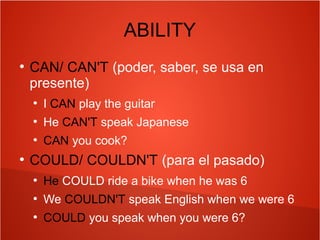
ABILITY
●
CAN/ CAN'T (poder, saber, se usa en
presente)
●
I CAN play the guitar
●
He CAN'T speak Japanese
●
CAN you cook?
●
COULD/ COULDN'T (para el pasado)
●
He COULD ride a bike when he was 6
●
We COULDN'T speak English when we were 6
●
COULD you speak when you were 6?
PERMISSION
●
CAN/ CAN'T (poder)
●
Mum CAN I go out tonight?
●
No, you CAN'T
●
Mum says that I CAN'T go out tonight
●
CAN I open the window? It's very hot in here
●
Yes, you CAN
●
The teacher says that I CAN open the window
ADVICE
●
SHOULD/ SHOULDN'T (debería)
●
You SHOULD go to the doctor if you don't feel
well
●
They SHOULD arrive on time
●
We SHOULDN'T miss classes
●
I SHOULDN'T tell lies
SOME PRACTICE
●
Click here
●
Click here
●
Click here
SOME PRACTICE
●
Click here
●
Click here
●
Click here

Modalverbs

  • 2.
    INTRODUCTION ● Son un grupode verbos que expresan algunas funciones como obligación, prohibición, permiso... ● Siempre van seguidos de un verbo en infinitivo
  • 3.
    OBLIGATION ● HAVE TO (tenerque) ● I HAVE TO study hard ● He HAS TO study hard ● What DO you HAVE TO do? ● What DOES he HAVE TO do? ● MUST (deber) ● I MUST study hard ● He MUST study hard ● What MUST you do?
  • 4.
    PROHIBITION ● MUSTN'T (no sepuede, está prohibido) ● You MUSTN'T use your mobile phone in class ● He MUSTN'T use his mobile phone in class ● What MUSTN'T you do at school?
  • 5.
    LACK OF OBLIGATION ● DON'T/DOESN'T HAVE TO (no es necesario, no hace falta que, no hay por qué) ● You DON'T HAVE TO wear a uniform in this school ● He DOESN'T HAVE TO wear a uniform in his school ● What DON'T you HAVE TO do at school? ● What DOESN'T he HAVE TO do at school?
  • 6.
    ABILITY ● CAN/ CAN'T (poder,saber, se usa en presente) ● I CAN play the guitar ● He CAN'T speak Japanese ● CAN you cook? ● COULD/ COULDN'T (para el pasado) ● He COULD ride a bike when he was 6 ● We COULDN'T speak English when we were 6 ● COULD you speak when you were 6?
  • 7.
    PERMISSION ● CAN/ CAN'T (poder) ● MumCAN I go out tonight? ● No, you CAN'T ● Mum says that I CAN'T go out tonight ● CAN I open the window? It's very hot in here ● Yes, you CAN ● The teacher says that I CAN open the window
  • 8.
    ADVICE ● SHOULD/ SHOULDN'T (debería) ● YouSHOULD go to the doctor if you don't feel well ● They SHOULD arrive on time ● We SHOULDN'T miss classes ● I SHOULDN'T tell lies
  • 9.
  • 10.