Alumno: Carlos J. Chacón O.
CI: V- 25.921.453
ESC 45
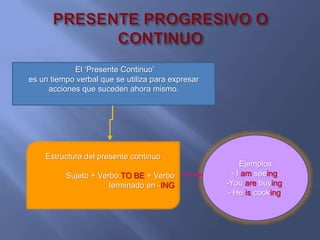
Ejemplos
- I am seeing.
-You are buying.
- He is cooking.
Estructura del presente continuo
Sujeto + Verbo TO BE + Verbo
terminado en -ING
El ‘Presente Continuo’
es un tiempo verbal que se utiliza para expresar
acciones que suceden ahora mismo.
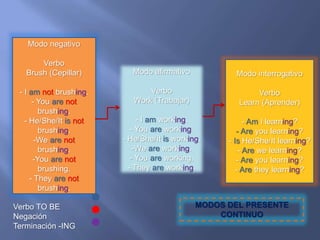
Modo afirmativo
Verbo
Work (Trabajar)
- I am working.
- You are working.
- He/She/It is working.
-We are working.
- You are working.
- They are working.
Modo negativo
Verbo
Brush (Cepillar)
- I am not brushing.
- You are not
brushing.
- He/She/It is not
brushing.
-We are not
brushing.
-You are not
brushing.
- They are not
brushing.
Modo interrogativo
Verbo
Learn (Aprender)
- Am I learning?
- Are you learning?
- Is He/She/It learning?
- Are we learning?
- Are you learning?
- Are they learning?
Verbo TO BE
Negación
Terminación -ING
MODOS DEL PRESENTE
CONTINUO
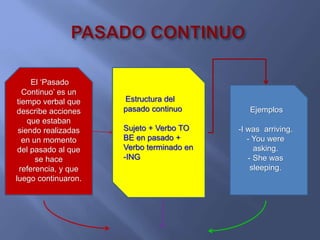
Estructura del
pasado continuo
Sujeto + Verbo TO
BE en pasado +
Verbo terminado en
-ING
El ‘Pasado
Continuo’ es un
tiempo verbal que
describe acciones
que estaban
siendo realizadas
en un momento
del pasado al que
se hace
referencia, y que
luego continuaron.
Ejemplos
-I was arriving.
- You were
asking.
- She was
sleeping.
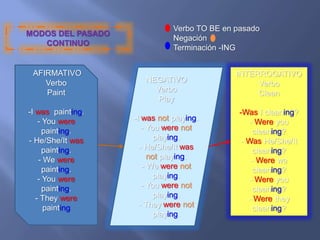
MODOS DEL PASADO
CONTINUO
NEGATIVO
Verbo
Play
-I was not playing.
- You were not
playing.
- He/She/It was
not playing.
- We were not
playing.
- You were not
playing.
- They were not
playing.
INTERROGATIVO
Verbo
Clean
-Was I cleaning?
- Were you
cleaning?
- Was He/She/It
cleaning?
- Were we
cleaning?
- Were you
cleaning?
- Were they
cleaning?
Verbo TO BE en pasado
Negación
Terminación -ING
AFIRMATIVO
Verbo
Paint
-I was painting.
- You were
painting.
- He/She/It was
painting.
- We were
painting.
- You were
painting.
- They were
painting
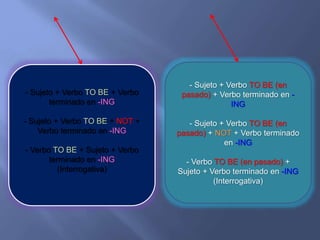
- Sujeto + Verbo TO BE + Verbo
terminado en -ING
- Sujeto + Verbo TO BE + NOT +
Verbo terminado en -ING
- Verbo TO BE + Sujeto + Verbo
terminado en -ING
(Interrogativa)
- Sujeto + Verbo TO BE (en
pasado) + Verbo terminado en -
ING
- Sujeto + Verbo TO BE (en
pasado) + NOT + Verbo terminado
en -ING
- Verbo TO BE (en pasado) +
Sujeto + Verbo terminado en -ING
(Interrogativa)

Ingles presente y pasado continuo

  • 1.
    Alumno: Carlos J.Chacón O. CI: V- 25.921.453 ESC 45
  • 2.
    Ejemplos - I amseeing. -You are buying. - He is cooking. Estructura del presente continuo Sujeto + Verbo TO BE + Verbo terminado en -ING El ‘Presente Continuo’ es un tiempo verbal que se utiliza para expresar acciones que suceden ahora mismo.
  • 3.
    Modo afirmativo Verbo Work (Trabajar) -I am working. - You are working. - He/She/It is working. -We are working. - You are working. - They are working. Modo negativo Verbo Brush (Cepillar) - I am not brushing. - You are not brushing. - He/She/It is not brushing. -We are not brushing. -You are not brushing. - They are not brushing. Modo interrogativo Verbo Learn (Aprender) - Am I learning? - Are you learning? - Is He/She/It learning? - Are we learning? - Are you learning? - Are they learning? Verbo TO BE Negación Terminación -ING MODOS DEL PRESENTE CONTINUO
  • 4.
    Estructura del pasado continuo Sujeto+ Verbo TO BE en pasado + Verbo terminado en -ING El ‘Pasado Continuo’ es un tiempo verbal que describe acciones que estaban siendo realizadas en un momento del pasado al que se hace referencia, y que luego continuaron. Ejemplos -I was arriving. - You were asking. - She was sleeping.
  • 5.
    MODOS DEL PASADO CONTINUO NEGATIVO Verbo Play -Iwas not playing. - You were not playing. - He/She/It was not playing. - We were not playing. - You were not playing. - They were not playing. INTERROGATIVO Verbo Clean -Was I cleaning? - Were you cleaning? - Was He/She/It cleaning? - Were we cleaning? - Were you cleaning? - Were they cleaning? Verbo TO BE en pasado Negación Terminación -ING AFIRMATIVO Verbo Paint -I was painting. - You were painting. - He/She/It was painting. - We were painting. - You were painting. - They were painting
  • 6.
    - Sujeto +Verbo TO BE + Verbo terminado en -ING - Sujeto + Verbo TO BE + NOT + Verbo terminado en -ING - Verbo TO BE + Sujeto + Verbo terminado en -ING (Interrogativa) - Sujeto + Verbo TO BE (en pasado) + Verbo terminado en - ING - Sujeto + Verbo TO BE (en pasado) + NOT + Verbo terminado en -ING - Verbo TO BE (en pasado) + Sujeto + Verbo terminado en -ING (Interrogativa)