Most magazines have a
bifurcate structure.


   Creative Engine
    (Editorial and Art)

   Business function
    (advertising,
    circulation,
    production and
    general
    management)
TRADE Magazines
-These are edited for readers
who have a need for more
information about their
particular job, industry or
profession.
CONSUMER Magazines
--These appeal directly to an
audience of readers who are
targeted as potential readers by
virtue of where they live.
-- Most of these magazines sell
pages of advertising.
(ADVERTISING)
-- Consumer magazines are easy
for readers to find.
(AVAILABILITY)
Editor-in-
                                      Chief
     Managing               Executive                             Creative
      Editor                  Editor                              Director
                     Contributing     Senior           Art        Associate
    Copy Chief       Editors and
                                                    Director         Art          Art
                      Columnists      Editor                                  department
                                                                  Director
                                                                               Assistant
 Copy     Research                   Features        Photo
editors     Chief                     Editor         Editor

             Fact                     News            Associate
           checkers                   Editor           Photo
                                                       editor
                                    Staff Writer

                               Associate Editors

                                        Assistant
                                         Editors
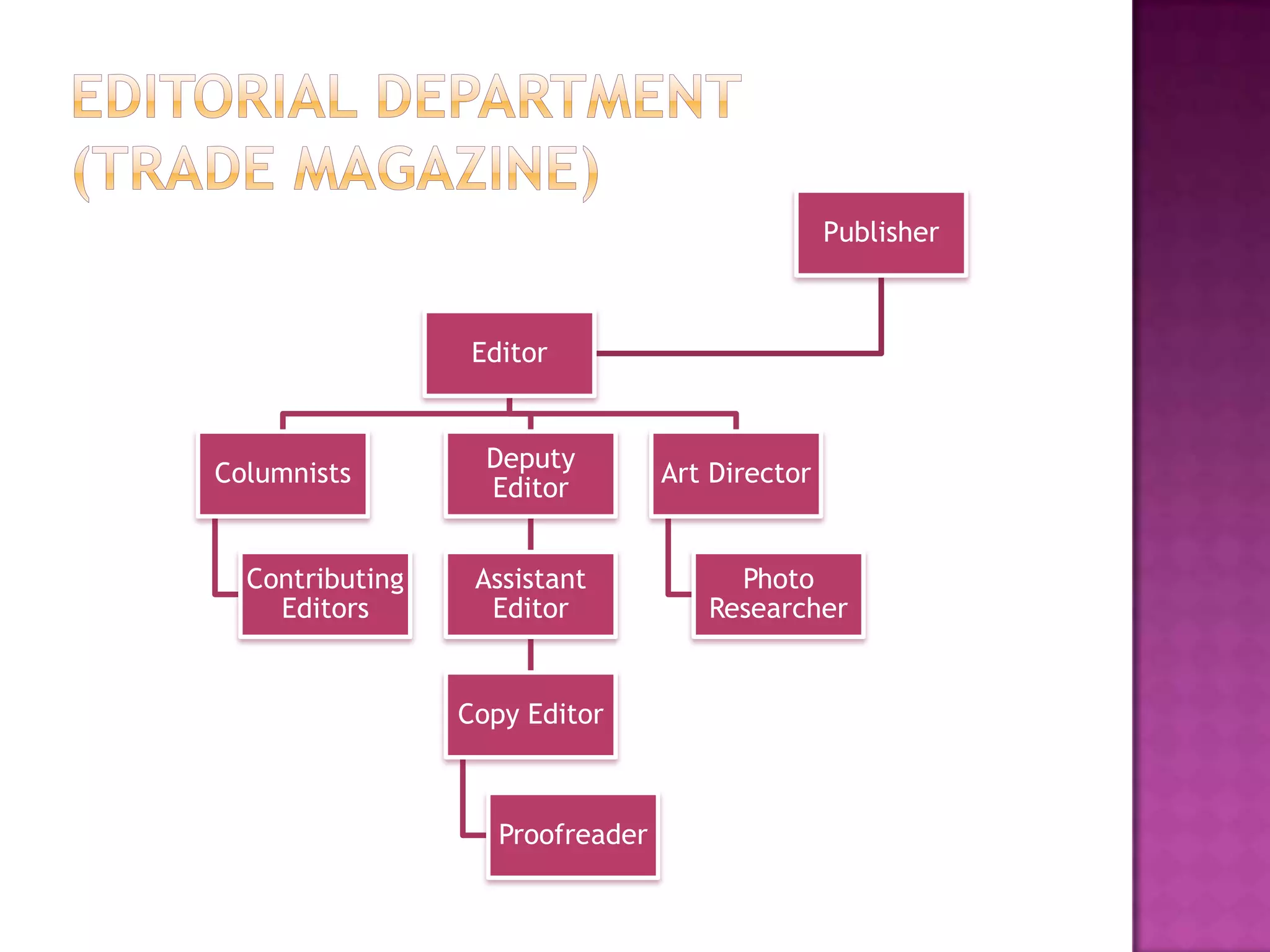
Publisher


                  Editor


                   Deputy
Columnists                        Art Director
                   Editor


  Contributing    Assistant            Photo
    Editors        Editor            Researcher


                 Copy Editor


                    Proofreader
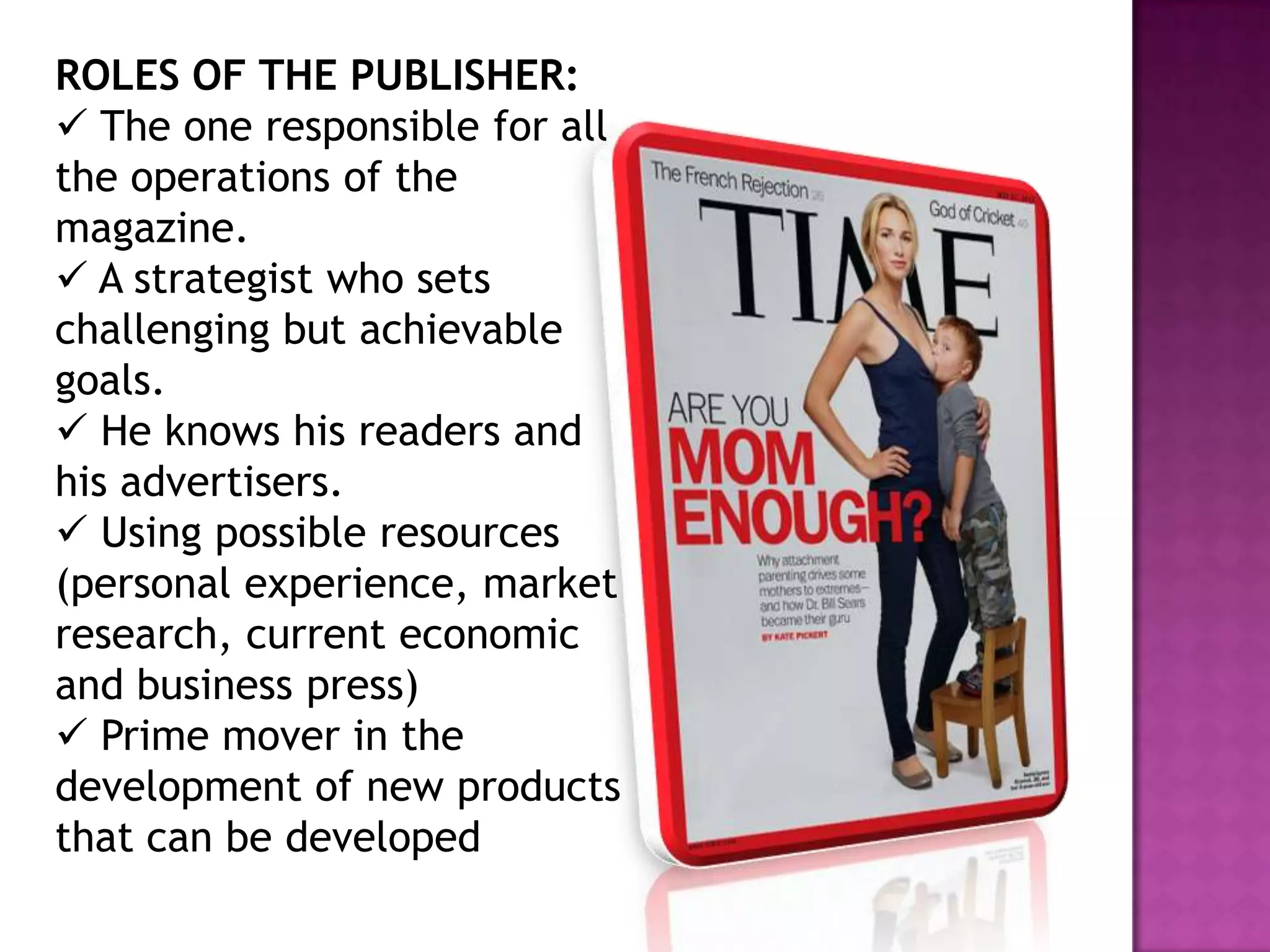
ROLES OF THE PUBLISHER:
 The one responsible for all
the operations of the
magazine.
 A strategist who sets
challenging but achievable
goals.
 He knows his readers and
his advertisers.
 Using possible resources
(personal experience, market
research, current economic
and business press)
 Prime mover in the
development of new products
that can be developed
1. OVERALL VISION.
   The editor must be able to see clearly where his
   magazine is headed.
2. CREATIVITY AND DEMONSTRATED SKILL.
   He must be an exceptional writer. Must be creative and
   must be able to recognize and nurture creative ability in
   others.
3. GRAPHIC SENSIBILITY.
   The editor must be comfortable imagining how a story
   will appear on the printed page.
4. PRODUCTION KNOWLEDGE.
   He must understand the production and the other
   technical aspects of publishing.
5. FLAIR FOR PROMOTION
   He must entice readers into reading, newsstand buyers
   into buying. (writing eye-catching headlines, selecting
   provocative photograph, creating moving captions)
ROLE OF THE EDITOR:
 He decides what will appear
in the magazine’s editorial
pages.
 He keeps the words and
images in the magazine
consistent with the magazine’s
editorial mission.
 His main concern is to
satisfy the needs of the
magazine’s audience/readers.
 His basic job is to oversee
the editorial direction and
content of the magazine.

Organization Structure of the Magazine Industry

  • 2.
    Most magazines havea bifurcate structure.  Creative Engine (Editorial and Art)  Business function (advertising, circulation, production and general management)
  • 3.
    TRADE Magazines -These areedited for readers who have a need for more information about their particular job, industry or profession. CONSUMER Magazines --These appeal directly to an audience of readers who are targeted as potential readers by virtue of where they live. -- Most of these magazines sell pages of advertising. (ADVERTISING) -- Consumer magazines are easy for readers to find. (AVAILABILITY)
  • 4.
    Editor-in- Chief Managing Executive Creative Editor Editor Director Contributing Senior Art Associate Copy Chief Editors and Director Art Art Columnists Editor department Director Assistant Copy Research Features Photo editors Chief Editor Editor Fact News Associate checkers Editor Photo editor Staff Writer Associate Editors Assistant Editors
  • 5.
    Publisher Editor Deputy Columnists Art Director Editor Contributing Assistant Photo Editors Editor Researcher Copy Editor Proofreader
  • 6.
    ROLES OF THEPUBLISHER:  The one responsible for all the operations of the magazine.  A strategist who sets challenging but achievable goals.  He knows his readers and his advertisers.  Using possible resources (personal experience, market research, current economic and business press)  Prime mover in the development of new products that can be developed
  • 7.
    1. OVERALL VISION. The editor must be able to see clearly where his magazine is headed. 2. CREATIVITY AND DEMONSTRATED SKILL. He must be an exceptional writer. Must be creative and must be able to recognize and nurture creative ability in others. 3. GRAPHIC SENSIBILITY. The editor must be comfortable imagining how a story will appear on the printed page. 4. PRODUCTION KNOWLEDGE. He must understand the production and the other technical aspects of publishing. 5. FLAIR FOR PROMOTION He must entice readers into reading, newsstand buyers into buying. (writing eye-catching headlines, selecting provocative photograph, creating moving captions)
  • 8.
    ROLE OF THEEDITOR:  He decides what will appear in the magazine’s editorial pages.  He keeps the words and images in the magazine consistent with the magazine’s editorial mission.  His main concern is to satisfy the needs of the magazine’s audience/readers.  His basic job is to oversee the editorial direction and content of the magazine.