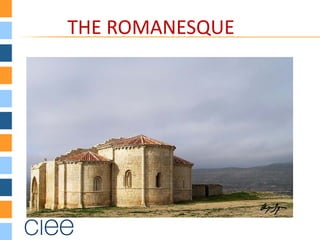
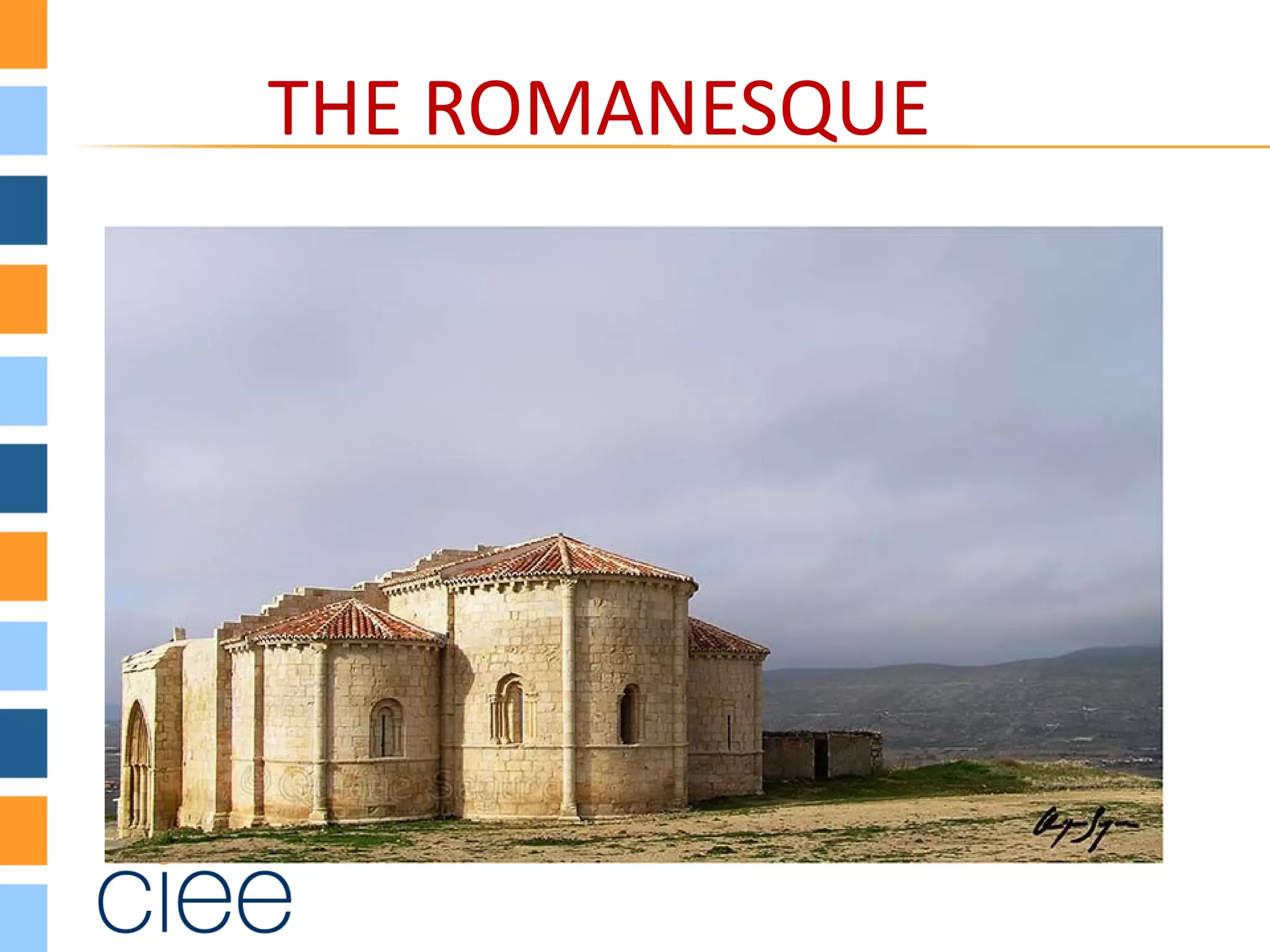

THE ROMANESQUE
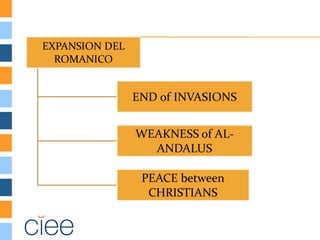
   Historical Context
   Architecture.
   The Mudéjar style.
   Sculpture and Painting.


                              Juan A. L. Luque
   Europe XI – XIII Centuries

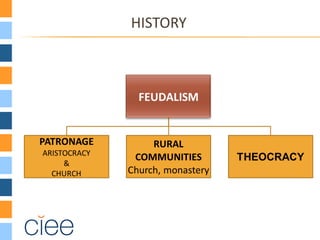
   FEUDALISM

   It’s called Romanesque because of the use of Ancient
    Roman’s technical solutions (arc, vaux,…)

   It’s basically a RELIGIOUS art.
HISTORY
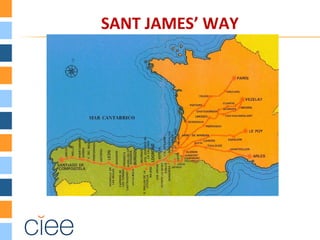
SANT JAMES’ WAY
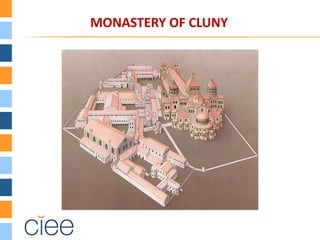
MONASTERY OF CLUNY
ROMANESQUE ARCHITECTURE
       CARACHTERISTIQUES
ROMANESQUE ARCHITECTURE


   AUSTERITY    very few ornaments


   SIMPLICITY   simple forms


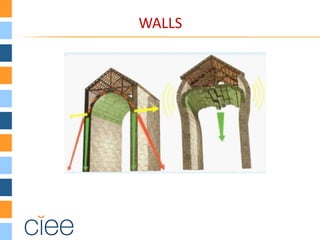
   SOLIDITY     very thick walls
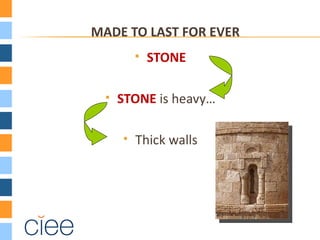
MADE TO LAST FOR EVER
             STONE

     STONE is heavy…

         Thick walls
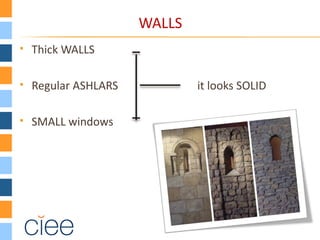
WALLS
   Thick WALLS

   Regular ASHLARS           it looks SOLID

   SMALL windows
WALLS
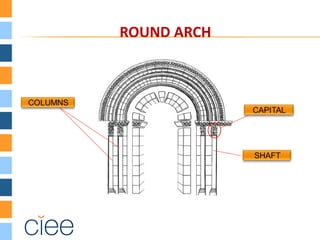
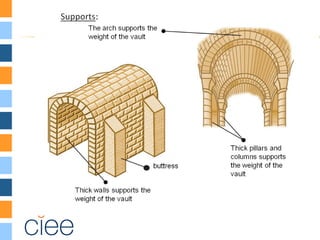
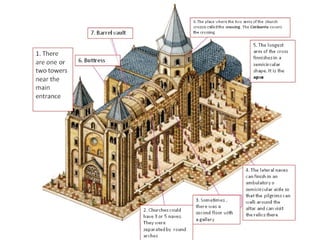
ROUND ARCH
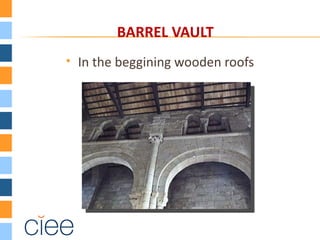
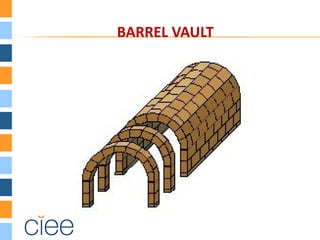
BARREL VAULT
   In the beggining wooden roofs
BARREL VAULT
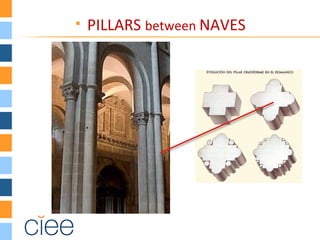
   PILLARS between NAVES
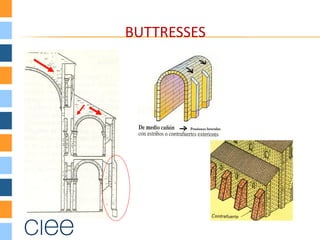
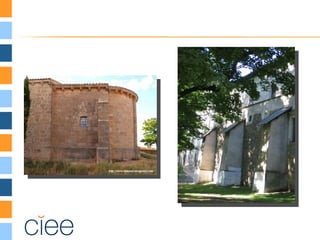
BUTTRESSES
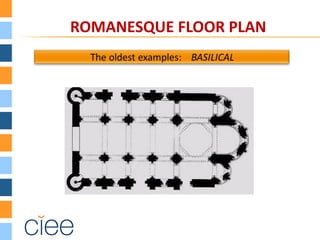
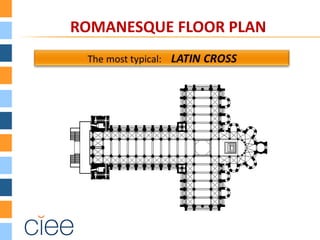
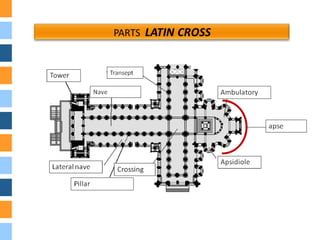
ROMANESQUE FLOOR PLAN
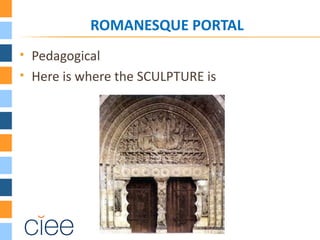
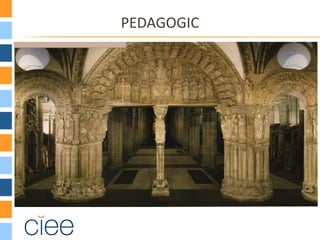
ROMANESQUE PORTAL
   Pedagogical
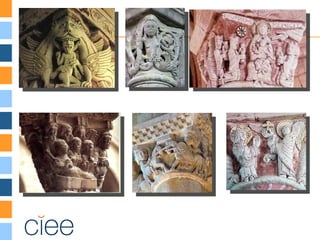
   Here is where the SCULPTURE is
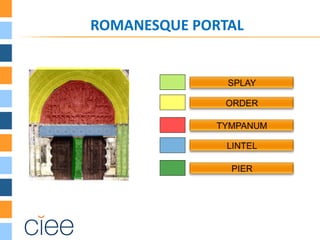
ROMANESQUE PORTAL
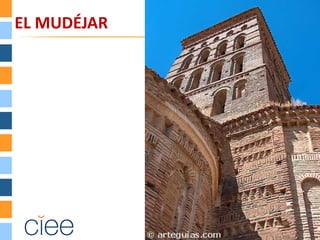
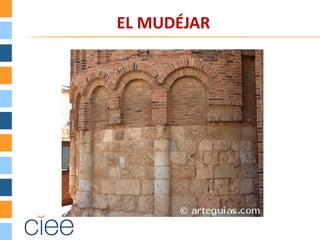
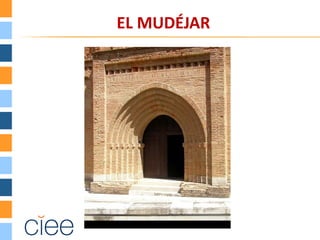
EL MUDÉJAR
        Mudajjan ‫مدجن‬meaning "domesticated", in a reference to ,
        the Muslims who submitted to the rule of the Christian kings

       In erecting Romanesque buildings (Gothic and Renaissance
        too), builders used elements of Islamic art

       Use of BRICKS in a geometrical character

       Only in Spain
EL MUDÉJAR
EL MUDÉJAR
EL MUDÉJAR
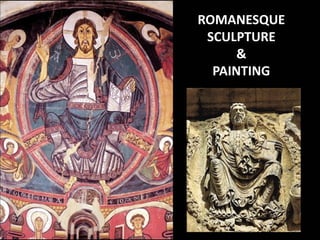
ROMANESQUE
 SCULPTURE
      &
  PAINTING
PEDAGOGIC
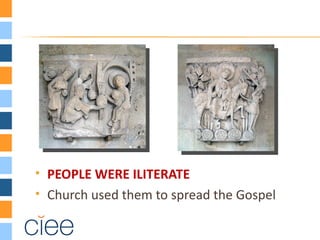
   PEOPLE WERE ILITERATE
   Church used them to spread the Gospel
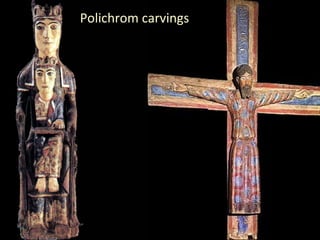
Polichrom carvings
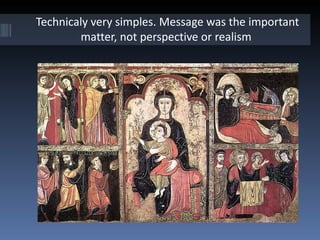
Technicaly very simples. Message was the important
        matter, not perspective or realism
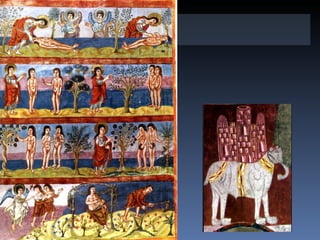
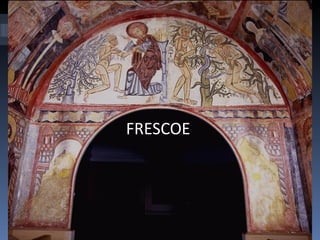
FRESCOE
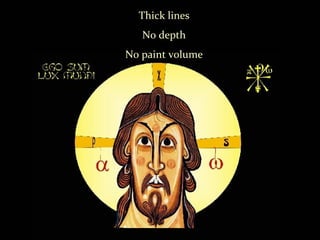
Thick lines
   No depth
No paint volume

Spanish Art 2.- Romanesque