 Values are those ideals, beliefs or norms which
the society have accepted.
 Socially accepted desires, behaviours and goals
are called values.
 Values tell us what is right and what is wrong for
us.
 The ideals to which weightage is given in society
and by which the behaviour of the persons of
that society is governed and controlled, are called
values.
Meaning
Contd…
 Values are defined as everything from eternal ideas
and guiding principles that lead to desirable behavioural
and positive patterns.
 They provide an important basis for individual
choices based on connecting thoughts, feelings and
emotions leading to positive action.
VALUE EDUCATION
 The form of education which endeavors for moral and
spiritual development of life values, is called value
education.
 Value education is education that shapes a person’s
conduct and behavior based on values.
 Develops the personality of the child.
 Inculcates manners and a sense of responsibility and
cooperation in the child.
 Helps in making the child a good citizen.
 Develops a sense of respect for others in the human
being.
 Concern about degeneration of values.
 Inculcates a sense of patriotism and national unity in the
child.
 Impact of change on children and youth.
 Dys-functional families, increased crime and violence.
 Effect of media and information overload.
 The competitive mindset among students, parents,
teachers.
 Develops democratic way of thinking and living.
 Develops tolerance and understanding of different
religious beliefs.
 Helps pupils to have faith in themselves.
 Enables pupils to make decisions.
 Develops the spirit of brotherhood at the social,
NEED AN IMPORTANCE OF VALUES
Holistic development of the child while addressing the
head and the heart.
Revisiting values and making everyone aware of eroding
values.
Creating balance between child and community.
An education that connects the heart, head and hand.
Inculcating the understanding of Interdependence
between family, society, nation and the world.
Bringing in a pro-active social conscience.
Improvement of the quality of education.
Harmony and peace with self.
Value Concerns at School Stage
►Developing Universal Human Values.
►Values derived from the Indian Constitution.
►Developing problem solving attitude towards
contemporary challenges.
►Holistic development of the individual.
►Responsible attitude towards self and society.
►Nurturing an ethical approach, collaborative skills
and respect for Human Rights.
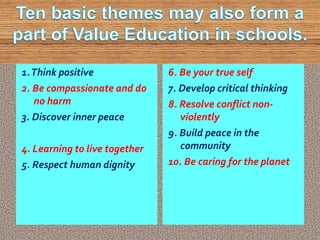
CBSE - VALUE SYSTEMS
1.Think positive
2. Be compassionate and do
no harm
3. Discover inner peace
4. Learning to live together
5. Respect human dignity
6. Be your true self
7. Develop critical thinking
8. Resolve conflict non-
violently
9. Build peace in the
community
10. Be caring for the planet
1. External Factors
2. Hidden Curriculum
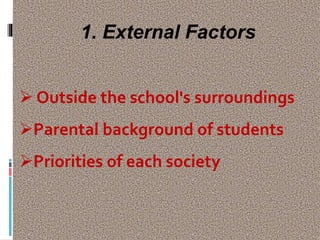
1. External Factors
 Outside the school's surroundings
Parental background of students
Priorities of each society
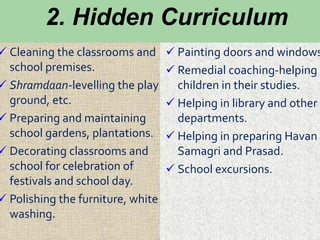
2. Hidden Curriculum
 Cleaning the classrooms and
school premises.
 Shramdaan-levelling the play
ground, etc.
 Preparing and maintaining
school gardens, plantations.
 Decorating classrooms and
school for celebration of
festivals and school day.
 Polishing the furniture, white
washing.
 Painting doors and windows
 Remedial coaching-helping
children in their studies.
 Helping in library and other
departments.
 Helping in preparing Havan
Samagri and Prasad.
 School excursions.
Contd….
Through Subject Areas
 Story and dramatisation on social
evils
 Issues and reacting to them
 Living conditions affect cultures,
value systems and behaviours
 Co-operation in sports,
sporting/team spirit.
The Lessons Taught
Identifying the values of each lesson
Develop a strategy to communicate
Device creative mechanisms
Reflect on affective behavior
ENGAGING LEARNERS
 Preparing Guidelines for School Disciplines
 Developing a Confident Personality
 Value Based Activities for Developing High
Conduct
 Value Inspiration for the Day
 Display Boards in Classrooms / Schools
 Value Based Events
 Identifying Peer Facilitators
 School Assembly
 Connecting School withValue Programmes
Preparing Guidelines for School
Discipline
Arrival and DepartureTime
Morning Assembly
Respecting School Property
While in the Corridors
While in the Playground
During Lunch Break
Developing a Confident
Personality
Value star of the week to be displayed
on the Value Display Board.
Experience sharing by the star child in
the morning assembly.
Awarding badges, bands, value
certificates, etc., to encourage such
behaviour.
Value BasedActivities for
Developing High Conduct
Creating learning environment
Modeling the values and behaviour by the teacher
Promoting creative thinking and decision making skills
Providing equal opportunity to each
Improvising skills for better relationships
Sensitizing students towards the community
Value Inspiration for the
Day
The day should begin by introducing
values by-
A talk
Poem
Story
Personal Experience
News
Instances from biographies
Quotations
Display Boards in Classrooms /
Schools
Writing stories
Composing Poems
Collection of articles
Displaying news and views, etc.
(Valuefortheweekmaybe:-Integrity,Honesty, Peace,
Love,Non-violence andRightConduct, Compassion,
Respectetc.)
Value Based Events
They can be in the form of:-
 Discussions
 Debates
 Exhibitions
 Art and Music concerts
 Display Board competitions
 Discussion based on motivational and
inspirational movies
 Book readings and book weeks based on a theme
 Community outreach connect programmes
Identifying Peer Facilitators
 Identify peer facilitators in the classrooms
 The peer will act as a mentor for a small
group of students
 Promote qualities like empathy, patience,
co-operation and respect for others
 On rotation basis, every student will get an
opportunity
 Teachers should guide them in resolving the
conflicts
School Assembly
 Quotations/Thoughts
 Life incident of famous personality
 Group songs
 Skit play
 Word of the day
 Student’s speech
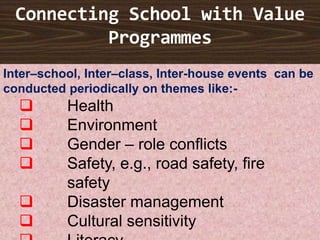
Connecting School with Value
Programmes
Inter–school, Inter–class, Inter-house events can be
conducted periodically on themes like:-
 Health
 Environment
 Gender – role conflicts
 Safety, e.g., road safety, fire
safety
 Disaster management
 Cultural sensitivity
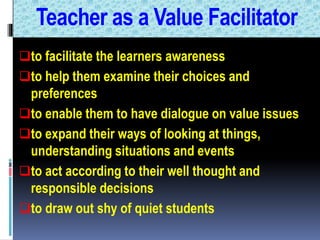
Teacher as a Value Facilitator
to facilitate the learners awareness
to help them examine their choices and
preferences
to enable them to have dialogue on value issues
to expand their ways of looking at things,
understanding situations and events
to act according to their well thought and
responsible decisions
to draw out shy of quiet students
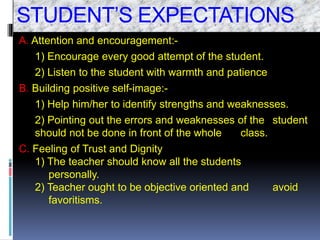
STUDENT’S EXPECTATIONS
A. Attention and encouragement:-
1) Encourage every good attempt of the student.
2) Listen to the student with warmth and patience
B. Building positive self-image:-
1) Help him/her to identify strengths and weaknesses.
2) Pointing out the errors and weaknesses of the student
should not be done in front of the whole class.
C. Feeling of Trust and Dignity
1) The teacher should know all the students
personally.
2) Teacher ought to be objective oriented and avoid
favoritisms.
VALUE BASED EDUCATION.pptx

VALUE BASED EDUCATION.pptx

  • 2.
     Values arethose ideals, beliefs or norms which the society have accepted.  Socially accepted desires, behaviours and goals are called values.  Values tell us what is right and what is wrong for us.  The ideals to which weightage is given in society and by which the behaviour of the persons of that society is governed and controlled, are called values. Meaning
  • 3.
    Contd…  Values aredefined as everything from eternal ideas and guiding principles that lead to desirable behavioural and positive patterns.  They provide an important basis for individual choices based on connecting thoughts, feelings and emotions leading to positive action.
  • 4.
    VALUE EDUCATION  Theform of education which endeavors for moral and spiritual development of life values, is called value education.  Value education is education that shapes a person’s conduct and behavior based on values.  Develops the personality of the child.  Inculcates manners and a sense of responsibility and cooperation in the child.  Helps in making the child a good citizen.  Develops a sense of respect for others in the human being.
  • 5.
     Concern aboutdegeneration of values.  Inculcates a sense of patriotism and national unity in the child.  Impact of change on children and youth.  Dys-functional families, increased crime and violence.  Effect of media and information overload.  The competitive mindset among students, parents, teachers.  Develops democratic way of thinking and living.  Develops tolerance and understanding of different religious beliefs.  Helps pupils to have faith in themselves.  Enables pupils to make decisions.  Develops the spirit of brotherhood at the social, NEED AN IMPORTANCE OF VALUES
  • 6.
    Holistic development ofthe child while addressing the head and the heart. Revisiting values and making everyone aware of eroding values. Creating balance between child and community. An education that connects the heart, head and hand. Inculcating the understanding of Interdependence between family, society, nation and the world. Bringing in a pro-active social conscience. Improvement of the quality of education. Harmony and peace with self.
  • 7.
    Value Concerns atSchool Stage ►Developing Universal Human Values. ►Values derived from the Indian Constitution. ►Developing problem solving attitude towards contemporary challenges. ►Holistic development of the individual. ►Responsible attitude towards self and society. ►Nurturing an ethical approach, collaborative skills and respect for Human Rights.
  • 8.
    CBSE - VALUESYSTEMS
  • 9.
    1.Think positive 2. Becompassionate and do no harm 3. Discover inner peace 4. Learning to live together 5. Respect human dignity 6. Be your true self 7. Develop critical thinking 8. Resolve conflict non- violently 9. Build peace in the community 10. Be caring for the planet
  • 10.
    1. External Factors 2.Hidden Curriculum
  • 11.
    1. External Factors Outside the school's surroundings Parental background of students Priorities of each society
  • 12.
    2. Hidden Curriculum Cleaning the classrooms and school premises.  Shramdaan-levelling the play ground, etc.  Preparing and maintaining school gardens, plantations.  Decorating classrooms and school for celebration of festivals and school day.  Polishing the furniture, white washing.  Painting doors and windows  Remedial coaching-helping children in their studies.  Helping in library and other departments.  Helping in preparing Havan Samagri and Prasad.  School excursions.
  • 13.
    Contd…. Through Subject Areas Story and dramatisation on social evils  Issues and reacting to them  Living conditions affect cultures, value systems and behaviours  Co-operation in sports, sporting/team spirit. The Lessons Taught Identifying the values of each lesson Develop a strategy to communicate Device creative mechanisms Reflect on affective behavior
  • 14.
    ENGAGING LEARNERS  PreparingGuidelines for School Disciplines  Developing a Confident Personality  Value Based Activities for Developing High Conduct  Value Inspiration for the Day  Display Boards in Classrooms / Schools  Value Based Events  Identifying Peer Facilitators  School Assembly  Connecting School withValue Programmes
  • 15.
    Preparing Guidelines forSchool Discipline Arrival and DepartureTime Morning Assembly Respecting School Property While in the Corridors While in the Playground During Lunch Break
  • 16.
    Developing a Confident Personality Valuestar of the week to be displayed on the Value Display Board. Experience sharing by the star child in the morning assembly. Awarding badges, bands, value certificates, etc., to encourage such behaviour.
  • 17.
    Value BasedActivities for DevelopingHigh Conduct Creating learning environment Modeling the values and behaviour by the teacher Promoting creative thinking and decision making skills Providing equal opportunity to each Improvising skills for better relationships Sensitizing students towards the community
  • 18.
    Value Inspiration forthe Day The day should begin by introducing values by- A talk Poem Story Personal Experience News Instances from biographies Quotations
  • 19.
    Display Boards inClassrooms / Schools Writing stories Composing Poems Collection of articles Displaying news and views, etc. (Valuefortheweekmaybe:-Integrity,Honesty, Peace, Love,Non-violence andRightConduct, Compassion, Respectetc.)
  • 20.
    Value Based Events Theycan be in the form of:-  Discussions  Debates  Exhibitions  Art and Music concerts  Display Board competitions  Discussion based on motivational and inspirational movies  Book readings and book weeks based on a theme  Community outreach connect programmes
  • 21.
    Identifying Peer Facilitators Identify peer facilitators in the classrooms  The peer will act as a mentor for a small group of students  Promote qualities like empathy, patience, co-operation and respect for others  On rotation basis, every student will get an opportunity  Teachers should guide them in resolving the conflicts
  • 22.
    School Assembly  Quotations/Thoughts Life incident of famous personality  Group songs  Skit play  Word of the day  Student’s speech
  • 23.
    Connecting School withValue Programmes Inter–school, Inter–class, Inter-house events can be conducted periodically on themes like:-  Health  Environment  Gender – role conflicts  Safety, e.g., road safety, fire safety  Disaster management  Cultural sensitivity
  • 24.
    Teacher as aValue Facilitator to facilitate the learners awareness to help them examine their choices and preferences to enable them to have dialogue on value issues to expand their ways of looking at things, understanding situations and events to act according to their well thought and responsible decisions to draw out shy of quiet students
  • 25.
    STUDENT’S EXPECTATIONS A. Attentionand encouragement:- 1) Encourage every good attempt of the student. 2) Listen to the student with warmth and patience B. Building positive self-image:- 1) Help him/her to identify strengths and weaknesses. 2) Pointing out the errors and weaknesses of the student should not be done in front of the whole class. C. Feeling of Trust and Dignity 1) The teacher should know all the students personally. 2) Teacher ought to be objective oriented and avoid favoritisms.

Editor's Notes

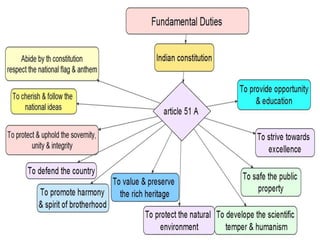
  • #9 Article 51 A of the Indian Constitution –Fundamental Duties – provides the most comprehensive list of values that should be inculcated by every Indian citizen.
  • #13 Informal curriculum that are learnt during schooling in addition involve a host of values
  • #14 Values can never be taught in isolation. They cannot be transacted independently from the learning that takes place in the classroom and within the school